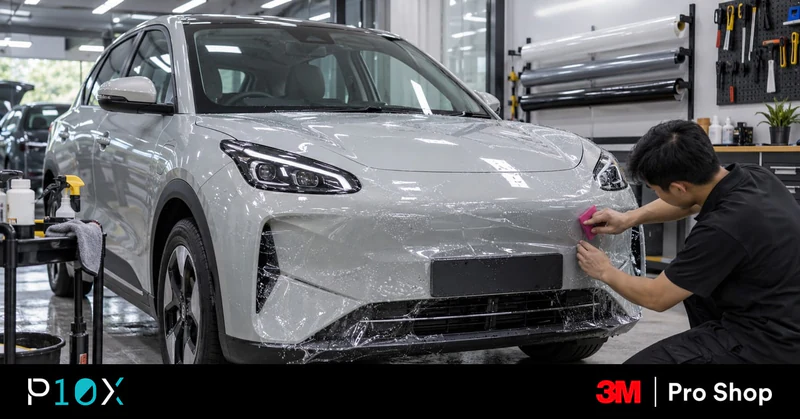
✧ Key Takeaways
- For road chips, the front bumper, the front edge of the bonnet and the outer side mirror covers are sensible places to start.
- For scratches from daily use, the door cups, door edges and painted boot lip are worth adding.
- You may not need PPF on the whole car; the right panels depend on your driving, parking and budget.
- When comparing films, thickness alone does not tell you enough; finish, care requirements and warranty matter too.
- Before installation, you can have the paint checked and agree where the film edges will sit.
You may not need PPF on the whole Proton eMAS 5. If road chips worry you, the front bumper, the front edge of the bonnet and the outer side mirror covers are the places to start. For scratches from daily use, the door cups behind the handles, the door edges and the painted boot lip are worth considering.
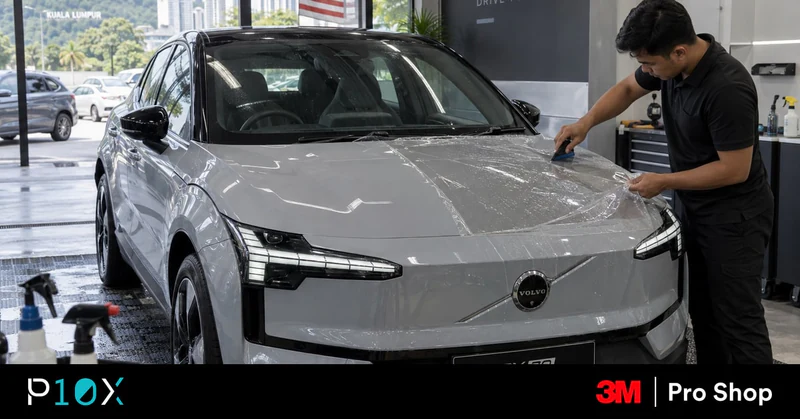
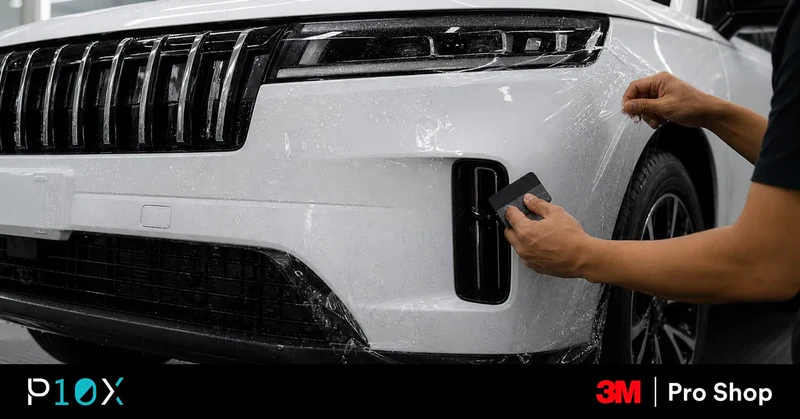
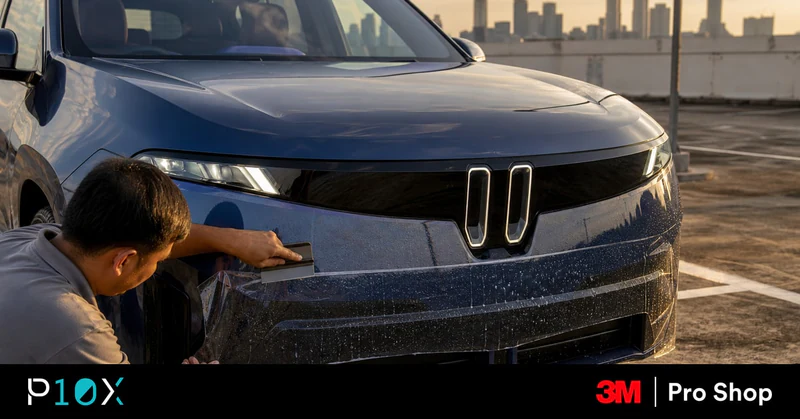
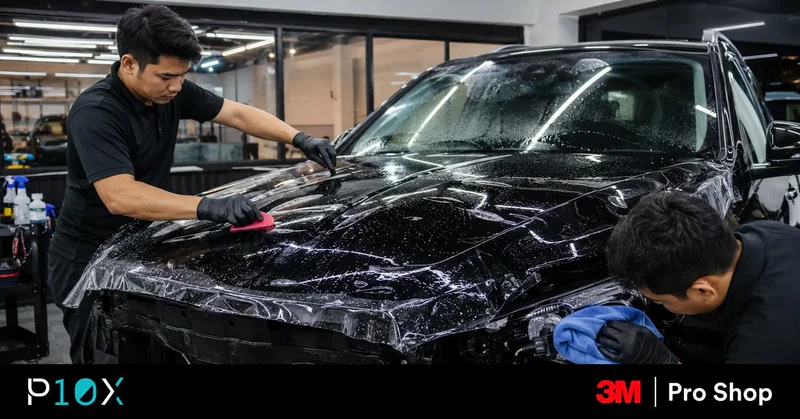
Paint protection film, or PPF, is a clear layer fitted over the surfaces you choose to cover. It can reduce damage from some stone chips, light scrapes and everyday contact, but it will not prevent dents or every scratch.
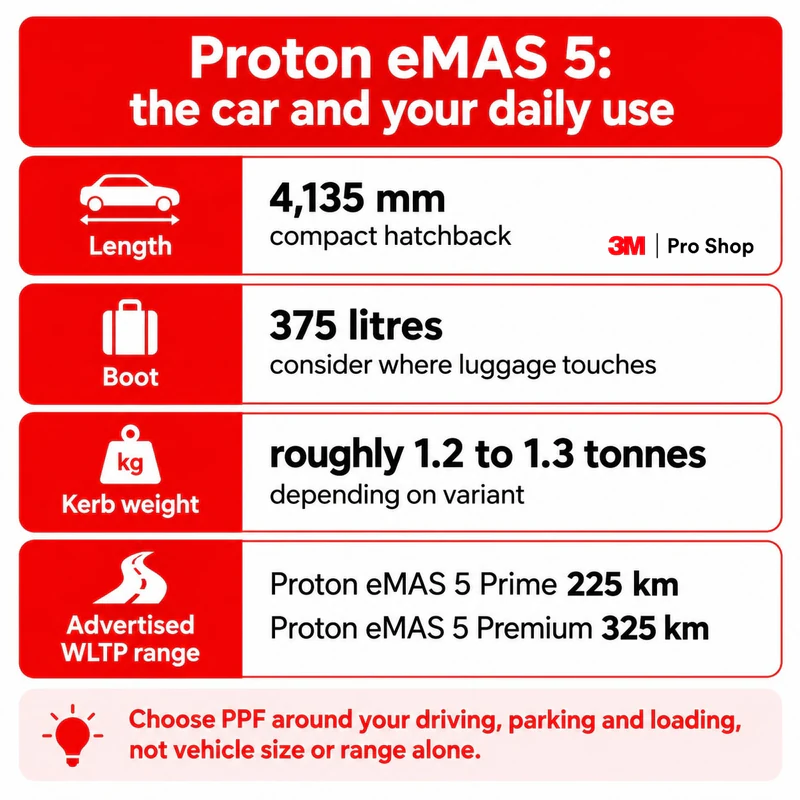
Proton eMAS 5 is a compact hatchback, but how much PPF coverage you need depends more on how you use it than on its size. A daily highway commute exposes the front of the car to road grit, while tight parking and loading the 375 litre boot can leave scratches around the doors and boot lip.
Why chips appear at the front and scratches around the doors and boot
Sand and small stones thrown up by traffic can chip the front bumper and the front edge of the bonnet. The outer side mirror covers are exposed too, especially if you regularly drive on highways. Around the doors and boot, scratches come from everyday use rather than the road.
Fingernails and rings can scratch the paint behind a door handle. Door edges can scrape a wall or pillar in a tight parking bay. Bags, a stroller or a case of bottled water can scuff the painted boot lip as you load the car.
PPF can handle light contact, but it does not make it safe to push a door against a wall or slide heavy bags across the boot lip.
Where to start, and which 3M film suits each panel
Each area of the car picks up a different kind of wear, so you may want a different 3M film on different panels. For each panel in the table below, the listed 3M PPF series are options to discuss, not the only choice. Your installer can tell you which film suits each area.
| Area | Likely wear | 3M series to compare with the installer | When to consider it |
| Front bumper | Stone chips and road grit | Series 150 or 100 | Start here for road chips |
| Front edge of the bonnet | Chips from road grit | Series 150 or 100 | Start here for road chips |
| Outer side mirror covers | Stone chips | Series 100 | Consider with front coverage |
| Door cups, behind the handles | Scratches from nails and rings | Series 50 or 100 | Add for frequent contact |
| Door edges | Light scrapes against walls or pillars | Series 50 | Add for tight parking |
| Painted boot lip | Scuffs from loading and unloading | Series 50 or 100 | Add for frequent loading |
| Headlamps | Chips and surface pitting | Only a film approved for headlamp lenses | If the installer confirms the film suits the lenses |
| Painted rocker panels, along the lower sides | Road grit | Series 50 | Consider if you often drive on gritty roads |
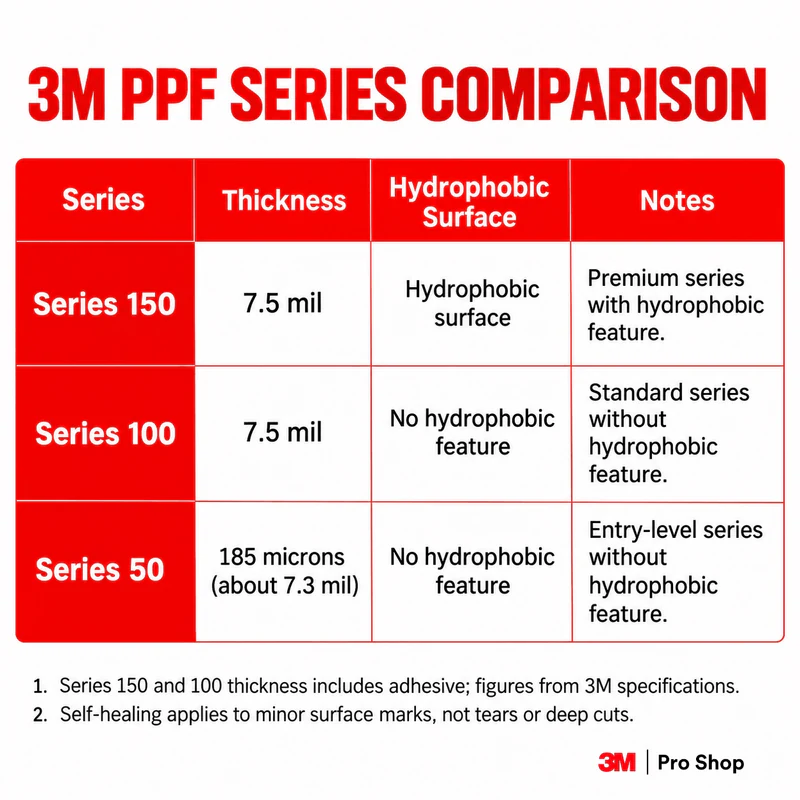
3M's specifications list Series 150 and Series 100 at 7.5 mil (0.19 mm) thick, and Series 50 at 185 microns, about 7.3 mil. For Series 150 and Series 100, that figure includes the adhesive layer but not the backing liner, which is peeled off when the film is fitted. Compared with Series 100, Series 150 has a water repellent top layer that makes water bead up and roll off, a clearer finish with less of the uneven texture known as orange peel, and a longer warranty in Malaysia: 5 years instead of 3. You can compare all three films on our 3M PPF page.
All three have self-healing technology that uses heat to reduce minor marks on the film's surface. It does not repair tears, deep cuts or damage to the paint underneath.
Thickness alone doesn't tell you which film suits you; finish, care requirements and warranty matter too. You can ask the installer to show you how the films differ in finish.
Do you need PPF on the whole car?
Not necessarily. Covering most painted panels suits owners who want more protection and are comfortable with the cost. On a smaller budget, you can ask for separate quotes for the front of the car, door cups, door edges and painted boot lip to see what each area costs. The total cost of 3M PPF also depends on the film you choose and how many panels you cover.
Partial coverage leaves some paint exposed, so covered and uncovered areas may wear differently over time. Covering only part of the bonnet also leaves an exposed film edge where the coverage stops. Before booking, you can ask where that edge will sit and, ideally, look at a similar finished car in daylight.
If you use PLUS, NKVE, MEX or Karak most days, it may be worth discussing more of the bonnet or the painted lower sides, because highway stone chips do not only hit the front bumper.
A paint check before installation, and a film check before you drive off
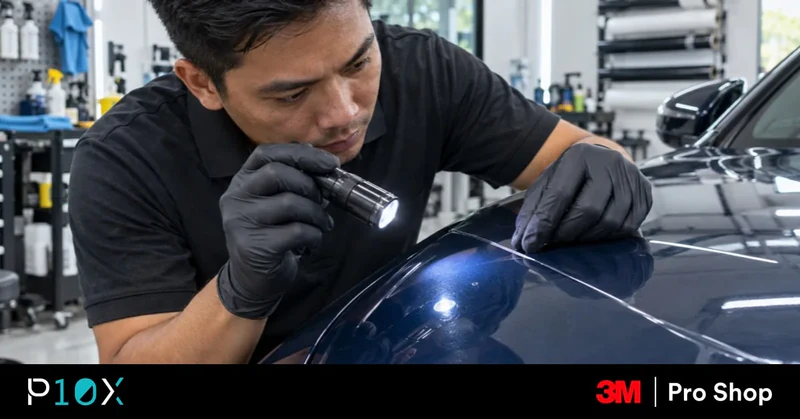
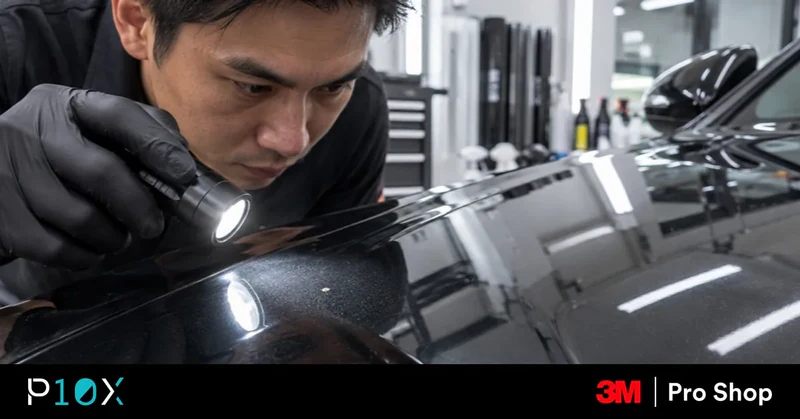
A newly delivered car can still have chips, scratches or wash marks, so it is worth inspecting the paint in good light before any film goes on. Photos of existing damage give you a record, and the installer can tell you whether the paint needs preparation or correction. Booking soon after collection also cuts down the wear that happens before the film goes on.
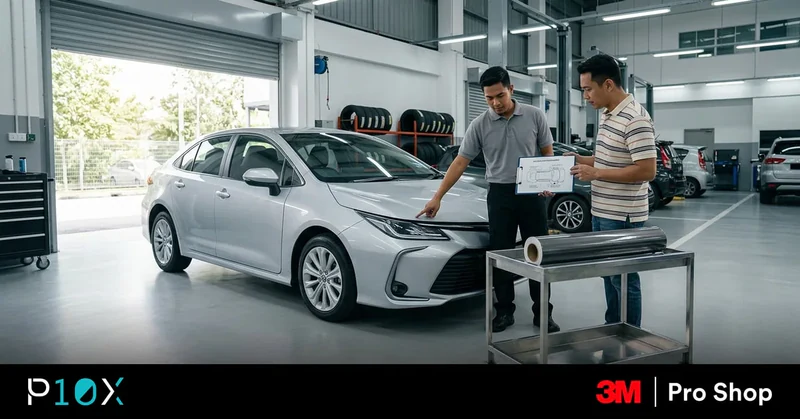
Before work starts, it helps to agree where the film will end and which edges can be wrapped, meaning the film is folded around the edge of the panel. Some panel shapes do not allow every edge to be wrapped, so it is also worth asking how the installer will trim the film without cutting into the paint. Camera lenses, sensor openings and any areas the eMAS 5 owner's manual says to keep clear should stay free of film.
Before collecting the car, you can check the film's edges and seams and ask for written confirmation of which film was used, which panels it covers and the warranty that applies. If film was fitted near any cameras or parking sensors, it is worth checking that they still work properly, with the owner's manual as your guide.
Washing after PPF: waiting at least 72 hours and keeping pressure washer jets off the film edges
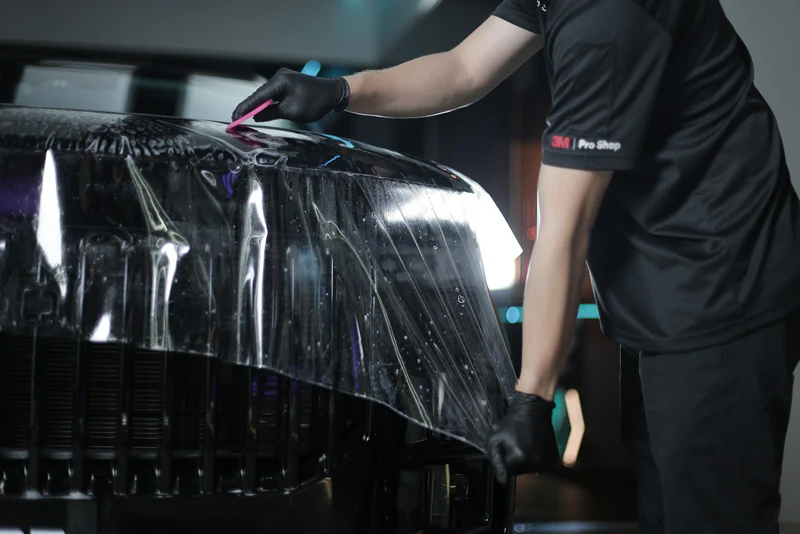
3M's installation guidance recommends waiting at least 72 hours before the first wash. If your installer gives you their own aftercare instructions, such as a longer wait, it is best to follow them, since your film or installation may need more time. After that, when washing PPF with a pressure washer, it is best to keep the jet away from the film's edges, where the film could start to lift.
How to get a quote for only the panels you need
You can tell the installer about your daily routes, where you usually park and what you load into the boot. That way, they can quote chip protection for the front and add the smaller areas that get scratched in daily use.
At 3M Pro Shop by P10X, a 3M Authorized Dealer, we can quote for each of those areas separately. Comparing quotes is easier when each one lists the film series, paint preparation, panels covered and warranty, since a package name alone doesn't show what you are paying for. You can find your nearest outlet on our locations page.
Find out the best protection for your car
Visit a 3M Pro Shop and discover the cost-effective 3M Protective Film and Window Tint
Frequently asked questions
Is PPF worth it on a Proton eMAS 5?
It can be, if you want to reduce chips and light scratches on the areas that get hit most, such as the front bumper, the front edge of the bonnet, the door cups and the painted boot lip. A quote for those panels lets you compare the cost with covering most of the car. PPF will not prevent dents or every type of damage.
Can I cover just the front of the car?
Yes. You can cover only the front, and add smaller areas such as the door cups or painted boot lip if you want. If you cover only part of the bonnet, it is worth agreeing where the exposed film edge will sit before booking.
Can PPF go over cameras or parking sensors?
Not over camera lenses, sensor openings or any areas the owner's manual says to keep clear. On panels with parking sensors, the installer can trim the film around each sensor and plan where the film edges will sit. After the work, it is worth checking that those systems still work properly.
When should I install PPF after collecting the car?
Booking soon after you collect the car makes sense if you want the film on before the first chips and scratches appear. Even on a new car, it is worth having the paint inspected first and asking whether it needs preparation.
Which 3M PPF series should I choose?
It depends on the panels you want covered and your budget. 3M's specifications list Series 150 and Series 100 at 7.5 mil, and Series 50 at 185 microns, about 7.3 mil. Series 150 also has a water repellent top layer, a clearer finish and a 5-year warranty in Malaysia, compared with 3 years for Series 100. Beyond thickness, you can ask the installer about the finish, care requirements and Malaysian warranty for each film.
Can I add more panels later?
Yes, as long as the paint on those panels is in good condition when you come back. The installer will need to inspect and prepare it first, and any chips or scratches that appeared before coverage will still be there unless they are repaired.