
How to Spot a Bad PPF Installation
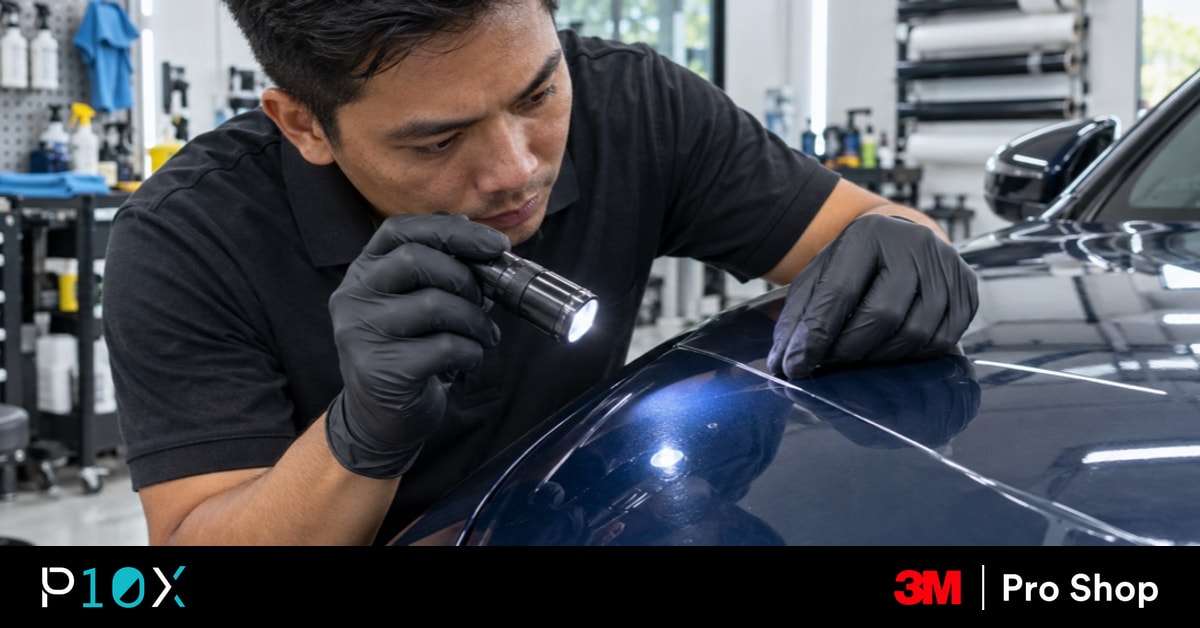
- Inspect the car in daylight before accepting it.
- Check edges, corners, seams and large flat panels.
- Wet-looking moisture may settle, but dirt, creases and lifting film need attention.
- Photograph every concern before touching the film.
A bad PPF installation usually shows up as lifting edges, trapped dirt, wrinkles, poor seams or cuts beside the film. Check the car before leaving the workshop because some problems are much easier to document on handover day.
If the only issue is one small speck, read the guide to dust under PPF before assuming the whole panel needs replacing. Fresh installation moisture and solid debris can look similar at first, but they do not behave the same way.
Check Lifting Edges First
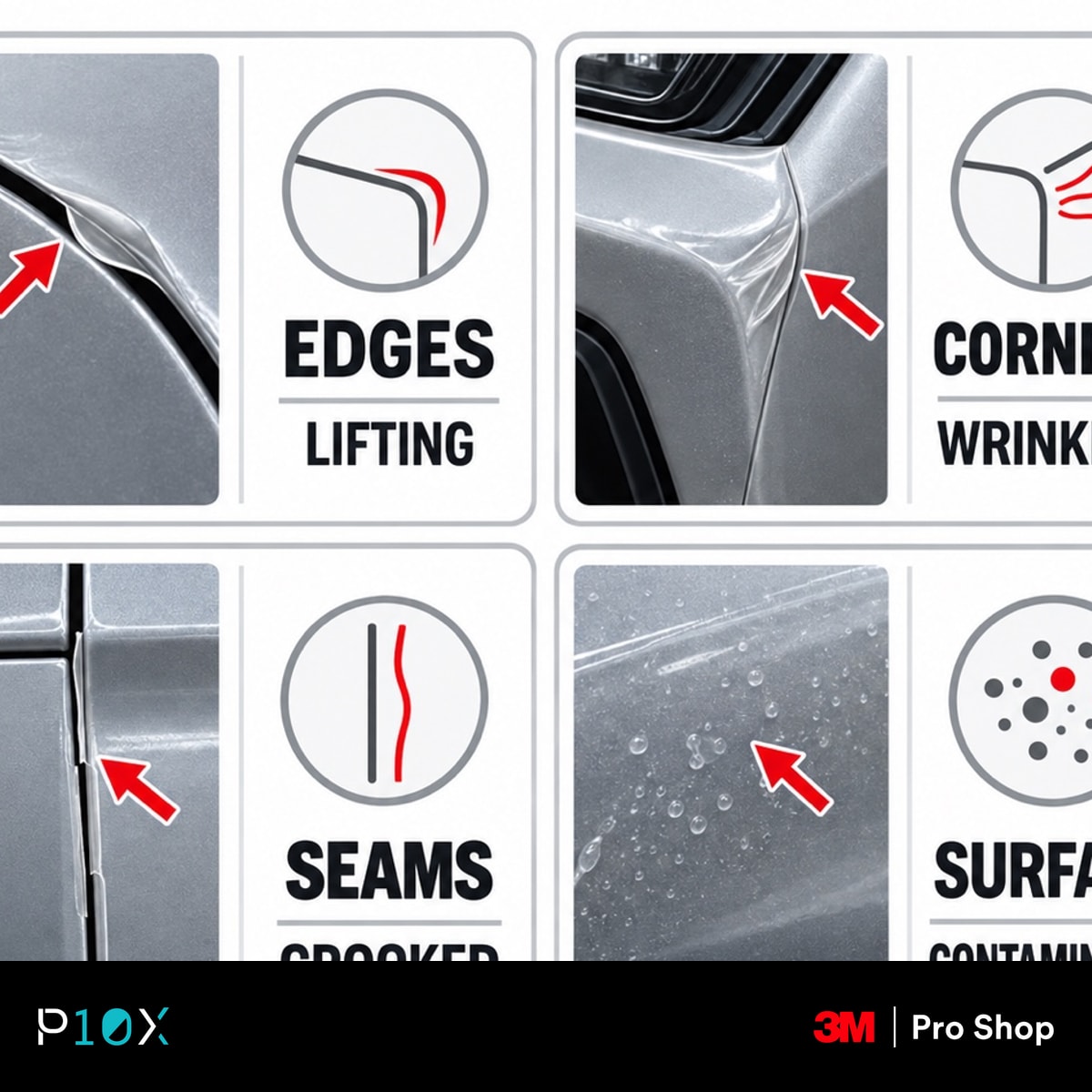
The film should sit flat around the bonnet, bumpers, wheel arches, mirrors and door edges. A corner that is already curling can collect dirt and may lift further during washing.
A tiny section that needs a professional touch-up is different from several panels lifting at once. Report either one early. Do not press it down with your fingers or add your own adhesive because that can trap dirt underneath.

Look for Dirt Underneath
Use daylight first, then a phone light held at a low angle. Dark paint makes small particles easier to see. Look across the bonnet and doors instead of staring straight down at them.
One tiny flat speck may be cosmetic. Repeated dirt, visible fibres or a hard particle that lifts the film into a small tent shows poor contamination control. Dirt under the film cannot be polished away from the surface.
Tell Moisture From Bubbles
PPF is fitted using liquid, so fresh film can hold wet-looking patches while it dries. These marks should slowly change shape or become less visible during the settling period given by the installer.
A dry, silver-looking bubble is different. It may contain air or a particle and usually keeps a fixed shape. Do not puncture it. A pin leaves a permanent hole and can reach the paint below.
Check Wrinkles and Stretch Marks
Curved bumpers and mirror caps need careful stretching. Poor fitting can leave finger-shaped ridges, white stress marks, creases or a patch that reflects light differently from the rest of the panel.
A planned relief cut or seam can be the right solution on a difficult shape. The problem is a crooked seam, an obvious overlap, a loose edge or a cut placed across open paint without warning.
Compare Both Sides
Look at matching areas on the left and right of the car. The two mirrors, front wings and door cups should have similar coverage when the panel shapes are the same.
Ask why if one side stops much earlier, leaves a bare corner or uses a different seam. The answer may be the panel design, but the difference should not be a surprise after the job is finished.
Watch for Knife Marks
Scratches beside a hand-cut edge are more serious than a cosmetic film issue. Do not pull the PPF up to investigate because lifting it can make the damage worse and remove useful evidence.
Photograph the whole panel and then the close-up. Ask the installer to inspect it. If there is still doubt, have another qualified professional assess the paint before anyone removes the film.
Do a Five-Minute Handover
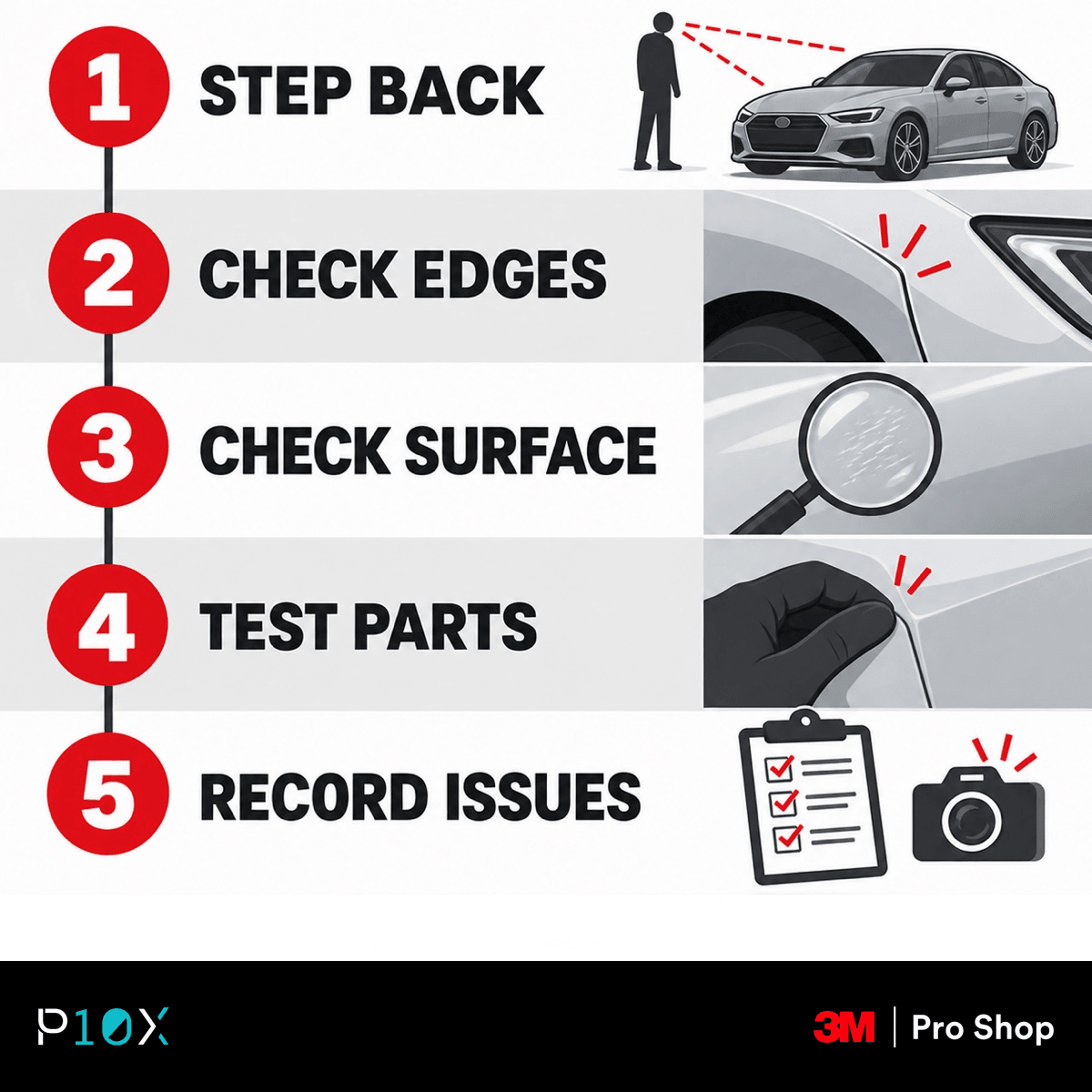
Stand one metre from the car and look for obvious differences in gloss or coverage. Then move closer and use side lighting to inspect the bonnet, bumpers, mirrors and edges.
Check the agreed seams and every part that may have been removed. Test handles, locks, cameras and nearby sensors. Record each concern by panel and ask whether the next step is monitoring, a local correction or replacing the affected piece.
Get the Fix in Writing
Do not heat, cut, inject or peel the film yourself. Keep your invoice, panel list and photos, then ask the installer for a clear correction plan and timeframe.
A 3M Authorized Dealer such as 3M Pro Shop by P10X should explain what you are seeing in plain language and record the agreed next step before you leave.
Find out the best protection for your car
Visit a 3M Pro Shop and discover the cost-effective 3M Protective Film and Window Tint
Frequently Asked Questions
Are bubbles normal after PPF installation?
Some wet-looking moisture pockets may settle as fresh film dries. Dry silver bubbles, bubbles with dirt inside or bubbles that do not change need an installer check.
Is a visible PPF edge bad workmanship?
Not always. Some panels need a visible edge. It should be straight, secure and placed where normal washing will not catch it.
How much dust under PPF is acceptable?
One tiny flat speck may be cosmetic. Repeated debris, visible fibres or a raised particle that tents the film should be reviewed.
Can I press lifting PPF down?
No. Dirt may already be underneath, and pressing the edge can hide the problem without fixing the cause.
Can good PPF still be installed badly?
Yes. Film quality and workmanship are separate. A good product still needs clean preparation, careful fitting and a proper handover check.
Author

Kelvin Cheen
Kelvin is an Automotive Solutions Consultant and Branch Manager at 3M Pro Shop. With 4+ years of field experience in premium vehicle surface protection, Kelvin specializes in flagship 3M technologies, including 3M Crystalline Black optical film and Ceramic IR tints, 3M Paint Protection Film (PPF), etc. His focus is on delivering transparent, engineering-backed advice to car and EV owners, cutting through sales upsells to ensure customers choose the exact thermal rejection and paint protection tailored to their driving needs.
Experience the future of window tinting
Visit a 3M Pro Shop and discover the revolutionary Crystalline CR BLK film