✧ Key Takeaways
- Clean droppings off your film as soon as you see them, even if the rest of the car can wait.
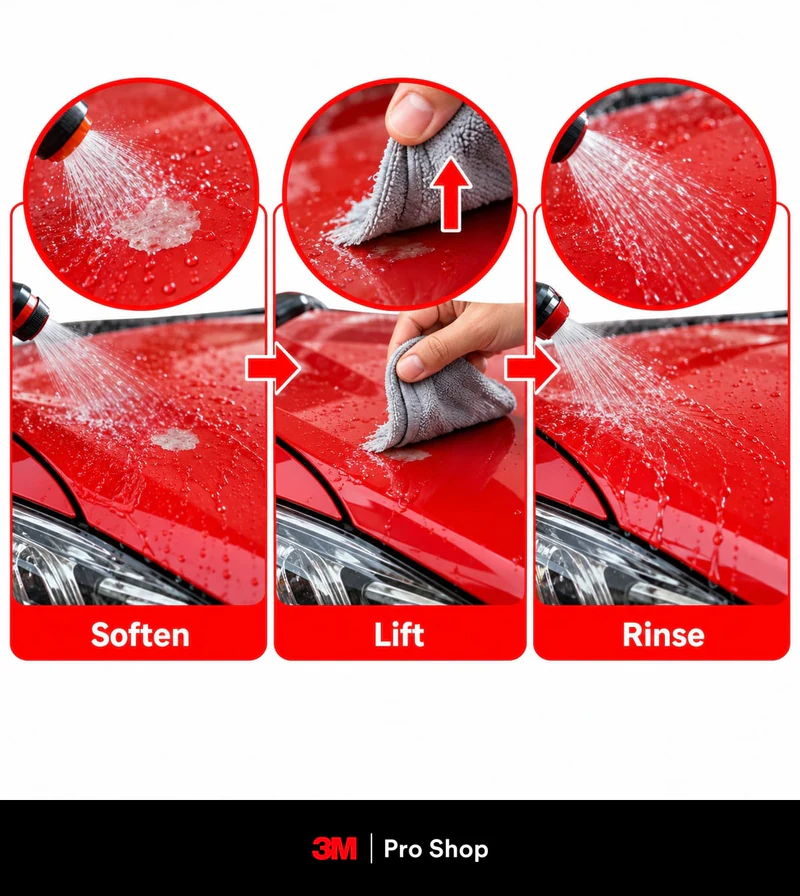
- Soak the spot first, lift it with a soft wet cloth, then rinse. Never wipe it dry.
- Skip acidic, alkaline and alcohol cleaners, and keep abrasive pads away from the film.
- In the first 72 hours after installation, rinse the spot gently and leave the full wash for later.
- If a dull ring stays after a gentle clean, stop and show it to your installer.
Bird droppings on PPF come off safely when you soften them with plenty of water and lift them away, instead of wiping them dry. PPF, or paint protection film, is the clear layer stuck over your paint to protect it. The film has done its job by taking the hit instead of your paint. That does not mean you can leave the mess there until the weekend wash.
3M's installation and care guidelines for its paint protection film are direct about this. Droppings, tar and other organic fallout (mess that comes from nature, such as tree sap) should be cleaned off as soon as possible to avoid staining or damage. The film is tough, but its top coat (the thin, clear outer skin of the film) can still mark if acidic mess bakes on it under the Malaysian sun.
You probably want to clean it tonight without leaving a dull patch, and if your film went on this week, you may be worried about touching it at all. The same care basics in our PPF aftercare guide apply here, with a few extra steps for droppings.
Why droppings need cleaning the same day
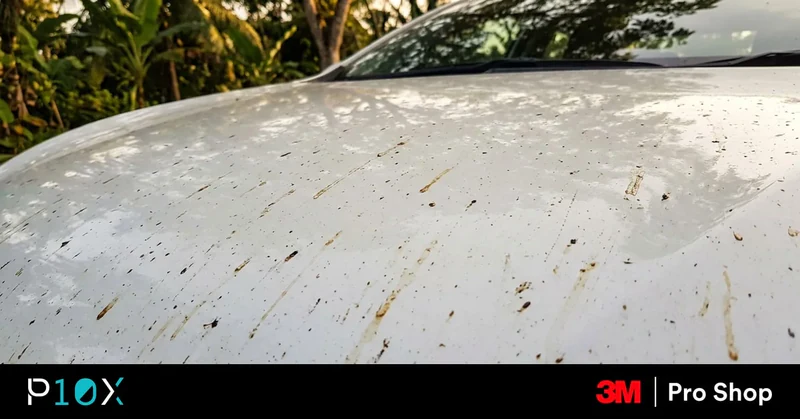
Droppings on PPF are best cleaned the same day because they carry acids and grit and dry into a hard crust that sits tight against the film in the sun. On a hot car, the water inside evaporates quickly. There is no safe number of hours to wait, so the sooner you clean it, the better.
Paint protection film is built to take this kind of mess so the clear top layer of your paint does not. The film's main layer, a tough clear plastic called urethane, and its top coat stop the mess reaching the paint.
We have come across overseas forum threads where owners found marks on filmed bonnets after droppings sat there for days. Some thought the film had failed. In most of those cases, the film still protected the paint underneath, and the mark was on the film itself. That is a much better outcome than etched paint, but it is still a mark you would rather avoid.
If you only notice it the next morning, it is still worth cleaning it then, gently and with plenty of water.
Which panels need a closer look?
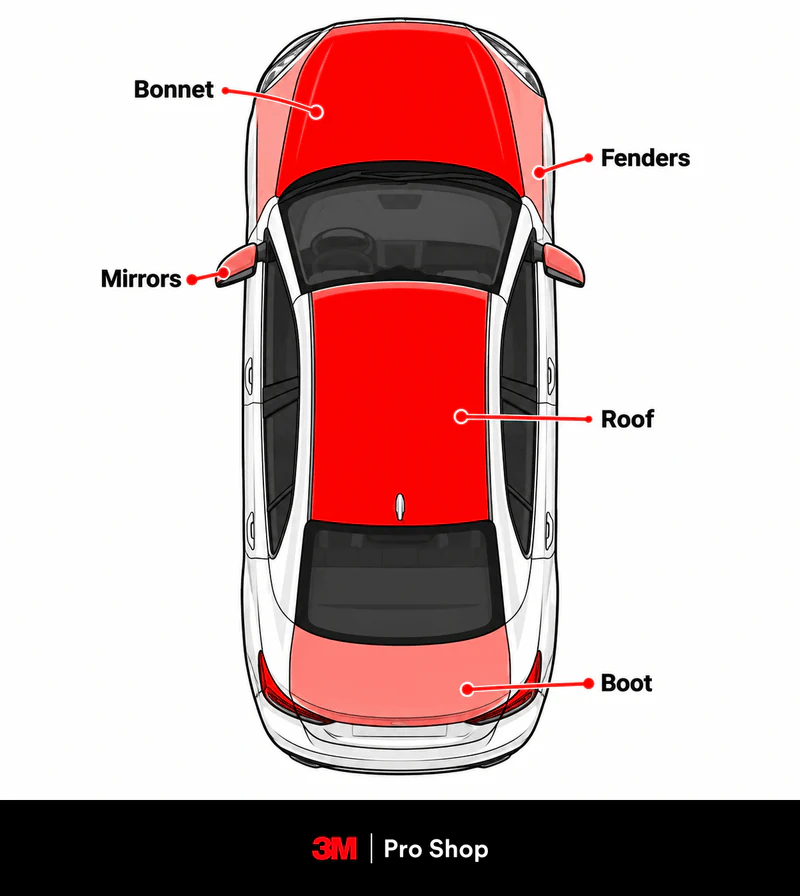
Droppings collect on the bonnet, roof and other upward facing surfaces, so checking only the bonnet can miss a spot. PPF coverage also varies by panel. Your roof or boot lid may not have the same coverage as the front of the car, even when the paint looks alike.
| Panel | Why it gets hit | Cleaning note | Common 3M film coverage |
| Bonnet | Large flat surface, faces the sky | Soaked and lifted. Most visible spot on the car | Full bonnet with Pro Series 200, Series 150 or Series 50 |
| Roof | Flat, often parked under trees | Hard to see. Worth checking after parking outdoors | Roof as an add-on panel |
| Front fenders (panels above the front wheels) | Curved top edge catches splashes | Best not rubbed near the wheel arch edges | Fenders, often with the bonnet |
| Side mirrors | Small but face upwards and forwards | A small soaked cloth, lifted gently | Side mirrors in most front packages |
| Boot lid and trunk ledge | Flat rear surface | The film edge at the lid gap needs care | Trunk ledge or full boot lid |
| Windscreen and the panel at its base (cowl) | Runs off into the bonnet edge | Rinsed downwards, away from the film edge | Covered by the bonnet film edge |
Pro Series 200 and Series 150 are made to resist stains, but every current 3M film gets the same care advice, so the cleaning method is the same whichever one you have. What changes from car to car is your PPF coverage, which decides which panels have film and which are still bare paint.
Your installation paperwork lists the filmed panels, so there is no need to guess whether the whole car is covered. A spot beside a bonnet edge still needs a gentle clean, just without picking at the join.
If you park under trees at your office carpark or on an open mall rooftop, it is worth walking around the car before you drive off and checking the bonnet, roof, front fender tops, mirrors and boot lid. The bonnet is easy to see from the front, but the roof needs a proper look, not a quick glance from beside the driver's door. A roof deposit is easy to miss for a week, and by then it has dried into a hard crust that needs a longer soak.
How to remove fresh and dried droppings
Fresh droppings can often be lifted with a soaked microfiber cloth, while dried droppings need enough soaking to soften the whole crust. On 3M PPF, the method is water first, a gentle lift, then a shampoo wash, rinse and dry. If it does not come off, soaking it longer works better than pressing harder.
For a dried spot, keeping it wet and lifting in stages works better than one big wipe. We give the same advice for tree sap: soften it with warm soapy water before you try to remove it.
The mistake most owners make with dried droppings is scrubbing. A dry crust is full of small hard particles. Rubbing them across the film works like fine sandpaper. You may remove the mess and leave a hazy patch behind.
- Moving into the shade if you can. 3M's care guidelines recommend washing film in the shade. A hot panel dries water and cleaners too fast.
- Rinsing the spot first. Gentle running water or a spray bottle wets the spot and the area around it. This floats off loose grit before your cloth touches anything.
- Soaking it for a few minutes. A folded, soaked microfiber cloth laid over the spot for a few minutes softens it. Dried crust may need the cloth re-wetted and laid down again.
- Lifting, not scrubbing. Pinching the cloth and lifting the softened mess away keeps grit from being dragged across the film. Using a clean side of the cloth each time helps.
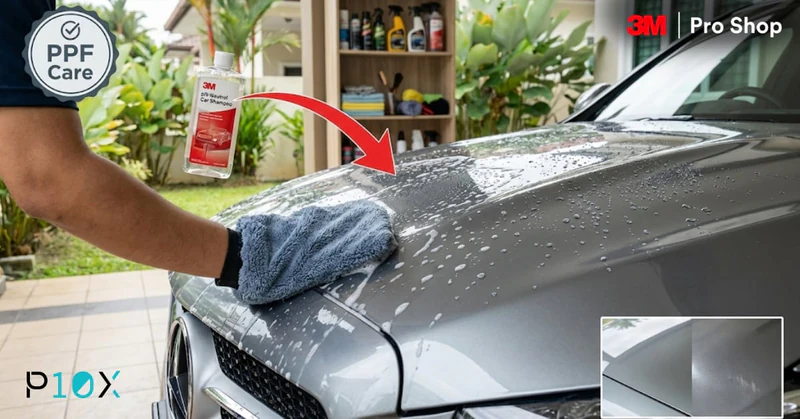
- Washing with a neutral shampoo. A car shampoo labelled pH neutral, meaning neither acidic nor alkaline, and a soft wash mitt clean off what is left.
- Rinsing and drying. Rinsing well, then drying with a clean, soft microfiber towel, stops water spots forming.
- Checking the spot and edges. Looking at the spot from a few angles shows whether anything is left. 3M's guidelines also suggest checking nearby film edges for lifting after a wash.
A pressure washer is fine for the rinse if it stays within 3M's limits: a nozzle of at least 40 degrees with a tip guard, pressure at or below 80 bar, water at or below 60°C, and at least 30 cm between the nozzle and the car. The spray should hit the surface straight on, never the film edges at a shallow angle.
Strong acidic, alkaline or alcohol-based cleaners can damage PPF. Abrasive pads, stiff brushes, rubbing compounds and dry paper towels should stay off the film too. Water, a soft wet cloth and a suitable shampoo are gentler, and they are the same basics used for maintaining PPF on your car. Fingernails and plastic scrapers are tempting on a dried crust, but they can scratch the film.
For a fresh spot, you can wet a microfiber cloth with plain water or a PPF-safe detail spray, a spray cleaner made for film. Leaving the wet cloth over the spot for a short time softens the mess so you can lift it away, then rinse the area.
3M's guidelines warn against abrasive polishes, rubbing compounds and dyed wax on the film. Even a detail spray can drag grit across the film if you follow it with a dry wipe before the crust has softened. The cloth needs to be wet too, not just the spot.
Is it residue, a mark or damage?
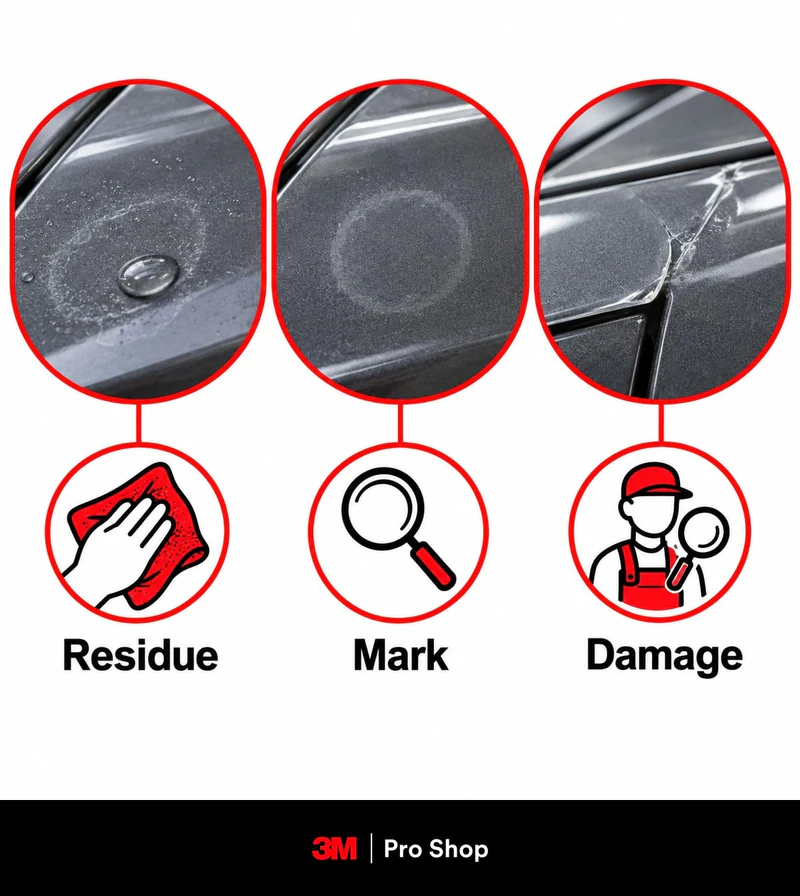
After cleaning PPF, residue may move or soften when wet again. A lasting mark stays visible after a second careful clean. Cracks, raised edges, bubbles or tears suggest film damage. Another gentle soak may clear residue, while a persistent mark or damaged film needs an installer's inspection.
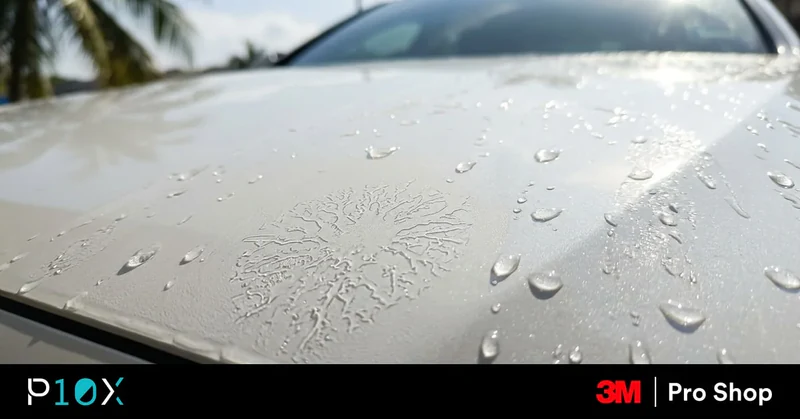
Marks from droppings can look similar to water etching on PPF, especially on dark cars. Water etching tends to show as many small rings across a panel. A dropping mark is usually a single patch where the mess sat.
Residue. A faint film or chalky outline that moves when you wet it again. This is leftover material. Another soak and lift, followed by a neutral shampoo wash, usually clears it.
A lasting mark. A dull ring, cloudy patch or outline that stays the same after a second careful clean. This is a mark on the film surface itself. Stronger chemicals or abrasives can make it worse, so this is the point where it is worth asking your installer to look at it.
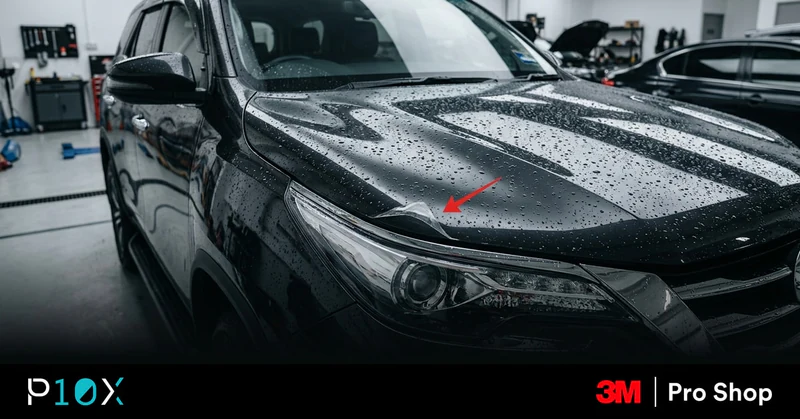
Damage. A crack, raised edge, bubble or tear in the film. This needs a professional look, because the film may need repair or panel replacement.
Why self-healing does not remove stains
Self-healing helps light surface scratches in PPF recover with heat. It is not designed to remove stains, so a dull ring after cleaning is not the same problem as a light wash scratch. A film with a mark on its surface can still be protecting the paint underneath.
Some owners hope self-healing will make a dull ring disappear, and when the ring stays, they assume their PPF did not self-heal after a clean. Before trying heat, it helps to work out whether you are looking at a scratch, leftover residue or a stain.
A ring left where droppings sat may be a stain rather than a scratch. A light scratch on the film does not mean the paint underneath has been affected. Your installer can inspect what remains after gentle cleaning before you try heat or another treatment.
3M PPF offers scratch resistance, self-healing and hydrophobicity, meaning water tends to bead on the surface. They help protect the car and make the surface easier to keep clean, but none of them removes a stain or saves you from cleaning. Water still beading on the panel also does not tell you whether a ring will fade once it dries. A stain still needs a gentle clean and, if it stays, an inspection.
Cleaning new PPF in the first 72 hours
New film needs time to settle, which is what installers mean by PPF curing time. 3M's guidelines say to wait at least 72 hours before washing the car. Droppings still need gentle spot cleaning with plain water and a soaked cloth during that wait, rather than a full wash.
For a spot clean during those first three days, stick to:
- Plain water sprayed on the spot to soften it.
- A soaked microfiber cloth laid over it for a while.
- A straight lift up, away from the film edges.
- A light rinse with a spray bottle, with no pressure washer.
- No rubbing near the edges and no chemical cleaners.
For example, if your installer hands the car back on Friday at 4pm, 72 hours is 3 full days from then. The earliest full wash is Monday at 4pm. If droppings land on Saturday morning, that is about 18 hours after collection, well inside the waiting window. You spot clean on Saturday with water and a soaked cloth only. The proper shampoo wash waits until Monday evening or later.
At handover, you can ask your installer which film edges need care. If you are unsure whether a mark appeared before or after spot cleaning, it is worth calling the installer.
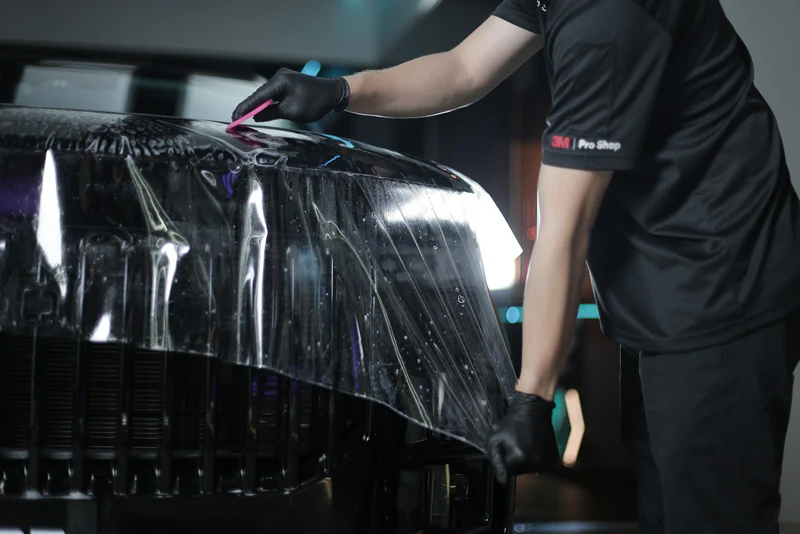
During installation, the technician works the film across the bonnet with a squeegee. Once you collect the car, the film still needs its waiting time before washing, so it is best not to rub the edges or press them down with anything at home.
When a mark needs an installer's inspection
A dull ring that remains after a second careful clean, or film with cracks, bubbles, tears or raised edges, needs an installer's inspection. That does not automatically mean replacement. Your installer can check whether you are seeing residue, a lasting surface mark or damaged film before advising what happens next.
Picking at a lifting edge can push mess further under it. A gentle rinse from above followed by an inspection is safer than trying to lift the corner, clean underneath and press it down again.
It helps to tell the installer where the droppings sat, whether they had dried and what you used to clean them. If the film is new, the time you collected the car shows whether you were still within the first 72 hours.
The inspection also tells you whether you have a surface mark or damage that may need a new panel of film. There is no need to choose a replacement film before someone has checked the surface. A ring that stays after cleaning also does not mean the paint underneath is damaged.
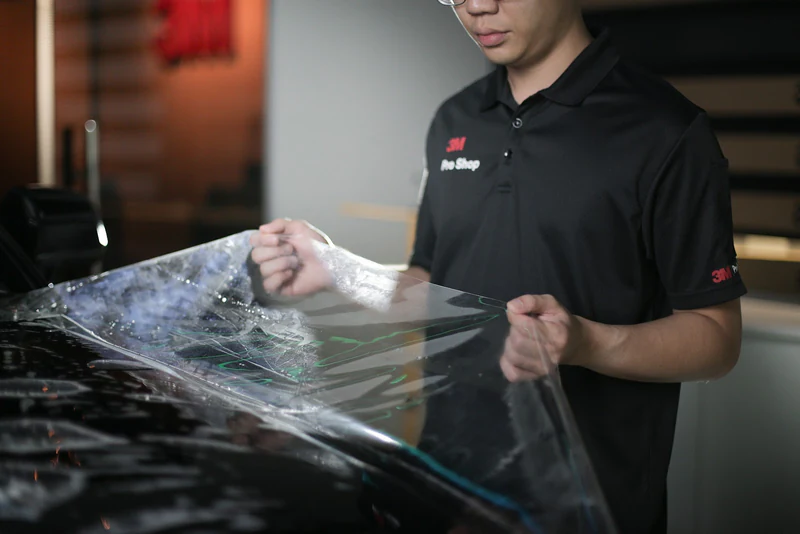
If a panel does need new film, the technician prepares a fresh sheet of clear PPF by hand before fitting it to the car. That is workshop work, not another cleaning step to try at home on the marked panel.
Keeping your film clean between washes
A spray bottle of water and clean microfiber cloths let you deal with a spot without waiting for a full wash. Covered parking helps you avoid sap and droppings under trees. Regular washing still matters too. Stain resistance and a protective top layer help, but they are no substitute for getting mess off quickly.
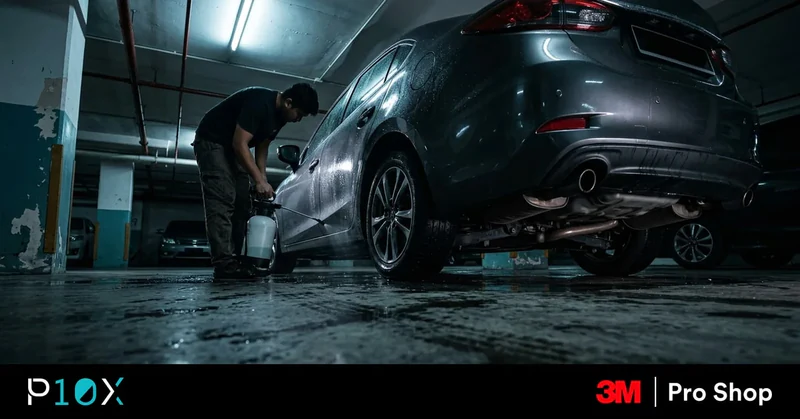
If you live in a condo and cannot use a hose, a spray bottle and two or three soaked cloths are still enough to clean one spot on the bonnet or roof, and the same approach works for washing a PPF car at a condo. Keeping the used cloth apart from the clean ones stops the same grit ending up on another panel.
3M's care guidelines suggest a suitable 3M wax on Pro Series 200 and Series 150 film within 3 to 6 months, and within 3 months on Series 50. A compatible ceramic product made for film is another option. A slick top layer makes it easier for mess to come off.
A PPF maintenance inspection lets your installer look at edges, marks and surface condition before small issues get worse. It does not replace the same-day spot clean, so droppings should not wait until your next appointment.
How to keep bird droppings on PPF from staining
The best way to stop droppings staining your film is to clean them off quickly and gently. Soaking the spot and lifting the mess, not wiping it dry, keeps grit off the surface. On film under 72 hours old, a spot clean will do until the full wash. A ring that stays or a damaged edge needs an inspection.
At 3M Pro Shop by P10X, we would always rather see a car early than after someone has tried to scrub a mark away. You are welcome to bring your car to any of our 3M Authorized Dealer locations for an inspection.
Find out the best protection for your car
Visit a 3M Pro Shop and discover the cost-effective 3M Protective Film and Window Tint

Frequently Asked Questions
Will bird droppings on PPF stain the film?
Droppings can stain PPF if left on the film. 3M's care guidelines advise cleaning droppings, tar and other organic fallout off as soon as possible to avoid staining or damage. The film protects the paint underneath, but the film surface itself can still mark.
Can PPF self-healing remove a stain from droppings?
Usually not. Self-healing helps light surface scratches recover with heat. It is not made to remove stains. If a dull ring stays after a gentle clean, it is worth asking your installer to inspect it.
Is a detail spray safe to use on PPF?
A PPF-safe detail spray is fine on fresh, soft mess if your cloth is soaked and you lift instead of rub. For dried crust, soaking the spot with water first lets it soften all the way through.
Can I use a pressure washer to remove droppings from PPF?
A pressure washer can rinse PPF if you stay within 3M's limits. That means at least a 40 degree nozzle, no more than 80 bar, at least 30 cm away, and never aimed at the film edges. In the first 72 hours after installation, a pressure washer should not be used at all.
What if droppings get under the edge of the PPF?
Picking at the PPF edge can push droppings further under the film, so a gentle rinse from above followed by an inspection is the safer route. A lifting edge needs an installer's attention.
Does a stain on PPF mean the film needs replacing?
A stain on PPF does not always mean the film needs replacing. Your installer will check whether the area has residue, a lasting surface mark or damaged film, and advise on the next step. Replacement is only one possible outcome.
How soon after PPF installation can I clean off droppings?
Droppings on newly installed PPF can be spot cleaned straight away with water and a soaked cloth. Shampoo and a full wash should wait until at least 72 hours after installation.