✧ Key Takeaways
- Check what the mark actually is before you polish PPF. Dirt, stains, scratches and damage need different fixes.
- 3M's care guidelines rule out abrasive polishes, rubbing compounds and wax with dyes on its film.
- Use a 3M wax or 3M ceramic product made for film, and test any other product on a hidden spot first.
- Let warmth and time help light scratches on self-healing film before you consider anything stronger.
- It is worth asking your installer before a machine polisher touches the film.
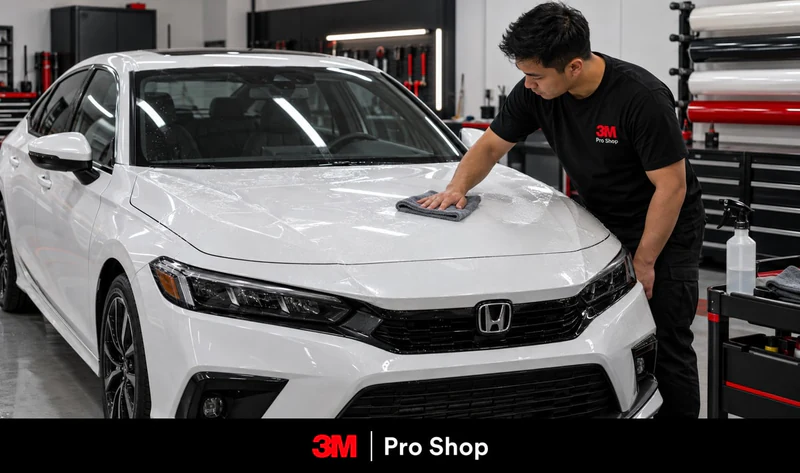
If you polish PPF (paint protection film) the way you polish paint, you can wear away its clear top coat. That is why 3M's care guidelines rule out abrasive polishes and rubbing compounds on 3M film. Maybe your bonnet looks a little dull one day, with light swirls showing under the carpark lights, and a polish feels like the obvious fix.
A dull patch can usually be fixed without polishing. Most dull film comes back with a proper wash, some warmth and the right wax.
Which products wear down PPF?
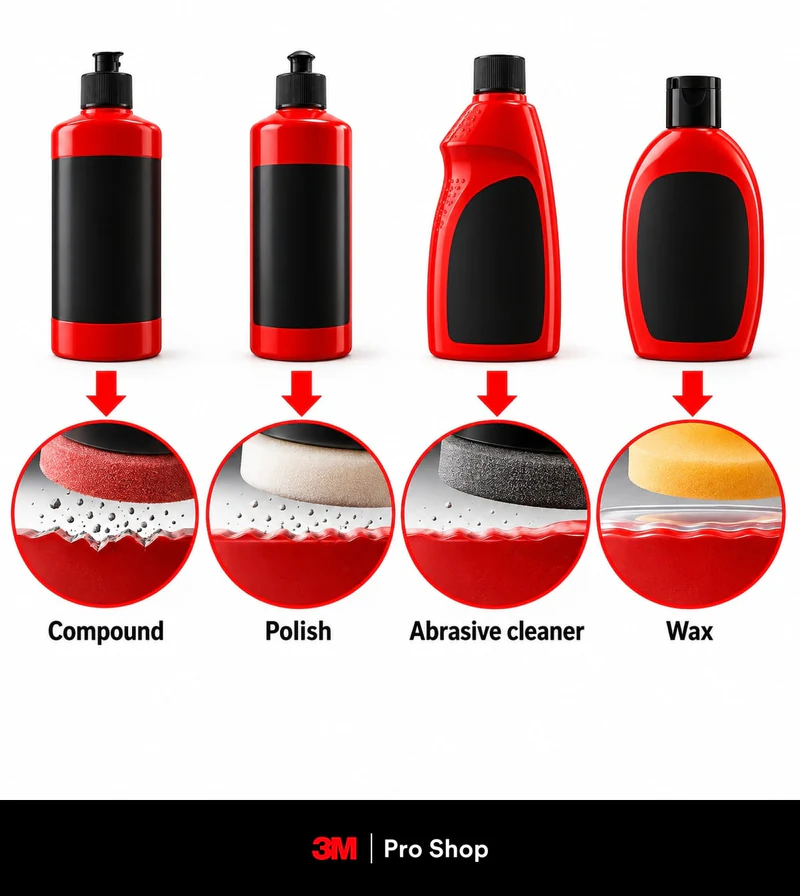
Compound, polish and most cleaner waxes contain abrasives that remove a thin layer from the surface. Non-abrasive wax and sealant sit on top instead. On paint, removing material can clear swirls. On PPF, it thins the clear top coat that protects the film, so the product's contents matter more than its name.
Compound contains coarse abrasives that cut away surface material to remove deeper defects in paint. On film, those particles cut into the top coat. Polish uses finer abrasives to refine a surface and remove light swirls. A bottle labelled “light” or “finishing” can still work by removing a small amount of material.
Cleaner or cleanser wax often contains mild abrasives or chemical cleaners to strip old wax and grime. Many people use it without realising it may be abrasive. A “one step” product cleans, polishes and waxes in one go, so it is not the same as a plain protective wax. Words such as cut, correct, compound, polish or cleaner on a label usually mean the product is abrasive.
Non-abrasive wax and sealant do not remove any material. Some waxes contain dyes to hide swirls on coloured paint, which 3M's care guidelines advise against on film. Put simply, anything abrasive cuts into the film's top coat, while a suitable wax just sits on top of it.
What does a dull patch mean?
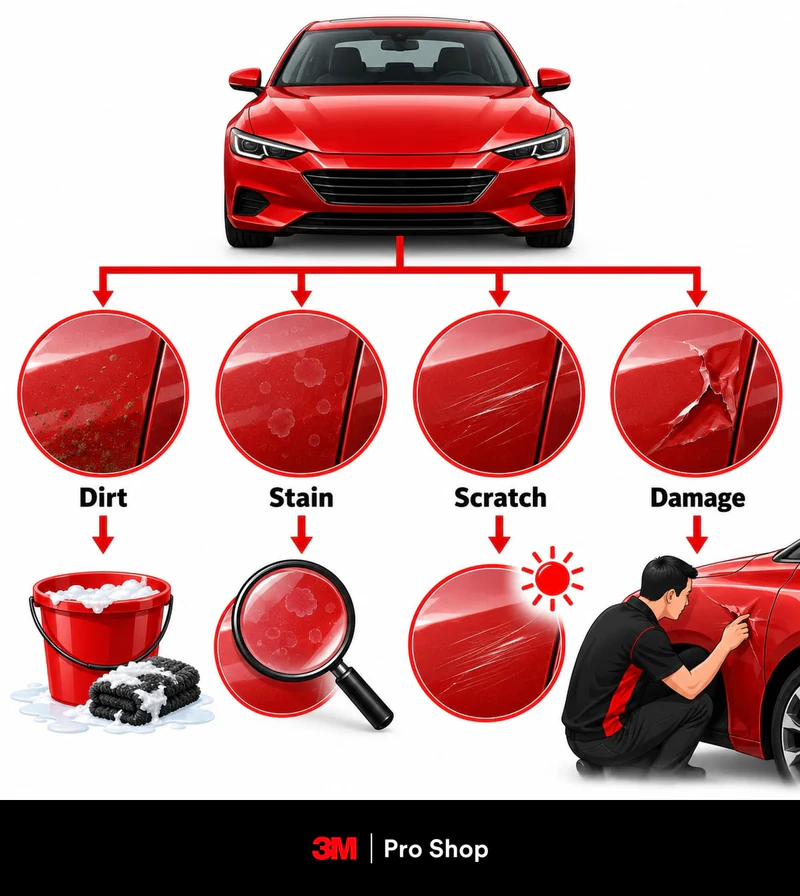
Most dull patches on PPF are not a polishing problem. They are usually dirt, a water mark or light wash scratches, and each has a gentler fix than an abrasive. The causes below run from most common to least common, and real damage is the one that always needs an installer.
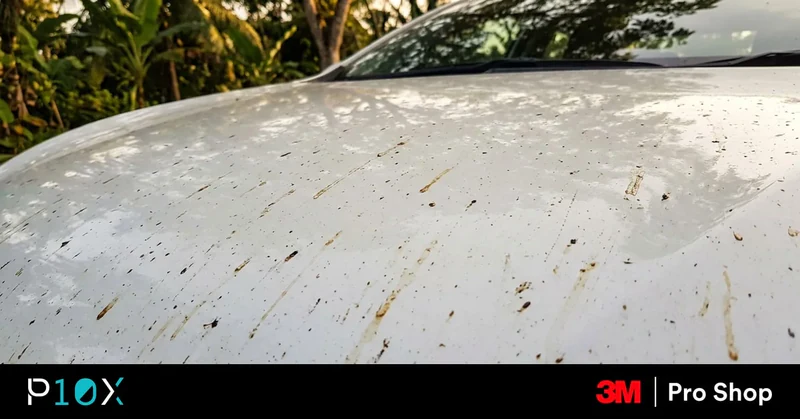
Dirt. Traffic film, dust and old wax residue often look like haze. A proper wash with pH-neutral shampoo and a good rinse is the first thing to try. A dirty panel can look worn even when the film underneath is still clear, and if the patch disappears after washing, there was nothing to correct.
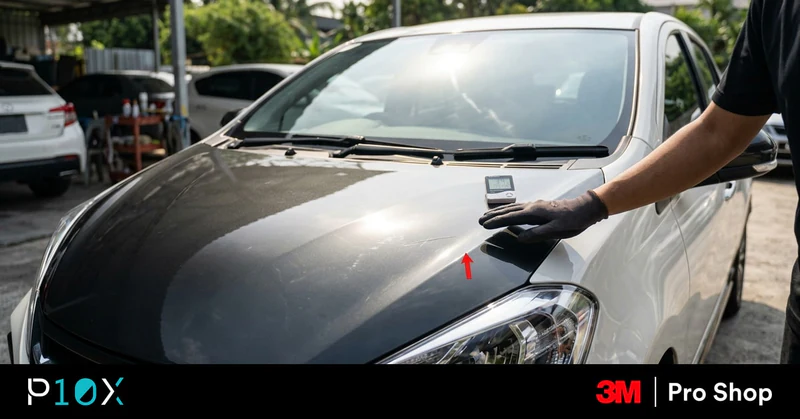
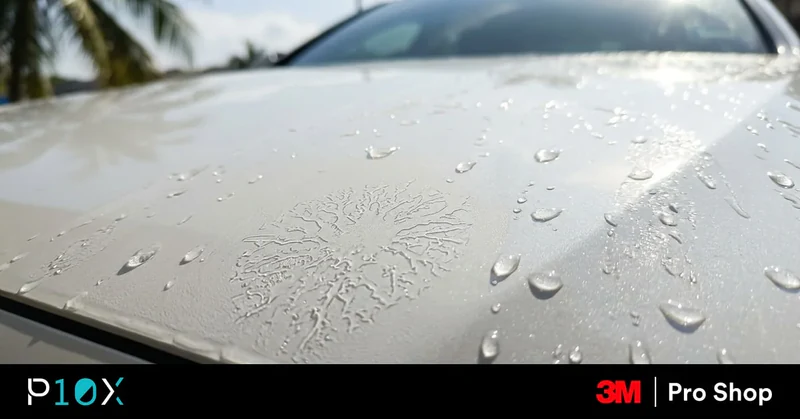
Stains or water spots. Spots that remain after washing may be water marks or contamination. Rings that stay may be water etching on PPF, left by water drying on the film. Polishing is not the first fix here. If rings are still there after a proper wash, an installer can check them, because a stain needs different treatment from a scratch.
Light scratching. Fine lines from wash mitts or brushes are different from deposits sitting on the surface. Self-healing film may recover from light surface scratches with warmth. If the mark fades after washing or warming, it was most likely a light scratch. If it stays the same, it may need an installer to look at it.
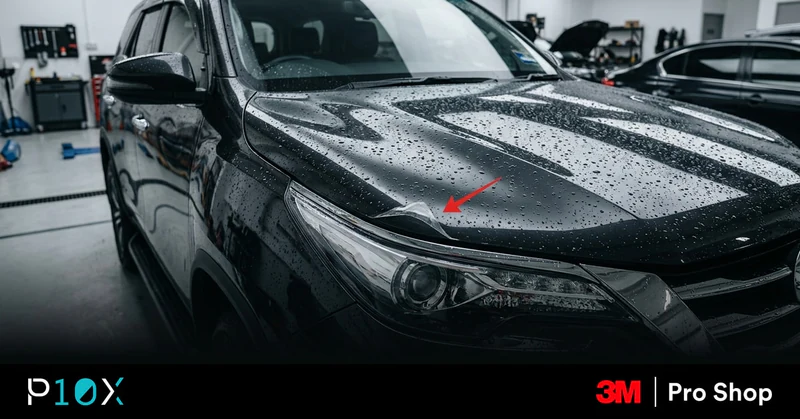
Damage. Deep scratches, cuts, lifting edges, cracking and bubbles need an installer. Polishing will not fix them and may make them worse.
Can warmth remove light PPF scratches?
Light surface scratches on self-healing PPF such as Pro Series 200 can recover with warmth. Warm water or time in the sun can help, without removing film. Deep marks, stains and damage will not disappear this way, and scratches in the paint under the film cannot heal through the film above them.
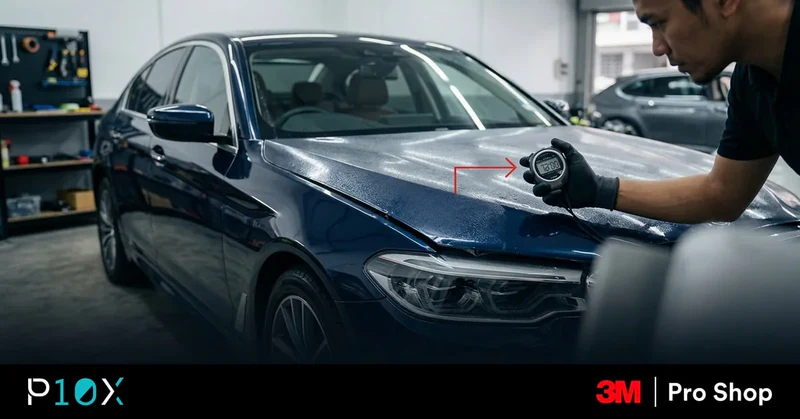
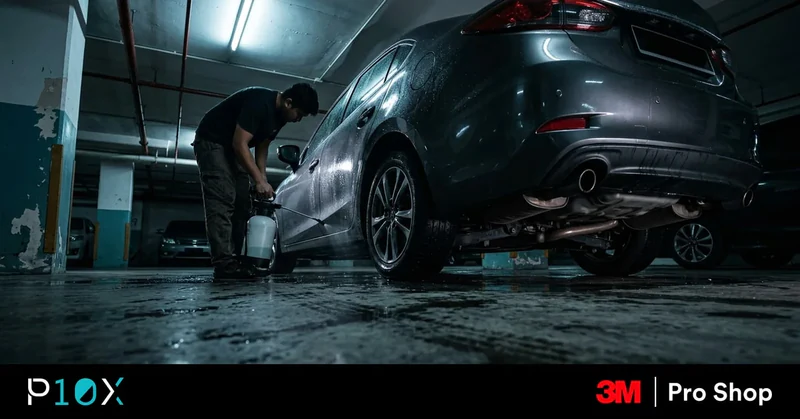
Fine wash lines can show up under carpark lights even when a panel looks clear in daylight. On black or dark paint, those light marks are easier to spot. Seeing them clearly does not mean you need an abrasive product. What matters is whether they are light scratches on self-healing film or something else.
Parking in the sun for a while, or rinsing the panel with warm water, often helps those light surface scratches. Warmth needs time, so it is worth checking again the next day to see whether the lines have faded, rather than reaching for a polish straight after a wash. If lines remain the next day, there may be another reason why your PPF has not self-healed. A small mark is not always a light scratch, though. A stain or deeper mark can look tiny too, and an installer can tell you which one you have.
How to clean and protect 3M PPF
3M's PPF care guidelines rule out abrasive polishes, rubbing compounds and waxes with dyes. For gloss film, the alternatives are proper washing, the recommended wax schedule, or 3M ceramic products made for film. Other waxes need a hidden-area test before use across the car, while matte film needs separate care.
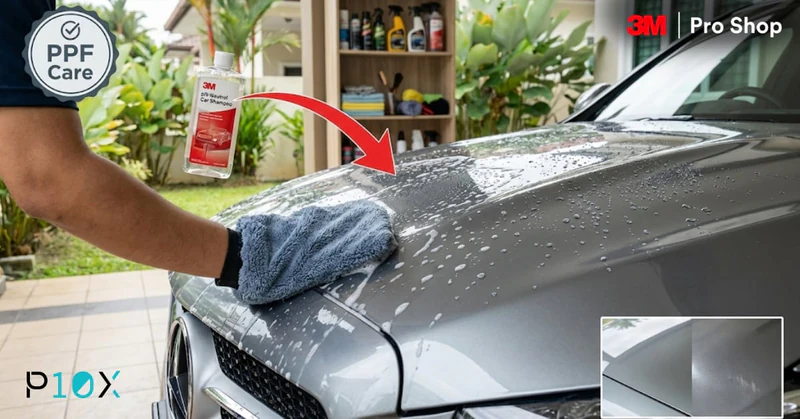
A hand wash with pH-neutral shampoo and a soft mitt, done in the shade, or a touchless wash can clean the film without polishing it. Drying promptly with a clean towel helps too. 3M Perfect-It Show Car Paste Wax makes the surface slippery so dirt and grime wash off more easily. 3M's care guidelines also mention that liquid wax can help prevent water spots.
For Pro Series 200 and Series 150, the guidelines specify 3M Perfect-It Show Car Paste Wax within 3 to 6 months. For Series 50, the window is within 3 months. If Pro Series 200 was installed on 1 January, that means the first wax falls between 1 April and 1 July. Series 50 installed on the same day is due by 1 April. Setting a phone reminder when you collect the car helps, because regular waxing does far more for the film than polishing.
3M Ceramic Coating or Ceramic Boost Spray can add gloss and water beading on top of the film. A coating does not replace the self-healing PPF underneath. If you want to use another wax, it is worth testing it on a small hidden area and checking the result after a few days before using it on the whole car.
For pressure washing, 3M's guidelines require a nozzle of at least 40 degrees with a tip guard, no more than 80 bar, water no hotter than 60 C and at least 30 cm between the nozzle and panel. Spray must hit straight on, never at the film edges from a shallow angle. 3M also lists strong alkaline, acidic or alcohol-based cleaners, abrasive pads and brushes as things to avoid.
Tar and other sticky residue should come off as soon as possible because 3M's guidelines warn they can stain or damage the surface. 3M PPF protects paint against road debris and contamination, but the film's own surface still needs looking after. Wax only sits on that surface. It is no substitute for the film when it comes to small stones and road debris.
Why do detailers recommend polishing PPF?
Some detailers recommend polishing PPF because films use different top coats, some sellers make polishes meant for film, and skilled professionals sometimes do light correction on certain films. Results depend on the film's condition too. For 3M film, its own care guidelines still rule out abrasive polishes and rubbing compounds.
Online answers go both ways. One detailing brand's guide recommends a light finishing product, another says never to polish film, and a car care retailer sells a polish made for film. We came across a detailing forum thread where an owner polished film that had already gone cloudy and made the haze worse. That often happens when an abrasive goes onto a top coat that is already worn.
Not every film brand uses the same top coat. A method that one film tolerates may not suit another, even when both products are described as PPF. Advice written for one film is often shared as if it applies to all of them. A seller may also be recommending a polish it sells. That does not make the advice wrong, but it is a good reason to check that the product suits your film.
Some experienced professionals do light correction on certain films. Results depend on the film, product, pad, machine and person using them. A trained detailer may get a good result where an owner with a heavy hand does not. None of that means a machine polisher is safe to use on any film at home.
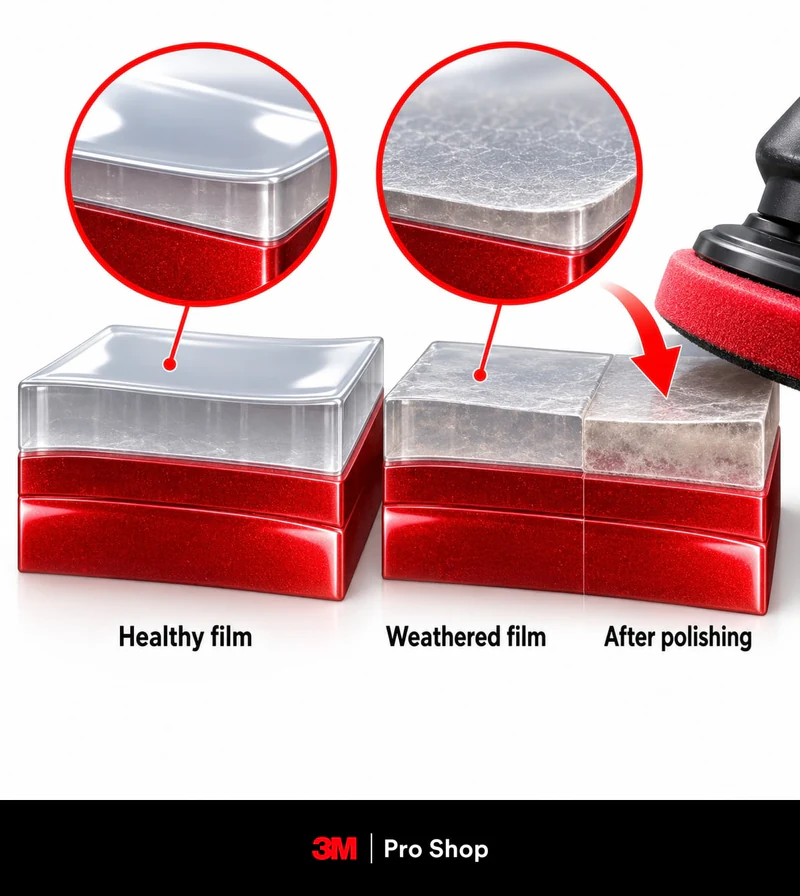
Healthy film with light wash marks is different from weathered film. Polishing an old top coat can expose a duller layer below. On weathered film, a polish thins a surface that has already worn down, which is why copying a successful correction on another car can leave your panel looking worse.
When does PPF need professional attention?
An installer should check PPF when haze survives washing and warmth, when marks may be under the film, or when edges lift, bubbles appear or the film cracks. Matte film should also be checked before any product goes on it. If the top coat cannot recover, replacing that panel's film may make more sense than a heavier polish.
Haze left after a full wash and warm water may be ageing of the top coat, a stain or product residue. Lifting edges, bubbles and cracks are film or installation issues rather than marks to polish away. It helps to tell the installer what you have already tried, so the same patch is not treated as ordinary dirt again.
Matte Pro Series 200 should never be polished or waxed with gloss products, because they change its finish. Matte film is meant to look flat, so you cannot judge a dull patch on it by how glossy it looks. A product made to add gloss will not keep that matte finish.
Dullness that will not wash off does not tell you which layer the problem is in. An installer can tell you whether a mark sits on top of the film or in the paint under it, and a PPF maintenance inspection can answer that before you agree to correction or replacement.
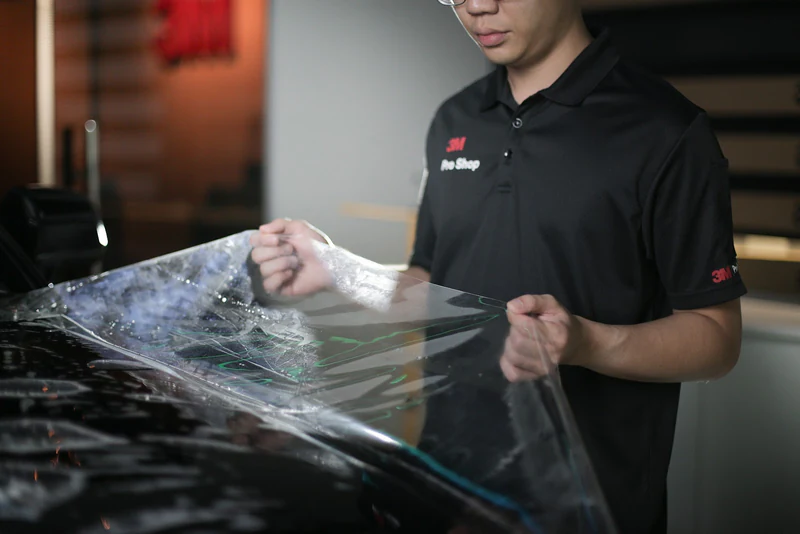
If replacement is needed, a technician prepares a new sheet of PPF and holds it above the panel before smoothing it onto the surface.
What happens when PPF needs replacing?
Replacing damaged PPF means a professional removes the old film, prepares the paint and fits new film. It is not simply a stronger way to polish the old surface. Any marks already in the paint need attention before new film goes on, because products used above the film cannot reach them afterwards.
If your car showed swirls soon after fitting PPF, they may be new car swirl marks that were already in the paint. Removing marks from the top of the film would not remove those underneath it. That is worth knowing before you pay for work on the wrong layer, or expect new film to fix marks that are in the paint itself.
Old film comes off with a steamer or heat gun, and that is a professional job. Before new film goes on, 3M's installation guidelines call for proper paint preparation. Any ceramic coating on the paint has to be removed first by an authorised paint correction specialist or detailer.
Preparation continues with 3M General Purpose Adhesive Cleaner and a non-ammonia glass cleaner. 3M's preparation sequence then includes claying the panel, a final wipe and inspection before the film is laid. These steps happen on bare paint during replacement work, not on your existing PPF during a normal wash.
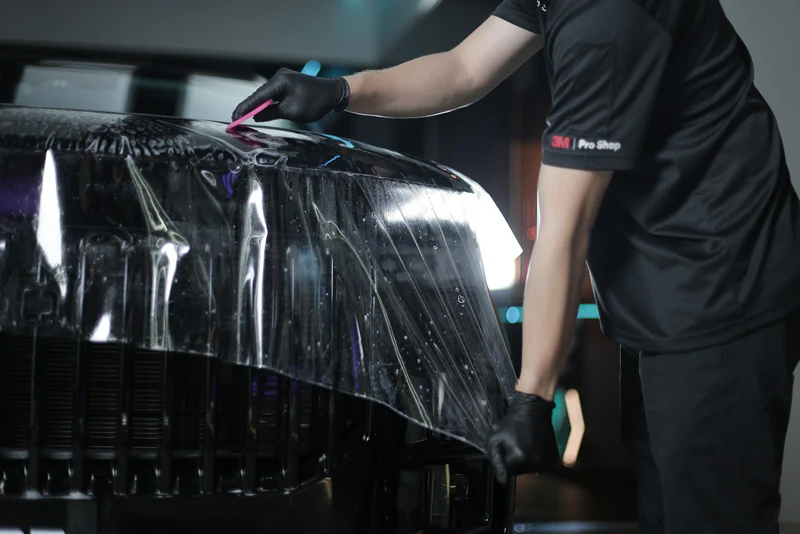
Once preparation is complete, an installer lays the clear film onto the panel and uses a squeegee to smooth it over the surface.
Which PPF panels get which marks?
Different panels pick up different marks, so what to try first depends on where the dullness is and what it looks like. Bonnet and roof film take sun and water spots, front bumper film collects sticky residue and road grime, and film around door handles picks up fine scratches from fingernails and finger rings.
| Panel | Common cause of dullness | First step |
| Bonnet | Water spots, sun, contamination | Washing, then checking for rings |
| Front bumper | Sticky residue, road grime, chips | Gentle soaking and washing |
| Fenders | Road film, light wash marks | Washing, then warm water for scratches |
| Side mirrors | Hand contact, wash marks | Gentle wash, warmth |
| Door handles | Scratches from fingernails and finger rings | Warm water and time |
| Door step and sills | Shoe scuffs, grit | Washing with a soft mitt |
| Roof | Sun exposure, water spots | Washing and drying in shade |
A ring on the bonnet after rain is not the same problem as grit along a door sill. The ring may stay after washing and need checking for water etching. The grit needs a gentle wash before you can tell whether there is a scratch underneath. Where the mark is gives you a clue, but it does not prove the cause.
None of these panels needs polishing as a first step. If washing and warmth do not clear the mark, you can tell the installer which panel is affected, whether the mark feels or looks like damage, and what you have already used on it. Photos of the patch before and after washing also help show what changed, without you needing to try another product first.
Polish PPF or have it checked?
3M PPF should not be corrected at home with abrasive polishes or rubbing compounds. Washing, warmth for light scratches and the right protection are gentler ways to bring it back. If a patch stays, the film looks damaged or you are unsure about the finish, it is worth having it inspected before anyone removes more of the top coat.
At 3M Pro Shop by P10X, we would rather check a dull patch early than replace film after an aggressive polish. You can visit any of our 3M Authorized Dealer locations to have the film checked.
Find out the best protection for your car
Visit a 3M Pro Shop and discover the cost-effective 3M Protective Film and Window Tint
Frequently Asked Questions
Can you polish PPF at home?
We do not recommend polishing 3M PPF at home. 3M's care guidelines advise against abrasive polishes and rubbing compounds because abrasive particles damage the surface. It is safer to ask your installer before trying any correction.
Will swirls on PPF self-heal?
Light surface scratches on self-healing film such as Pro Series 200 can recover with warmth. Deeper marks, stains and damage will not. If swirls are under the film, they are in the paint.
Is wax safe on PPF?
Yes, if it is the right wax. 3M's care guidelines recommend 3M Perfect-It Show Car Paste Wax and advise against wax with dyes. For any other wax, 3M requires a hidden-spot test before use across the car.
Can I use a dual action polisher on PPF?
We do not recommend using a dual action polisher on 3M PPF at home. Even a gentle machine with an abrasive product removes some of the top coat. A professional should look at the panel first.
Can I polish matte PPF?
No. Polishing or glossy waxes can change the matte finish. Care products made for matte film are the safe choice.
Can a ceramic coating replace polishing?
A ceramic coating does not remove marks from PPF. On gloss film, 3M Ceramic Coating or Ceramic Boost Spray can add gloss and water beading. It sits on top of the film instead of removing any of it.