
How to Maintain PPF on Car Malaysia with the Right Products and Safe Cleaning Methods

Learning how to maintain PPF on car Malaysia properly starts with using the right products and techniques. Paint protection film is an investment that requires specific care to maintain its clarity, hydrophobic properties, and self-healing capabilities. Using the wrong products or methods can scratch the film, reduce its protective qualities, or even void your warranty. This guide provides clear, practical recommendations for cleaning your 3M PPF safely and effectively in Malaysian conditions.
Malaysian drivers face unique challenges. Tropical heat, heavy rain, urban pollution, and frequent exposure to contaminants like bird droppings and tree sap all affect PPF. The products and techniques you use must address these conditions while preserving the film's performance. Follow these recommendations to keep your PPF looking new for years.
Essential Cleaning Products for 3M PPF
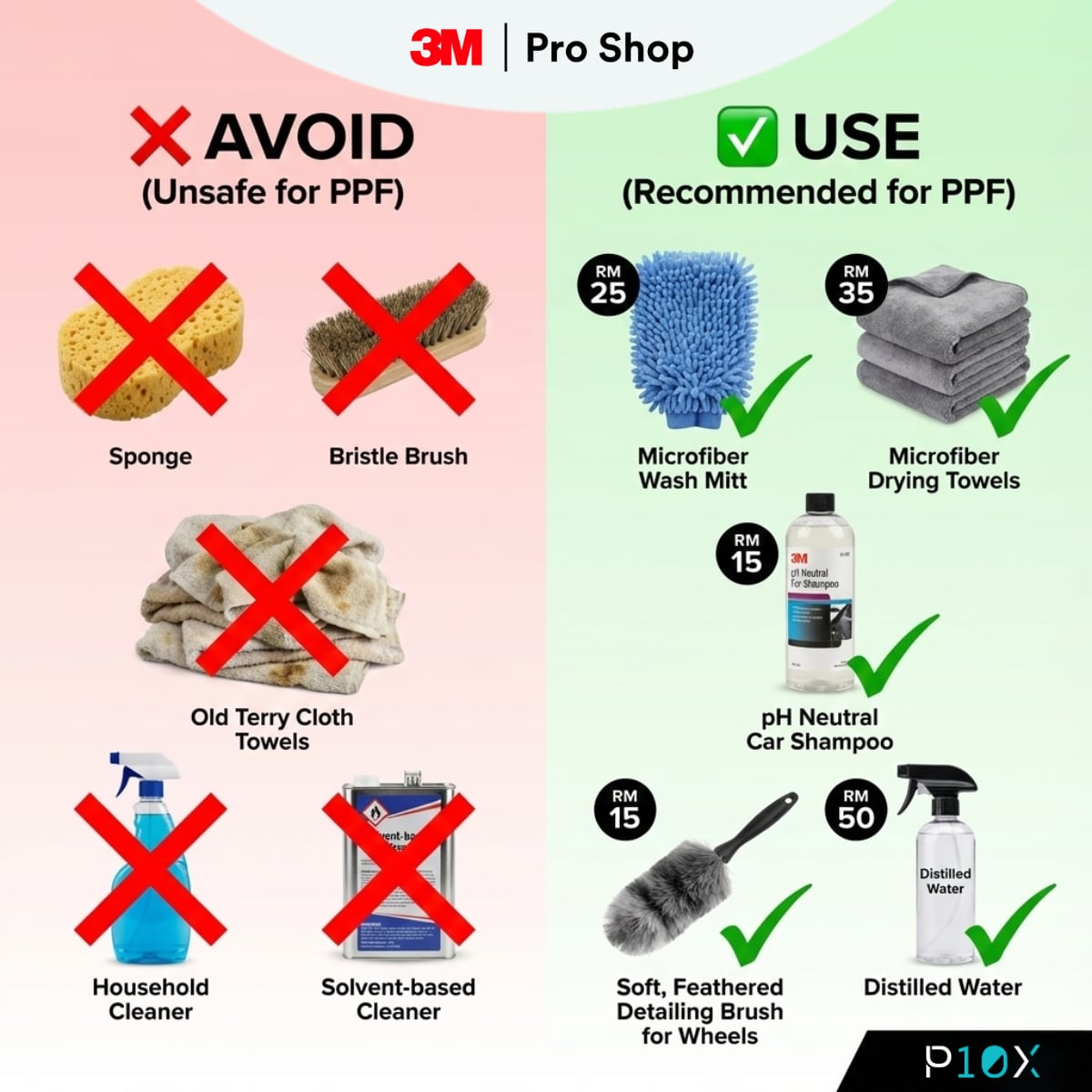
pH-neutral car shampoo
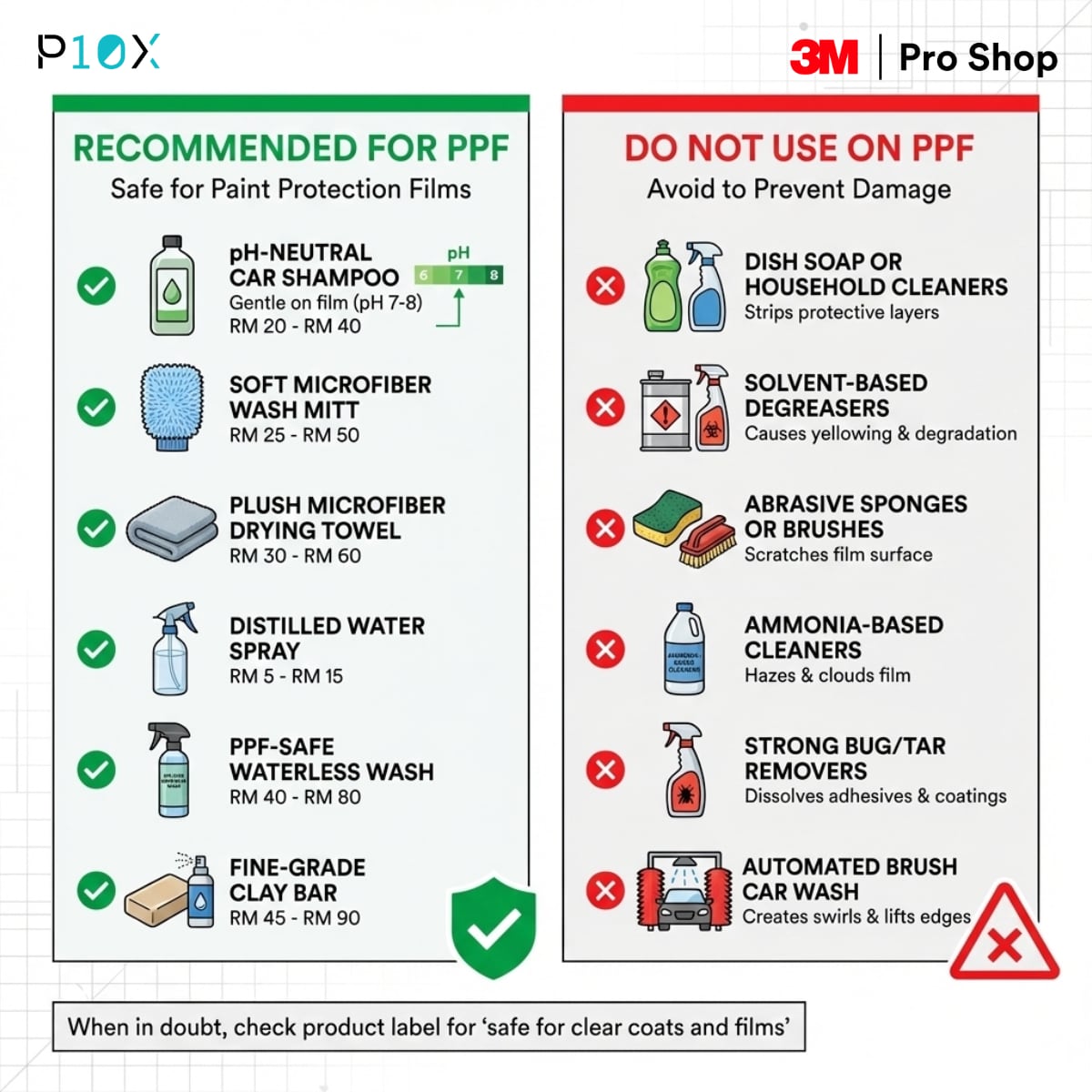
The foundation of proper PPF care is a pH-neutral car shampoo. pH-neutral means the product has a pH level between 6 and 8, which is gentle on both the film and your car's paint. Acidic or alkaline cleaners can break down the PPF's protective top coat, leading to yellowing, reduced hydrophobic properties, and faster degradation under UV exposure.
Look for products specifically labeled as safe for clear coats, ceramic coatings, or films. Many premium car care brands offer pH-neutral formulas. In Malaysia, products from brands like Meguiar's, Chemical Guys, and Gtechniq are widely available and suitable for PPF. Check the label to confirm pH neutrality before purchase.
Avoid dish soap, household cleaners, or any product that warns against use on delicate surfaces. These often contain degreasers or harsh surfactants that strip away the film's protective layer. Even if they clean effectively in the short term, they cause long-term damage that may not be covered by warranty.
Microfiber wash mitts and towels
Quality microfiber products are non-negotiable for PPF care. Use a soft, plush microfiber wash mitt for washing. The mitt should have a thick pile that traps dirt particles away from the film surface. Thin or worn mitts can drag contaminants across the PPF, causing scratches.
For drying, use a separate set of large, plush microfiber drying towels. These should be dedicated to PPF and not used for other tasks like interior cleaning or wheel detailing. Contamination from brake dust or interior products can transfer to the film and cause scratching.
Replace your wash mitts and towels regularly. After 10 to 15 washes, microfiber products lose their effectiveness. Wash them separately from other laundry using a gentle detergent without fabric softener. Fabric softener coats the fibers and reduces their absorbency and dirt-trapping ability.
Distilled water spray
Keep a spray bottle of distilled water in your car for quick spot cleaning. Distilled water is free of minerals and impurities that can leave spots on the film. Use it to wipe away fresh contaminants like bird droppings, insect remains, or light dust before they bond to the surface.
Alternatively, use a waterless wash product designed for PPF or ceramic coatings. These products contain lubricants and cleaning agents that lift dirt safely without scratching. They are convenient for quick clean-ups when you do not have access to a full wash setup.
Clay bar or detailing clay
Automotive clay bar removes embedded contaminants that regular washing cannot. Twice a year, use a fine-grade clay bar or synthetic clay mitt to gently clean the PPF surface. This removes bonded pollutants, industrial fallout, and light overspray without damaging the film.
Use a dedicated clay lubricant or a waterless wash product as a lubricant. Never clay on a dry surface. Glide the clay gently across the film in straight lines. Fold and reshape the clay frequently to expose a clean surface. After claying, wash the car again to remove any residue.
For a detailed breakdown of care mistakes to avoid, see our guide on paint protection film care tips Malaysia.
The Two-Bucket Hand Washing Method
Why two buckets matter
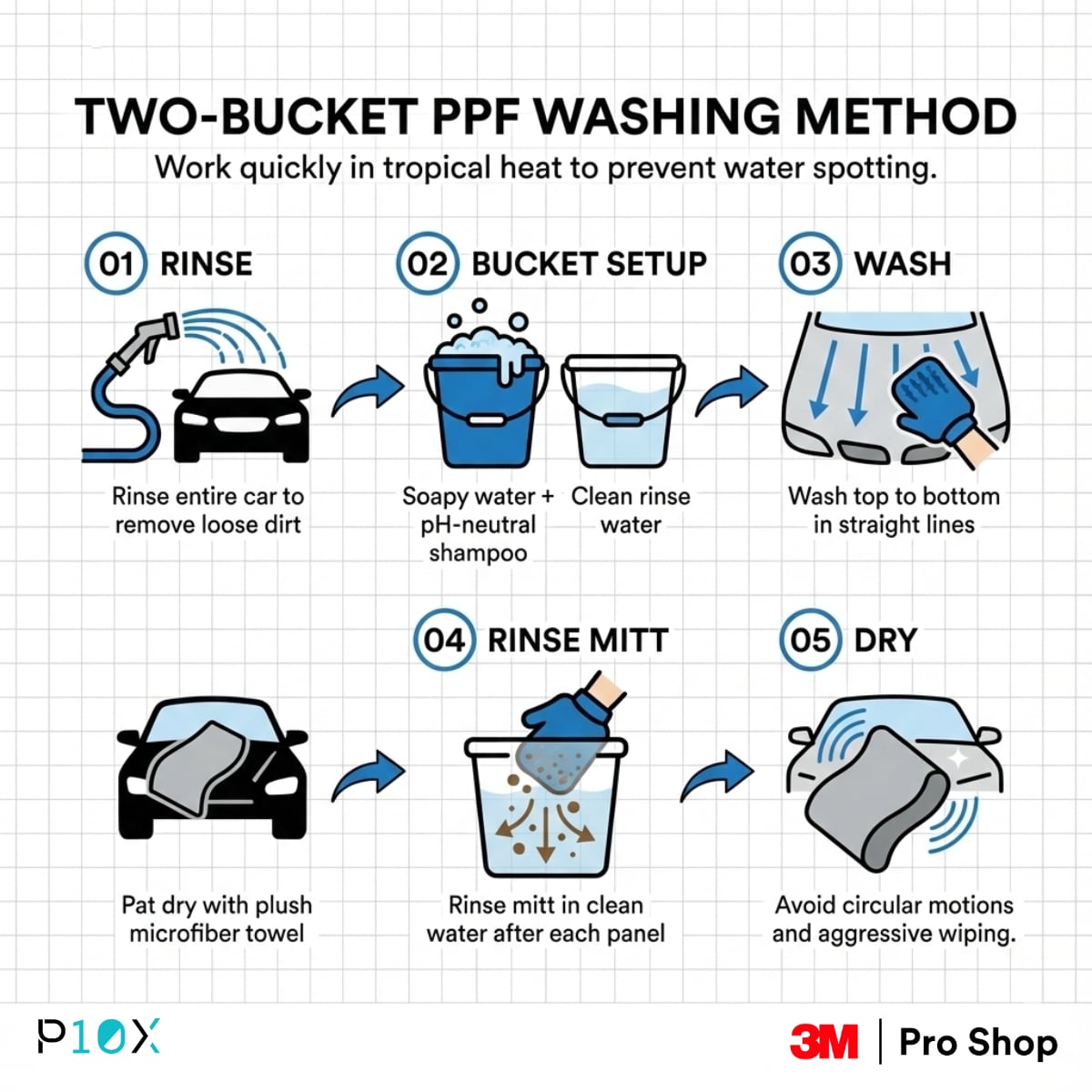
The two-bucket method is the safest way to wash PPF. One bucket holds your soapy wash solution. The other holds clean rinse water. After each pass with the wash mitt, rinse the mitt in the rinse bucket before dipping it back into the soapy water. This prevents dirt from your previous pass from contaminating the clean wash solution.
Without this separation, dirt accumulates in the wash bucket. Every time you reload your mitt, you pick up that dirt and drag it across the film. Over hundreds of washes, this creates micro-scratches and swirl marks that dull the PPF's finish.
Step-by-step washing technique
Start by rinsing the entire car with clean water to remove loose dirt, dust, and debris. Use a hose or pressure washer on a low setting. Keep the nozzle at least 30 cm from the film and use a wide fan spray.
Fill one bucket with water and add the pH-neutral shampoo according to the product instructions. Fill the second bucket with clean water only. Dip your microfiber wash mitt into the soapy water and begin washing from the top of the car, working your way down.
Wash in straight lines, not circular motions. Circular motions can create visible swirl marks if any contaminants are present. Straight lines minimize visible scratching. Work on one panel at a time. After completing a panel, rinse the mitt thoroughly in the rinse bucket, wring it out, and reload with soapy water.
Rinse the car thoroughly after washing to remove all soap residue. Work quickly so the soap does not dry on the film. In Malaysia's heat, soap can dry within minutes, leaving streaks or spots.
Drying without scratching
Drying is as important as washing. Use a large, plush microfiber drying towel. Pat or gently drag the towel across the surface. Do not press hard or rub aggressively. The goal is to absorb water, not scrub the film.
For best results, use two drying towels. Use the first to remove most of the water. Use the second for a final dry pass to eliminate any remaining moisture or streaks. If a towel becomes saturated, wring it out or switch to a fresh towel.
Some car owners use a leaf blower or dedicated car dryer to blow water off the film. This is safe and effective, especially around edges and panel gaps where water tends to collect. It eliminates the risk of towel-induced scratching entirely.
Frequency and Timing for PPF Cleaning
How often to wash
Wash your PPF-protected car every two weeks if you drive daily in urban areas. City traffic exposes your car to pollution, brake dust, and airborne contaminants that bond to the film surface. Regular washing removes these before they accumulate and cause staining.
If your car is parked outdoors in direct sun, increase washing frequency to once a week. Heat accelerates the bonding of contaminants to the film. Weekly washing prevents buildup and keeps the hydrophobic properties working effectively.
For cars driven less frequently or stored indoors, washing every three to four weeks is sufficient. The key is consistency. Regular light cleaning is better than infrequent heavy scrubbing.
Best time to wash
Wash your car early in the morning or late in the afternoon when temperatures are cooler. Avoid washing in direct mid-day sun. In Malaysia's heat, soap and water dry too quickly on the film, leaving streaks and spots that are difficult to remove.
If you must wash during the day, work in the shade. Wash one small section at a time and rinse immediately. This prevents soap from drying on the surface.
Never wash your car immediately after driving. Let the film cool down first. Hot surfaces cause water and soap to evaporate rapidly, increasing the risk of water spots and soap residue.
Spot Cleaning Between Washes
Quick response to fresh contaminants
Keep a small cleaning kit in your car. Include a spray bottle of distilled water, a microfiber towel, and a waterless wash product. When you notice bird droppings, tree sap, or insect remains, address them immediately.
Spray the contaminant with distilled water or waterless wash. Let it sit for 30 seconds to soften. Gently wipe with the microfiber towel. Do not rub hard. If the contaminant does not come off easily, apply more spray and wait longer.
For stubborn spots like tree sap, use hot water. Soak a microfiber towel in hot water, wring it out, and place it over the spot for a minute. The heat softens the sap, allowing you to wipe it away gently without scraping or using harsh solvents.
Fuel spills and chemical exposure
Wipe fuel spills immediately. Carry a clean microfiber towel specifically for this purpose. Petrol and diesel can stain PPF if left on the surface. Wipe once to remove the bulk of the spill, then use a second clean towel with distilled water to wipe the area again.
After washing, inspect the area for any residual staining. If you notice discoloration, visit a 3M Pro Shop for professional assessment. Some stains can be polished out if treated early.
For more guidance on maintaining your PPF between professional inspections, refer to our article on when to schedule a professional PPF check-up.
Products to Avoid
Harsh chemicals and solvents
Never use solvent-based cleaners, degreasers, or products containing bleach, ammonia, or strong acids. These chemicals break down the PPF's protective top coat and can cause irreversible damage. Even if the film looks clean immediately after use, the damage accumulates over time.
Avoid bug and tar removers unless specifically labeled as safe for PPF. Many of these products are too aggressive for film. If you need to remove stubborn bugs or tar, use hot soapy water and patience. Soak the area first, then wipe gently.
Window cleaners containing ammonia should not be used on PPF. If you need to clean the film on side windows, use a dedicated PPF-safe cleaner or plain distilled water.
Abrasive tools and materials
Do not use sponges, brushes, or towels with rough textures. Scouring pads, stiff brushes, and even some low-quality microfiber products can scratch the film. The scratches may be microscopic at first, but they accumulate over time and dull the finish.
Avoid using the same towels you use for wheels or engine cleaning. These towels pick up abrasive particles like brake dust and metal filings that can scratch the PPF. Keep dedicated towels for PPF cleaning only.
Automated brush car washes are off limits. The brushes collect dirt and debris from hundreds of cars and transfer it to your film. They also apply uneven pressure that can lift film edges. If you must use an automated wash, choose a touchless system that uses only water and foam.
For a complete list of common care mistakes, see our guide on common mistakes to avoid when caring for your PPF.
When to Seek Professional Cleaning
Signs you need expert help
If your PPF has deep stains that home cleaning cannot remove, contact a certified installer. Professional detailers have specialized products and techniques that can remove stubborn contaminants without damaging the film.
If you notice the film losing its gloss or hydrophobic properties despite regular cleaning, a professional assessment can determine whether the issue is contamination, oxidation, or film degradation. Some issues can be resolved with professional polishing or treatment.
Annual professional inspections at a 3M Pro Shop include thorough cleaning and assessment. The technician will identify any areas that need attention and can perform maintenance you cannot do at home. This annual service helps extend the film's life and maintain warranty coverage.
For guidance on professional maintenance schedules, refer to our article on how regular maintenance extends the life and warranty of your 3M PPF.
Professional polishing and treatment
Some 3M Pro Shops offer professional PPF polishing services. This removes light surface oxidation and restores the film's original gloss. Polishing should only be done by trained technicians using products and methods approved for PPF. Improper polishing can thin the film or damage the self-healing top coat.
Professional treatments can also enhance the film's hydrophobic properties. These treatments are not always necessary if you maintain the film properly, but they can be beneficial for older films or those exposed to harsh conditions.
Building a Long-Term Maintenance Routine
Maintaining your PPF is straightforward once you establish a routine. Stock your garage with the right products. Keep a small cleaning kit in your car for quick spot treatments. Schedule regular washes based on your driving conditions. Address contaminants immediately when they appear.
Document your maintenance. Take photos of your PPF regularly and note wash dates. This record supports warranty claims if issues arise and demonstrates responsible ownership when you sell the car.
The return on your maintenance effort is significant. Well-maintained PPF lasts years beyond the warranty period, continues protecting your paint effectively, and preserves your car's resale value. The small investment of time and products required for proper care pays for itself many times over.
If you want expert support, partner with a 3M Pro Shop for professional guidance and service. They can recommend specific products, answer questions about your local conditions, and provide professional cleaning when needed. Your PPF is an investment. Care for it properly, and it will protect your car for years to come.
Find out the best protection for your car
Visit a 3M Pro Shop and discover the cost-effective 3M Protective Film and Window Tint
Frequently Asked Questions
Can I use wax or ceramic coating on top of my PPF?
Yes, you can apply wax or ceramic coating designed for clear coats and films. Use a soft applicator and follow the product instructions carefully. However, 3M PPF already has a durable hydrophobic top coat, so additional coatings are often unnecessary. If you choose to add a coating, select a high-quality product and apply it correctly to avoid streaking or uneven coverage.
How do I remove water spots from PPF?
Water spots form when mineral-rich water dries on the film surface. To remove them, wash the area with distilled water and a pH-neutral shampoo. For stubborn spots, use a dedicated water spot remover safe for clear coats. Spray the product on the spot, let it sit for the recommended time, and wipe gently with a microfiber towel. Prevent water spots by drying your car immediately after washing.
Is it safe to use a pressure washer on PPF?
Yes, but use caution. Keep the nozzle at least 30 cm from the film and use a wide fan spray, not a concentrated jet. Avoid directing high pressure at the film edges where it could lift. Lower pressure settings are safer and still effective for rinsing. Never use a pressure washer during the 72-hour curing period immediately after installation.
What should I do if my microfiber towels leave lint on the PPF?
Low-quality or old microfiber towels can shed lint. Replace them with fresh, high-quality towels. Before using new towels, wash them separately without fabric softener to remove any manufacturing residue. If lint appears during drying, use a second clean towel to wipe it away. Consider using a dedicated car dryer or leaf blower to eliminate towel contact entirely.
How often should I clay bar my PPF?
Clay bar your PPF twice a year for most driving conditions. If you drive frequently on highways or in areas with heavy industrial fallout, increase to three times per year. Always use a fine-grade clay with proper lubricant. After claying, wash the car again to remove any residue, then inspect the film for smoothness. Proper claying restores the film's slickness and prepares it for any additional treatments.
Author

Fabian
He is passionate about revolutionizing the car protection services industry by bringing innovation and transparency to a traditionally opaque and often misunderstood field. His mission is to educate end users on the true benefits and importance of car protection, aiming to replace outdated practices with honest, customer-focused solutions. With a fresh approach to car tinting, paint protection film (PPF), and detailing services, he is committed to delivering a superior customer experience that sets a new standard in the market. He welcomes discussions about the future of the automotive industry and is eager to connect with like-minded professionals who share his vision for innovation, integrity, and excellence.
Experience the future of window tinting
Visit a 3M Pro Shop and discover the revolutionary Crystalline CR BLK film