
PPF over a respray: why hidden paintwork is a costly risk in Malaysia
- PPF over a respray means applying film to a repainted panel instead of original factory paint, which is common on used, recond, and accident-repaired cars in Malaysia.
- Aftermarket paint can bond weakly to the panel, so removing the film years later may lift the respray and clear coat with it, turning a film job into a repaint bill.
- The 3M paint protection film warranty does not cover paint damage caused by weak adhesion, poor preparation, or insufficient curing, so an undetected respray sits entirely on the owner.
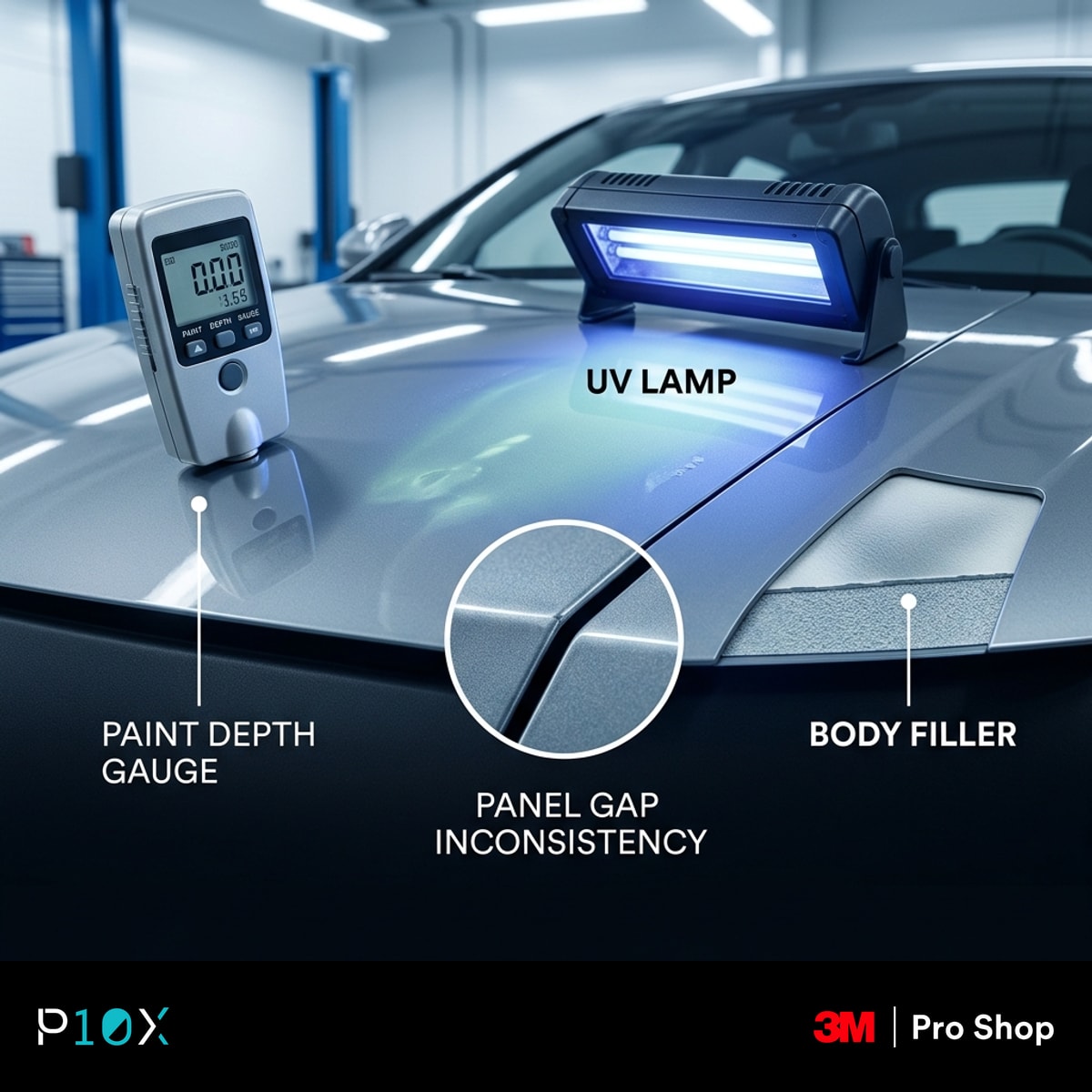
- A paint depth gauge, a UV lamp, and a check of panel gaps can flag a respray before any film is ordered, though no single micron number proves one on its own.
- A fresh repaint should cure and outgas for roughly 30 to 60 days before film, and 3M Pro Shop by P10X documents every panel first so you start from an honest baseline.
PPF over a respray means bonding paint protection film to a panel that was repainted outside the factory rather than to original paint. It is risky because aftermarket paint often holds less firmly, so when the film is removed later it can peel the respray away with it and leave you paying for a brand new panel.
This is a real and common problem in Malaysia, where many cars are used, recond, or quietly repaired after a knock. The bumper that looks perfect in the showroom light may have been resprayed by a previous owner, and you would never know until the film comes off. This guide explains why resprayed panels put your investment at risk, how an installer detects hidden paintwork before quoting, and what to do if a respray is found.
What "PPF Over a Respray" Actually Means
A respray is any paint applied to a panel after it left the factory, whether to cover a scratch, repair accident damage, or refresh a faded colour. PPF over a respray simply means the film is laid on top of that non-factory paint instead of the original layer the carmaker baked on. The film itself does not care what is underneath, but the bond between paint and panel does.
Factory paint is cured in an oven at high heat, which gives it a hard, stable finish. A respray done in a body shop usually air dries or cures at much lower temperatures, so it stays softer and bonds less firmly to the metal below. That difference is invisible from the outside, which is exactly why it catches owners out.
Why Resprayed Panels Put Your PPF at Risk
Resprayed panels are risky because paint protection film is only as reliable as the surface it sticks to. 3M film is built to bond to a sound, fully cured clear coat. When it sits on soft or weakly adhered aftermarket paint, the strong film adhesive can become the strongest layer in the stack, which is the opposite of what you want.
Fresh respray also keeps releasing solvents for weeks after it looks dry, a process called outgassing. Seal that panel under film too early and the trapped solvents have nowhere to go, which leads to bubbles, haze, and lifted edges. To understand why a clean, stable surface matters so much, it helps to read why a professional pre-installation inspection matters before you book.
How a Respray Makes Paint Peel With the Film
The real damage usually shows up at removal, not installation. PPF is designed to be taken off cleanly years later, but a strong film adhesive lifting off a weakly bonded respray can drag the paint and clear coat with it. The worst spots are bumpers, headlight surrounds, and any panel that was repainted after a collision.
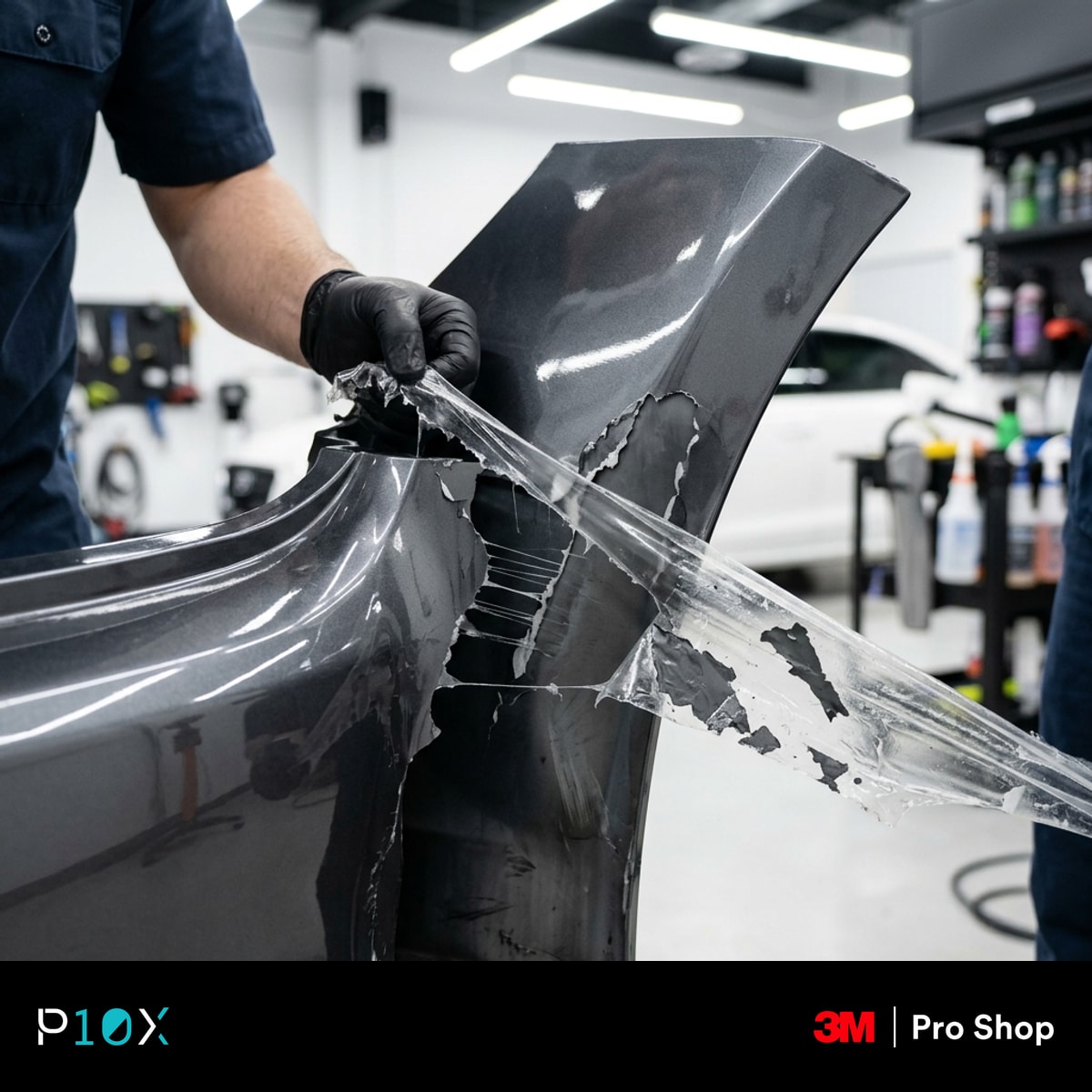
Owners in local PPF groups describe paint coming away with the film after only two or three years on repainted panels. On original factory paint this is rare. On an unstable respray it is a known risk, and once the clear coat is gone the only fix is to repaint the panel and start again.
4 Ways to Detect Hidden Respray Before PPF
A careful installer uses four checks to flag a respray before quoting, not after the film is on. None of them is perfect alone, but together they build a clear picture of which panels are original and which have been touched.
Paint Depth Gauge Readings
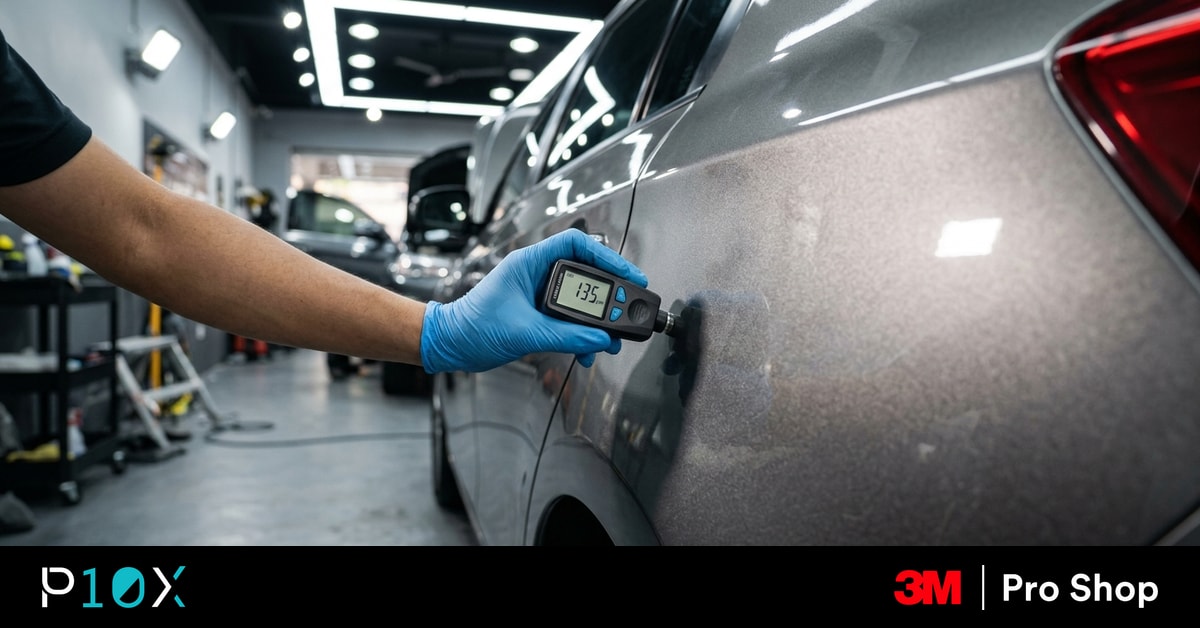
A paint depth gauge measures the thickness of the paint in microns. Factory paint usually sits in a consistent band across the car, so a panel that reads far thicker than its neighbours, or that jumps around within the same panel, points to filler or a respray underneath.
UV Inspection Lamp Check
Under ultraviolet light, factory paint and aftermarket paint often fluoresce differently. Shining a UV lamp across a panel can reveal repaint blend lines and touched-up areas that look identical in normal daylight.
Masking Lines at Panel Gaps
When a panel is resprayed, paint can creep into door shuts, around badges, and along rubber seals where the original would be crisp. Slightly rough edges or overspray at these gaps are a strong sign the panel came off the gun, not the factory line.
Body Filler and Overspray Signs
Filler used to smooth a dent sits under the paint and changes how the surface feels and sounds. A light tap, a careful feel for uneven texture, and a look for dusty overspray on trim and glass all help confirm whether a panel has had bodywork.
What a Paint Depth Gauge Reading Really Tells You
A paint depth gauge tells you how thick the paint is, not whether the car is good or bad. Original factory paint commonly falls somewhere around 90 to 160 microns, with some genuine factory high spots reaching close to 180 to 200 on certain makes. Readings well above that, or wildly uneven from panel to panel, suggest a respray or filler.

The important caveat is that there is no single magic number. Factory thickness varies by brand, model, and even colour, so a reading has to be judged against the rest of the car and the other detection checks. This is why an experienced installer looks at the whole pattern rather than one figure. For a fuller owner-side walkthrough, see how to spot hidden paint and glass issues before protection.
Who Pays When Paint Lifts Off With PPF
If paint comes off with the film on a panel that was resprayed, the cost almost always falls on the owner. The 3M paint protection film warranty does not cover paint damage caused by weak adhesion, poor surface preparation, or paint that had not cured properly. A respray you did not disclose, or did not know about, falls squarely into that gap.
This is why a written record matters. When an installer documents panel condition and you both sign off before work begins, there is no dispute later about what was original and what was already repainted. A short inspection protects both sides, which is the whole point of what to expect during a 3M Pro Shop pre-installation inspection.
What to Do When a Respray Is Detected
If a respray is found, the safe move is to wait, not to rush the film on. A fresh repaint should be left to cure and outgas, commonly around 30 to 60 days, before any PPF goes over it. That gives the solvents time to escape and the paint time to harden.

If you choose to proceed before then, do it with eyes open and a signed disclosure that the panel is going on at your own risk. Better still, get an independent pre-installation inspection that flags every repainted panel first, so you can decide with full information. A 3M Authorized Dealer such as 3M Pro Shop by P10X will document the car, explain which panels are sound, and only fit film where it will actually last, with outlets listed at 3mproshop.com.my/locations.
Find out the best protection for your car
Visit a 3M Pro Shop and discover the cost-effective 3M Protective Film and Window Tint
Frequently Asked Questions
Can you put PPF over repainted paint?
Yes, but only if the repaint is sound and fully cured. Film bonds to whatever is underneath, so a strong, properly prepared respray can take PPF, while a soft or fresh one risks lifting later. An inspection confirms which case you are dealing with.
Will PPF pull off fresh paint?
It can, if the paint was not fully cured or bonded weakly to the panel. The film adhesive is strong, so on an unstable respray it can lift the paint and clear coat at removal. On sound factory paint this is rare.
How long should you wait after a respray before PPF?
A fresh repaint usually needs around 30 to 60 days to cure and release its solvents before film is safe to apply. The exact time depends on the paint and the shop, so confirm with whoever did the respray.
How do you tell if a car has been resprayed?
Look for uneven paint depth readings, repaint lines under a UV lamp, overspray at panel gaps, and texture or colour that does not match neighbouring panels. No single sign is proof, but several together usually confirm it.
Does PPF void the paint warranty?
Quality film fitted by an authorised dealer should not harm sound factory paint, and 3M film is made to be removable. What the warranty will not cover is paint damage caused by weak adhesion, poor preparation, or an undisclosed respray, which is why detection matters.
Author

Kelvin Cheen
Kelvin is an Automotive Solutions Consultant and Branch Manager at 3M Pro Shop. With 4+ years of field experience in premium vehicle surface protection, Kelvin specializes in flagship 3M technologies, including 3M Crystalline Black optical film and Ceramic IR tints, 3M Paint Protection Film (PPF), etc. His focus is on delivering transparent, engineering-backed advice to car and EV owners, cutting through sales upsells to ensure customers choose the exact thermal rejection and paint protection tailored to their driving needs.
Experience the future of window tinting
Visit a 3M Pro Shop and discover the revolutionary Crystalline CR BLK film