
Removing tree sap, tar, and bugs from PPF in Malaysia
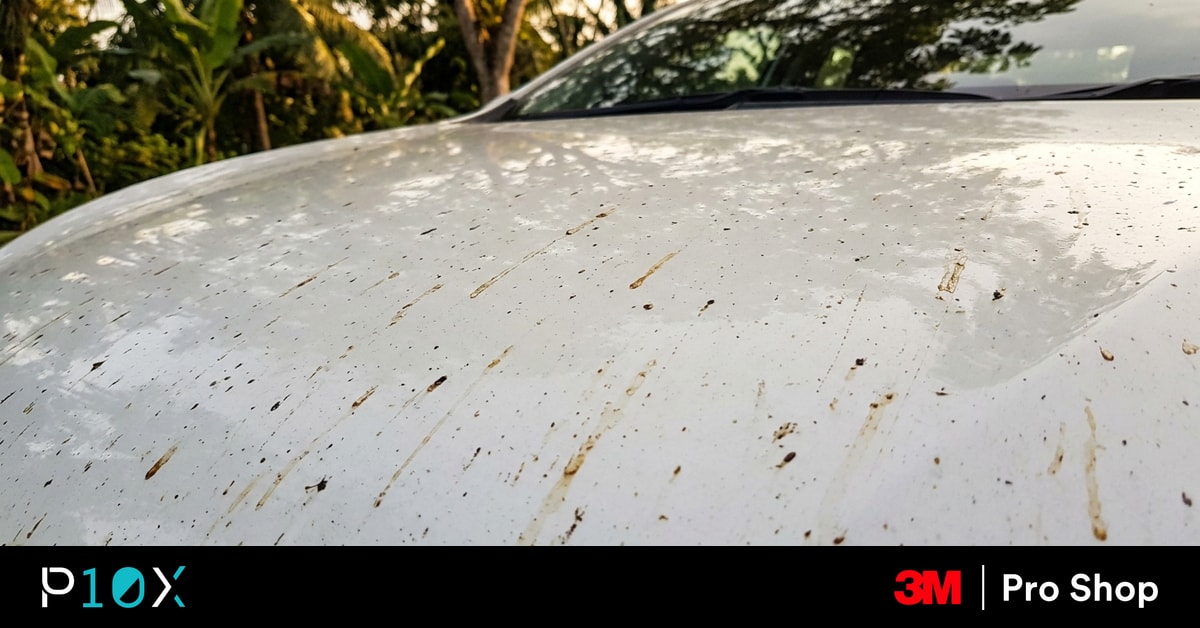
- Tree sap, tar, and bug residue sit on the PPF top coat and bond harder the longer they bake in the sun.
- The safe first move is to soften the contaminant with hot soapy water, not to scrape or scrub it.
- A PPF safe remover with dwell time lifts most sap, tar, and bugs without harming the film.
- Avoid razor blades, abrasive pads, strong solvents, and dyed or harsh shampoos.
- Stains that will not lift, or any lifting film edges, should go to a 3M Authorized Dealer.
Knowing how to remove tree sap from PPF in Malaysia matters more here than in cooler countries, because our heat bakes sap, tar, and bug residue onto the film fast. Park under a roadside tree at a condo or mall for an afternoon, or drive a fresh stretch of the PLUS or KESAS, and you can come back to sticky spots on the bonnet and bumper. The good news is that paint protection film is taking the hit instead of your paint. This guide walks through safe removal steps for sap, tar, and bugs, plus the products to avoid so you do not damage the top coat.
What Tree Sap, Tar, and Bugs Do to PPF
Tree sap, road tar, and bug splatter are surface contaminants that stick to the PPF top coat, and the risk is staining rather than instant damage. Sap is sticky and hardens as it dries, tar is oily and smears, and bug residue is acidic. Left in the sun, all three bond more firmly and can leave a mark if ignored for too long.
The key point is that these sit on the film, not in your paint. 3M Paint Protection Film is built to take stone chips, scratches, bug damage, road tar, and stains so the paint stays protected underneath. That is exactly why prompt, gentle cleaning works. You are lifting a contaminant off a tough top coat, not repairing paint. For the full care picture, start with this complete 3M PPF aftercare guide.
Why Malaysian Roads Cause These Stains
Local driving and parking habits put cars in constant contact with sap, tar, and bugs. Roadside and carpark trees drip sap onto bonnets and roofs, fresh tar patches on highways flick onto bumpers and side skirts, and humid evenings bring heavy bug activity along kampung and expressway routes. Our heat and haze then bake the residue on faster than a cooler climate would.
This is why timing matters so much in Malaysia. A sap droplet wiped off the same evening lifts easily, while the same droplet left through two hot afternoons turns hard and stubborn. Drivers who park daily under the same tree at a condo see this build up most, so a quick check of the bonnet after parking pays off.

How Fast You Should Act on Sap and Bugs
Speed is your biggest advantage with sap, tar, and bugs, because all three bond harder the longer they sit in the heat. As a rule of thumb, the same day is easy, a few days is harder, and a few weeks risks a lasting mark.
Fresh sap or bug splatter often lifts with little more than warm soapy water. After a day or two in the sun it needs a dedicated remover and some dwell time. Past a week of repeated heat cycles, the residue can cure into a firm deposit that may leave a faint shadow even after removal. The lesson for Malaysian drivers is simple, a two minute check after parking under trees or after a highway run saves a much bigger job later.
How to Remove Tree Sap From PPF Safely
The safe method is to soften first, lift gently, then re protect, working in the shade on a cool panel. Never dry scrape sap or scrub hard, since that risks marring the top coat. The steps below follow 3M care guidance, which calls for softening contaminants like tree sap with hot soapy water before rinsing and avoiding abrasive tools.
Soften With Hot Soapy Water
Mix warm to hot water with a PPF safe shampoo and soak the sap with a soaked microfiber cloth laid over it for a minute or two. Heat and moisture soften the sap so it releases instead of clinging. This single step lifts a surprising amount of fresh sap on its own.
Let a PPF-Safe Remover Dwell
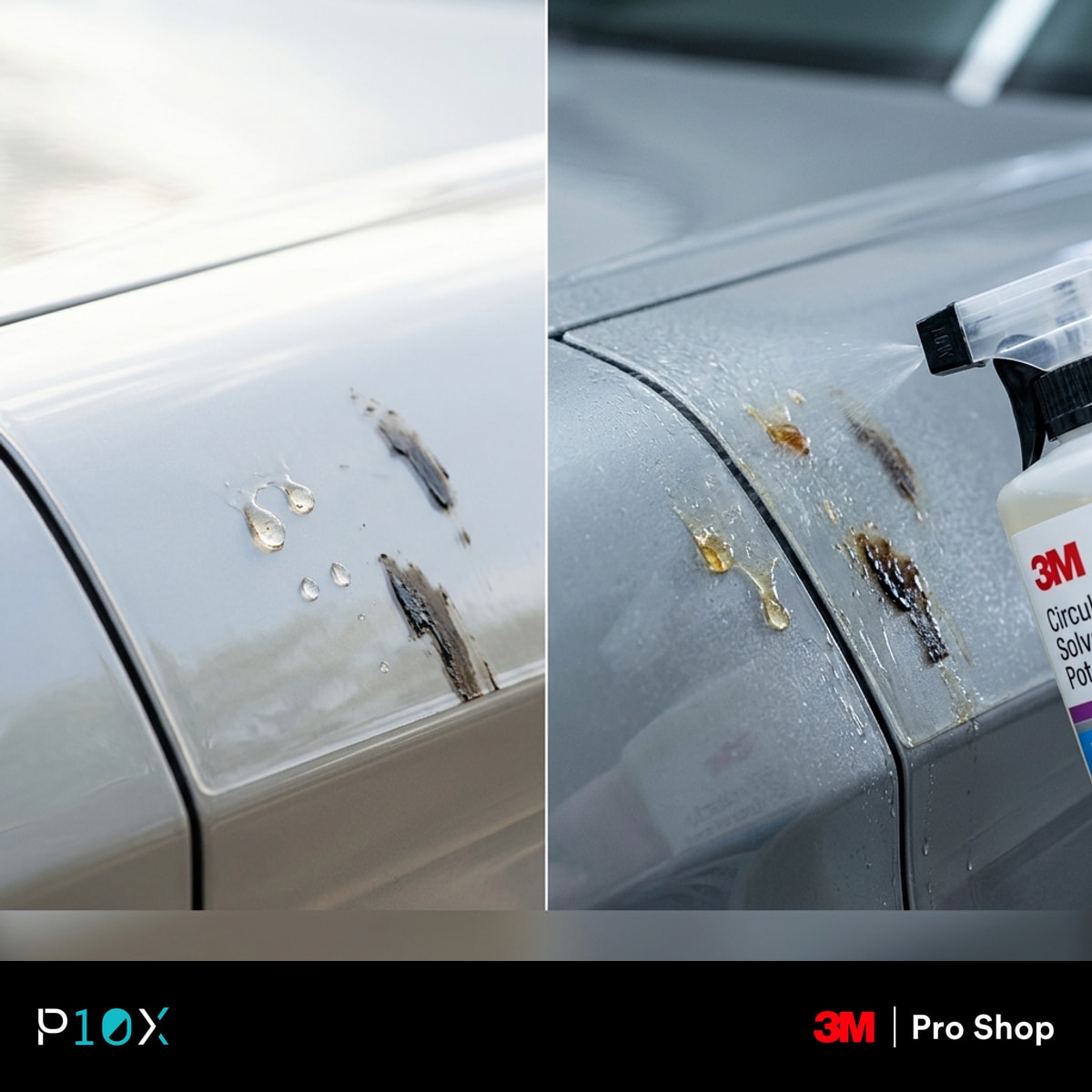
If softening is not enough, apply a dedicated PPF safe sap, tar, and bug remover and let it dwell for the time stated on the label. Dwell time does the work that scrubbing should not. Test on a small area first if you are unsure how the film will respond.
Wipe With Clean Microfiber
Wipe the loosened residue with a clean, soft microfiber cloth using light straight passes. Switch to a fresh side often so you are not dragging sticky residue back across the film. Repeat the soften and dwell step rather than increasing pressure if a spot remains.
Rinse and Re-protect
Rinse the area with clean water, dry it with a plush microfiber towel, and reapply your PPF safe sealant or topper to restore the slick finish. Re protecting helps the next round of sap or bugs wipe off more easily.

How to Lift Tar and Bug Splatter From PPF
Tar and bugs come off with the same soften and dwell approach, using a PPF safe tar and bug remover rather than aggressive scrubbing. Tar is oily, so it usually needs a dedicated remover and a little patience. Bug residue is acidic, so the sooner you clear it, the lower the chance of a faint mark.
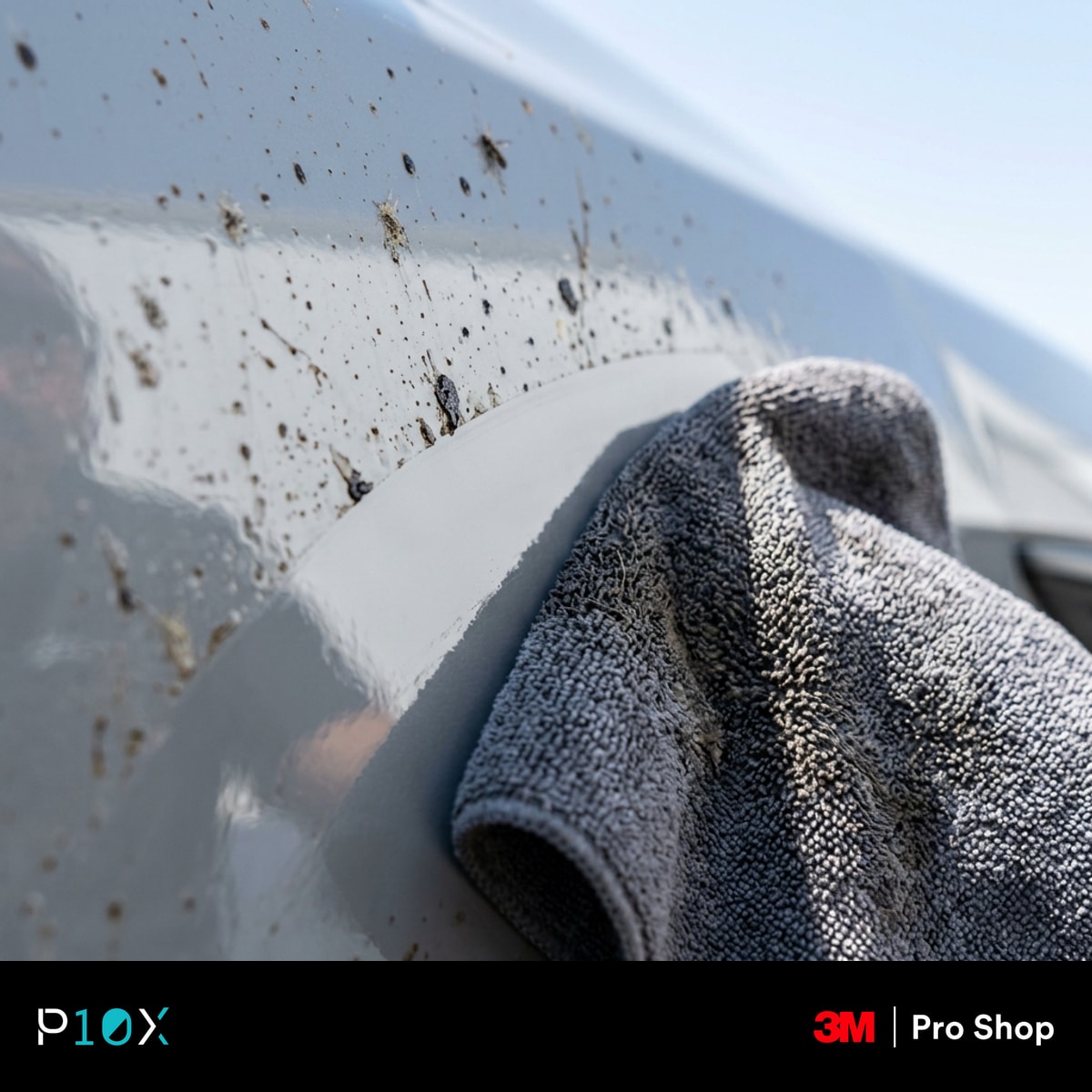
Work out of direct sun so the remover does not flash dry, and keep the cloth moving with light pressure. For bug splatter on the bumper and mirrors after a highway run, a soaked microfiber laid over the area for a minute loosens most of it before you wipe. For product choices and technique across your whole car, see these PPF safe cleaning products and technique tips.
Products to Avoid on Paint Protection Film
The wrong product does more harm than the contaminant itself, so a short avoid list protects your film. Abrasive tools, strong solvents, and harsh or dyed shampoos can scratch, cloud, or stress the top coat. The rule of thumb is to soften and lift, never grind or dissolve aggressively.
Keep these off your PPF. Razor blades and abrasive pads, which scratch the film. Petroleum heavy or strong solvent cleaners used casually, which can attack the top coat. Car wash shampoos with dyes or harsh chemicals, which can stain the film. If a stubborn spot tempts you toward something stronger, that is the signal to stop and get help rather than risk the film.
How to Tackle Bird Droppings on PPF
Bird droppings are acidic and harden fast in our heat, so they belong in the same prompt removal mindset as sap and bugs. Clear them as soon as you spot them, and never wipe a dry dropping, since the grit inside can scratch the film.
Soften the dropping first with a warm, damp microfiber laid over it for a minute, then lift it gently without scrubbing. Follow with a quick PPF safe cleaner and a clean cloth to remove any residue, then dry the spot. Left baking on a hot panel for a day or two, droppings can leave a faint etched outline, so speed is again your best defence.
How to Reduce Sap and Bug Build-Up
You cannot avoid sap and bugs entirely on Malaysian roads, but a few habits cut how much sticks and how hard it sets. The goal is less contact time and a slicker surface for contaminants to release from.
Park away from known sap dripping trees at your condo or office where you can, and keep a fresh sealant or topper on the film so sap and bugs sit on a slicker surface. Clear the front bumper and mirrors soon after a long highway drive, and keep a small kit of PPF safe remover and clean microfiber in the boot for quick spot cleaning. These small steps mean most contamination wipes off in seconds rather than turning into a stubborn stain.
When to Stop and Call a 3M Dealer
If a stain will not lift after a couple of gentle attempts, or if you see the film lifting at an edge, stop and bring it to a professional. Repeated staining in the same spot, or residue that has clearly hardened over weeks, is better assessed by a trained installer than attacked with stronger chemicals at home.
A 3M Authorized Dealer such as 3M Pro Shop by P10X can treat stubborn sap and tar safely and check that the film edges are still sound. You can find a nearby outlet on the 3M Pro Shop locations page. Staying gentle and getting help early also protects your coverage, which you can read more about in this guide on how to keep your PPF warranty valid.
Building a Simple Sap and Bug Habit
The practical approach is to act early and stay gentle. Check the bonnet after parking under trees, clear bug splatter the same evening after a highway drive, and always soften before you wipe. Those small habits prevent almost all lasting marks on a daily driven car in Malaysia.
If a spot resists a calm soften and lift routine, resist the urge to scrape or reach for solvents. Note the spot, keep your cloth clean, and book a quick visit with a certified installer who can lift it without risking the film.
Find out the best protection for your car
Visit a 3M Pro Shop and discover the cost-effective 3M Protective Film and Window Tint

Tree Sap and Bugs on PPF: Frequently Asked Questions
Does tree sap damage PPF?
Usually not, if you remove it reasonably soon. Sap sits on the top coat, so prompt softening and gentle lifting clears it. The risk rises when sap is left to harden in the sun over days, which can leave a faint mark that needs professional attention.
How do you get tree sap off PPF?
Soften it first with hot soapy water using a soaked microfiber laid over the spot, then use a PPF safe remover with dwell time and wipe gently with clean microfiber. Rinse, dry, and re protect. Avoid scraping or hard scrubbing.
Can you use rubbing alcohol on PPF?
Use caution. A heavily diluted solution is sometimes used for spot cleaning, but strong alcohol or solvents can stress the top coat. For sap, tar, and bugs, a dedicated PPF safe remover is the safer choice, and stubborn spots are best left to a dealer.
How do you remove bugs from PPF?
Lay a warm, soapy soaked microfiber over the bug residue for a minute to soften it, then wipe gently. For baked on splatter, use a PPF safe bug remover with dwell time. Clear bugs the same day where you can, since the residue is acidic.
Will tar stain PPF permanently?
Fresh tar rarely stains if you remove it with a PPF safe tar remover before it bakes on. Old, hardened tar left through several hot days can leave a faint mark, which a professional can often improve. Prompt, gentle removal is the best prevention.
Author

Kelvin Cheen
Kelvin is an Automotive Solutions Consultant and Branch Manager at 3M Pro Shop. With 4+ years of field experience in premium vehicle surface protection, Kelvin specializes in flagship 3M technologies, including 3M Crystalline Black optical film and Ceramic IR tints, 3M Paint Protection Film (PPF), etc. His focus is on delivering transparent, engineering-backed advice to car and EV owners, cutting through sales upsells to ensure customers choose the exact thermal rejection and paint protection tailored to their driving needs.
Experience the future of window tinting
Visit a 3M Pro Shop and discover the revolutionary Crystalline CR BLK film