
PPF Aftercare Service Malaysia: Essential Maintenance Guide for Malaysian Car Owners

For Malaysian car owners who have invested in PPF aftercare service, understanding proper maintenance determines whether your Paint Protection Film delivers years of flawless protection or requires premature replacement. Professional installation represents only the beginning of PPF ownership. Daily exposure to tropical heat, monsoon rains, urban pollution, and road contaminants creates ongoing care requirements that differ significantly from temperate climates.
This guide explains practical aftercare techniques that preserve PPF appearance and performance throughout your vehicle ownership in Malaysian driving conditions.
Why PPF Aftercare Matters in Malaysia
Paint Protection Film shields your vehicle's paint from stone chips, scratches, and environmental damage, but the film itself requires maintenance to continue performing as designed. Malaysia's equatorial climate creates specific challenges that affect PPF longevity and appearance.
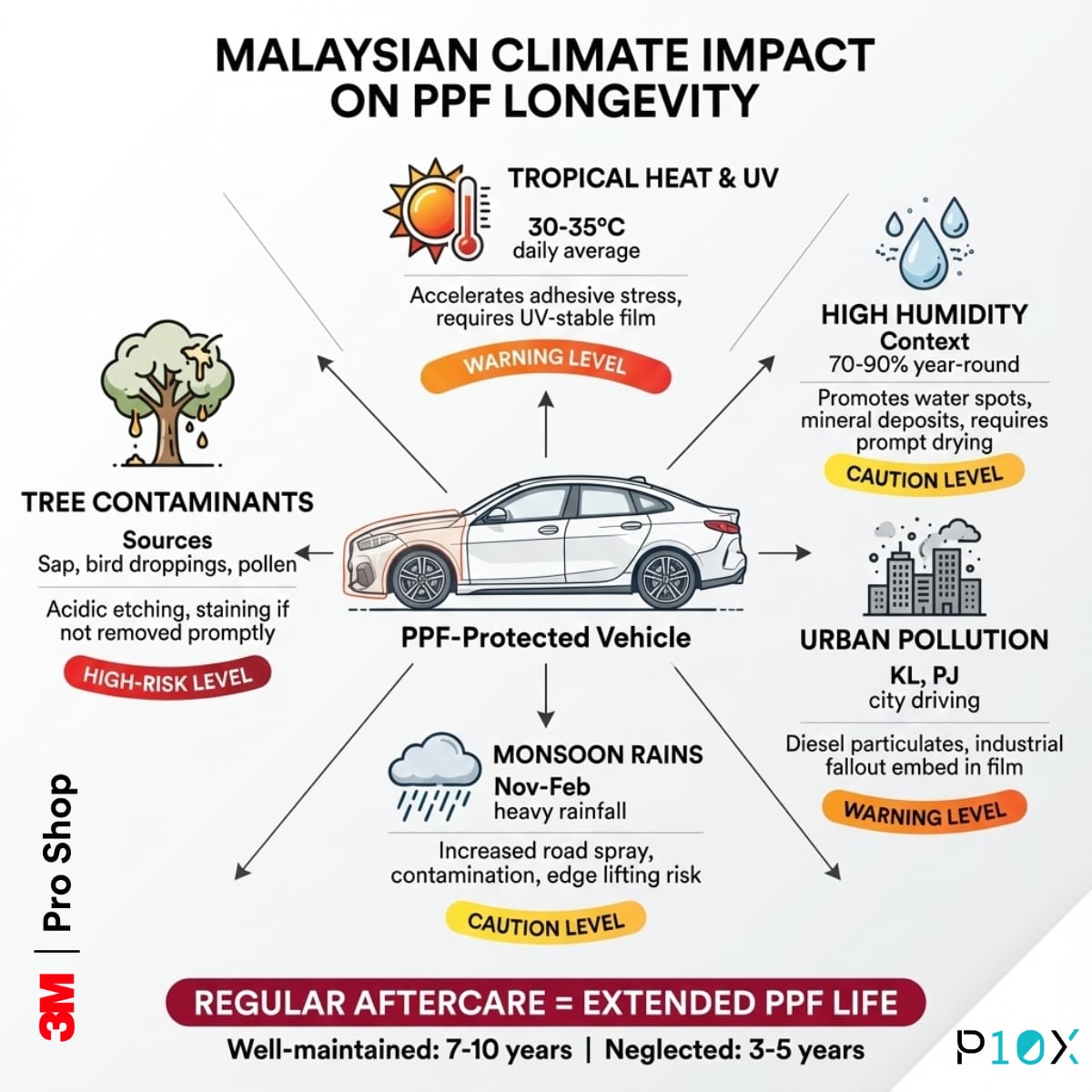
Year-round heat and UV exposure stress the film's urethane construction and adhesive layer. Temperatures inside parked vehicles regularly exceed 60°C, accelerating any degradation from improper products or contamination. High humidity prevents complete drying between rain events, allowing water spots and mineral deposits to bond more aggressively to film surfaces.
Urban driving in Kuala Lumpur, Petaling Jaya, and other cities exposes PPF to diesel particulates, industrial fallout, and road construction dust. These contaminants embed in the film's top coat if not removed promptly. Highway driving generates constant bombardment from loose gravel, tar spots, and insect residue. Parking under trees introduces sap, bird droppings, and pollen that can etch or stain if left unaddressed.
Professional paint protection film installation provides the foundation, but proper aftercare ensures you receive full value from your investment. Well-maintained PPF preserves vehicle appearance and resale value while poorly maintained film can peel, or develop permanent staining that defeats the protection purpose.
Daily and Weekly Washing Best Practices
Regular washing removes contaminants before they bond permanently to PPF surfaces. Frequency depends on your driving patterns and parking environment, but most Malaysian car owners benefit from weekly washing during dry periods and more frequent attention during monsoon seasons.
Hand Washing Technique
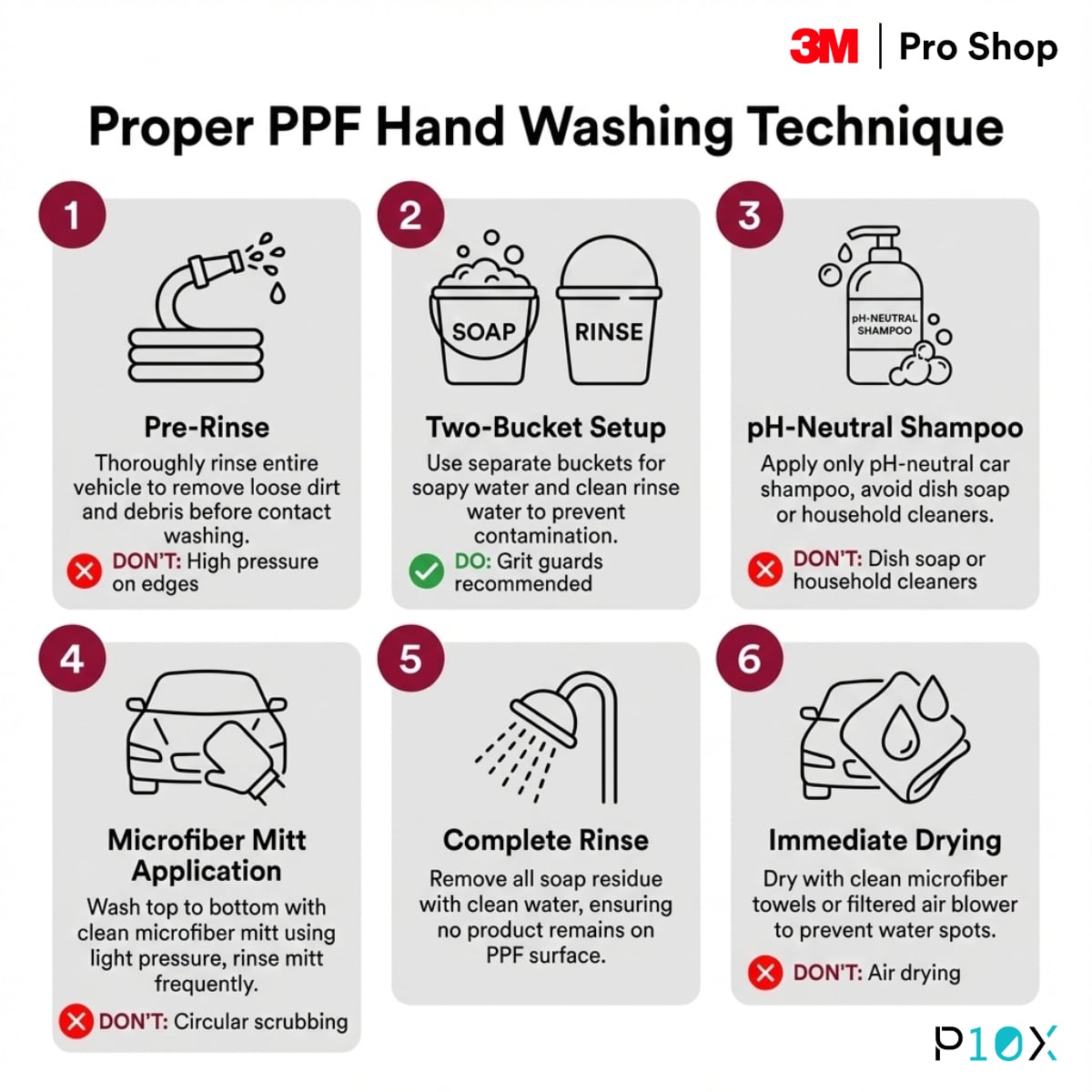
Hand washing with proper materials and products delivers the safest results for PPF-protected vehicles. Use two buckets (one for soapy water, one for rinsing) to prevent reintroducing dirt particles that could scratch the film. Start with a thorough rinse to remove loose dirt and debris.
Apply pH-neutral car shampoo diluted according to product instructions. Avoid dish soap, household cleaners, or degreasing products that can break down PPF adhesive or strip protective coatings. Work from top to bottom using a clean microfiber wash mitt, applying light pressure. PPF's self-healing properties work best when the surface remains free of embedded particles that could prevent proper healing.
Rinse thoroughly with clean water, ensuring complete removal of soap residue. Dry immediately using clean microfiber drying towels or a filtered air blower. Air drying in Malaysian humidity often leaves water spots that require additional effort to remove later.
Pressure Washing Considerations
Pressure washers offer efficient rinsing but require careful technique around PPF edges. Maintain at least 30 cm distance from the vehicle surface and avoid directing high-pressure streams at film edges, particularly around door handles, mirrors, and panel seams where lifting could begin.
Keep water temperature moderate. Extremely hot water can temporarily soften PPF adhesive, increasing lifting risk. Most home pressure washers operate safely, but commercial high-pressure systems at some workshops may exceed safe limits for PPF.
Never use pressure washers with rotating or spinning nozzles that concentrate force. These can lift film edges or damage the top coat. Standard fan spray patterns work safely when used at proper distance.
Products to Use and Avoid
Product selection directly affects PPF longevity and appearance. 3M Paint Protection Film uses specific urethane formulations and top coat technologies designed to work with certain cleaning chemistries while being damaged by others. Understanding how to maintain ppf on car requires knowing which products support film performance.
Safe Cleaning Products
pH-neutral car shampoos formulated for automotive paint work safely on PPF. These products clean effectively without attacking the film's urethane construction or adhesive layer. Many quality automotive detailing brands offer PPF-safe formulations that specifically state compatibility with clear films.
Isopropyl alcohol diluted to 50% with distilled water removes stubborn contaminants like adhesive residue or tar without damaging PPF. Apply with a clean microfiber cloth, working gently to avoid excessive rubbing. This solution evaporates completely, leaving no residue.
Quality spray detailers designed for automotive finishes work well for quick cleaning between full washes. These products add temporary hydrophobic properties that help water sheet off the film surface, reducing water spot formation in Malaysian humidity.
Products That Damage PPF
Avoid alkaline wheel cleaners, bug and tar removers containing petroleum solvents, and any products listing aggressive degreasing agents. These chemicals can break down PPF adhesive, causing edge lifting or complete film failure. They may also damage the top coat, eliminating self-healing properties and leaving the film vulnerable to permanent scratching.
Waxes containing abrasives, cutting compounds, and most traditional polish formulations can remove or damage PPF top coats. While the film itself may appear undamaged initially, degraded top coat leads to increased contamination adhesion and reduced self-healing over time.
Never use automatic car wash facilities that apply harsh alkaline pre-soaks, tire shine products that spray onto body panels, or high-speed brushes that can lift film edges. The time savings rarely justify the risk to your PPF investment.
Contamination Removal and Spot Treatment
Specific contaminants require prompt attention and proper removal techniques to prevent permanent damage or staining to PPF surfaces.
Bird Droppings and Tree Sap
Bird droppings contain uric acid that etches PPF if left for extended periods in heat. Malaysian temperatures accelerate this chemical reaction. Remove droppings as soon as possible by softening with water or quick detailer, then lifting gently with a microfiber cloth. Avoid scrubbing dried droppings, which can scratch the film.
Tree sap bonds tenaciously to PPF in heat. Soften sap with isopropyl alcohol solution or dedicated sap remover (verify PPF compatibility), then lift gently. Multiple applications may be needed for heavy sap contamination. Parking under trees in Malaysian climate increases sap exposure significantly compared to open parking areas.
Road Tar and Asphalt
Construction zones and freshly paved roads deposit tar spots that bond to PPF surfaces. Remove tar using isopropyl alcohol or PPF-safe tar remover. Apply product to a microfiber cloth rather than directly to the film, then work gently to dissolve the tar. Rinse thoroughly after removal.
Avoid petroleum-based tar removers commonly sold for paint surfaces. These products work by dissolving asphalt, but they also attack PPF adhesive and can cause film clouding or delamination.
Water Spots and Mineral Deposits
Malaysian municipal water contains minerals that leave visible spots when water evaporates from PPF surfaces. Regular washing and immediate drying prevent most water spotting. For existing spots, use distilled white vinegar diluted 1:1 with distilled water. Apply with a soft cloth, allow brief contact, then rinse thoroughly.
Severe mineral buildup may require professional attention. Attempting aggressive removal with acidic cleaners or abrasive methods risks damaging the film beyond repair.
Professional Maintenance and Inspection
While daily care prevents most problems, professional PPF aftercare service in Malaysia provides inspection and maintenance that extends film life and catches developing issues early. Learning about comprehensive paint protection film care tips malaysia helps you understand when professional attention becomes necessary.
Recommended Service Intervals
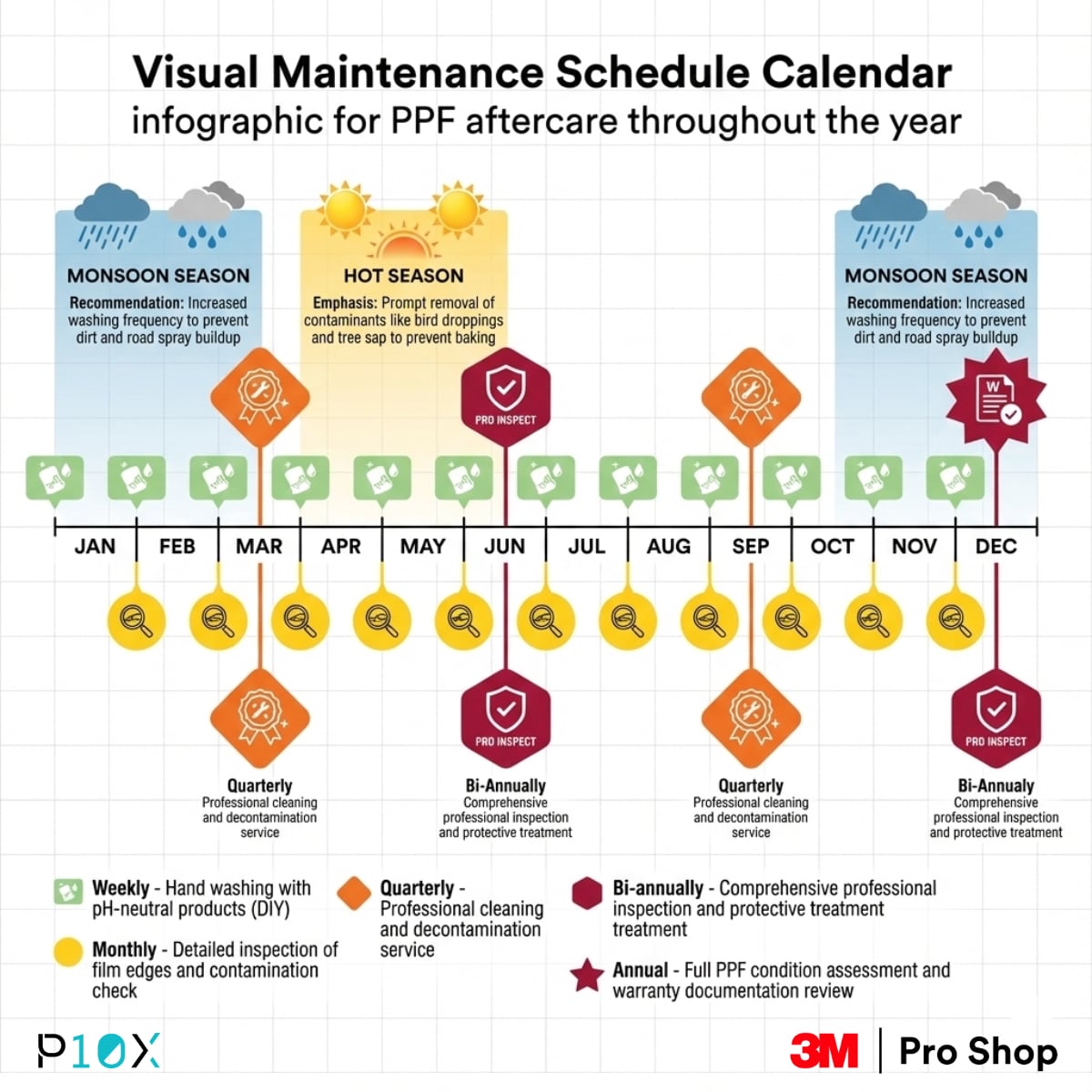
Schedule professional PPF inspection every six months for vehicles driven daily in urban conditions. This interval allows technicians to identify edge lifting, contamination that resists home cleaning methods, and early signs of film degradation before problems become severe.
Vehicles driven primarily on highways or in dusty conditions may benefit from quarterly inspection, as road debris and environmental exposure accelerate wear. Vehicles garaged and driven occasionally can extend to annual professional service.
What Professional Service Includes
Professional PPF maintenance begins with thorough cleaning using specialized products and techniques. Technicians inspect all film edges for lifting, checking adhesion around complex curves, door handles, and panel gaps where stress concentrates.
Contamination removal uses professional-grade products and clay bar treatment that safely removes embedded particles from the film surface without scratching. This process restores clarity and prepares the surface for protective treatment.
Inspection identifies areas where film has sustained damage requiring attention. Small tears or chips can sometimes be repaired, while severe damage may require panel replacement to maintain protection and appearance. Early detection prevents minor issues from expanding into major problems.
Warranty Documentation
Most 3M Paint Protection Film warranties require documented maintenance to remain valid. Professional service provides records showing proper care, protecting your warranty coverage if manufacturer defects develop. Understanding ppf warranty malaysia terms helps you maintain compliance with care requirements.
Keep all service records, receipts for approved cleaning products, and documentation of any damage reports. If warranty claims become necessary, this paperwork demonstrates that film failure resulted from product defects rather than neglect or improper care.
Malaysian Climate Considerations
Tropical conditions create specific PPF care requirements that differ from manufacturer guidelines designed for temperate climates. Adapting maintenance practices to local environment preserves film performance and appearance.
Heat and UV Management
Consistent high temperatures and intense UV exposure in Malaysia accelerate PPF aging compared to cooler climates. Park in covered or shaded areas whenever possible to reduce direct UV bombardment and lower surface temperatures. While 3M PPF includes UV stabilizers, minimizing exposure extends film life.
Heat activates PPF's self-healing properties, allowing minor scratches to disappear. However, excessive heat from parking in direct sun can also soften adhesive temporarily. Avoid aggressive washing or pressure washing on extremely hot film surfaces, as this increases lifting risk.
Humidity and Moisture
Malaysia's high humidity creates persistent moisture that prevents complete drying between rain events. This extended wetness allows water spots, mineral deposits, and contamination to bond more aggressively. Increase washing frequency during wet periods to prevent buildup, and ensure thorough drying after each wash.
Covered parking reduces but does not eliminate humidity exposure. Even garaged vehicles experience high ambient moisture that can promote water spotting if rain water or washing residue remains on PPF surfaces.
Monsoon Season Care
Heavy rains during monsoon months (typically November through February in many Malaysian regions) require increased attention to PPF care. Road spray carries more contaminants during wet weather, and reduced visibility sometimes results in closer following distances that increase stone chip risk.
Wash vehicles more frequently during monsoon season to remove road film and contamination. Check PPF edges regularly, as water intrusion at lifted edges can accelerate delamination. If you notice water trapped under film edges, seek professional service promptly to prevent the problem from spreading.
Common Aftercare Mistakes to Avoid
Understanding what not to do protects your PPF investment from avoidable damage. Many car owners unknowingly use techniques or products that degrade film performance.
Automatic car washes with brush systems remain the most common source of PPF damage. Brushes lift film edges, and harsh pre-soak chemicals attack adhesive. Even touchless automatic washes often use alkaline cleaning agents inappropriate for PPF. The minor convenience never justifies the damage risk.
Circular scrubbing motions when washing create micro-scratches that accumulate over time. While PPF's self-healing properties can repair some scratching, repeated abuse overwhelms the film's capacity to heal. Use straight-line motions aligned with vehicle body lines, applying minimal pressure.
Delaying contamination removal allows bird droppings, sap, and other aggressive substances to etch or stain the film. Malaysian heat accelerates these reactions significantly compared to cooler climates. Address contamination the same day you notice it rather than waiting for your next scheduled wash.
Applying traditional car wax to PPF surfaces wastes product and can actually reduce the film's hydrophobic properties. PPF top coats already include water-repelling characteristics. Many waxes contain filling agents or petroleum distillates that cloud the film or interfere with self-healing.
Maximizing PPF Value Through Proper Care
Paint Protection Film represents a significant investment in vehicle preservation and appearance. Proper aftercare ensures you receive maximum return on this investment through extended film life, maintained appearance, and preserved resale value.
Regular maintenance costs less than film replacement. A professional PPF aftercare service in Malaysia typically costs RM150 to RM300 for comprehensive cleaning and inspection, while partial film replacement can cost RM1,500 to RM3,000 depending on coverage area. Six-monthly service totaling RM600 annually remains far more economical than replacement every few years due to neglect.
Well-maintained PPF demonstrates care to potential buyers when selling your vehicle. Documented service records and pristine film condition signal that the vehicle received proper attention in all areas. Buyers often value this care history as much as the PPF protection itself.
For current maintenance options and professional service scheduling, explore available services at 3M Pro Shop locations across Kuala Lumpur and Selangor. Professional facilities offer specialized PPF care that complements your home maintenance routine.
If you maintain a consistent care routine using appropriate products and techniques, schedule professional service at recommended intervals, address contamination promptly before permanent damage occurs, and protect your vehicle from unnecessary UV and environmental exposure when possible, your Paint Protection Film will deliver years of flawless protection and maintained appearance throughout your ownership in Malaysian driving conditions.
Find out the best protection for your car
Visit a 3M Pro Shop and discover the cost-effective 3M Protective Film and Window Tint
Frequently Asked Questions
Can I use the same products on PPF that I use on regular paint?
Not all paint-safe products work safely on Paint Protection Film. Avoid products containing petroleum solvents, abrasive compounds, or strong alkaline or acidic cleaners. Stick to pH-neutral car shampoos specifically labeled as safe for clear films. When in doubt, test new products on a small, inconspicuous area of PPF or consult with your installer before applying to the entire vehicle.
How soon after PPF installation can I wash my vehicle?
Most professional installers recommend waiting 48 to 72 hours after installation before washing to allow complete adhesive curing. During this period, avoid getting the vehicle wet and do not use automated car washes or pressure washers. After the curing period, you can resume normal washing using proper techniques and products. Your installer should provide specific curing guidelines based on the film type and installation conditions.
Can I remove tar, bugs, and other stubborn contaminants at home or do I need professional service?
Most common contaminants can be safely removed at home using appropriate products and gentle techniques. Isopropyl alcohol diluted 50/50 with distilled water handles many stubborn substances. For heavy contamination, embedded particles, or substances that resist home treatment, professional service provides specialized products and clay bar treatment that safely restore PPF clarity without damage risk from improper DIY attempts.
Does proper PPF aftercare affect my warranty coverage?
Yes, manufacturer warranties typically require proper maintenance using approved products and techniques. Damage resulting from neglect, improper cleaning products, or inappropriate care methods often voids warranty coverage. Keep records of your maintenance routine, receipts for approved products, and documentation of professional services. These records demonstrate proper care if warranty claims become necessary during the coverage period.
Author

Fabian
He is passionate about revolutionizing the car protection services industry by bringing innovation and transparency to a traditionally opaque and often misunderstood field. His mission is to educate end users on the true benefits and importance of car protection, aiming to replace outdated practices with honest, customer-focused solutions. With a fresh approach to car tinting, paint protection film (PPF), and detailing services, he is committed to delivering a superior customer experience that sets a new standard in the market. He welcomes discussions about the future of the automotive industry and is eager to connect with like-minded professionals who share his vision for innovation, integrity, and excellence.
Experience the future of window tinting
Visit a 3M Pro Shop and discover the revolutionary Crystalline CR BLK film