✧ Key Takeaways
- A useful comparison names Crystalline Black and the exact LLumar films in your local quotation, rather than two brands or an overseas range.
- LLumar is not one type of film. Its Malaysian range includes different colours and films with or without metal.
- A higher infrared number does not mean a cooler car. Total solar energy rejection (TSER) is more useful for comparison when both figures use the same glass and test conditions.
- A good quotation names the film on each window, and the tint reading through your actual glass should meet JPJ limits.
Neither 3M nor LLumar is better for every car because both brands sell several films. A fair comparison puts 3M Crystalline Black against the exact LLumar film in your quotation. Crystalline Black contains no metal and has a charcoal black look. LLumar's local options vary in construction and colour.
3M Crystalline Black is the 3M reference in this comparison. On the LLumar side, the local catalogue lists products such as AIR BLUE, TOP 70, PIPL and ATR. Their specifications are not interchangeable, and an overseas review may discuss a different range from the one offered locally.
If you are also weighing up brands other than LLumar, our comparison of 3M Crystalline Black with other tint brands looks at how each film's construction, light transmission and test conditions differ.
Which LLumar film are you comparing with 3M?
Comparing 3M with LLumar means naming the film for each window, not just the package. Crystalline Black is one specific 3M series. LLumar offers films with different materials and colours, so an unnamed LLumar package leaves you unsure what you would receive. The material also matters as the film ages, and it is a big part of why some tint turns purple after a few years.
For example, the local listing describes AIR BLUE, also labelled AIR 80, and TOP 70 as nano ceramic with a neutral blue colour. It describes PIPL products as nano ceramic with a charcoal colour. ATR is listed as metallised charcoal film. These are product distinctions within LLumar, not descriptions that apply to every LLumar installation.
A quotation might use one film on the windscreen and another on the side and rear windows. That can be a sensible choice, as long as the quotation explains which film goes on which window. The heat figure for the side-window film does not tell you how the windscreen film performs.
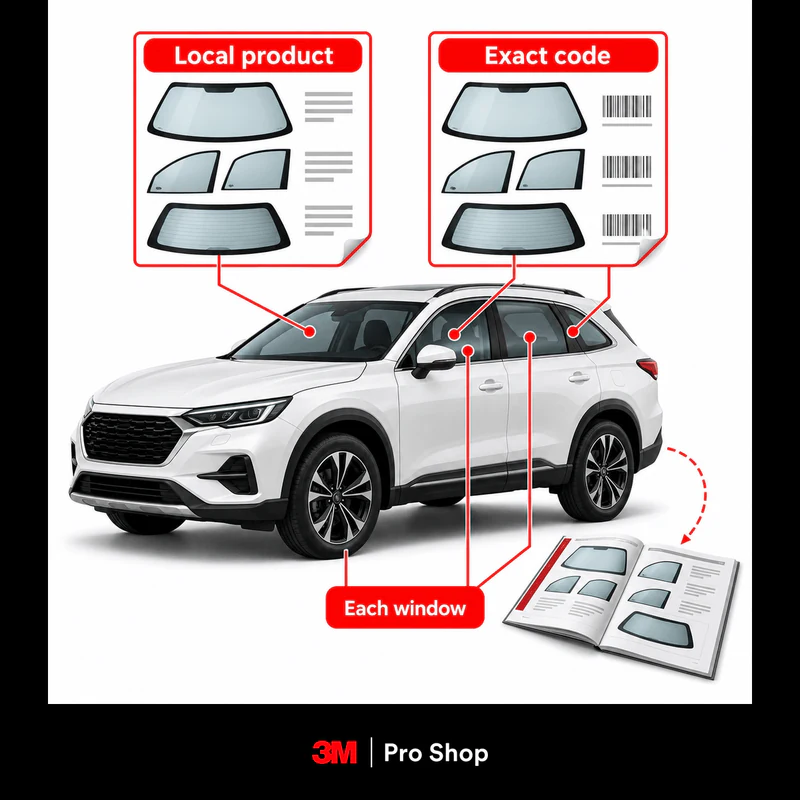
Overseas reviews often cover LLumar ranges sold in North America, which may not be what Malaysian installers offer. A review of a different series can give you questions to ask, but it does not tell you how your quoted film performs.
Which is cooler, 3M or LLumar?
Nobody can say for sure which is cooler from the published numbers alone. A fair heat comparison needs both films to let through a similar amount of light, use the same heat measure and be tested on the same type of glass. The published figures for Crystalline Black and LLumar do not meet all three yet.
VLT means visible light transmission, the share of visible light passing through. TSER means total solar energy rejected under the stated test conditions. Infrared rejection only covers the infrared part of sunlight, which is one share of the heat you feel.
LLumar's local listing shows how much the numbers change from one film to the next. These are catalogue claims, not measurements from your car.
| Local LLumar listing | Listed VLT | Listed TSER | Listed construction and colour |
| AIR BLUE / AIR 80 | 78% | 43% | Nano ceramic, neutral blue |
| TOP 70 | 69% | 49% | Nano ceramic, neutral blue |
| PIPL 50 | 55% | 50% | Nano ceramic, charcoal |
Heat after long outdoor parking is a different concern from sunlight feeling hot while you drive. A car can retain heat through the body and other glass even with solar-control film. Our guide to why a car can stay hot after tinting helps you judge whether a different film would address the problem you actually notice.
LLumar's local listing does not say which glass or test conditions were used, so these numbers cannot be lined up fairly against Crystalline Black. That does not make LLumar's films worse. It just means nobody can honestly rank the two brands on heat from these numbers.
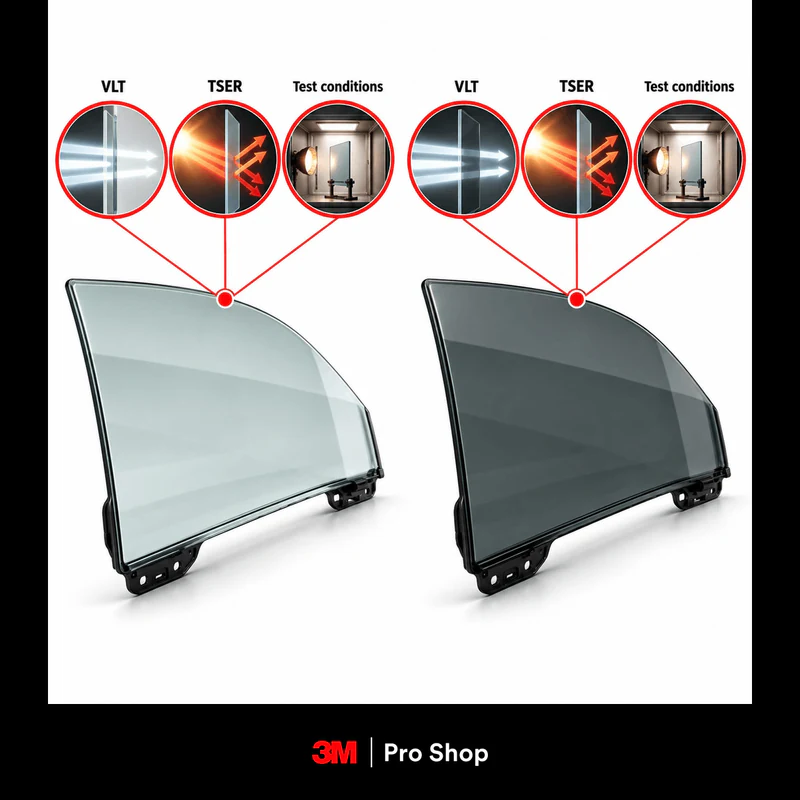
Crystalline Black's CR BLK 70, the shade often used on windscreens, is listed at 43% total solar energy rejection (TSER) on our product page. That page does not say which glass the figure was measured on, so it cannot be lined up fairly against LLumar's numbers either. It also does not tell you the light transmission through your car's finished glass and film.
Is nano ceramic tint always the better choice?
No. A technology label explains something about how a film is made, but it does not replace its measured performance. LLumar's local catalogue includes nano ceramic and metallised products. Crystalline Black is a metal-free film that combines multilayer optical film with nano-ceramic technology. Neither description alone tells you the temperature your cabin will reach on a sunny afternoon.
With over 200 nano-layers, Crystalline Black shows that a film can be both optical and ceramic. That is a product feature, though, not proof that every Crystalline Black shade beats every ceramic film from another brand. The shade, the test glass and the heat measure decide which published figure matters for your car.
The same goes for LLumar. A benefit claimed for one of its nano ceramic films does not automatically apply to ATR, which is a metallised film. And having a metallised range does not mean every LLumar film contains metal. The product name on your quotation tells you which one you are getting.
Crystalline Black replaced the original Crystalline Series in Malaysia in December 2025 and is the current flagship Crystalline range. Our Crystalline Black launch article covers what changed. If a quotation still lists an older Crystalline code, it is worth asking why.
How dark can you go, and which colour suits your car?
On most private cars in Malaysia, the windscreen must let through at least 70% of visible light and the front side windows at least 50%, measured through the glass and film together. Colour is separate. Crystalline Black is charcoal black, while LLumar's Malaysian catalogue lists nano ceramic options in neutral blue and charcoal.
A sample viewed from outside against a white wall is not the same as looking through your windscreen from the driver's seat. Two samples that look similarly dark may still have different published light transmission and solar performance. Your glass colour and the light around the car also affect what the installed combination looks like.
How well you can see through window tint at night matters alongside its colour and daytime appearance. Rain, reflections, scratches on the glass and your own eyesight all affect the view at night. Passing the JPJ limit does not mean every driver will find it comfortable after dark, and a small sample cannot show every reflection you will see once the film is fitted.
PUSPAKOM said in July 2025 that it follows JPJ specifications and measures the glass and film together, so a product code is not a compliance certificate. Your factory glass may already block some light before any film goes on, which is why the reading on your car matters more than the shade name. Each window has its own JPJ limit, as our guide to JPJ-compliant window tint explains.
Will 3M or LLumar tint affect your phone or GPS?
Crystalline Black is metal-free and designed to avoid the radio-signal interference associated with metallic film, including interference with phone and GPS reception. Some LLumar films, such as ATR, are metallised, so it is worth asking which one you are being quoted. If your key fob or autogate remote is the worry, our guide to tint and key fob or autogate interference explains how those signals behave.
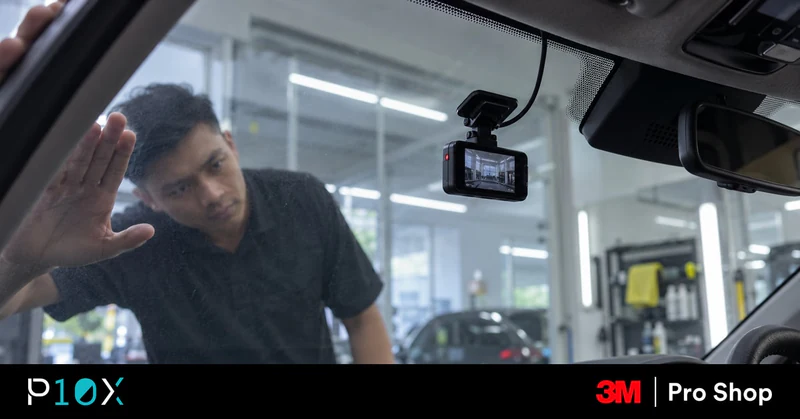
It helps to tell your installer about the equipment you use, including anything mounted near the windscreen. If a device already has weak reception before tinting, it helps to note that before the job so the new film is not blamed later. The vehicle maker's requirements for cameras and sensors still apply, even with metal-free film. Driver-assistance cameras (ADAS) and head-up displays (HUD) can need certain areas of the windscreen kept clear, and our guide to ADAS, HUD and window tint explains which ones. A careful installer will point out any area that must stay clear before quoting.
Do you need security film as well as solar control?
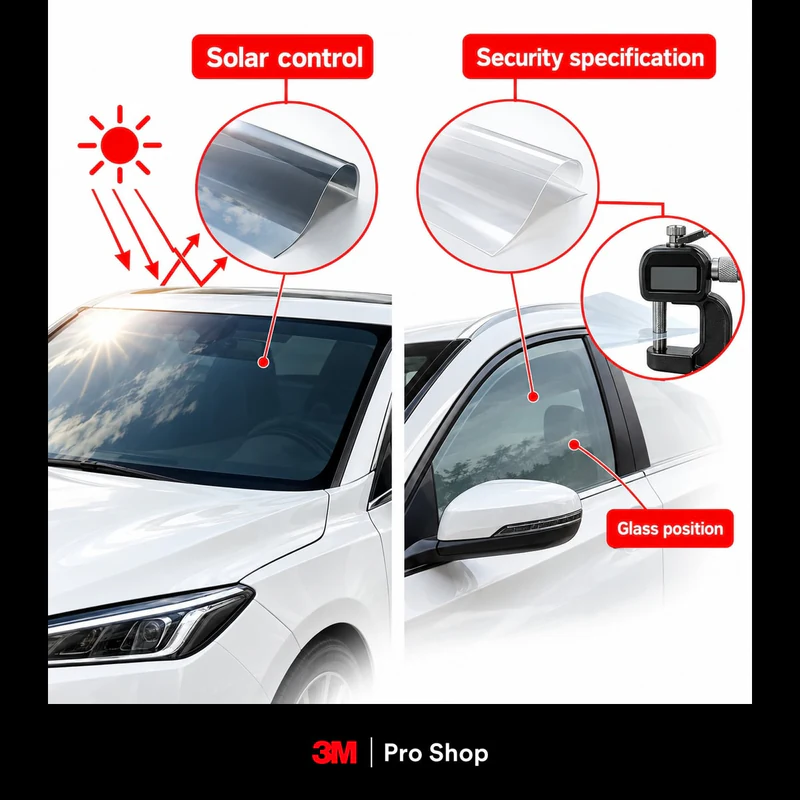
Only if security is part of what you want. Heat-rejection tint and security film do different jobs, so a tint chosen for heat should not be expected to give the same protection as a proper security film. LLumar's local catalogue includes safety and security films, but that does not make every LLumar tint a security film.
If security is part of your reason for choosing a package, a careful installer will tell you the exact film, which windows receive it and what the supplier's documentation covers. Thickness may help distinguish products, but thickness alone cannot promise that glass will never break or that entry into a car becomes impossible.
What should you expect from installation?
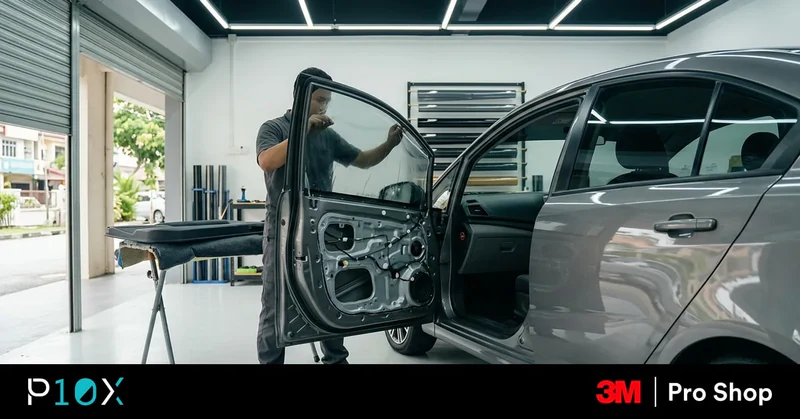
Whichever brand you choose, how the film is fitted affects the result. A clear quotation covers removing any old film, preparing the glass and the exact film for each window. None of that shows up in a product catalogue.
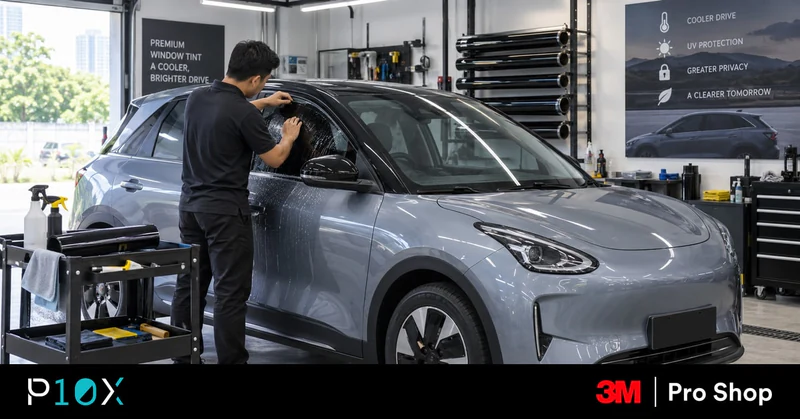
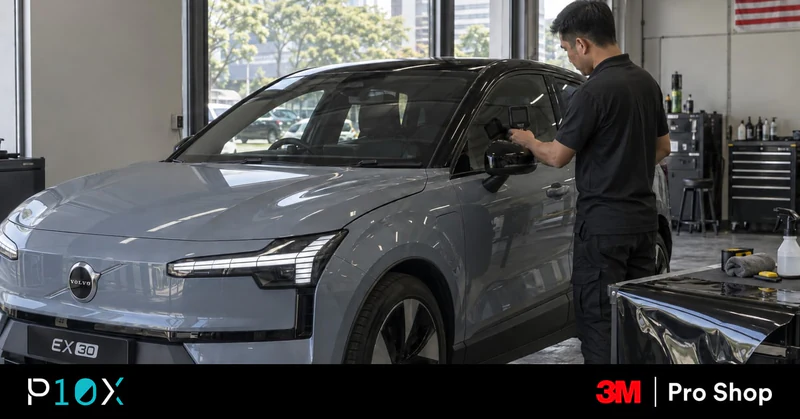
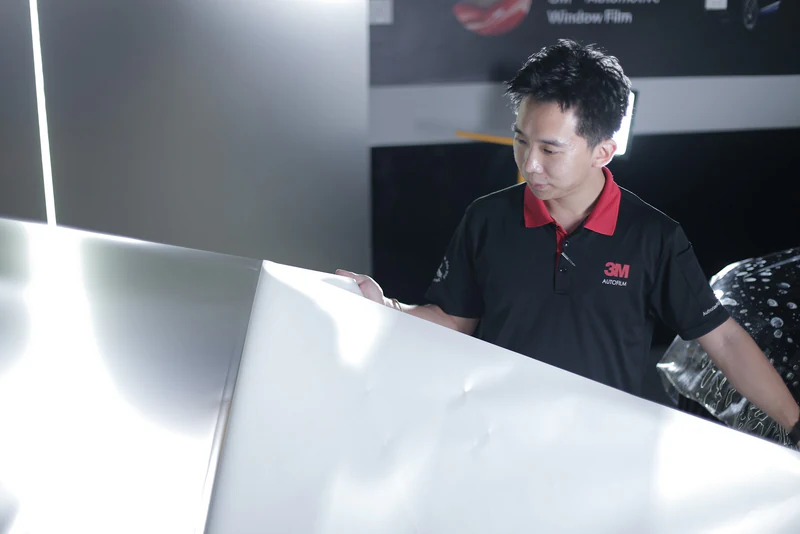
Careful fitting matters as much as the film itself. The film is cut and prepared for the glass it will cover, the glass is cleaned, and the water is squeegeed out so no edge is left lifting.
If your car already has tint, any reading taken before the job includes that old film. Once it is removed and the glass is cleaned, marks or scratches that were hidden may show up. A good job sheet notes the glass condition before work, what was removed and the final reading, so each one is recorded separately.
Before any film goes on, a good installer checks the glass, door trim and switches, and covers nearby electronics so the soapy water used to fit the film cannot reach them.
The 3M range includes Crystalline Black, Ceramic IR and XP. The job sheet should name the exact series, not just say “3M tint”.
Our pre- and post-install tint checklist covers what is worth checking before the job and when you collect the car. A clear record of the product codes and which film went on each window makes any later inspection easier.
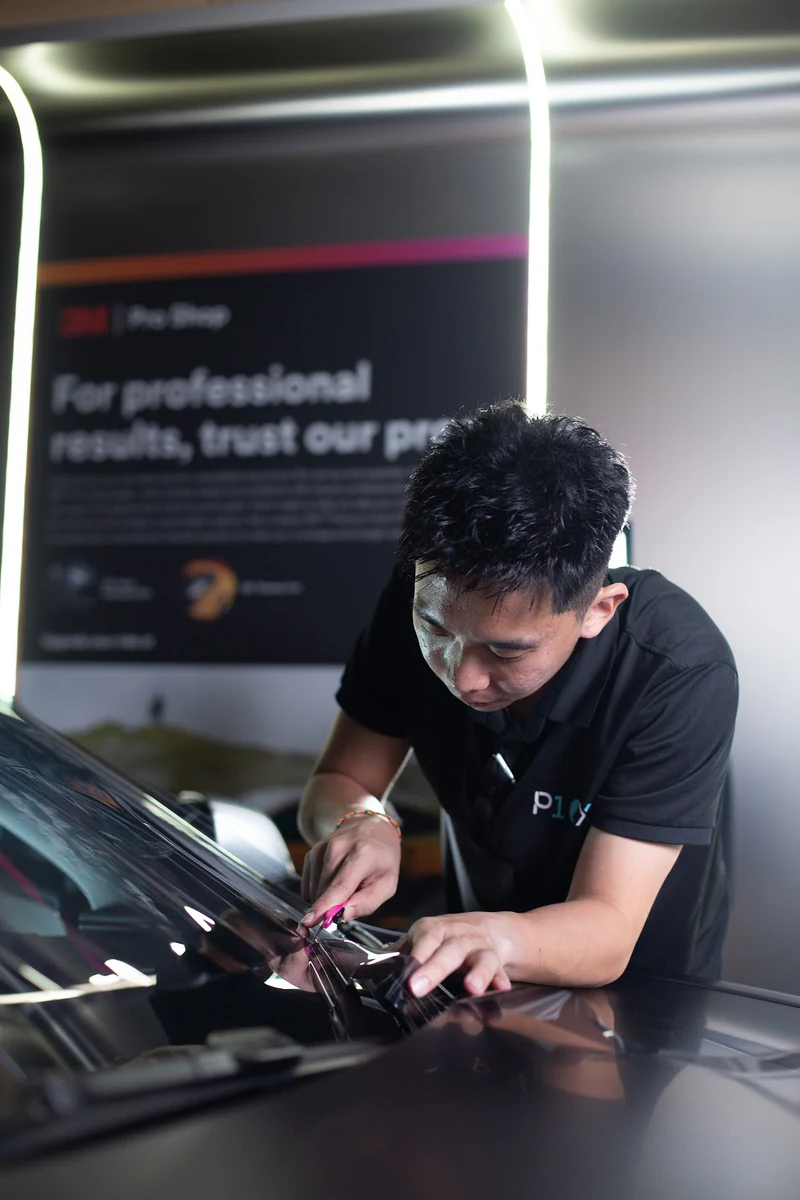
On the windscreen, the film has to be shaped to the curve of the glass and trimmed neatly at the edges. The view through the glass and any promised VLT reading are worth checking when you collect the car.
So which should you choose, 3M or LLumar?
If you want a metal-free film with a charcoal black look, Crystalline Black is a sensible place to start. A LLumar quotation can be a reasonable alternative too, as long as it names the actual film, such as AIR BLUE, TOP 70, PIPL or ATR, rather than just “LLumar”.
A clear quotation shows the colour, the film on each window, the installation plan and what the warranty covers.
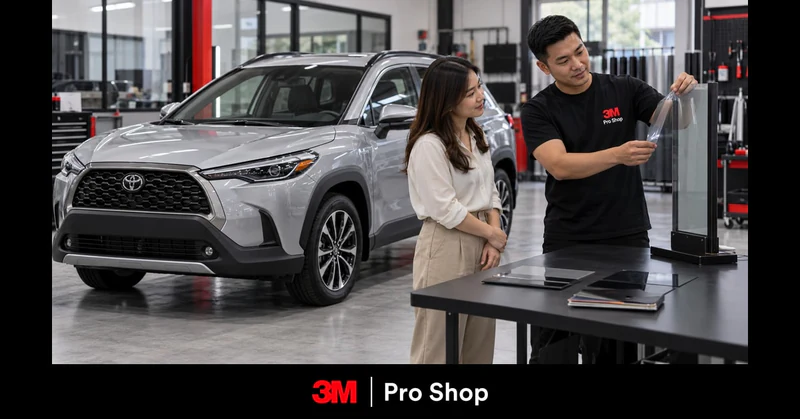
At 3M Pro Shop by P10X, we can explain the Crystalline Black codes proposed for your windows and what their published figures actually mean. If you already have a LLumar quotation, we are happy to go through the exact product names with you. That way you are comparing real products, not headline numbers.
Find out the best protection for your car
Visit a 3M Pro Shop and discover the cost-effective 3M Protective Film and Window Tint
Frequently Asked Questions
Is every LLumar film nano ceramic?
No. The Malaysian catalogue lists nano ceramic products such as AIR BLUE, TOP 70 and PIPL, as well as metallised products such as ATR. The exact series in the quotation determines which description applies.
Which LLumar range should I compare with Crystalline Black?
The fairest comparison is with the LLumar films actually offered for your car, listed window by window. An overseas range or an unnamed premium package won't tell you whether the construction, colour or light transmission is the same.
Does a higher infrared percentage mean better overall heat rejection?
No. Infrared rejection only covers the infrared part of sunlight. Total solar energy rejection (TSER) is the share of all solar energy the film blocks under stated test conditions, so it is the better figure to compare, as long as both films were tested on the same type of glass.
Is 3M Crystalline Black better than LLumar?
Not automatically. Crystalline Black is a metal-free film that combines optical layers with nano-ceramic technology, but that construction alone does not prove it beats every LLumar film. Which is better for your car depends on the exact shades compared, the glass they were tested on and the heat measure used.
Does a LLumar or 3M shade code guarantee JPJ compliance?
No. Visible light transmission, or VLT, is the amount of visible light passing through the finished glass and film together. Factory glass affects that reading, so a 3M or LLumar shade code cannot guarantee JPJ compliance on your car.
Will heat-rejection tint stop someone breaking my window?
No. A high heat rejection figure or a familiar brand does not show that ordinary window tint provides the same protection as security film. If security matters to you, you can ask which security film would be fitted, how it would be installed and what protection that installation is designed to provide.