
7 Common Mistakes to Avoid When Caring for Your Paint Protection Film in Malaysia

If you have invested in paint protection film care tips Malaysia recommends following closely, you want that film to last. Paint protection film is not cheap. Whether you chose 3M PPF Series 150, Series 100, or Series 50, proper aftercare determines whether your film stays clear and protective for years or starts peeling, yellowing, and losing effectiveness within months.
Many Malaysian car owners make the same mistakes immediately after installation or during routine cleaning. These mistakes do not just affect how the film looks. They compromise the self-healing properties, reduce warranty coverage, and accelerate wear in Malaysia's hot, humid climate. This guide walks through the most common PPF care errors and shows you exactly how to avoid them.
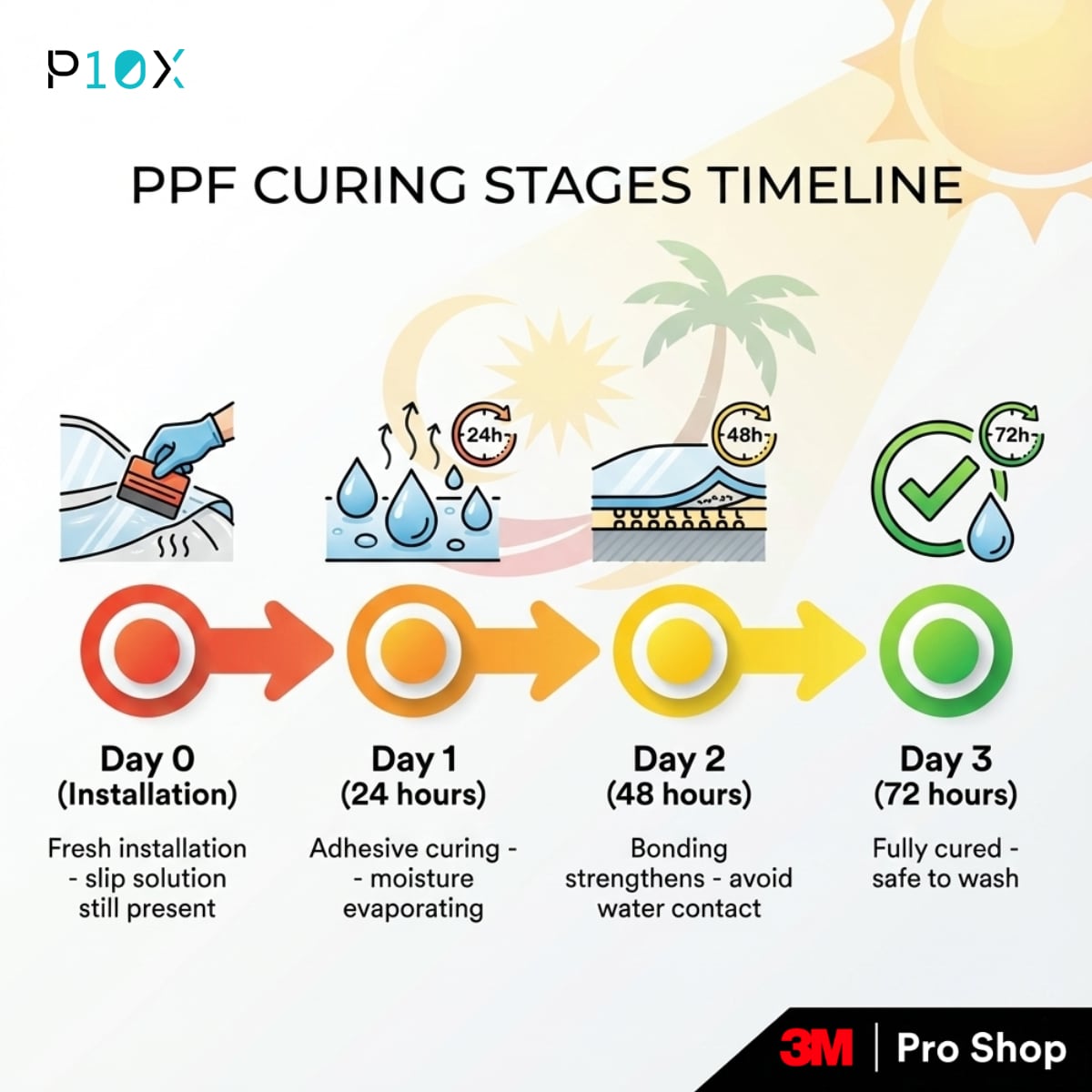
Mistake 1: Washing Too Soon After Installation
Why 72 hours matters
The adhesive layer under your PPF needs time to cure fully. During the first 72 hours, moisture is still evaporating from under the film. If you wash the car too early, especially with high-pressure water, you risk introducing water under the edges or preventing the adhesive from bonding correctly to the paint.
In Malaysia's heat and humidity, installers apply a slip solution during PPF fitting. This liquid allows repositioning of the film for a perfect fit. The curing period lets that solution dry completely and the adhesive set properly.
What to do instead
Park your car in a covered area for the first three days. If you must drive, avoid heavy rain or muddy roads. Light dust can be wiped gently with a clean microfiber towel, but do not use water or cleaning products. After 72 hours, you can begin hand washing with proper technique.
Mistake 2: Using Automated Brush Car Washes
The hidden damage from rotating brushes
Automated car washes with rotating brushes are convenient. However, those brushes collect dirt, grit, and debris from hundreds of cars. When they spin across your PPF, they create micro-scratches and swirl marks on the surface. Over time, this dulls the gloss finish and makes the self-healing top coat less effective.
The brushes also apply uneven pressure. At the edges of your PPF, where the film meets bare paint or wraps around curves, brushes can catch and lift the film. Once an edge starts lifting, water and dirt get underneath, leading to bubbling or peeling.
Safer washing options
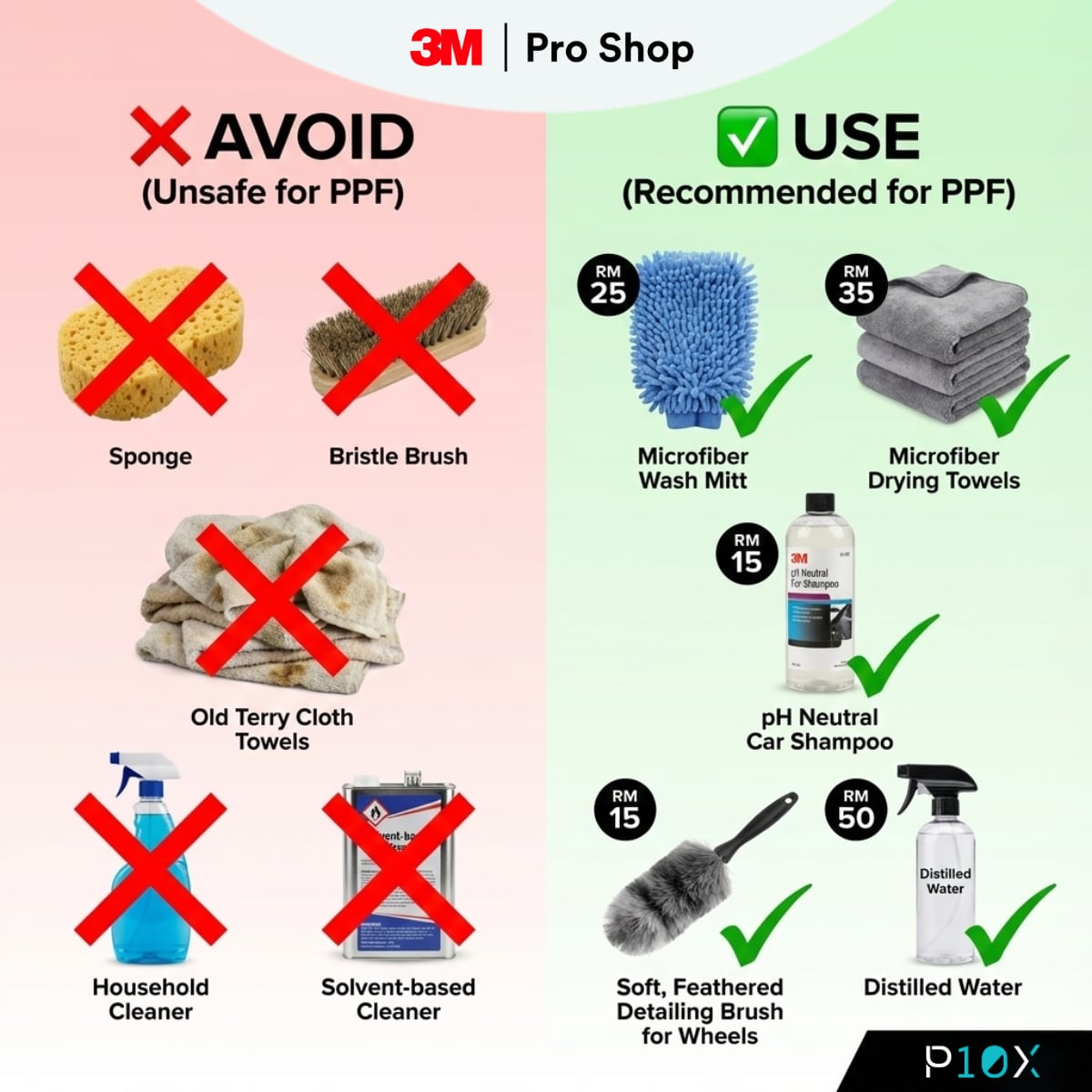
Hand washing is the best method. Use a pH-neutral car shampoo, two buckets (one for soapy water, one for rinsing your mitt), and a soft microfiber wash mitt. Rinse the car first to remove loose dirt. Wash from top to bottom in straight lines, not circular motions.
If you must use an automated wash, choose a touchless system that relies only on high-pressure water and foam. Touchless washes do not physically contact the film, so there is no risk of scratching or lifting edges. However, they may not remove stubborn contaminants as effectively as hand washing.
For more guidance on maintaining your PPF between washes, see our guide on how to maintain PPF on car Malaysia.
Mistake 3: Ignoring Fuel Spills and Contaminants
Why quick action prevents permanent stains
Petrol, diesel, and other automotive fluids can stain PPF if left on the surface. In Malaysia, you are refueling regularly, and spills happen. If fuel drips onto your bonnet or fender and sits for hours under the sun, it can penetrate the film's top layer or leave a discolored mark that is difficult to remove.
Tree sap, bird droppings, and insect remains are equally damaging. These organic substances are acidic. In tropical heat, they etch into the PPF surface faster than in cooler climates. What might take weeks to cause damage elsewhere can happen in days in Kuala Lumpur or Penang.
Immediate response protocol
Carry a small pack of microfiber towels in your car. When you notice a fuel spill, wipe it off immediately with a dry or slightly damp towel. For sticky contaminants like tree sap, do not scrape or rub hard. Instead, soak the area with hot soapy water for a few minutes to soften the residue, then wipe gently. The heat loosens the bond without needing abrasive force.
If a stain has already set, avoid using solvent-based cleaners or abrasive compounds. Instead, visit a 3M Pro Shop for professional assessment. Some stains can be polished out without damaging the film, but this requires the right tools and experience.
Mistake 4: Using Abrasive Tools or Harsh Chemicals
Common cleaning mistakes that damage PPF
Scouring pads, stiff brushes, and rough towels scratch the PPF surface. Even if the scratches are minor, they accumulate over time and dull the finish. The self-healing technology in 3M PPF works for light surface marks caused by normal driving, but it cannot repair deep scratches from improper cleaning.
Harsh chemicals are another problem. Solvent-based cleaners, degreasers with strong alkaline or acidic formulas, and some household cleaners can break down the PPF's protective top coat. This leads to yellowing, reduced hydrophobic properties, and faster degradation under UV exposure.
What to use instead
Stick to automotive-specific products. Use a pH-neutral car shampoo designed for clear coats and films. For drying, use clean, plush microfiber drying towels. Change your towels regularly and wash them separately from other laundry to avoid picking up lint or debris.
When dealing with stubborn dirt, use a dedicated automotive clay bar or a fine-grade detailing clay. This removes embedded contaminants without scratching. Follow up with a quick spray of distilled water or a waterless wash product to maintain the hydrophobic layer.
If you want a complete breakdown of recommended cleaning products and step-by-step techniques, refer to our article on recommended products and techniques for cleaning 3M Paint Protection Film.
Mistake 5: Neglecting Edge Maintenance
Why edges need extra attention
The edges of your PPF are the most vulnerable points. At door edges, bumper seams, and around panel gaps, the film terminates with a thin border. If dirt, wax, or water gets under these edges, it can cause the film to lift or create a visible line.
In humid Malaysian conditions, moisture can seep under lifted edges and promote mold or mildew growth. This not only looks bad but also weakens the adhesive further, leading to progressive peeling.
Inspection and care routine
Once a month, inspect the edges of your PPF closely. Look for any lifting, discoloration, or dirt buildup. Use a soft detailing brush and soapy water to gently clean around the edges. Do not use high-pressure water directly on the edges, as this can force water underneath.
If you notice an edge starting to lift, do not pull it further or try to re-stick it yourself. Visit a certified 3M authorized dealer Malaysia for proper edge re-sealing. Professional installers have the tools and adhesive primers to fix minor lifting before it becomes a larger problem.
Regular inspections help you catch issues early. For guidance on when professional attention is needed, read our article on when to schedule a professional PPF check-up.
Mistake 6: Skipping Regular Maintenance and Inspections
The cost of neglect
PPF is designed to be low maintenance, but it is not zero maintenance. Skipping regular cleaning and inspection allows contaminants to build up. Dirt left on the surface for weeks acts like sandpaper when you eventually wipe it off. Salt from coastal roads or pollutants from city traffic can gradually degrade the film if not removed.
Neglecting maintenance also means missing early warning signs. A small scratch, a lifted corner, or a discolored patch can all be addressed easily if caught early. Left unchecked, they can spread or worsen, requiring more expensive repair or even full film replacement.
Establishing a maintenance schedule
Wash your car every two weeks if you drive daily in urban areas. If your car is parked outdoors in direct sun, increase washing frequency to once a week to remove dust and pollutants before they bake onto the film.
Every three months, do a detailed inspection. Check all edges, high-impact areas like the bonnet and front bumper, and any sections that show heavy exposure to sun or rain. Look for changes in clarity, gloss, or texture.
Once a year, schedule a professional inspection at a 3M Pro Shop. Trained technicians can spot issues you might miss and recommend targeted maintenance. Regular professional checks can extend the life of your PPF significantly and ensure your warranty remains valid. Learn more about how regular maintenance extends the life and warranty of your 3M PPF.
Mistake 7: Improper Storage and Environmental Exposure
Heat and UV damage in Malaysian climate
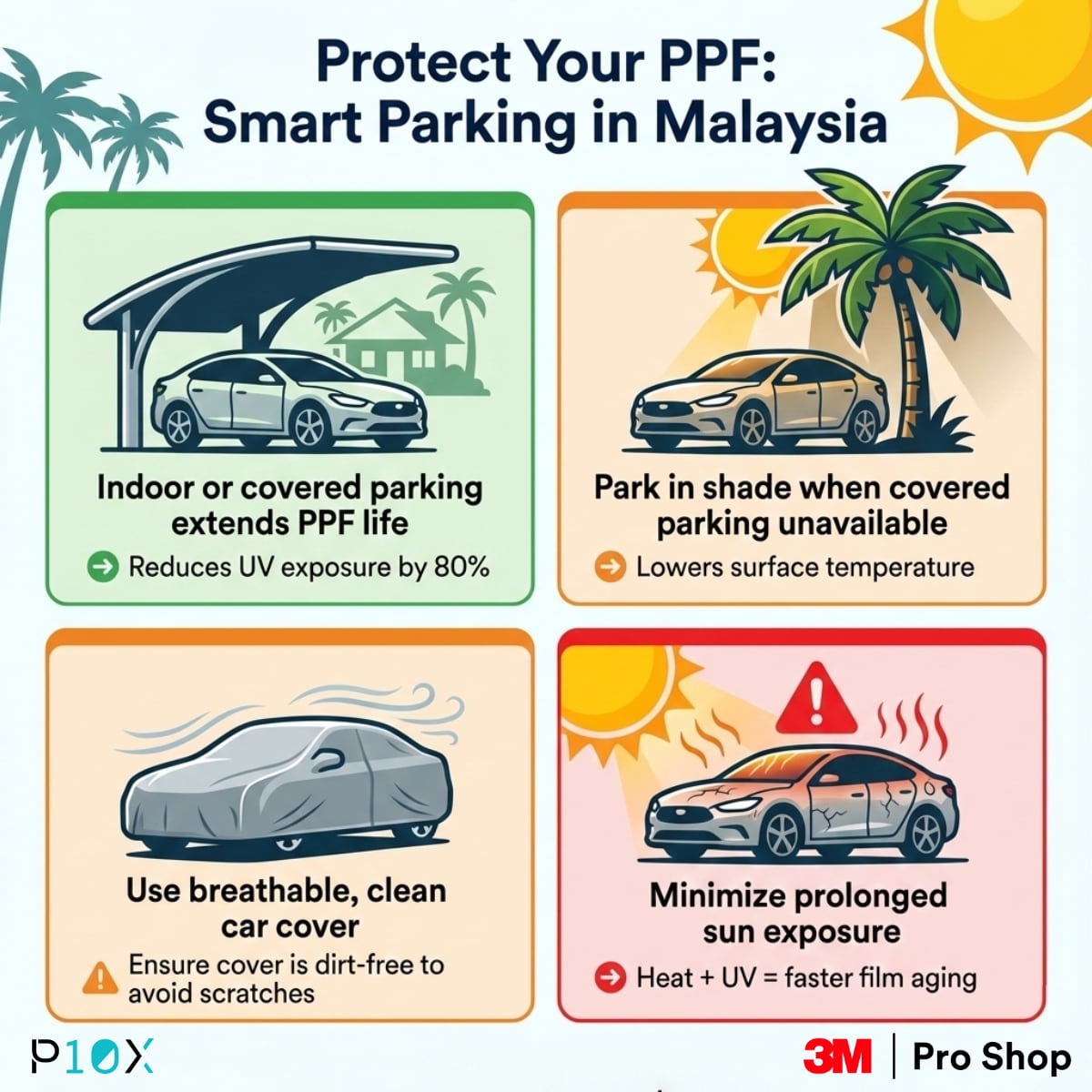
Malaysia's tropical sun is intense. Prolonged UV exposure can affect PPF over time, especially if the film is not maintained properly. While 3M PPF is engineered with UV inhibitors to resist yellowing and cracking, parking your car in direct sun every day for months will test those limits.
High temperatures also affect the self-healing properties. The top coat can heal minor scratches when exposed to heat, but excessive heat combined with dirt or chemical residue can reduce this ability.
Parking and storage best practices
Whenever possible, park your car in covered parking, under a carport, or in a shaded area. If you have no choice but to park outdoors, consider using a breathable car cover designed for vehicles with PPF. Make sure the cover is clean and does not trap moisture, as this can promote mildew.
If you store your car for extended periods, clean and dry it thoroughly first. Remove all contaminants, and store it in a cool, dry location away from direct sunlight. This keeps the film in optimal condition and prevents premature aging.
For more comprehensive aftercare advice tailored to Malaysian conditions, see our ultimate 3M PPF aftercare guide for Malaysian car owners.
Why Proper PPF Care Matters for Malaysian Drivers
Paint protection film is a significant investment. Proper care ensures you get the full lifespan out of your film, whether that is five years for Series 50, or longer for Series 100 and 150. When you avoid these common mistakes, you maintain the clarity, gloss, and protective properties that make PPF worthwhile.
Good care also protects your warranty. 3M PPF warranties cover defects and premature yellowing, but they require proper maintenance. If you damage the film through improper washing or chemical exposure, warranty claims may be denied.
Finally, well-maintained PPF preserves your car's resale value. Buyers pay more for vehicles with flawless paint and clear, intact PPF. Neglected film that has yellowed, peeled, or scratched tells a different story and reduces buyer confidence.
If you want to ensure your film receives the best care from the start, choose a certified installer. Read more about why 3M Pro Shop is Malaysia's most trusted automotive protection specialist.
Taking care of your PPF is straightforward once you know what to avoid. Give your film the attention it deserves, and it will protect your car's paint for years. When in doubt, consult a 3M Pro Shop for professional advice and service. Your car, your investment, and your peace of mind all benefit from proper paint protection film care.
Find out the best protection for your car
Visit a 3M Pro Shop and discover the cost-effective 3M Protective Film and Window Tint
Frequently Asked Questions
Can I use a pressure washer on PPF?
Yes, but keep the nozzle at least 30 cm away from the film and use a wide fan spray, not a concentrated jet. Avoid directing high pressure at the edges where the film could lift. Lower pressure settings are safer and still effective for rinsing.
How do I know if my PPF needs professional attention?
Look for visible lifting at edges, persistent bubbles that do not go away after a few weeks, yellowing or discoloration, or deep scratches that do not self-heal after exposure to heat. Any of these signs warrant a visit to a certified installer for assessment.
Is it safe to wax or polish over PPF?
Yes, you can apply wax or sealant designed for clear paint. Avoid products with abrasive compounds or heavy solvents. Use a soft applicator pad and wipe gently. Many car owners find that well-maintained PPF needs minimal wax since the film already has a hydrophobic top coat.
What should I do if my PPF starts to yellow?
Yellowing is usually caused by UV exposure or chemical contamination. If it appears within the warranty period and you have maintained the film correctly, contact your installer to discuss warranty coverage. If the yellowing is from improper care, professional polishing or film replacement may be necessary.
Can I take my PPF-protected car through an automated car wash if it is touchless?
Touchless washes are safer than brush washes, but check that the chemicals used are pH-neutral and safe for films. Some touchless systems use strong alkaline pre-soaks that can affect the PPF over time. Hand washing remains the safest option for long-term film care.

Fabian
He is passionate about revolutionizing the car protection services industry by bringing innovation and transparency to a traditionally opaque and often misunderstood field. His mission is to educate end users on the true benefits and importance of car protection, aiming to replace outdated practices with honest, customer-focused solutions. With a fresh approach to car tinting, paint protection film (PPF), and detailing services, he is committed to delivering a superior customer experience that sets a new standard in the market. He welcomes discussions about the future of the automotive industry and is eager to connect with like-minded professionals who share his vision for innovation, integrity, and excellence.
Experience the future of window tinting
Visit a 3M Pro Shop and discover the revolutionary Crystalline CR BLK film