
Does Peeling PPF Need to Be Replaced Immediately?
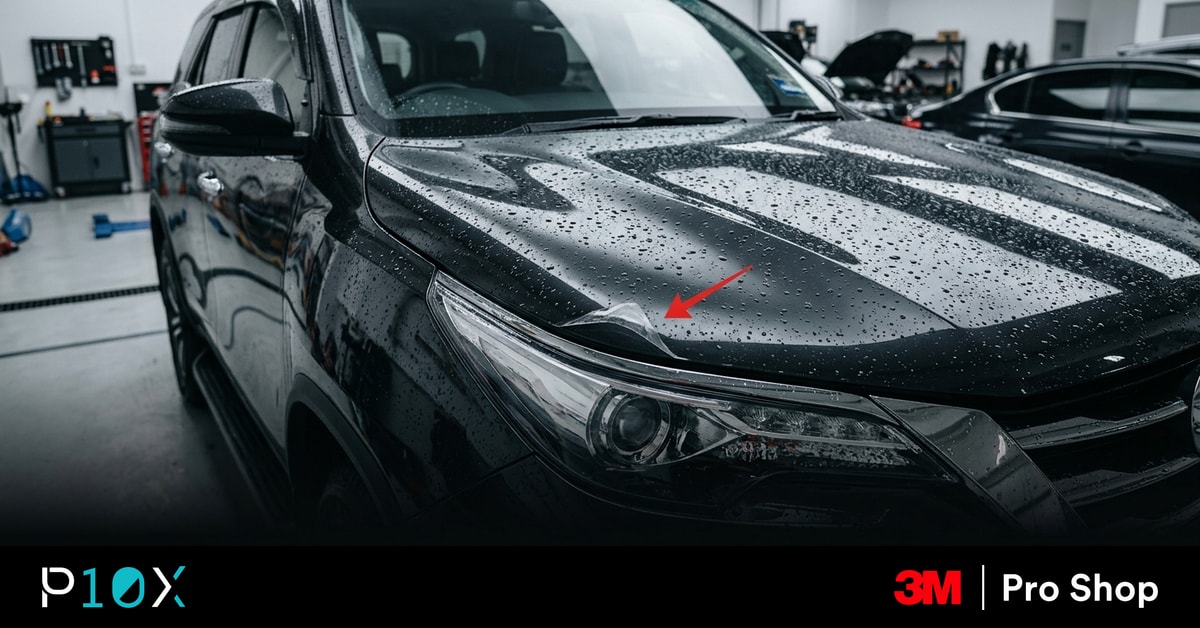
- A small, clean, recent lifted edge needs prompt inspection, not automatic full replacement.
- Dirt, stretching, cracking, yellowing, widespread lift, or a failed earlier repair make affected-panel replacement more likely.
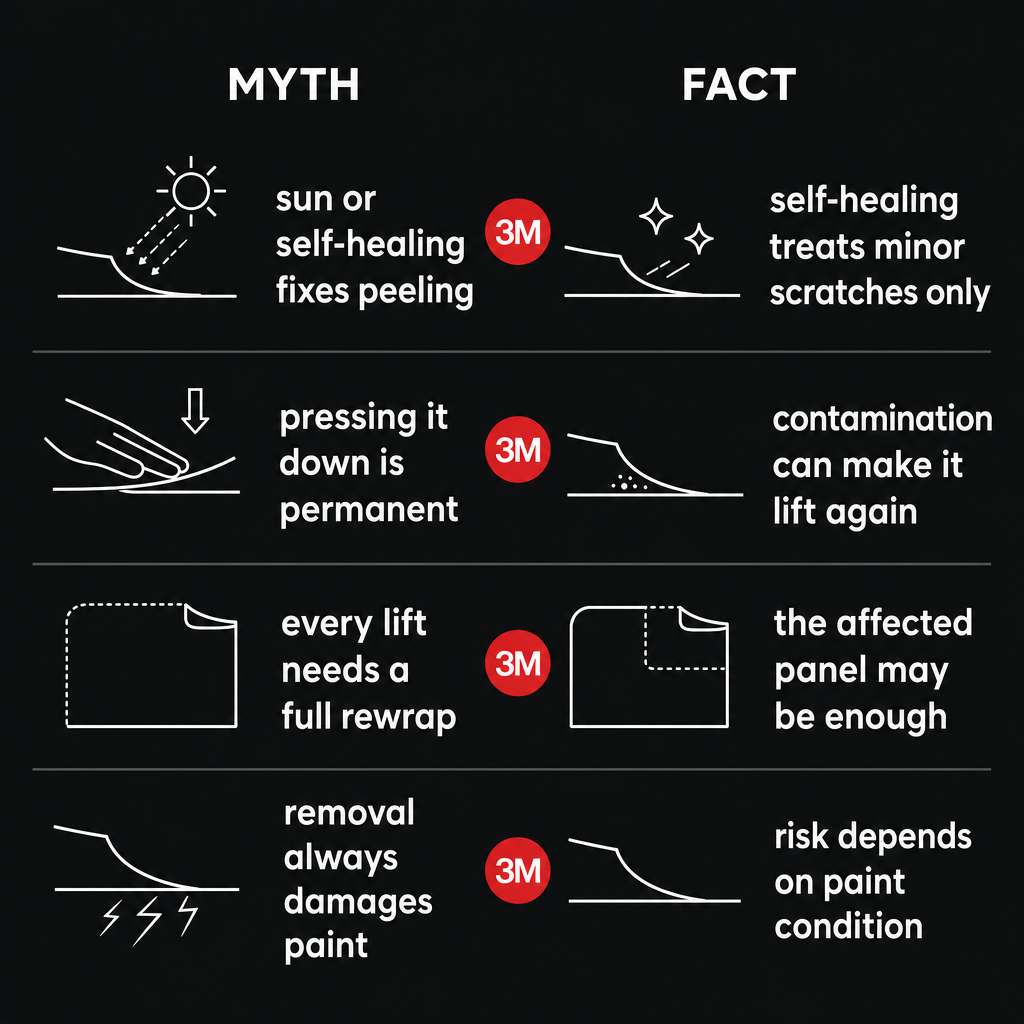
- Self-healing technology can reduce minor surface scratches with heat, but it cannot restore detached adhesive.
- Do not pull, cut, glue, heat, or pressure-wash a peeling edge yourself.
- Photograph the defect and ask a qualified installer for the smallest durable repair.
Peeling PPF replacement is not always needed the moment an edge lifts. A small, clean, recent lift may be repairable, but it should be inspected promptly before dirt and moisture enter the gap. Widespread lifting, cracking, yellowing, contamination, or repeat failure usually makes replacement of the affected panel the more durable option.
Malaysian heat, monsoon rain, outdoor parking, and strong pressure washers can make a small defect harder to ignore. The safest approach is to document the area, avoid disturbing it, and arrange an assessment. It also helps to understand why PPF may not self-heal and the signs your PPF needs a professional inspection before deciding what comes next.
What Does Peeling PPF Mean for Protection?
Why Should Lifted PPF Edges Be Checked Quickly?
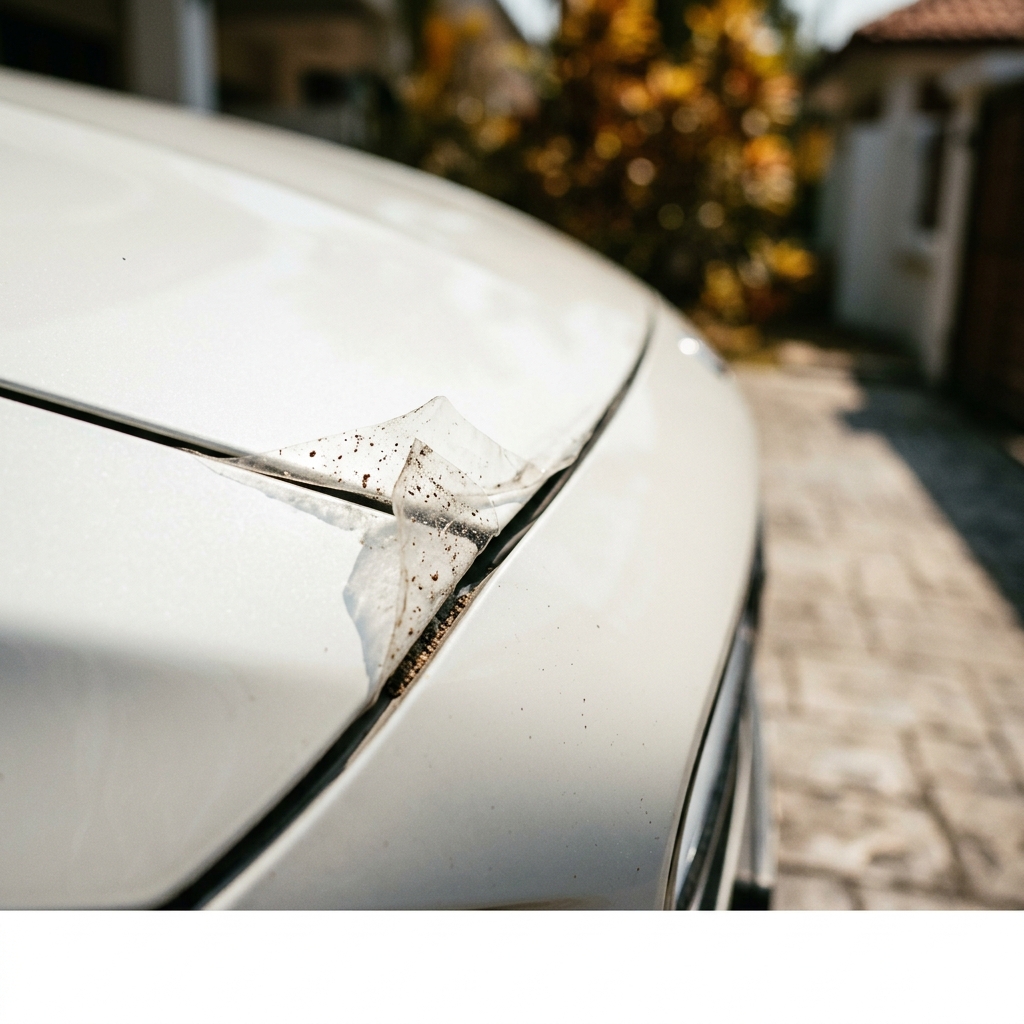
A quick response means arranging an installer review before washing, picking, or letting contamination build up. It does not mean replacing the film on the same day. Early assessment keeps more options open because a clean local lift may still be repairable, while a dirty or repeatedly lifting edge is less likely to hold.
A lifted edge can widen when a wash mitt, drying towel, or pressure-washer jet catches it. Dirt may form a dark line under clear film. Protection is also reduced across the exposed strip. The issue is usually not a driving emergency, but delaying after repeat lifting can turn a small correction into panel replacement.
Fresh installations deserve early follow-up. During the curing period, ask the installer whether the area should be monitored or corrected. Follow the guidance on how long PPF takes to cure before washing, and do not direct water pressure at the seam.

How Can You Tell Repair From Replacement?
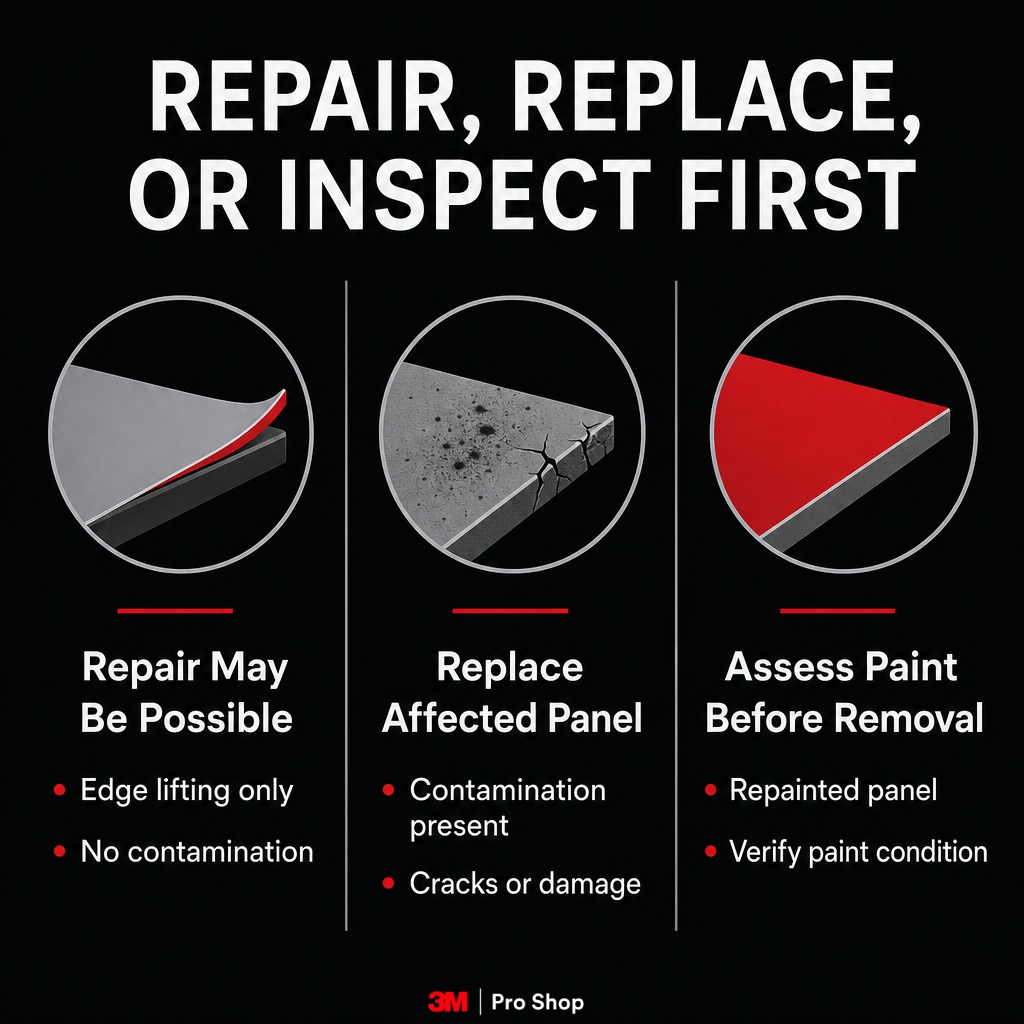
Repair is more plausible when the lift is small, recent, clean, and limited to one edge on otherwise clear film. Replacement is more likely when peeling spreads, debris has entered, the film is stretched, cracked, or yellowed, bubbles appear away from edges, or a previous repair lifts again.
| Observation | Likely next step | Urgency | What not to do |
|---|---|---|---|
| Small, clean, recent edge lift | Installer assessment and possible reseal | Prompt review | Do not press or pick repeatedly |
| Dirty or stretched lifted edge | Local correction or affected-panel replacement | Book soon | Do not add glue or solvent |
| Widespread lift or bubbling | Replace the affected panel | High priority | Do not pull the sheet |
| Yellowing, cracking, or repeat failure | Replace the affected panel | High priority | Do not use aggressive heat |
| Repainted or uncertain panel | Paint assessment before removal | Plan carefully | Do not attempt DIY removal |
Repair a Localised Edge
A trained installer may clean around the area, check how far contamination has travelled, and decide whether a reseal or local correction can last. A tiny corner is not automatically salvageable. Film that has stretched, trapped grit, or lost adhesive can lift again even after it looks flat.
Replace a Failing Panel
When adhesion failure spreads, the practical replacement unit is often the affected panel rather than the full car. Ageing, yellowing, cracks, contamination, or repeat repair failure all reduce the chance of a durable edge fix. Multiple failing panels may justify a broader plan, but one defect does not prove the whole installation has failed.
Inspect Uncertain Paint First
Tell the installer if the bumper or panel was repainted after an accident. Removal risk depends on paint preparation, clear-coat condition, film age, and removal technique. Factory paint in good condition and repaired paint should not be treated as identical cases.
What Causes PPF Peeling in Malaysia?
No single cause can be confirmed from appearance alone. Common contributors include contamination before installation, excessive tension around curves, unsecured edges, repeated pressure-washing at seams, brush contact, film age, and existing damage. Malaysia's heat, humidity, rain, and outdoor exposure make careful edge maintenance especially important.
Installation preparation matters because wax, oil, dust, or moisture can weaken the bond. Tight bumper corners and mirror shapes also require careful film handling. A new lifted edge may relate to installation, curing, or panel geometry, but a photo alone is not enough to assign blame.
Low mileage, touchless washing, or sheltered parking does not settle the cause by itself. Film condition, installation details, wash technique, age, and panel shape still need to be checked together.
Washing habits can accelerate an existing weakness. Hand washing is preferred. A touchless wash may be used when necessary, while brushes can scratch film or catch edges. Review common PPF care mistakes that can lift film edges before your next wash.
Heat and rain do not prove adhesive failure by themselves. Repeated hot-panel exposure, cooling rain, road grime, and outdoor parking can challenge an already vulnerable seam. An older outdoor-parked car with peeling, yellowing, and cracking is more likely to need affected-panel replacement than a clean edge on a recent installation.
How Does Professional Inspection Prevent Bigger Problems?
A useful PPF inspection is a diagnosis, not an automatic replacement quote. The installer should map the lifted area, check whether contamination has travelled beneath the film, review its age and warranty, assess paint and repair history, then explain whether resealing, local correction, or affected-panel replacement offers the most durable outcome.
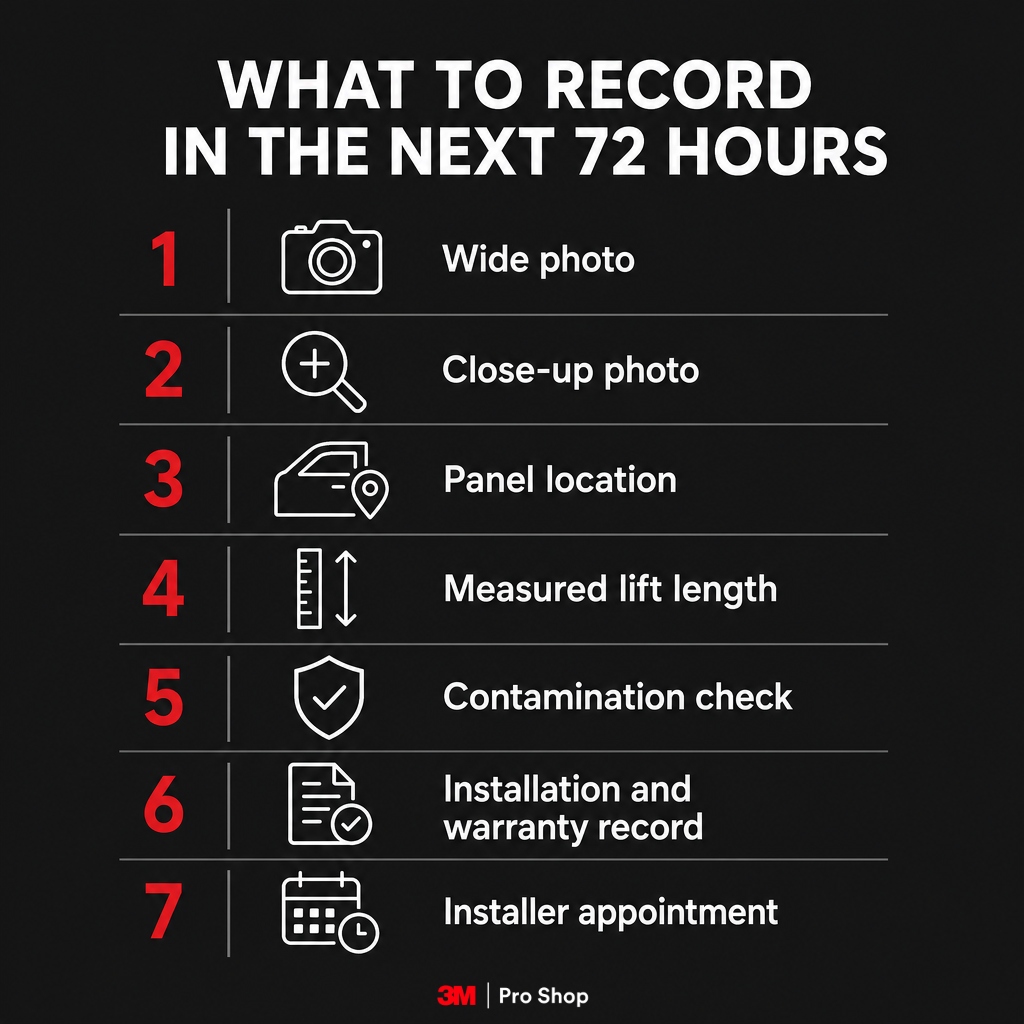
Before the appointment, take one wide photograph and one close view in daylight. Note the panel, approximate length of the lift, when you first saw it, your latest wash method, and whether it is growing. Keep the invoice, installation date, film series, warranty record, and installer details available.
For 3M installations, record whether the product is Series 150 Gloss, Series 100 Gloss, or Series 50 Gloss. Do not assume one warranty period applies to every series or installation. Use the warranty supplied with your job and confirm the terms with the specific authorised dealer.
Warranty terms vary by product, installation, and documented conditions. Check how to maintain your 3M PPF warranty in Malaysia, then ask the original installer what evidence is needed. An early issue may qualify for installer follow-up, but inspection is still required before responsibility or coverage can be confirmed.
Ask for the smallest durable intervention. A good explanation should cover why a reseal may hold, why contamination prevents it, or why replacing one panel is more reliable. If removal is proposed, disclose repainting or accident repair before work starts.

Which Mistakes Make Peeling PPF Worse?
Pulling the loose film, cutting it with a blade, adding household glue, using harsh solvent, or blasting the seam with water can turn a controlled repair into a larger problem. Pressing the edge down may hide the symptom briefly, but it cannot remove trapped dirt or correct stretched film.
Avoid these actions before inspection:
- Do not pull or peel the lifted section.
- Do not cut the film with a razor or knife.
- Do not apply glue, adhesive promoter, or solvent at home.
- Do not use a heat gun, boiling water, or aggressive direct heat.
- Do not aim a pressure washer at the open edge.
- Do not scrub it with an abrasive brush or scraper.
- Do not assume sunlight or self-healing will restore adhesion.
If washing cannot wait, keep water pressure and wiping motion away from the lifted seam. Dry gently around the area without catching the edge. For a complete routine, use the complete 3M PPF aftercare guide rather than experimenting with household products.
What Should Your 72-Hour Action Checklist Include?
During the next 24 to 72 hours, photograph the defect, stop picking or pressure-washing it, check the installation record, and contact the original or authorised installer. Note whether dirt, moisture, yellowing, cracks, or bubbles are visible. Seek a faster review if the lift spreads or catches during normal handling.
Record these details before calling:
- Panel and exact location
- Approximate length of the lifted edge
- Clean edge or visible contamination
- Clear film or yellowed and cracked film
- Recent installation or older film
- First occurrence or repeat failure
- Factory paint, repaint, or unknown history
- Recent hand wash, brush wash, or pressure wash
- Installation date, product series, invoice, and warranty record
- Written recommendation for repair or affected-panel replacement
Compare what you see over a short period only if the installer recommends monitoring. Do not use waiting as a reason to continue washing over the defect. The goal is to preserve evidence and prevent avoidable contamination while a professional decides the next step.
Choose Prompt Inspection Before Selective Replacement
Peeling PPF needs prompt attention, but replacement should match the defect. Preserve evidence, avoid unsafe DIY work, and ask whether a clean edge repair or affected-panel replacement is the smallest durable solution. If paint history is uncertain, plan removal carefully with a 3M Authorized Dealer such as 3M Pro Shop by P10X.
A calm inspection protects more options than pulling at the film or waiting until the gap fills with dirt. Bring your photos, installation record, wash history, and repaint information. Ask for the reason behind the recommendation, what warranty may apply, and what would cause the problem to return.
What Should You Do When PPF Starts Peeling?
The right response is to protect the area, document it, and arrange professional assessment. Most small cases are not emergencies, but they should not be ignored while contamination has time to spread. The answers below address common repair, replacement, removal, and warranty questions Malaysian owners ask when a film edge begins to lift.
Can Peeling PPF Be Repaired?
Yes, some peeling PPF can be repaired when the lift is small, clean, recent, and limited to an edge. An installer must first check for trapped grit, stretched film, and failed adhesive. If contamination has travelled underneath or the edge has failed before, replacing the affected panel may last longer.
Can Peeling PPF Damage My Car's Paint?
The lifted film does not automatically damage paint, but the open gap reduces protection and can trap abrasive dirt. Risk during removal depends on paint condition, repaint history, film age, and technique. Avoid pulling the film yourself, especially on repaired bumpers or panels with uncertain clear coat.
Can I Fix Lifting PPF Edges at Home?
No unsafe DIY method is recommended. Pressing may only hide the lift, while glue, cutting, solvent, or aggressive heat can contaminate the repair area or damage film and paint. Photograph the edge, keep washing pressure away from it, and let an installer assess whether it can be resealed.
How Do I Know if My PPF Needs Replacing?
Replacement is more likely when lifting spreads, dirt has entered, the film is yellowed or cracked, bubbles appear away from edges, or a previous repair fails. The durable scope is often one affected panel rather than the full car. Film age and paint condition also influence the decision.
Will Removing PPF Damage My Paint?
Not always. Removal outcome depends on whether the paint is factory-applied or repainted, the condition of the clear coat, film age, and the installer's method. Disclose accident repair and repaint history before removal. A professional assessment is especially important where paint is thin, chipped, or already lifting.
Can New PPF Be Applied Immediately After Removal?
Sometimes, but only after the panel is inspected and properly prepared. Adhesive residue, paint defects, contamination, or fresh paint may require extra work or waiting. The installer should confirm that the surface is stable, clean, and suitable before applying new film.
Why Is My PPF Peeling?
Possible causes include surface contamination before installation, high tension around curves, unsecured edges, pressure-washer contact, brush abrasion, age, or existing film damage. Appearance alone cannot confirm the cause. Installation timing, wash history, location of the lift, and progression give the installer better diagnostic evidence.
Is It Worth Repairing PPF, or Should I Replace It?
Repair is worth considering for a small, clean, first-time edge lift on otherwise healthy film. Replacement is more sensible when contamination, stretch, ageing, cracking, widespread separation, or repeat failure makes a reseal unreliable. Ask for the smallest durable option and the evidence supporting that recommendation.
Find out the best protection for your car
Visit a 3M Pro Shop and discover the cost-effective 3M Protective Film and Window Tint
Author

Kelvin Cheen
Kelvin is an Automotive Solutions Consultant and Branch Manager at 3M Pro Shop. With 4+ years of field experience in premium vehicle surface protection, Kelvin specializes in flagship 3M technologies, including 3M Crystalline Black optical film and Ceramic IR tints, 3M Paint Protection Film (PPF), etc. His focus is on delivering transparent, engineering-backed advice to car and EV owners, cutting through sales upsells to ensure customers choose the exact thermal rejection and paint protection tailored to their driving needs.
Experience the future of window tinting
Visit a 3M Pro Shop and discover the revolutionary Crystalline CR BLK film