
Professional PPF Maintenance Malaysia: Signs Your Film Needs Expert Attention

Malaysian car owners who invest in Paint Protection Film often focus on installation quality but overlook ongoing maintenance requirements. Understanding ppf maintenance in Malaysia timing and recognizing signs that your film needs professional attention prevents minor issues from becoming expensive problems. Paint Protection Film protects your vehicle's paint from environmental damage, but the film itself requires periodic inspection and care to maintain that protection throughout its warranty period.
This guide explains when to schedule professional check-ups, what signs indicate your PPF needs immediate attention, and how Malaysian climate conditions affect maintenance intervals.
Why Professional PPF Inspection Matters
Paint Protection Film represents a significant investment in vehicle appearance and value preservation. Professional inspection by trained technicians identifies developing problems before they cause permanent damage or require complete film replacement. Many PPF issues progress gradually, remaining invisible to car owners during regular washing and daily use until damage becomes severe.
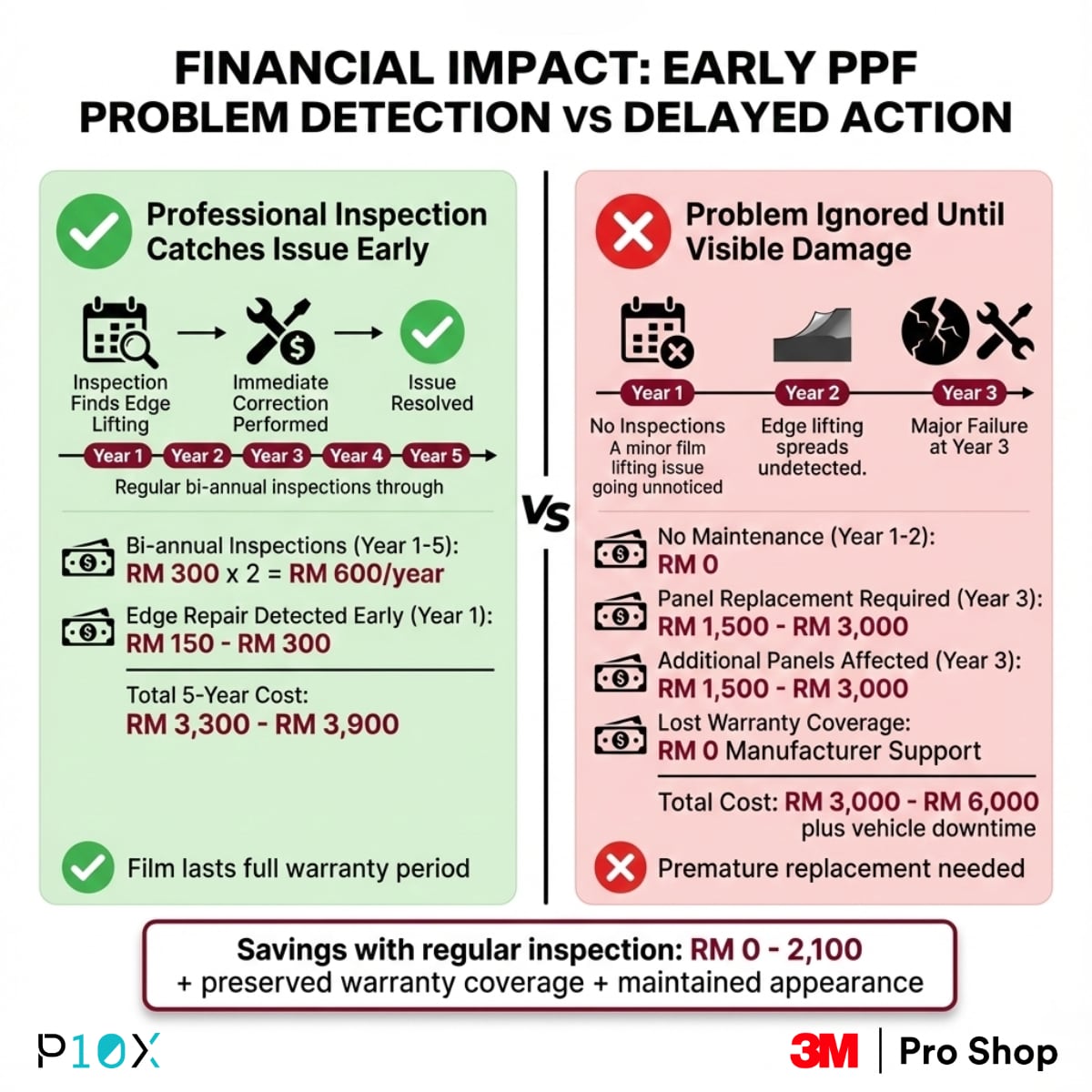
Early detection saves money and extends film life. A lifted edge detected during inspection can be corrected with adhesive reapplication costing RM150 to RM300, while ignored lifting eventually spreads across entire panels, requiring film removal and reinstallation at RM1,500 to RM3,000 per panel depending on vehicle type and coverage area.
Professional inspection also protects warranty coverage. Most 3M Paint Protection Film warranties require documented maintenance at specified intervals. Missing these inspections can void warranty coverage, leaving you responsible for replacement costs if manufacturer defects develop. Understanding ppf warranty terms helps you maintain compliance with required care schedules.
Trained technicians identify issues that car owners miss. They use proper lighting, magnification, and inspection techniques to detect contamination embedded in the film's top coat, early signs of adhesive degradation, and stress points around complex vehicle contours where problems typically begin. This expertise catches problems at stages when correction remains straightforward and affordable.
Recommended Inspection Intervals
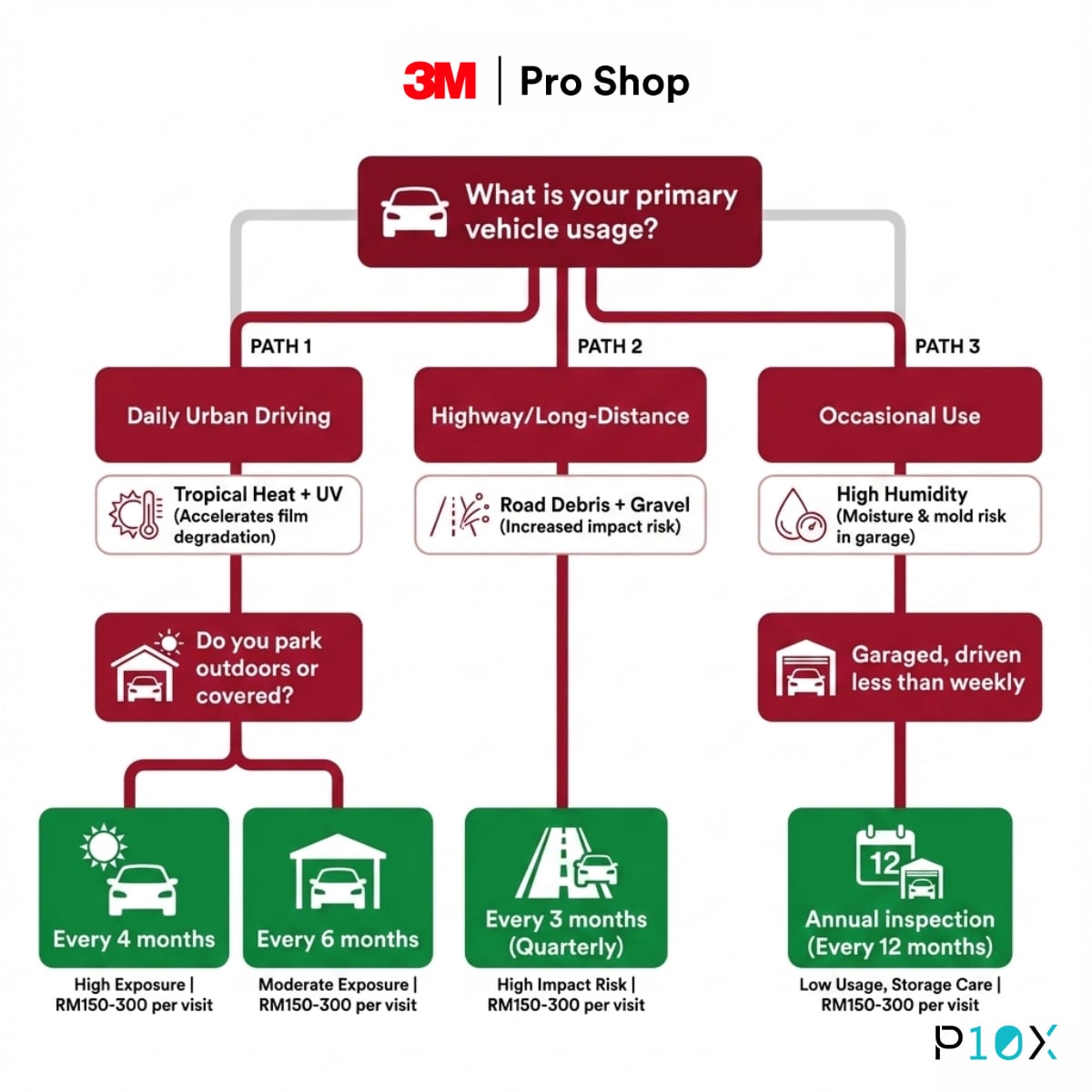
Inspection frequency depends on your vehicle usage patterns, parking environment, and driving conditions. Malaysian climate and road conditions generally require more frequent maintenance than manufacturer guidelines designed for temperate regions.
Daily Urban Driving
Vehicles driven daily in Kuala Lumpur, Petaling Jaya, or other Malaysian cities should receive professional PPF inspection every six months. Urban driving exposes film to diesel particulates, road construction dust, and frequent washing that gradually stress adhesive bonds and film surfaces.
Six-month intervals allow technicians to monitor edge adhesion around door handles, mirrors, and complex curves where lifting typically begins. They can clean embedded contamination before it bonds permanently to the film surface and check indicate UV damage or improper initial installation.
For vehicles parked outdoors daily rather than garaged, consider inspection every four months. Direct sun exposure, bird droppings, and tree sap accumulation accelerate film degradation compared to covered parking. Professional service removes contamination that home washing cannot eliminate and applies protective treatments that extend time between major maintenance.
Highway and Long-Distance Driving
Vehicles driven primarily on highways or used for regular long-distance travel benefit from quarterly professional inspection. Highway driving generates constant bombardment from loose gravel, road debris, and insects. These impacts stress the film more severely than urban stop-and-go traffic.
Quarterly inspection allows early detection of micro-tears or chips in the film before they expand. Technicians can repair small damage and prevent moisture intrusion under edges near impact points. This frequency also addresses rapid contamination buildup from highway speeds and extended exposure to environmental elements during long drives.
Garaged and Occasional Use
Vehicles garaged and driven occasionally can extend inspection intervals to annual service. Protected storage reduces UV exposure, contamination accumulation, and environmental stress. However, annual professional maintenance remains important to monitor adhesive condition and ensure proper film performance when the vehicle is used.
Even garaged PPF requires attention because adhesive can degrade over time regardless of usage. Malaysian humidity affects adhesive chemistry even in covered parking. Annual inspection verifies that film maintains proper bonding and identifies any moisture intrusion that could cause hidden delamination.
Visual Signs Your PPF Needs Immediate Attention
Certain visible indicators signal that your Paint Protection Film requires professional assessment regardless of your regular inspection schedule. Addressing these signs promptly prevents problems from expanding and protects your film investment.
Edge Lifting and Peeling
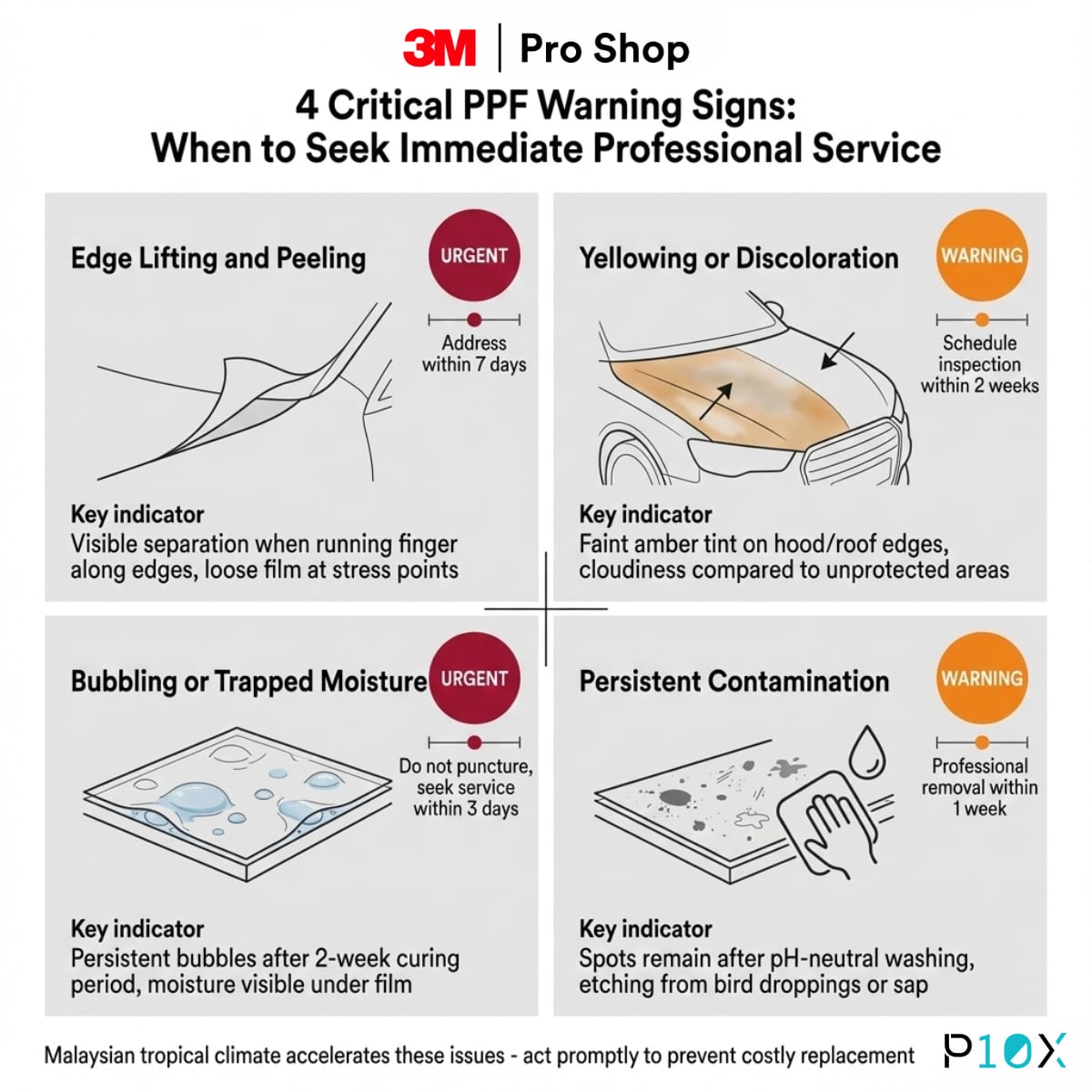
Film edges that lift away from paint surfaces represent the most common PPF problem requiring immediate professional attention. Lifting typically begins at high-stress points around door handles, mirror bases, panel seams, and complex curves where the film transitions between surfaces.
Early stage lifting appears as slight separation visible when you run your finger along film edges. The film may feel loose or show a visible gap between the edge and paint. At this stage, professional service can reapply adhesive and reseal edges, preventing further separation.
Ignored lifting progresses rapidly. Once an edge lifts, moisture and contaminants enter the gap between film and paint. This intrusion spreads the separation, eventually requiring complete panel replacement rather than simple edge correction. Address any visible lifting within a week of discovery to minimize repair costs and preserve surrounding film.
Bubbling or Trapped Moisture
Bubbles under PPF indicate adhesive failure, contamination during installation, or moisture intrusion through lifted edges. Small bubbles sometimes appear immediately after installation as remaining water evaporates during the curing period. These installation bubbles typically disappear within a week as the film fully bonds.
Bubbles that persist beyond two weeks or appear after the initial curing period signal problems requiring professional attention. Moisture trapped under the film can promote mold growth, cause permanent paint staining, or lead to complete adhesive failure. Do not attempt to puncture bubbles yourself, as this damages the film and voids warranty coverage.
Professional technicians can assess whether bubbles result from correctable installation issues or indicate film failure requiring replacement. Early intervention often allows correction without full panel reinstallation, saving significant cost compared to delayed action.
Persistent Contamination
Contamination that resists removal through proper home washing techniques indicates either embedded particles requiring professional clay bar treatment or chemical staining that has penetrated the film's top coat. Bird droppings, tree sap, road tar, or industrial fallout can etch or stain PPF if not removed promptly using appropriate techniques.
If you notice spots, stains, or embedded particles that remain after gentle cleaning with pH-neutral products and microfiber materials, schedule professional service. Technicians use specialized products and methods that safely remove stubborn contamination without damaging the film. Attempting aggressive home removal with inappropriate products or abrasive materials can permanently damage PPF surfaces. Understanding how to maintain ppf on car helps you recognize when professional intervention becomes necessary.
Malaysian Climate Impact on PPF Condition
Malaysia's tropical environment affects Paint Protection Film differently than temperate climates where many products are tested and rated. Understanding these climate-specific factors helps you monitor your PPF more effectively and adjust inspection schedules to local conditions.
Heat and UV Acceleration
Consistent high temperatures and intense UV exposure in Malaysia accelerate PPF aging compared to cooler regions. Surface temperatures on vehicles parked in direct sun regularly exceed 70°C, stressing adhesive bonds and film materials. UV radiation works continuously to break down polymer chains in the film structure despite built-in UV stabilizers.
This accelerated aging means PPF in Malaysian conditions may show signs of degradation earlier than manufacturer estimates based on temperate climate testing. Monitor your film more closely if you park outdoors regularly or drive in direct sun for extended periods daily. Consider covered parking whenever possible to reduce heat and UV stress on your PPF investment.
Professional inspection becomes more critical in tropical climates because problems develop faster. What might take 18 months to become visible in temperate regions can appear in 12 months under Malaysian conditions. Adjust your inspection frequency upward if you notice any early signs of degradation between scheduled maintenance.
Humidity and Moisture
High humidity throughout Malaysia creates persistent moisture that affects PPF adhesive chemistry over time. Unlike dry climates where adhesive remains stable, Malaysian humidity can gradually soften adhesive or promote moisture migration under film edges if any lifting occurs.
Humidity also extends the time required for complete adhesive curing after installation. While installers typically recommend 48 to 72 hours before washing, Malaysian humidity may require longer curing periods. Discuss climate-appropriate curing times with your installer to ensure proper initial bonding.
Monitor film edges carefully during monsoon seasons when humidity reaches peak levels. Water intrusion at lifted edges accelerates during heavy rain periods. If you notice trapped moisture or edge separation during wet months, seek professional service immediately rather than waiting for your next scheduled inspection.
Contaminant Bonding
Malaysian heat causes road tar, tree sap, bird droppings, and industrial fallout to bond more aggressively to PPF surfaces compared to cooler climates. The combination of heat and contamination creates chemical reactions that can etch or stain film more rapidly than in temperate regions.
This means contamination removal cannot be delayed. What might sit harmlessly on film for a week in cooler climates can cause permanent staining in Malaysian heat within 24 to 48 hours. Inspect your PPF regularly for contamination and address it immediately using proper removal techniques covered in ppf aftercare service guidelines.
Professional inspection includes contamination assessment and removal using specialized products. Technicians can identify embedded particles that home cleaning cannot reach and apply protective treatments that reduce future contamination adhesion. This service extends time between major cleanings and prevents permanent film damage.
What Professional Inspection Includes
Understanding what happens during professional PPF maintenance helps you evaluate service quality and ensures you receive comprehensive assessment rather than cursory visual checks.
Complete Film Edge Examination
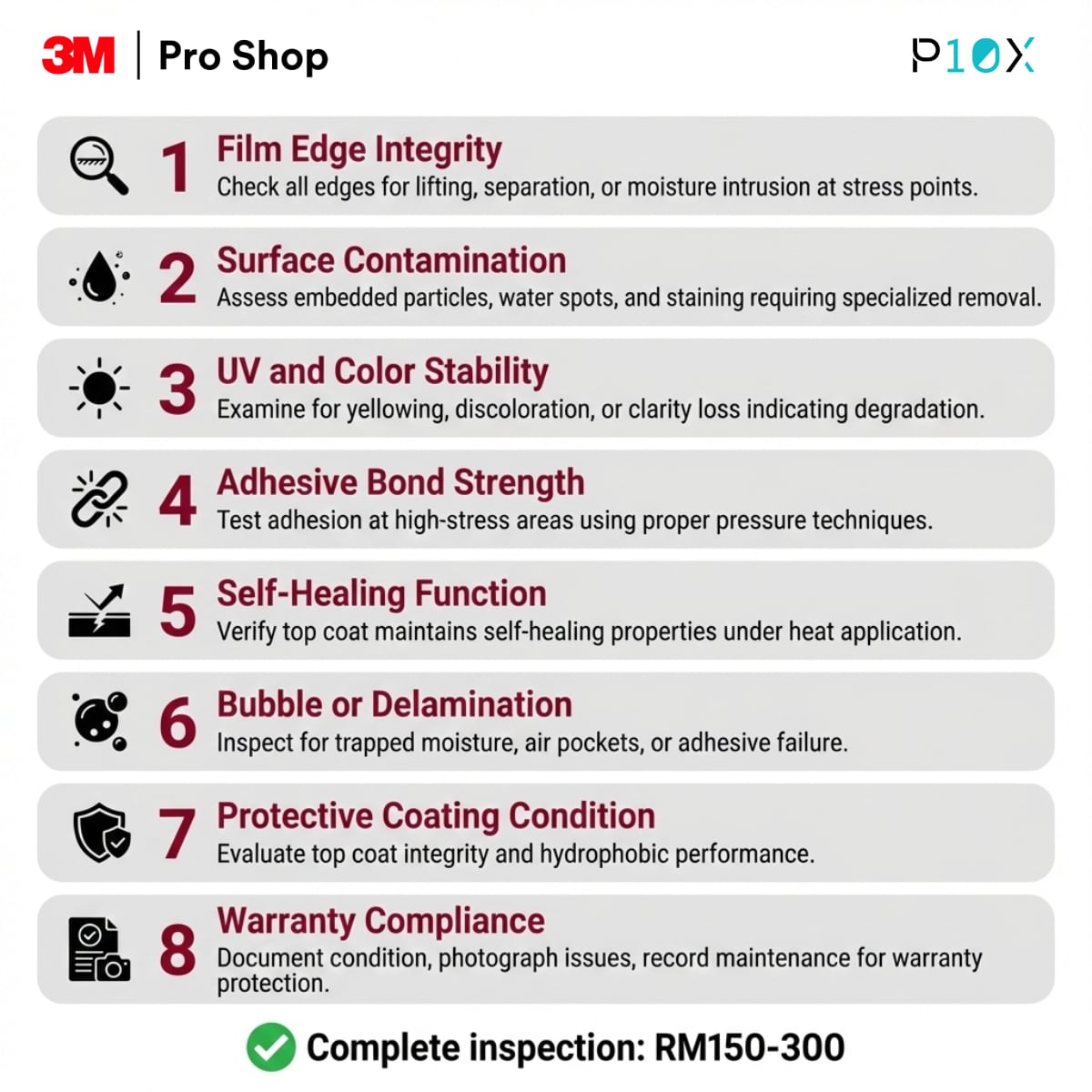
Technicians systematically inspect all PPF edges for signs of lifting, moisture intrusion, or adhesive degradation. They use proper lighting and magnification to detect early-stage problems not visible during regular washing or daily use. This examination covers edges around door handles, mirrors, panel seams, and any areas where film transitions between surfaces.
Edge inspection identifies stress points where lifting typically begins. Technicians apply light pressure to test adhesion strength and check for any separation or air pockets. They examine the transition between protected and unprotected areas to ensure clean edges without contamination buildup.
If lifting is detected, technicians assess whether edge resealing provides adequate correction or whether panel reinstallation becomes necessary. Early detection usually allows simple edge correction, while advanced lifting requires more extensive service.
Surface Contamination Assessment
Professional inspection includes evaluation of embedded contamination, water spotting, and surface clarity. Technicians identify particles or staining that regular washing cannot remove and determine appropriate removal methods. They use specialized lighting to reveal contamination not visible under normal conditions.
Contamination assessment leads to clay bar treatment when needed. This process safely removes embedded particles without scratching the film, restoring surface clarity and smoothness. Professional clay bar service costs RM100 to RM200 but prevents permanent contamination bonding that would eventually require panel replacement.
UV Damage and Discoloration Check
Technicians examine film for any signs of UV degradation, or color shift compared to unprotected paint areas. They use color matching techniques to detect early-stage discoloration that might not be obvious to vehicle owners. This examination helps identify whether from environmental factors outside warranty terms.
UV damage assessment includes checking for top coat breakdown, surface crazing, or loss of gloss that indicates advanced aging. These signs help technicians recommend appropriate service intervals and determine whether protective treatments can extend film life or whether replacement provides the better solution.
Warranty Documentation and Records
Professional service includes documentation of film condition, any issues discovered, and corrective actions taken. This paperwork becomes critical if warranty claims arise later. Service records prove you maintained the film according to manufacturer requirements, protecting your coverage for manufacturer defects.
Technicians photograph any problem areas and note specific locations for future reference. This documentation helps track whether issues progress between inspections and provides evidence supporting warranty claims if film failure occurs within coverage periods.
Choosing Professional PPF Maintenance Service
Selecting qualified service providers ensures your inspection delivers real value rather than cursory examination that misses developing problems.
Certified Installer Advantage
The same certified installers who can properly install PPF possess the training and tools to conduct thorough maintenance inspections. They understand how 3M products should perform under normal use and can identify problems resulting from installation errors, product defects, or improper care.
Certified installers have access to manufacturer technical support if unusual problems appear during inspection. They can consult with 3M regarding whether observed issues fall within warranty coverage and coordinate any necessary warranty claims. This manufacturer connection provides protection that independent service providers cannot match.
For locations of certified facilities, explore 3M Pro Shop locations across Kuala Lumpur and Selangor. These authorized dealers offer professional inspection services that complement your home maintenance routine and protect your film investment.
Service Scope and Pricing
Quality professional PPF inspection should include edge examination, contamination assessment, UV damage check, cleaning or correction of minor issues, protective treatment application, and warranty documentation. Comprehensive service typically costs RM150 to RM300 depending on vehicle size and film coverage area.
This pricing should be transparent with detailed breakdown of inspection components, any additional services recommended, and clear explanation of findings. Avoid services offering extremely low inspection fees, as these often represent cursory visual checks rather than thorough assessment.
If your vehicle requires Paint Protection Film, professional installation by certified experts ensures proper initial application that reduces future maintenance needs. Understanding car ppf installation in Malaysia standards helps you evaluate whether installation quality meets specifications that support long-term film performance.
Cost Comparison: Prevention Versus Replacement
Understanding the economics of regular PPF maintenance versus premature film replacement helps justify inspection costs as sensible investment protection rather than optional expense.
Regular professional inspection every six months at RM150 to RM300 per session totals RM300 to RM600 annually. Over a typical five-year ownership period, maintenance costs reach RM1,500 to RM3,000 total. This investment prevents problems that would cost significantly more to correct through film replacement.
Single panel PPF replacement due to neglected lifting, contamination. Full front-end replacement including hood, fenders, and bumper can exceed RM8,000 to RM12,000. These replacement costs far exceed the total maintenance investment over vehicle ownership.
Early problem detection through regular inspection also preserves warranty coverage. Warranty replacement of defective film costs nothing out of pocket when you maintain required inspection schedules and documentation. Neglecting maintenance voids coverage, leaving you responsible for full replacement costs even when manufacturer defects cause failure.
Well-maintained PPF preserves vehicle appearance and resale value throughout ownership. Buyers recognize documented maintenance as evidence of careful vehicle care, often adding RM1,000 to RM2,000 to resale value compared to vehicles with degraded or failing PPF. This return partially offsets maintenance costs while delivering ongoing protection benefits during your ownership.
If you notice any of the warning signs described, particularly edge lifting, persistent contamination, or bubbling, schedule professional inspection within a week rather than waiting for your next scheduled service. Maintain regular inspection intervals appropriate to your usage patterns and driving conditions. Keep all service documentation organized for warranty protection. Choose certified installers for both installation and maintenance to ensure proper care throughout your PPF ownership. Professional PPF maintenance represents sensible investment protection that extends film life, preserves warranty coverage, and maintains the protection quality you paid for during installation.
Find out the best protection for your car
Visit a 3M Pro Shop and discover the cost-effective 3M Protective Film and Window Tint
Frequently Asked Questions
Can I perform PPF inspections myself or do I need professional service?
You can conduct basic visual checks for obvious problems like edge lifting. However, trained technicians identify developing issues not visible to car owners using proper lighting, magnification, and assessment techniques. They also have access to specialized cleaning products and tools for contamination removal that home methods cannot achieve. Professional inspection every six months for daily-driven vehicles catches problems early while your own regular monitoring helps you identify urgent issues requiring immediate attention between scheduled services.
What happens if I miss a scheduled professional inspection?
Missing a single inspection typically does not void warranty coverage if you resume regular maintenance afterward. However, repeated gaps in documented maintenance can jeopardize warranty claims because manufacturers require proof of proper care. More importantly, missed inspections allow problems to progress from easily correctable issues to expensive panel replacement. Schedule catch-up inspection as soon as possible if you miss your regular service interval, and maintain consistent documentation going forward to protect both warranty coverage and your film investment.
How long does professional PPF inspection and maintenance take?
Comprehensive professional inspection typically requires 1 to 2 hours depending on vehicle size and film coverage area. This includes systematic edge examination, contamination assessment, UV damage evaluation, basic cleaning, and documentation. If technicians discover issues requiring correction such as edge resealing or intensive contamination removal, service time extends to 3 to 4 hours. Most facilities offer appointment scheduling to minimize wait times and can provide estimated completion times when you book service.
Does professional PPF maintenance include cleaning or just inspection?
Quality professional PPF maintenance includes both inspection and cleaning services. Technicians perform thorough washing with appropriate pH-neutral products, contamination removal using clay bar treatment when needed, and application of protective treatments that reduce future contamination adhesion. This cleaning goes beyond what most car owners achieve at home because professionals use specialized products and techniques designed specifically for PPF care. The combination of inspection and cleaning in one service provides comprehensive film care that extends life and maintains appearance.
Will regular professional inspection prevent all PPF problems?
Regular professional inspection catches most developing problems early when correction remains straightforward and affordable. However, some issues like sudden impact damage from road debris or immediate chemical exposure cannot be prevented through scheduled maintenance. The goal of regular inspection is to identify gradual degradation, adhesive breakdown, or environmental damage before problems become severe. Combined with proper home care and prompt attention to visible warning signs, professional inspection minimizes PPF problems and maximizes film life, but cannot eliminate all possible issues from occurring between service intervals.
Author

Fabian
He is passionate about revolutionizing the car protection services industry by bringing innovation and transparency to a traditionally opaque and often misunderstood field. His mission is to educate end users on the true benefits and importance of car protection, aiming to replace outdated practices with honest, customer-focused solutions. With a fresh approach to car tinting, paint protection film (PPF), and detailing services, he is committed to delivering a superior customer experience that sets a new standard in the market. He welcomes discussions about the future of the automotive industry and is eager to connect with like-minded professionals who share his vision for innovation, integrity, and excellence.
Experience the future of window tinting
Visit a 3M Pro Shop and discover the revolutionary Crystalline CR BLK film