
Is Paint Protection Film Worth the Investment? Expert Insights and ROI from Malaysian Car Owners
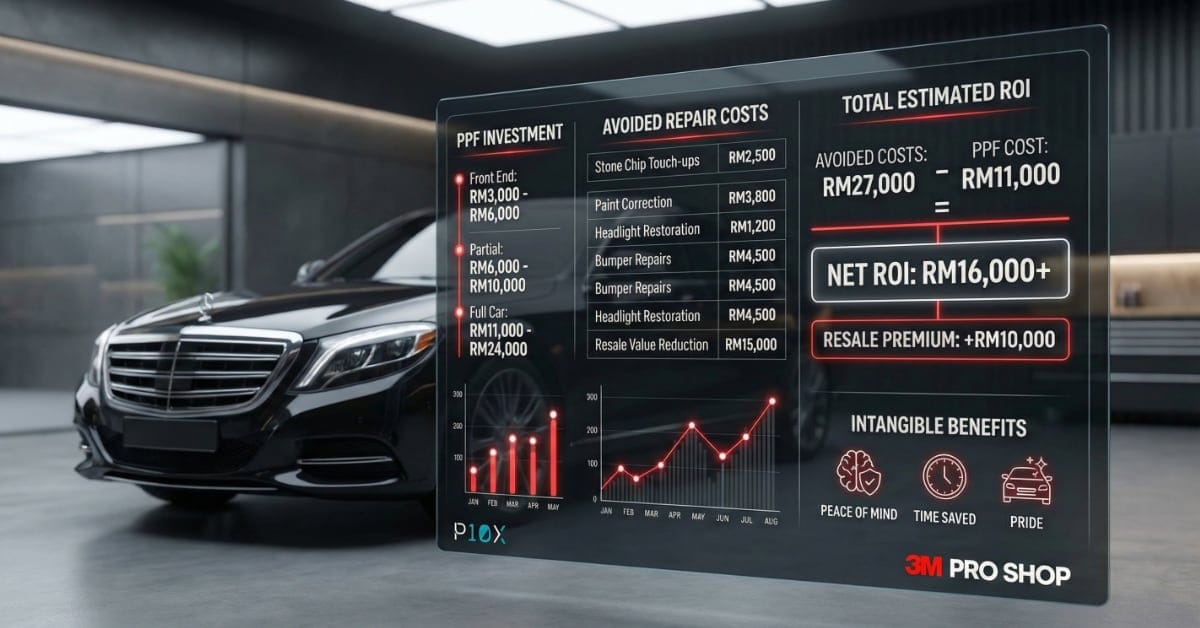
When considering paint protection film options in Malaysia, the most common question is straightforward: is it actually worth the money? With full car PPF packages ranging from RM11,000 to over RM20,000, this is not a small decision. This article examines the real costs, tangible benefits and actual return on investment that Malaysian car owners experience with PPF.
The Real Cost of Unprotected Paint in Malaysia
Before evaluating whether PPF is worth it, consider what happens to unprotected paint in Malaysian conditions.
Daily Threats to Your Car's Paint
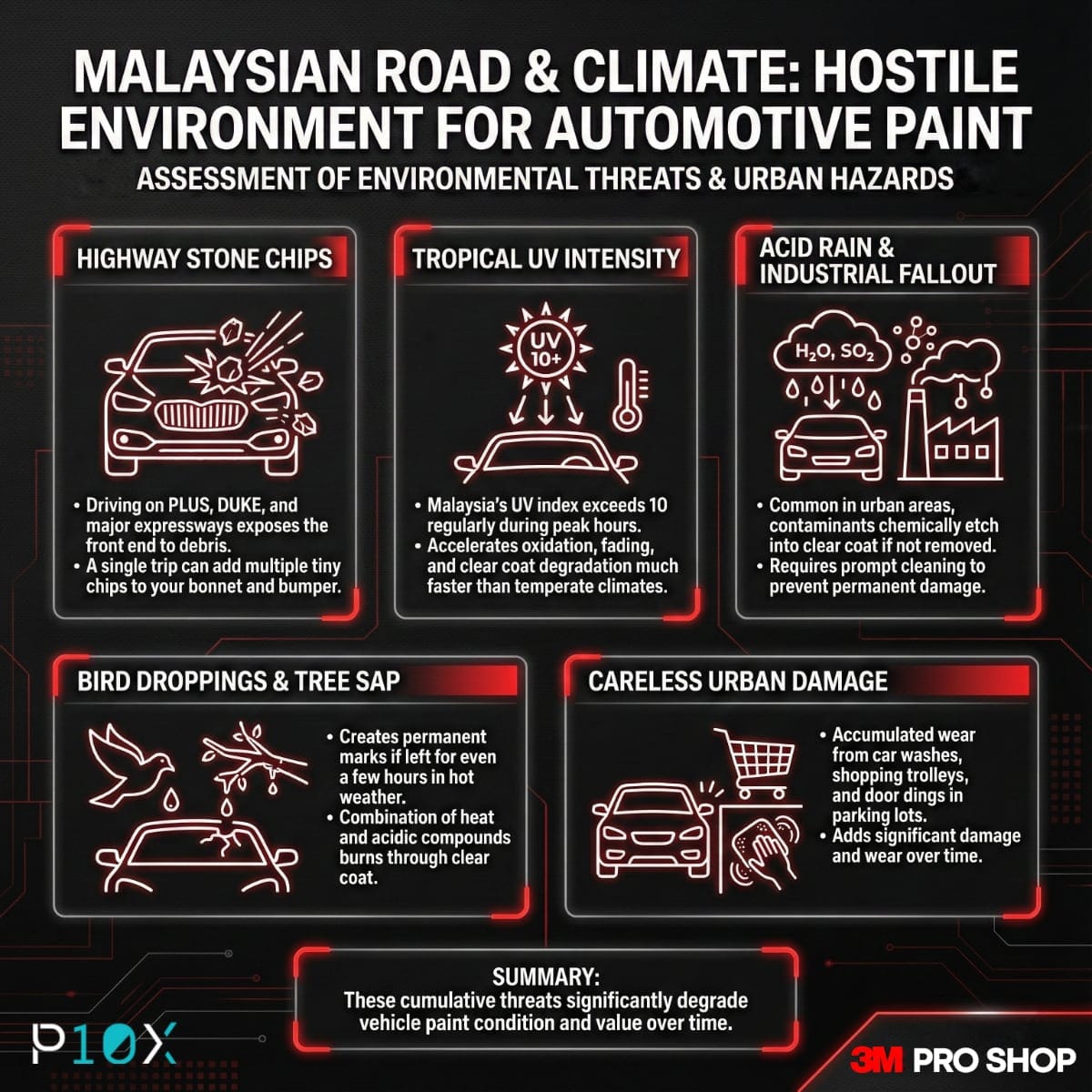
Malaysian roads and climate create a hostile environment for automotive paint:
Highway stone chips are nearly unavoidable. Driving on the PLUS highway, DUKE or any major expressway exposes your front end to debris kicked up by vehicles ahead. A single trip can add multiple tiny chips to your bonnet and bumper.
Tropical UV intensity in Malaysia regularly exceeds UV index 10 during peak hours. This accelerates paint oxidation, fading and clear coat degradation far faster than in temperate climates.
Acid rain and industrial fallout are common in urban areas. These contaminants chemically etch into clear coat if not removed promptly.
Bird droppings and tree sap create permanent marks if left for even a few hours in hot weather. The combination of heat and acidic compounds burns through clear coat quickly.
Careless damage from car washes, shopping trolleys, door dings in parking lots and general urban wear adds up over time.
The Financial Impact
Without protection, here is what paint damage typically costs to repair in Malaysia:
These costs do not include the depreciation hit from having repainted panels, which sophisticated buyers can detect and will negotiate down.
Understanding the True ROI of PPF
Return on investment for PPF comes from multiple sources. Let us break down each component.
Avoided Repair Costs
The most direct ROI calculation compares PPF cost against likely repair expenses over the same period.
Scenario: Highway commuter in Klang Valley
A driver commuting daily on LDP and DUKE can expect significant stone chip accumulation within 2 to 3 years. Without PPF:
- Bonnet touch-up or respray: RM1,500 - RM3,000
- Bumper respray: RM1,200 - RM2,500
- Headlight restoration or replacement: RM500 - RM2,000
- Fender touch-ups: RM800 - RM1,500 per side
Total potential repair cost over 5 years: RM4,000 - RM9,000+
With PPF protecting these areas, these costs are avoided entirely. The film absorbs the damage instead of your paint.
Preserved Resale Value
This is where PPF ROI becomes most compelling for Malaysian car owners.
When selling a used car, buyers evaluate paint condition carefully. Factory original paint in excellent condition commands premium prices. Repainted panels raise questions about accident history and reduce buyer confidence.
Value impact examples:
- A 5-year-old sedan with flawless original paint might sell for RM5,000 to RM10,000 more than an identical car with visible paint wear
- Luxury vehicles see even larger gaps, sometimes RM15,000 to RM25,000 difference based on exterior condition
- Buyers increasingly request paint metre readings to verify original paint, making touch-ups and resprays harder to hide
PPF preserves that factory original condition. When you remove the film before selling, the paint underneath looks as it did the day the car left the showroom.
Reduced Maintenance Costs
PPF owners typically spend less on ongoing paint maintenance:
- Fewer detailing sessions needed because the hydrophobic surface stays cleaner longer
- No paint correction required since swirl marks affect the film, not the paint
- Lower washing frequency as dirt and contaminants release more easily
- No waxing or polishing of protected areas, though some owners choose to maintain the film with spray sealants
Over 5 years, these savings can add RM1,000 to RM3,000 depending on your previous maintenance habits.
Expert Perspectives on PPF Value
Automotive professionals who work with paint daily offer informed perspectives on PPF value.
What Detailers Say
Professional detailers frequently see the difference between protected and unprotected vehicles:
"Cars that come in with PPF need far less paint correction work. The owners save money and we can focus on enhancing what is already in good condition rather than repairing damage."
Common observations from detailing professionals:
- Unprotected cars typically need paint correction every 1 to 2 years to maintain good appearance
- PPF-protected cars often look showroom-fresh after 5 years with basic washing
- The self-healing properties of quality PPF handle light scratches that would require polishing on bare paint
What Body Shop Technicians Report
Paint and body repair specialists see the cost of damage firsthand:
"Stone chip repair on modern metallic and pearl paints is expensive because matching the colour requires skill and time. PPF prevents this problem entirely. The upfront cost is often less than one proper bonnet respray."
Body shop insights:
- Modern paint systems with multiple layers and complex colours are harder to repair invisibly
- Touch-up paint rarely matches perfectly, especially on metallic finishes
- Panel blending (painting adjacent panels to hide colour differences) increases repair costs significantly
What Certified Installers Observe
Installers who apply and remove PPF over years of service provide long-term perspective:
"When we remove film that has been on for 5 to 7 years, the paint underneath is pristine. Customers are always surprised at how good it looks compared to unprotected areas."
Installer observations:
- Quality PPF from reputable brands does not damage paint when properly removed
- Self-healing technology actually works, with most light scratches disappearing within hours on a hot day
- Film failure rates on premium products are very low when installed correctly
Calculating Your Personal ROI
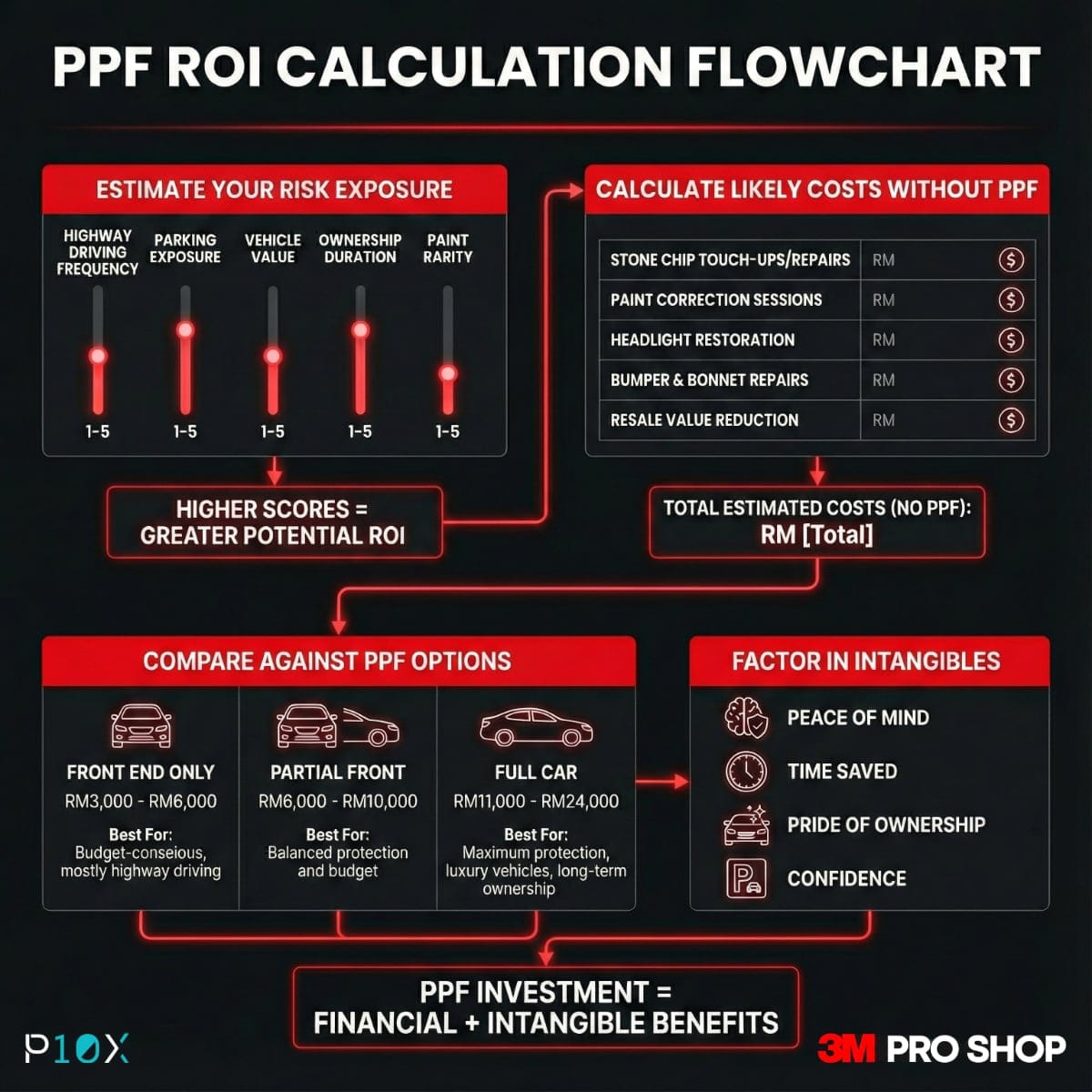
Everyone's situation differs. Here is a framework to calculate whether PPF makes financial sense for you.
Step 1: Estimate Your Risk Exposure
Rate yourself on these factors (1 = low, 5 = high):
- Highway driving frequency: How often do you drive on expressways?
- Parking exposure: Do you park in open lots under sun, or covered parking?
- Vehicle value: How much is your car worth and how much would paint damage affect that?
- Ownership duration: How many years do you plan to keep this car?
- Paint rarity: Is your car's colour difficult or expensive to match?
Higher scores indicate greater potential ROI from PPF.
Step 2: Calculate Likely Costs Without PPF
Based on your exposure, estimate what you would likely spend on:
- Stone chip touch-ups or repairs over your ownership period
- Paint correction sessions to remove swirl marks and oxidation
- Headlight restoration
- Bumper and bonnet repairs
- Resale value reduction from paint condition
Step 3: Compare Against PPF Options
PPF investment depends on coverage level:
For detailed pricing on 3M paint protection film in Malaysia, including complete Series 150, 100 and 50 pricing structure, refer to our comprehensive guide.
Step 4: Factor in Intangibles
Some benefits are harder to quantify but still real:
- Peace of mind knowing your paint is protected
- Time saved not dealing with repairs and complaints
- Pride of ownership maintaining excellent vehicle condition
- Confidence parking anywhere without worry
Real Scenarios: When PPF Clearly Pays Off
Certain situations make PPF almost universally worthwhile.
New Car Buyers
Applying PPF immediately after purchase makes the most sense:
- Paint is in perfect condition, requiring no prep work
- Full warranty period ahead maximises protection duration
- No existing damage to be sealed under the film
- Financing can sometimes include protection packages
If you are buying a new car and plan to keep it for 5+ years, PPF on at least the front end is almost always a sound decision.
Luxury and Sports Car Owners
Higher vehicle values amplify PPF benefits:
- Repair costs are proportionally higher on premium vehicles
- Resale buyers are more discerning about condition
- Paint colours on luxury cars are often more complex and expensive to match
- Emotional value of keeping a special car pristine is significant
For vehicles valued above RM200,000, full car PPF is often standard practice among informed owners.
Highway Commuters
Daily expressway driving dramatically increases stone chip exposure:
- Front end damage accumulates quickly
- Replacement windscreens and headlights add to costs
- Paint chips allow moisture penetration, leading to rust on older vehicles
If you drive 50+ km of highway daily, front end PPF typically pays for itself within 3 years through avoided repairs alone.
Those Who Plan to Sell
If resale value matters, PPF protects your investment:
- Documented PPF installation is a selling point
- Original paint verified by paint metre increases buyer confidence
- Well-maintained PPF can be removed to reveal pristine paint before sale
- Or leave it on as a feature for the next owner
When PPF Might Not Be Worth It
Honest assessment means acknowledging when PPF may not deliver strong ROI.
Older Vehicles with Existing Damage
If your paint already has significant chips, scratches or oxidation:
- These defects will be visible under the film
- Paint correction before PPF adds substantial cost
- The combined expense may exceed the car's value
For older cars with damaged paint, consider whether the total investment makes sense relative to vehicle value.
Very Short Ownership Periods
If you change cars every 1 to 2 years:
- PPF does not have time to accumulate protective value
- The cost per year of protection is high
- Partial coverage might make more sense than full car
However, documented PPF can still be a selling point even after short ownership.
Extremely Tight Budgets
When finances are constrained:
- Basic partial coverage is better than nothing
- Focus protection on highest-impact areas only
- Consider PPF as a future upgrade when budget allows
A RM3,000 front end package provides meaningful protection if full coverage is not feasible.
Garage-Kept Vehicles with Minimal Use
If your car rarely leaves a covered garage:
- Stone chip and UV exposure are minimal
- The primary threats PPF guards against are reduced
- Basic ceramic coating might be more cost-effective for your situation
Maximising Your PPF Investment
If you decide PPF is right for you, these practices ensure you get full value.
Choose Quality Film and Installation
The product and installer matter significantly:
- Premium films from established brands like 3M offer better longevity, clarity and self-healing
- Certified installers follow proper techniques that prevent premature failure
- Warranty backing from reputable companies provides recourse if issues arise
Saving a few hundred ringgit on inferior film or installation often costs more in the long run through early replacement or poor results. Understanding car PPF installation in Malaysia helps you choose qualified installers who ensure proper application and warranty protection.
Maintain the Film Properly
PPF requires basic care to perform its best:
- Wait 72 hours after installation before washing
- Hand wash with pH-neutral shampoo rather than automated brush washes
- Remove bird droppings and tree sap promptly
- Park in shade when possible to extend film lifespan
Following proper PPF maintenance in Malaysia routines protects your investment and ensures the film performs optimally throughout its lifespan.
Document Your Protection
Keep records for future resale value:
- Save installation invoices and warranty documentation
- Take photos of the installation and film condition periodically
- Register any e-warranty offered by the installer
- Note the film brand and series for buyer reference
This documentation supports your asking price when selling and reassures buyers about vehicle care.

The Verdict: Is PPF Worth It for Malaysian Car Owners?
After examining costs, benefits, expert perspectives and real scenarios, the answer depends on your specific situation, but for most Malaysian car owners, PPF delivers positive ROI.
PPF is likely worth it if:
- You drive highways regularly
- You plan to keep your car for 3+ years
- Your vehicle is valued above RM80,000
- Resale value matters to you
- You park in open or high-traffic areas
PPF may not be essential if:
- Your car rarely leaves covered parking
- You plan to sell within 1 to 2 years
- The vehicle has significant existing paint damage
- Your budget cannot accommodate even partial coverage
For owners in the "worth it" category, the remaining question is coverage level. Start with front end protection at minimum, and extend to full car if budget allows and ownership duration justifies it.
Next Steps
If you have determined that paint protection film makes sense for your vehicle:
- Assess your coverage needs based on driving patterns and exposure
- Research film options to understand the differences between series and price points
- Find a certified installer with proper training, clean facilities and warranty backing
- Get quotations and ensure all inclusions are clearly stated
- Schedule installation allowing adequate time for quality work
For professional installation from a certified 3M facility, you can explore 3M PPF options at 3M Pro Shop including Series 150, Series 100, and Series 50 to learn about available packages and book a consultation with trained specialists.
Find out the best protection for your car
Visit a 3M Pro Shop and discover the cost-effective 3M Protective Film and Window Tint
Frequently Asked Questions
How long does PPF last before needing replacement?
Quality PPF from reputable brands typically lasts 5 to 10 years depending on the product tier, installation quality and maintenance. Entry-level films may need replacement sooner, while premium options like 3M Series 150 can last a decade with proper care.
Can PPF be removed without damaging paint?
Yes, when properly installed and removed by trained technicians. The adhesive is designed to release cleanly from factory paint. DIY removal or improper techniques can cause issues, so professional removal is recommended.
Does PPF affect car wash safety?
Touchless car washes are safe for PPF. Avoid automated brush washes as the bristles can scratch the film surface or lift edges over time. Hand washing remains the best option for maintaining film appearance.
Will insurance cover PPF costs?
Standard motor insurance does not typically cover PPF installation. However, if your PPF is damaged in a covered incident (accident, vandalism), some policies may include it in repair costs. Check with your insurer for specific coverage terms.
Is ceramic coating a better alternative to PPF?
They serve different purposes. Ceramic coating provides chemical resistance and easier cleaning but offers minimal physical protection against stone chips. PPF provides physical barrier protection that ceramic coating cannot match. Many owners combine both: PPF on high-impact areas and ceramic coating on the rest of the car.
Author

Fabian
He is passionate about revolutionizing the car protection services industry by bringing innovation and transparency to a traditionally opaque and often misunderstood field. His mission is to educate end users on the true benefits and importance of car protection, aiming to replace outdated practices with honest, customer-focused solutions. With a fresh approach to car tinting, paint protection film (PPF), and detailing services, he is committed to delivering a superior customer experience that sets a new standard in the market. He welcomes discussions about the future of the automotive industry and is eager to connect with like-minded professionals who share his vision for innovation, integrity, and excellence.
Experience the future of window tinting
Visit a 3M Pro Shop and discover the revolutionary Crystalline CR BLK film