
PPF Aftercare in Malaysia: Essential Tips to Keep Your 3M Paint Protection Film Looking New
Proper PPF maintenance practices can mean the difference between film that looks faded and worn after three years versus film that still appears showroom-fresh after seven. If you have invested in 3M Paint Protection Film for your vehicle, understanding the correct aftercare routine protects that investment and keeps your car looking its best. This guide covers everything you need to know about maintaining PPF in Malaysian conditions.
Why PPF Aftercare Matters in Malaysia
Malaysia's climate creates specific challenges for paint protection film that differ from temperate countries where most care guides originate.
The Malaysian Climate Factor
Intense UV exposure affects PPF differently here. With UV index readings regularly exceeding 10, the film's top coat works harder to protect against degradation. Proper care supports the film's built-in UV inhibitors rather than working against them.
High humidity and frequent rain mean your car is constantly exposed to water. This makes edge adhesion critical and highlights the importance of proper drying techniques.
Tropical heat accelerates chemical reactions. Bird droppings, tree sap and insect residue that might sit harmlessly for days in cooler climates can etch into PPF within hours in Malaysian heat.
Urban pollution and industrial fallout in cities like Kuala Lumpur, Penang and Johor Bahru deposit acidic contaminants that require regular removal.
The Cost of Neglect
Poor maintenance leads to several problems:
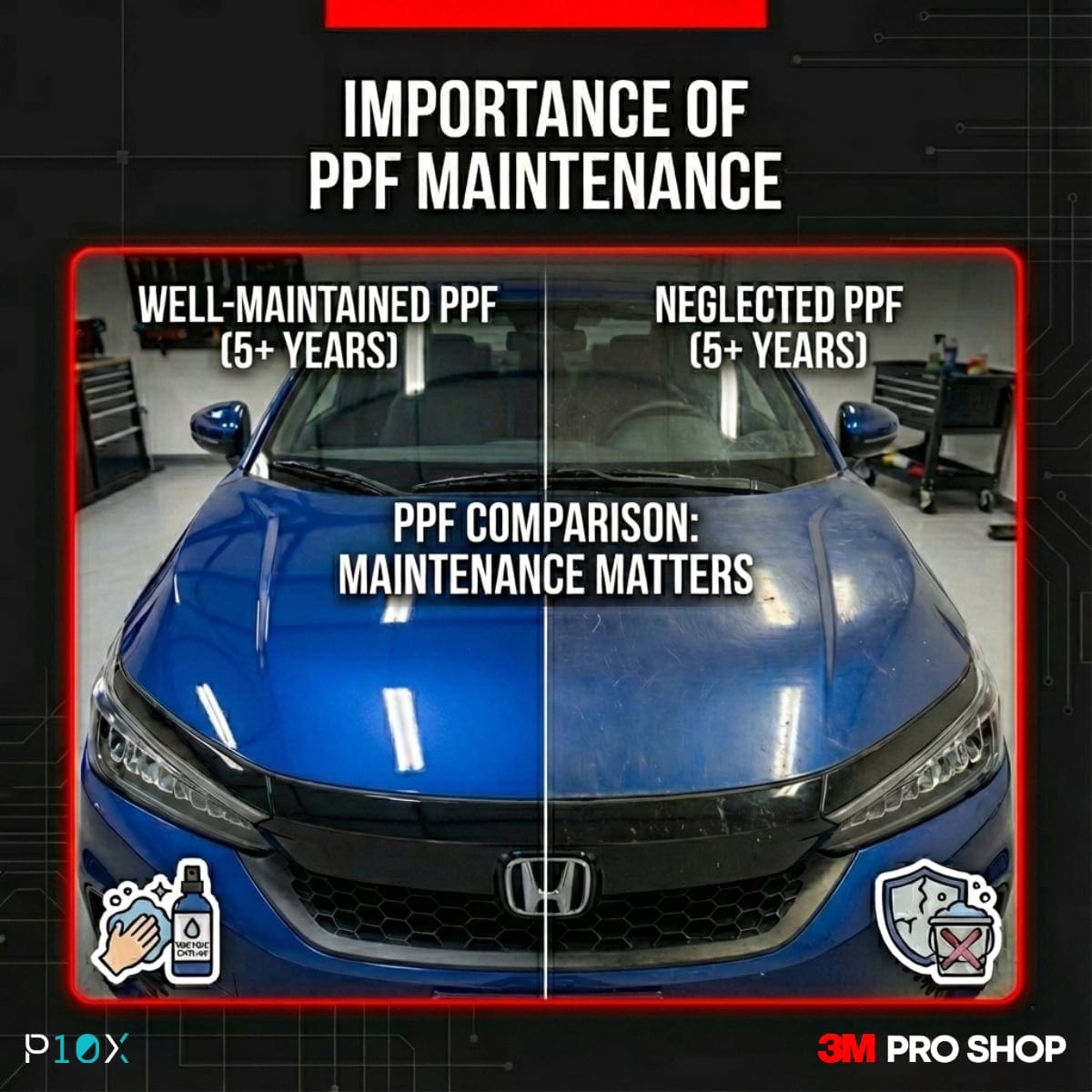
- Premature yellowing as the top coat degrades faster than designed
- Staining from contaminants that bond permanently to the film surface
- Edge lifting where dirt accumulation compromises adhesion
- Reduced self-healing as the top coat loses its ability to flow back together
- Shortened lifespan requiring early replacement at significant cost
With 3M paint protection film in Malaysia ranging from RM11,000 to RM24,000 for full car coverage, protecting your investment through proper care makes clear financial sense.
The First 72 Hours: Critical Curing Period
The immediate post-installation period sets the foundation for long-term performance.
Why Waiting Matters
During installation, the adhesive layer needs time to fully bond with your paint. Water exposure during this curing window can:
- Interfere with adhesive bonding
- Cause moisture to become trapped under the film
- Lead to cloudy patches or bubbles
- Compromise edge adhesion
What to Avoid
For the first 72 hours after installation:
- No washing of any kind, including hand washing
- No pressure washers or spray nozzles directed at the car
- Avoid driving in heavy rain if possible
- Do not touch or rub the film surface
- Keep away from automatic car washes
What You Can Do
If your car gets dirty during this period:
- Light dust can be left until the curing period ends
- If absolutely necessary, use a very soft microfibre cloth with no pressure to remove loose debris
- Bird droppings are the exception, as they should be removed gently with a damp cloth due to their acidic nature
After 72 hours, you can begin normal washing, but continue to be gentle for the first two weeks as the adhesive continues to strengthen.
Regular Washing: The Foundation of PPF Care
How you wash your PPF-protected car has the biggest impact on film longevity.
Hand Washing Best Practices
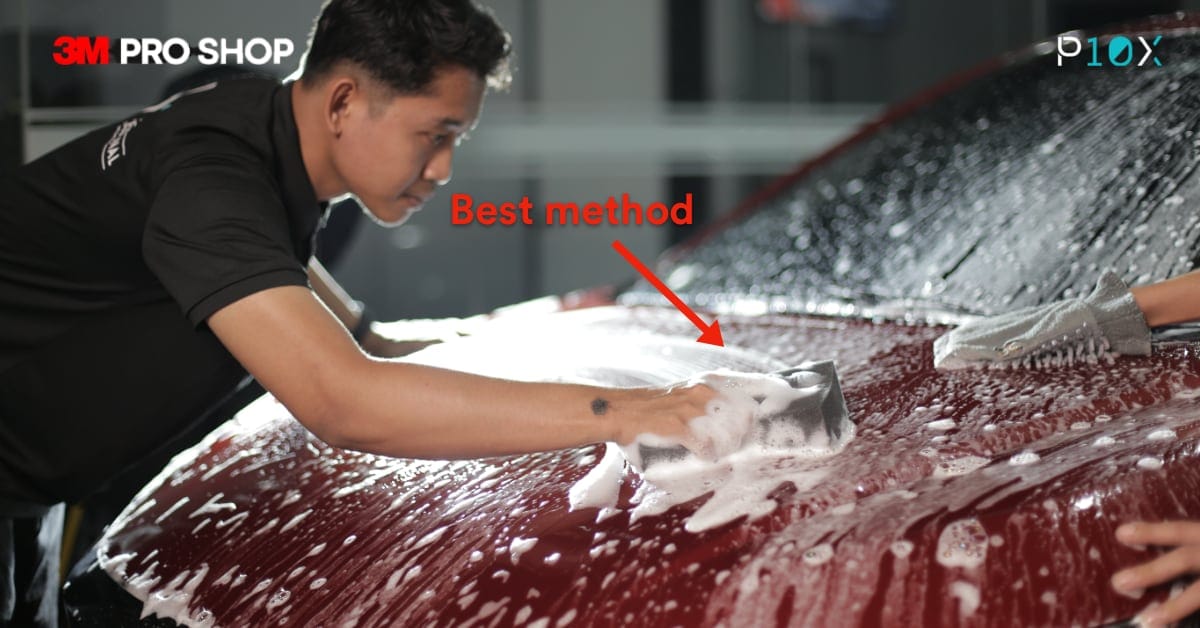
Hand washing remains the safest and most effective method for PPF maintenance.
Equipment needed:
- Two buckets (one for soapy water, one for rinsing your mitt)
- pH-neutral car shampoo (avoid acidic or highly alkaline products)
- Soft microfibre wash mitt
- Multiple clean microfibre drying towels
- Grit guard for your rinse bucket (optional but recommended)
Washing process:
- Pre-rinse the entire car with low-pressure water to remove loose dirt and debris
- Work from top to bottom since lower panels are dirtiest
- Use straight-line motions rather than circular movements to minimise swirl risk
- Rinse your mitt frequently in the clean water bucket
- Rinse each section before moving to the next to prevent soap drying on the film
- Final rinse the entire car thoroughly
- Dry immediately using clean microfibre towels in patting motions
Frequency recommendation: Wash every 1 to 2 weeks depending on your driving and parking conditions. Cars parked outdoors or driven daily need more frequent washing than garage-kept vehicles.
Car Wash Options
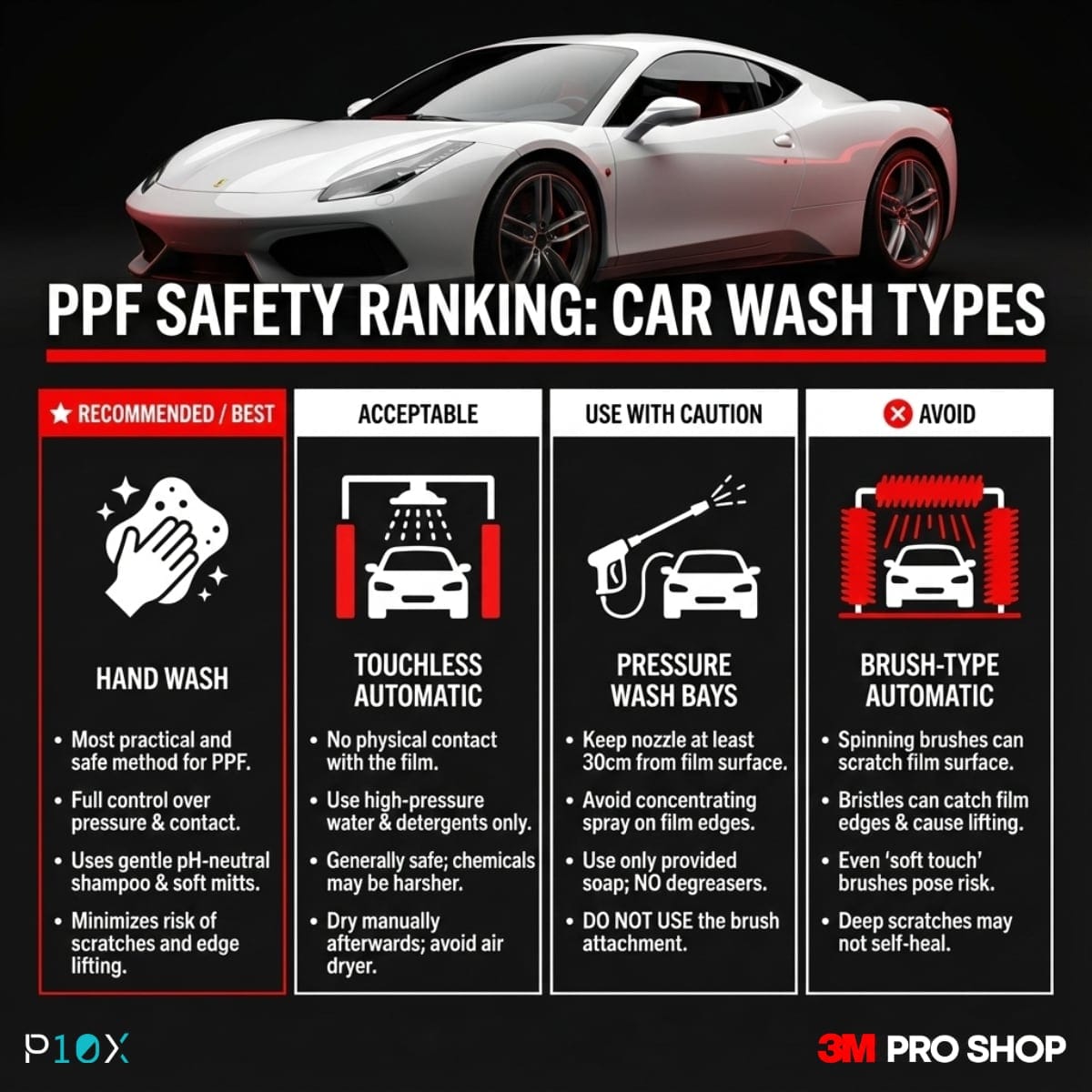
If hand washing is not practical, here are your options ranked by safety for PPF:
Touchless automatic car washes (Acceptable)
- No physical contact with the film
- Use high-pressure water and detergents only
- Generally safe for PPF, though chemicals may be harsher than hand wash products
- Dry your car afterwards rather than using the air dryer, which may not fully dry all areas
Self-service pressure wash bays (Use with caution)
- Keep the nozzle at least 30cm from the film surface
- Avoid concentrating spray on edges where film meets paint
- Use only the car wash soap provided, not degreaser or other harsh options
- Do not use the brush attachment
Brush-type automatic car washes (Avoid)
- Spinning brushes can scratch the film surface
- Bristles can catch film edges and cause lifting
- Even "soft touch" brushes pose risk over repeated use
- The scratches may not self-heal if they penetrate the top coat
Dealing with Contaminants
Malaysian conditions expose your car to various substances that require specific removal approaches.
Bird Droppings
Bird droppings are the most urgent contaminant to address. Their acidic content can etch into PPF within hours, especially in hot weather.
Removal method:
- Soak a microfibre cloth in warm water
- Place the wet cloth over the dropping for 2 to 3 minutes to soften it
- Gently wipe away without rubbing or scrubbing
- Rinse the area with clean water
- Dry with a clean cloth
Prevention: If you regularly park under trees or power lines, consider parking elsewhere or using a car cover.
Tree Sap
Tree sap hardens quickly in Malaysian heat and bonds to PPF surfaces.
Removal method:
- Apply warm, soapy water to the sap and let it soak for several minutes
- For stubborn sap, use a dedicated tree sap remover that is PPF-safe (check product labels)
- Gently work the softened sap off with a microfibre cloth
- Never scrape with fingernails or tools, as this can scratch the film
- Wash and rinse the area thoroughly afterwards
Insect Residue
Bug splatter accumulates quickly on front-end PPF, especially after highway driving at night.
Removal method:
- Rinse the area with water first to remove loose debris
- Apply warm, soapy water and let it soak for a few minutes
- Use a soft microfibre cloth to gently wipe away residue
- For dried-on bugs, dedicated bug remover products work well
- Avoid scrubbing, which can smear residue and cause light scratches
Best practice: Remove insect residue within 24 to 48 hours before it hardens and bonds to the film.
Fuel and Chemical Spills
Petrol, diesel and other automotive fluids can damage PPF if left in contact.
Immediate action:
- Wipe the spill immediately with a clean cloth
- Wash the affected area with car shampoo and water
- Rinse thoroughly to remove all residue
Prevention: Be careful when refuelling to avoid drips and splashes near PPF-covered areas.
Road Tar and Asphalt
Tar spots appear as small black specks, particularly on lower panels and wheel arches.
Removal method:
- Use a dedicated tar remover product that is safe for PPF
- Apply according to product instructions
- Let the product dwell to dissolve the tar
- Wipe gently with a microfibre cloth
- Wash the area afterwards to remove any residue
Activating Self-Healing Properties
One of the key benefits of 3M PPF is its self-healing top coat. Understanding how to use this feature maximises your film's appearance.
How Self-Healing Works
The top coat of 3M PPF is formulated to flow back together when heated. Minor scratches and swirl marks in the top coat layer disappear as the material softens and reforms into a smooth surface.
Heat Sources That Activate Self-Healing
Sunlight exposure
- Parking your car in direct sunlight for 15 to 30 minutes can heal light scratches
- Malaysian sun provides ample heat for this purpose
- Works best during midday when temperatures are highest
Warm water
- Pouring warm (not boiling) water over scratched areas activates healing
- Follow with the sun exposure method for best results
- Useful for specific areas rather than the whole car
Heat gun (professional use)
- Installers use heat guns for stubborn marks
- Not recommended for DIY use due to risk of overheating the film
- If scratches do not heal with sunlight or warm water, consult your installer
Limitations of Self-Healing
Self-healing works on:
- Light surface scratches in the top coat
- Swirl marks from improper washing
- Minor abrasions from light contact
Self-healing does not work on:
- Deep scratches that penetrate through to the film base
- Cuts or tears in the film
- Chemical etching or staining
- Physical damage from impacts
If your film has damage that does not heal with heat, the affected panel may need professional assessment and possible replacement.
Protecting PPF from UV Damage
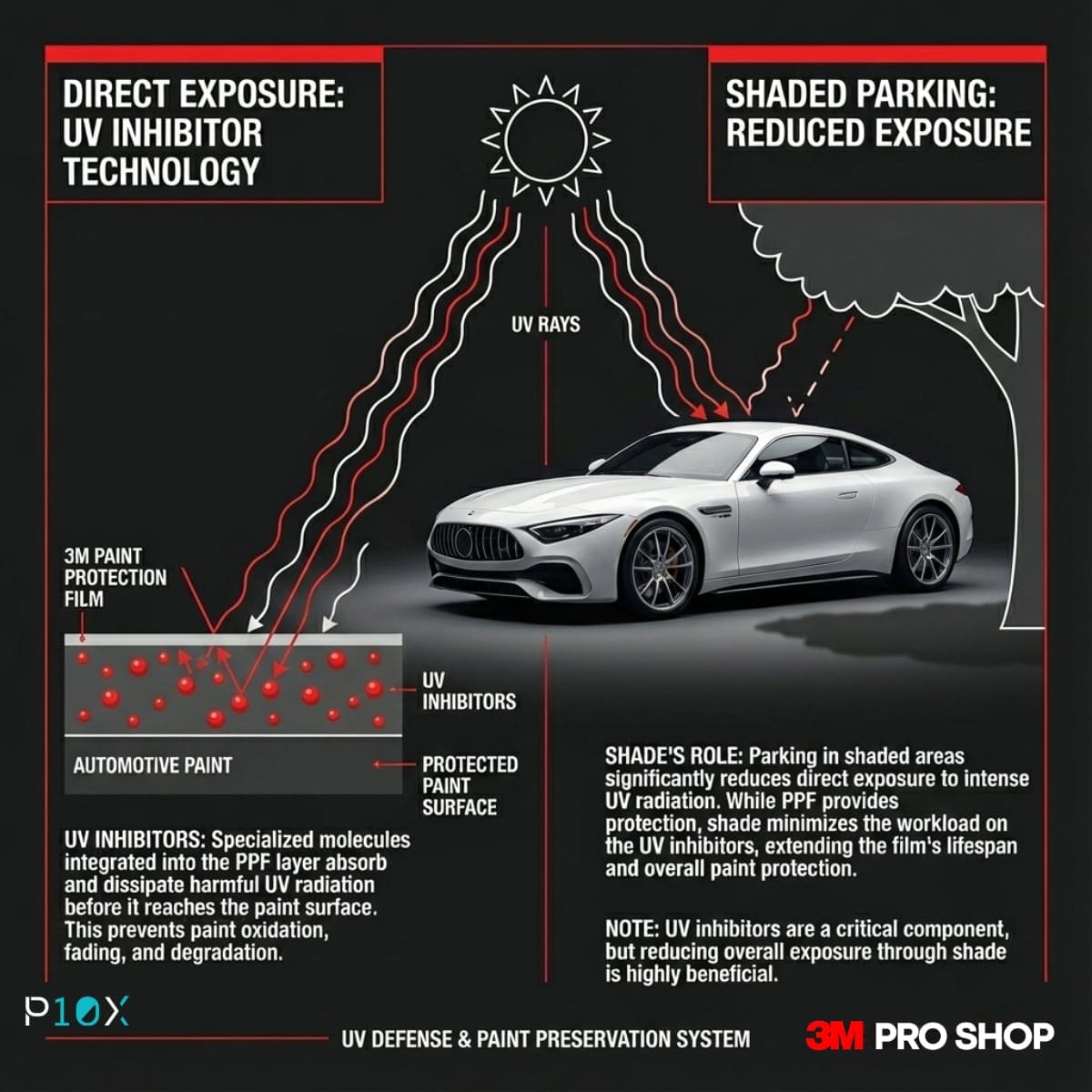
While 3M PPF contains UV inhibitors, supporting these built-in protections extends film lifespan.
Parking Strategies
Best options:
- Covered parking in buildings or car parks
- Shaded outdoor parking under permanent structures
- Home garage storage
Acceptable options:
- Tree shade (watch for sap and bird droppings)
- Temporary car covers for extended outdoor parking
Least ideal:
- Open parking lots in full sun for extended periods daily
Car Covers
If you must park outdoors for extended periods, a breathable car cover provides UV protection. Choose covers specifically designed for automotive use with soft inner linings that will not scratch PPF.
Window Tinting Synergy
Quality window tinting reduces interior heat buildup, which indirectly benefits PPF by reducing thermal cycling stress on the film. For vehicles with both PPF and window tint, you can learn more about 3M's tinting options in our article on 3M Crystalline CR BLK.
Products to Use and Avoid
Choosing the right products protects your PPF while keeping it looking its best.
Safe Products for PPF
Car shampoos:
- pH-neutral formulas (pH 6 to 8)
- Products specifically labelled as safe for PPF, ceramic coatings or wrapped vehicles
- Avoid shampoos with added wax or glaze unless PPF-compatible
Detail sprays:
- Water-based quick detailers
- Products designed for coated or filmed surfaces
- Spray sealants formulated for PPF
Drying aids:
- Clean microfibre towels (300+ GSM weight)
- Dedicated drying towels without fabric softener residue
- Filtered or deionised water for final rinse to reduce water spots
Products to Avoid
Harsh chemicals:
- Solvent-based cleaners
- Petroleum-based products
- Strong degreasers or all-purpose cleaners
- Wheel cleaners (keep away from PPF areas)
Abrasive products:
- Polishing compounds
- Rubbing compounds
- Clay bars (unless specifically PPF-safe and used correctly)
- Abrasive waxes
Problematic applicators:
- Paper towels or tissues (can scratch)
- Old or dirty cloths
- Stiff brushes
- Sponges with abrasive sides
Waxing and Sealing PPF
You can apply products to PPF, but choose wisely:
Spray sealants designed for PPF are safe and add gloss and hydrophobic properties. These are the easiest option for maintaining appearance between washes.
Traditional carnauba wax can be used on PPF but may build up over time and require more effort to maintain.
Ceramic coatings designed for PPF can be professionally applied for additional protection. Consult your installer before applying any coating.
Understanding which 3M PPF series in Malaysia you have helps tailor your maintenance approach, as Series 150, 100 and 50 have slightly different characteristics.
Seasonal and Periodic Maintenance
Beyond regular washing, periodic deeper maintenance keeps PPF in optimal condition.
Monthly Checks
Inspect for:
- Edge lifting or peeling
- Yellowing or discolouration
- Scratches that have not self-healed
- Bubbles or cloudiness
- Staining from contaminants
Address promptly:
- Contact your installer if you notice edge lifting early, as it may be repairable
- Document any warranty concerns with photos and dates
Quarterly Deep Clean
Every three months, consider a more thorough cleaning:
- Full hand wash using the two-bucket method
- Clay bar treatment if needed (use PPF-safe clay gently)
- Isopropyl alcohol wipe to remove any wax or product buildup
- Apply fresh spray sealant for protection and gloss
- Clean and inspect all edges carefully
Annual Professional Inspection
Once a year, have your installer inspect your PPF:
- Professional assessment of film condition
- Identification of any warranty issues
- Recommendation on remaining lifespan
- Advice on any necessary repairs or replacements
Common Maintenance Mistakes to Avoid
Learning from others' errors helps you protect your investment.
Washing Too Soon After Installation
The 72-hour curing period exists for a reason. Washing early can cause:
- Adhesive failure
- Water intrusion under film edges
- Cloudy patches that become permanent
Using the Wrong Products
Harsh chemicals and abrasive products cause:
- Top coat damage that prevents self-healing
- Permanent discolouration
- Reduced lifespan
Ignoring Contaminants
Leaving bird droppings, tree sap or bugs for "later" results in:
- Permanent etching into the film surface
- Stains that no amount of cleaning removes
- Costly panel replacement
Aggressive Scrubbing
Rubbing hard to remove stubborn marks causes:
- Scratches that do not self-heal
- Swirl marks visible in direct light
- Premature wear of the top coat
Neglecting Edges
Film edges are the most vulnerable areas. Failing to keep them clean leads to:
- Dirt accumulation that lifts edges over time
- Moisture intrusion under the film
- Peeling that spreads across the panel
When to Seek Professional Help
Before investing in protective film, evaluating whether paint protection film in Malaysia makes financial sense for your specific vehicle and usage helps set realistic expectations. Some situations require professional attention rather than DIY solutions.
Contact Your Installer If:
- Edges are lifting more than 2mm from the paint
- Yellowing appears despite proper care
- Deep scratches or cuts in the film
- Bubbles or cloudiness develop
- Film is peeling away from the surface
- Staining does not respond to cleaning
Warranty Considerations
Choosing qualified professionals for car PPF installation in Malaysia ensures your warranty remains valid. 3M PPF comes with warranty coverage when installed by authorized dealers. Typical coverage includes:
- Yellowing, bubbling or cracking
- Adhesive failure
- Manufacturing defects
Warranties typically do not cover:
- Damage from improper care
- Normal wear and tear
- Stone chips or physical impacts
- Staining from neglected contaminants
Keep your installation documentation and follow care guidelines to maintain warranty validity.
Your PPF Maintenance Schedule
Here is a practical maintenance schedule for Malaysian conditions:
Following this schedule maximises film lifespan and maintains appearance throughout your ownership.
For professional PPF maintenance services or to address any concerns about your film's condition, you can visit 3M Pro Shop to explore 3M PPF options and book an inspection with certified technicians.
Find out the best protection for your car
Visit a 3M Pro Shop and discover the cost-effective 3M Protective Film and Window Tint
Frequently Asked Questions
Can I use a pressure washer on PPF?
Yes, but with caution. Keep the nozzle at least 30cm from the film surface, use a wide spray pattern rather than a concentrated jet, and avoid directing water at film edges. High pressure at close range can lift edges or force water under the film.
How often should I apply sealant or wax to PPF?
Spray sealants can be applied monthly or after each wash if desired. Traditional wax can be applied every 2 to 3 months. Over-application is not harmful but creates more buildup to remove later.
Will minor scratches really heal on their own?
Yes, for light surface scratches in the top coat layer. Park your car in direct Malaysian sunlight for 15 to 30 minutes, and most minor scratches will disappear. Deeper scratches that penetrate the base layer will not self-heal and may require professional attention.
My PPF edges are starting to lift slightly. What should I do?
Contact your installer promptly. Small edge lifts caught early can often be repaired by reheating and pressing down the film. Ignored lifts worsen over time and eventually require panel replacement. Early intervention is usually covered under warranty.
Can I use a clay bar on PPF?
Yes, but use a fine-grade clay bar specifically designed for delicate surfaces. Use plenty of lubricant, work gently with no pressure, and limit clay bar use to when truly necessary. Frequent or aggressive clay bar use can dull the film surface over time.
Author

Fabian
He is passionate about revolutionizing the car protection services industry by bringing innovation and transparency to a traditionally opaque and often misunderstood field. His mission is to educate end users on the true benefits and importance of car protection, aiming to replace outdated practices with honest, customer-focused solutions. With a fresh approach to car tinting, paint protection film (PPF), and detailing services, he is committed to delivering a superior customer experience that sets a new standard in the market. He welcomes discussions about the future of the automotive industry and is eager to connect with like-minded professionals who share his vision for innovation, integrity, and excellence.
Experience the future of window tinting
Visit a 3M Pro Shop and discover the revolutionary Crystalline CR BLK film