
PPF Over Factory Decals and Racing Stripes
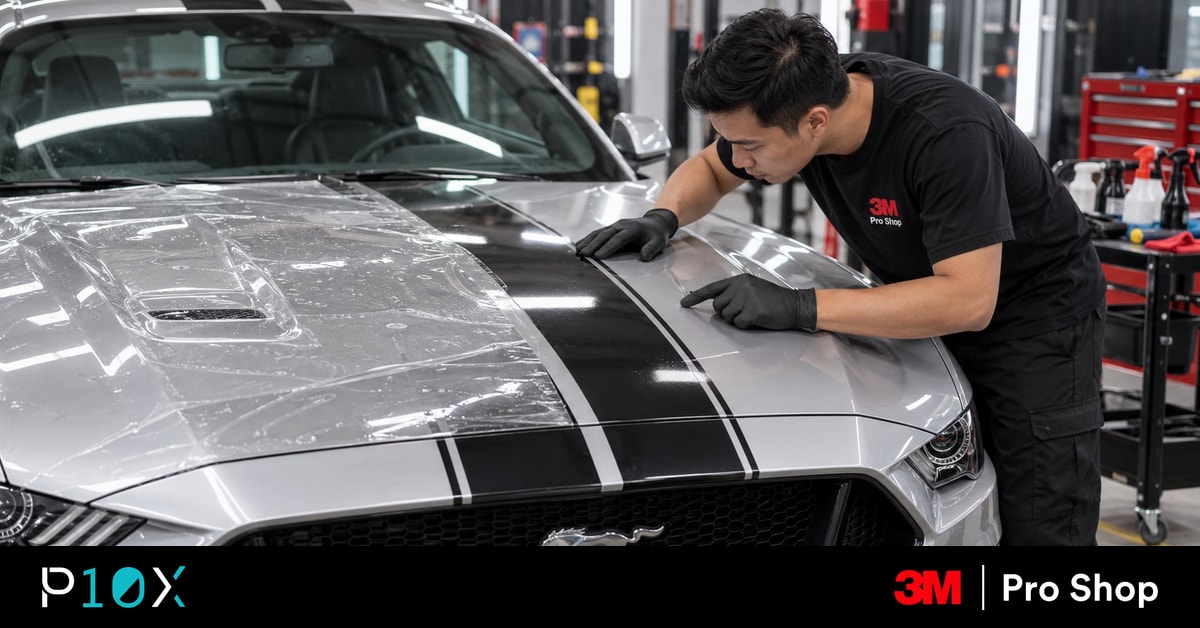
- Identify whether the stripe is paint, vinyl, a printed decal or a raised emblem.
- Ask for a small sample to check gloss and edge visibility before covering a full panel.
- Choose one continuous strategy for the whole stripe so the finish looks intentional.
- Inspect the result under workshop lights and outdoor daylight.
PPF over factory decals can protect the graphic, but it can also change how the stripe looks. A matte decal may turn glossy under clear film, while a raised vinyl edge can create a thin line that remains visible from certain angles.
3M's official support says paint protection film can be installed over racing stripes and partial colour wrap accents. XPEL also notes that hard graphic edges can trap air. The answer is therefore not a simple yes or no. It is a choice between protection, appearance and future removal. Start with the 3M PPF Malaysia comparison so the film decision does not hide the graphic decision.
You may be protecting a special-edition bonnet, a roof stripe or a dealer-fitted side graphic. Before anyone cuts film, establish what the graphic is and decide which visual compromise you can accept.
Identify the Factory Graphic First
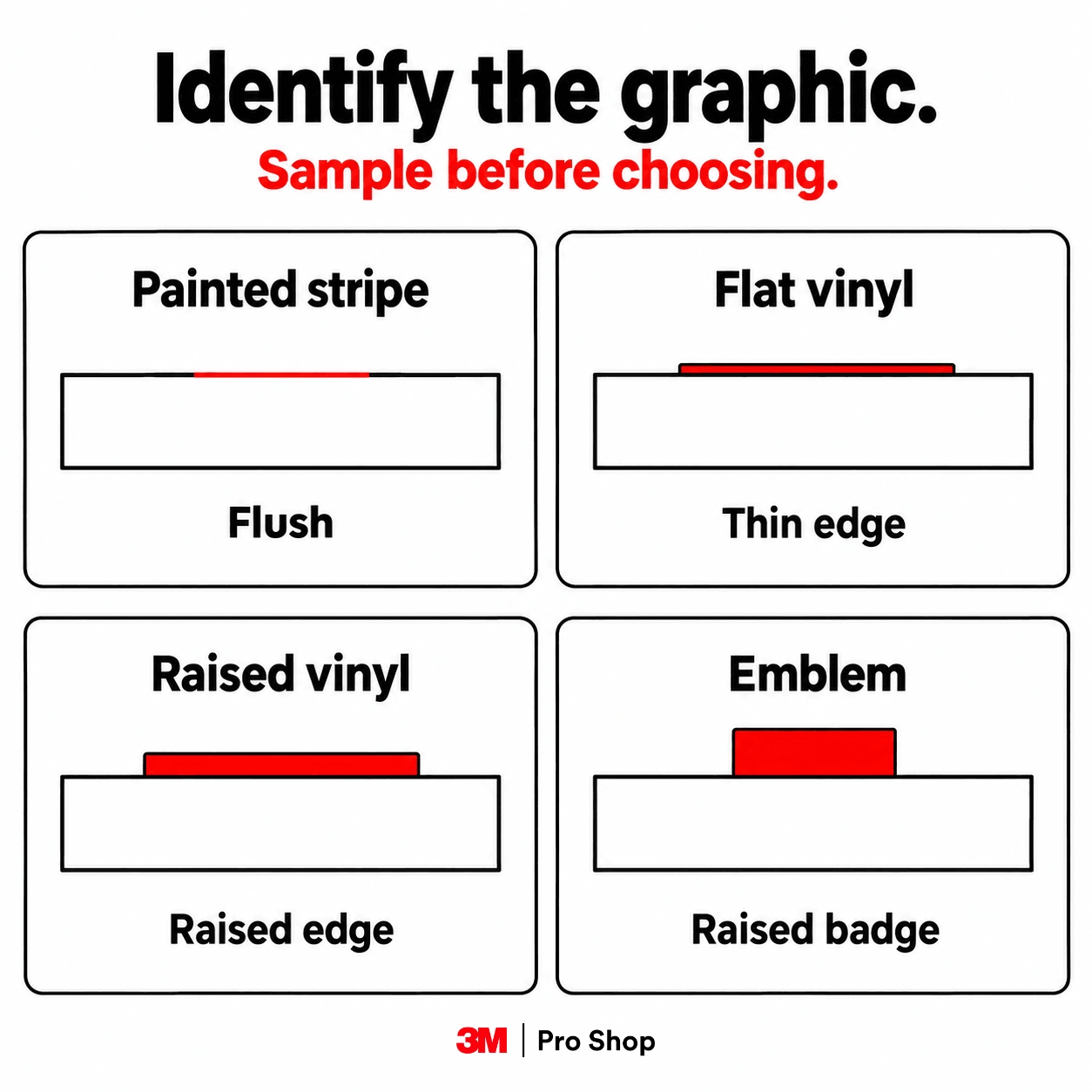
Painted stripes sit beneath the clear coat and feel almost level with the surrounding paint. Vinyl graphics usually have a detectable edge. Printed decals may have several colour layers, while badges and emblems stand much higher. Run a clean fingertip across the transition and inspect it with side lighting at 30 degrees.
The graphic's age matters. A new factory stripe should be clean, bonded and free from lifting. An older vinyl edge may already hold polish residue or road grime. The safe PPF redo guide explains why an unstable layer below new film creates a weak foundation. The matte PPF Malaysia guide helps if keeping a low-sheen appearance is the priority, while the stone-chip panel guide shows where coverage matters most.
Do not let the workshop identify the graphic by guesswork. Ask whether it is shown in the vehicle's original specification, whether it has been replaced and whether a previous detailing job has polished its edge. A five-minute check now can prevent an expensive-looking mismatch across a full bonnet.
Covering Gives One Continuous Skin
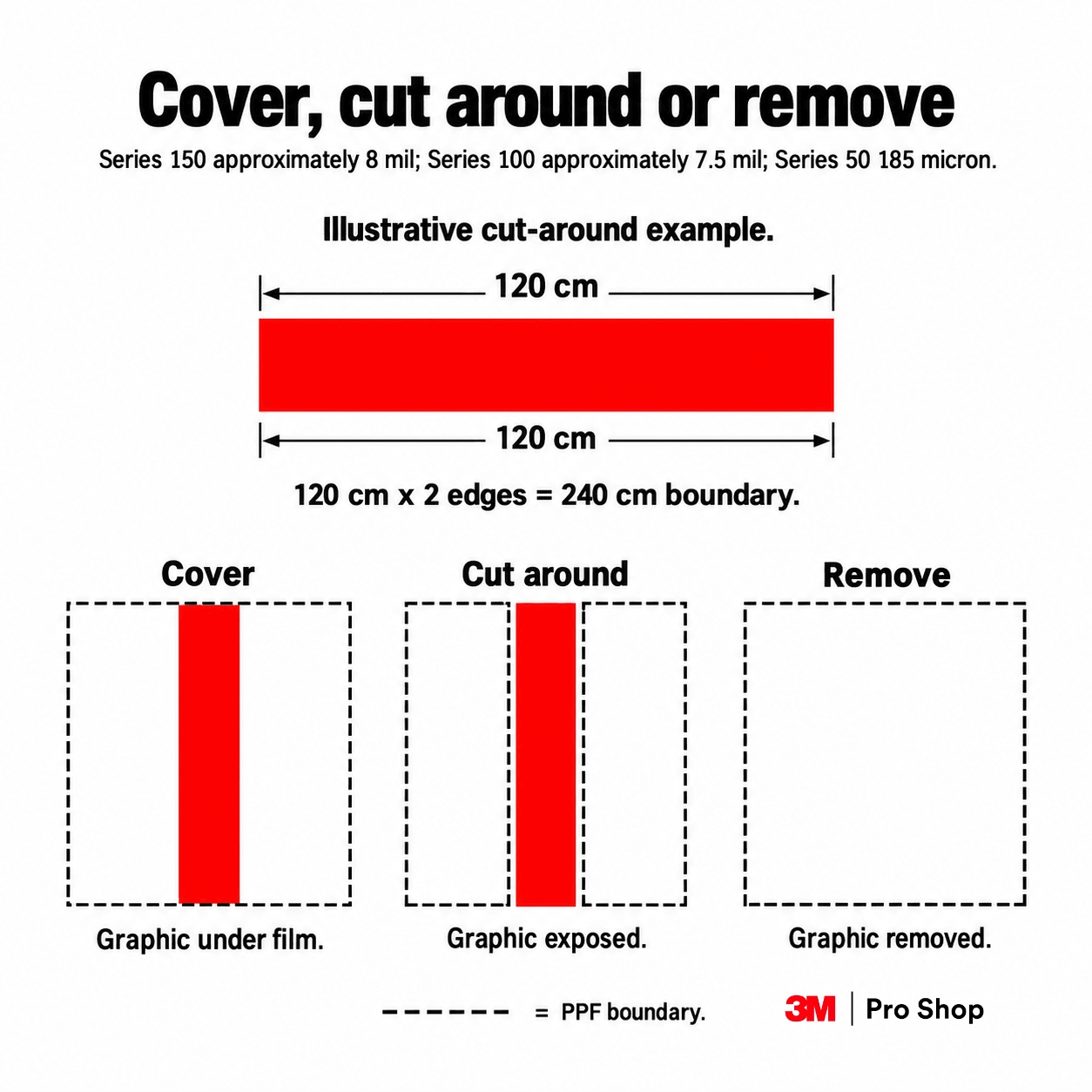
Covering the entire panel protects both paint and graphic from road debris. It also removes exposed cut lines around the stripe. On a bonnet that sees 200 km of highway driving each week, continuous coverage is the cleaner impact barrier because stones do not meet a deliberate seam beside the graphic.
The trade-off is optical. Clear gloss PPF changes the surface reflection above a matte or satin stripe. A raised vinyl edge may show a light line, and initial installation moisture can collect beside that ridge. The owner of a striped Mustang described exactly this after choosing full coverage. The line may reduce as solution leaves, but the finish change remains.
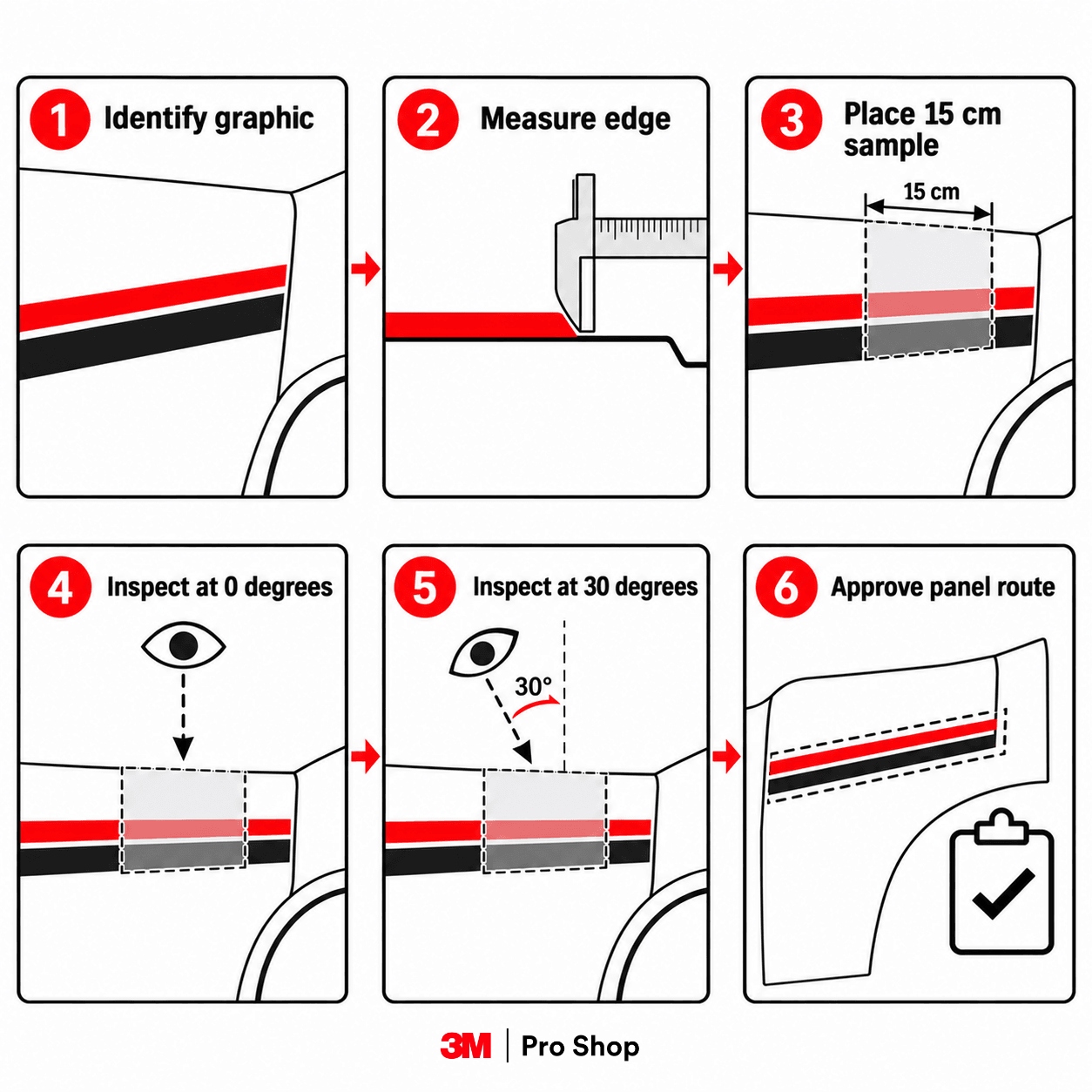
Ask for a sample over at least 15 cm of the stripe and surrounding paint. View it under white workshop lighting, then outside in daylight. Look from the driver's approach angle, not only straight down. If the stripe gains an unwanted glossy cap, continuous coverage has answered the protection question but failed the appearance test.

Cutting Around Preserves the Finish
Stopping PPF at the stripe keeps the graphic's original gloss level. That can be the right answer for a wide matte bonnet stripe that defines the car's appearance. The installer patterns two film sections and leaves the stripe exposed between them.
Every cut creates an edge. On a 120 cm bonnet stripe, the left and right transitions each run roughly 120 cm. Together they create 240 cm of visible PPF boundary. That boundary can collect wax, dust or polishing residue if maintenance is careless. It can also look uneven when the gap changes by only a few millimetres.
Computer-cut patterns reduce the need for a blade near paint, but the pattern still needs accurate alignment. Ask whether the gap will be 1 mm, 2 mm or flush to the graphic edge. Inspect both sides from the windscreen end of the bonnet, where a small wander is easier to see over the full 120 cm length.
Removing Decals Resets the Panel
Removal creates a uniform paint surface for the film, but it sacrifices the original graphic unless a replacement is available. This route suits dealer-added stripes that the owner does not want, not a rare factory graphic whose originality matters.
Paint exposure may differ under an older stripe. After years in Malaysian sun, the uncovered paint can weather differently from the protected area. Removing the graphic may reveal a colour or gloss shadow. A professional paint assessment should happen before PPF locks that difference under a clear layer.
If a replacement stripe will go above the PPF, confirm its adhesive compatibility and exact alignment. The visual result can be clean, but the new stripe becomes the exposed top layer. Record the original stripe measurements at 5 cm intervals and take straight-on photographs before removal.
Panel Choice Changes the Answer
A narrow door graphic faces different exposure from a full bonnet stripe. Bonnet and bumper graphics sit in the main stone-impact path. Roof stripes see less direct impact but more sun. Lower-door decals face road grime and pressure washing near their edges.
Series 150 Gloss provides the strongest fit where clarity, flexibility and surface performance matter. Series 100 Gloss is a balanced option for broad panels. Series 50 Gloss can suit smaller basic protection zones. Whichever series is chosen, the installer must test the graphic edge and finish first.
The table turns the decision into a panel plan. It does not force every graphic into one route. A car can use continuous coverage on a painted bonnet stripe and a cut-around strategy on a thick side decal, as long as each choice is deliberate and visually consistent.
| Panel or graphic | Impact risk | Preferred route | 3M series | Coverage tier |
|---|---|---|---|---|
| Painted bonnet stripe | High | Cover continuously | Series 150 Gloss | Full front |
| Flat factory vinyl bonnet stripe | High | Sample, then cover | Series 150 Gloss | Full front |
| Raised roof stripe | Medium | Cut around | Series 100 Gloss | Full roof |
| Dealer-added door decal | Medium | Remove or cut around | Series 100 Gloss | Side panel |
| Small printed sill graphic | Low | Cover after edge test | Series 50 Gloss | Wear zone |

Samples Prevent Expensive Regret
A useful sample crosses the graphic and surrounding paint. A square placed only on the paint proves nothing about the stripe edge. Make the sample large enough to show the finish under several reflections, ideally 15 cm wide with at least 5 cm on each side of the transition.
Check the sample after the installer has fully squeegeed it. Look for a light line beside the graphic, trapped air, texture telegraphing and gloss change. Rotate around the panel at 0, 30 and 60 degrees. A defect that disappears straight on may remain obvious as you walk towards the car in a mall carpark.
Take one photograph under workshop lights and another outdoors. If you approve the appearance, ask the workshop to use the same tension and edge method across the full panel. The sample becomes a shared visual reference for the finished result.
Handover Needs Three Viewing Angles
Inspect from directly above, then from the driver's approach and finally from a low side angle. The first view shows alignment. The second shows whether the two sides track evenly. The third reveals trapped air and the change in reflection across a raised edge.
Move the car into daylight if the workshop bay hides the problem. At 2 metres away, the stripe should look intentional as a whole. At 30 cm, inspect the boundary for debris and uneven gaps. Do not use only a phone torch because its narrow beam can exaggerate or hide the wrong details.
Confirm the approved route on the job sheet. Write cover, cut around or remove for each graphic and panel. This prevents a technician from making a different choice halfway through the job when the owner is not present.
Measure the Decal Edge Before Choosing
Factory graphics vary in thickness. A thin printed stripe may sit almost level with the clear coat, while a layered emblem or textured vinyl creates a more obvious step. Ask the installer to inspect that height under side lighting because it affects how clearly the line may remain visible through PPF.
Edge condition matters as much as thickness. A firmly bonded decal with a clean edge is a more predictable base than one with lifting corners, cracks or trapped contamination. PPF should not be used to press a failing graphic back down. The underlying weakness remains and can create a visible ridge or pocket later.
The direction of the stripe changes the installation plan. A graphic that runs across a bonnet may cross a high-stretch area. One that finishes close to a door edge leaves little room for a separate PPF termination. A careful pattern should show where film tension and graphic edges meet before any trimming begins.
Use a movable light source and view the edge from the driver's normal height. A transition that looks minor from directly above may be obvious from the front corner. That simple viewing check helps the owner decide whether one continuous skin, a deliberate reveal or decal removal gives the cleaner result.
Plan for Future Panel Work
The best choice should also make sense if the panel needs paint correction, a decal replacement or collision repair later. Covering the stripe creates one film layer over the whole panel, but any future graphic change requires the PPF above it to be removed first. That suits an owner who plans to retain the existing design.
Cutting around the stripe keeps the graphic independently accessible. It also creates more exposed edges that require careful cleaning. Owners who frequently update racing stripes may prefer this separation, while owners seeking the simplest wash routine may accept the visible step created by covering.
Removing the graphic resets the panel visually, but the paint beneath it may differ from the surrounding finish. Sun exposure, polishing and contamination can leave a colour or gloss outline. The installer should clean and inspect the whole panel after removal before confirming that it is ready for film.
Record the decision panel by panel. A car may reasonably use different methods on the bonnet, roof and side stripes because the shapes and future plans differ. The handover sheet should name each covered graphic, each exposed graphic edge and any decal removed before installation so later work starts with accurate information.
Decide How Film Meets the Panel Edge
The graphic route and the outer PPF edge should be planned together. A stripe may continue around a bonnet lip, stop before the lip or align with a neighbouring panel. If the film wraps farther than the decal, the layered transition can look different at the front edge. Ask to see the pattern boundary before installation rather than discover it during handover.
Wrapped edges can reduce visible film lines on suitable panels, but the underside must be clean, stable and accessible. A factory decal that already curls around the same edge adds another layer and may limit how far PPF can be tucked. The installer should avoid excessive tension and choose a clean visible termination when the hidden surface is unsuitable.
Panel gaps also need space. Film should not bridge from one moving panel to another or interfere with a bonnet, door or charging flap. Open and close every affected panel at handover. The chosen method is successful only when the graphic remains visually balanced, the PPF edges are secure and all adjacent parts move freely.
Choose the Graphic Result First
PPF over factory decals works best when you decide the appearance before choosing the installation route. Ask a 3M Authorized Dealer such as 3M Pro Shop by P10X to identify the graphic, apply a cross-edge sample and record the chosen route for every panel.
PPF Decal Questions
Can PPF cover factory racing stripes?
Yes. Clear PPF can cover painted or vinyl stripes, but a raised edge may remain visible and a matte stripe may look glossier.
Will PPF change a matte decal?
Gloss PPF usually adds reflection above the decal. Test a sample that crosses the decal and surrounding paint before approving the full panel.
Can an installer cut around stripes?
Yes. The method preserves the stripe's surface finish but creates visible PPF edges that must be aligned and maintained.
Should dealer decals be removed first?
Remove them only if you do not need to preserve the graphic and the paint below is stable and visually even.
Can air sit along a decal edge?
Yes. A hard raised transition can make a thin air line more likely. Good pressure control and realistic expectations are essential.
How should I inspect striped-panel PPF?
View the panel straight on, at 30 degrees and from a low side angle under workshop light and daylight.
Find out the best protection for your car
Visit a 3M Pro Shop and discover the cost-effective 3M Protective Film and Window Tint
Author

Kelvin Cheen
Kelvin is an Automotive Solutions Consultant and Branch Manager at 3M Pro Shop. With 4+ years of field experience in premium vehicle surface protection, Kelvin specializes in flagship 3M technologies, including 3M Crystalline Black optical film and Ceramic IR tints, 3M Paint Protection Film (PPF), etc. His focus is on delivering transparent, engineering-backed advice to car and EV owners, cutting through sales upsells to ensure customers choose the exact thermal rejection and paint protection tailored to their driving needs.
Experience the future of window tinting
Visit a 3M Pro Shop and discover the revolutionary Crystalline CR BLK film