
Tesla Model 3 PPF in Malaysia: Which Panels to Protect First
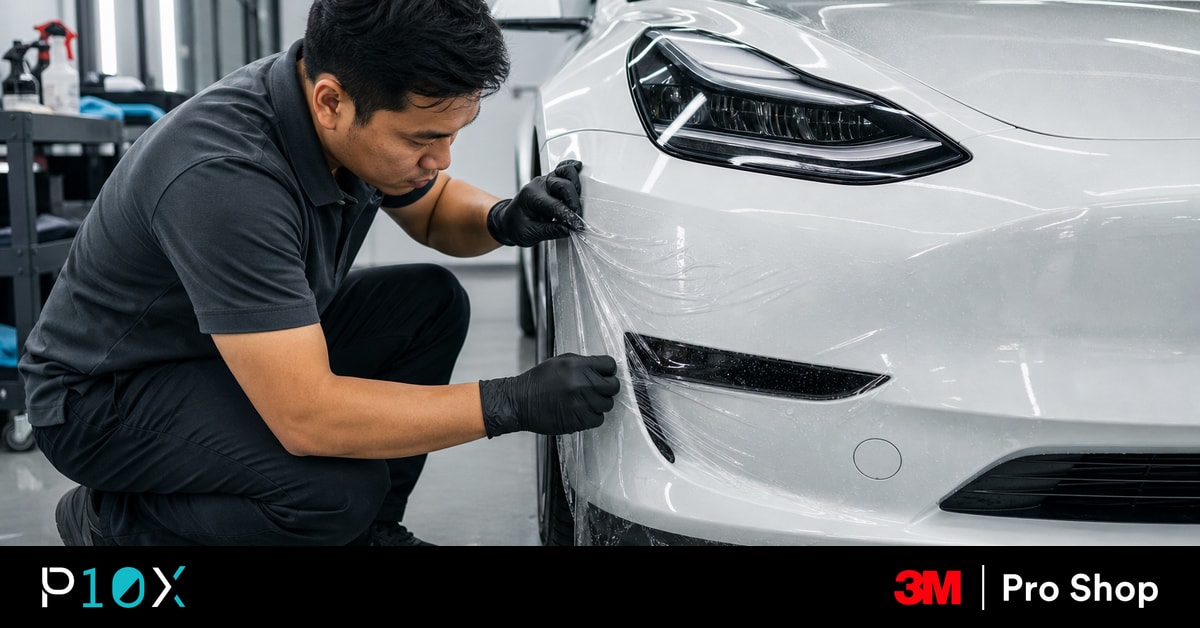
- Tesla Model 3 PPF in Malaysia matters more than on most cars because the factory paint system measures only about 80 to 100 microns in total, thinner than most European rivals.
- A single layer of 3M Series 150 Gloss puts roughly 2.3 times more sacrificial material over the panel than the entire factory paint build underneath it.
- The bonnet leading edge, front bumper, A-pillars and the rear arch behind each front wheel take damage first on Malaysian highways.
- Front-end coverage answers most Klang Valley driving. Full body earns its place when the car is kept long or parked outdoors daily.
- Covered defects under a 3M paint protection film warranty are bubbling and cracking. Yellowing is not a covered defect on any 3M film.
Booking Tesla Model 3 PPF in Malaysia is one of those decisions that feels optional until you look at what the factory actually sprayed onto the car. The Model 3 Standard arrived here in January 2026 as the cheapest new Tesla on sale locally, and the order book filled quickly with first-time EV owners who had never thought about paint thickness in their lives. Then the first stone chip appears on the bonnet somewhere past the Sungai Besi toll, and the question becomes urgent.
The short version is that the Model 3 is not a car you want to leave bare on Malaysian roads for long. Its paint is measurably thinner and softer than the industry average, its front end is broad and low, and it spends its life on highways that throw grit at everything. That combination is exactly what paint protection film was built for, and it is why the panel-priority thinking in our guide to which panels need PPF first applies with more force here than on a thick-painted German saloon.
What follows is the order a Malaysian owner should actually book, the measured reason behind it, and the parts of the decision that get sold to you badly.
Why Model 3 Paint Chips So Easily
Which Panels Get Hit First
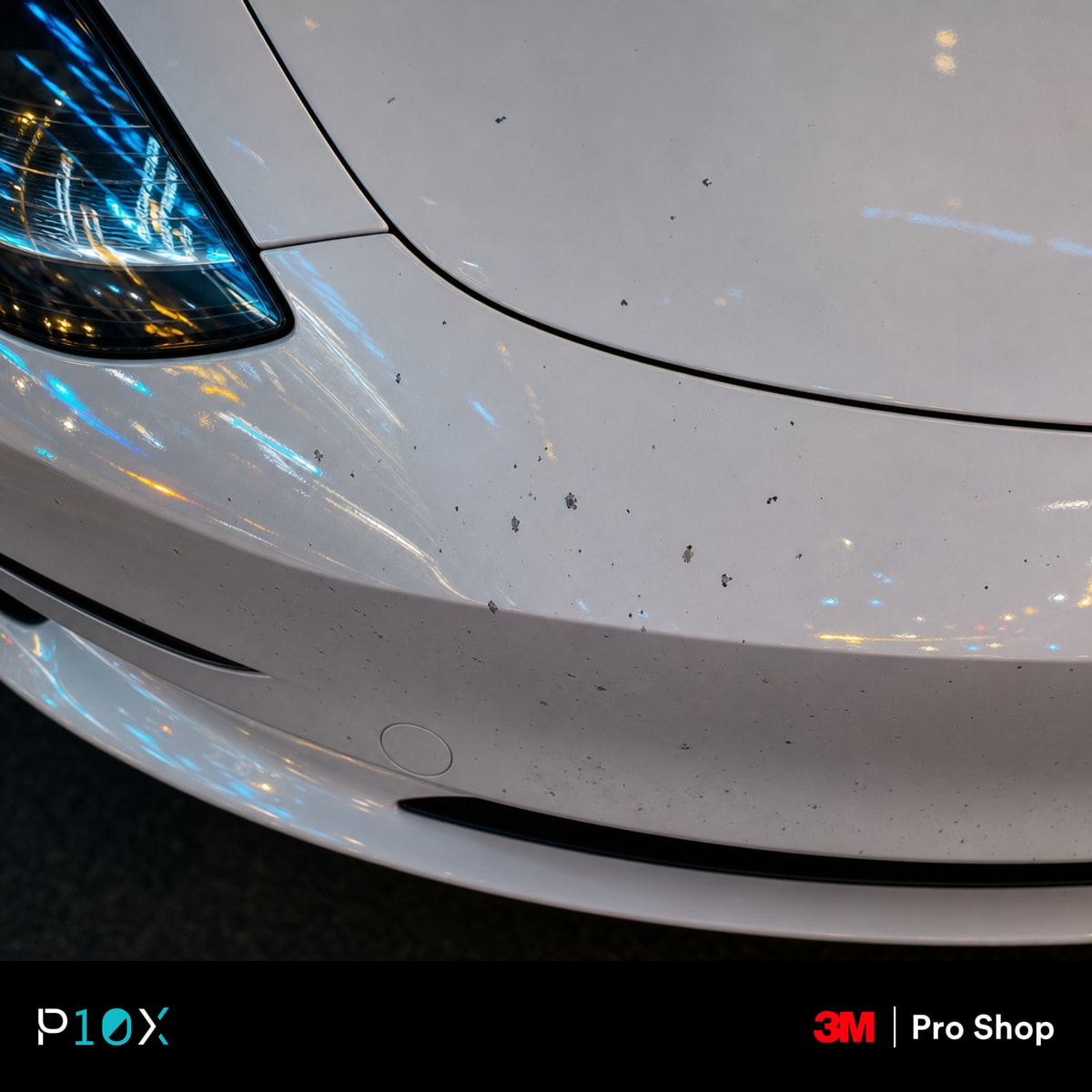
Damage on a Model 3 is not evenly distributed. It concentrates in four places, and if you only ever film four things, film these. The bonnet leading edge takes the direct hit from anything lifted by the vehicle ahead. The front bumper, which on the Model 3 is a broad low surface with very little rake, catches everything the bonnet misses. The A-pillars and the leading edge of the roof glass surround take angled grit at highway speed. And the rear arch behind each front wheel takes a constant blast of whatever the front tyres pick up, which is why that specific strip goes dull long before the rest of the car does.
Side mirrors and door cups are the cheap wins. Mirrors are exposed on every overtake, and door cups collect fingernail scratches from the day the car arrives. Both are small pieces of film and both prevent the kind of damage that is visible from three metres away when you eventually sell.
The panel most owners forget is the rocker, the sill strip below the doors. On the Model 3 it sits low and close to the road, and on a wet KESAS run it takes a continuous spray of grit for the entire journey. Owners who skip it usually discover the problem at the two-year mark, when the lower edge has gone matte and no amount of polishing brings it back, because there is not enough clearcoat left to polish.
| Panel | Impact risk | Recommended 3M series | Coverage tier |
|---|---|---|---|
| Bonnet leading edge | Very high | Series 150 Gloss | Essential |
| Front bumper | Very high | Series 150 Gloss | Essential |
| A-pillars | High | Series 150 Gloss | Essential |
| Rear arch behind front wheel | High | Series 100 Gloss | Essential |
| Side mirrors | High | Series 100 Gloss | Recommended |
| Door cups | Moderate | Series 50 Gloss | Recommended |
| Rocker panels | Moderate to high | Series 100 Gloss | Recommended |
| Full bonnet | Moderate | Series 150 Gloss | Extended |
| Doors and rear quarters | Low to moderate | Series 100 Gloss | Full body |
| Boot lid and rear bumper top | Low | Series 100 Gloss | Full body |
Read that table as a booking order rather than a menu. Everything marked essential is doing work from the first week. Everything marked full body is protecting resale value rather than preventing an immediate problem, which is a real reason to do it but a different reason.
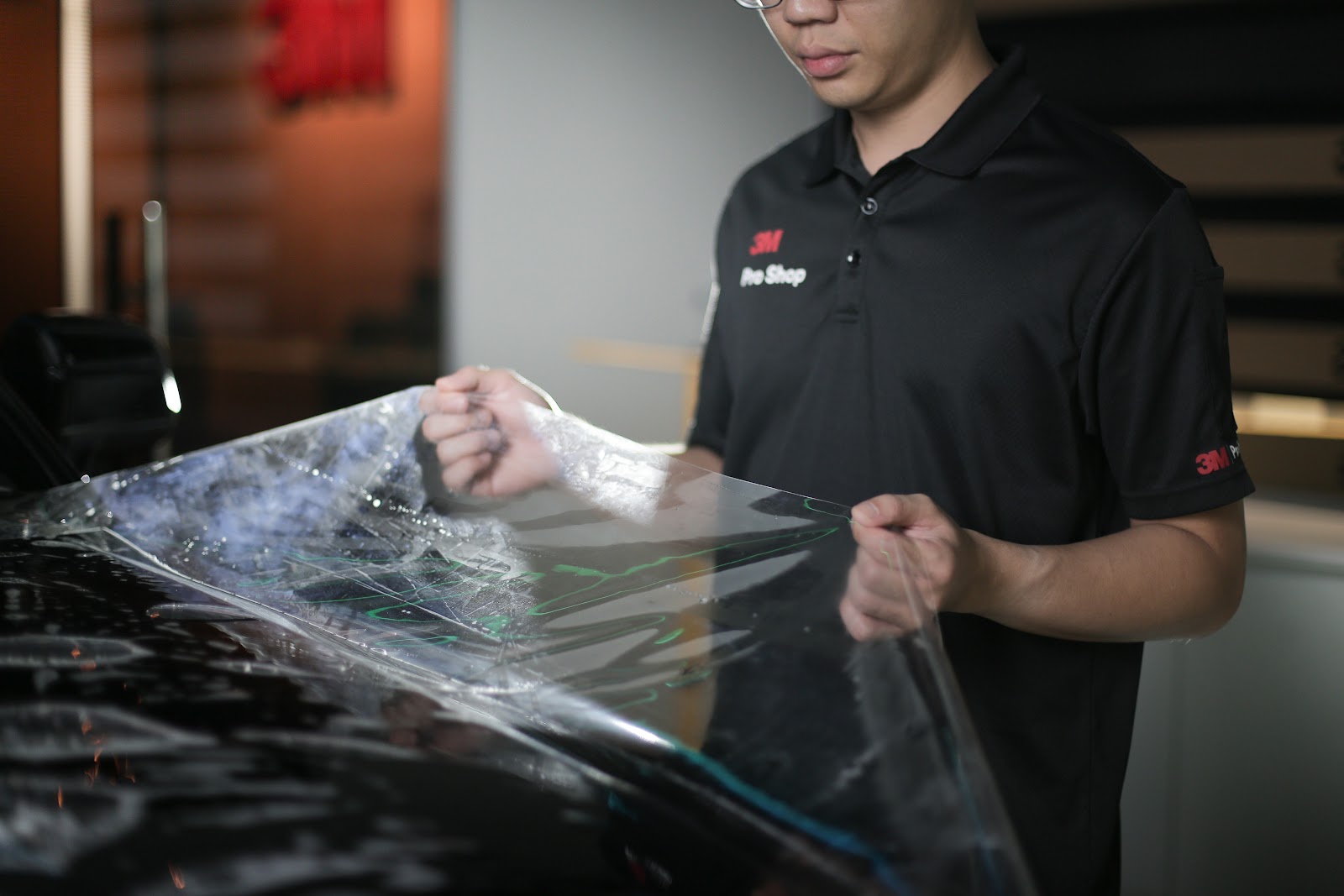
The prep stage in that photo is where the panel list above turns into physical pieces of film. A shop working from a proper pattern set cuts to the panel edge and wraps where the panel allows it. A shop working freehand trims on the car, which is where blades meet paint.
PPF Is 2.3 Times Your Factory Paint
Here is the calculation that settles the question for most Model 3 owners, and you will not find it on a product page.
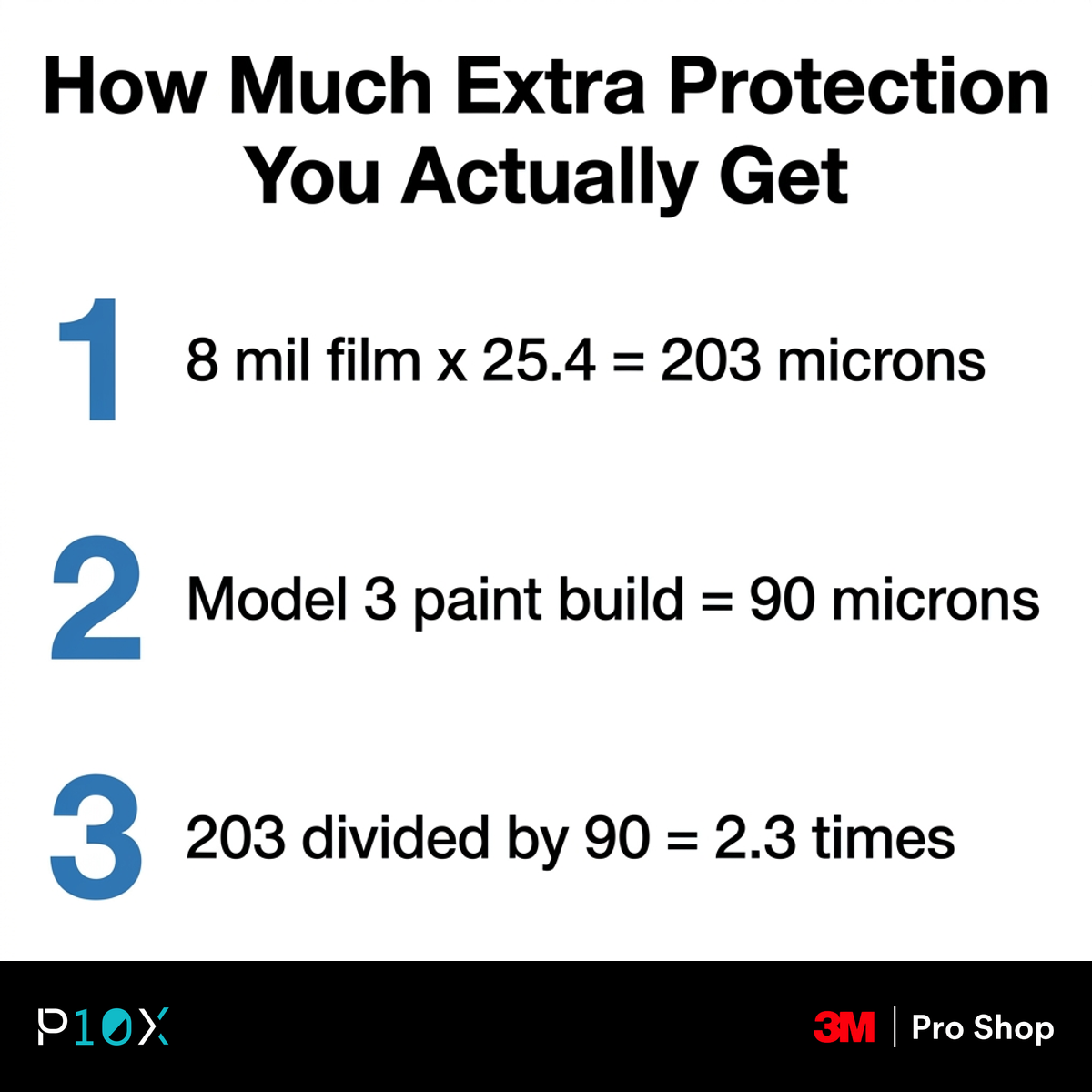
Start with the film. 3M Paint Protection Film Series 150 Gloss measures approximately 8 mil including adhesive. One mil is one thousandth of an inch, which converts to 25.4 microns. So 8 mil multiplied by 25.4 gives 203.2 microns of film sitting on the panel.
Now the paint. Take the Model 3's measured total build of 80 to 100 microns and use the midpoint, 90 microns, as a working assumption. That figure is basecoat and clearcoat combined, which is everything standing between road grit and bare primer.
Divide 203.2 by 90 and you get 2.26. Round it and the answer is 2.3. A single layer of Series 150 puts about 2.3 times more sacrificial material over the panel than the factory paint system it is protecting. Series 100 Gloss at roughly 7.5 mil works out to 190.5 microns, or about 2.1 times. Series 50 Gloss at 185 microns lands at roughly 2.1 times as well.
The practical meaning is simple. A stone that would have taken a chip out of the clearcoat and reached the basecoat now has to get through more than twice that depth of film before it touches paint at all. That is why owners who film the front end stop finding new chips, not because the film is magic but because the arithmetic changed. It is also why the self-healing behaviour matters on a soft-painted car. Light scratches sit in the film's top layer and close up with heat, and in Malaysia the heat arrives free every afternoon.
Front End or Full Body
Front-end coverage on a Model 3 means bonnet, front bumper, front fenders, A-pillars and mirrors, sometimes with the rear arches added. It handles the damage that actually happens on a Klang Valley commute, and for a car that lives in a basement carpark at night and does a predictable highway run twice a day, it is usually the right answer.
Full body earns its place under two conditions. The first is outdoor parking. A Model 3 that sits under open sky at a condo for ten hours a day is taking UV and organic fallout across every horizontal panel, not just the front, and the roof and boot lid start showing it before the doors do. The second is holding period. If you plan to keep the car past the point where the warranty ends and resale value is the main asset you are protecting, filming the whole car makes financial sense in a way it does not for a three-year owner.
There is a third case worth naming honestly. If the car is a dark colour, the calculation shifts, because every swirl mark and light scratch shows on dark paint in direct sun in a way it never does on white or silver. That is a cosmetic argument rather than a structural one, and it is covered properly in our piece on PPF for a black car in Malaysia. On a black Model 3 the self-healing top layer is doing visible work every week.
That clip shows the self-healing behaviour in real time, which is the part owners find hardest to believe until they see a light scratch close up under heat.
Mistakes Model 3 Owners Make
The most common mistake is booking too late. Film goes on best over paint that has never been corrected, and a car that has done four months of highway commuting already has chips that will be sealed under the film permanently. Owners who arrange installation in the week after collection get the cleanest result, and they avoid paying for paint correction they did not need.
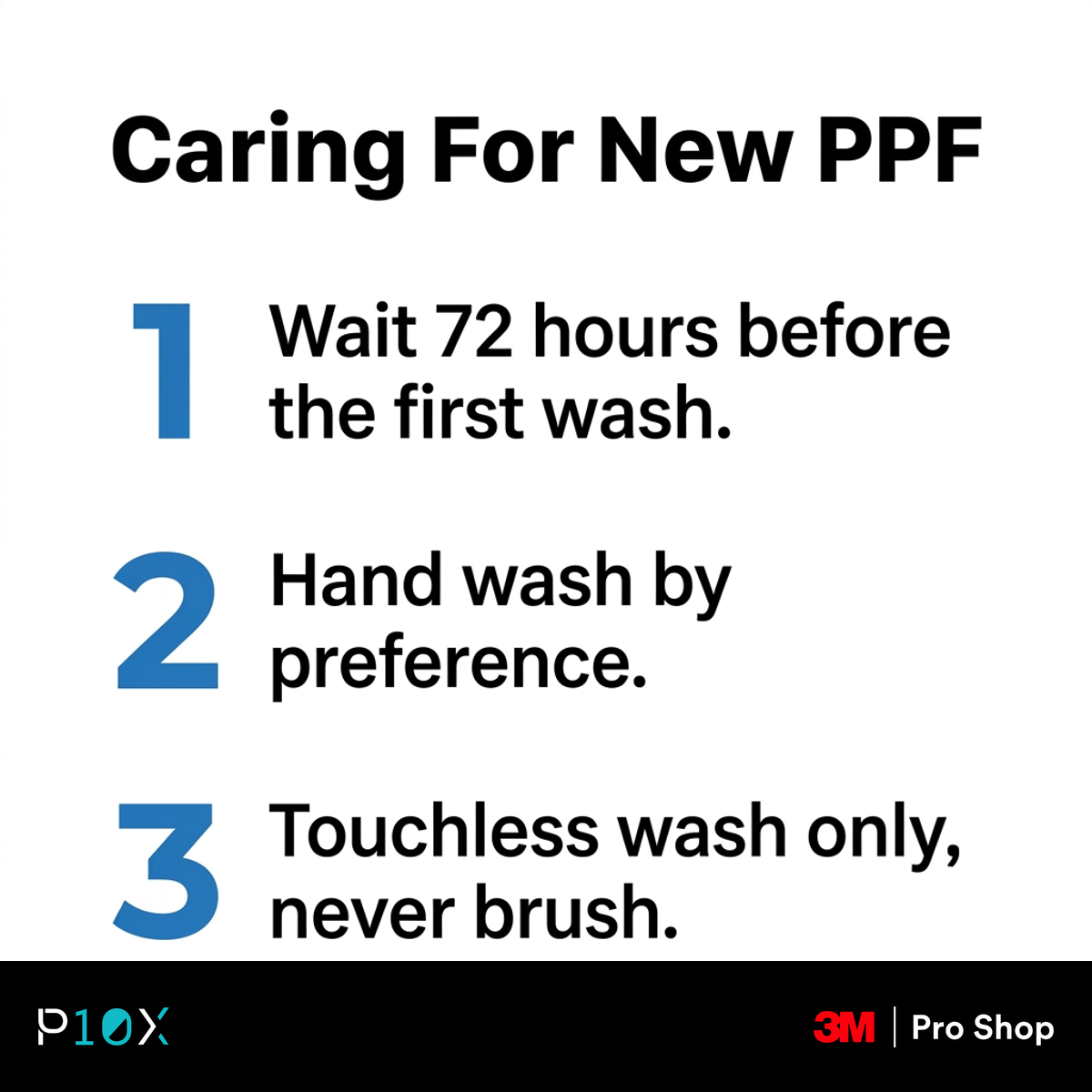
The second mistake is washing the car wrong in the first three days. Freshly installed film needs time for the adhesive to fully bond, and the guidance is to leave it at least 72 hours before washing. After that, hand washing is preferred, and automatic brush washes are a genuine risk because rotating brushes can catch film edges and lift them. If you must use a machine, a touchless wash is the safe option.
The third is confusing film with a wrap. A colour-change wrap is vinyl and it changes how the car looks. Paint protection film is thermoplastic urethane and it is designed to absorb impact while staying invisible. They are different products solving different problems, and a shop that talks about them interchangeably is a shop to be careful with. The same applies to shops that position ceramic coating as an alternative rather than a complement, a point our comparison of ceramic coating against PPF works through properly. Coating changes how dirt behaves on the surface. It does not stop a stone.

The squeegee pass in that photo is the difference between film that holds its edge for years and film that starts lifting at the bonnet lip after a few months of Malaysian heat cycling.
What the PPF Warranty Actually Covers
This section exists because the answer is narrower than most owners assume, and knowing the boundary before you buy prevents an argument later.
Covered defects on a 3M paint protection film warranty are bubbling and cracking. That is the list. If the film bubbles or cracks within the warranty period and the installation was done by a 3M Authorized Dealer, that is a warranty matter. Delamination, peeling and adhesive failure are not named as covered defects in 3M's own warranty documentation, so treat any shop that promises coverage for them as promising something they cannot deliver.
Yellowing is not a warranty-covered defect on any 3M film, for paint protection film or for window tint. This matters because it is frequently sold as if it were. What is true is that the film is built with UV inhibitors engineered to resist yellowing under tropical UV, which is a genuine product characteristic and a real reason to choose a quality film over a cheap one. It is not a promise of replacement, and no honest installer will tell you otherwise. If a shop offers you a yellowing guarantee in writing, ask which document it comes from.
The practical takeaway for a Model 3 owner is to keep the installation traceable. Film installed by a 3M Authorized Dealer such as 3M Pro Shop by P10X comes with paperwork that ties the film batch to your vehicle, which is what any future claim depends on. Film bought from a social media vendor at a good price usually cannot be traced to anything, and the difference an authorized dealer makes is mostly invisible until the day you need it.
The moment this becomes real is ordinary. A Model 3 that has spent eighteen months parked on the top deck of a shopping mall carpark, four hours at a stretch, comes back with a bonnet edge that has started to lift about 30 millimetres along the lip. If that lifting is bubbling, it is a conversation with the dealer who installed it. If the film has simply gone slightly warm in tone after that much direct UV, it is not, and knowing which one you are looking at before you drive over saves the trip.
Getting Your Model 3 PPF Right in Malaysia
The decision comes down to three questions in order. Does the car live outdoors, which pushes you toward full body. How long will you keep it, which decides whether resale protection justifies the extended panels. And how soon after collection can you book it, which is the one variable entirely within your control and the one that most changes the final result. Answer those three and the panel table above tells you what to film.
If you want the front end done properly on a new Model 3, take the car to a 3M Authorized Dealer while the paint is still untouched, ask to see the pattern set for your exact variant, and confirm the warranty paperwork names the film series going on your car.
Tesla Model 3 PPF Questions Malaysian Owners Ask
Is PPF worth it on a Tesla Model 3 in Malaysia?
On a car with a measured paint build of roughly 80 to 100 microns, yes for the front end at minimum. The Model 3 has less factory material to lose than most rivals, and Malaysian highway conditions remove it steadily.
Which panels should I PPF first on a Model 3?
Bonnet leading edge, front bumper, A-pillars and the rear arch behind each front wheel. Those four take the majority of impact damage on a Klang Valley commute.
Does the Model 3 glass roof need paint protection film?
No. Paint protection film is for painted surfaces. The glass roof is a window film question, not a PPF question, and the two are booked separately.
How soon after collecting my Model 3 should I install PPF?
Within the first week if you can arrange it. Film applied over untouched paint gives the cleanest result and avoids sealing existing chips underneath.
Can I wash my Model 3 normally after PPF installation?
Wait at least 72 hours before the first wash, then hand wash by preference. Avoid automatic brush washes, which can catch and lift film edges.
Does PPF stop swirl marks on a black Model 3?
It prevents most of them and heals many of the light ones, because the film's top layer closes minor scratches when warmed. It does not make the surface immune to bad washing technique.
Is full body PPF necessary for a Model 3 parked in a condo basement?
Usually not. A car kept under cover at night and driven on predictable highway routes is well served by front-end coverage plus the rear arches and rockers.
What does a 3M PPF warranty cover on a Model 3?
Bubbling and cracking. Yellowing is not a covered defect, though quality film uses UV inhibitors that resist it.
Find out the best protection for your car
Visit a 3M Pro Shop and discover the cost-effective 3M Protective Film and Window Tint
Author

Kelvin Cheen
Kelvin is an Automotive Solutions Consultant and Branch Manager at 3M Pro Shop. With 4+ years of field experience in premium vehicle surface protection, Kelvin specializes in flagship 3M technologies, including 3M Crystalline Black optical film and Ceramic IR tints, 3M Paint Protection Film (PPF), etc. His focus is on delivering transparent, engineering-backed advice to car and EV owners, cutting through sales upsells to ensure customers choose the exact thermal rejection and paint protection tailored to their driving needs.
Experience the future of window tinting
Visit a 3M Pro Shop and discover the revolutionary Crystalline CR BLK film