
BMW iX3 PPF: What to Book Before You Collect the Car
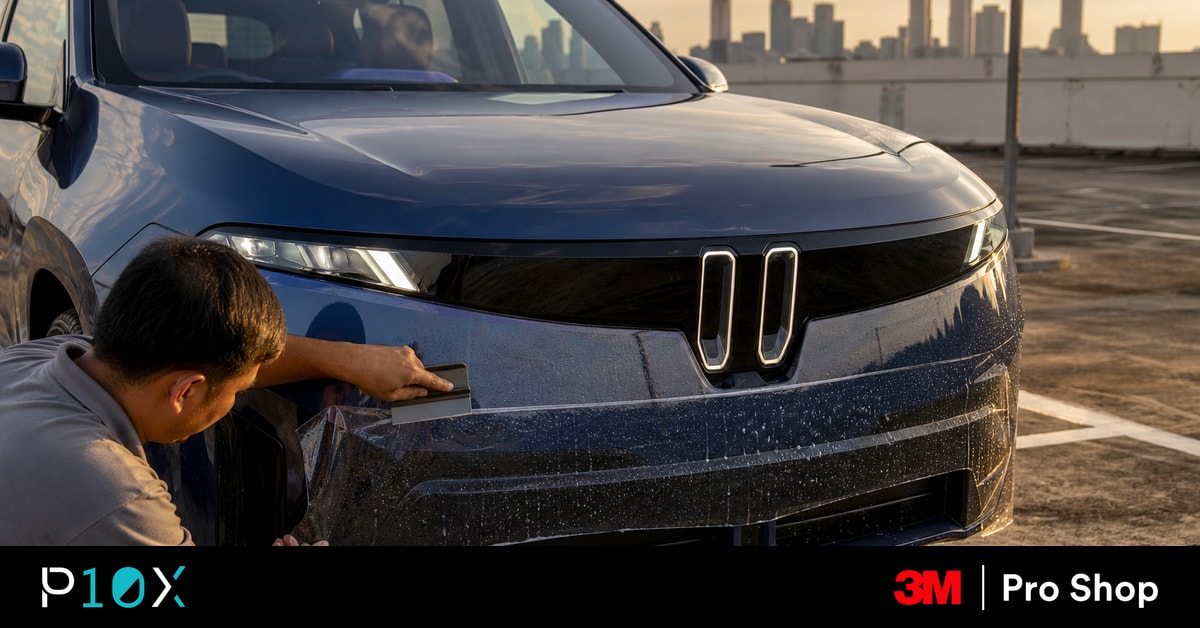
- Book the installation slot before collection day, because film can only preserve the paint it finds.
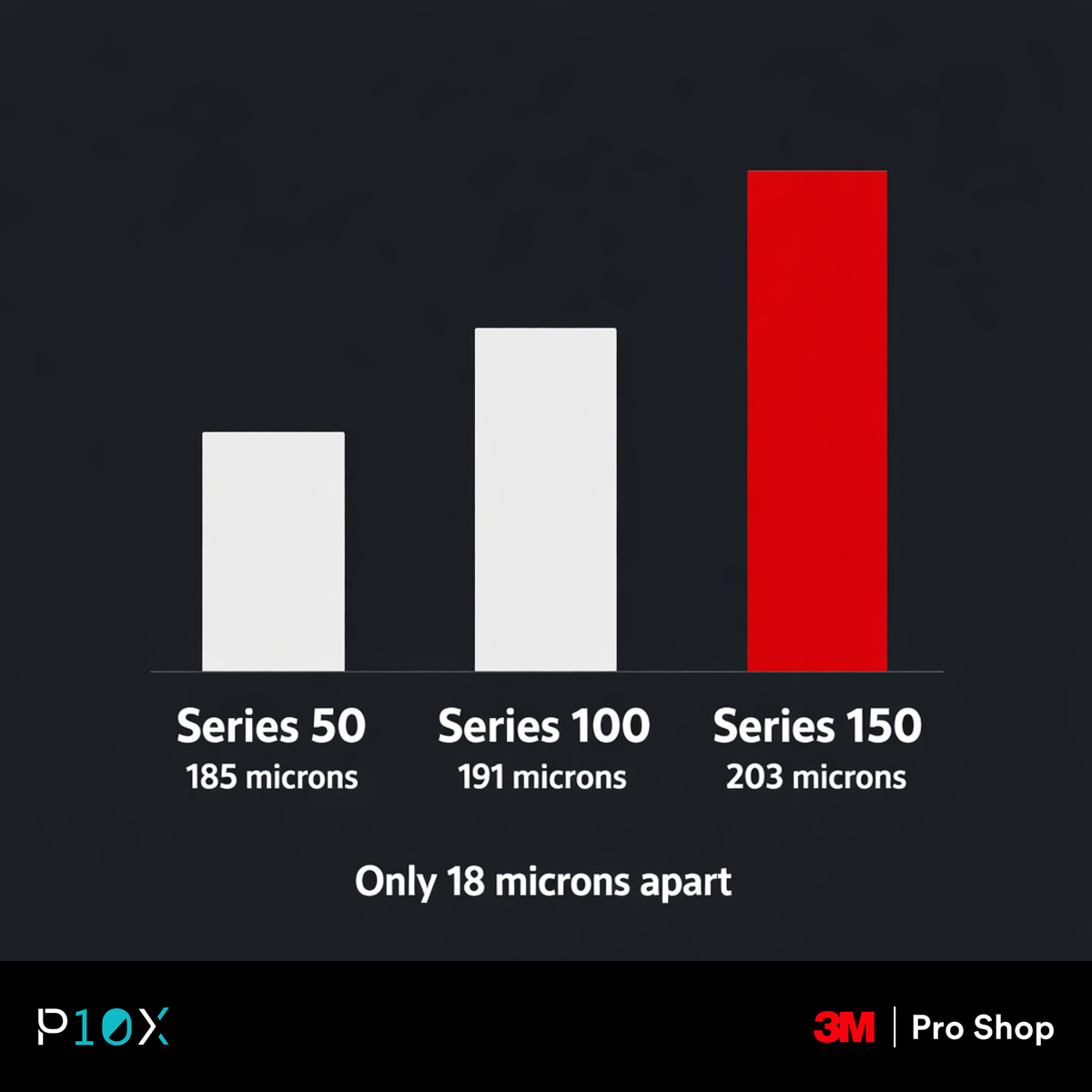
- Only 18 microns separate Series 50 from Series 150, so choose on clarity and contour behaviour rather than thickness.
- Across one full charge split between highway and city driving, 88 percent of the impact energy your front end absorbs arrives during highway kilometres.
- The front bumper, bonnet, headlamps, mirror caps and fender leading edges absorb that share, so a front-end package buys the most protection per panel.
- A first allocation of 50 imported units makes a damaged panel a waiting problem rather than a quick repair.
- No washing for 72 hours after installation, then hand washing from there.
Booking BMW iX3 PPF before your collection date changes what the film can protect and what it can no longer save. The first Malaysian allocation of the iX3 50 xDrive M Sport Pro was 50 fully imported units and it sold out, so the paint on your car left Debrecen months ago, crossed an ocean and passed through pre-delivery handling before you ever touched a door handle. Film fitted before the first drive protects paint with no history. Film fitted three months later protects paint that already has one.
That gap matters more on this car than on most. Neue Klasse surfacing gives the iX3 large, flat panels with very little crease work to break up a reflection, and a flat panel is exactly where one chip reads from two metres away. If your morning run is the PLUS Highway into the city or the KESAS towards Subang, you are using the same surface that lifts gravel onto the leading edge of a bonnet every day, which is why we mapped the worst local stretches in our guide to KL highway stone chips. The closest car we have filmed to this brief is the Denza Z9GT, and the Denza Z9GT PPF guide already answers many of the coverage questions for a long flagship EV.
What a Pre-Delivery Film Booking Actually Covers
Why Fresh CBU Paint Needs Film Before Driving
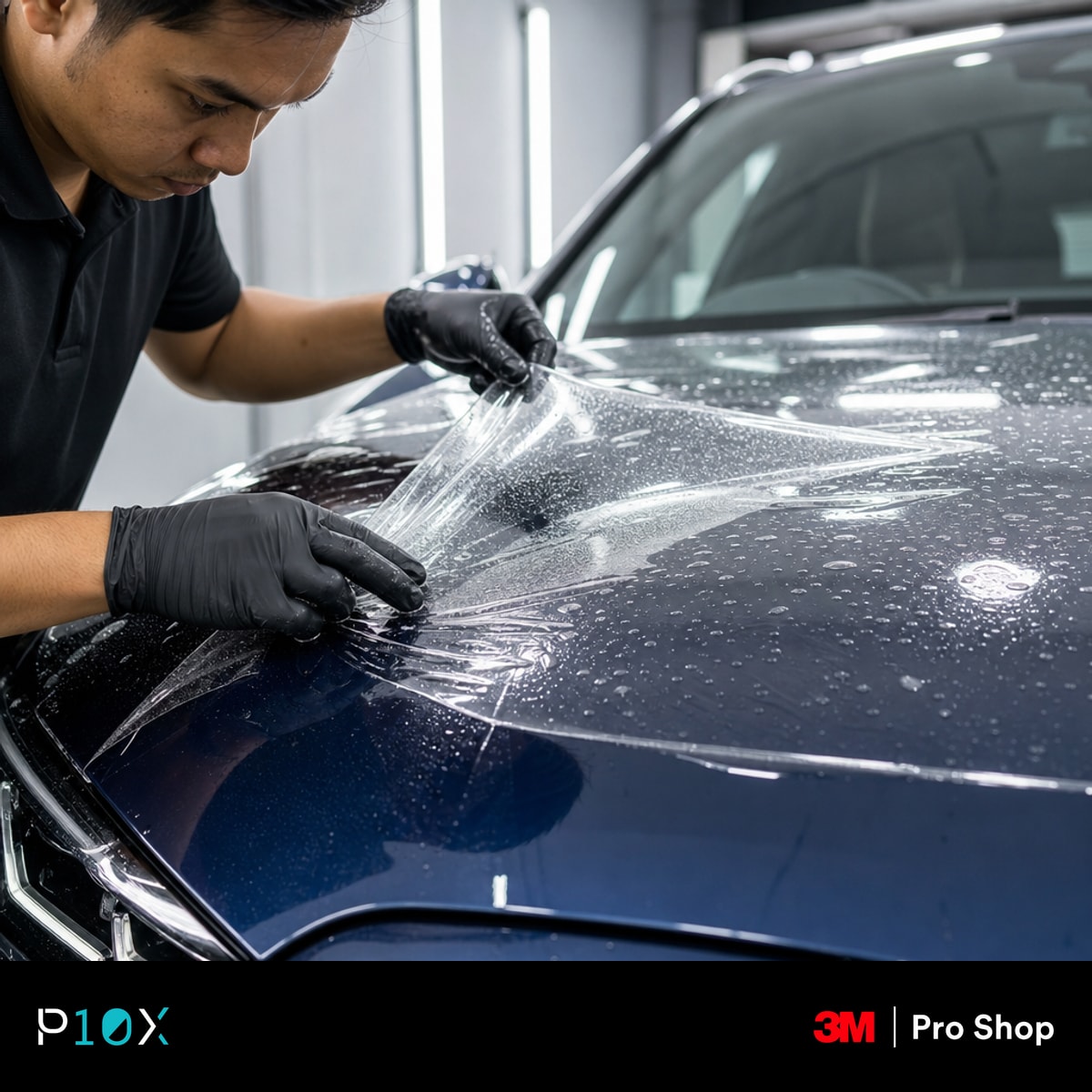
Fresh factory paint is at its most uniform on day one, and every wash, polish and highway kilometre moves it away from that baseline. Because the iX3 is fully imported and the first batch was 50 units, a chipped panel becomes a waiting problem rather than a quick fix. Film applied first locks in the condition the car arrived in.
A new car also collects damage before you ever see it. Sea transport, storage, transport film removal and pre-delivery preparation all put hands and cloths on the paint. On a large flat bonnet, a single wipe with the wrong cloth leaves marks that only show up in direct sun at a specific angle, usually the first weekend you park nose-out at a condo driveway and walk back towards the car.
Neue Klasse surfacing raises the stakes again. The iX3 has broad, low-crease panels, so a body shop has almost nowhere to hide a blend line across a 1.2 metre span of bonnet. Ocean Wave Blue and Polarised Grey are also new to Malaysia, with no local respray or colour-match history behind them, and a colour without a track record is the last colour you want to hand to a refinisher.
Why 88 Percent of Chip Energy Hits on Highways
Impact energy rises with the square of speed, so highway kilometres do most of the damage even when city driving takes similar time. Using the iX3 rated range and a normal Klang Valley driving split, 88 percent of the impact energy the front end absorbs across one charge arrives during highway running. Here is the working.
- Rated range per charge: 805 km WLTP on the 108.7 kWh battery
- Assumption: 70 percent of those kilometres at 110 km/h on the PLUS and the KESAS, and 30 percent at 60 km/h on city roads, which gives 564 km and 241 km
- A 4 mm granite chip weighs 0.09 g, taking granite density at 2,700 kg per cubic metre
- Impact energy of that chip at 110 km/h: 0.042 joules. At 60 km/h: 0.013 joules
- Assumption: the same number of strikes per kilometre on both road types
- Highway share: 564 multiplied by 0.042 gives 23.7, city share is 241 multiplied by 0.013 which gives 3.1, so highway running carries 23.7 out of 26.8, or 88 percent
The conclusion is not that city driving is harmless, it is that the money follows the front end. That same chip carries more than three times the energy at highway speed, and it lands on a vertical bumper face and a bonnet lip rather than spreading evenly over the car. Series 150 Gloss puts 203 microns of sacrificial film exactly where that 88 percent arrives.
Run the numbers on your own week and the pattern holds. A Subang to Cyberjaya commute on the ELITE and the LDP is roughly 70 highway kilometres a day, which is around 350 km a week at the speed where chips do their worst work, so the front of the car sees a highway year in about eight months.

Series 150 vs 100 vs 50 on the iX3
Thickness is the wrong tie-breaker. Series 150 Gloss measures 8 mil, which is 203 microns, Series 100 Gloss measures 7.5 mil or 191 microns, and Series 50 Gloss measures 185 microns, so only 18 microns separate the entry film from the flagship. What actually separates them is optical clarity and how the film behaves over a contour.
On a car with panels this flat and this reflective, clarity is the visible difference. Series 150 has the lowest orange peel of the three and a hydrophobic top coat, which on a Polarised Grey bonnet is the difference between film you cannot find and film you notice at a traffic light. It is also the most flexible of the three over difficult contours, which matters on the iX3 flush door handles and the tight radius where the bonnet meets the light units. You can read the full 3M PPF Malaysia breakdown for the technical detail behind each tier, and the Series 150 Gloss product page lists the current specification.
All three films are high gloss with self-healing behaviour, so light swirl marks close up with heat, and all three use a clear coat with ultraviolet inhibitors engineered to resist yellowing under tropical sun. Registered 3M coverage obtained through an authorised dealer treats bubbling and cracking as the covered defects. A practical build on this car uses Series 150 across the impact zone and Series 100 on secondary panels, which is a better use of budget than a single mid-tier film everywhere.
Five Panels That Take the Worst Highway Damage
The front bumper, bonnet, headlamps, mirror caps and fender leading edges take the overwhelming share of chip damage on this car. They face the airflow, they sit low, and on a 4,782 mm body they are the surfaces that meet debris first. Coverage priority should follow impact risk, not panel size or price per panel.
| Panel | Impact risk | Recommended 3M series | Coverage tier |
|---|---|---|---|
| Front bumper | Very high | Series 150 Gloss | Front-end essential |
| Bonnet, full panel | Very high | Series 150 Gloss | Front-end essential |
| Headlamp units | High | Series 150 Gloss | Front-end essential |
| Mirror caps | High | Series 150 Gloss | Front-end essential |
| Front fender leading edges | High | Series 150 Gloss | Front-end essential |
| A-pillars and roof leading edge | Moderate | Series 100 Gloss | Extended front |
| Door cups and handle recesses | Moderate | Series 100 Gloss | Extended front |
| Rocker panels and lower doors | Moderate | Series 100 Gloss | Extended front |
| Rear bumper upper face | Low | Series 100 Gloss | Full body |
| Boot lid and rear quarters | Low | Series 50 Gloss | Full body |
Two of those entries surprise people. Mirror caps sit exactly in the debris stream thrown up by the lorry two lanes over on the LDP, and they are cheap to protect and awkward to repaint. Rocker panels take grit at low level all the way along the flanks, and on a 2,360 kg car with 645 Nm the tyres throw that grit rearward with real force from every standing start. Our guide to which panels need PPF first goes deeper on the map of a typical strike pattern.
Door cups are the one to add if you have a family. On a school run at a Bandar Utama pick-up point, the same three fingernails hit the same 40 mm of paint behind the handle twice a day, which is 500 times a year on the driver door alone. Film there is not about highway debris at all, it is about the one spot that never gets a rest.

Front-End, Full-Body or Coating for the iX3
A front-end package covers where 88 percent of the impact energy lands. Full body coverage adds protection against the things that happen when the car is parked, which is a different risk and a different argument. Ceramic coating solves neither, because it adds gloss and easier cleaning without adding a physical impact layer.
On a sold-out allocation the maths shifts towards more coverage rather than less. A scraped rear quarter on a car with local parts stock is an inconvenience. On a fully imported car from a first batch of 50 units, the same panel can idle in a workshop waiting on a part while the rest of the car sits under a cover. That waiting time, not the repair itself, is what full body coverage is really insuring against.
A sensible middle path is film across the impact zone plus coating on the remaining paint and the glass, then adding panels later if the car earns them. What you should avoid is the reverse order, which is coating first and film later, because that usually means paying to have the coating removed from every panel that is about to be filmed anyway.
How to Sequence Film Work Around Collection Day
Work backwards from the handover date. Confirm the collection day with the dealer, hold a film slot two weeks earlier, inspect the paint before the car leaves the showroom, then release it unwashed to the installer. Four steps, in this order, and the whole plan takes one phone call to set up.
Step 1: Confirm the collection date
Get the date in writing before you book anything, then add two working days for the film work. On a 50-unit allocation the handover date can move, so ask your advisor to tell you the moment it does, and ask the film shop what their reschedule window looks like.
Step 2: Book the installation slot
Book two weeks ahead for a front-end package and three for full body. Ask whether the bay is enclosed and temperature controlled, because dust is the main enemy of a clean edge, and ask specifically for wrapped edges rather than cut edges on the bonnet and bumper. Our walkthrough of PPF installation in Malaysia shows what a proper bay looks like.
Step 3: Inspect the paint at handover
Spend 15 minutes on the paint under the showroom lights and again outside in daylight. Photograph every panel before the car moves, look along the flat surfaces at a low angle for transport marks, and raise anything you find while the car is still the dealer responsibility.
Step 4: Hand the car over unwashed
Ask the dealer not to wash or quick-detail the car before it goes to the installer. The film shop will do a proper decontamination and clay stage anyway, and an unwashed panel is easier to inspect than a freshly waxed one. After installation, no washing for 72 hours, then hand washing only, and our guide to PPF maintenance in Malaysia covers the first month in detail.

What Actually Changes an iX3 Film Quote
Five things move a film quote, and none of them is the badge on the bonnet. Panel count, film series, whether edges are wrapped or cut, the labour hours the body shape demands, and the size of the car. Understand those five and you can compare two quotes properly instead of comparing two numbers.
Edge treatment is the one that separates a good quote from a cheap one. Wrapping film around a panel edge takes longer, needs the panel gap opened up, and sometimes needs trim removed, and it is also the only way to stop a visible film line collecting grime along the bonnet lip. A quote that comes in noticeably lower than everything else usually cuts film at the edge instead of wrapping it, which is a workmanship decision rather than a discount.
Body size matters on a 4,782 mm SAV because film is sold by area and fitted by hand. Ask your installer which package bracket this body falls into before you compare anything, since bracket definitions differ between shops. Verifying the shop matters just as much as verifying the film, so use a 3M Authorized Dealer such as 3M Pro Shop by P10X and check the outlet on the official 3M Pro Shop locations list before you hand over the keys.
Mistakes Owners Make Specifying Film on Delivery Day
Four mistakes account for most of the regret we hear about in the first month of ownership. All four are decisions made in a hurry on handover day, and all four are avoidable with one conversation a fortnight earlier.
Booking after the first wash
The first automatic wash puts fine swirl marks into soft new paint, and film locks in whatever is underneath it. If the car has already been through a petrol station wash, budget for a light correction stage before the film goes on, which adds a day.
Paying for panels that never get hit
A full body quote that treats the boot lid and the front bumper as equally urgent is not reading the car. Spend on the impact zone first, then add panels in the order the road actually attacks them.
Accepting cut edges instead of wrapped
A cut edge sits on the visible face of a panel, collects road grime along the line and gives water somewhere to sit. Ask for wrapped edges on the bonnet, bumper and fenders, and ask to see a finished car before you agree.
Choosing on thickness alone
Since 18 microns separate the entry film from the flagship, thickness is close to irrelevant between tiers. Clarity, contour behaviour and the top coat are what you feel every time you look down a flat panel in the sun.
Booking iX3 Paint Protection Around Your Collection Date
The decision logic on this car is short. Film goes on before the first drive, because film preserves the paint it finds rather than repairing it. Series 150 Gloss across the impact zone, Series 100 Gloss where the road only grazes the car, and wrapped edges everywhere film meets a panel gap. Coverage grows from the front backwards, never the other way around.
The allocation matters more than the film choice. Fifty imported units means a damaged bumper or fender is a waiting problem, and a car parked in a workshop is worth nothing to you no matter which package is on the invoice. Film is the cheapest way to keep the car out of that queue in the first place.
The calm next step is one phone call. Confirm your collection date with the dealer, hold an installation slot two weeks ahead of it with a 3M Authorized Dealer, and put two things in writing before the car moves: arrive unwashed, and wrap the edges. Everything else on this page is detail you can settle in the bay.
BMW iX3 PPF Questions Malaysian Owners Ask
Should I install PPF on a BMW iX3 before collecting it?
Yes, if your dealer will release the car before handover. Film applied to untouched factory paint gives you the best possible starting condition, and it avoids the first wash, the first highway run and the first carpark scuff. Ask your sales advisor early, because it changes who drives the car and on which plates.
Which panels need 3M PPF most on a BMW iX3 in Malaysia?
The front bumper, the full bonnet, the headlamp units, the mirror caps and the front fender leading edges. Those five sit in the debris stream on the PLUS and the KESAS, and they absorb the overwhelming share of chip energy. Door cups and rocker panels are the next two worth adding.
Is Series 150 or Series 100 better for a BMW iX3?
Series 150 Gloss for the impact zone and Series 100 Gloss for secondary panels. Only 18 microns separate the two, so the real difference is clarity, orange peel and how the film handles the tight radius around the light units. On flat Neue Klasse panels, clarity is the difference you actually see.
Does PPF damage BMW iX3 paint when it is removed?
Correctly installed film on healthy factory paint is designed to be removed safely, and removal is a heat and technique job rather than a strength job. The risk sits with resprayed panels, poor edge preparation and film left far beyond its service life, which is why the installer matters as much as the film.
How soon can I wash a BMW iX3 after PPF installation?
Wait 72 hours before washing so the adhesive can finish setting and any installation moisture can clear. After that, hand washing is preferred, and a touchless machine only if you have no alternative. Avoid brushes, abrasive sponges and pressure washing directly at a film edge.
Does PPF fit over the iX3 flush door handles?
Yes, and it is one of the details worth specifying. Flush handles create a tight recess where fingers and nails land in the same spot every day, so ask for that area to be wrapped rather than trimmed short of the edge. Series 150 is the more flexible film across that radius.
Find out the best protection for your car
Visit a 3M Pro Shop and discover the cost-effective 3M Protective Film and Window Tint
Author

Kelvin Cheen
Kelvin is an Automotive Solutions Consultant and Branch Manager at 3M Pro Shop. With 4+ years of field experience in premium vehicle surface protection, Kelvin specializes in flagship 3M technologies, including 3M Crystalline Black optical film and Ceramic IR tints, 3M Paint Protection Film (PPF), etc. His focus is on delivering transparent, engineering-backed advice to car and EV owners, cutting through sales upsells to ensure customers choose the exact thermal rejection and paint protection tailored to their driving needs.
Experience the future of window tinting
Visit a 3M Pro Shop and discover the revolutionary Crystalline CR BLK film