
BMW iX3 Window Tint: The Right Film for a New EV
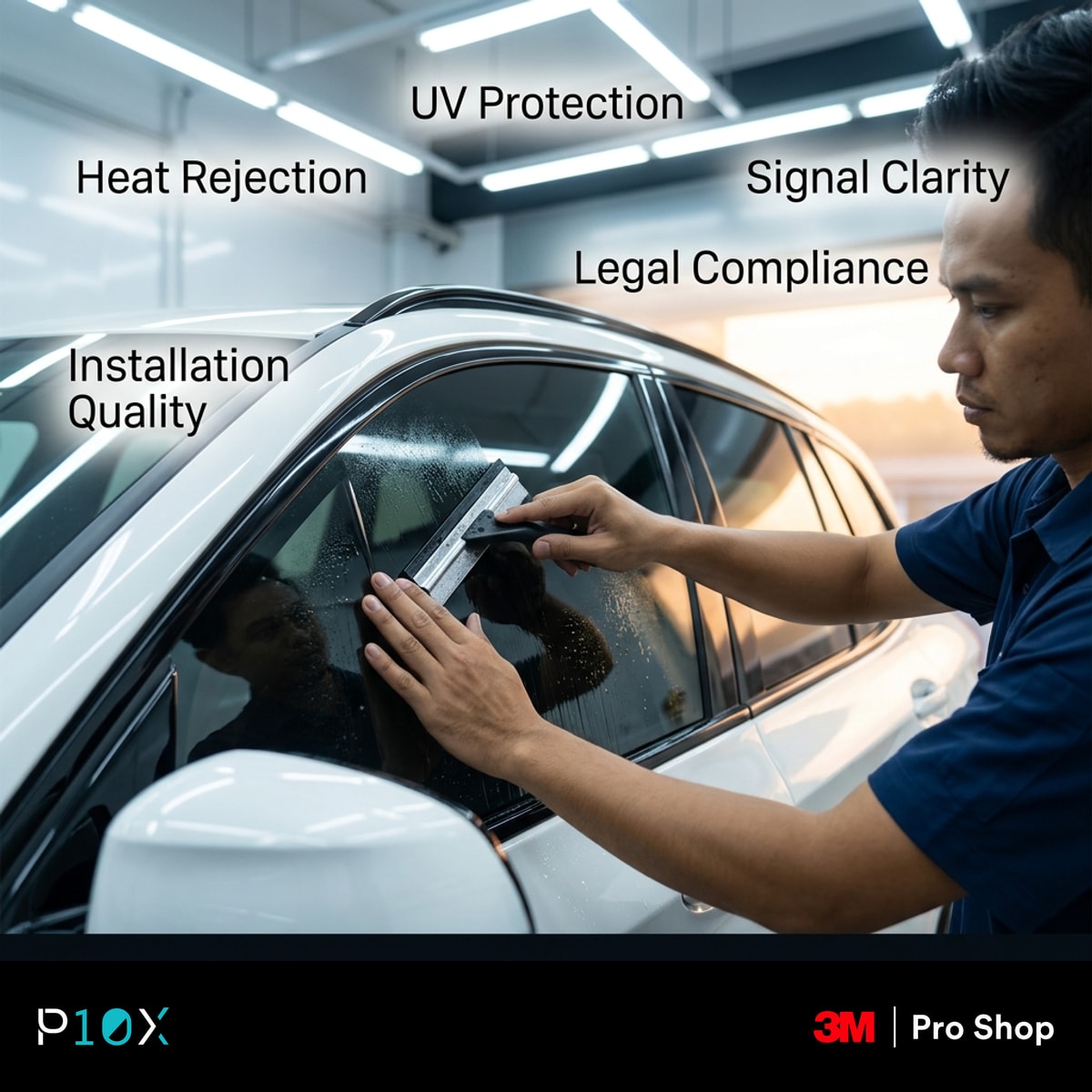
- Ask for two numbers on every pane, total solar energy rejection and visible light transmission, in that order.
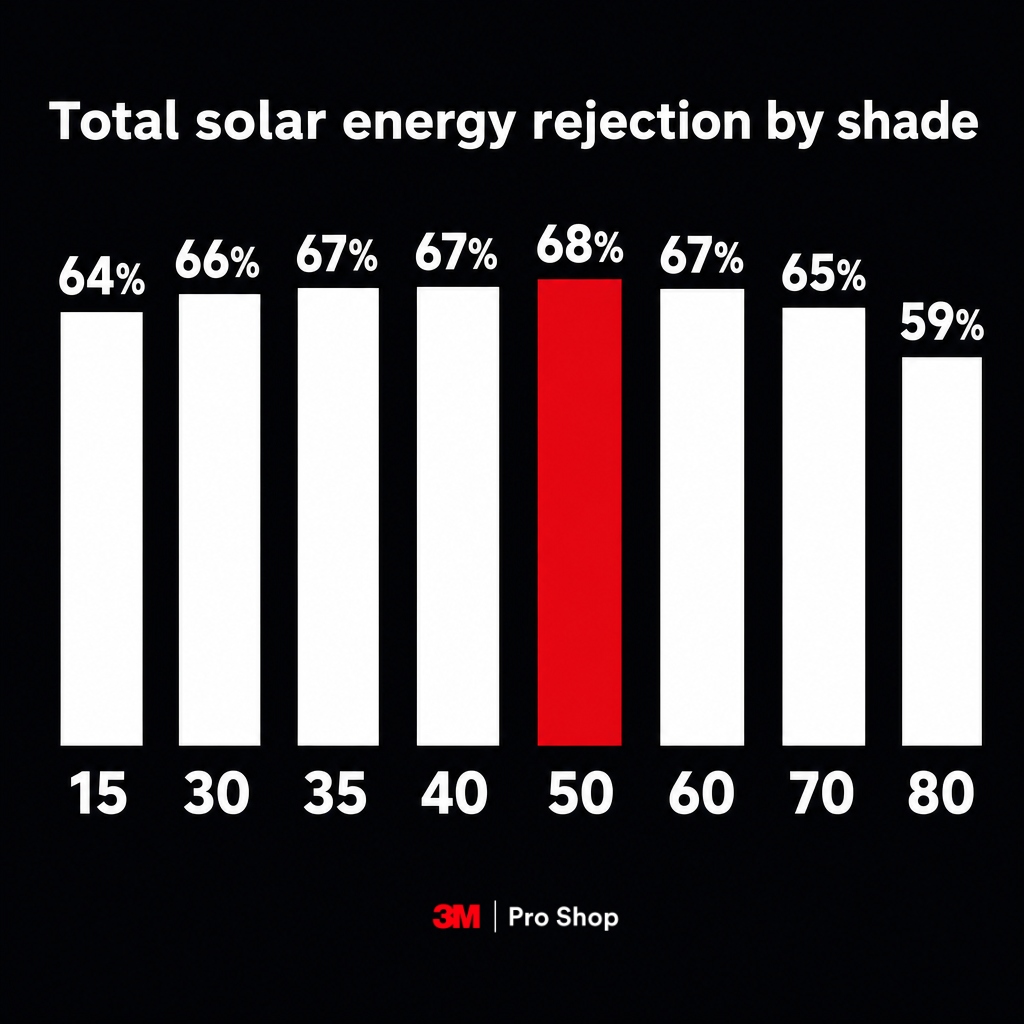
- The darkest CR BLK shade is not the coolest. CR BLK 50 rejects 68 percent of total solar energy, CR BLK 15 rejects 64 percent, and CR BLK 80 rejects 59 percent.
- The whole CR BLK range sits inside nine points of heat rejection, so a light windscreen shade costs very little performance.
- On the figures below, filming the glass returns roughly 15 km of range per full charge in hot weather.
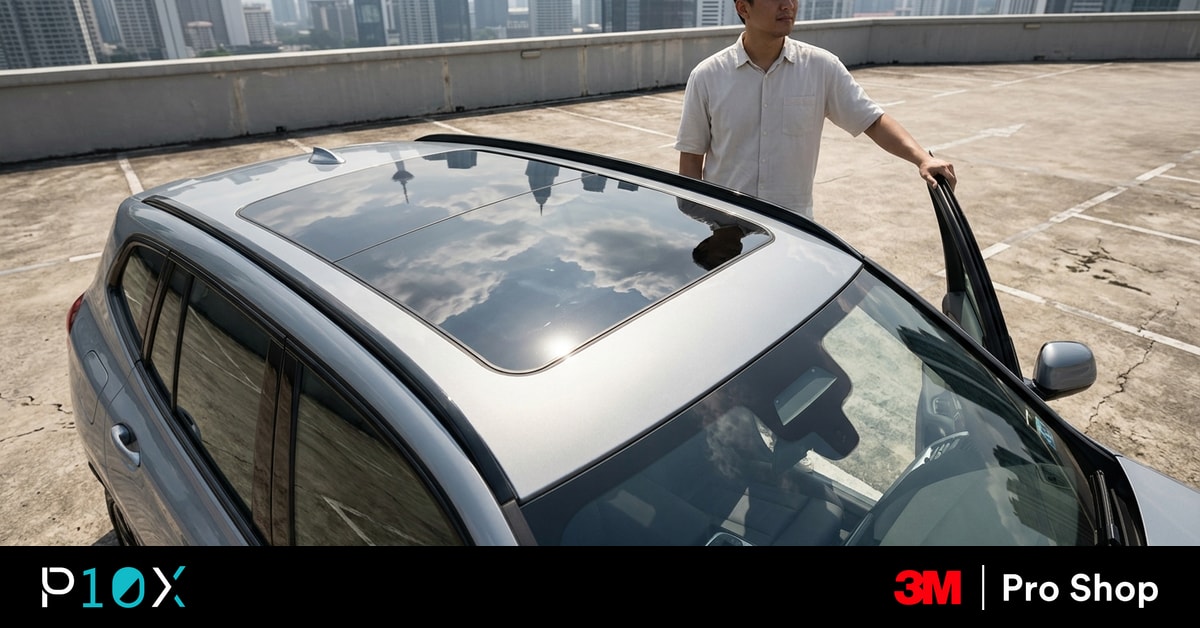
- The panoramic roof is standard, fixed and has no sunshade, which makes it the single most valuable pane to film.
- Non-metallised film construction is a requirement on this car, not a preference, because of the sensor suite and the in-windscreen display.
Choosing window tint for a BMW iX3 comes down to two numbers per pane, and darkness is not one of them. The iX3 50 xDrive M Sport Pro lands here with a fixed panoramic glass roof as standard, fitted with heat-insulating glazing instead of a powered sunshade, so there is no blind to pull across when you park on an open deck at 2pm. Whatever the glass rejects is what the cabin gets.
That makes the film specification a real decision rather than a styling choice. The current flagship for this job is 3M Crystalline Black, the CR BLK range that replaced the legacy Crystalline series in Malaysia from December 2025, and our 3M Crystalline CR BLK guide covers how the film is built. The closest car we have specified pane by pane is the Denza Z9GT, and the denza z9gt window tint guide shows the same method applied to a longer flagship EV.
What Makes an EV Tint Spec Different
Why Darker Film Is Not Cooler Film
No, darker film is not cooler film. Within the CR BLK range the best heat rejection sits in the middle, not at the dark end. CR BLK 50 rejects 68 percent of total solar energy, the darkest CR BLK 15 rejects 64 percent, and the lightest CR BLK 80 rejects 59 percent. The full range spans nine points.
| CR BLK shade | Visible light transmission | Total solar energy rejection |
|---|---|---|
| CR BLK 15 | 15 percent | 64 percent |
| CR BLK 30 | 30 percent | 66 percent |
| CR BLK 35 | 35 percent | 67 percent |
| CR BLK 40 | 40 percent | 67 percent |
| CR BLK 50 | 50 percent | 68 percent |
| CR BLK 60 | 60 percent | 67 percent |
| CR BLK 70 | 70 percent | 65 percent |
| CR BLK 80 | 80 percent | 59 percent |
The reason is construction rather than colour. CR BLK is a multilayer optical film with around 200 nano-layers, and those layers reject infrared energy according to how they are tuned, not according to how dark the film looks to your eye. Darkness is a visible-light property. Heat rejection is mostly an infrared property. They are two different parts of the spectrum.
What darkness does buy is glare control and privacy, and there the dark end wins, with glare reduction reaching 81 percent at CR BLK 15. So the correct way to read this table is to treat TSER as close to constant across the middle of the range and choose each shade for the job that pane has to do. That is also why owners who buy on darkness alone still complain about a warm cabin.
Why the Fixed Panoramic Roof Changes the Spec
The Malaysian car gets a panoramic glass roof as standard, and because it is a European-derived specification, BMW fits heat-insulating glazing in place of a powered sunshade. The panel is fixed and there is no blind to close, so the roof is both the largest single pane on the car and the only one you cannot cover from the inside.
Geometry makes it worse at the worst time. At noon the sun is nearly overhead, so the roof takes solar energy close to head-on while the side glass sits at a shallow angle. Rear passengers feel it first because they sit directly under the widest part of the panel, which is why a family car with a fixed glass roof is the strongest case for filming the roof rather than the last thing to consider.
Heat-insulating glazing is a coating in the glass, not a film, and the two stack rather than compete. Adding film gives the roof a second rejection layer, and on the figures above the mid-range shades give the most heat rejection while the darkest shade gives the most glare control for anyone sitting under it. Film does not change the structural behaviour of the glass, so treat it as a comfort and heat decision only.
How Air-Con Load Eats an 805 km Range
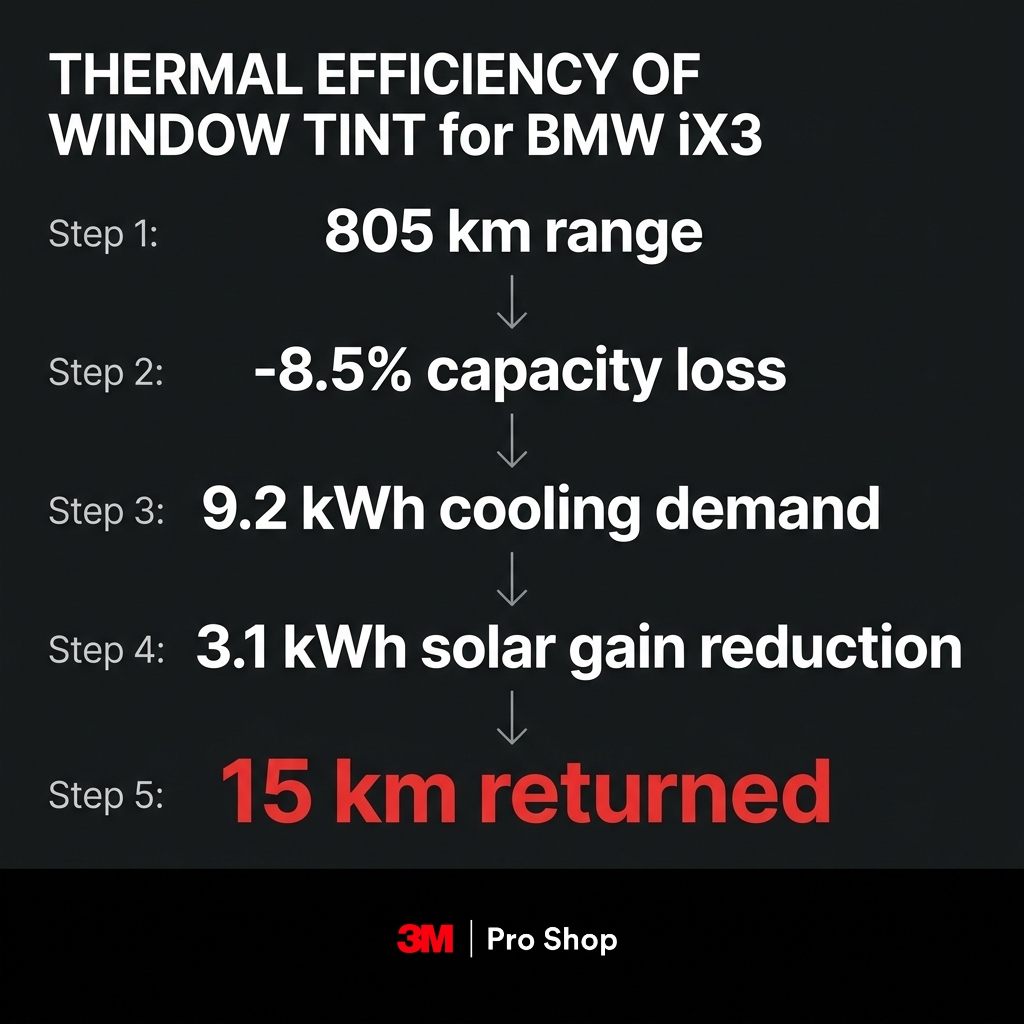
Climate control costs an EV real distance in this climate, and film gives some of it back. Working from the iX3 rated figures and independent hot-weather testing, filming the glass returns roughly 15 km per full charge. This is an estimate built from the inputs below, not a guarantee, and every input is visible so you can rerun it.
- Battery and range: 108.7 kWh and 805 km WLTP, which is 13.5 kWh per 100 km
- Independent input: AAA dynamometer testing found EVs lose 8.5 percent of driving range at 35 degrees Celsius ambient with climate control running, measured against a 24 degree baseline
- 8.5 percent of 805 km is 68 km, which is 9.2 kWh of the pack spent on hot-weather cooling
- Assumption: solar gain through the glass accounts for one third of that cooling demand, which is 3.1 kWh. Published cabin heat load research treats solar gain through glazing as the largest single thermal load on a cabin, so one third is a conservative share
- 3M input: CR BLK 50 rejects 68 percent of total solar energy, so 3.1 multiplied by 0.68 gives 2.1 kWh
- 2.1 kWh divided by 13.5 kWh per 100 km returns 15 km of range per full charge
Fifteen kilometres is roughly a one-way run from Kepong to KLCC, recovered on every full charge without changing how you drive. It is not the headline number a salesperson would choose, and that is the point. It is the number the physics supports, and it comes with the compressor cycling less on the same journey.
The same logic explains why local EV owners notice tint more than combustion owners do. We ran through the mechanism in detail for another local EV in our proton eMAS 7 window tint guide, and the pattern holds on any car where cabin cooling and forward motion draw from the same battery.
The Right CR BLK Shade for Each iX3 Pane
Specify by pane, not by car. The windscreen and front sides are regulated, the rear glass is not, and the roof has no sunshade to fall back on, so one shade across the whole car is always the wrong answer. This is the specification to send a shop.
| Glass pane | 3M shade | Visible light transmission | Total solar energy rejection | Infrared rejection | JPJ status |
|---|---|---|---|---|---|
| Front windscreen | CR BLK 80 | 80 percent | 59 percent | 95 to 98 percent | Regulated, 70 percent minimum |
| Front side windows | CR BLK 70 | 70 percent | 65 percent | 95 to 98 percent | Regulated, 50 percent minimum |
| Rear side windows | CR BLK 15 | 15 percent | 64 percent | 95 to 98 percent | Not regulated |
| Rear windscreen | CR BLK 15 | 15 percent | 64 percent | 95 to 98 percent | Not regulated |
| Panoramic glass roof | CR BLK 15 | 15 percent | 64 percent | 95 to 98 percent | Not regulated |
The infrared figure is quoted for the film measured on its own between 900 and 1,000 nanometres, which is why it stays constant across shades and why it should never be the number you buy on. Read the TSER column first, then check the shade against the pane.
Two choices in that table need explaining. The front sides could take CR BLK 50 for four more points of heat rejection, but the legal reading is taken through the glass and film together, so the lighter shade protects your margin. The roof gets the darkest shade because a fixed panel with no blind needs glare and privacy control more than it needs the last four points of heat rejection, and it is unregulated, so you are free to choose.
CR BLK vs Ceramic IR vs XP at Matched VLT
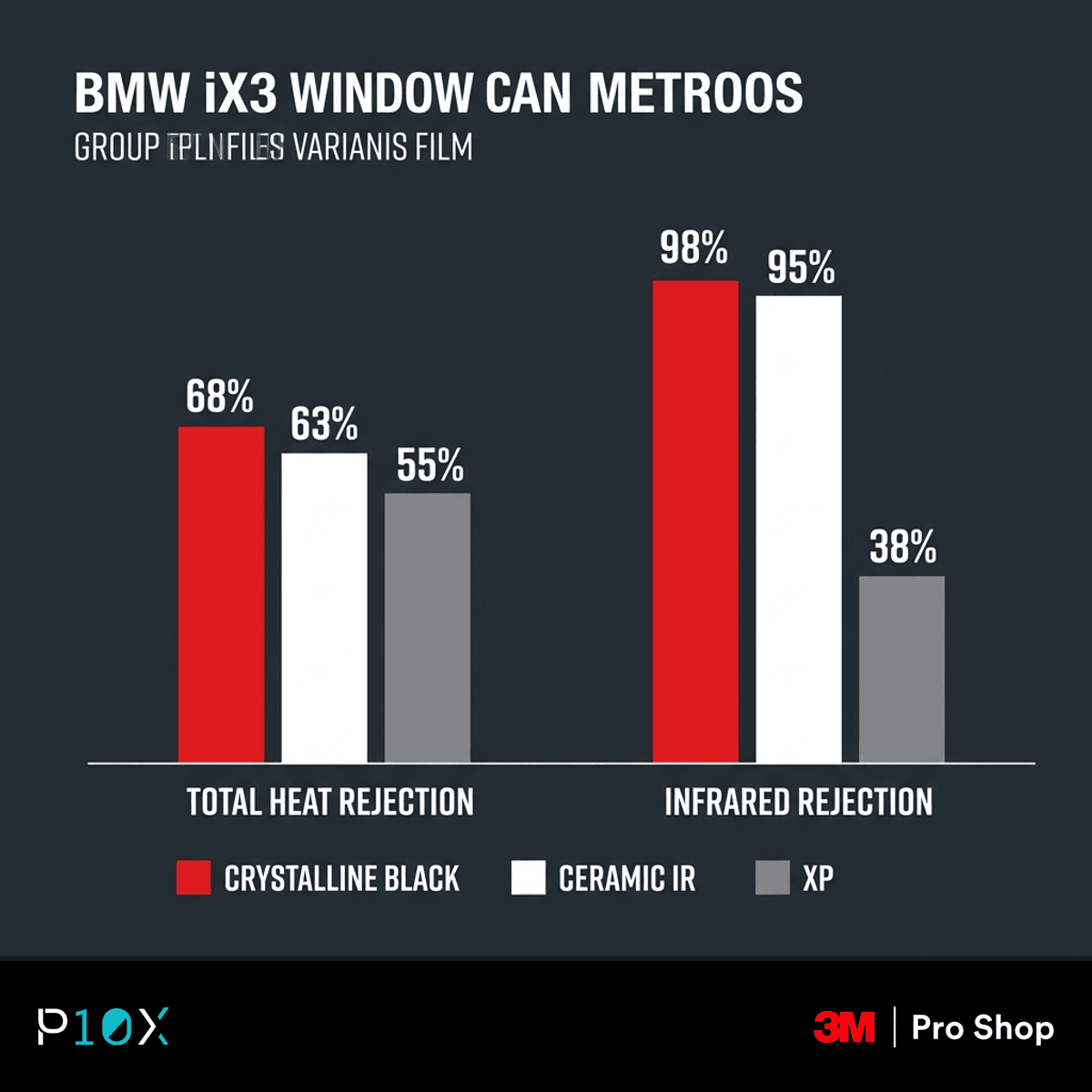
Three 3M lines are quoted locally, and at matched visible light transmission they separate cleanly. Crystalline Black rejects the most total solar energy at 68 percent, Ceramic IR follows at 63 percent, and XP sits at 55 percent. That order holds whatever shade you pick.
| Film | Total solar energy rejection | Infrared rejection | Glare reduction | Warranty |
|---|---|---|---|---|
| Crystalline Black | 68 percent | 98 percent | 81 percent | Covered |
| Ceramic IR | 63 percent | 95 percent | 93 percent | Covered |
| XP | 55 percent | 38 percent | 95 percent | Covered |
Each figure above is the strongest in that film's own range. The glare column is the one that misleads people, because glare reduction climbs with darkness, which is exactly why XP posts the highest glare figure alongside the lowest heat rejection. If you read that column on its own you would buy the weakest film in the table.
The real dividing line is the infrared column. Ceramic IR holds 95 percent while XP manages 38 percent, and that gap is what you feel on the back of your hands on the steering wheel in a jam on the Federal Highway. The 3M window tint range page lists the current line-up, and all three carry coverage when the film is installed and registered by an authorised dealer.
For an 800 V EV with a fixed glass roof, the film with the highest total solar energy rejection is the one that pays back twice, once in comfort and once in consumption. That is the case for CR BLK on this particular car rather than a general claim that the most expensive film always wins.
What JPJ Allows on Windscreen, Sides and Rear
JPJ regulates visible light transmission and nothing else. The minimum is 70 percent on the front windscreen and 50 percent on the front side windows, with no limit on the rear side glass, the rear windscreen or the roof. Darkness is measured. Heat rejection is not.
The detail that catches owners out is what the meter actually reads. Compliance is measured on the finished pane, which means the factory glass and the film together, not the film on its own. Your car's glass already absorbs some light before any film goes on, so a film rated at 70 percent does not produce a 70 percent reading once it is bonded to the windscreen.
That is why the lightest shade in the range is the only sensible windscreen choice, and why you should ask the installer to meter the finished windscreen and front doors in front of you before you drive away. Our JPJ compliant window tint guide covers the inspection process, and it is worth reading before you commit, because film removed at an inspection is paid for twice.
Behind the front doors you have a free hand. Rear side glass, the rear windscreen and the roof carry no VLT limit at all, so specify those panes for comfort, privacy and glare rather than for a number on a meter.
Why Non-Metallised Film Matters on a Sensor Windscreen
The iX3 runs a 43.3 inch BMW Panoramic Vision display along the base of the windscreen and puts its driver assistance cameras behind the same glass. Any film you fit sits in front of all of it, which is why film construction is a specification requirement on this car rather than a preference.
CR BLK is a non-metallised multilayer optical film, roughly 200 nano-layers doing the heat work without a metal layer in the stack. Metallised and sputtered films use exactly that metal content to reject heat, which is what puts them in front of antennas and sensors. Non-metallised construction does not interfere with mobile signal, GPS or satellite radio.
Ask for three things at the bay. Film cut cleanly around the camera and sensor housing at the top of the windscreen, nothing applied across the Panoramic Vision projection area without the installer confirming it first, and a test of the driver assistance functions before you leave. We covered the sensor question in more depth in our guide to whether window tint affects ADAS systems.
What Actually Changes an iX3 Tinting Quote
Four things move a tint quote. The film line, the number of panes, the glass area, and whether the roof is included. Film choice is the largest single factor, and the roof is the pane most often missing from a headline number, so it is the first thing to check.
Glass area matters on a 4,782 mm body with tall side glass and a full-width roof panel. The roof is a single large pane that has to be handled in one piece, and the rear windscreen has its own curvature and heating elements to work around. Ask your installer which package bracket this body falls into and whether the roof and rear windscreen are inside or outside the figure, because bracket definitions differ between shops. Our 3M window tint price guide explains how local quotes are structured.
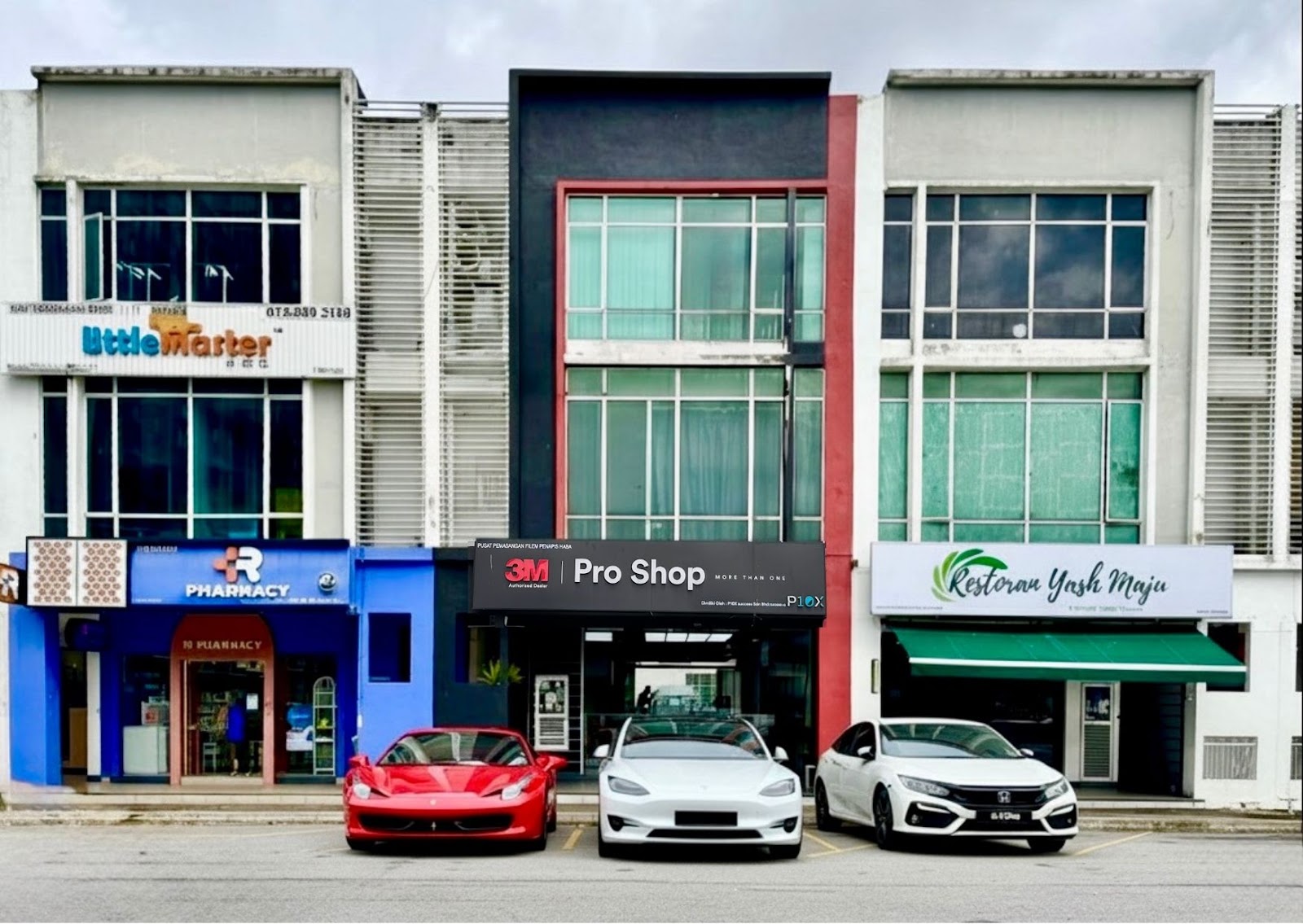
The last thing that changes the value of a quote is proof. Ask for the film line and the shade code for each pane written on the invoice, and register the E-Warranty through the installer before you leave, because that registration is your evidence the film on your car is the film you paid for. Use a 3M Authorized Dealer such as 3M Pro Shop by P10X and confirm the outlet on the official 3M Pro Shop locations list first.
Mistakes New EV Owners Make Before Tinting
Four mistakes account for most of the disappointment we hear about after a tint job. Three of them happen before the film is even ordered, and all four are avoidable with the figures already on this page.
Buying on darkness alone
The darkest film in the range rejects four points less heat than the mid-range shade. If the cabin still feels warm after tinting, the usual cause is a film chosen by shade rather than by total solar energy rejection.
Accepting an infrared number with no TSER
Infrared rejection is measured on the film alone across a narrow band, so it always reads high and it never tells you what the pane does as a whole. If a quote shows an infrared figure and no total solar energy rejection figure, ask for the missing number before you compare anything.
Skipping the glass inspection
Existing chips, edge damage and worn rubber seals all matter once film goes on, because film follows the glass rather than hiding it. Have every pane inspected and photographed before installation, and have the door trim and switches checked at the same time.
Leaving the warranty unregistered
An unregistered job leaves you with no record of the film line or shade fitted to your car. Register the E-Warranty through the authorised installer on the day, and keep the invoice showing the shade code for each pane.
Choosing iX3 Window Tint That Works in Malaysia
The specification on this car is short enough to send in a message. CR BLK 80 on the windscreen, CR BLK 70 on the front doors, CR BLK 15 on the rear glass and the panoramic roof, with the finished front panes metered in front of you before the car leaves the bay.
Everything else follows from two numbers. Total solar energy rejection tells you what the pane does about heat, visible light transmission tells you whether it is legal, and infrared rejection is a supporting figure rather than a headline. Read them in that order and no shop can sell you a warm cabin.
The next step is one conversation. Book the car with a 3M Authorized Dealer, confirm the shade for each pane including the roof, ask for the film line and shade codes on the invoice, and register the coverage the same day. The roof is the pane to insist on, because it is the largest, the hottest and the only one with no blind to pull across.
BMW iX3 Window Tint Questions Owners Ask
What is the best window tint for a BMW iX3?
3M Crystalline Black, specified shade by shade rather than as one film across the car. It rejects 68 percent of total solar energy at its strongest shade, uses a non-metallised construction that suits the sensor suite and the in-windscreen display, and comes in a shade range light enough for a regulated windscreen.
Does window tint improve BMW iX3 range?
It recovers a small amount. On the calculation in this article, film returns roughly 15 km per full charge in hot weather by cutting the solar heat the climate system has to remove. That is around a fifth of the range that heat takes away in the first place, so treat it as comfort first and consumption second.
What tint is legal on a BMW iX3 windscreen in Malaysia?
JPJ requires at least 70 percent visible light transmission on the front windscreen and 50 percent on the front side windows. The reading is taken through the glass and film together, so specify the lightest shade in the range for the windscreen and have the finished pane metered before you accept the job.
Can you tint the BMW iX3 panoramic glass roof?
Yes, and on this car it is the pane with the most to gain. The roof is standard, fixed and has heat-insulating glazing rather than a powered sunshade, so film is the only shading you can add. It carries no VLT limit, which means you can run the darkest shade for glare and privacy.
Does window tint affect the iX3 Panoramic Vision display?
Non-metallised film has no metal layer to interfere with signals, which is why CR BLK is the right construction on a sensor-dense windscreen. Ask the installer to keep film clear of the projection area unless they confirm otherwise, to cut cleanly around the camera housing, and to test the assistance systems before handover.
Which CR BLK shade should go on iX3 rear windows?
CR BLK 15 on the rear side windows, the rear windscreen and the roof. Those panes carry no legal limit, and the darkest shade gives 81 percent glare reduction and the most privacy while giving up only four points of heat rejection against the strongest shade in the range.
Find out the best protection for your car
Visit a 3M Pro Shop and discover the cost-effective 3M Protective Film and Window Tint
Author

Kelvin Cheen
Kelvin is an Automotive Solutions Consultant and Branch Manager at 3M Pro Shop. With 4+ years of field experience in premium vehicle surface protection, Kelvin specializes in flagship 3M technologies, including 3M Crystalline Black optical film and Ceramic IR tints, 3M Paint Protection Film (PPF), etc. His focus is on delivering transparent, engineering-backed advice to car and EV owners, cutting through sales upsells to ensure customers choose the exact thermal rejection and paint protection tailored to their driving needs.
Experience the future of window tinting
Visit a 3M Pro Shop and discover the revolutionary Crystalline CR BLK film