
ADAS, HUD and Rain Sensors: Which Windshields You Should Never Tint With Sputtered Film
- The right film fitted correctly does not break ADAS. The wrong film or a careless install can.
- Sputtered or metallised film and overly dark windshields are the real risk, not tint in general.
- HUD ghosting is often the glass or a display setting, not always the film.
- A non-metallic, high-clarity film with neat camera and sensor cutouts is the safe default.
- Some cars need ADAS recalibration after windshield work, so plan for it if your car prompts it.
If you are wondering does window tint affect ADAS, the short answer is that the right film fitted correctly does not, while the wrong film or a careless install can. Driver-assist cameras, rain sensors, and head-up displays all sit at the windshield, so the film and the workmanship there matter. This guide explains where the sensors are, why sputtered film is the real risk, how HUD ghosting actually works, and how to tint a Malaysian-spec car safely.
This question matters more every year, because driver-assist features are no longer reserved for luxury cars. Lane-keep assist, adaptive cruise control, and autonomous emergency braking now ship on mainstream models from Proton, Honda, Toyota, BYD, and others sold here. All of these systems read the road through a camera mounted on the windshield, which is the same glass a tinter works on. That overlap is why a job that would be routine on an older car needs a little more care on a modern one.
The good news is that none of this means you have to skip tinting the front. It means choosing the right film and the right installer, and knowing what to ask before any work begins. Read on so you can brief your shop with confidence and keep your safety systems working exactly as the carmaker intended.
Where Your Car's Sensors Actually Sit
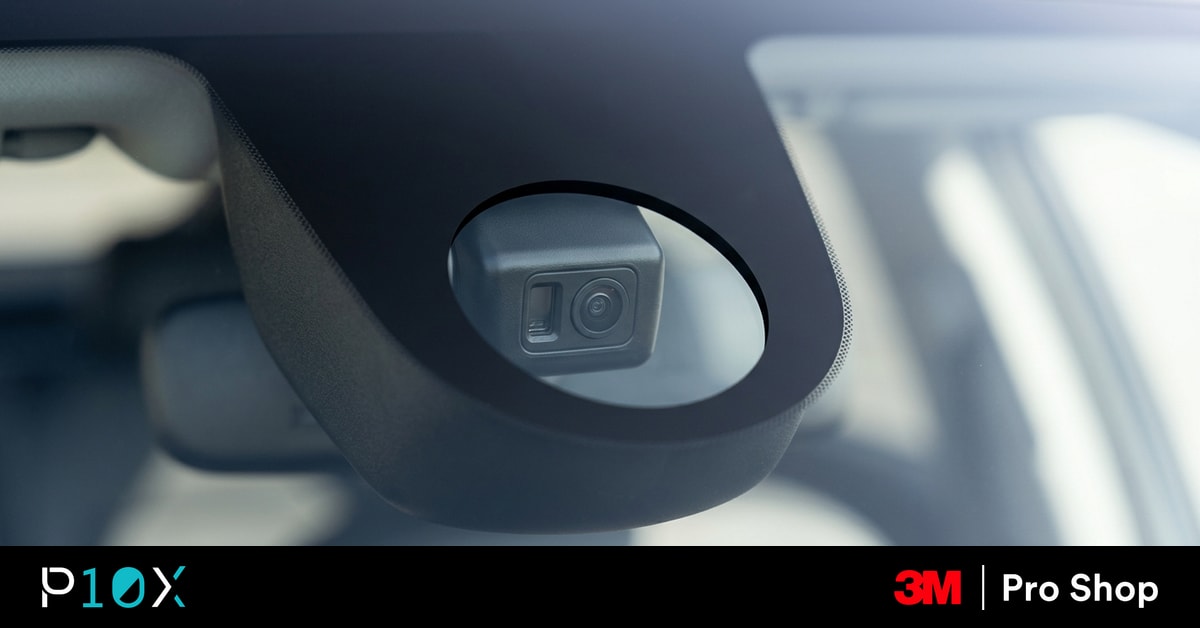
Most driver-assist hardware clusters at the top centre of the windshield, behind the rear-view mirror. Knowing the layout explains why a clean install with proper cutouts matters more than the tint alone. If you understand what sits where, you can watch the installer work and confirm that nothing important is covered. The three areas below are the ones a tinter must work around on a typical Malaysian-spec car.

Front camera and rain sensor
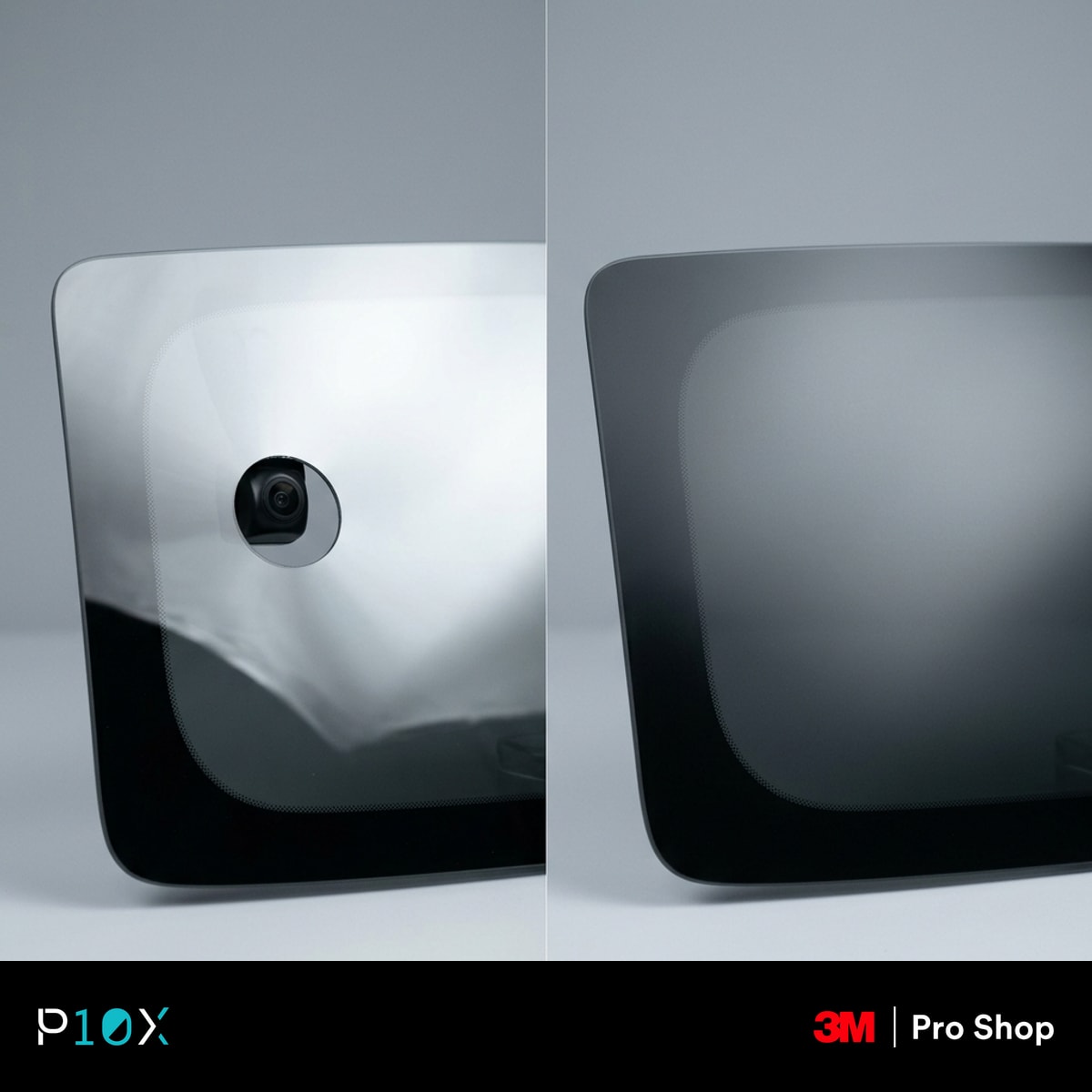
The forward ADAS camera that reads lanes and vehicles usually sits in a housing behind the mirror, often next to the rain and light sensor. This single camera can drive lane-keep assist, automatic high beam, traffic-sign recognition, and the forward collision warning, so anything that clouds its view affects several features at once. Film laid over this area, or trapped moisture during install, is what causes most problems. A neat cutout that follows the shape of the housing keeps the camera and sensor seeing clearly, which is why a careful installer maps this zone before laying any film.
HUD projector
The head-up display projects from the dashboard onto a section of the windshield. The glass in that zone is often a special laminate designed to show a single crisp image without a double reflection. Adding a film layer there can, in some cases, affect the projection, which is why film choice and clarity matter for HUD-equipped cars. If your car has a HUD, point out the projection zone to the installer so they use the clearest film available and take extra care in that area.
Driver-monitoring camera
Some newer cars add a camera that watches the driver for attention and drowsiness, mounted on the steering column or near the mirror. It rarely involves the windshield film directly, but it is worth knowing it exists so it is not disturbed during interior work or knocked out of alignment when panels are removed. Mentioning it to your installer takes a second and avoids a puzzling warning light later.
Why Sputtered Film Is the Real Risk
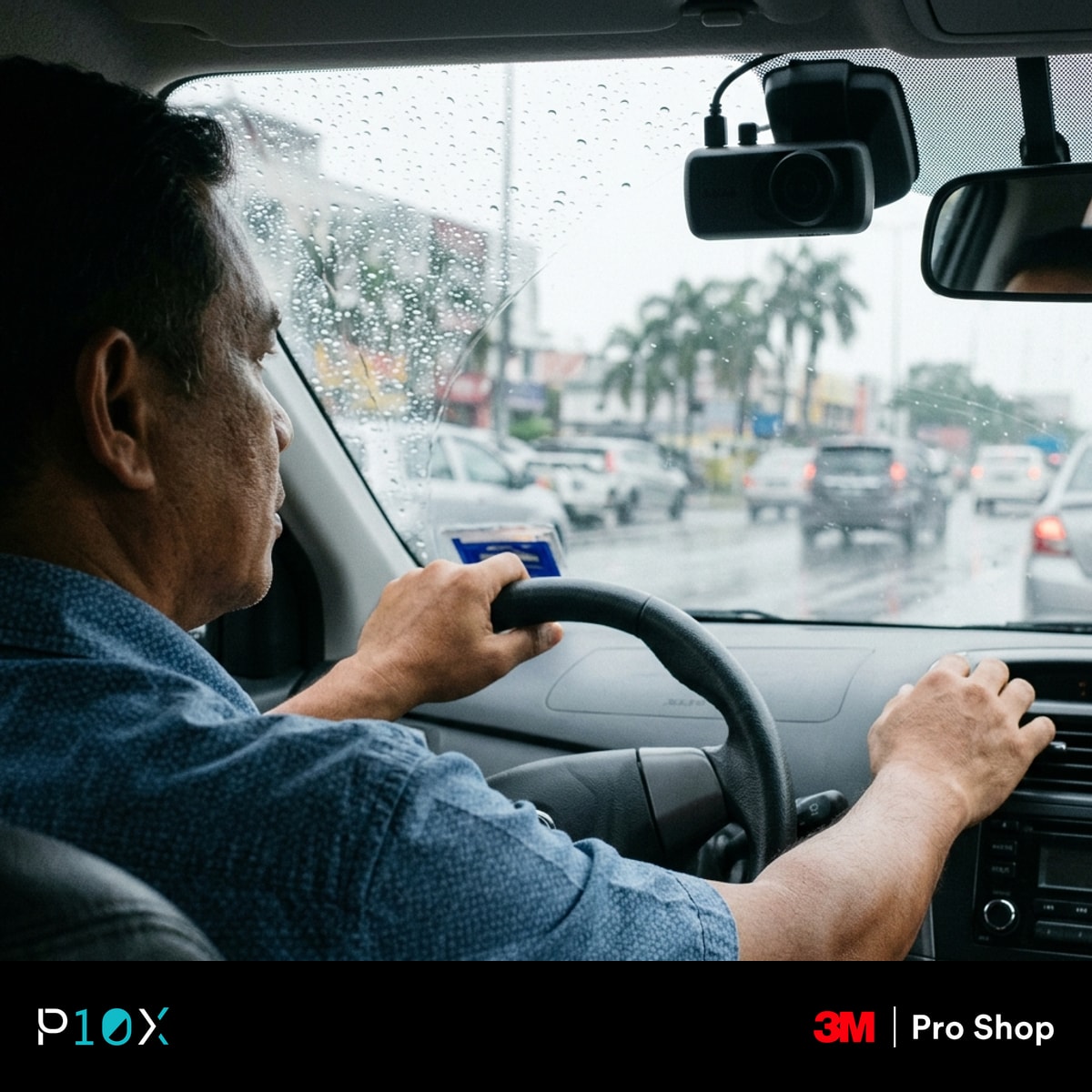
Sputtered and metallised films are the genuine concern, not tint as a category. They are made by bonding a fine layer of metal to the film, which is what gives them their mirror-like heat rejection. That same metal layer can reflect or scatter the infrared and light signals that cameras and rain sensors rely on, and it can interfere with signals more broadly, the same reason these films weaken key fobs and remotes, as we explain in does window tint block your key fob signal. On a windshield packed with sensors, that is the wrong material to use, no matter how good the heat numbers look on paper.
The darkness of the film is a separate issue. An overly dark windshield film reduces the light the camera receives, which can degrade lane and object detection, especially at night or in heavy rain on an unlit stretch of highway. A windshield film should stay near-clear and within the legal limit, both for the law and for the camera. Most reported sensor faults trace back to metallised film, an overly dark shade, or trapped moisture, rather than tint in principle, which is reassuring once you know what to avoid. Choose a metal-free film at a high VLT for the front glass and the risk all but disappears.
How Tint Causes HUD Ghosting (and When It Is Not the Tint)
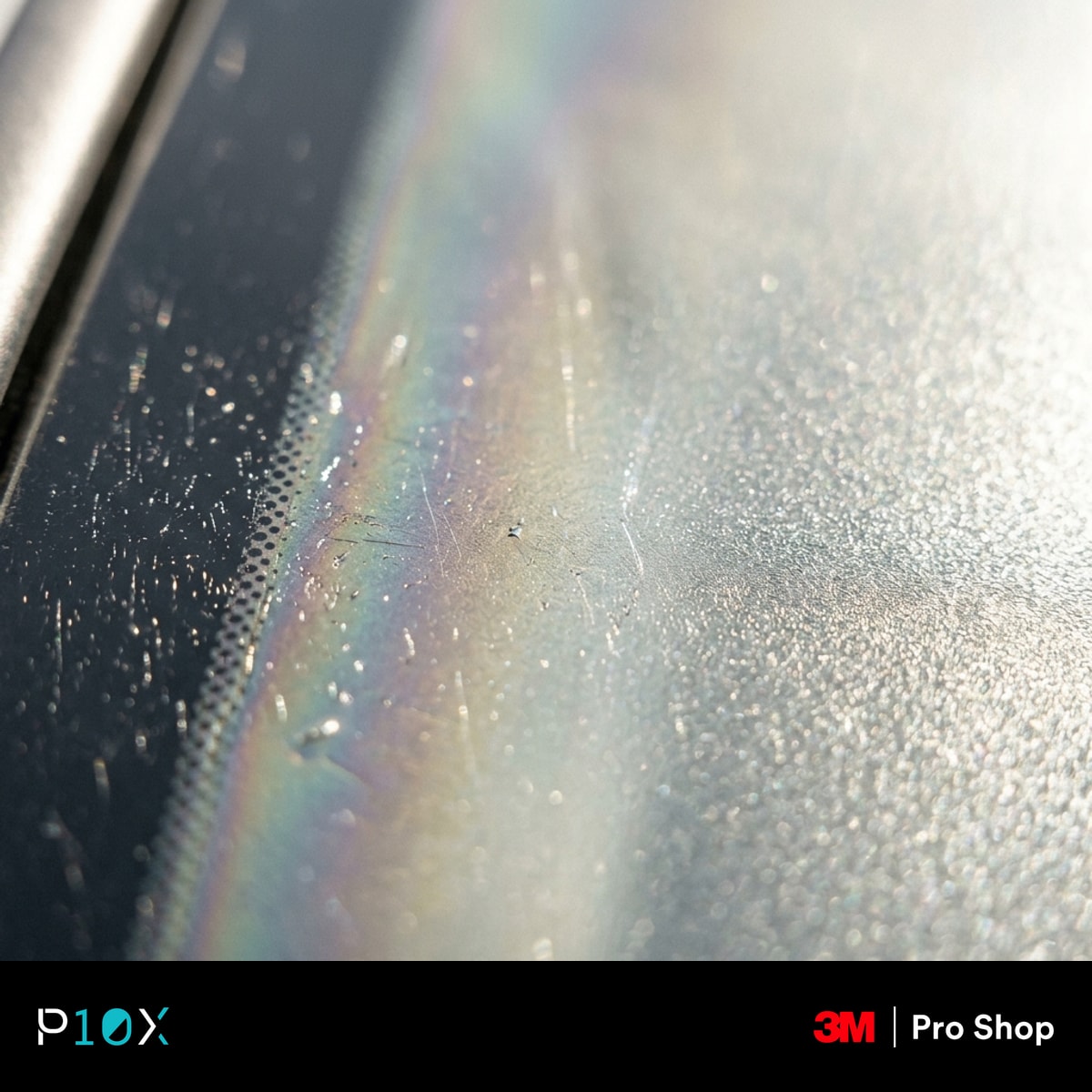
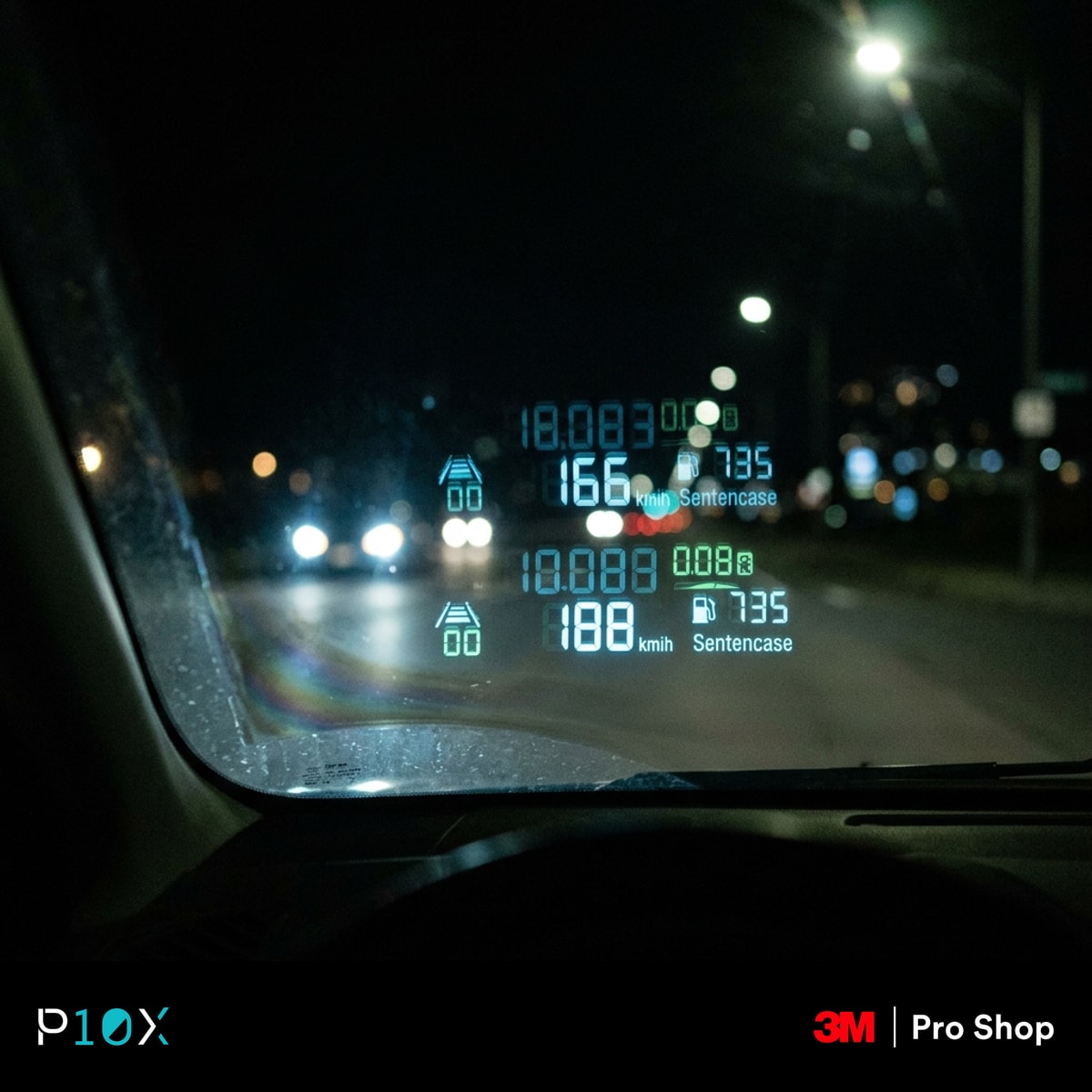
HUD ghosting shows as a faint second image sitting just above or beside the main projected display, and tint is often blamed first because it is the most recent change to the glass. A film layer can contribute in some cases by adding another reflective surface for the projected light to bounce off. When it does, the fix is the right film in the HUD zone or a high-clarity film designed not to interfere with the projection.
Very often, though, the tint is not the cause. Ghosting can come from the windshield glass itself, the wedge angle built into the laminate, the viewing angle from the driver's seat, or simply a display brightness setting that is turned up too high. Owners sometimes go through the trouble of removing the film only to find the double image is still there. Treat ghosting as something to diagnose, not to assume, since blaming the film can hide a glass or settings issue that a quick adjustment would solve. If you notice it, try lowering the HUD brightness and checking the angle first before you touch the film.
A Malaysian-Spec Model Guide
The Malaysian market now has driver-assist systems across many brands, from national marques to imported EVs, and the safe approach is the same for all of them. Carmakers use different names for what is broadly the same idea, a windshield camera feeding the safety features, so do not be put off by the branding. The table below groups common local systems and the recommendation, which is consistent: use a non-metallic, high-clarity film and request proper camera and sensor cutouts. Only the recalibration step tends to vary, so confirm the specifics for your model with the manufacturer or franchise service centre.
| System | Common Malaysian models | Safe tint approach |
| Proton ADAS | X90, S70, eMAS 7 | Non-metallic clear windshield film, camera cutout |
| Honda Sensing | CR-V, Civic, HR-V | Non-metallic clear windshield film, camera cutout |
| Toyota Safety Sense | Camry, Corolla, RAV4 | Non-metallic clear windshield film, camera cutout |
| BYD DiPilot | Atto 3, Sealion, Seal | Non-metallic clear windshield film, camera cutout |
| MG Pilot | MG4, MG ZS, MG S5 | Non-metallic clear windshield film, camera cutout |
| Tesla Autopilot | Model 3, Model Y | Non-metallic clear windshield film, camera cutout |
Whatever the badge on your steering wheel, the brief to your installer stays the same: metal-free film, clear shade on the windshield, and a clean cutout around the camera and rain sensor. For model-specific notes, our MG S5 EV window tint and Proton eMAS 7 window tint guides go deeper on those cars, including how film choice affects EV range and cabin heat.
The Safe-Default Film and Clear-Cutout Rule
The safe default is a non-metallic, high-clarity film with neat cutouts around the camera and sensors. 3M Crystalline Black is a non-metallized multilayer optical film, and Ceramic IR and XP are metal-free nano-ceramic, so none carries the metal that interferes with sensors. This matters because it means you do not have to trade heat rejection for safety. These films block a large share of heat and infrared through advanced material science rather than a metal coating, so your cabin stays cool and your cameras stay clear. Clarity and a clean install do the rest.
The clear-cutout rule is simple. The installer leaves a precise gap in the film around the ADAS camera and rain sensor so nothing sits in their line of sight, and keeps any windshield film light and legal. A good shop cuts this gap to match the sensor housing exactly, not a rough square that leaves film hanging into the camera's view. Done this way, the safety systems keep working as designed and the finish still looks neat from inside and out. You can compare the premium options in our 3M Crystalline tint comparison and understand the wider range in our why 3M window tinting guide.
Recalibration: When Your Car Needs It
Some cars need an ADAS recalibration after any work that touches the windshield camera, and tinting can occasionally trigger this if the camera or its mount is moved. Recalibration realigns the camera so it reads the road accurately, which matters because a camera that is even slightly off can misjudge lane position or following distance. Whether it is needed depends on the model and whether the camera or its housing was disturbed during the install. Many tint jobs leave the camera completely untouched and need no recalibration at all.
The practical advice is to ask your installer and check your owner manual before tinting a windshield with a camera. If a warning light or a driver-assist fault appears afterward, have the system checked rather than ignored, since these features are there to protect you. Recalibration procedures and costs vary by manufacturer, so confirm the specifics with a franchise service centre rather than assuming a figure you read online.
Insurance and Warranty Stakes
The stakes go beyond a blurry camera. If an ADAS fault is traced to a poorly tinted windshield, you could face a recalibration bill, and a service centre may point to the film in a warranty discussion. That conversation is much easier when you can show exactly what film went on and how the camera area was handled. Our guide on whether a service centre can void your warranty over tint explains how to document an install so that argument does not stick. Getting the film and the cutouts right the first time avoids both the safety risk and the awkward dispute.
This is why the windshield is the one window to treat with extra care, even more than the darkness of your side glass. A correct, non-metallic, properly cut install protects your safety systems and your paperwork at the same time. To keep your records clean, plan the job with our car window tint installation guide and keep the invoice, film series, and any cutout photos on file. Should a question ever come up, that small folder of evidence is what settles it quickly.
Tinting an ADAS Windshield the Right Way
The safe path is clear once you separate the film from the workmanship. Avoid metallised film and overly dark windshields, use a non-metallic high-clarity film with neat camera and sensor cutouts, treat HUD ghosting as something to diagnose, and plan for recalibration if your car calls for it. Do that, and your driver-assist systems keep working exactly as the carmaker intended, while you still enjoy the heat and glare comfort that brought you to tinting in the first place.
If you drive an ADAS-equipped car, ask your installer directly about the film type and the cutouts before any windshield work begins, and choose a shop that has tinted your model before. A short conversation upfront is what keeps your cameras, sensors, and display reliable for the life of the car. The few extra minutes it takes to confirm the film and the cutouts are the cheapest insurance you will buy all year.
Find out the best protection for your car
Visit a 3M Pro Shop and discover the cost-effective 3M Protective Film and Window Tint
Frequently Asked Questions
Does window tint affect ADAS cameras?
The right film fitted correctly does not. Problems come from metallised film, an overly dark windshield, trapped moisture, or film laid over the camera. A non-metallic, clear film with a neat cutout keeps the camera reading the road normally.
Can tint interfere with rain sensors?
It can if film is placed over the sensor or moisture is trapped during install. A clean install with a proper cutout around the rain sensor avoids this, so the issue is usually workmanship rather than the film itself.
Does windshield tint cause HUD ghosting?
Sometimes, by adding a reflective layer, but often the cause is the glass or a display setting rather than the film. If a double image remains after the film is removed, the windshield or settings are the real source.
Is ceramic tint safe for ADAS?
Yes. Ceramic and multilayer optical films are metal-free, so they do not carry the metal that interferes with cameras and sensors. Paired with a clear shade and proper cutouts, they are an ADAS-friendly choice.
Do I need ADAS recalibration after tinting?
Sometimes, depending on the model and whether the camera was disturbed. Ask your installer and check your manual, and if a warning light appears, have the system checked. Recalibration needs and costs vary by manufacturer.
Which windshield should I not tint?
Avoid tinting any windshield with a metallised or sputtered film, and avoid an overly dark shade over an ADAS camera. If you tint a windshield with a camera, use a clear non-metallic film with a precise cutout.
Can I still tint the front windshield on an ADAS car?
Yes, as long as you use a metal-free, high-clarity film kept within the legal VLT and the installer leaves a clean cutout around the camera and rain sensor. Done this way, a windshield film can cut heat and glare without affecting the safety systems.
Does ceramic tint reduce heat without affecting sensors?
Yes. Nano-ceramic and multilayer optical films reject a large share of heat and infrared through their material rather than a metal layer, so they keep the cabin cooler while leaving cameras, sensors, and signals undisturbed.
Author

Fabian
He is passionate about revolutionizing the car protection services industry by bringing innovation and transparency to a traditionally opaque and often misunderstood field. His mission is to educate end users on the true benefits and importance of car protection, aiming to replace outdated practices with honest, customer-focused solutions. With a fresh approach to car tinting, paint protection film (PPF), and detailing services, he is committed to delivering a superior customer experience that sets a new standard in the market. He welcomes discussions about the future of the automotive industry and is eager to connect with like-minded professionals who share his vision for innovation, integrity, and excellence.
Experience the future of window tinting
Visit a 3M Pro Shop and discover the revolutionary Crystalline CR BLK film