
How to Choose JPJ-Compliant Window Tint: Avoiding Fines and Maximising Comfort
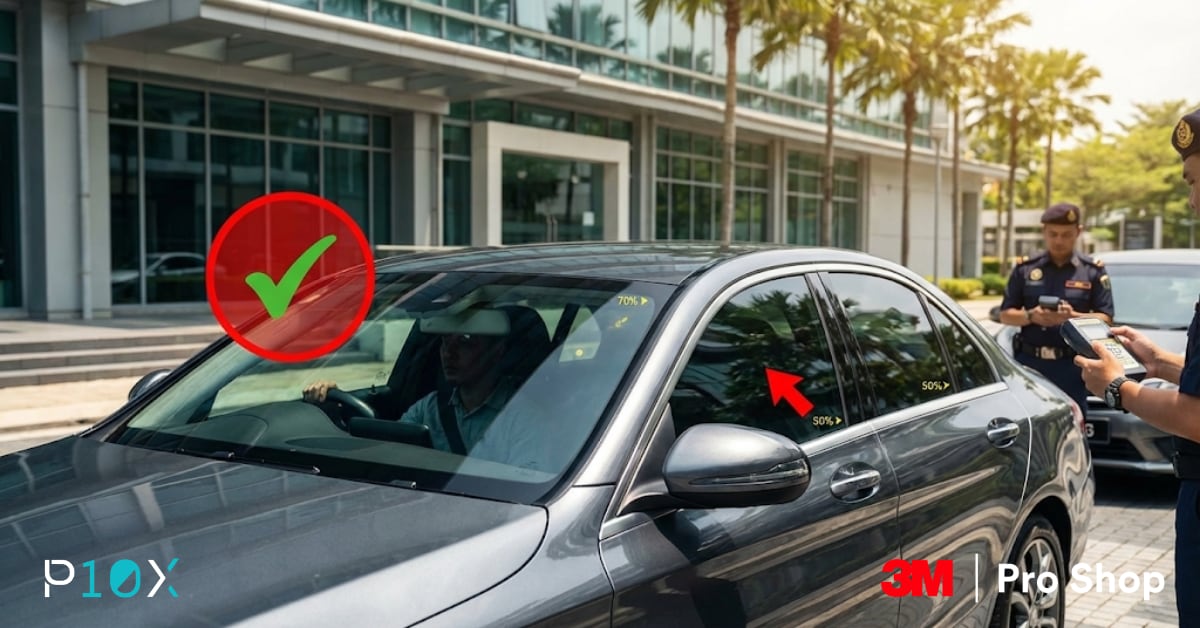
Understanding JPJ compliant window tint regulations is essential for Malaysian drivers who want heat rejection and privacy without risking fines or vehicle inspection failures. The challenge lies in maximising comfort within legal limits. Too many drivers install dark tint without knowing the rules, only to face penalties during roadblocks or puspakom inspections. For a comprehensive overview of why car window tinting in Malaysia requires legal compliance alongside performance, refer to our complete guide. Before choosing your tint, understanding the 3M window tint price structure helps you budget for quality films that meet regulatory requirements. This article explains exactly what the law allows, how to get the best performance within those limits, and what options exist if you need darker tint for legitimate reasons.
Malaysian Window Tint Regulations Explained
JPJ (Jabatan Pengangkutan Jalan) sets specific rules about window tint darkness. These regulations prioritise road safety by ensuring drivers have adequate visibility and enforcement officers can see into vehicles.
Current Legal Requirements
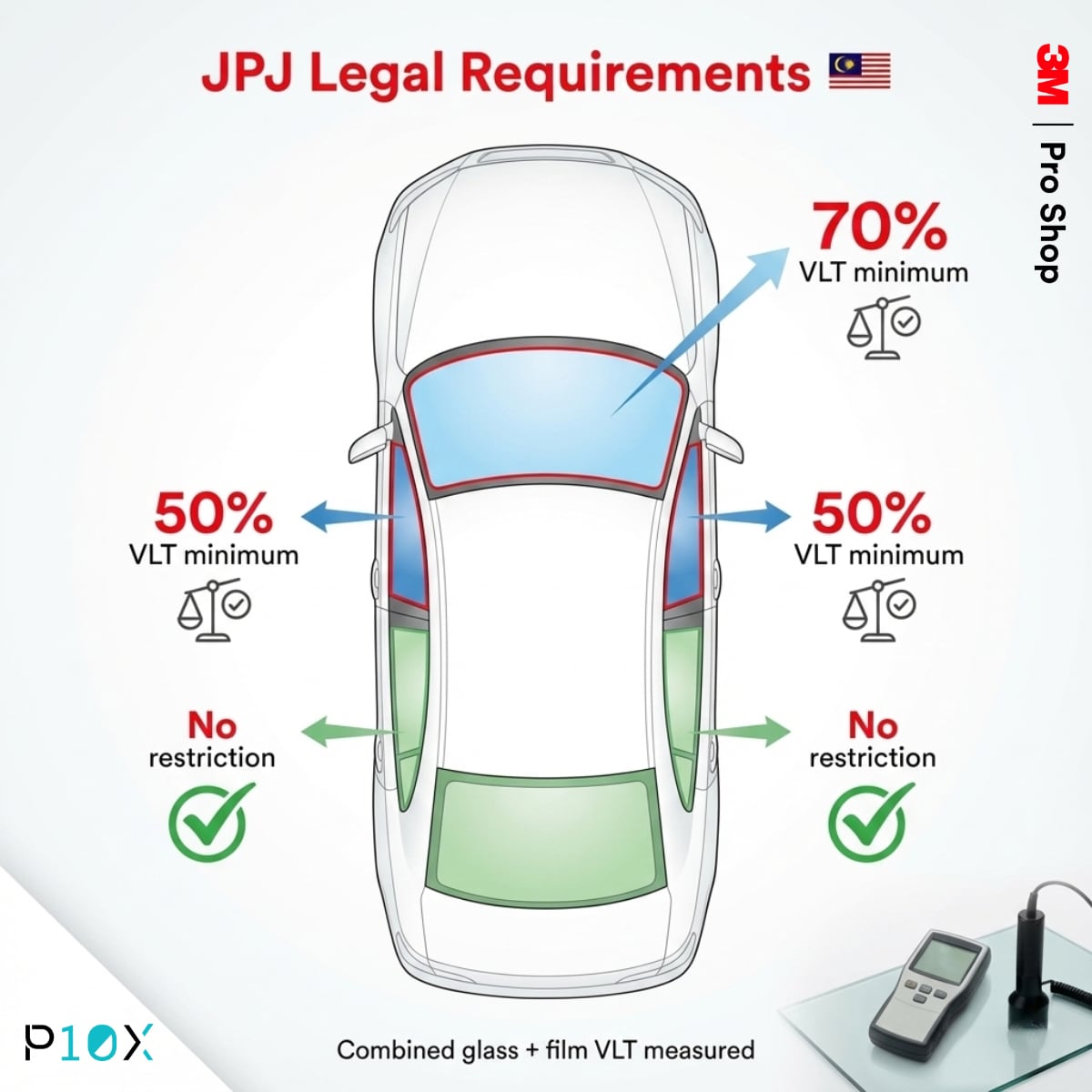
VLT (Visible Light Transmission) measures how much light passes through the glass and film combined. A 70% VLT means 70% of visible light enters, and the tint blocks 30%.
Important Clarifications
Factory glass makes full windscreen compliance extremely difficult. Most vehicle windscreens already have some tint from the factory, typically around 75% to 80% VLT. Adding any film reduces this further. A windscreen at 78% VLT with a 90% VLT film results in approximately 70% combined VLT, right at the legal boundary. In practice, factory glass VLT varies by car model, manufacturing region (European vs Asian specs), and even between identical vehicles off the same production line. This variance means hitting exactly 70% combined VLT is unreliable, and most tinted windscreens will technically fall below the legal threshold.
JPJ and Puspakom apply the same measurement standard. Some drivers believe these are separate rules, but both use the same 70% VLT standard for windscreens and 50% for front side windows. There is no "Puspakom loophole".
The regulations measure glass plus film. Officers use VLT metres that measure the combined transmission, not the film specification alone.
Tolerances exist but should not be relied upon. While minor variations might pass inspection, designing your tint to exactly hit legal limits risks failure due to measurement variance.
The Compliance Reality in Malaysia
The 70% VLT windscreen regulation creates a practical challenge that every tint shop and car owner in Malaysia navigates. Once any film is applied to factory glass, achieving a true 70% combined VLT is extremely difficult because factory glass itself rarely reaches 80% VLT consistently.
This has led to a widespread industry practice where drivers remove their windscreen tint before Puspakom inspections, then reinstall it afterward. While this is not something we recommend or endorse, it reflects the gap between regulation and real-world conditions.
What this means for you:
- Choose the lightest possible windscreen film (CR BLK 80 at 72% VLT or higher) to stay as close to the 70% threshold as possible
- Ask your installer to measure your specific factory glass VLT before selecting a windscreen film
- Keep your VLT measurement documentation in the vehicle at all times
- Understand that "JPJ compliant" in the context of windscreen tinting is a best-effort target, not a guarantee
The Consequences of Non-Compliance
Installing tint darker than regulations allow carries real consequences.
Immediate Penalties
- Traffic summons: Fines typically start at RM300 for window tint violations. Repeat offenders may face higher penalties.
- Roadblock detention: Officers may detain your vehicle until you remove or replace non-compliant tint.
- Inspection requirements: You may be required to pass a Puspakom inspection before returning to the road.
Longer-Term Issues
- Insurance complications: Accidents involving vehicles with illegal modifications may face claim complications. While not automatic denial, non-compliant tint adds a potential dispute point.
- Resale impact: Buyers may negotiate harder or walk away from vehicles with tint that requires replacement for road tax renewal.
- Renewal problems: Road tax renewal may be denied if your vehicle fails inspection due to non-compliant tint.
Enforcement Reality
Enforcement intensity varies by location and time:
- Festive season roadblocks see increased tint checks
- Commercial vehicle routes face more scrutiny
- Random roadblocks in certain areas target tint violations
- Puspakom inspections always include tint measurement
The unpredictable nature of enforcement means even occasional non-compliance carries risk.
Maximising Heat Rejection Within Legal Limits
Legal compliance does not mean accepting a hot cabin. Modern film technology achieves impressive heat rejection even at high VLT levels.
How Premium Films Achieve More
Traditional tint relies on darkness (dye) to block heat. The darker the film, the more heat it blocks. This approach conflicts with visibility requirements.
Advanced films like 3M Crystalline Black use multilayer optical technology that selectively filters infrared radiation while allowing visible light through. This means:
- A 70% VLT film can still block significant infrared heat
- A 50% VLT film can achieve heat rejection comparable to darker traditional films
- You get legal compliance without sacrificing comfort
3M Crystalline Black Performance at Legal VLT Levels
For front windscreen (70% VLT minimum):
CR BLK 80 (~88% VLT, 32% TSER) is the safest pick for staying above the 70% combined-VLT threshold after accounting for factory glass. CR BLK 70 (~78% VLT, 43% TSER) gives stronger heat rejection but sits closer to the legal line — verify with a VLT meter post-install.
For front side windows (50% VLT minimum):
CR BLK 50 (~59% VLT, 53% TSER, 69% IRER, 98% IRR) gives the strongest legal heat rejection on this window. (Note: the TSER peak of the CR BLK lineup is actually CR BLK 15 at 62% TSER — but its 17% VLT is illegal on front side windows. CR BLK 50 is the best legal compromise.)
Comparison with Budget Films
Budget films at the same VLT levels typically achieve:
- TSER of 35% to 45%
- IRR of 20% to 40%
- Significant degradation within 2 years
The performance gap at legal VLT levels is substantial. For detailed performance comparisons across different brands and technologies, refer to our 3M Crystalline tint comparison analysis. Choosing premium film for front windows makes the most sense precisely because darkness is restricted.
Recommended Configurations for Different Needs
Your ideal tint configuration depends on your priorities and vehicle type.
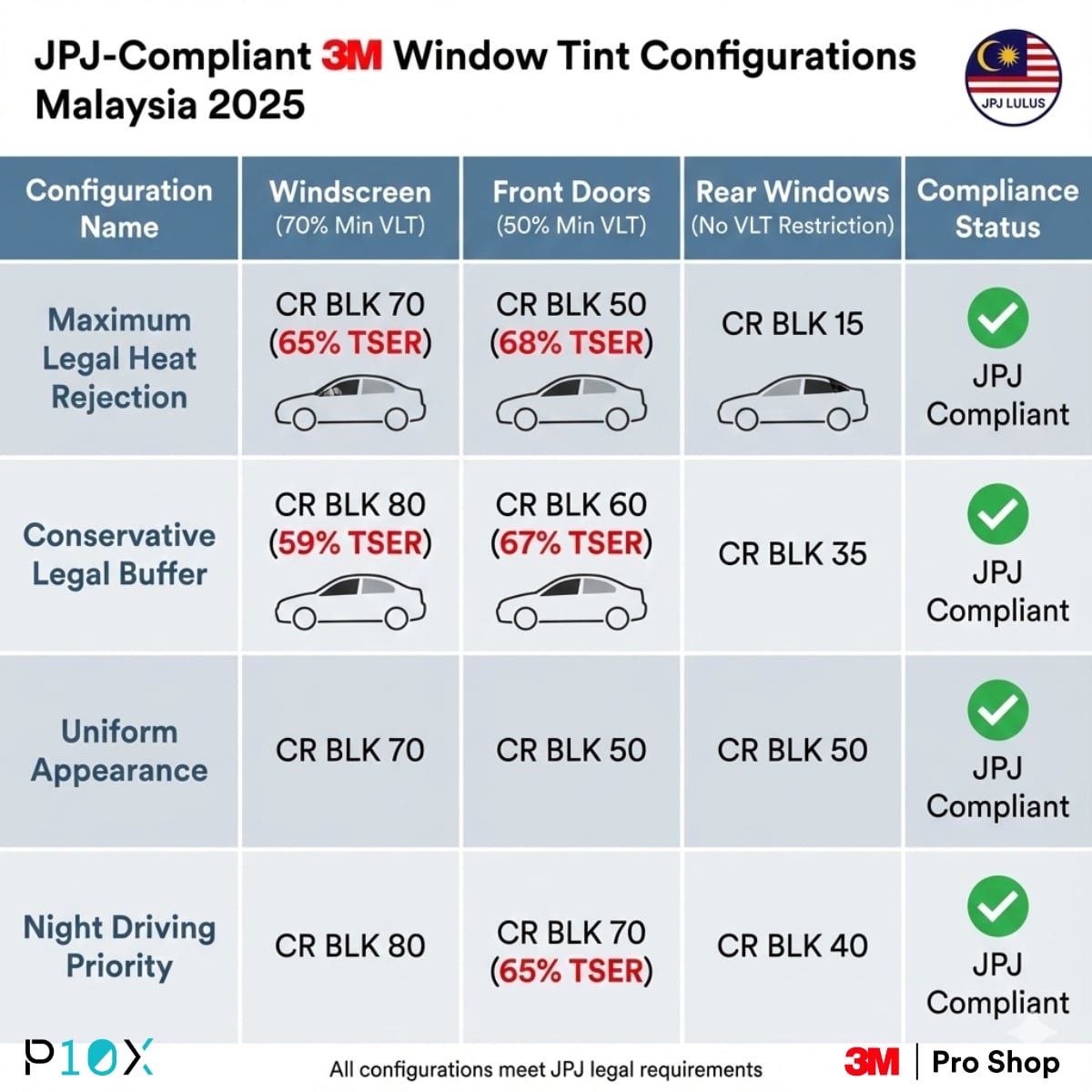
Maximum Legal Heat Rejection
For drivers who want the most cooling within legal limits:
- Windscreen: CR BLK 70 (43% TSER, ~78% VLT — verify legal compliance after factory glass)
- Front doors: CR BLK 50 (53% TSER, ~59% VLT, comfortably above 50% legal minimum)
- Rear doors: CR BLK 15 (62% TSER, ~17% VLT, maximum darkness)
- Rear windscreen: CR BLK 15 or CR BLK 30
This configuration provides maximum legal protection up front with full privacy and heat rejection in the rear.
Conservative Legal Buffer
For drivers who want extra margin above legal minimums:
- Windscreen: CR BLK 80 (32% TSER, ~88% VLT, comfortably above 70% requirement)
- Front doors: CR BLK 60 (49% TSER, ~69% VLT, comfortably above 50% requirement)
- Rear doors: CR BLK 35 (57% TSER) or CR BLK 40 (54% TSER)
- Rear windscreen: CR BLK 35 or CR BLK 40
This configuration sacrifices some heat rejection for guaranteed compliance and maintains better night visibility.
Uniform Appearance Priority
For drivers who prefer consistent appearance around the vehicle:
- All windows: CR BLK 50 or CR BLK 60
Note that this may not be fully compliant for windscreen unless CR BLK 70 is used there specifically.
Night Driving Consideration
Darker tint reduces visibility at night. Highway drivers and those frequently driving after dark should consider:
- Lighter front tint (CR BLK 60 or CR BLK 70 on front doors)
- Recognising that rear darkness does not affect forward visibility
- Balancing daytime comfort against night driving safety
Smart Tag, RFID, and Access System Compatibility
Modern Malaysian driving involves several wireless systems that interact with your window tint. Understanding these interactions prevents frustration after installation.
Smart Tag (Infrared)
Smart Tag toll readers use infrared signals to communicate with the device mounted on your windscreen. Window tints with very high infrared rejection (above 90% IRR) can block this signal entirely. Since high heat rejection is the main reason drivers choose premium tint, this creates a direct conflict: the films that block the most heat also block Smart Tag signals.
Most drivers accept the practical solution of winding down the window slightly when passing through Smart Tag lanes. When choosing your windscreen film, be aware that strong IR rejection and Smart Tag transparency are trade-offs, not features you can maximise simultaneously.
RFID Tags (Touch 'n Go, TNG RFID)
RFID tags use radio frequency signals. Metallic window films interfere with these signals because the metal layers reflect RF energy. Non-metallic films (ceramic and multi-layer sputtered technologies, including the 3M CR BLK, Ceramic IR and XP series) do not affect RFID performance.
If you have a metallic film and experience RFID issues, your installer can recommend alternative tag placement locations such as the headlamp area, which bypasses the tinted glass entirely.
Condo and Guard House Access Systems
Residential access systems vary widely. Some use infrared, others use NFC or RF signals. Signal strength and sensor direction differ between installations. If your access card or remote works through untinted glass but fails after tinting, the film technology is likely the cause. Ceramic and multi-layer films are safest for preserving compatibility across different systems.
Medical Exemptions and Special Permits
Certain medical conditions may qualify you for darker tint than standard regulations allow.
Conditions That May Qualify
JPJ considers exemption applications for conditions including:
- Photosensitivity disorders
- Lupus and related autoimmune conditions
- Certain eye conditions requiring reduced light exposure
- Skin conditions aggravated by UV exposure
- Post-surgical requirements following eye procedures
Application Process
To apply for a medical exemption:
- Obtain medical documentation from a registered specialist confirming your condition and the need for darker tint
- Submit application to JPJ with supporting documents
- Specify the VLT level requested based on medical necessity
- Await approval before installing non-compliant tint
- Carry permit documentation in your vehicle at all times
Important Notes on Medical Permits
- Permits are vehicle-specific and must be renewed
- The permit must be presented during any enforcement check
- Installing darker tint without approved permit remains illegal regardless of medical condition
- Processing time varies, so apply well before installation
What Medical Permits Do Not Cover
Medical exemptions typically:
- Do not allow unlimited darkness
- Specify maximum darkness permitted for your condition
- May restrict which windows can have darker tint
- Require periodic renewal with updated medical documentation
Verifying Your Tint Compliance
Before and after installation, verification protects you from surprises.
Pre-Installation Steps
Check your factory glass VLT. Most installers can measure this. Knowing your starting point helps calculate film selection.
Request film specifications in writing. Ensure the installer documents which film and VLT will be applied to each window.
Discuss combined VLT expectations. A reputable installer calculates the expected result, not just applies film without considering existing glass. Understanding the complete car window tint installation process helps you know what to expect during your appointment.
Post-Installation Verification
Request VLT measurement after installation. Professional installers can measure and document your actual VLT levels.
Obtain proper documentation. This should include film specifications, warranty information and VLT readings.
Test electronic systems. Confirm GPS, RFID toll tags, and mobile signals work properly. Metallic films are most likely to cause interference. Note that Smart Tag (infrared-based) may be affected even by non-metallic films with high IR rejection. Test your Smart Tag immediately after installation and adjust your approach if needed.
What to Do If Measurements Are Borderline
If your post-installation VLT is close to legal limits:
- Document the measurements carefully
- Keep measurement records in your vehicle
- Consider whether slightly lighter film would provide better margin
- Understand that enforcement metres may read differently
5 Common Mistakes to Avoid When Choosing JPJ-compliant Window Tint
Learning from others' errors saves you money and hassle.
Mistake 1: Trusting Verbal Assurances
"This will pass JPJ" means nothing without documentation. Insist on:
- Written specification of film VLT for each window
- Post-installation VLT measurements
- Clear understanding of your liability if violations occur
Mistake 2: Ignoring Factory Glass Contribution
Installing 70% VLT film on a windscreen that already has 75% VLT factory glass results in approximately 52% combined VLT, which violates regulations. Always factor existing glass into your calculation.
Mistake 3: Choosing Darkness Over Performance
A 35% VLT budget film may look darker than 50% VLT premium film but actually rejects less heat. If legal compliance matters, optimise for TSER at legal VLT levels rather than chasing darkness.
Mistake 4: Applying Uniform Tint Without Considering Regulations
Asking for "same tint all around" without specifying compliant levels results in either illegal front windows or missed opportunity for darker rear tint.
Mistake 5: Not Carrying Documentation
Even with legal tint, enforcement officers may question your installation. Carrying VLT documentation, warranty papers and film specifications allows quick verification and avoids unnecessary detention.
Working with Professional Installers
Choosing the right installer affects both compliance and performance.
What to Look for
Regulatory knowledge: Ask specific questions about JPJ requirements. Knowledgeable installers explain limits accurately without hesitation.
VLT measurement capability: Professional shops have metres to measure before and after installation.
Documentation practices: Legitimate installers provide detailed paperwork including film specifications and warranty information.
Brand authorisation: For premium films like 3M, certified installers ensure genuine product and proper warranty coverage.
Questions to Ask
- What VLT will each window have after installation?
- How do you account for existing factory glass tint?
- What documentation will I receive?
- What happens if my tint fails a JPJ inspection?
Red Flags
- Installers who dismiss regulatory questions
- Refusal to provide VLT measurements
- Pressure to install darker than legal tint
- No written documentation or warranty
- Significantly lower prices than established shops
For professional installation with proper compliance documentation, explore our 3M window tint products and visit 3M Pro Shop locations across Kuala Lumpur and Selangor to consult with certified installers who understand JPJ requirements.
Maintaining Compliance Over Time
Legal compliance is not a one-time consideration.
Film Degradation Effects
Budget films may:
- Develop bubbles that obscure visibility
- Fade or change colour, affecting appearance
- Delaminate at edges
These issues can trigger enforcement attention even if VLT remains technically compliant.
Documentation Retention
Keep records of your installation including:
- Original invoice with film specifications
- Warranty documentation
- Any VLT measurements taken
- E-warranty registration if applicable
These records help resolve disputes and support insurance claims if needed.
For comprehensive details on 3M's flagship window film technology including the breakthrough 200-layer nano-technology, refer to our coverage on 3M Crystalline CR BLK launch announcement.
Find out the best protection for your car
Visit a 3M Pro Shop and discover the cost-effective 3M Protective Film and Window Tint
Frequently Asked Questions
Can I tint my windscreen at all under JPJ regulations?
Technically yes, but full compliance is difficult in practice. The combined VLT of glass plus film must remain at least 70%, and most factory windscreens are around 75% to 80% VLT. Adding even a light film like CR BLK 80 (72% VLT) brings the combined reading close to or slightly below the threshold, depending on your specific factory glass. CR BLK 80 is the safest choice for staying as close to the legal limit as possible while still gaining meaningful heat rejection. Ask your installer to measure your factory glass VLT before selecting a film.
What if an officer's VLT metre gives a different reading than my installer's?
Measurement variance exists between devices. If you have documentation showing compliant readings from installation, present this to the officer. Most will accept professional documentation, though you may still need to verify at a Puspakom inspection if there is significant discrepancy.
Are there specific times when tint enforcement is stricter?
Yes. Festive periods (Hari Raya, Chinese New Year, Deepavali) see increased roadblocks with tint checks. Operations targeting specific vehicle types or areas also include tint verification. Year-round compliance is the safest approach.
Does window tint affect my insurance coverage?
Non-compliant modifications including illegal tint can complicate insurance claims. While not automatic denial, insurers may investigate whether non-compliant tint contributed to an accident. Legal tint does not affect coverage.
How dark can I go on rear windows legally?
There is no legal restriction on rear side windows or rear windscreen darkness in Malaysia. You can install the darkest available film on these windows. Many drivers choose maximum darkness (CR BLK 15) for rear windows to maximise privacy and heat rejection.
Author

Fabian
He is passionate about revolutionizing the car protection services industry by bringing innovation and transparency to a traditionally opaque and often misunderstood field. His mission is to educate end users on the true benefits and importance of car protection, aiming to replace outdated practices with honest, customer-focused solutions. With a fresh approach to car tinting, paint protection film (PPF), and detailing services, he is committed to delivering a superior customer experience that sets a new standard in the market. He welcomes discussions about the future of the automotive industry and is eager to connect with like-minded professionals who share his vision for innovation, integrity, and excellence.
Experience the future of window tinting
Visit a 3M Pro Shop and discover the revolutionary Crystalline CR BLK film