
DIY vs professional car maintenance in Malaysia: what to do yourself and what to leave to the pros
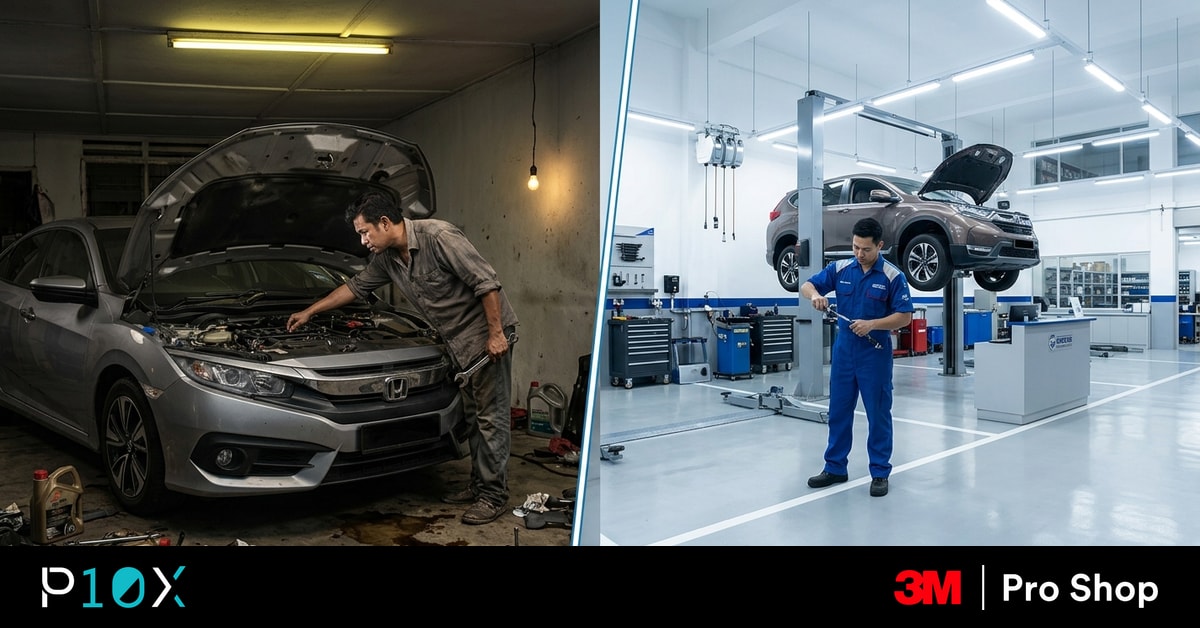
- DIY car maintenance in Malaysia works best for simple, low risk jobs like wipers, filters, tyre pressure, bulbs and battery terminals.
- Safety critical work such as brakes, timing belt, aircon gas and transmission fluid should always go to a professional workshop.
- Under Malaysia's Block Exemption Order, servicing at an independent workshop generally does not void your warranty when correct parts and specifications are used. Check your warranty booklet and keep records.
- Real savings come mostly from labour, but factor in tool cost, your time, and the risk of an expensive mistake.
- Many Malaysians live in condos with no driveway, which limits some DIY jobs. Choose tasks that suit your space and skill.
Deciding between DIY vs professional car maintenance in Malaysia usually comes down to one honest question: which jobs are safe and worth doing yourself, and which ones could cost you far more if they go wrong. Doing your own basic upkeep can save money and help you understand your car. The catch is knowing where the line sits between a simple home job and work that needs trained hands, proper tools and a clean workshop.
This guide gives you a clear split between what you can safely handle at home and what belongs in a workshop, tuned to Malaysian roads, weather and the reality that many of us park in condo basements with no driveway. By the end you will know which tasks to take on, which to hand over, and how to think about the cost either way.
When DIY Car Servicing Makes Sense for Malaysians
DIY servicing makes sense for simple, low risk jobs that need basic tools and have little safety consequence if done slowly. It rarely makes sense for specialised or safety critical work. The simplest test is this: if a mistake would only waste your time, it is fair game. If a mistake could fail on the highway, leave it to a professional.
Your space and skill matter too. If you live in a landed home with a porch, light DIY is realistic. If you park in a shared condo car park, even an oil change can be impractical and against building rules. Be honest about your tools, your patience and where you can actually work before taking a job on.
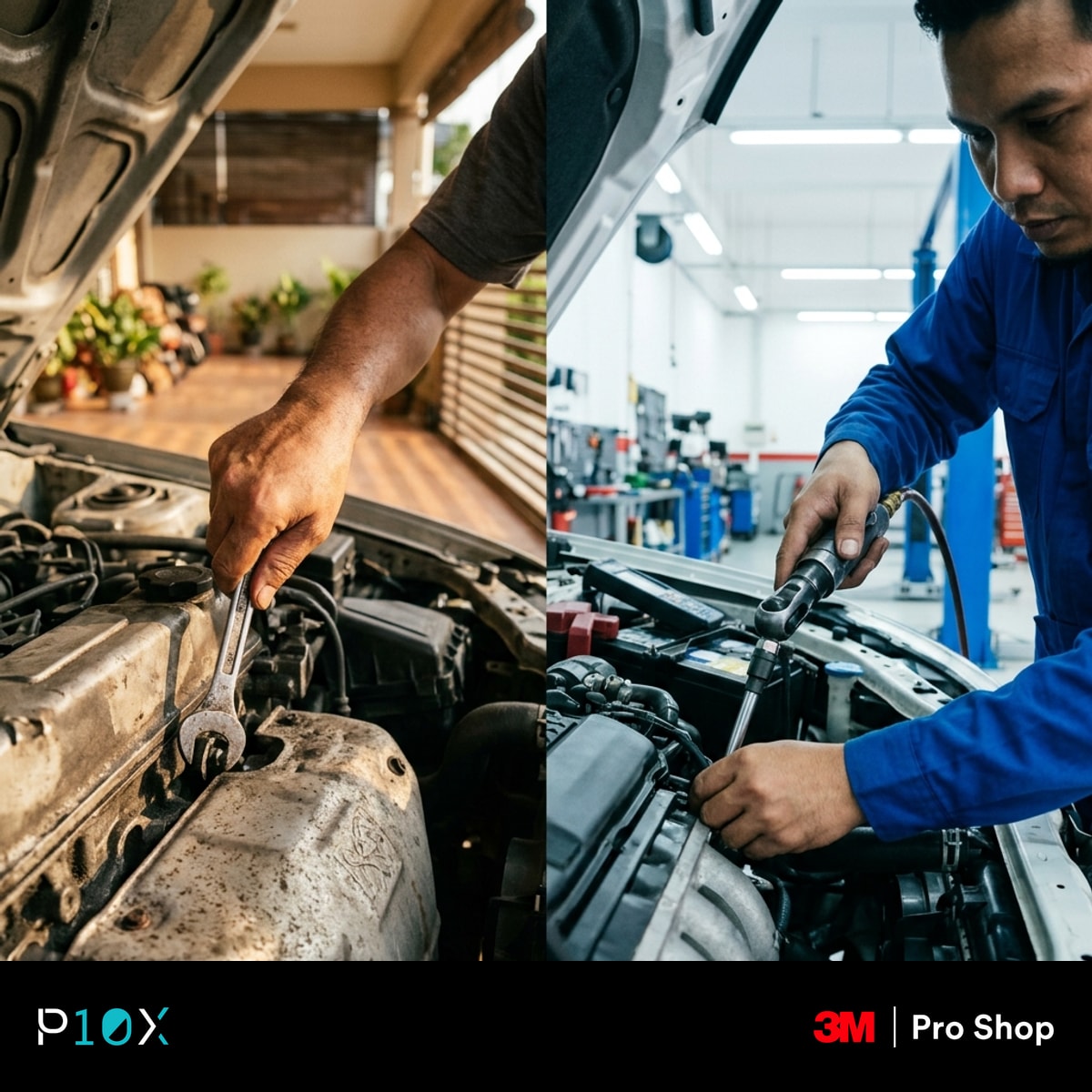
Here is a simple split to keep in mind before any job.
| Task | DIY or workshop | Why |
|---|---|---|
| Wiper blades, washer fluid | DIY | No tools, no safety risk |
| Air and cabin filter | DIY | Clip in, clip out, cheap parts |
| Tyre pressure and visual checks | DIY | Free at most petrol stations |
| Brake pads, discs, brake fluid | Workshop | Safety critical, needs bleeding |
| Timing belt | Workshop | Engine damage if wrong |
| Aircon regas, transmission fluid | Workshop | Special equipment and specs |
What Car Maintenance You Can Safely Do Yourself
The safe DIY list covers jobs that are visual, bolt free or clip based, and forgiving if you go slowly. These keep your car comfortable and roadworthy between services without touching anything that could fail dangerously. Master these first before considering anything heavier.
Wiper blades and washer fluid
Worn wipers are a real safety issue in our sudden downpours. Blades clip off and on in minutes with no tools, and topping up washer fluid is just opening a cap and pouring. Replace blades roughly once a year or whenever they streak or chatter across the windscreen.
Engine air and cabin filters
Most air and cabin filters sit in clip on housings you can open by hand. A clogged cabin filter weakens your aircon and lets dust and haze into the cabin, while a dirty air filter affects breathing and fuel use. Check them at each wash season and swap when grey and packed with debris.
Tyre pressure and visual checks
Tyre pressure is free to check at almost any petrol station and takes two minutes. Keep to the figure on the door jamb sticker, not the maximum on the tyre wall. While you are there, look for uneven wear, cuts, nails and tread depth, and never let tread fall below the 1.6mm legal limit.
Battery terminals and bulbs
Cleaning white powdery corrosion off battery terminals with a brush helps starting, especially in our heat. Most exterior bulbs are a simple twist and pull once you reach the holder. If a bulb sits behind sealed housings or needs bumper removal, that is a workshop job instead.
What to Always Leave to a Professional Workshop
Anything that affects stopping, steering or the engine internals should go to a trained workshop with the right tools. A small error here is not a wasted afternoon, it is a safety failure or a repair bill far larger than the job you tried to save on. These tasks reward proper equipment and experience.

Brakes and brake fluid
Brakes are the clearest example of work to never improvise. Pads, discs and brake fluid affect how your car stops, and the system must be bled correctly to remove air. Get this wrong and braking can fade or fail. If you notice grinding or a soft pedal, treat it as one of the warning signs your car needs a workshop.
Timing belt and major engine work
A timing belt must be replaced at the interval in your manual, and the timing must be set precisely. A snapped or wrongly fitted belt can destroy an engine in seconds on many cars. This, along with internal engine repairs, is firmly workshop territory.
Air-conditioning gas and transmission fluid
Aircon regas needs sealed equipment, the correct refrigerant and leak testing, which is why a workshop should handle it. Transmission fluid also needs the exact specification and often a specific fill procedure. Using the wrong fluid here can quietly ruin an expensive gearbox.

Does Servicing Outside Void Your Warranty in Malaysia?
Servicing at an independent workshop does not automatically void your warranty in Malaysia. The Block Exemption Order for the motor vehicle sector, issued under the Malaysia Competition Commission, generally lets owners service outside the official service centre without losing warranty, as long as correct parts and specifications are used and proper records are kept.
In practice this means you can use a trusted independent workshop or even do simple jobs yourself, provided you fit parts that meet the maker's specification and keep your receipts and service log. The safest move is to read your own warranty booklet, follow the stated intervals, and keep clear records of what was done and with which parts. When in doubt, confirm the current wording before deciding, because terms can change. For deeper routine care, follow our monthly car maintenance tips checklist.
How Much You Actually Save Doing It Yourself
Most DIY savings come from skipping labour charges, not parts. Parts often cost similar whether you or a workshop buy them, so the saving is the time you replace with your own effort. That saving shrinks once you buy tools and weigh the risk of a costly mistake.
As a rough Malaysian example, an engine air filter might cost RM30 to RM80 in parts, while a workshop may charge a small labour fee on top to fit it. Wiper blades might run RM40 to RM120 a pair, with the fitting being free if you do it. The pattern is clear: simple jobs save you a modest, real amount each time, and those add up over a year. Treat any figures here as estimates and check current local prices, since they vary by model and shop.
DIY Limits for Condo and Apartment Owners
For many Malaysians, the biggest limit on DIY is not skill but space. Most condos and flats ban oil changes and messy work in shared car parks, and you rarely have room, lighting or drainage to work safely. This pushes several jobs back to a workshop by default.
If you live high rise, focus on the clean, quick jobs you can do beside the car in a few minutes, such as checking tyre pressure at the nearby station, swapping wipers, topping up washer fluid and replacing a cabin filter. Leave anything involving fluids under the car, jacking or long bench time to a workshop. There is no shame in this, it is simply the practical reality of city living and helps you avoid fines from building management.
Common DIY Mistakes That Cost More Later
The most expensive DIY mistakes come from false economy: using the wrong oil grade, overtightening or stripping bolts, or skipping a torque setting. These small errors can lead to leaks, damaged threads or premature wear that costs far more than the job you tried to save on.
The usual traps are using a cheaper oil that does not match the manual specification, forcing a drain plug or filter until the thread strips, reusing worn washers and gaskets, and ignoring the correct tightening force on wheel nuts and sump plugs. Another common one is putting parts back without noting how they came out. If a job needs a torque wrench or a specific procedure and you do not have it, that is your signal to hand it over. For older or recon cars where tolerances are tighter, lean even more on a workshop, as covered in our used car maintenance guide.
Tools Worth Buying to Start DIY Car Maintenance
You do not need a full workshop to handle the safe jobs, just a small, sensible kit. A basic set covers checks and simple swaps, and most of it pays for itself within a few jobs. Buy decent quality where safety or torque matters, and keep it simple at first.
A practical starter kit for a Malaysian car owner looks like this, with rough prices as estimates that vary by brand and shop.
- A digital or pencil tyre pressure gauge, around RM20 to RM60
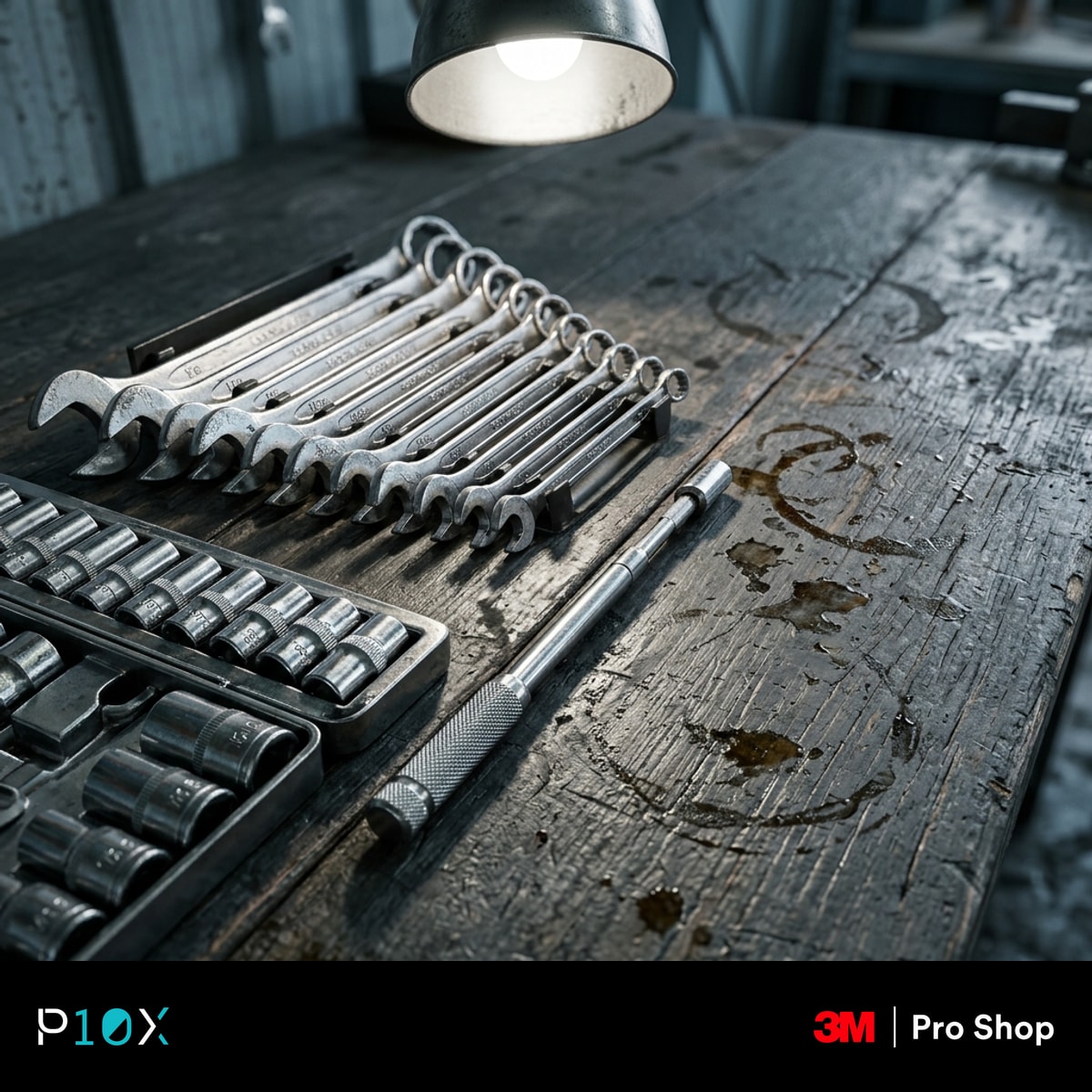
- A basic socket and spanner set, around RM80 to RM200
- A torque wrench for wheel nuts and drain plugs, around RM100 to RM250
- Gloves, a microfibre cloth set and a funnel, around RM30 to RM60
- A sturdy jack and axle stands only if you have safe, flat space to use them
Store everything in one box in the boot or store room so checks stay quick. If a job needs a tool you do not have and cannot justify buying, that is a fair reason to let a workshop handle it instead.
How to Keep Service Records That Protect Your Warranty
Good records are what turn DIY and independent servicing into a warranty safe habit. Whether you do a job yourself or use a workshop, keep proof of what was done, when, and with which parts. This is your evidence if a warranty question ever comes up.
Save receipts for parts and oil, note the date and mileage, and take a quick photo of the part box showing the specification. A simple notes app, a spreadsheet or a physical logbook in the glovebox all work. Keeping the part packaging for a short while also helps if you need to confirm the grade or standard later. The goal is a clear, honest trail that shows the right parts and intervals were used.
When a Recon or High-Mileage Car Changes the Plan
Older and recon cars shift the DIY line because parts are more worn and tolerances are tighter. A bolt that turns easily on a new car may be seized or fragile on a high mileage one, and a small slip can cause a bigger leak or break. Be more cautious as a car ages.
On these cars, keep doing the simple visual checks and fluid top ups, but lean on a workshop sooner for anything that resists or looks corroded. A professional can also spot wear you might miss, such as perished hoses, weeping seals or uneven tyre wear, before they strand you. The safe jobs stay safe, but the threshold for calling in help drops as the odometer climbs.
Choosing Where to Spend Your Maintenance Effort
The smart approach is to own the simple, safe jobs and pay a professional for anything that affects safety or needs special tools. Doing your own basic checks keeps you close to your car and saves a little each time, while a trusted workshop protects you on the work that really matters. Match each task to your space, your tools and your honest skill level.
If you are unsure whether a job is yours to do, ask what happens if it goes wrong. If the answer involves the brakes, the engine or the gearbox, book it in. For paint and heat protection work such as window film and paint protection film, that is also specialist work best done by a 3M Authorized Dealer such as 3M Pro Shop by P10X, which you can find by location here. Pair your DIY routine with our seasonal car care tips to stay ahead of our rain and heat.
Find out the best protection for your car
Visit a 3M Pro Shop and discover the cost-effective 3M Protective Film and Window Tint
Frequently Asked Questions
What car maintenance can I do myself?
You can safely handle wiper blades, washer fluid, air and cabin filters, tyre pressure checks, exterior bulbs and battery terminal cleaning. These need little more than basic hand tools and carry low risk. Keep anything involving brakes, engine internals or fluids under the car for a workshop.
Does servicing your own car void the warranty in Malaysia?
Not automatically. Malaysia's Block Exemption Order generally allows servicing outside the official centre without voiding warranty, as long as you use parts that meet the maker's specification and keep proper records. Always read your own warranty booklet and keep every receipt and service entry.
Is DIY car maintenance worth it?
It is worth it for simple, repeatable jobs where you save labour and learn your car. It is not worth it for safety critical or specialised work, where a mistake can cost far more than you save. Weigh the tool cost, your time and your space before deciding.
Which car repairs should always be done by a professional?
Brakes and brake fluid, timing belt and internal engine work, aircon regassing, transmission fluid, suspension and wheel alignment should always go to a professional. These need correct specifications, special equipment and experience, and a small error can be dangerous or very expensive.
How much can I save doing my own car maintenance?
Most of the saving is labour rather than parts, since parts cost roughly the same wherever they are bought. Simple jobs save a modest, real amount each time, which adds up across a year. Subtract the cost of any tools you buy and the value of your time to see the true saving.
Author

Fabian
He is passionate about revolutionizing the car protection services industry by bringing innovation and transparency to a traditionally opaque and often misunderstood field. His mission is to educate end users on the true benefits and importance of car protection, aiming to replace outdated practices with honest, customer-focused solutions. With a fresh approach to car tinting, paint protection film (PPF), and detailing services, he is committed to delivering a superior customer experience that sets a new standard in the market. He welcomes discussions about the future of the automotive industry and is eager to connect with like-minded professionals who share his vision for innovation, integrity, and excellence.
Experience the future of window tinting
Visit a 3M Pro Shop and discover the revolutionary Crystalline CR BLK film