
The ultimate used car maintenance guide for recon cars in Malaysia

- Smart used car maintenance in Malaysia starts on day one with a full fluid and filter reset, because you rarely know the true service history of a recon unit.
- Treat the first 30 to 90 days as a baseline reset, then settle into a slightly tighter routine than a brand-new car.
- For older or higher-mileage units, oil and filter every 5,000 to 7,000 km is a sensible conservative interval, but always defer to the owner's manual.
- Check the VIN and history report, inspect belts, hoses and the timing belt, and confirm parts availability for imported models before problems appear.
- Budget realistically for slightly higher running costs, and fix small issues early to protect long-term reliability.
Good used car maintenance in Malaysia begins the day you collect the car, not months later when a warning light finally forces the issue. A recon car is an imported, refurbished unit, and a local used car has lived a life you did not see. In both cases the single biggest risk is the unknown: you cannot fully trust the previous service record, so the safest move is to reset the baseline yourself and then keep a steady, slightly tighter routine after that. This guide walks through exactly how to do that, from the first 90 days to ongoing care, costs and the mistakes that catch recon owners out.
Why recon and used cars need a different maintenance approach
A recon or used car needs a more cautious approach than a new car because its real history is uncertain, its parts are older, and it has already absorbed years of heat, traffic and wear before reaching you. New cars come with a known service book and a warranty. A recon unit is imported and refurbished before sale, which means cosmetic and mechanical work has been done, but the deeper maintenance record is often thin or missing.
That uncertainty changes your priorities. Instead of simply following the next service sticker, you start by assuming nothing and verifying everything. Rubber components such as hoses, belts and engine mounts age with time as much as mileage, and Malaysia's constant heat and humidity speed that up. An older car that spent years in stop and go Klang Valley traffic will also have more wear on its cooling system, transmission and brakes than the odometer alone suggests.
It also helps to understand how a recon car differs from a local used car, because the two carry slightly different risks. A recon unit is usually a low-mileage import from Japan or the UK, often in clean cosmetic shape, but with a service record that may not have followed it across the border. A local used car may have a traceable history through its previous owner and local service centre, yet it has lived its whole life in Malaysian heat and traffic. Knowing which type you own tells you where to focus your first checks.
| Consideration | Recon (imported) car | Local used car |
|---|---|---|
| Service history | Often incomplete or not transferred from abroad | Usually traceable through local owner and workshop |
| Mileage trust | Verify carefully, rollback risk on some imports | Easier to confirm with local records |
| Parts availability | Some variants need ordered or specialist parts | Usually widely available locally |
| Climate exposure | Newer to local roads, but unknown earlier care | Fully aged in Malaysian heat and humidity |
What to check right after buying a recon car
Right after buying a recon car, do a full reset within the first 30 to 90 days: change every major fluid and filter, inspect the belts, hoses and timing belt, and verify the VIN and service history. This resets your maintenance clock to a known point so every future interval is measured from work you can actually trust.
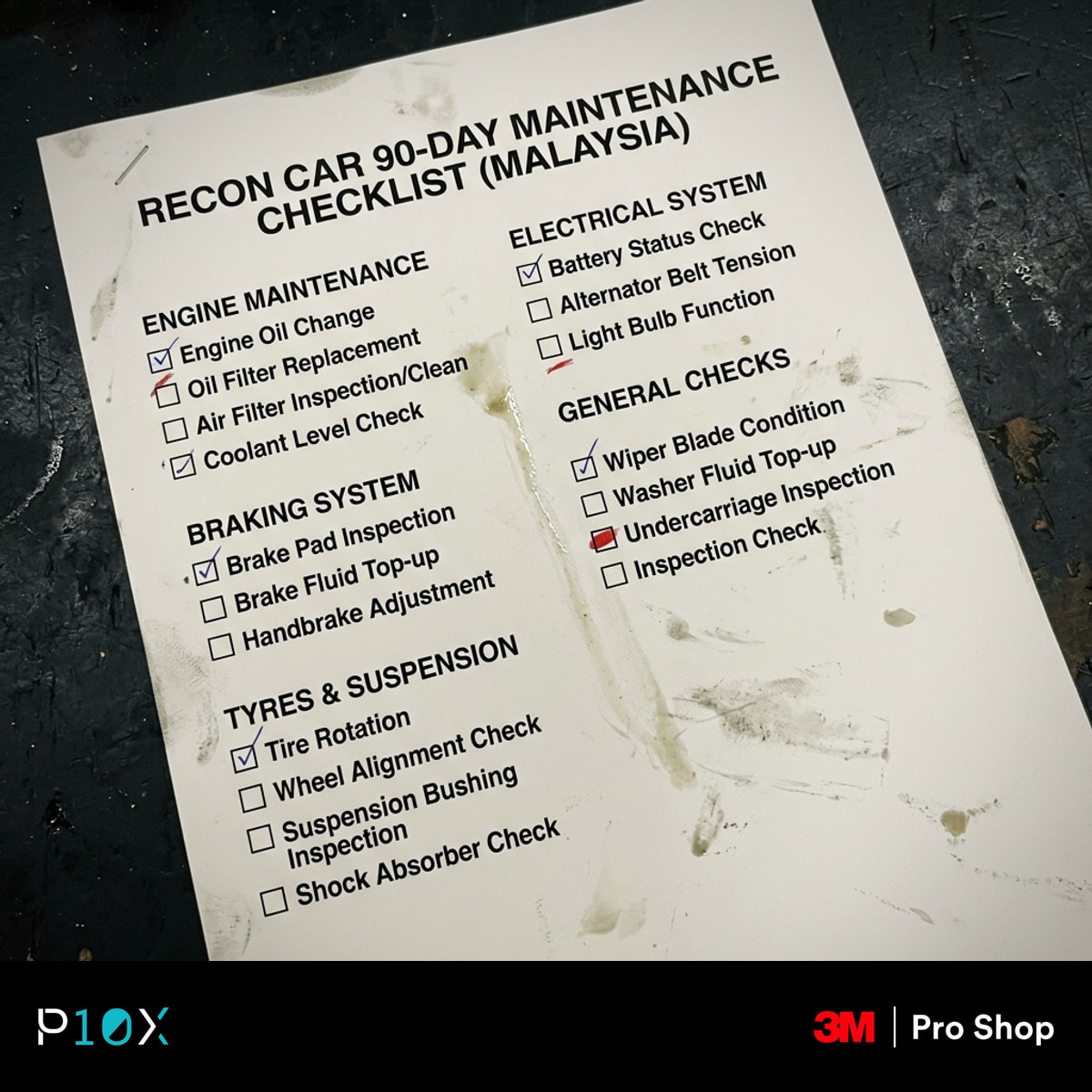
Use this as your post-purchase reset checklist:
Engine oil and oil filter changed
Coolant drained and refilled
Brake fluid checked and replaced if old
Automatic transmission fluid level and condition checked
Air filter and cabin filter replaced
Spark plugs inspected and replaced as needed
Battery voltage tested (healthy range 12.4 to 12.7V)
Tyres, including age and tread, inspected
Change all fluids and filters first
Start with a complete fluid and filter reset because fluids are cheap relative to the engine and gearbox they protect. Replace the engine oil and oil filter with the correct grade for your model, then refresh the coolant so the cooling system starts clean for the local climate. Check the brake fluid and change it if it looks dark or has not been done in years, since it slowly absorbs moisture and fades under hard braking. Inspect the automatic transmission fluid for level, colour and any burnt smell, and have it serviced if the condition looks poor. Swap the air filter and cabin filter too, because a clogged cabin filter is common on cars that sat in a yard before sale and a dirty air filter quietly hurts fuel economy. This single step removes most of the doubt about what the previous owner did or skipped, and it gives every future service a clean starting point.
Inspect belts, hoses and timing belt
Next, inspect the rubber and the timing system, because these fail with age, not just distance. Look for cracked or glazed drive belts, soft or swollen hoses, brittle clamps, and any weeping around the water pump. Rubber hardens and perishes faster in tropical heat, so a five year old hose can be close to failure even on a low-mileage import. If the model uses a timing belt rather than a chain, find out when it was last replaced and follow the model interval, because a snapped timing belt on an interference engine can bend valves and destroy it. For an imported unit with no record, many owners choose to replace the timing belt, water pump and tensioner together early on for peace of mind, since the labour overlaps anyway.
Verify service history and VIN report
Finally, verify what you actually bought. Run a history and VIN check through a service such as scrut.my or recond.my, and keep the Puspakom inspection report on file. This helps you spot mileage inconsistencies and accident history, and it gives your workshop a starting reference for future work. Take a few clear photos of the odometer, engine bay and VIN plate on day one so you have your own dated record from the start. Frame any gaps factually rather than assuming the worst, but treat an unknown record as a reason to be thorough, not to panic.
How often to service a recon car (interval guide)
Service a recon or older car on a slightly tighter schedule than a new one, with oil and filter roughly every 5,000 to 7,000 km and a fuller inspection every 6 months, whichever comes first. Older seals, an aged cooling system and unknown past care all justify shorter intervals than the manufacturer's best-case figures. Always confirm against the owner's manual for your specific model, since intervals vary.

| Task | Suggested interval (older or recon unit) | Why it matters |
|---|---|---|
| Engine oil and filter | Every 5,000 to 7,000 km or 6 months | Protects a worn engine with unknown past care |
| Coolant | Check every service, replace per model schedule | Cooling system stress is high in local heat and traffic |
| Brake fluid | Every 2 years or as advised | Absorbs moisture and fades in heavy stop-go driving |
| Transmission fluid | Check regularly, service per model | Older gearboxes are sensitive to neglected fluid |
| Timing belt | Per model interval, replace early if unknown | Failure can wreck an interference engine |
Engine, cooling and transmission care for older cars

The engine, cooling system and transmission are where reliability is won or lost on an older car, so give them the most attention. Keep up with oil changes using the correct grade, and watch the oil level between services, since older engines can consume a little without ever leaking. A monthly glance at the dipstick takes a minute and catches slow consumption before it turns into engine wear.
The cooling system deserves special care in Malaysia. Make sure the radiator, hoses, fan and coolant are all healthy, because overheating does fast and expensive damage when you are crawling through midday traffic. Top up with proper coolant rather than plain water, and get into the habit of glancing at the temperature gauge. For automatics, smooth shifting and clean, non-burnt fluid are good signs, while jerky shifts, slipping or delays are early warnings worth investigating before they grow into a gearbox rebuild. If you ever feel new vibration, hear new noises, or see fluid on the floor, treat them as red flags to watch for on an older car and get them checked early.
Sourcing parts and a workshop for imported models
For imported and grey-import models, sort out parts and a trusted workshop before you urgently need them. Some recon units use model variants, engines or trims that are not sold locally, so certain parts may need to be ordered from abroad or sourced through a specialist. Common service items such as filters, brake pads and belts are usually easy to find, but model-specific sensors, body panels or electronics can take longer to arrive.
Find a workshop with genuine experience on your make, ask whether they can get parts within a reasonable time, and keep a relationship with them rather than shopping around each time. A workshop that already knows your model will spot common faults faster and tends to keep a sensible stock of the parts it sees often. For everyday jobs you can handle some basics yourself, but it helps to know what to DIY vs send to a workshop so you do not attempt anything safety-critical at home.

Recon car maintenance costs in Malaysia (RM ranges)
Expect recon car running costs to sit a little above a comparable local car, mostly because of the upfront reset and the occasional imported part. The baseline reset of fluids and filters is the biggest early spend, after which routine servicing settles into a predictable rhythm. Budgeting for this from the start keeps ownership calm rather than stressful.
As a rough guide for planning, the initial baseline reset of major fluids and filters often lands somewhere around RM500 to RM1,500 depending on the model and what needs replacing. A routine oil and filter service typically runs around RM150 to RM400, a timing belt job done together with the water pump can reach RM800 to RM2,000 on some models, and an air-conditioning service sits around RM150 to RM500. These figures are estimates only and move with parts choice, engine size and labour, so always ask for a written quote before approving work.

Prices vary by model, workshop and parts choice, so treat any figure as a guide and ask for a written quote. For a clearer routine and rough cost bands across all the common tasks, follow the full monthly maintenance checklist in our pillar guide and adjust the intervals tighter for your older unit.
Common recon ownership mistakes to avoid
The most common recon ownership mistakes are skipping the initial reset, trusting the odometer blindly, and ignoring early signs of wear. Many owners drive off and simply wait for the next service sticker, which assumes a history they cannot verify. Others take the displayed mileage at face value despite the rollback risk on some imports, then are caught out when worn parts fail sooner than the numbers suggest. A third group ignores small leaks, light rust or a soft hose until it becomes a roadside breakdown that costs far more than an early fix.
Avoid all three by resetting the baseline, verifying the history, and acting on small issues while they are still small. It also pays to watch for surface rust under the car and around the wheel arches, which spreads quietly on older imports. During the monsoon, take extra care to protect an older car through the monsoon, since heat and flooding are harder on aged rubber and electrics.

Keeping your recon car reliable for the long run
Reliable recon ownership comes down to a simple idea: reset what you cannot verify, then maintain a steady, slightly tighter routine. Start with the fluid and filter reset, confirm the history and the timing components, line up a workshop that knows your model, and budget for honest running costs. From there, regular servicing and early attention to small problems will keep an imported or used car dependable for years. If you want a second opinion before a major job, a 3M Authorized Dealer such as 3M Pro Shop by P10X can also advise on protecting the paint and glass that affect an older car's resale value. The calm next step is to book that first baseline reset and start your own clean service record today.
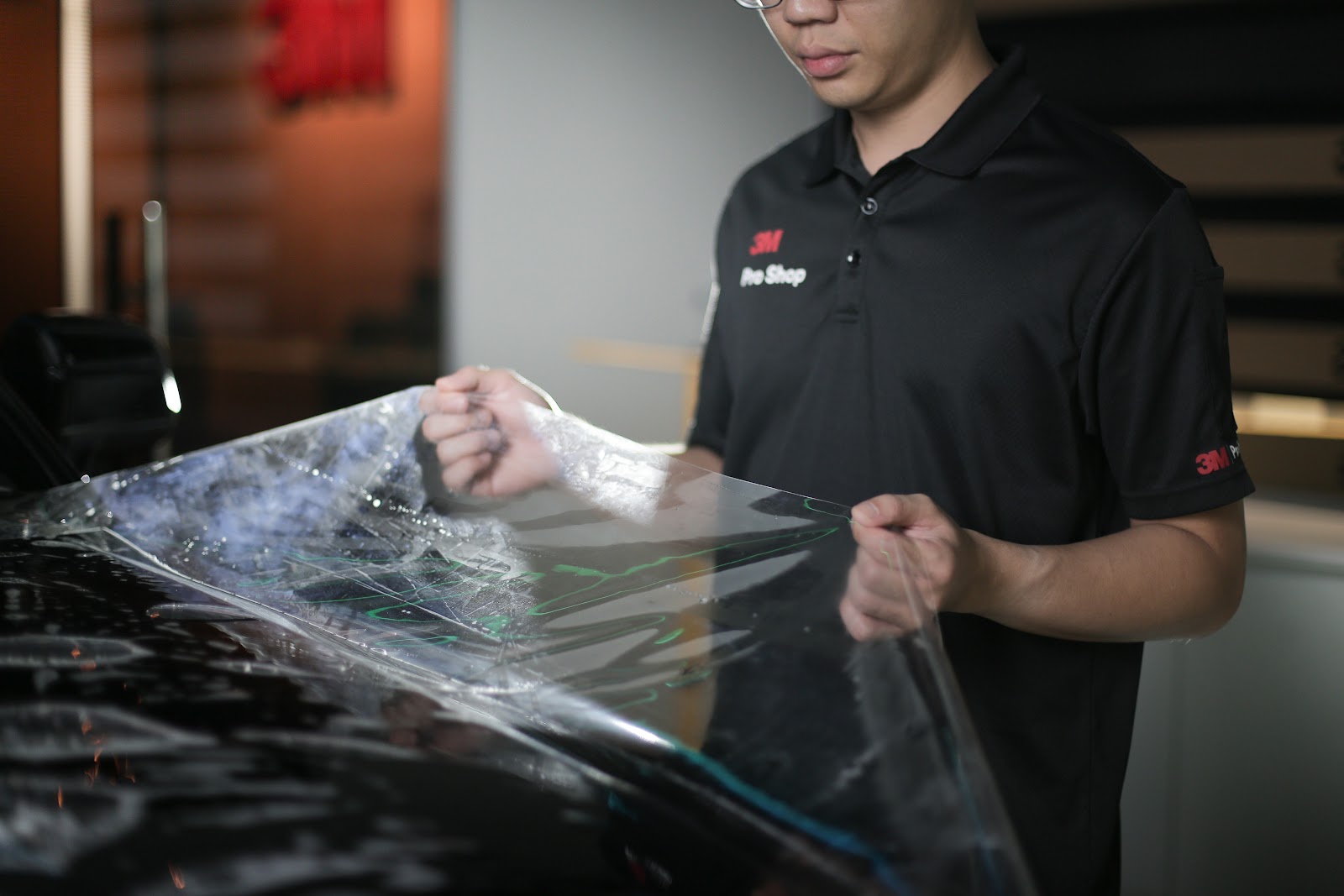
Find out the best protection for your car
Visit a 3M Pro Shop and discover the cost-effective 3M Protective Film and Window Tint
Frequently asked questions
Is recon car maintenance expensive in Malaysia?
Recon car maintenance is usually a little more than a comparable local car, mainly because of the upfront baseline reset and the occasional imported part. Once the reset is done, routine servicing costs settle into a predictable range. Ask any workshop for a written quote, since prices vary by model and parts choice.
How often should I service a recon car?
For an older or recon unit, oil and filter every 5,000 to 7,000 km with a fuller inspection every 6 months is a sensible conservative routine. Tighter intervals make sense because the past care is unknown. Always confirm against your model's owner's manual.
Can I service a recon car at a normal workshop?
Yes, most recon cars can be serviced at a competent independent workshop, ideally one with experience on your make. The key is parts availability for imported variants, so confirm the workshop can source what your model needs within a reasonable time.
How do I check a used or recon car's service history?
Run a VIN and history check through a service such as scrut.my or recond.my, and keep the Puspakom inspection report. These help reveal mileage inconsistencies and accident history. Treat any gaps as a reason to do a thorough baseline reset.
Are recon cars reliable and worth it?
A recon car can be reliable and good value when you maintain it properly from day one. The main risk is unknown history, which you offset with a full reset, verified records and early attention to wear. Maintained well, many imported units stay dependable for years.
Author

Fabian
He is passionate about revolutionizing the car protection services industry by bringing innovation and transparency to a traditionally opaque and often misunderstood field. His mission is to educate end users on the true benefits and importance of car protection, aiming to replace outdated practices with honest, customer-focused solutions. With a fresh approach to car tinting, paint protection film (PPF), and detailing services, he is committed to delivering a superior customer experience that sets a new standard in the market. He welcomes discussions about the future of the automotive industry and is eager to connect with like-minded professionals who share his vision for innovation, integrity, and excellence.
Experience the future of window tinting
Visit a 3M Pro Shop and discover the revolutionary Crystalline CR BLK film