
Jaecoo J5 PPF in Malaysia: Which Panels to Wrap First
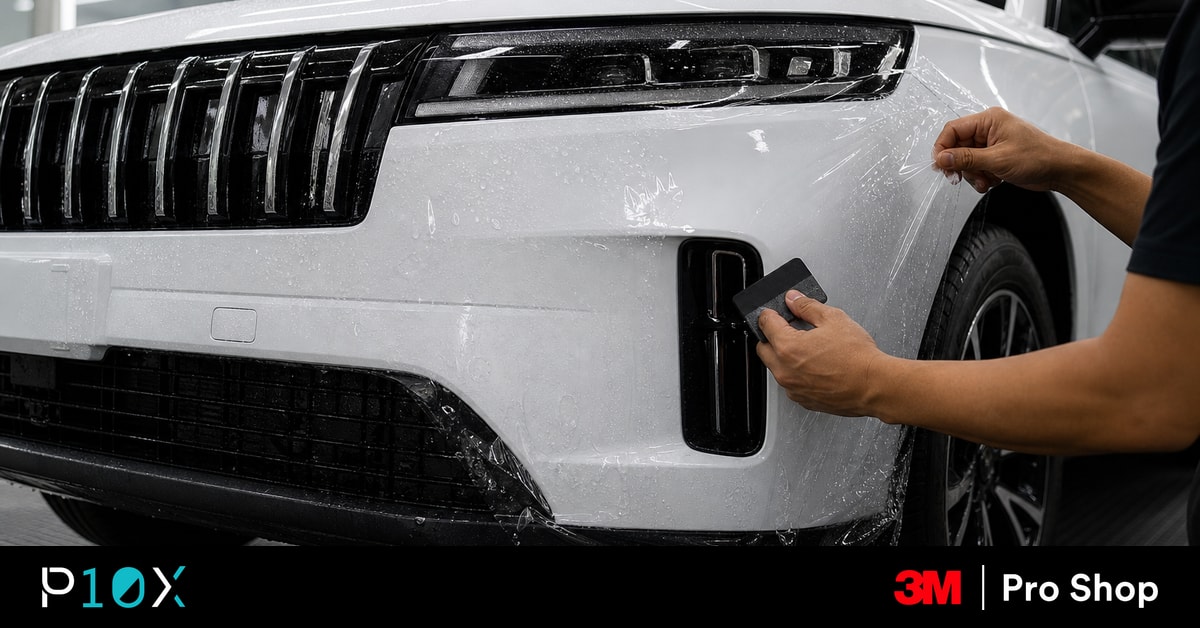
- Wrap the front bumper, the front third of the bonnet, the headlights and the wing mirrors first. Those four take most of the damage on a Malaysian car.
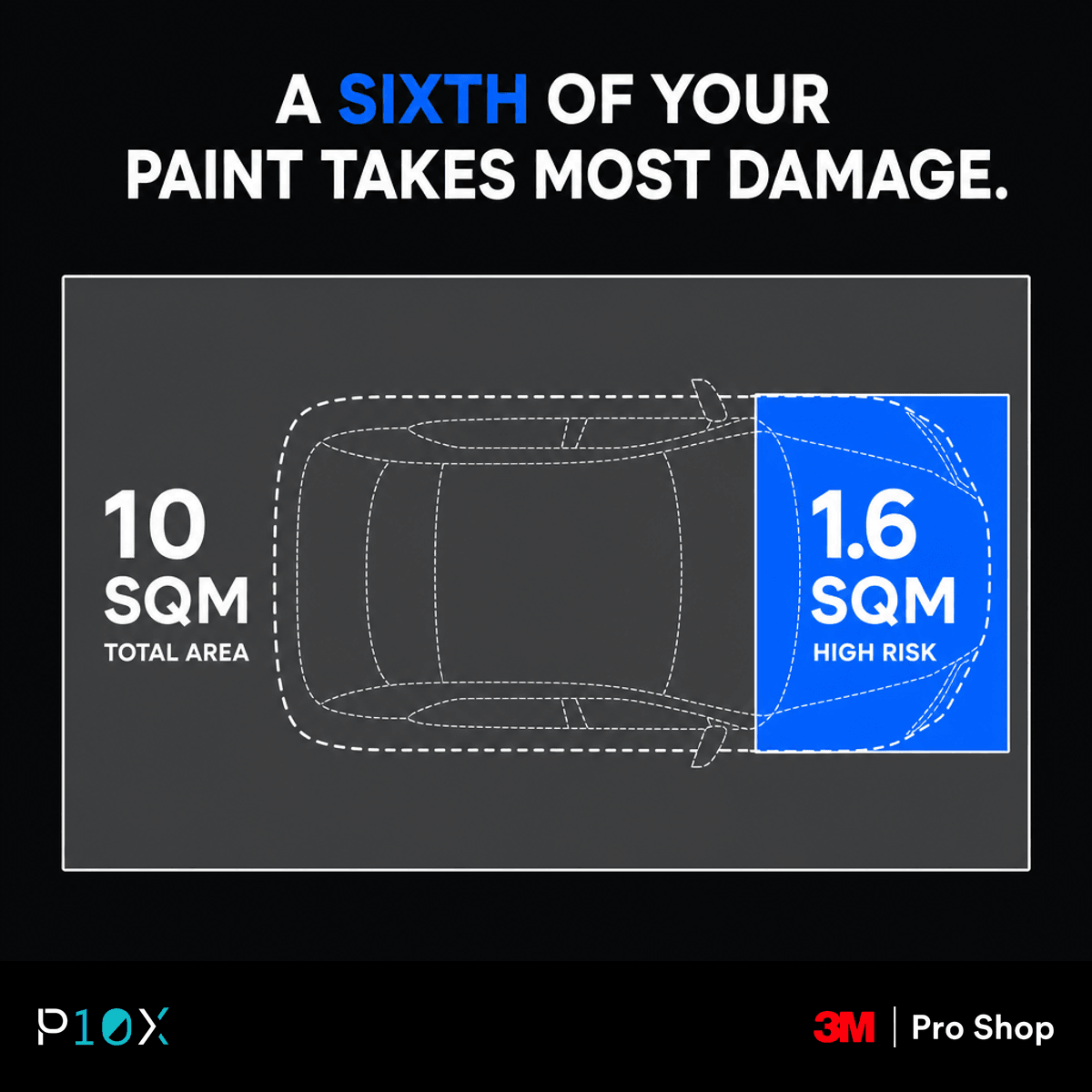
- Roughly a sixth of your paint is in the firing line. Full front is not a compromise, it is the coverage that matches where the damage lands.
- Series 150 goes where the strikes are hardest, Series 100 handles the flatter front panels, Series 50 covers the panels that need covering rather than armouring.
- The J5 EV has a 35-litre frunk, so the bonnet lip gets hands on it every week rather than twice a year. Nobody wraps that panel and everybody should.
- The boot has a two-tier floor, which means more dragging over the lip, not less.
- Wait 72 hours before the first wash, and keep the car away from brush washes for good.
If you are looking at Jaecoo J5 PPF in Malaysia, the useful question is not whether to wrap but which panels to wrap and in what order. Damage on a car is not spread evenly, so protection should not be either.
The J5 launched here in March 2026 and the J5 EV opened for booking in July, which means most owners reading this are inside their first few weeks. That is the best possible time to be asking, because paint that has never been struck is paint film can protect completely. For the background on what the film actually does, start with what 3M paint protection film actually does.
This is the panel-by-panel version. What hits each part of the car, the order to wrap them in, and how much of your paint is genuinely at risk.
Why a New J5 Starts Losing Paint Immediately
What Actually Hits Each Panel on a J5
Sorting panels by what strikes them is more useful than sorting them by size, because the four things that damage a car all behave differently.
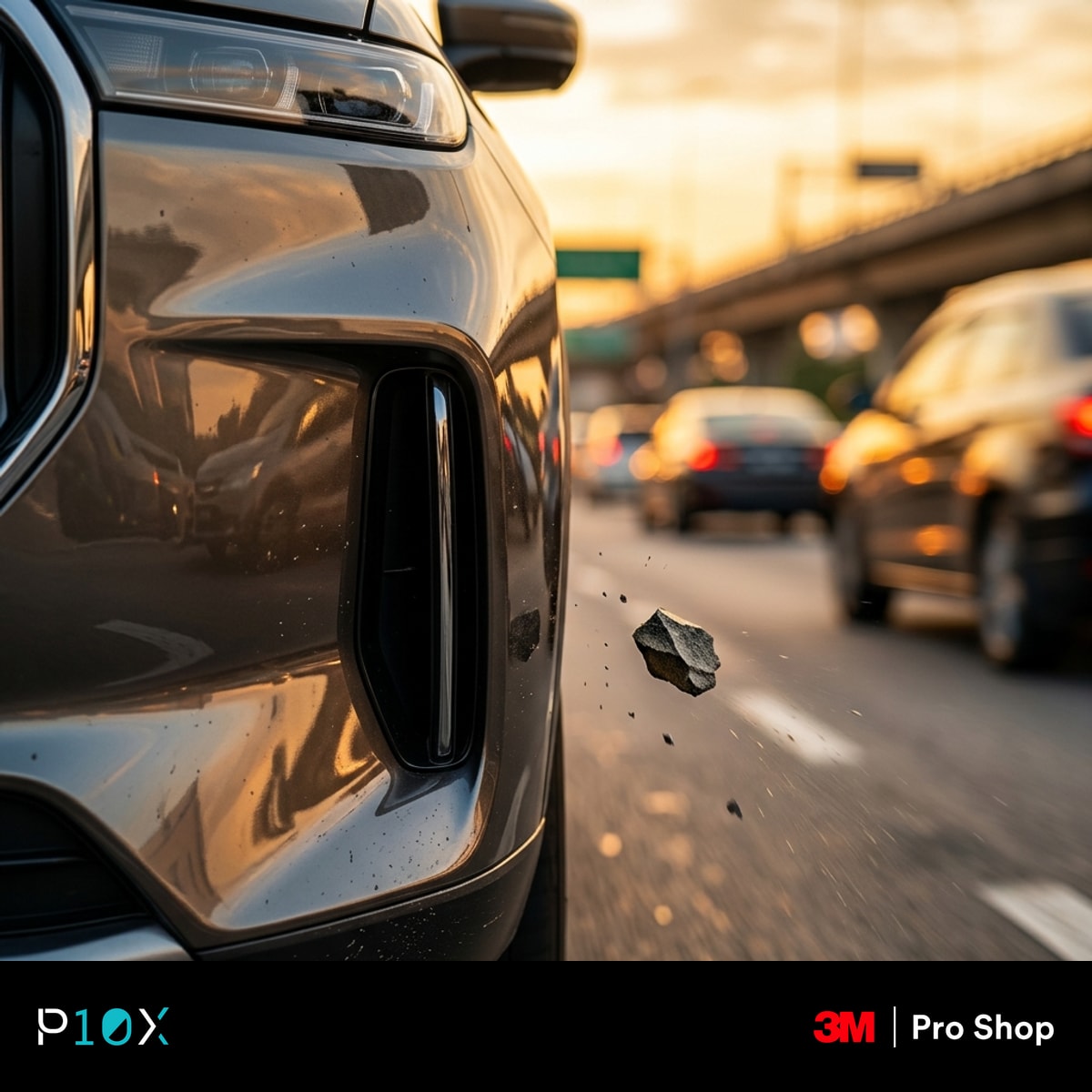
Impact damage is the fast, permanent kind. Stones, grit and road debris hitting the front of the car at speed. It concentrates almost entirely on the bumper face, the leading third of the bonnet, the headlight lenses and the wing mirrors. On a J5 the mirrors sit fairly far forward on a 2,620 mm wheelbase, which puts them squarely in the spray from the car in front rather than tucked behind it.
Abrasion damage is slow and comes from tyre spray. Your front tyres pick up grit and fling it backwards and outwards, which lands on the front wings, the rockers and the lower rear quarters. Nobody inspects rockers because they sit low and in shadow, so this damage runs for years unnoticed and then shows up as a dull, sandblasted strip when the car goes for valuation.
Contact damage is the human kind. Fingernails at the door handle, keys, rings, bags dragged over the boot lip. The J5's two-tier boot floor makes this worse rather than better, because a two-tier design means you are lifting things over the lip and setting them down twice as often.
The J5 EV adds a contact panel that does not exist on the petrol car. Its 35-litre frunk sits under the bonnet, which changes how often that panel gets touched. On a petrol car the bonnet opens maybe twice a year for a service check. On an EV with usable front storage it opens for the weekly shop, so the lip and the shut line pick up fingernails, rings and bag handles constantly. It is a panel nobody thinks to protect, because on every other car nobody needed to.
Environmental damage is the one people forget. Sun, acid rain, road grime and organic fallout landing on horizontal surfaces, so the bonnet, roof and boot lid. It does not chip anything, it just dulls the clearcoat over years. Film handles this quietly by taking it instead of your paint.
Best Panels to Wrap First on a J5
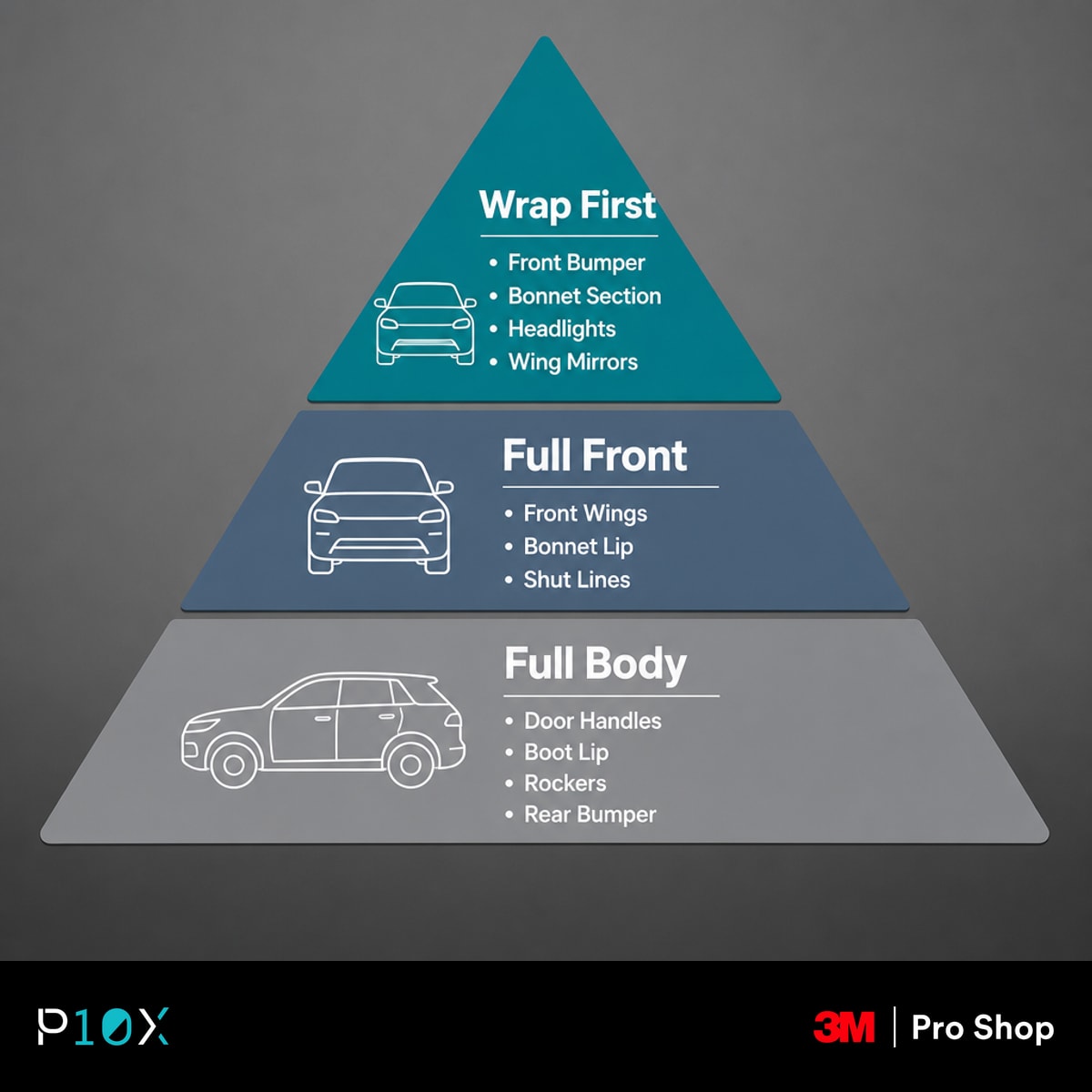
Here is the order. If you only do the top four rows, you have covered most of what will actually happen to this car.
| Panel | What actually hits it | Risk | 3M series | Tier |
|---|---|---|---|---|
| Front bumper | Everything the car ahead throws up | Highest | Series 150 | Wrap first |
| Bonnet, front third | Highway stone strike at speed | Highest | Series 150 | Wrap first |
| Headlights | Grit and UV hazing on the lens | High | Series 150 | Wrap first |
| Wing mirrors | Spray from the next lane, carpark knocks | High | Series 100 | Wrap first |
| Front wings | Tyre spray off the front wheels | Medium high | Series 100 | Full front |
| Bonnet lip and shut line | Hands, on the J5 EV frunk especially | Medium high on EV | Series 100 | Full front add-on |
| Door handles and cups | Fingernails, keys and rings | Medium | Series 50 | Full front add-on |
| Boot lip | Groceries dragged over the two-tier floor | Medium | Series 50 | Full front add-on |
| Rocker panels | Constant grit off the front tyres | Medium | Series 50 | Full body |
| Rear bumper and rear wings | Carpark contact and reversing scuffs | Lower | Series 50 | Full body |
Two rows there are worth arguing about, so let me argue for them. The headlights first. The J5 runs LED headlights and taillights, and LED lenses are polycarbonate rather than glass, which means they haze under UV and they scratch under grit. A hazed lens throws less light down the road, so this is a visibility item and not only a cosmetic one. We wrote about PPF on headlights separately because it comes up so often.
The rockers second. They rank medium on the table and they are usually the last thing anyone wraps, but they take damage on literally every drive whether you go near a highway or not. If you are choosing between wrapping the rear bumper and wrapping the rockers, take the rockers. Our fuller treatment of which panels need PPF first works through the same logic on other cars.
How Much of Your Paint Is Actually at Risk
Here is the number that settles the full front question, and as far as we can tell nobody has published it.
Take the J5's own dimensions. It is 1,860 mm wide and 1,650 mm tall. The painted front face, measured from the bottom of the bumper up to the leading edge of the bonnet, runs roughly 0.85 m tall across the full width. Multiply it out and you get about 1.58 square metres of paint sitting directly in the firing line. Total painted body area on a car of these dimensions comes out somewhere near 10 square metres, estimated from the footprint rather than taken from a manufacturer sheet, so treat it as a good approximation rather than a spec.
Run the division and the answer is about 16 percent. Roughly a sixth of your paint takes the great majority of the stone damage. Every other panel on the car is exposed to slower, gentler wear that takes years rather than months to show.
That reframes the whole decision. Full front is not the budget option that leaves the rest of the car unprotected. It is the coverage that matches where the damage actually lands, and for a lot of J5 owners it is the correct stopping point rather than a compromise. Going further makes sense on a dark colour, on a car that lives outdoors, or on one you plan to keep well past the point where the paint condition starts affecting what a buyer offers you. Going less far than full front does not, because the sixth is the sixth.
It also tells you what to do if you are staging the work across a few months. Cover the sixth first and completely, then add panels as it suits you. What does not work is spreading a thin budget evenly across the whole car, because that leaves the panels taking real strikes with the same protection as the panels taking almost none. Protection is only useful where the damage is, and on this car the damage is concentrated in one place you can point at.
What 3M PPF Series Suits a J5
Three series, and they are genuinely different jobs rather than three prices for the same film.
Series 150 is the premium one at about 8 mil. It carries the highest stain resistance and durability in the range, the best clarity with noticeably lower orange peel, and a hydrophobic finish that sheds water and dirt. Crucially it is also the most flexible of the three, which is what lets it wrap into difficult contours without thinning at the stretch. That combination is why it belongs on the bumper, where the shape is complex and the strikes are hardest.
Series 100 sits in the middle at about 7.5 mil and it is the sensible workhorse. It protects against rocks, keys and salt, it stretches well, and its easy release liner makes it practical for the larger flatter areas. On a J5 that means the front wings, the mirrors and the bonnet lip. You are not giving much away against Series 150 on a flat panel, and the film goes on cleanly across a bigger area.
Series 50 is the entry film at 185 microns and it is the right answer for panels that need covering rather than armouring. Door handle cups, boot lip, rockers and the rear of the car on a full body job. It is still self-healing, still high gloss, and it still takes the abrasion instead of your paint.
To put those thicknesses in perspective, one mil is 25.4 microns, so Series 150 is about 203 microns, Series 100 about 190, and Series 50 is stated directly at 185. All three are far thicker than the clearcoat they sit on. Our side-by-side of how the 3M PPF series compare goes into the differences in more depth.
Mistakes J5 Owners Make With PPF
Four keep repeating, and every one of them is avoidable before you book rather than after.
The first is waiting. Owners drive the car for a couple of months, then book the wrap, and by then there are chips on the bumper. Film goes over damage, it does not undo it, so anything already there is sealed under it permanently. If you are past that point it changes the plan rather than cancelling it, but get the car inspected before the film goes on.
The second is skipping the edges. A panel wrapped flush to the surface rather than tucked into the panel gap leaves a visible line that collects grime and eventually lifts. Ask specifically whether the shop wraps edges into the gaps. It is the single clearest divide between a cheap job and a proper one, and after a year of Malaysian rain it is the first thing that shows.
The third is washing too early. Fresh film needs 72 hours before it sees any water, and a car collected on Friday and taken to a wash on Saturday is a car with lifted edges by Monday. After that, hand wash or touchless only. A brush wash will scratch the film and lift edges, permanently, and no film warranty anywhere covers that.
The fourth is treating film as maintenance free. It is low maintenance, not no maintenance. Wipe fuel spills immediately, soften tree sap and organic fallout with hot soapy water rather than scrubbing it off, and park in shade where you have the option. Our aftercare guide covers the routine properly.
Get It Wrapped Before the Chips Start
If you have just collected the J5, book it now, before the first drive north. Every week of highway running before the wrap is damage you are about to seal in, and the difference between wrapping a car at week one and wrapping it at month three is the difference between protecting paint and preserving damage.
If you are in the EV, add the bonnet lip and the shut line to whatever else you are doing. The frunk is genuinely useful and you will use it far more than you expect, which is exactly why that edge needs covering. It costs very little added to an existing front-end job and it is close to impossible to retrofit neatly once the paint there is already marked.
One practical note on scheduling. If you are also getting the windows tinted, book both in the same visit. The car occupies the same bay either way, the film work and the glass work do not get in each other's way, and you lose one morning instead of two. Tell the shop both jobs are coming and they will sequence it themselves.
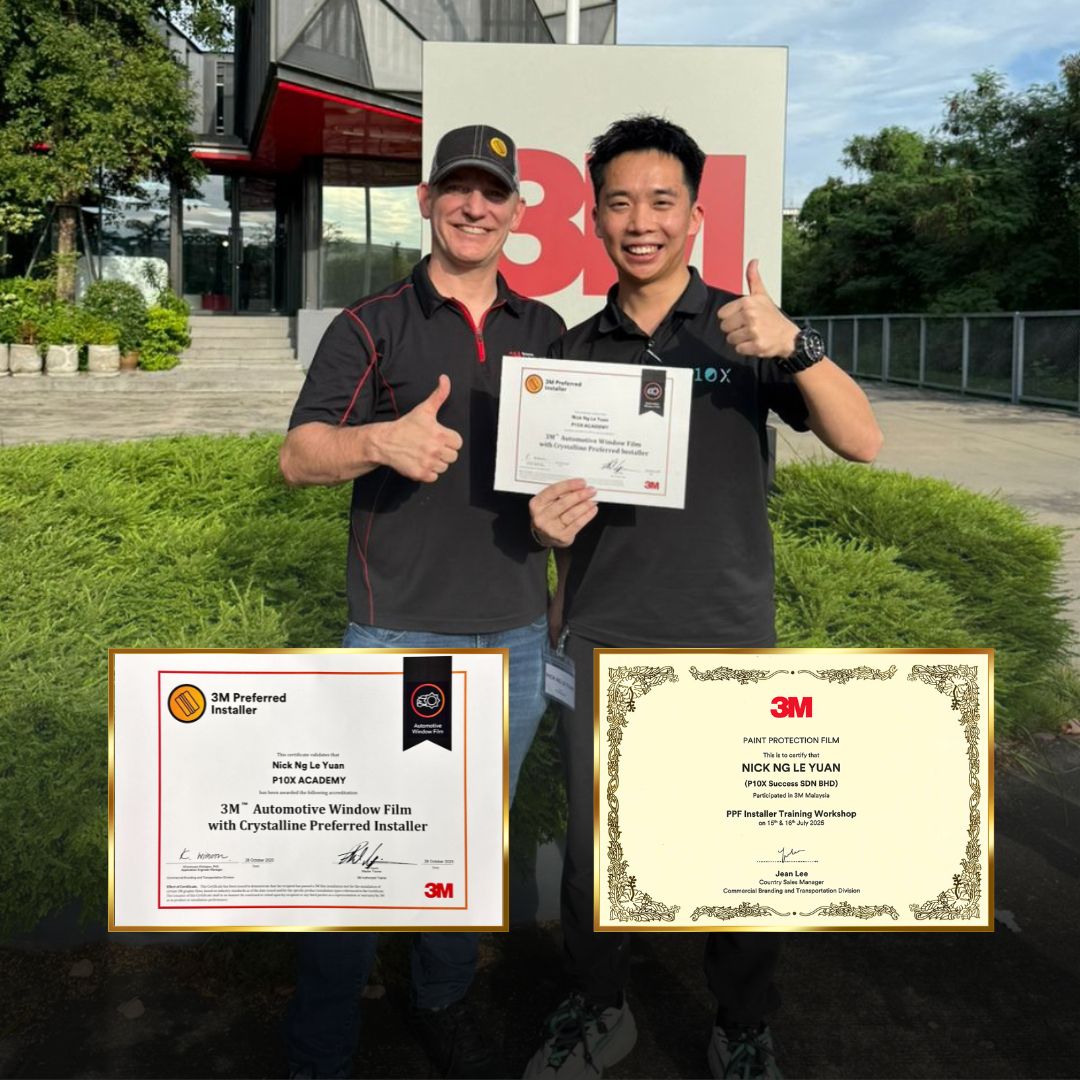
Whoever you book with, the installer matters more than the film. The same Series 150 laid badly will lift at the edges inside a year, and laid properly it will still look right when you sell the car. Ask who is cutting it, ask whether they are accredited, and ask to see a finished front end before you commit. We wrote about why the installer matters more than the brand on the box because it is the part owners skip.
Find out the best protection for your car
Visit a 3M Pro Shop and discover the cost-effective 3M Protective Film and Window Tint
Jaecoo J5 PPF in Malaysia FAQ
Which panels should you PPF first on a Jaecoo J5?
Front bumper, the front third of the bonnet, the headlights and the wing mirrors. Those four take the great majority of the impact damage. After that come the front wings, then the door handles and boot lip, then the rockers.
Is PPF worth it on a Jaecoo J5 in Malaysia?
For the front end, yes. Roughly a sixth of the car's paint sits in the firing line and takes most of the stone damage, so full front coverage matches where the damage actually lands rather than covering paint that is barely at risk.
How soon after collecting a Jaecoo J5 should you get PPF?
Before the first long highway drive if you can. Film goes over whatever is already on the paint, so any chip picked up in the first few weeks gets sealed underneath permanently.
Does the Jaecoo J5 EV frunk need paint protection?
The frunk itself does not, but the bonnet lip and shut line around it do. A 35-litre frunk gets opened for shopping rather than twice a year for a service check, so that edge sees hands, rings and bag handles constantly.
What 3M PPF series is best for a Jaecoo J5?
Series 150 on the bumper and the leading third of the bonnet where the strikes are hardest and the contours are complex. Series 100 on the flatter front panels and mirrors. Series 50 on the panels that need covering rather than armouring.
Can you wash a Jaecoo J5 straight after PPF installation?
No. Wait 72 hours before the first wash. After that, hand wash or a touchless machine only. Brush washes scratch film and lift edges, and that damage does not come back out.
Does PPF protect the Jaecoo J5 headlights?
Yes, and it is worth doing. The J5 runs LED headlights with polycarbonate lenses, which haze under UV and scratch under grit. A hazed lens throws less light down the road, so this is a visibility item as much as a cosmetic one.
Author

Kelvin Cheen
Kelvin is an Automotive Solutions Consultant and Branch Manager at 3M Pro Shop. With 4+ years of field experience in premium vehicle surface protection, Kelvin specializes in flagship 3M technologies, including 3M Crystalline Black optical film and Ceramic IR tints, 3M Paint Protection Film (PPF), etc. His focus is on delivering transparent, engineering-backed advice to car and EV owners, cutting through sales upsells to ensure customers choose the exact thermal rejection and paint protection tailored to their driving needs.
Experience the future of window tinting
Visit a 3M Pro Shop and discover the revolutionary Crystalline CR BLK film