
Headlight PPF in Malaysia: How It Stops Yellowing Without Cracking Your Headlamp
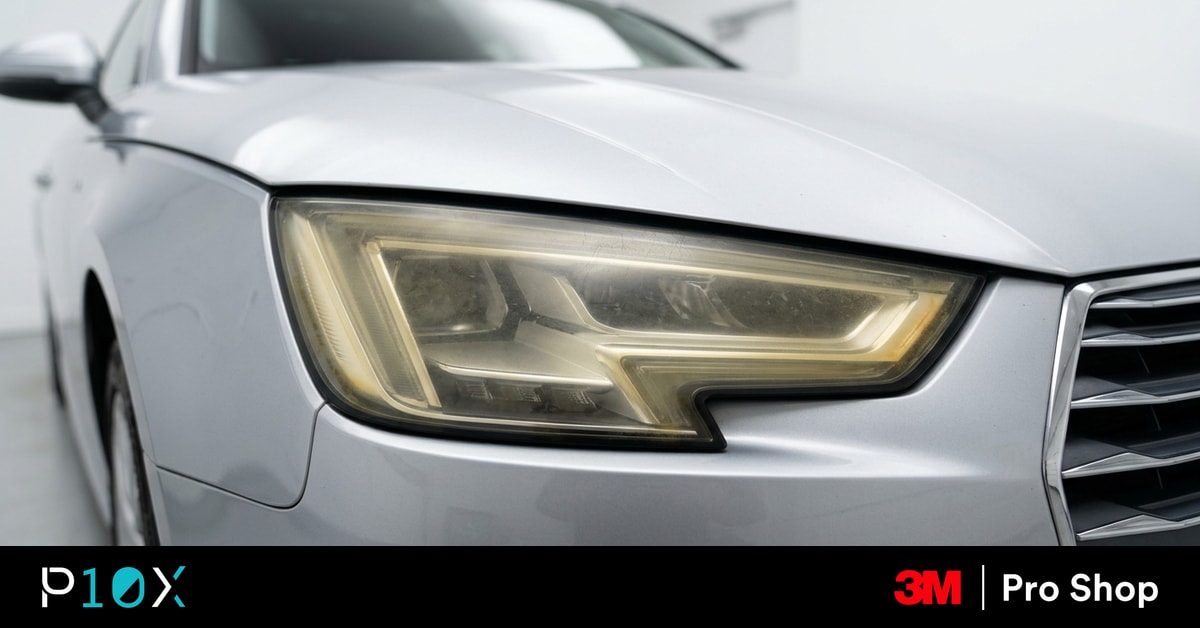
- Headlight PPF in Malaysia stops the UV yellowing that ruins polycarbonate lenses in three to five years under our equatorial sun.
- The cracking concern is real but narrow. It applies to old sealed halogen housings and cheap film, not to modern LED or matrix headlamps wrapped in genuine 3M TPU.
- Honest price band at a 3M Authorized Dealer is RM500 to RM600 per pair for a medium vehicle, which is one to ten percent of an OEM LED replacement.
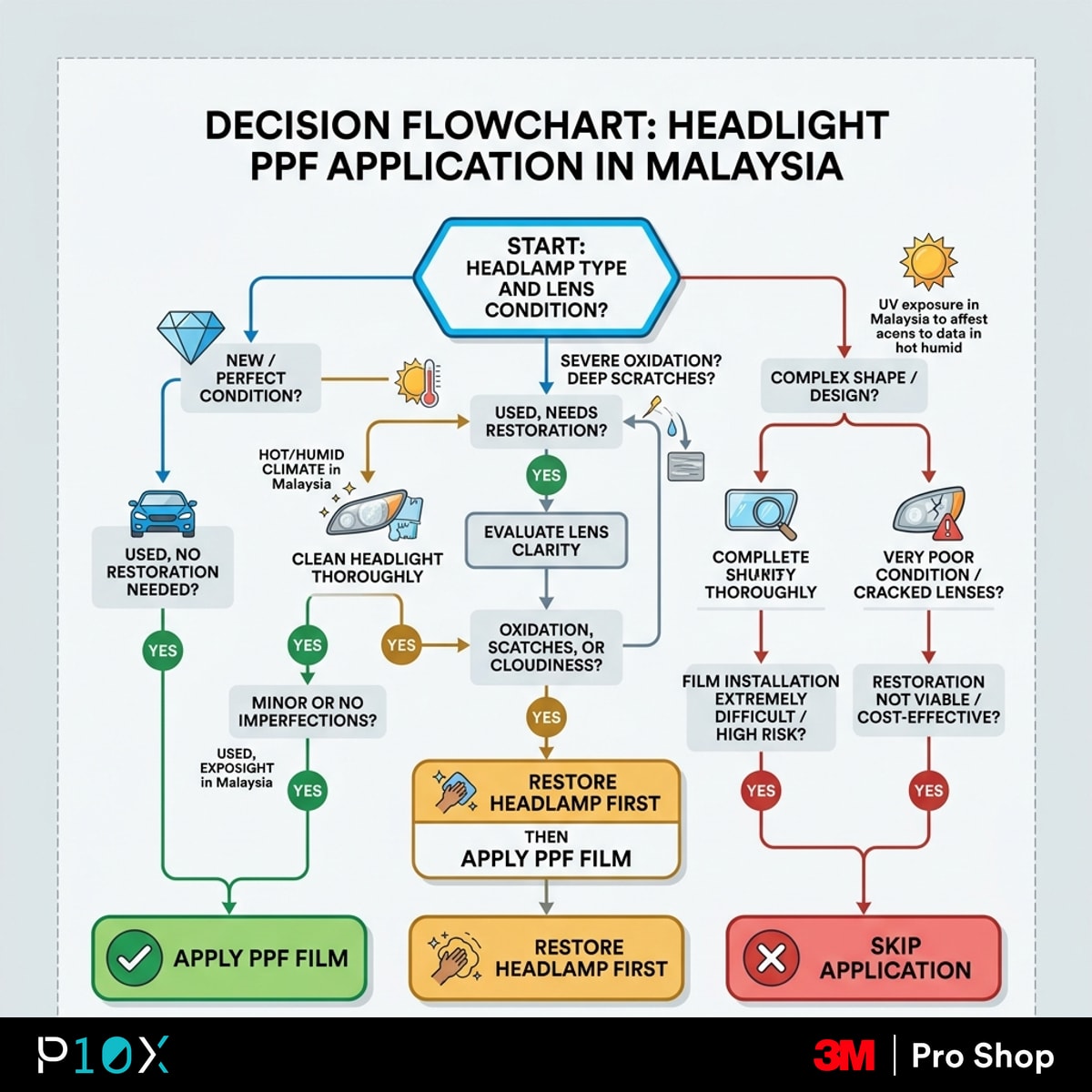
- Restore first if the lens is already hazed, then decide on PPF. Never wrap over a yellowed lens.
- Choose a 3M Authorized Dealer with clean-room install, batch-code proof, and a 3M-backed warranty.
Headlight PPF in Malaysia, Explained for Real Car Owners
Headlight PPF in Malaysia is one of the cheapest ways to stop your headlamps from yellowing under our equatorial sun, but only if your headlamp housing and installer are right for it. Almost every Malaysian shop sells it as a no-brainer RM128 to RM600 add-on, and almost none of them address the real concern car owners read about on Lowyat forum and paultan kereta Facebook groups, that a badly chosen film can crack a polycarbonate lens.
This guide does the opposite. It tells you, in plain Malaysian English, when headlight PPF is the correct call, when it is the wrong call, what RM128 versus RM600 actually buys you, and how to recognise a real 3M Authorized Dealer in Klang Valley. The framing is simple. Yes, headlight PPF stops the yellowing. No, it will not crack a properly built modern headlamp.
What Is Headlight PPF and Why Malaysians Are Asking
Headlight PPF is a clear thermoplastic polyurethane film, around 7.5 to 8 mil thick, that sits over the polycarbonate lens of your headlamp. It blocks UV radiation, absorbs stone chips, stays optically clear so beam pattern is unaffected, and self-heals from minor scratches when warmed.
3M PPF uses a TPU body with a UV inhibitor top coat, the same construction used on bonnets and bumpers. A growing share of Malaysian car owners now ask about it because LED and matrix headlamps on modern cars cost RM2,000 to RM12,000 to replace, and a single chip on a new Tesla, BYD Sealion 7 or MG S5 EV can ruin a six-figure purchase. For the wider PPF context, our overview of 3M paint protection film in Malaysia covers what TPU does across the whole car.
Why Headlight Yellowing Is Worse in Malaysia Than in the West
Malaysia sits on the equator with a daily UV index of 10 to 12 and humidity above 80 percent for most of the year. The thin clearcoat that car makers apply to polycarbonate headlamp lenses is designed for moderate climates. Here it breaks down in three to five years instead of the seven to ten years it lasts in Europe or Japan.
Add open-deck parking at LRT stations, condo rooftop bays, and mall top floors at Mid Valley, 1 Utama and IOI City Mall Putrajaya, and the lens spends most of its life baking under direct sun. By the time you notice the haze, the damage is already deep in the polycarbonate, not just on the surface.
The cost stake is real. A professional restoration runs RM800 to RM2,000 per pair, and that only buys another one to two years before the haze returns. An OEM replacement on a Tesla Model Y, BYD Sealion 7 or MG S5 EV starts around RM6,000 and can pass RM12,000 once adaptive driving beam modules and labour are included. Even on a Proton X50 or Honda Civic, a full LED unit is RM2,000 or more per side. If you have just picked up a three to five year-old car, our guide on PPF on a used car explains how to prioritise the headlamps first. Headlight PPF, by contrast, is a one-time RM500 to RM600 outlay on a medium vehicle. The maths is similar to what we lay out in is PPF worth the investment for Malaysian car owners, just concentrated on the most exposed part of the car.
How Headlight PPF Protects Against Yellowing, Chips and Hazing
Headlight PPF works on four physical layers at once. The UV inhibitor top coat blocks the UV-A and UV-B bands that crack polycarbonate at a molecular level. The TPU body absorbs the kinetic energy of stone chips, sand and small debris that would otherwise pit the lens. The self-healing finish lifts swirl marks back into a clear surface when warmed. The hydrophobic outer skin sheds water, bird droppings and acid rain that normally etch into bare polycarbonate.
UV Filter Layer Blocks Polycarbonate Breakdown
The clear top coat of 3M PPF is engineered for outdoor automotive use. It filters the UV wavelengths that cause polycarbonate to oxidise and turn yellow, the same chemistry that makes old plastic patio furniture chalky.
TPU Body Absorbs Stone Chips and Sandblasting
At 7.5 to 8 mil thick, the TPU layer absorbs impact energy from highway stone chips on PLUS, KESAS and SPRINT before it reaches the lens. This is the same protection logic used on bonnets and front bumpers, mapped out in our KL highway stone-chip zones guide and ranked in our take on which panels to PPF first against stone chips.

Self-Healing Top Coat Lifts Swirl Marks
Light scratches from car-wash brushes, microfibre grit, or careless fingernails relax out of the surface when warmed by the sun or a heat gun. This is the same self-healing chemistry that fights new-car swirl marks in KL detailing bays. The result is a lens that stays optically clear for years rather than building up a permanent haze of micro-scratches.
Hydrophobic Surface Sheds Haze and Acid Rain
Water beads off, taking dust and pollen with it. Bird droppings and tree sap sit on top of the film instead of etching the lens, which makes routine washing far less risky.
The Cracking Concern: Where the Lowyat and paultan Warning Comes From
Yes, headlight PPF can cause crazing on the lens, but only under a specific combination of conditions. The warning threads on Lowyat forum, paultan kereta Facebook groups, and overseas Porsche 718 and C8 Corvette forums all share three traits. They involve cheap unbranded film, an older sealed halogen or aftermarket high-wattage HID housing, and a hot environment that traps heat behind the film.
The root cause is not PPF as a category. The root cause is heat. When a sealed halogen housing runs at high temperature and the film does not vent that heat properly, the polycarbonate expands faster than the cooled outer skin, and hairline cracks appear. A premium TPU film like 3M Series 100 or 150 is engineered to dissipate heat evenly, and a 3M Authorized Dealer installs with proper edge tucks that allow the housing to breathe. Modern LED housings, which run far cooler than halogen, have effectively removed this risk on cars built after 2018.
If you drive a 2010 to 2015 sedan with original sealed halogen units, the right move is restoration first, then PPF only if the lens is stable. If you drive any LED or matrix car from 2018 onwards, PPF is the lower-risk choice over the long run.
When Headlight PPF Is the Right Answer (Bulb and Housing Checklist)
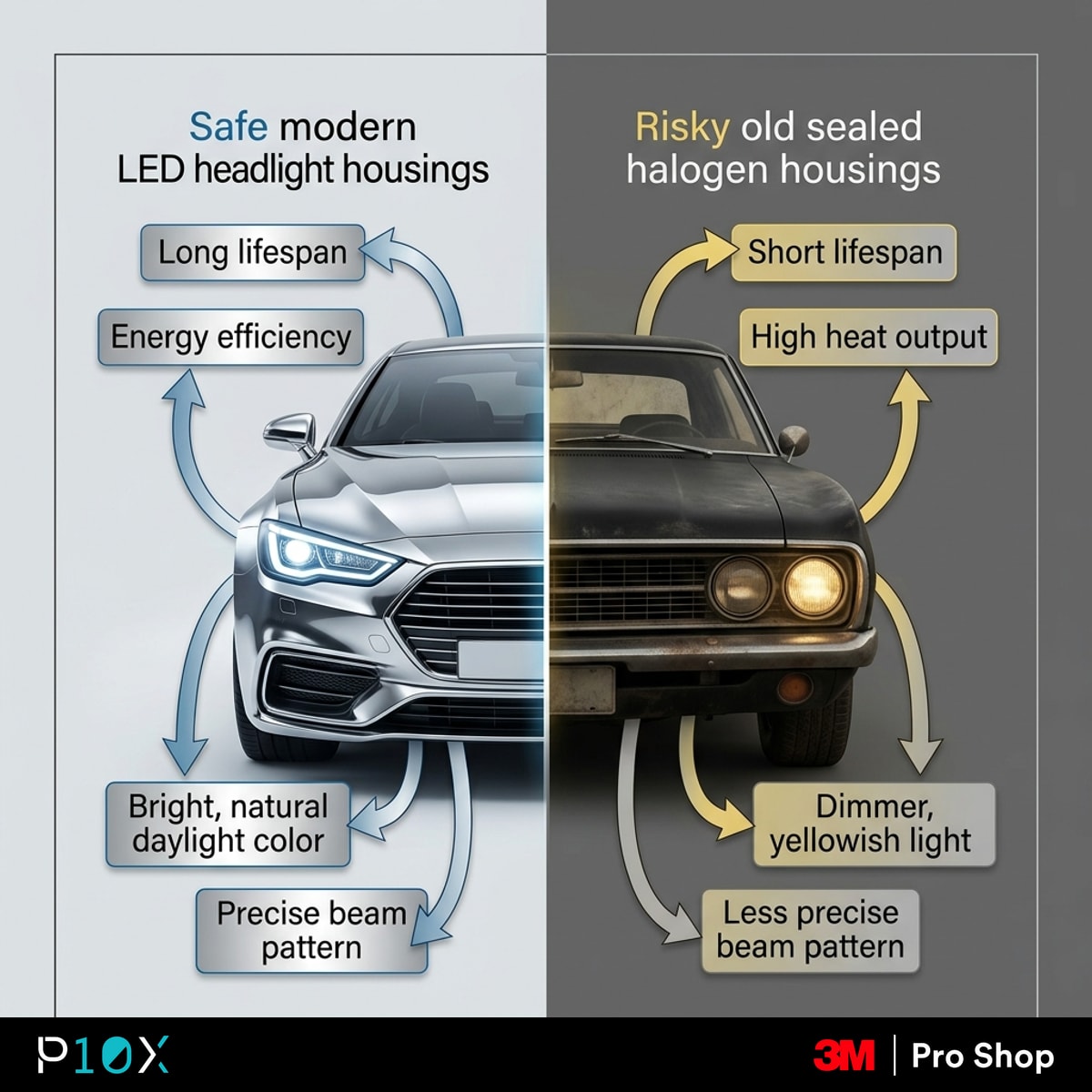
Headlight PPF is the correct choice for the majority of cars on Malaysian roads today, because almost every new model since 2018 ships with LED or matrix units that run cool enough for safe film application.
Modern LED Headlamps With External Drivers
LED headlamps on Honda Civic, Toyota Camry, Mazda CX-5, Proton X50, BYD Atto 3, and Tesla Model 3 sit far below the heat threshold that worries forum users. The driver electronics live outside the housing, so the lens itself stays cool.
Projector Beams With Ventilated Housings
Projector units on most post-2015 Japanese and Korean cars have rear vents that cycle heat out. PPF over a vented projector housing carries effectively no cracking risk when the film is genuine 3M TPU.
Newer Xenon HIDs With Reflector Cooling
Factory Xenon HIDs on premium German cars from 2016 onwards are designed with reflector cooling channels. They run hotter than LED but stay within safe PPF range when installed by a 3M Authorized Dealer.
EV Matrix and Adaptive LED Units
EV LED matrix headlamps on Tesla Model Y, BYD Sealion 7, MG S5 EV, and Perodua QV-E are the strongest case for PPF. Replacement units carry adaptive driving beam control modules that push replacement costs past RM8,000. For model-specific notes, see 3M PPF for the MG S5 EV and our guide on protecting the Perodua QV-E.
When Headlight PPF Is the Wrong Answer (Skip or Restore First)
There are real cases where headlight PPF is the wrong purchase, and you will lose money if you go ahead anyway. The honest list is short but specific.
Old Sealed Halogen Without Ventilation
On older sedans with sealed halogen housings, especially those that have done seven or more years on Malaysian roads, the lens is usually already brittle. Wrapping it with PPF can trap residual heat and accelerate hairline cracks.
Aftermarket High-Wattage HID Bulbs
If you have swapped to non-OEM high-wattage HID bulbs, the housing runs hotter than what 3M designed PPF for. Either return to OEM bulbs first, or skip PPF and use a 2K clearcoat instead.
Already Cracked or Hazed Lenses
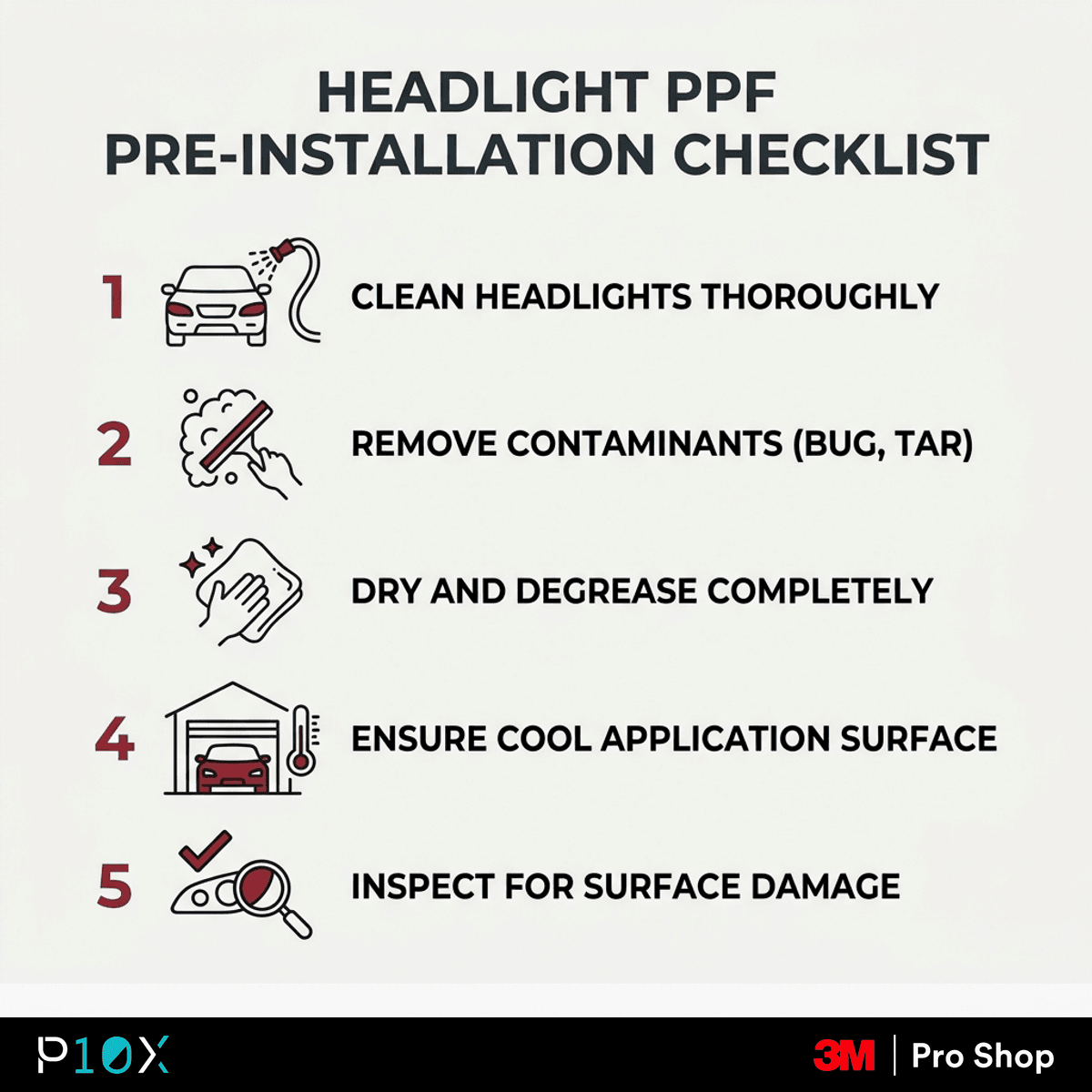
PPF is clear. It does not hide existing yellowing or cracks, it preserves what is under it. If your lens is already foggy, restore first and then decide whether to PPF. For DIY film already on the lens, our safe PPF removal and redo guide covers what to do.
DIY Films With No UV Top Layer
Generic PPF rolls sold on Shopee or Instagram carry no UV inhibitor layer. Within twelve months, the film itself yellows and the polycarbonate underneath continues to break down. You end up paying twice. The chemistry of why PPF itself can yellow is worth a quick read before buying.
3M Headlight PPF Options: Series 150, 100, 50 Compared for Headlamps
3M sells three TPU films in Malaysia that are suitable for headlamp use. Each carries the same UV inhibitor top coat, self-healing finish, and TPU body, but they differ in thickness, hydrophobic finish quality, and warranty.
| Spec | 3M PPF Series 150 Gloss | 3M PPF Series 100 Gloss | 3M PPF Series 50 Gloss |
|---|---|---|---|
| Thickness | Approx. 8 mil (203 micron) | Approx. 7.5 mil (190 micron) | Approx. 7.3 mil (185 micron) |
| Self-healing | Yes, premium | Yes | Yes, basic |
| Hydrophobic finish | Strongest, lower orange peel | Balanced | Standard |
| Warranty range | Up to 5 years, 3M-backed | Around 3 years, 3M-backed | Around 3 years against yellowing, bubbling, cracking |
| Ala-carte price per pair, medium vehicle | Upper end of RM500 to RM600 | Mid RM500 range | Around RM500 entry |
For Tesla, BYD, MG S5 EV, and luxury cars with adaptive LED matrix units, Series 150 makes sense for the longer warranty and stronger hydrophobic finish. For most Proton, Perodua, Toyota and Honda LED headlamps, Series 100 is the practical balance of price and performance. Series 50 covers daily drivers on a tighter budget. The full multi-panel breakdown is in our compare 3M PPF Series 150, 100 and 50 article.
Headlight PPF Cost in Malaysia: What RM128, RM400 and RM600 Actually Buy You
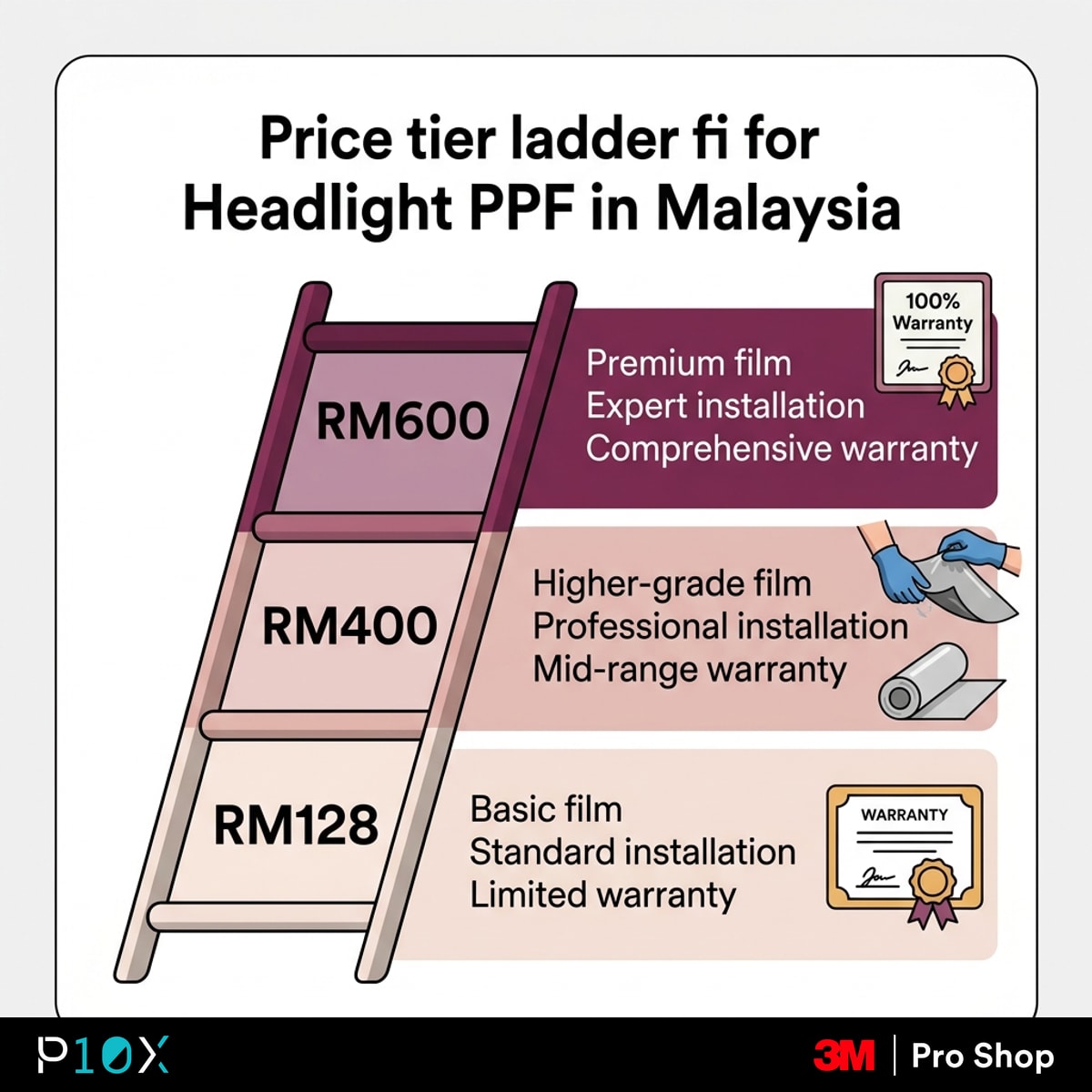
Headlight PPF pricing in Malaysia has three honest tiers, and the gap between them is real.
The RM128 to RM200 tier on Shopee and Instagram pop-ups is generic vinyl or low-grade PPF with no UV inhibitor, often installed without proper housing prep. Expect the film itself to yellow within a year, and expect zero coverage when the lens cracks.
The RM300 to RM400 tier at independent workshops uses mid-grade TPU and trained but uncertified installers. The film usually holds for two to three years, but warranty coverage depends on the workshop staying in business.
The RM500 to RM600 tier at a 3M Authorized Dealer such as 3M Pro Shop by P10X uses genuine 3M Series 50, 100 or 150 TPU, clean-room installation, factory edge tucks, and a 3M-backed warranty. For a medium vehicle, this is the band for a properly installed pair.
Frame this against the alternative. An OEM headlamp replacement on a Tesla Model 3, BYD Sealion 7, or MG S5 EV starts around RM6,000 and runs past RM12,000 with adaptive matrix modules. Even on a Proton X50 or Honda Civic, a full LED unit costs RM2,000 or more per side. Headlight PPF at RM500 to RM600 is between one and ten percent of replacement cost. Some Malaysian comprehensive policies will even claim PPF replacement after an accident, which softens the outlay further.
Headlight PPF vs Alternatives: 2K Clearcoat, Coating, Restoration
Owners often ask whether headlight PPF is overkill compared to a 2K clearcoat, a ceramic coating, or a one-off restoration. The honest answer depends on lens condition and how long you plan to keep the car.
| Solution | Longevity | Cost per pair | Reversible | Best for |
|---|---|---|---|---|
| 3M headlight PPF | 3 to 5 years | RM500 to RM600 | Yes, peels off cleanly | Modern LED, EV matrix, daily highway drivers |
| 2K clearcoat | 2 to 3 years | RM400 to RM700 | No, must be sanded off | Mildly hazed older lenses, halogen housings |
| Ceramic coating only | 6 to 12 months | RM150 to RM300 | Wears off naturally | Already protected lenses, light maintenance layer |
| Polish restoration | 6 to 18 months | RM200 to RM800 | One-time process | Bringing back a hazed lens before PPF or replacement |
For most modern cars, the order is simple. Restore first if the lens is hazed, then apply PPF, and use a ceramic coating only as a top-up maintenance step. A coating alone cannot stop stone chips or UV penetration the way PPF can, which we explain in self-healing PPF vs coating alone.
Common Mistakes Malaysian Owners Make With Headlight PPF
Mistake 1: Wrapping Over an Already Yellowed Lens
PPF is clear and preserves what is under it. A yellow lens stays yellow under the film. Restore the lens first, then PPF.
Mistake 2: Choosing the Cheapest RM128 Roll
Budget rolls skip the UV inhibitor and use thinner TPU or vinyl. The film yellows within a year, and the polycarbonate underneath continues to oxidise. You pay twice.
Mistake 3: Skipping the 72-Hour No-Wash Rule
The adhesive cures over three days. Washing the car in the first 72 hours, especially with a high-pressure jet near the edges, lifts the film. Our PPF aftercare in Malaysia guide covers the full cure-time routine.
Mistake 4: Letting a Non-Authorized Installer Use Heat Guns Too Long
Excess heat during install softens the polycarbonate. A 3M Authorized Dealer follows a temperature and time budget. Untrained installers often hold the heat gun in one spot until the film conforms, which is the most common cause of crazing reports on the forums.
How to Choose a 3M Authorized Dealer for Headlight PPF in Klang Valley
A real 3M Authorized Dealer has three traits you can verify in five minutes. The dealer is listed on 3M Malaysia's official website. The installer can show 3M certification documents and the batch code on the film roll. The shop offers a clean-room or dust-controlled bay, not an open carpark install.
3M Pro Shop by P10X operates three certified outlets in Klang Valley. Taman Equine in Seri Kembangan was Malaysia's first 3M Pro Shop, opened in 2024. Kepong and Bandar Sunway followed in 2025. All three carry genuine 3M Series 50, 100 and 150 PPF, install in a clean-room bay, and register your warranty under 3M's national system. You can compare outlets at 3mproshop.com.my/locations or read our deeper take on why a certified 3M Pro Shop installer matters before booking with any shop.
A 3M Authorized Dealer such as 3M Pro Shop by P10X is the practical default for headlight PPF because the cost gap to a non-authorized installer is small but the warranty and install-quality gap is large.
How to Decide on Headlight PPF for Your Car
Headlight PPF is the right answer for almost every car built in the last six years, and the wrong answer for a small list of older halogen setups. The deciding factors are bulb type, the age of the housing, and the installer. If your car has LED or matrix headlamps and you drive on Klang Valley highways or park in open rooftop lots, RM500 to RM600 for a 3M-backed pair is one of the highest-leverage paint protection decisions you can make.
If the lens is already hazed, restore first and then revisit the PPF decision once the polycarbonate is clean and stable. If you are unsure which series fits your headlamp and driving pattern, take the car to a 3M Authorized Dealer for a quick lens inspection, then compare Series 50, 100 and 150 against your usage and budget.
Find out the best protection for your car
Visit a 3M Pro Shop and discover the cost-effective 3M Protective Film and Window Tint
FAQ
Is headlight PPF worth it?
For any car with LED or matrix headlamps, yes. The film costs one to ten percent of a replacement headlamp unit and pays back the first time a stone chip would have hit the lens. For older sealed halogen housings, restoration is the better first step.
Does headlight PPF prevent yellowing?
Yes, when the film carries a genuine UV inhibitor top coat. 3M Series 50, 100 and 150 are all warranted against yellowing. Generic rolls without a UV layer do not prevent yellowing, and they often yellow themselves within twelve months.
How long does PPF last on headlights in Malaysia?
Three to five years on properly installed genuine 3M film, depending on the series and how the car is parked. Garaged or shaded cars sit at the longer end of that range. Always-outdoor cars on rooftop carparks sit at the shorter end.
Can headlight PPF cause cracking or crazing?
Only when cheap film is applied to an older sealed halogen or aftermarket high-wattage HID housing. Genuine 3M TPU on a modern LED or projector housing carries effectively no cracking risk when installed by a 3M Authorized Dealer with proper edge tucks.
How much does headlight PPF cost in Malaysia?
Roughly RM500 to RM600 per pair for a medium vehicle at a 3M Authorized Dealer, depending on series. Confirm exact pricing with the installer because vehicle size and headlamp shape change the final quote.
Can I install headlight PPF myself?
Not recommended. Dust contamination, incorrect edge tucks, and heat-gun mistakes cause peeling and crazing. The cost of a redo plus a restoration usually exceeds what a professional install would have cost.
Does headlight PPF affect JPJ or PUSPAKOM inspection?
Clear headlight PPF is transparent and does not change visible light transmission. It is not flagged in routine inspection, and beam pattern stays within the original housing spec.
Can I PPF already-yellowed headlights?
No. Restore the lens first. PPF preserves the surface under it and will lock in the haze if applied over yellowed polycarbonate.

Fabian
He is passionate about revolutionizing the car protection services industry by bringing innovation and transparency to a traditionally opaque and often misunderstood field. His mission is to educate end users on the true benefits and importance of car protection, aiming to replace outdated practices with honest, customer-focused solutions. With a fresh approach to car tinting, paint protection film (PPF), and detailing services, he is committed to delivering a superior customer experience that sets a new standard in the market. He welcomes discussions about the future of the automotive industry and is eager to connect with like-minded professionals who share his vision for innovation, integrity, and excellence.

Experience the future of window tinting
Visit a 3M Pro Shop and discover the revolutionary Crystalline CR BLK film