
How Long Does PPF Take to Cure, and When Can You Wash the Car?
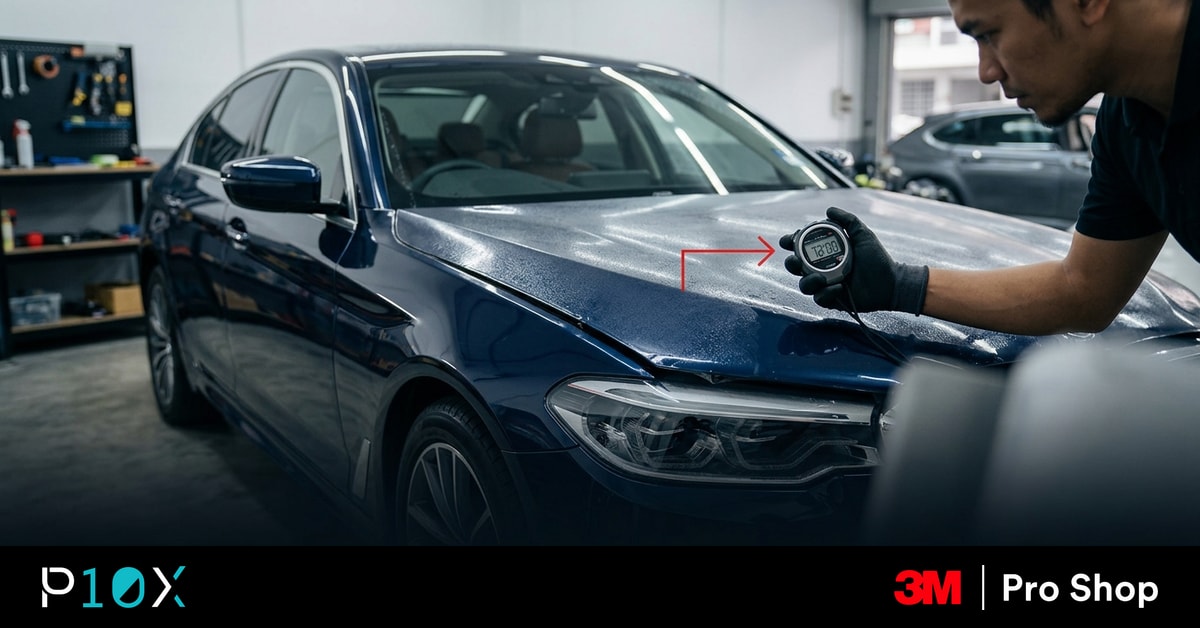
- Wait at least 72 hours after 3M PPF installation before washing the car.
- After 72 hours, a gentle hand wash is preferred. Choose touchless if a commercial wash is unavoidable.
- Keep brushes, towels, and water pressure away from film edges.
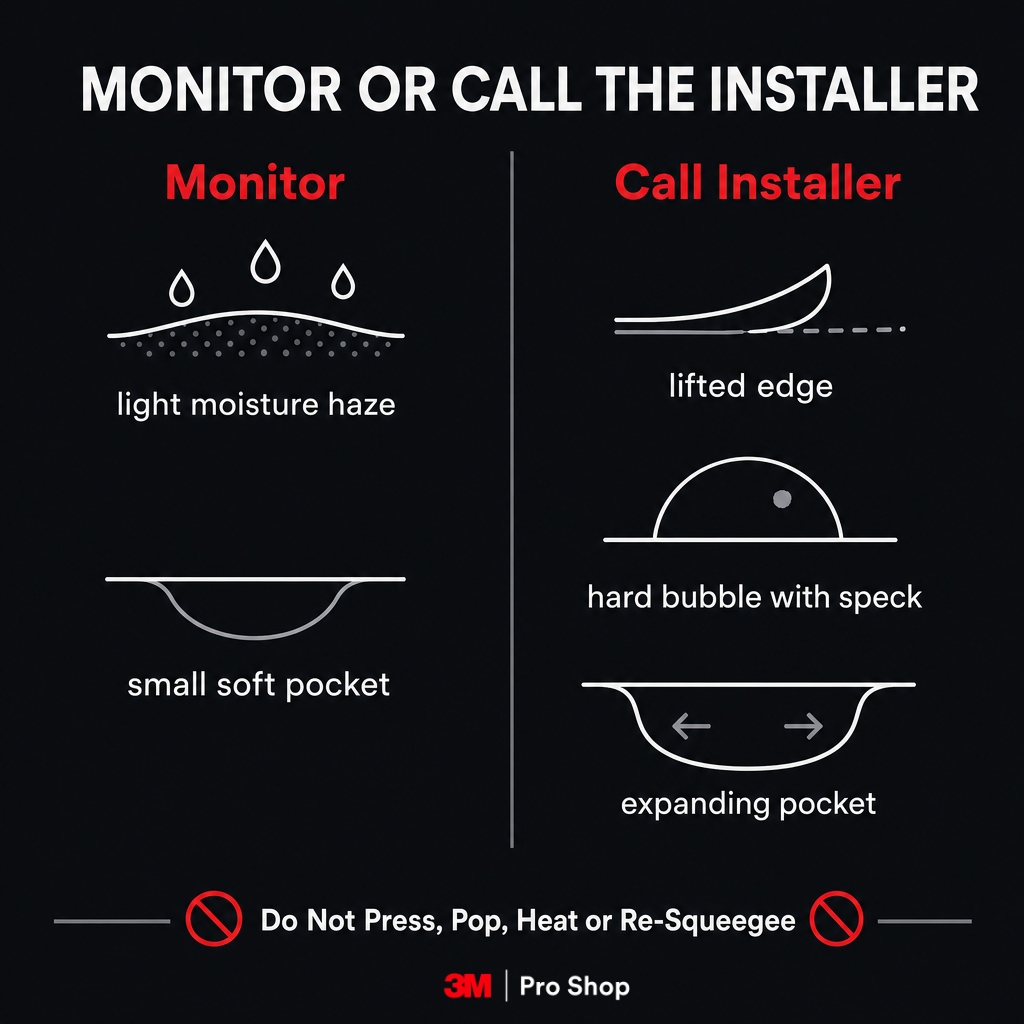
- Light moisture haze can settle over time, but lifting edges and hard debris bubbles need installer review.
- Rain during the first 72 hours does not automatically ruin the installation. Avoid wiping and inspect the film calmly.
PPF curing time matters because a newly installed film still needs a quiet settling period before it faces washing pressure, brushes, or wiping. For 3M Paint Protection Film, wait at least 72 hours after installation before washing. After that, hand washing is preferred. If a commercial wash is unavoidable, choose touchless and keep water pressure away from film edges.
This minimum no-wash period is not the same as the time needed for every trace of moisture haze to disappear. Malaysian humidity, covered carparks, panel shape, and installation conditions can affect visible settling. This guide explains the two timelines, the safest first wash, and the signs that deserve a professional check. For broader ownership guidance, keep the complete 3M PPF aftercare guide and these PPF care mistakes to avoid handy.
What Does Fresh PPF Curing Mean?
Fresh PPF curing means the film is already protecting the paint, while its pressure-sensitive adhesive and remaining installation moisture continue settling against the panel. The useful milestones are the initial no-touch period, the minimum safe-to-wash time, and later visual stabilisation. They are related, but they are not one universal finish time.
Initial Bond: Film Holds Position
PPF is commonly installed using a slip solution that helps the technician position the film accurately. The solution is worked out as the film is squeegeed onto the paint, allowing the adhesive to contact the panel. Fresh edges and complex curves still deserve extra care while that contact stabilises.
Avoid testing an edge with a fingernail or rubbing a small pocket to see whether it moves. If you want a full routine beyond the first wash, use this guide on how to maintain PPF on your car in Malaysia rather than improvising with household cleaners.
Visual Settling: Moisture Gradually Clears
Small moisture pockets or a light haze can remain visible after installation. Their appearance may change as moisture leaves the film and adhesive contact improves. That visual change can continue after the 72-hour minimum, so safe-to-wash time and fully settled appearance should not be treated as the same milestone.
Do not expect Malaysian heat to complete this process instantly. A shaded carpark can be warm yet humid, while wrapped corners and deep curves may behave differently from a flat bonnet. Follow the installer’s inspection advice rather than applying a generic seven-day or fourteen-day rule from another film brand.
Owner forums carry conflicting advice on this point, with three days, seven days and even a fortnight all presented as fact. Those posts explain why the confusion exists, but 3M care guidance remains the technical authority for the film on your car.
When Can You Wash Fresh PPF Safely?
3M instructs owners to wait at least 72 hours after installation before washing fresh PPF. Once 72 hours have passed, use a gentle hand wash where practical. If you depend on a commercial wash, choose touchless. Wait longer and contact the installer if an edge is already lifting or another installation issue is visible.
| Timeline | What to do | What to avoid |
|---|---|---|
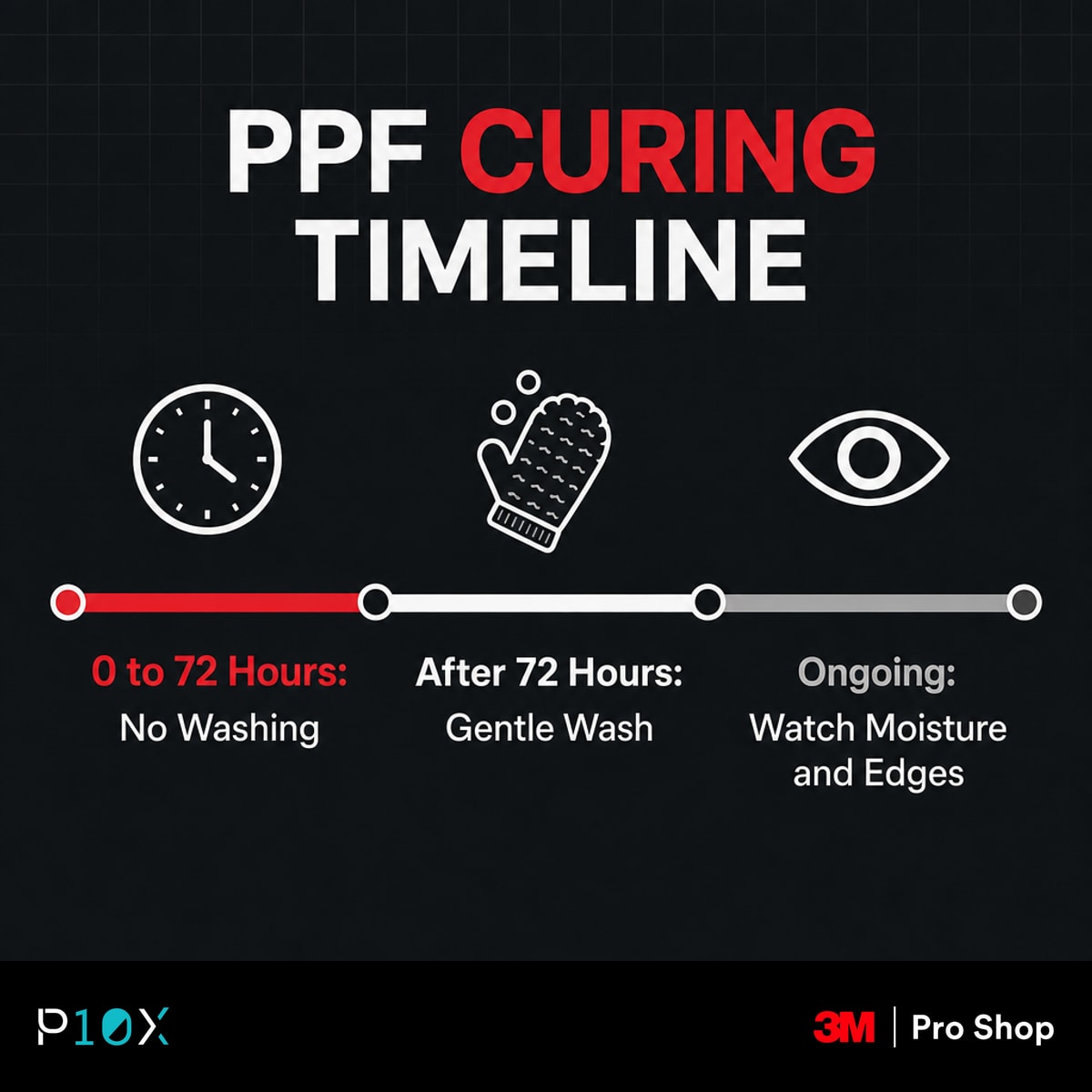
| 0 to 72 hours | Leave film undisturbed and spot-treat urgent contamination only as directed | Full washing, wiping, brushes, and pressure |
| After 72 hours | Inspect edges, then hand wash gently or choose touchless | Brush tunnels and edge-directed jets |
| Ongoing settling | Monitor haze and photograph changes | Pressing pockets or guessing a universal cure date |
First 72 Hours: No Washing
Do not perform a full wash during this window. Skip the hose, pressure washer, wash mitt, towel drying, brush tunnel, and waterless wash. Even gentle wiping adds friction at a time when edges and installation moisture should be left undisturbed.
If urgent contamination lands on the film, do not rub it dry. Organic fallout, sap, and fuel require prompt but careful attention. Use the installer’s care advice and 3M guidance for spot treatment. For sap, hot soapy water can soften the contaminant before a gentle rinse and dry, with no abrasive tools and no pressure at the film edge.
After 72 Hours: Gentle Washing
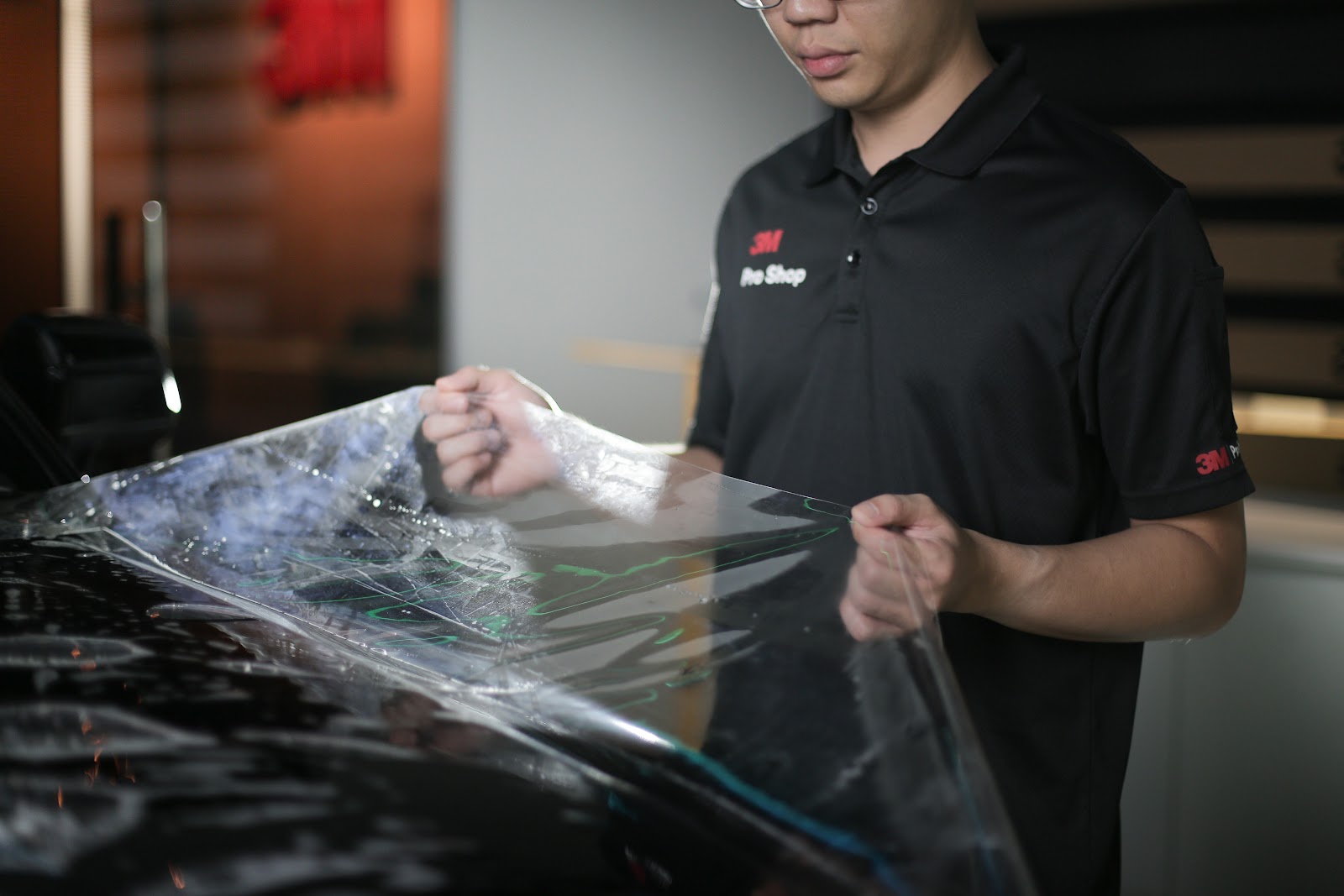
After the minimum waiting period, inspect the film before getting it wet. Look along the bonnet, bumper, mirrors, door edges, and wrapped corners. If everything lies flat, proceed on a cool surface using low pressure, pH-neutral automotive shampoo, and a clean microfiber mitt.
Hand washing gives you the most control. Condo residents who cannot wash at home can choose a reputable hand wash or touchless bay. The guide to washing a PPF car safely in a condo explains how to brief the operator and avoid risky equipment.
Later Settling: Follow Installer Advice
Visible moisture may continue clearing after washing becomes acceptable. The pace varies with humidity, residual moisture, panel shape, parking, and the installation itself. There is no useful universal deadline for every pocket to disappear.
Photograph anything that concerns you in consistent lighting. A dated photo helps the installer compare changes without you pressing the area. If a pocket expands, an edge rises, or a hard speck remains at the centre of a bubble, arrange an inspection before the next wash. Use this guide to professional PPF maintenance in Malaysia to prepare clear notes for the installer.
Why Can Early Washing Lift Film Edges?
Early washing can disturb vulnerable film edges through brush agitation, wiping friction, or water driven toward a seam. A jet that reaches beneath an edge may contribute to lifting. Pressing or puncturing moisture pockets can also damage the film. One accidental rain shower, however, does not automatically mean the PPF installation has failed.
Risk 1: Brush Agitation
Automatic brush washes and hand brushes repeatedly drag across the surface. Besides the risk of dulling or scratching the film, a brush can catch a corner or a raised edge. This is why hand washing is preferred and touchless is the safer commercial alternative when necessary.
Risk 2: Edge-Directed Pressure
A pressure washer is not automatically safe just because PPF protects paint. Avoid aiming a jet at film edges, seams, corners, or a suspicious pocket. Use a low-pressure rinse for routine washing and direct water across the panel rather than underneath an edge.
Risk 3: Bubble Tampering
Do not press, pop, needle, heat, re-squeegee, trim, or glue a bubble yourself. A soft moisture pocket may change as the film settles. A hard bubble with a visible speck may indicate trapped debris and needs installer review. DIY action can turn a minor concern into film or adhesive damage.
If an edge has already moved, do not wait for the next wash to deal with it. Keep the area clean, avoid water pressure, take clear photos in consistent light, and contact the installer while the lifted section is still small.
How Does Malaysian Weather Affect Fresh PPF?
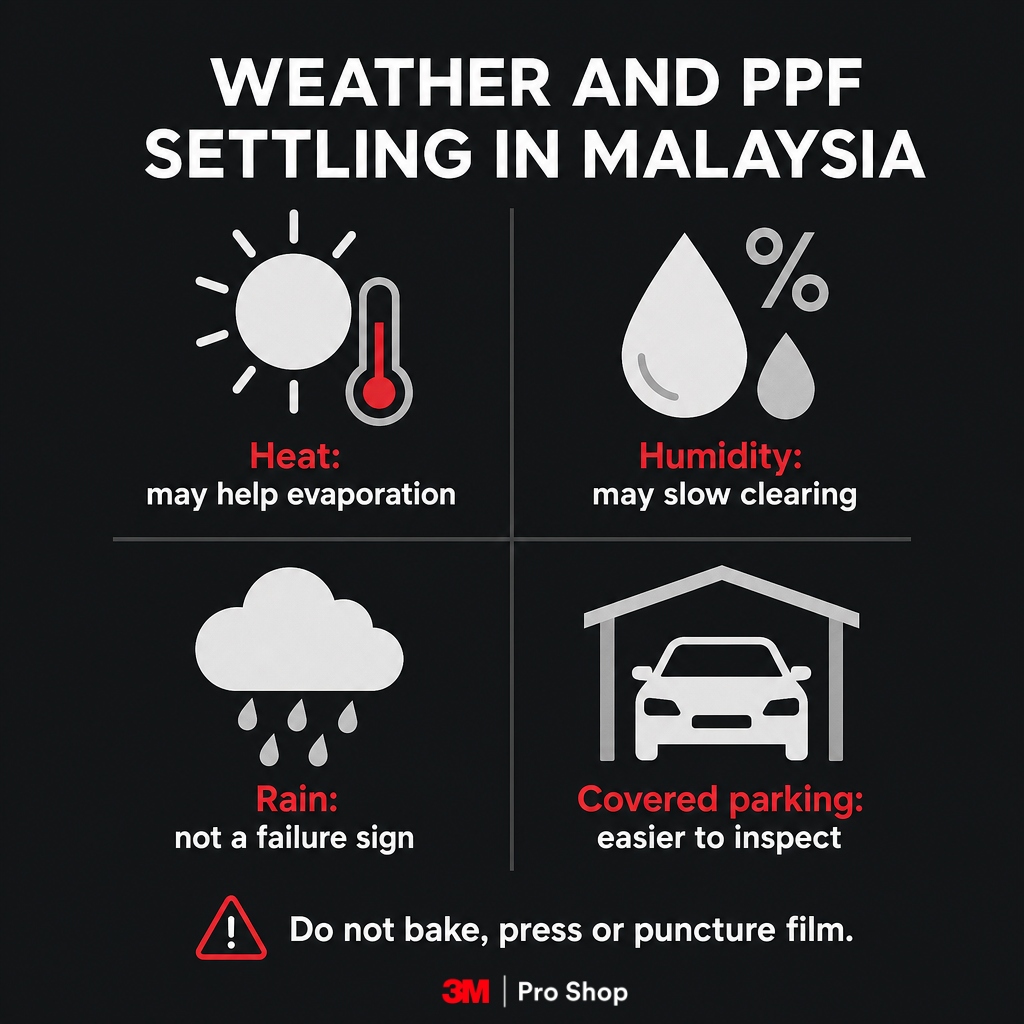
Malaysia’s warmth may support surface moisture evaporation, but high humidity, monsoon rain, covered carparks, and complex wrapped edges can make visual settling uneven. Heat does not guarantee instant curing. Park indoors or in shade where practical, avoid deliberate sun baking, and inspect the film before its first wash after wet weather.
How Heat Changes Settling
A warm panel and moving air can help moisture leave the installation, but more heat is not always better. Do not park specifically to bake the film in harsh midday sun, and do not use a heat gun. Prolonged UV and heat exposure are also reasons 3M recommends indoor or shaded storage where possible.
How Humidity Slows Evaporation
Klang Valley humidity can slow visible moisture clearing even when the day feels hot. A car in a basement condo carpark may dry differently from one in a ventilated covered bay. Judge the film by stable edges and installer guidance, not by the air temperature alone.
How Parking Conditions Matter
If rain falls within 72 hours, avoid wiping, scrubbing, or pressure washing. Park under cover if practical, let the exterior dry naturally, and inspect the edges in good light. Contact the installer if you see lifting. Normal rain exposure alone is not proof that water has reached beneath the film, although rain that dries on the panel can leave marks of its own, which is why water etching on PPF in Malaysia is worth understanding before your first wash.
Dust and haze can make a freshly protected car look dirty during the wait. Leave dry grit alone until washing is allowed. For organic fallout or sap, spot-treat only as directed rather than turning the response into a full wash.
How Should You Complete the First Wash?
Complete the first wash on a cool panel with a low-pressure rinse, pH-neutral automotive shampoo, a clean microfiber mitt, and gentle top-to-bottom passes. Keep separate tools for wheels. Rinse without driving water beneath film edges, dry without catching corners, then inspect the film again under good light before parking the car.
| Wash method | Suitability | Safer practice |
|---|---|---|
| Gentle hand wash | Preferred after 72 hours | Use pH-neutral shampoo and clean microfiber |
| Touchless wash | Acceptable when needed | Keep jets away from edges and suspicious areas |
| Brush automatic wash | Not recommended | Choose hand wash or touchless instead |
| Pressure at edges | Unsafe | Direct a gentle rinse across the panel |
Prepare pH-Neutral Wash Tools
Gather a clean microfiber wash mitt, pH-neutral car shampoo, drying towels, and separate wheel tools. Do not use abrasive pads, stiff brushes, harsh solvents, or a towel that has touched brake dust. Wash in shade and allow hot panels to cool first.
Rinse Away Loose Malaysian Grit
Use a gentle rinse to loosen road film, haze dust, and grit before touching the paint. Start at the roof and work down. Around film edges, direct the flow across the panel. Never hold a concentrated jet against a seam or wrapped corner.

Wash Gently From Top Down
Load the mitt with shampoo solution and use straight, light passes. Rinse the mitt often so trapped grit does not travel across the film. Leave wheels and lower dirty areas until later, using the separate tools prepared for them.
A touchless wash can be practical after 72 hours when condo facilities are limited. Inspect the bay first and brief the operator to avoid close, edge-directed pressure. Skip brush tunnels even when they are marketed as soft or premium.
Dry Without Catching Film Edges
Use a clean, soft microfiber towel and light contact. Pat or glide the towel in a direction that does not pull across an edge. Do not force water from a pocket. When the car is dry, walk around it and check edges, seams, and any area photographed before washing.
Confirm at least 72 hours have passed
Check that visible edges lie flat
Cool the panels and rinse loose grit
Use pH-neutral shampoo and clean microfiber
Keep wheel tools separate
Avoid brushes and edge-directed pressure
Dry gently and inspect again
What Fresh PPF Signs Need Attention?
Light moisture haze or small soft pockets can be part of visual settling and may improve as moisture clears. Persistent lifting edges, expanding pockets, or hard bubbles centred on debris need installer attention. Photograph the area and avoid DIY repair. Do not puncture, heat, press, trim, or re-squeegee fresh PPF yourself.
| Sign | Likely meaning | Best action |
|---|---|---|
| Light haze or soft moisture pocket | Residual moisture may still be clearing | Monitor without pressing and follow installer advice |
| Persistent lifted edge | Film is not lying flat at the boundary | Keep dry and arrange installer review |
| Hard bubble with a speck | Possible trapped debris | Photograph and show the installer |
| Expanding pocket | Condition is changing rather than settling | Pause washing and contact the installer |
Normal Sign: Temporary Moisture Haze
A light milky patch that changes gradually can be consistent with remaining installation moisture. Keep the surface clean, do not press it, and compare photos taken from the same angle. The installer can advise whether its progress matches the panel and installation conditions.
Warning Sign: Persistent Edge Lifting
An edge that stays raised or continues moving should be protected from brushes, towels, and water pressure. Do not add glue or trim it. Ask a 3M Authorized Dealer such as 3M Pro Shop by P10X to inspect the installation and advise the correct next step.
Warning Sign: Hard Debris Bubbles
A firm bubble with a visible dark or light speck is different from a soft moisture pocket. It may involve trapped debris rather than water alone. Avoid trying to flatten it. Photo documentation and professional inspection protect both the film and the paint beneath it.
The 3M PPF range sold in Malaysia includes Series 150 Gloss, Series 100 Gloss, and Series 50 Gloss. Series 150 is about 8 mil including film and adhesive, Series 100 is about 7.5 mil, and Series 50 uses a 185-micron protective film. Self-healing can reduce minor scratches with heat, but it cannot repair lifting edges, punctures, debris bubbles, adhesive damage, or paint.
Keep PPF Curing Time Simple and Safe
The practical rule is clear. Give fresh 3M PPF at least 72 hours without washing, then use a gentle hand wash or a carefully chosen touchless wash. Keep pressure, brushes, and towels away from edges. Treat changing bubbles or lifting as inspection issues, not DIY repair opportunities, even when the paint still looks protected.
Keep your handover notes and installer contact details with the vehicle records. Warranty terms differ by installed series and dealer documentation, so confirm the exact film rather than relying on a general promise. The 3M PPF maintenance and warranty guide can help you prepare the right questions for your dealer.
If you are unsure whether a mark is normal settling, take clear photos and speak to your nearest 3M Authorized Dealer before the next wash. That calm check is safer than testing an edge or following advice written for another film.
What Do Drivers Ask About Fresh PPF?
These are the questions Malaysian owners most often ask immediately after PPF installation. Each answer separates the firm 3M minimum from the variable settling period. Where the issue involves a changing bubble, lifted edge, or possible installation defect, keep the area undisturbed and let the authorised installer inspect it.
How long should I wait to wash my car after PPF?
Wait at least 72 hours after 3M PPF installation before washing. Once that period has passed, inspect the edges and use a gentle hand wash. Choose touchless if a commercial wash is necessary.
What happens if I wash my car too early after PPF?
Brush friction, wiping, and water pressure can disturb vulnerable edges or drive water toward a seam. Stop washing, let the car dry without rubbing, inspect the edges, and contact the installer if lifting appears.
Can PPF get wet after installation?
Rain does not automatically ruin fresh PPF. During the first 72 hours, avoid scrubbing, towel drying, and pressure washing. Park under cover if practical, let the water dry naturally, and inspect the film calmly.
Is it safe to use a pressure washer on PPF?
Use caution even after the waiting period. Do not aim concentrated pressure at film edges, seams, corners, lifted areas, or bubbles. A gentle rinse across the panel is the safer approach.
Are bubbles normal after PPF installation?
Some soft moisture pockets may improve as the installation settles. Hard bubbles with a visible speck, expanding pockets, or bubbles near a lifting edge need installer review. Do not press or puncture them.
Can I use an automatic car wash on PPF?
Hand washing is preferred. If a commercial wash is unavoidable, choose touchless. Avoid brush automatic washes because brushes may dull or scratch the film and can catch vulnerable edges.
How do I know if PPF is fully cured?
Do not rely on one universal cure day. The 72-hour rule is the minimum before washing, while visual settling can continue. Stable edges and installer assessment are more useful than guessing from temperature or time alone.
What should I do if a PPF edge starts lifting?
Keep water pressure, towels, and brushes away from the edge. Photograph it, stop DIY handling, and arrange an inspection. Do not trim, heat, glue, or press the film back down yourself.
Find out the best protection for your car
Visit a 3M Pro Shop and discover the cost-effective 3M Protective Film and Window Tint
Author

Kelvin Cheen
Kelvin is an Automotive Solutions Consultant and Branch Manager at 3M Pro Shop. With 4+ years of field experience in premium vehicle surface protection, Kelvin specializes in flagship 3M technologies, including 3M Crystalline Black optical film and Ceramic IR tints, 3M Paint Protection Film (PPF), etc. His focus is on delivering transparent, engineering-backed advice to car and EV owners, cutting through sales upsells to ensure customers choose the exact thermal rejection and paint protection tailored to their driving needs.
Experience the future of window tinting
Visit a 3M Pro Shop and discover the revolutionary Crystalline CR BLK film