✧ Key Takeaways
- Decide between no PPF, targeted coverage and wider coverage based on how your car is used, not on a sales package.
- Start with the areas passengers touch most, such as the rear bumper top and boot lip, plus the door handle areas.
- Add front panels if you drive a lot of highway or airport runs.
- Plan for time off the road and the 72-hour wait before the first wash.
- Get written permission first if the car is rented or owned by a fleet.
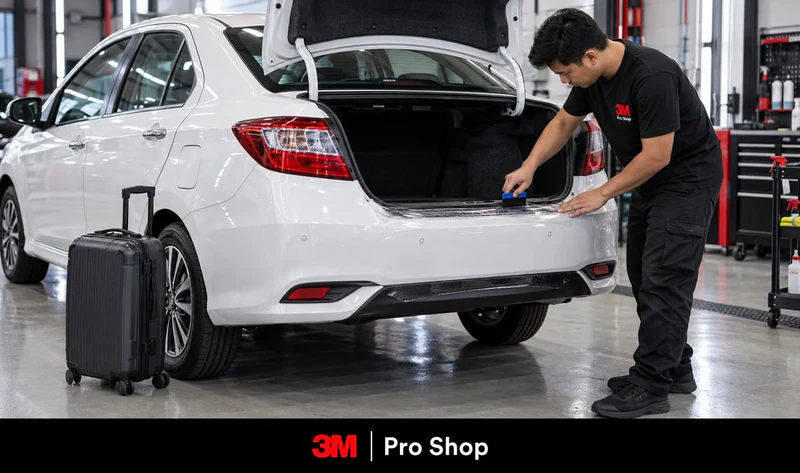
PPF for a Grab car is often worth it on the few spots passengers wear down fastest, such as the rear bumper top and boot lip where luggage gets dragged, rather than on the whole car. Your car carries strangers, their bags and their shopping many times a day, so the boot lip and door handles wear faster than on a car used only at weekends. If you also do KLIA runs, the front end collects more stone chips too. Paint protection film is a clear layer that takes the scuffs and chips instead of your paint.
How much film makes sense depends on how long you plan to keep the car, how much highway driving you do, and whether the car is yours. Since the cost of 3M PPF in Malaysia goes up with every panel you add, picking the right few panels matters more than covering the whole car.
Where a Grab car takes damage
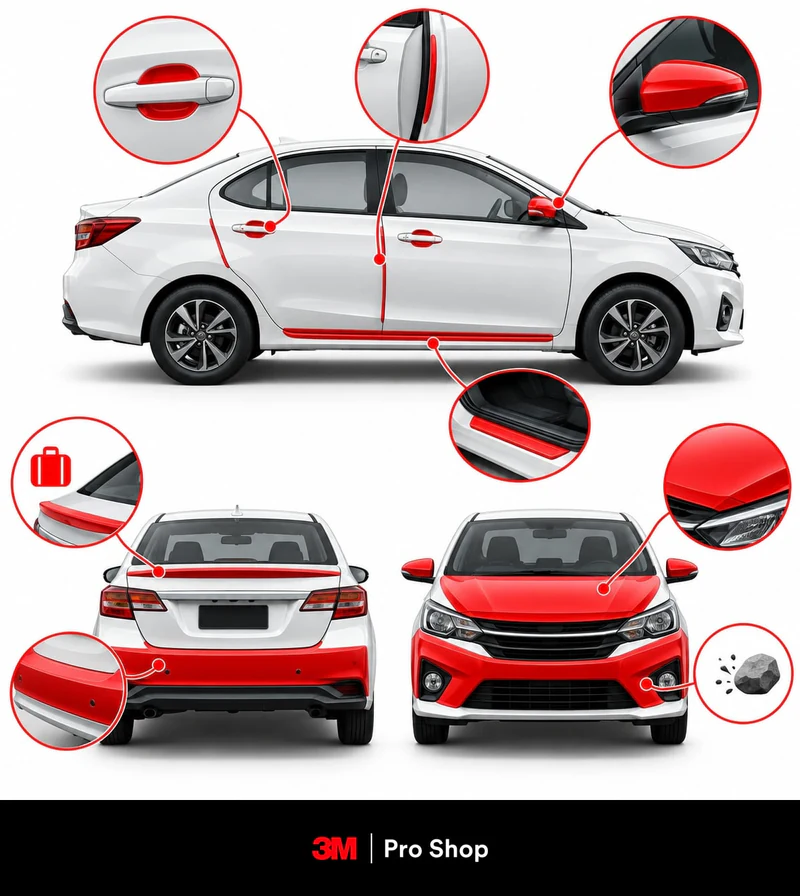
Luggage can scuff the rear bumper top and boot lip, while rings, nails and keys scratch around the door handles. Highway trips bring stone chips to the front bumper, bonnet and mirrors. Short city trips tend to leave more wear around the rear and doors.
On rideshare forums around the world, drivers keep mentioning the same few areas.
Rear bumper top and boot lip. Suitcase wheels, zips and buckles scrape the paint as passengers drag luggage, prams and shopping bags over the bumper. This is the most common complaint from rideshare drivers.
Door handle areas and door edges. Rings, nails and keys leave fine scratches around the door handles. Door edges can touch walls or pillars when passengers open doors in tight spots.
Front bumper, bonnet and mirrors. If you often drive on highways or do airport runs, stone chips are a reason to consider PPF on the front bumper, bonnet and mirrors.
Door steps and sills. Shoes and bags rub the lower door frame as passengers climb in and out.
Roof. Long hours parked outdoors between jobs expose the roof to strong sun, tree sap and road grime.
| Panel | Main risk on a Grab car | Usual priority | Coverage level |
| Rear bumper top and boot lip | Luggage and bags dragged over the edge | High | Targeted |
| Door handle areas | Nail, ring and key scratches | High | Targeted |
| Door steps and sills | Shoes and bags rubbing on entry | Medium to high | Targeted |
| Side mirrors | Chips and contact in tight parking | Medium | Targeted or wider |
| Door edges | Contact with walls and pillars | Medium | Targeted or wider |
| Front bumper | Stone chips on highways | High for highway drivers | Wider |
| Full bonnet | Chips and outdoor exposure | High for highway drivers | Wider |
| Fenders | Chips thrown from the front wheels | Medium | Wider |
| Roof | Long hours parked outdoors | Low to medium | Wider |
The quickest way to use this table is to compare it with the marks already on your car. If the boot lip is scuffed and the handles are scratched, the targeted rows matter most. If the bonnet is already chipped, the front-end rows matter too.
No PPF, targeted or wider coverage?
Most Grab drivers end up choosing between no PPF, film on just the spots passengers touch, or those spots plus the front end. If you plan to replace the car soon, you may not need PPF. If passengers often scrape the boot lip or scratch around the handles, covering those areas may be enough.
1. No PPF. You accept normal wear and fix paint when needed. It can suit short city trips with little luggage, and it means no time off the road. The trade-off is that scuffs and chips land directly on paint.
2. Targeted coverage. You protect only the areas that take the most contact. For many Grab drivers this means the rear bumper top and boot lip, the door handle areas, the door steps, and perhaps the side mirrors. This keeps the job smaller and the time off the road shorter.
3. Wider coverage. You add the front end, such as the full bonnet, front bumper and fenders, on top of the contact areas. It protects more paint from chips, but the job takes longer.
PPF handles the light scratches and scuffs from keys, nails and door dings that a Grab car collects around the handles and door edges, but it is not armour against heavy impacts.
Skipping PPF can mean paying for paint repairs later, especially on panels that often get scuffed. That does not mean every Grab car needs full coverage. You may prefer to accept wear on some panels while protecting the loading areas that passengers scrape most often. How long you plan to keep the car still matters here.
Choosing film for the front panels
For front-panel PPF, Pro Series 200 heals light swirl marks with heat, resists stains and has a top coat that makes water bead and roll off. Series 150 resists stains well and stays very clear over the paint. Series 50 is the basic gloss option. Picking a film series does not commit you to covering the whole car.
Pro Series 200 is about 8 mil thick, roughly 0.2 mm. Series 50 is a gloss film 185 microns (about 0.19 mm) thick for everyday protection.
For highway or airport work, the front bumper, bonnet and mirrors are worth discussing with your installer. For the film itself, you can ask how stain resistance and the finish differ between the three series, rather than choosing on thickness alone.
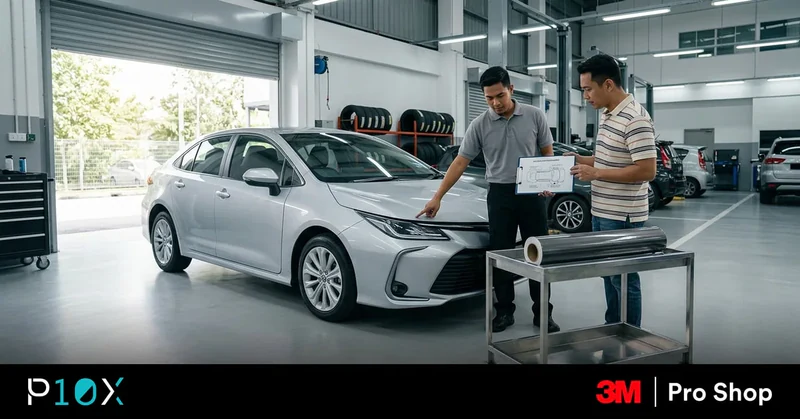
A useful quote names both the film and the panels. Otherwise, two proposals can look similar even though one covers the bonnet and bumper while the other only covers smaller contact areas. You can compare like for like by keeping the panel list the same while discussing the film options.
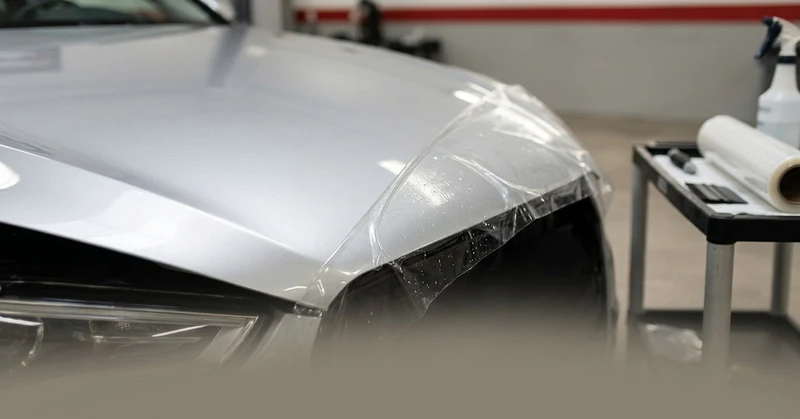
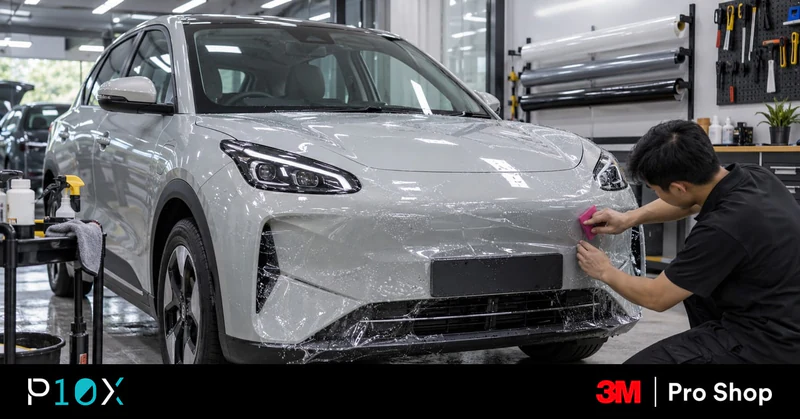
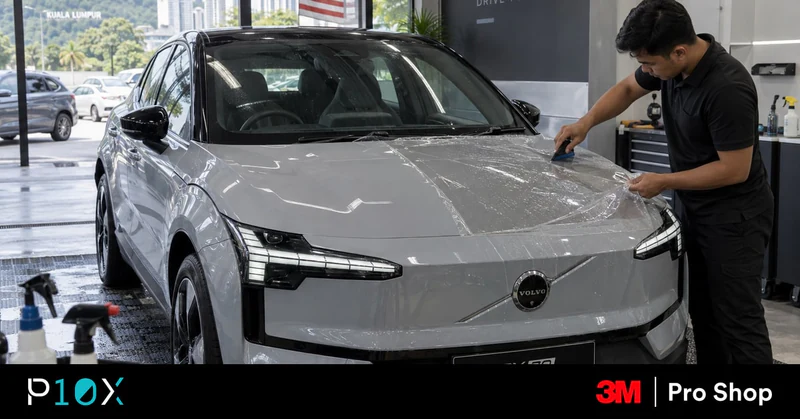
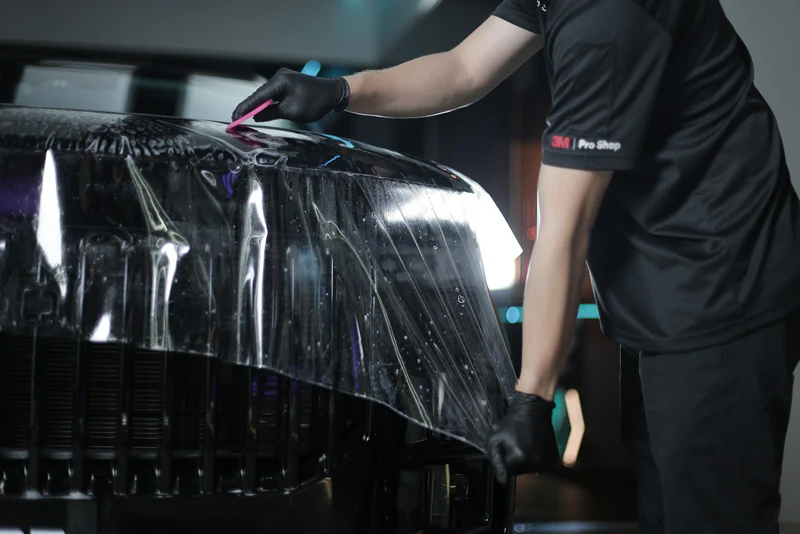
With wider coverage, the bonnet becomes part of the job, not just the handles and boot. On a large panel like this, the installer smooths the film across the surface with a squeegee.
Paint and film preparation before fitting
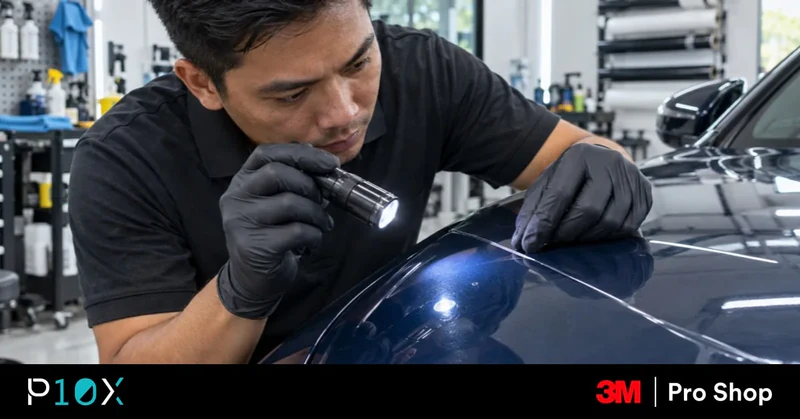
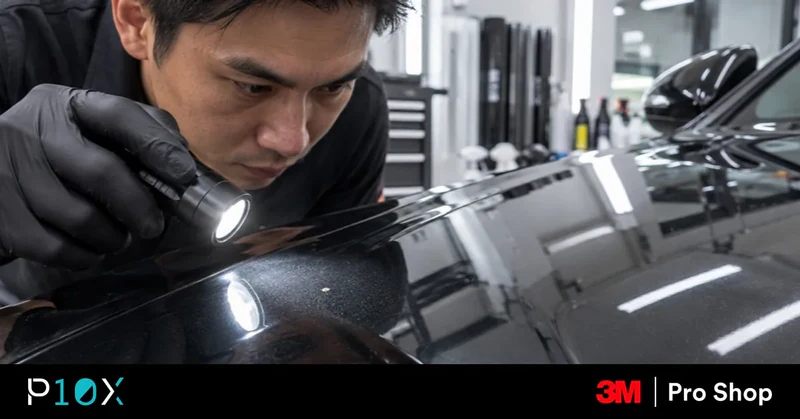
PPF needs suitable paint underneath it, so an existing ceramic coating or scratches are worth discussing before installation. 3M's installation guidelines say film should not go over a ceramic coating. Your installer also needs time to clean and inspect the paint before fitting the film.
Because of that rule, if your car already has a ceramic coating, an authorised paint correction specialist or detailer has to remove it first. After that, the installer cleans the paint with 3M General Purpose Adhesive Cleaner, wipes down with a non-ammonia glass cleaner, runs a clay bar over the panels, then does a final wipe and inspection. A car that has done months of highway and airport runs usually carries more road grime, so this step can take a little longer.
Showing your installer the scuffs you already have lets them see where your passengers load bags and how your doors get used. If the paint already has scratches, it is worth asking whether they should be polished out as part of the paint preparation before your PPF installation, because film will cover them but not remove them.
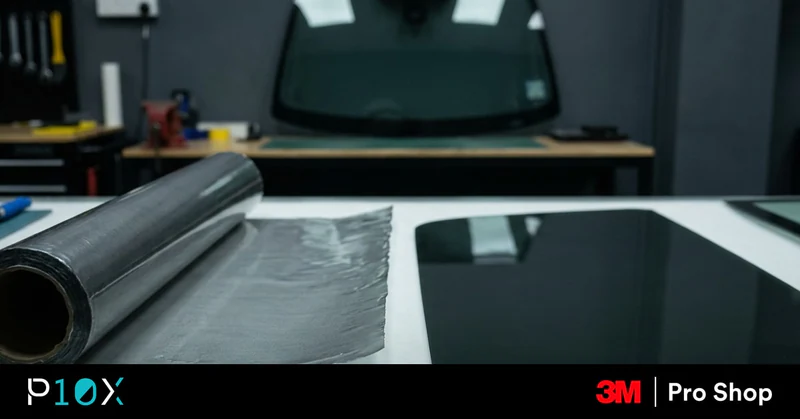
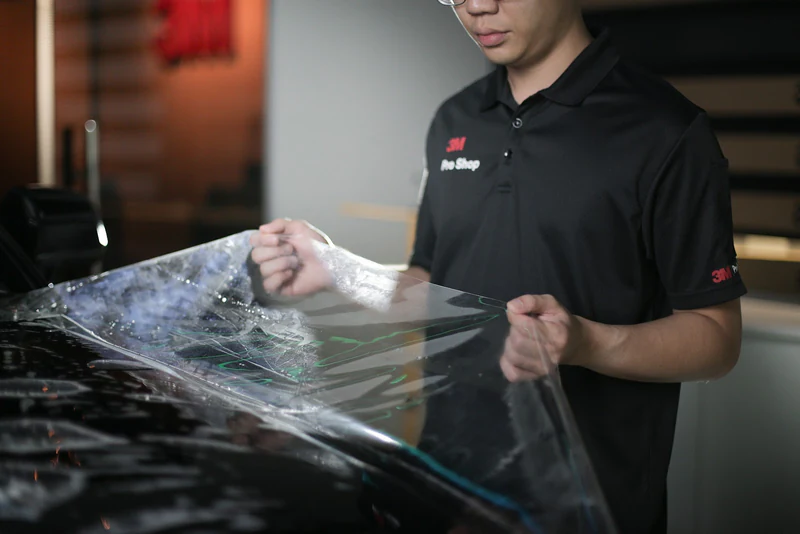
Before the film goes onto your car, the technician prepares the sheet of PPF. It is worth asking whether the time estimate covers this preparation as well as fitting the film to the panels.
Time off and the first wash
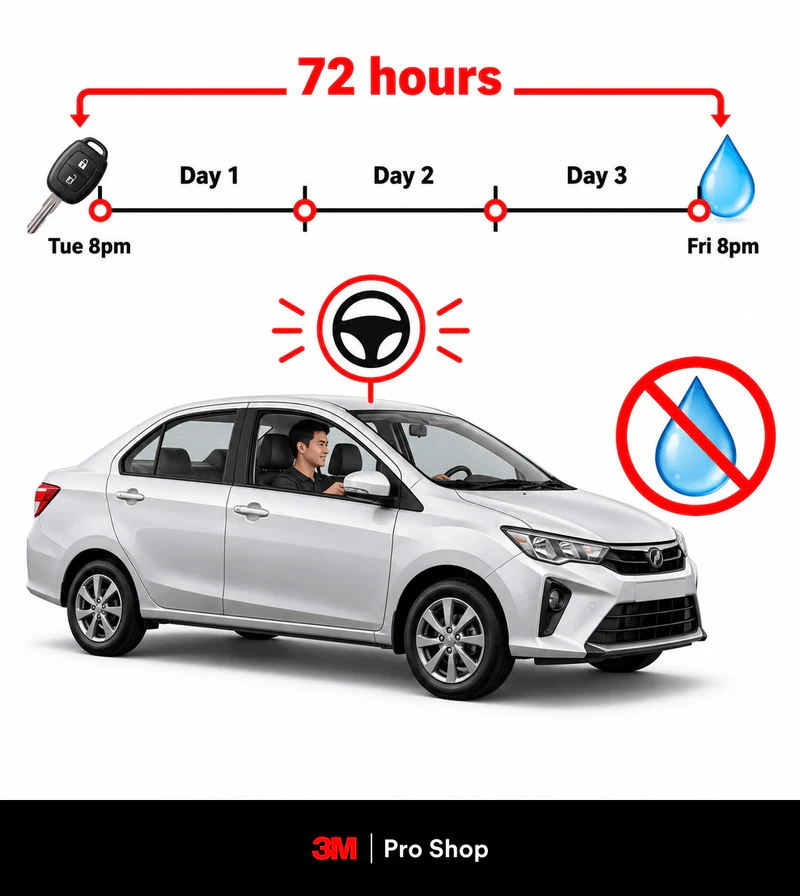
There are two waits to plan for: the installation itself and the time before the first wash. The time needed depends on how many panels you cover, the condition of the paint and the car model. After installation, 3M's care guidelines say to wait at least 72 hours before the first wash.
Installation time. Targeted coverage is a smaller job than wider coverage. It is worth asking your installer how long they need the car, so you can book it on a day you would normally rest.
The first 72 hours. 3M's care guidelines say to wait at least 72 hours before the first wash. You can usually drive straight away, but washing has to wait so the film can settle.
During those first days, it helps to ask passengers to load their bags carefully. Newly installed film edges are still settling, so it is best to avoid heavy scraping on them for now.
Say you collect the car on Tuesday at 8pm after a targeted install. 72 hours is 3 full days, so the earliest full wash is Friday at 8pm. You can still drive on Wednesday and Thursday. If the car gets dusty from those trips, it is better to leave it or ask your installer about gentle spot cleaning, and move your usual weekly wash to Saturday.
Caring for PPF between shifts
PPF on a Grab car lasts longer with gentle hand or touchless washes, prompt cleaning of tar and sap, and a quick look at the edges after each wash. Abrasive brushes can scratch the film. If an edge lifts or a mark will not wash off, an installer can inspect it.
- A hand wash or touchless wash with a pH-neutral shampoo (one that is neither acidic nor alkaline) is safest, ideally in the shade.
- Abrasive pads and brushes are best avoided, because they can scratch the film surface.
- Tar, tree sap and other road grime are best cleaned off quickly, as 3M recommends, because they can stain the film if left too long.
- It is worth checking the edges after each wash, especially on the rear bumper and door handles where bags and hands touch.
- A check-up is worth booking if an edge lifts or a mark does not wash off.
The same 3M guidelines also cover which products to use and avoid on the film. Strong alkaline, acidic or alcohol-based cleaners are best avoided, and so are waxes with dyes, abrasive polishes and rubbing compounds. Drying the car soon after rinsing helps prevent water spots, and a liquid wax can be used during drying if you have one. For extra protection, 3M's care guidelines suggest Perfect-It Show Car Paste Wax within 3 to 6 months on Pro Series 200 and Series 150, or within 3 months on Series 50. 3M Ceramic Coating and 3M Ceramic Boost Spray are the other options, applied on top of the film once it is fitted. Any other wax is worth testing on a hidden spot first.
On a hardworking e-hailing car, the film on the busiest spots will wear over time and may need replacing. That is normal, because the film is there to take the wear so the paint does not. Because film goes on panel by panel, it is worth asking whether a worn piece on the boot lip can be replaced on its own, without touching the doors or bonnet.
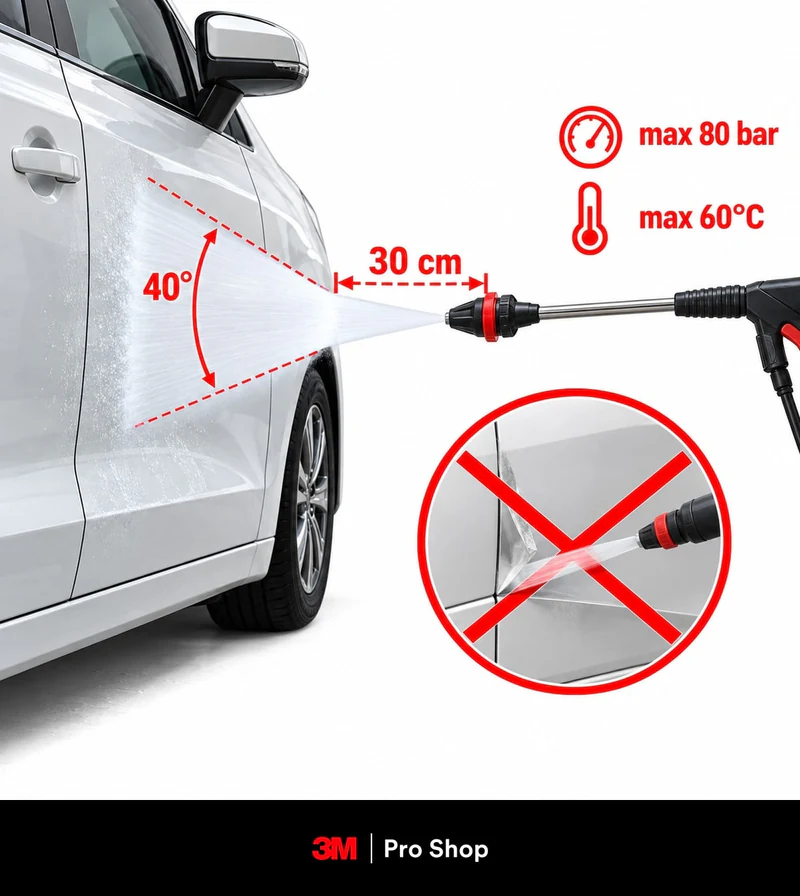
If you rinse the car with a pressure washer at a self-service bay between shifts, the film can take it when the wand is used the right way. 3M's guidelines call for a nozzle of at least 40 degrees with a tip guard, no more than 80 bar of pressure and water no hotter than 60°C. The tip should stay at least 30 cm from the car, pointed straight at the panel, and never aimed at a film edge from a shallow angle. On a Grab car, the edges along the boot lip and around the door handles are the ones to keep the spray off.
Booking PPF with an authorised dealer
Before booking PPF, you can discuss which panels suit your routes, how the film series differ and how long the installer needs your car. Edge finishing around the boot lip and handles matters too, along with what happens if an edge lifts or a panel needs repairs later.
- Which panels do you suggest for my routes, and why? A clear answer should link each panel to how you drive, not to a fixed package.
- Which film series fits a working car? It is worth asking how Pro Series 200, Series 150 and Series 50 differ for your use, and what changes if you choose one over another.
- How long will you need the car? A written estimate helps you plan your days off.
- How will edges be finished on high-contact areas? The rear bumper top, boot lip and door handle areas take a lot of contact, so edge placement matters.
- What should I avoid in the first few days? A good installer will explain washing, loading bags and parking in direct sun.
- What happens if an edge lifts or a panel gets damaged later? It is better to know how inspections and panel replacement work before you need them.
You can discuss PPF coverage in person at our outlets in Taman Equine (Seri Kembangan), Kepong and Sunway. Alongside PPF, these authorised dealer outlets offer window tint, wrapping and ceramic coating. For a Grab car, though, the main things to talk through are which panels need film and how the job fits around your driving schedule.
PPF on a rented or fleet car
PPF on a rented Grab car needs the fleet or rental company's agreement before installation. Written permission should settle who pays, whether the film stays on when you return the car, and who handles removal. Many Grab drivers in Malaysia rent their cars from a fleet or rental partner.
- Written permission from the owner. The fleet or rental company owns the car and may have rules about modifications.
- Who pays and who owns the film. If the car is returned, the film goes with it unless removed.
- How removal will work. PPF can be removed by a professional using heat, usually with a steamer or heat gun. Peeling it off yourself can damage the paint.
- The paint condition at handover. Photos of the paint before installation help everyone agree on the starting point.
Handover is where all of this matters most. When a rented car goes back to the fleet, someone will look over the paint, and the rear bumper top and boot lip are where luggage scuffs tend to show. If film was fitted with permission, the scrapes from months of bags sit in the film rather than in the paint underneath. That only helps you if the fleet agreed to the film in the first place and you both know whether it stays on or comes off. A short written note that names the panels, the film series and who handles removal can save an argument later, when you and the fleet may remember the deal differently.
Deciding on PPF for your Grab car
PPF on a Grab car is worth thinking about panel by panel. If luggage scrapes and handle scratches are your main problem, targeted coverage may be enough. If you do a lot of highway and airport work, adding the front end protects the paint where chips land.
If you plan to replace the car soon, no PPF may be the sensible choice. The same thinking applies to any car. Whether PPF is worth the investment comes down to how long you keep the car and how hard you use it.
At 3M Pro Shop by P10X, we are happy to look at your car, your routes and your schedule at any of our 3M Authorized Dealer locations, and suggest only the coverage that makes sense.
Find out the best protection for your car
Visit a 3M Pro Shop and discover the cost-effective 3M Protective Film and Window Tint
Frequently Asked Questions
Do Grab drivers need PPF on their cars?
No. PPF is not a Grab requirement. It is an optional protection choice for drivers who want to reduce wear on their paint.
Will PPF affect a Grab car's Puspakom inspection?
PPF is a clear film over paint and is not something Puspakom checks for. It does not change the car's colour. If you are unsure about a specific inspection, the inspection centre can confirm.
Can I put PPF on a rented Grab car?
PPF can go on a rented Grab car only with written permission from the fleet or rental company that owns it. It is worth agreeing in writing who pays, who owns the film and how it will be removed if the car is returned.
Which panels should a Grab driver protect first?
For PPF on a Grab car, most drivers start with the rear bumper top and boot lip, the door handle areas and the door steps. Highway drivers often add the front bumper, bonnet and mirrors.
How long will a Grab car be off the road for PPF?
Time off the road for PPF installation depends on how many panels you cover and your Grab car's model. Your installer can estimate how long they need the car. After collection, you can usually drive but should wait at least 72 hours before washing.
Can PPF be removed from a Grab car later?
Yes. A professional can remove PPF from a Grab car using heat from a steamer or heat gun. Peeling it off yourself can damage the paint.