
Pre-Cut vs Hand-Cut PPF: Which Produces Better Coverage?
- Pre-cut PPF reduces blade exposure and improves repeatability, but the pattern may still be customised.
- Hand-cut PPF offers more freedom around unusual shapes, yet the result depends heavily on technician control.
- A hybrid workflow often gives Malaysian owners the best balance of paint safety, clean edges and practical coverage.
- Judge the installer by blade controls, edge strategy, sensor handling, inspection and rework terms, not the method label alone.
Pre-cut vs hand-cut PPF is not a simple contest between safe and unsafe installation. For Malaysian car owners, the better result comes from matching the cutting method to the panel, then checking how the installer controls blades, edges, sensors, disassembly and final inspection. This guide helps you compare those details before paying a deposit.
If this is your first protection-film quote, understand why certified PPF installation matters and which panels need PPF first. The method affects fit and finish, while film quality, preparation and workmanship determine whether the installation performs as intended.
What Separates Pre-Cut and Hand-Cut PPF?
Pre-cut PPF is shaped by a plotter, a computer-controlled cutting machine, using a vehicle pattern before the film reaches the car. Hand-cut PPF starts as oversized bulk film that a technician positions and trims. Neither label guarantees better coverage. The main differences are blade contact, pattern control, edge strategy, labour and adaptability.
Standard pre-cut kits follow stored panel templates. Customised pre-cut patterns can be enlarged or adjusted for accessible edges, which corrects the belief that every digital kit must leave a wide border. A bulk installation gives the technician more material to shape, but it also makes trimming skill and paint controls more important.
A hybrid workflow combines both. Standard panels may use modified plotter patterns, while an unusual bumper, aftermarket lip or difficult corner receives limited custom finishing. This panel-by-panel approach is often more useful than insisting on one method for the whole car.
Malaysian and international owner discussions show why buyers distrust simple labels. A local Lowyat discussion raises blade, disassembly and climate concerns, while a Reddit discussion on custom and pre-cut misconceptions questions visible edges and extended patterns. These are demand signals, not technical proof, but they identify the right questions to ask.
How Does Each PPF Cutting Method Work?
A pre-cut installation moves from pattern selection to plotter cutting, alignment and application. A hand-cut installation places oversized film, controls stretch, trims excess and finishes accessible edges. Professional shops may combine both methods by panel. In every workflow, paint preparation and a strong final inspection matter more than speed alone.
Step 1: Prepare and Inspect Paint
The technician should wash, decontaminate and inspect the paint under strong lighting. Existing chips, repaint, polish residue and damaged clear coat need to be recorded before film is fitted. Owners dealing with an earlier poor job should first learn how to inspect and safely redo bad PPF.
Step 2: Select or Modify Patterns
For pre-cut work, the shop should confirm the exact model year, trim, body kit and pattern version. A skilled operator can modify some digital patterns to extend edges where panel geometry allows. For hand-cut work, the technician plans material allowance, trimming zones and safe access before applying the sheet.
Step 3: Apply and Position Film
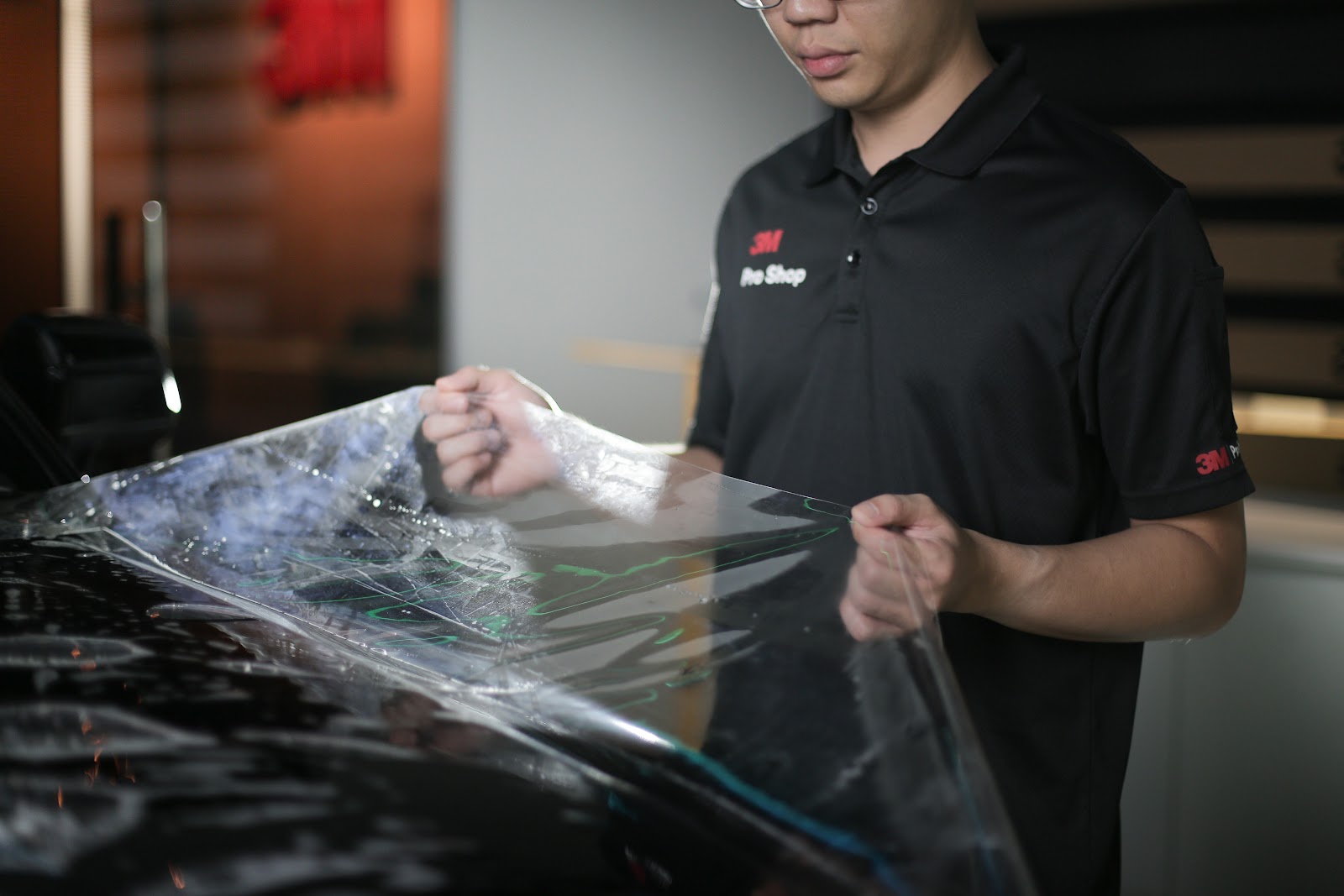
The film is positioned using installation solution and controlled tension. Excessive stretching can distort gloss, pull corners back or place stress on an edge. 3M Series 100 Gloss is designed with stretchability and installer-friendly handling. Series 150 Gloss adds strong clarity, flexibility, stain resistance and a hydrophobic finish.
Step 4: Finish Edges and Corners
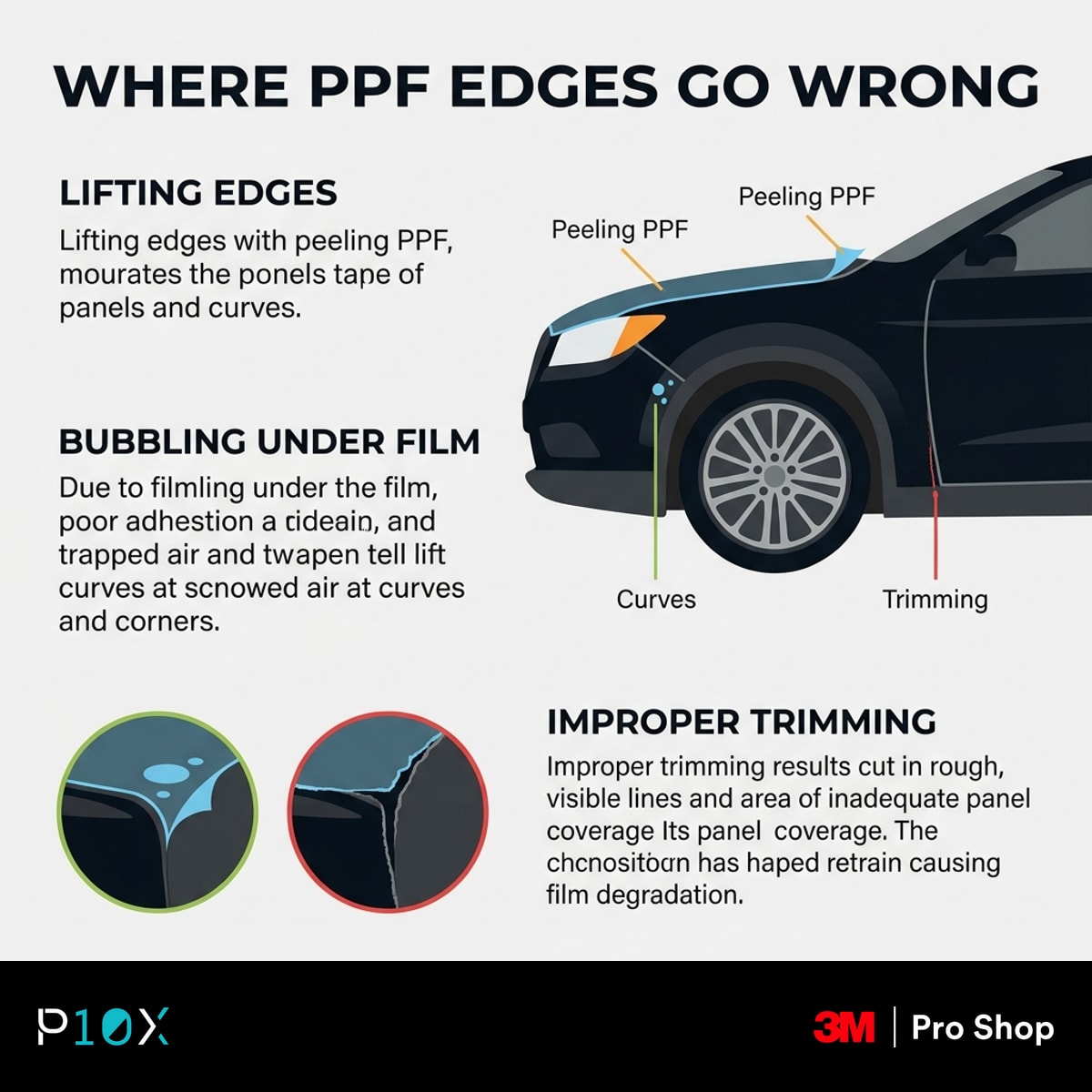
The installer wraps an edge only when there is enough access, a clean surface and suitable geometry. Some safe termination gaps are intentional because forcing film around a tight return can create tension and lifting. Ask whether finishing cuts happen on a protected surface and whether trim must be removed.
Step 5: Cure and Inspect Results
After application, the shop checks alignment, trapped contamination, bubbles, corners and edge adhesion under bright light. Wait 72 hours before washing, prefer hand washing and keep pressure-washer nozzles away from exposed edges. Follow this 3M PPF aftercare guide for Malaysia for practical care steps.
Which PPF Method Protects Paint More Safely?
Pre-cut patterns usually reduce blade contact because the main panel shape is cut before installation. Hand trimming can be safe when performed by an experienced technician with clear controls, but it adds workmanship-dependent risk. Ask whether a blade cuts film on painted panels, what safeguards are used and who accepts responsibility for damage.
Paint safety is broader than blade risk. Panel disassembly can break clips or cause poor reassembly. Dirty film can trap grit. Excess stretch can create pullback. Repainted panels may also behave differently during future removal, so the shop should assess non-factory paint before promising an outcome.
A claim that pre-cut means no blade ever comes near the vehicle is too broad. Some shops make small finishing cuts or mix methods. Likewise, hand-cut does not automatically mean the paint will be scored. The useful question is how the full workflow controls contact with paint.
Which PPF Method Gives Better Edge Coverage?
Hand-trimmed film or extended patterns can wrap more accessible edges, but customised pre-cut patterns can also be enlarged and tucked. Better coverage depends on panel geometry, pattern design, stretch control and clean access behind the edge. A wrapped edge is not automatically better if tension or contamination makes it likely to lift.
Paint Safety: Pre-Cut Reduces Blade Contact
Digital cutting keeps the main shape away from the painted panel and improves consistency across repeat jobs. It is especially useful on bonnets, doors and fenders with proven patterns.
Edge Coverage: Custom Patterns Wrap Further
A pattern can sometimes be extended for the bonnet leading edge, fender returns or door edges. Mirrors, bumper joins and deep recesses may need another strategy because extra material does not always tuck cleanly.
Finish Quality: Skill Controls Visible Lines
Visible lines are not always defects. A neat, aligned termination can be safer than a forced wrap. Problems include jagged cuts, exposed adhesive, dirt lines, lifting corners and inconsistent borders.
Installation Time: Plotters Improve Repeatability
A plotter can reduce pattern-making time and material waste. Total workshop time still depends on preparation, complexity, disassembly, curing and correction. Avoid choosing a shop only because it promises the fastest handover.
Vehicle Fit: Hybrid Methods Adapt Best
For many standard vehicles, customised pre-cut patterns handle most panels while controlled hand finishing solves selected edges. This preserves repeatability without treating every bumper, sensor area or body kit as identical.
| Factor | Pre-cut | Hand-cut | Hybrid |
|---|---|---|---|
| Paint safety | Lower main-shape blade exposure | Depends on trimming controls | Low exposure with limited finishing |
| Edge coverage | Standard or extended patterns | Flexible where access allows | Selected edges wrapped further |
| Complex panels | Depends on pattern quality | High adaptability | Panel-specific adaptability |
| Speed | Usually more repeatable | More labour dependent | Balanced |
| Workmanship dependency | Moderate | High | High at selected areas |
| Best use | Standard panels | Unusual shapes | Mixed modern vehicles |
Which PPF Method Fits Modern Cars Better?
Digital patterns are useful for cameras, radar areas, badges and repeatable cut-outs, while custom finishing helps with unusual bumpers, aftermarket parts and newly launched models that may not match a pattern database. Modern cars often benefit from a hybrid, panel-specific plan rather than one cutting method across the entire vehicle.
For a sensor-heavy EV, the shop should confirm the exact trim and pattern version before cutting. It should not assume that a pattern for another market or body variant is identical. Sensor openings must follow vehicle and installer guidance. Film should never cover a device simply to make the panel look more seamless.
This matters for Malaysian buyers arranging protection before collection. Guides on authorised 3M PPF installation for the MG S5 EV and protecting factory paint before collection show why vehicle details, workshop controls and handover checks should be settled before the car arrives.
When Should You Choose a Hybrid Installation?
Choose a hybrid workflow when the car has mostly standard panels but needs selected edge wrapping, custom body parts or difficult corners. It balances plotter precision and lower blade exposure with skilled finishing only where extra coverage gives a visible or protective benefit. This is the strongest default for many modern Malaysian cars.
- Mainstream new car: Use customised pre-cut patterns for repeatable fit, then assess bonnet and door edges individually.
- Complex premium EV: Confirm sensors, trim version and bumper geometry, then use limited custom finishing where the pattern needs adjustment.
- Modified or classic car: Use available patterns as references, but consider controlled hand cutting for unmatched panels only after agreeing on paint and blade safeguards.

What Mistakes Ruin Either PPF Installation Method?
Poor preparation, wrong patterns, excessive stretching, rushed trimming and weak edge finishing can ruin either method. A badly installed pre-cut kit can misalign, collect dirt or lift. A badly executed bulk install can leave knife marks, rough corners, damaged trim or excessive tension that only becomes obvious after handover.
Mistake 1: Using the Wrong Pattern
A similar-looking trim may have different sensors, badges or bumper shapes. Confirm the exact vehicle before the plotter starts.
Mistake 2: Stretching Film Too Aggressively
Too much tension can distort the surface and pull film away from corners as it cures.
Mistake 3: Trimming Without Paint Controls
The quote should explain cutting surfaces, blade barriers and responsibility if paint, trim or clips are damaged.
Mistake 4: Wrapping Contaminated Panel Edges
Wax, dust or moisture behind a return can weaken adhesion. The edge must be clean and accessible before wrapping.
Mistake 5: Skipping Final Light Inspection
Wide social photos can hide small flaws. Inspect the car under strong lighting and from several angles. Before leaving, check alignment, bubbles, trapped debris, corner finish, exposed borders, lifted edges, trim fit and dashboard sensor warnings.
How Should You Inspect a PPF Installer?
Ask the shop to explain its exact workflow for your car, then inspect close-up examples of bonnet edges, bumper corners, mirrors and sensor cut-outs. A credible installer should discuss pattern customisation, blade controls, disassembly, curing, rework and written warranty documentation without hiding behind claims that one cutting method is always superior.
Ask About Blade Contact
Ask these eight questions before booking:
- Will any blade cut film while it is on painted panels?
- Which pattern software and vehicle version will you use?
- Which edges will be wrapped, extended or intentionally exposed?
- How will cameras, radar areas, badges and sensor openings be handled?
- Which trim pieces need removal, and who handles reassembly?
- How will chips, repaint or clear-coat issues be recorded?
- When is the curing recheck, and what qualifies for rework?
- Who pays if paint, trim, clips or sensors are damaged?
Inspect Wrapped Edges and Corners
Look for consistent borders, clean adhesive lines and corners without bunching. Ask to see completed work under strong light, not only wide social-media images.
Check Sensor and Trim Fitment
Confirm that removed trim sits correctly and no warning appears on the dashboard. Ask the installer to document any pre-existing issue before work begins.
Confirm Warranty and Rework Terms
Written coverage can vary by film series and dealer documentation. Do not accept a blanket verbal warranty period. Confirm the exact product, registered installation and written terms with a 3M Authorized Dealer such as 3M Pro Shop by P10X.
What Does PPF Method Cost in Malaysia?
Cutting method alone does not set the final price. Film series, vehicle size, coverage, panel complexity, preparation, edge strategy and disassembly affect the quote. Avoid assuming a costlier hand-cut job must be better. Compare the written scope, material, workmanship controls, rework terms and downtime instead of paying for a label.
Estimated full-car packages are about RM19,000 to RM24,000 for 3M Series 150 Gloss, RM15,000 to RM19,000 for Series 100 Gloss and RM11,000 to RM15,500 for Series 50 Gloss. These are estimates, not fixed retail prices. Confirm the current vehicle-specific quote and compare 3M PPF Series 150, 100 and 50.
Series 150 is about 8 mil including adhesive. Series 100 is about 7.5 mil including adhesive. Series 50 uses a 185-micron protective film. All help protect against stone chips, scratches, bug damage, road tar, stains and UV exposure, with heat-assisted self-healing for minor scratches.
The Best PPF Method Matches Your Car
For most standard Malaysian cars, customised pre-cut or hybrid installation gives a practical balance of lower blade exposure, consistent fit and useful edge coverage. Fully hand-cut work is most defensible for unusual panels or maximum wrapping when the installer can demonstrate suitable skill, paint controls and responsibility for the result.
Heat, rain, dust, condo parking and pressure washing do not make one cutting method automatically superior. They make preparation, clean edges, curing and aftercare more important. Start with standard panels, choose customised pre-cut patterns where available, use hybrid finishing for selected difficult areas and reserve full hand cutting for genuine fitment needs.
Take your exact model and trim to a 3M Authorized Dealer, request the panel-by-panel plan in writing and inspect real close-up work before booking. That gives you a stronger basis for choosing than a simple pre-cut or hand-cut sales claim.
Find out the best protection for your car
Visit a 3M Pro Shop and discover the cost-effective 3M Protective Film and Window Tint
Frequently Asked Questions About PPF Cutting Methods
These common questions focus on practical differences between cutting approaches. Each answer comes back to the same owner-first rule. Check how the film is shaped, where blades are used, which edges are wrapped, how sensors and trim are handled, and what happens if the result needs correction.
Is hand-cut PPF better than pre-cut?
No method is automatically better. Hand-cut film gives more freedom around unusual edges and custom parts, while pre-cut film usually reduces blade exposure and improves repeatability. The better choice is the workflow that delivers safe paint handling, suitable coverage and clean finishing for your exact vehicle and panel geometry.
Can pre-cut PPF wrap around panel edges?
Yes. Standard patterns may end before an edge, but skilled shops can modify or extend some digital patterns where access and geometry allow a safe wrap. Not every edge should be forced. Clean preparation, sensible tension and enough return area matter more than simply hiding every visible line.
Does cutting PPF on a car damage paint?
It can if a blade cuts too deeply through film on a painted panel, but careful hand trimming can be performed with suitable controls. Ask whether cutting happens on the car, what barriers or techniques are used and who accepts responsibility. Pre-cut patterns reduce main-shape blade exposure but may not remove every finishing cut.
Why do some PPF edges remain visible?
An edge may remain visible because the pattern uses a safe termination gap, the panel return is inaccessible, a sensor or trim piece limits coverage, or wrapping would create excessive tension. A straight, clean and consistent line can be preferable to a hidden edge that traps contamination or lifts later.
Do pre-cut PPF patterns fit every car?
No. Pattern fit depends on the correct model year, market version, trim, sensors, badges and body kit. Newly launched or modified cars may not match the database exactly. A capable shop should verify the pattern version, adjust it where practical and use controlled custom finishing only where needed.
Is a hybrid PPF installation better?
A hybrid installation is often the most balanced option for modern cars. It uses digital patterns for repeatability and lower blade exposure, then adds limited skilled finishing for unusual edges, bumpers or custom parts. It is not automatically superior, but it lets the installer choose the safest practical method panel by panel.
Which PPF installation method takes less time?
Pre-cut work is usually more repeatable because the main shapes are produced by a plotter before application. Hand-cut work may require more planning, material handling and trimming. Actual workshop time still depends on preparation, vehicle complexity, disassembly, curing and correction, so compare the full scope rather than a promised speed.
What should I ask a PPF installer before booking?
Ask about blade contact, pattern software, exact vehicle version, edge wrapping, sensor cut-outs, disassembly, paint inspection, curing, rework and damage responsibility. Request close-up examples under strong light and written warranty terms. A clear panel-by-panel explanation is more useful than being told only that the shop uses pre-cut or hand-cut film.
Author

Kelvin Cheen
Kelvin is an Automotive Solutions Consultant and Branch Manager at 3M Pro Shop. With 4+ years of field experience in premium vehicle surface protection, Kelvin specializes in flagship 3M technologies, including 3M Crystalline Black optical film and Ceramic IR tints, 3M Paint Protection Film (PPF), etc. His focus is on delivering transparent, engineering-backed advice to car and EV owners, cutting through sales upsells to ensure customers choose the exact thermal rejection and paint protection tailored to their driving needs.
Experience the future of window tinting
Visit a 3M Pro Shop and discover the revolutionary Crystalline CR BLK film