
How to Protect Your Car Before You Hand It to a Tint Shop
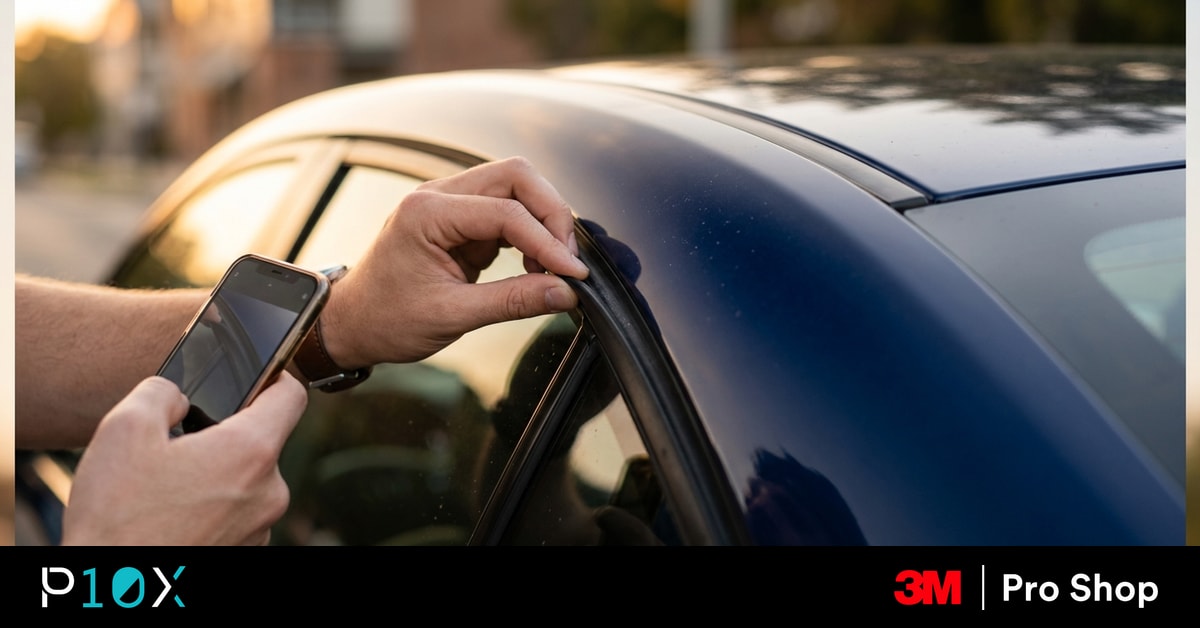
- A pre-install handover checklist protects you from sliced seals, scuffed trims, and cracked dashboards that surface days after tinting.
- Photograph ten key points and note the time before you hand over the keys, so you have a baseline.
- Get a short written or WhatsApp acknowledgement of the car's condition before work starts.
- Test windows, demister, and sensors before you drive off, while you are still at the shop.
- The 3M 5-year e-warranty covers film faults, not physical damage from a careless install, which is why your own documentation matters.
A clear pre-install handover checklist for car tinting protects you from the sliced seals, scuffed trims, and cracked dashboards that often surface days after you collect your car. Most tint shops in Malaysia are small operations with no formal handover routine, so owners drop the car and walk away with no record of its starting condition. When damage appears later, there is nothing to compare against. This guide gives you a simple way to document your car, agree the condition in writing, and check the important functions before you leave.
The sting of this kind of problem is that it rarely shows up while you are still at the shop. You collect the car, everything looks fine, and it is only days later that you notice a sliced window seal, a scuffed A-pillar, or a hairline crack in the dashboard. By then the link back to the tint job is impossible to prove, and what should be a simple fix turns into an awkward standoff.
A few minutes of preparation before you hand over the keys removes almost all of that risk. None of it is about distrust. It is about giving both you and an honest installer a clear, shared record, so that if anything does look wrong later it is settled in minutes rather than argued over.
For the technical side of choosing film, such as legal VLT limits and warranty terms, see our full pre-install and post-install checklist. This article stays focused on one thing, protecting your car at handover.
Why Handover Disputes Happen in Malaysia
Most handover disputes start for one simple reason: there is no agreed baseline of how the car looked before work began. Owners drop the car at a busy shop, hand over the key, and leave to run errands without taking a single photo or note. When a sliced seal or scratched trim shows up days later, neither side can actually prove the condition the car was in before the job started, so the whole thing collapses into one person's word against another, which helps nobody.
The common drop-and-go culture makes this worse rather than better. Cars are tinted in a few hours while you are off running errands, sometimes passed between more than one installer during the day, and interior panels may be removed and refitted without anyone ever walking you through what was touched. None of this means the shop is dishonest, and most are not. It simply means the practical responsibility to record the starting condition usually falls on you, the owner, since you are the only person with a clear interest in having that record.

What to Photograph Before You Hand Over Keys
Photograph the car in good light, confirm your phone's timestamp or location tag is switched on, then methodically capture the ten points below. Take clear, close shots of anything an installer is likely to touch when removing panels or working the glass, and do not rush them. This handful of dated images is the baseline that quietly settles the large majority of disputes quickly and calmly, often before they even become disputes.
The ten-point photo checklist:
- Window seals, top and bottom of each door.
- A-pillar trim on both sides.
- Headliner edge near the front windscreen.
- Dashboard surface and any existing crack lines.
- Door card faces for existing scratches.
- Window and door switches, including any panic switch.
- Sunroof glass, if fitted.
- Rear demister lines on the rear windscreen.
- Side mirrors and their folding action.
- A current visible light reading or photo of each window's existing tint.

What to Get the Installer to Agree
Before any work starts, get a short acknowledgement from the shop that the car's condition has been recorded. A quick WhatsApp message or a line written on the job sheet is more than enough, and takes a moment. You are not accusing anyone of anything by doing this. You are simply agreeing a shared starting point with the installer, so that any later issue is easy and unembarrassing for both sides to settle.
A simple WhatsApp message you can copy and adapt:
Hi, sending these photos of my car's condition before tinting today at [time]. Please confirm you have received them and that the seals, trims, and dashboard are noted as is before work starts. Thank you.
Keep the reply somewhere you can find it. A shop that willingly documents handovers, photographs the car itself, and keeps those records in the job file is showing you the very same professionalism you want to see in the install work. A shop that bristles at a polite, friendly request to note the condition is telling you something too. Our guide on how to avoid a bad tint job covers more signs of a careful operator.

Red Flags to Watch During Installation
If you are able to see the work area, it is worth keeping a casual eye out for a few warning signs. A heat gun being used aggressively close to interior trim, panels being levered off without a word of explanation, and tools or installers being swapped halfway through the job all quietly raise the risk of accidental damage. None of these on its own is proof of carelessness, but each is worth a calm, polite question if you notice it.
The biggest risk points by far are the door cards and the beltline seals, since these are the parts removed or worked to tuck film in cleanly at the edges. Careful shops protect the surrounding trim with tape or cloth, work slowly and deliberately at the seals, and explain what they are removing as they go. One common after-effect of rushed seal work is fine scratching along the lower glass, which we cover in our guide on window tint scratched by the door seal. Good surface preparation is also what makes the film itself last, as covered in our professional window tint installation guide.
What to Test Before You Drive Off
Before you leave the forecourt, take a few minutes to test the parts most likely to have been disturbed during tinting, while you are still standing at the shop and able to raise anything on the spot. Roll each window fully up and down, check the auto-up function, run the rear demister, and confirm any rain sensor, parking camera, or driver-assist feature still behaves normally. Catching a small issue now, with the installer right there, is far easier and far less stressful than discovering it and having to drive back days later.
A quick pre-drive-off test:
- Lower and raise every window, listening for new grinding or slow movement.
- Check auto-up and anti-pinch on the driver window.
- Switch on the rear demister and confirm it warms.
- Look for any warning light on the dashboard.
- Wipe the glass edges and check the film sits clean against the seals.

How a Proper Shop Documents Handover
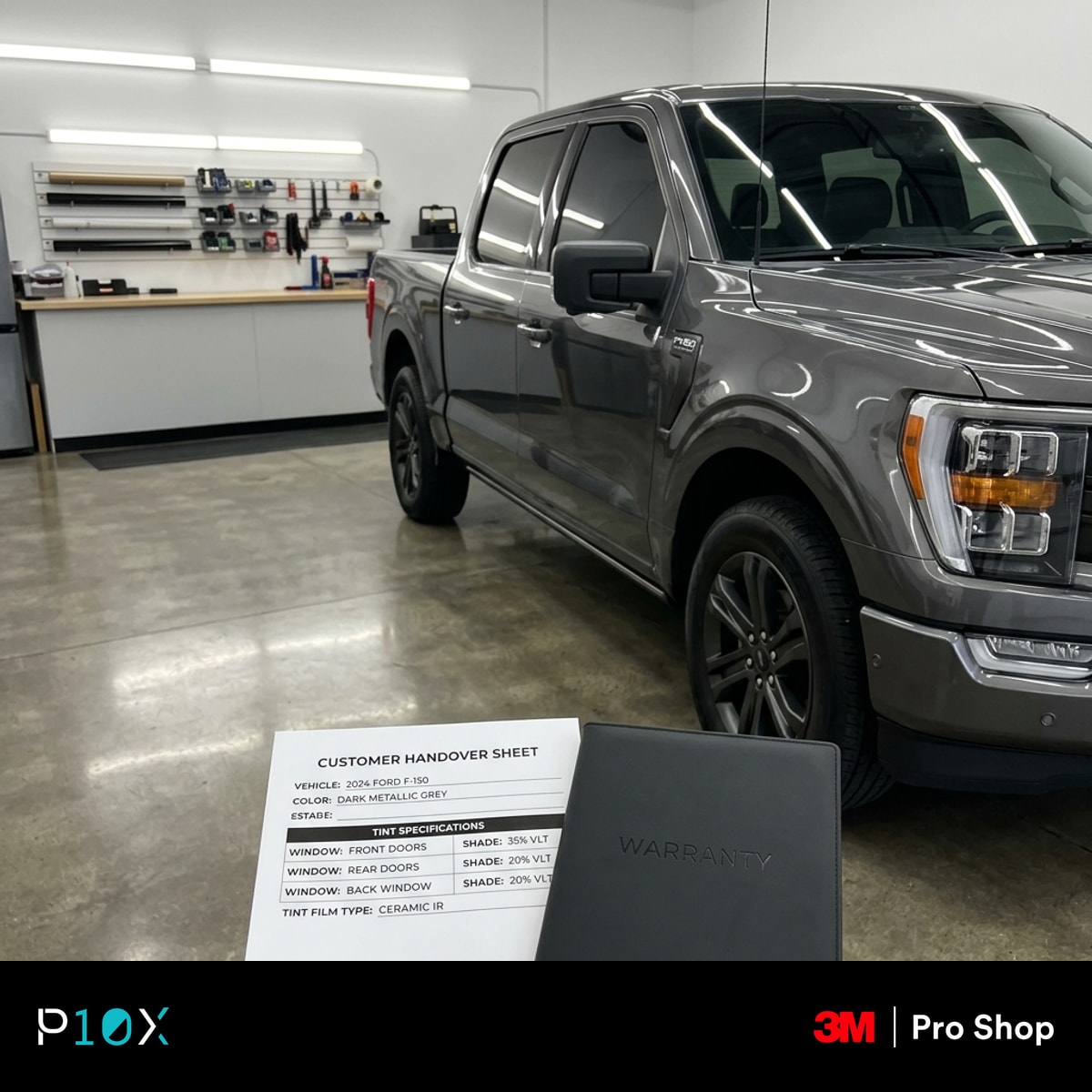
A genuinely professional shop keeps its own record of your car's condition, not relying on yours alone. In practice that usually means dated photos of the car taken before work begins, a note of any pre-existing marks or scratches, and a copy filed alongside the warranty paperwork. When both sides independently hold the same evidence, disputes rarely escalate, because there is simply nothing left to argue about.
This is also where film documentation matters. A 3M install fitted by a 3M Authorized Dealer comes with a 5-year e-warranty on the film, recorded against your invoice. That warranty covers film faults such as bubbling and peeling, not physical damage from a careless install, which is exactly why a clear condition record at handover protects you where the warranty does not. If you want a shop with a documented process, 3M Pro Shop by P10X is one option among certified dealers.
Closing: Document First, Drive Off Confident
Protecting your car at handover really comes down to four simple habits, none of which costs anything. Photograph the ten key points, agree the condition in a short message, keep a casual eye out for red flags during the work, and test the functions before you drive off. Individually each takes a minute or two, and together they remove almost all of the uncertainty and friction if something ever looks wrong later on.
If you are booking a tint in the coming days, save the checklist above to your phone, take your photos before you hand over the key, and keep the shop's reply somewhere safe. A calm, well-documented handover protects both you and an honest installer equally, and it turns what is often a nervous moment into a confident one. The few minutes it takes are repaid many times over the first time a question comes up.
Find out the best protection for your car
Visit a 3M Pro Shop and discover the cost-effective 3M Protective Film and Window Tint
Frequently Asked Questions About Tint Shop Damage
What should I check before tinting my car?
Check and photograph the window seals, door trims, dashboard, switches, mirrors, and rear demister, then note the time. This baseline lets you compare the car's condition before and after, which is the simplest way to settle any later concern.
Can a tint shop damage my car?
It can happen, usually at the door cards or window seals where panels are removed or the glass is worked. Most damage is accidental rather than deliberate. Documenting the car beforehand is the best way to catch and resolve it.
Who is responsible if a tint shop damages my car?
Responsibility depends on what you can show. If you have dated photos of the car before handover and the damage was not there, a fair shop will usually make it right. This is why a recorded baseline matters so much.
Should I take photos before tinting my car?
Yes. Clear, timestamped photos of the seals, trims, and dashboard are your strongest record. Send them to the shop before work starts and keep their acknowledgement, so both sides agree on the starting condition.
What should I check after window tint installation?
Before leaving, test every window, the auto-up function, the rear demister, and any sensors, and look for dashboard warning lights. Checking on the spot is far easier than returning later, and it confirms nothing was disturbed during the work.
How do I prove a tint shop damaged my car?
Compare your timestamped before-photos with the new damage and raise it with the shop early and calmly. A clear baseline, the shop's acknowledgement message, and prompt follow-up are usually enough to resolve it without conflict.
How long should I keep my handover photos and messages?
Keep them at least until the film has fully settled and you are confident nothing was disturbed, which is usually a few weeks. Since the photos cost nothing to store, it is sensible to keep them with your warranty file for the life of the tint.
What if I cannot watch the installation in person?
That is common, since most jobs take a few hours. Simply take your timestamped photos and send the acknowledgement message before you leave, then run the full function test when you collect the car. The baseline does the work even when you are not there to watch.
Author

Fabian
He is passionate about revolutionizing the car protection services industry by bringing innovation and transparency to a traditionally opaque and often misunderstood field. His mission is to educate end users on the true benefits and importance of car protection, aiming to replace outdated practices with honest, customer-focused solutions. With a fresh approach to car tinting, paint protection film (PPF), and detailing services, he is committed to delivering a superior customer experience that sets a new standard in the market. He welcomes discussions about the future of the automotive industry and is eager to connect with like-minded professionals who share his vision for innovation, integrity, and excellence.
Experience the future of window tinting
Visit a 3M Pro Shop and discover the revolutionary Crystalline CR BLK film