
Car Tint Checklist Malaysia: What to Check Before and After Installation

- A car tint checklist for Malaysia works in three stages: what to inspect before installation, what to confirm on the invoice, and what to verify after.
- JPJ rules need at least 70 percent VLT on the front windscreen and at least 50 percent on the front side windows, with no limit on the rear glass.
- Get the film series, exact shade, VLT per window, and warranty terms written on the invoice before any work begins.
- Confirm genuine film, an authorized dealer, and a registered e-warranty to avoid grey-market tint and rejected claims.
- A 3M Authorized Dealer such as 3M Pro Shop by P10X can measure VLT on handover and register your 5 year e-warranty for you.
A clear car tint checklist for Malaysia saves you from three common regrets: a JPJ summons, a warranty you cannot claim, and bubbling that only shows up weeks later under the hot sun. Tinting looks simple from the outside, but the difference between a clean job and an expensive redo comes down to what you check before, during, and after installation. This guide walks you through every stage so you can book with confidence, inspect like a pro, and keep the paperwork that protects you for years.
Most car owners in the Klang Valley think about shade and price first. Those matter, but they are the easy part. The harder questions are whether the film is genuine, whether the shop measured your VLT, and whether your warranty is registered in your name. Use the sections below as a printable reference you can follow on the day.
It helps to remember why tint is such a big deal here. Malaysian sun is harsh all year, and a car parked at a condo lot or an open mall rooftop bakes for hours at a time. Good film keeps the cabin cooler, protects your dashboard and seats from fading, and cuts the glare that tires your eyes on a long drive down the PLUS or the KESAS. A poor or illegal job does the opposite. It traps heat, ages badly, and leaves you exposed at the next roadblock. That is why a few careful checks matter far more than shaving fifty ringgit off the quote.
The other reason to slow down is money. Tint is a once in a few years purchase for most owners, and redoing a bad job means paying for removal, new film, and labour all over again. Treat this checklist as a small investment of attention that protects a much larger spend. Read it before you book, bring it with you on installation day, and keep it handy for the first week while the film settles.
What a Car Tint Checklist Covers in Malaysia
A car tint checklist is a simple three-stage process that protects your money and your comfort. Before installation, you inspect the glass, seals, and trims. On the invoice, you confirm the film series, shade, and warranty. After installation, you verify the VLT reading and register your e-warranty. Done in order, it turns a rushed purchase into a documented, professional handover.
Think of it as a handover record rather than a wish list. Each stage produces proof: a clean inspection, a detailed invoice, and a registered warranty. That proof is what you fall back on if anything goes wrong later.
The three stages also map neatly to the three things that can go wrong. Problems with the glass or trims are caught before any film is cut, which is the cheapest time to fix them. Problems with the wrong film, shade, or warranty are caught on the invoice, before you pay in full. Problems with the actual fitting, like uneven VLT or trapped dust, are caught on handover while the car is still at the shop and the installer can put it right. Skip a stage and you push the cost of any mistake further down the line, where it is harder and more expensive to undo.
You do not need to be technical to run this checklist. You only need to slow down, ask plain questions, and write the answers somewhere you can refer back to. A photo of the invoice and a saved copy of the warranty record are enough for most owners.

Why a Tint Checklist Saves You Money
Skipping the checklist is where drivers lose money. An illegal front shade can earn you a JPJ summons at the next roadblock or Puspakom check. When the tinted glass rules were tightened, reporting on the regulations put a first offence at a fine of up to RM2,000 or up to six months in jail, so the stakes are real. A cheap dyed film can turn purple or bubble within a year, forcing a full redo. A missing warranty record means you pay again for a defect that should have been covered. The checklist removes these risks for the price of a few extra minutes.
It also protects you from the hidden cost of grey-market film. Tint that is sold as a bargain is often not the genuine product it claims to be, which means no real warranty and performance that fades fast. By the time the film turns patchy or the heat rejection drops, the shop may have closed or denied the sale. Paying once for genuine film fitted by an authorized dealer almost always works out cheaper than paying twice for a cheap job and its replacement.
There is also a comfort cost. A poorly chosen film lets in more heat, so your air conditioning works harder on every drive down the PLUS or KESAS. Over a hot Malaysian year that extra load shows up as a warmer cabin at the start of every trip and more strain on the aircon system. Spending a little attention up front protects both your wallet and your daily comfort. If you want the bigger picture on value over five to ten years, see why 3M window tinting is built around heat rejection and durability rather than just darkness.
5 Questions That Reveal Tint Shop Quality
Before you put down a deposit, ask these five questions. The answers tell you more about a shop than any showroom display, because they force the shop to be specific about film, measurement, and paperwork. A confident installer will answer each one without hesitating and will often offer the proof before you even ask.
- Are you an authorized dealer, and can you show the certificate? Genuine film and valid warranties only come through authorized channels.
- Will you give me proof the film is genuine? Ask about batch labels, the warranty card, and an official film verification.
- Do you measure VLT on my car before I collect it? A real shop hands you a reading, not a guess.
- What warranty do I get, and is it registered in my name? Confirm the type, the duration, and who lodges the registration.
- What is your workmanship guarantee if there are bubbles or peeling? A confident shop stands behind its install.
If a shop dodges these questions, gives vague answers, or pushes you to decide on the spot, treat it as a warning sign. The best installers in the Klang Valley are used to informed customers and welcome the questions, because clear answers are how they win trust and repeat business. For more red flags to watch, read how to avoid a bad tint job before you commit.
What to Inspect Before Installation Begins
Before any film touches your glass, walk around the car with the installer and record the starting condition. Take a few photos on your phone as you go, especially of any existing marks. This protects you from disputes about damage that was already there and helps the film last longer, because clean, sound glass and trims are what good film bonds to best.
Glass condition and existing chips
Check every window for scratches, chips, or old adhesive residue, including any leftover glue from a previous tint job. Existing marks affect clarity and how well the film bonds, so note them before work starts. If you are re-tinting, agree on who removes the old film and how, since a rushed strip can scratch the glass or damage the rear defogger lines.
Door seals and rubber trims
Worn or loose rubber seals can trap water and lead to bubbling at the edges, especially on older cars that have spent years in the sun. Point out any cracked or lifting trims so the installer can work around them carefully. A good shop tucks the film neatly under the seal for a clean edge rather than leaving a visible line near the rubber.
Interior trims and panels
A proper shop protects your dashboard and door cards from the slip solution and water used during fitting. Confirm they will cover and dry these areas, and that they will wipe down the door panels and switches before you drive off. Water left in a door cavity can cause rattles or affect electrical switches later, so this small step matters more than it looks.
Sensors, cameras, and antennas
Modern cars carry rain sensors, dashcams, and defogger lines near the glass. Make sure the installer knows where they are so nothing is damaged or blocked, and ask how they will cut the film around the sensor housing at the top of the windscreen. Newer models and EVs add driver-assist cameras and large glass roofs, which makes film choice matter even more, because the wrong film can interfere with cameras or add heat load that affects range. See how this plays out for MG S5 EV window tint and for Proton eMAS 7 window tint and its effect on EV range.
For a fuller view of what a clean fitting looks like, see this guide to professional window tint installation.
What to Confirm on Your Tint Invoice
Your invoice is your contract. Before work begins, make sure it lists exactly what you are paying for so there is no room for substitution later. A detailed invoice also makes any future warranty claim far simpler, because it proves which film went on which windows and on what date. Ask for these details in writing before you pay the balance, not after.
Film series and exact shade
Write down the film series and the exact shade for each set of windows. Vague terms like premium or ceramic are not enough, because two films with very different prices and performance can both be called ceramic. The current 3M range sold here includes Crystalline Black, Ceramic IR, and the XP Series, each with its own heat rejection and price point. Naming the exact series and shade on the invoice is how you make sure the film fitted is the film you chose. If you are still weighing options, this 3M Crystalline tint comparison shows how the flagship 3M Crystalline CR BLK compares with the rest of the range.
VLT percentage per window
Record the VLT for the windscreen, front sides, and rear. This is your evidence of JPJ compliance and your reference if a reading is questioned later. Be clear about the difference between the film shade and the final VLT on the glass, since your windscreen already blocks some light on its own. A shop that knows its films can tell you the expected reading for each window before fitting.
Warranty type and duration
3M tint comes with a 5 year e-warranty when fitted by a 3M Authorized Dealer. It covers bubbling, peeling, blistering, and purpling, which are the most common ways film fails over time. It is not transferable and can be voided by abuse or poor care, so keep the terms in writing and make sure the registration is done in your name. Ask the shop to confirm what counts as poor care, since rolling windows down too early or using harsh cleaners can affect a claim.
Authorized dealer proof
Confirm the dealer is authorized and that the invoice carries the business details, including the company name, registration, and contact. Authorized status is what links your warranty to 3M and what guarantees the film is genuine rather than grey-market stock. For a sense of full-car pricing across the range, compare the current 3M window tint price in Malaysia before you decide, so you can tell a fair quote from one that looks too cheap to be real.

Normal vs Not Normal During Tint Curing
Fresh tint needs time to cure, and Malaysian heat speeds this up. In the first days you may see slight haze, a few faint water pockets, and tiny specks. These usually clear as the moisture dries out under the sun. What is not normal is large trapped bubbles, lifting edges, or sharp creases. Those point to a fitting or film problem, not curing, and are worth raising with the shop straight away.
Treat curing timelines as estimates. Most films settle within a few days, and up to about a week in cooler or humid weather such as the monsoon season. Do not roll your windows down while the film is still curing, because the film can shift or peel at the edge before it has bonded fully. Park in the shade where you can during this period, since gentle, even drying gives the cleanest result.
If you are unsure whether what you see is normal, this explainer on tint bubbles and peeling will help you tell the difference. When in doubt, photograph the spot in daylight on day one and again a few days later. If it is shrinking, it is curing. If it is growing or staying sharp, contact the installer.

How to Verify VLT and Warranty Documents
After collection, spend ten minutes confirming the work matches the invoice. This is the step most drivers skip in their rush to get home, and it is the one that protects you most. Doing it at the shop, while the installer is still there, means any genuine issue can be raised on the spot rather than argued over later.
Step 1: Measure VLT with a meter
Ask the shop to measure VLT in front of you, or use a handheld meter. Compare the windscreen and front side readings against the JPJ limits and the figures on your invoice. Malaysia requires at least 70 percent on the windscreen and at least 50 percent on the front sides since the rules took effect on 6 October 2023, with no limit on the rear side windows and rear windscreen. A reading close to the limit is fine, but one below it puts you at risk of a summons, so do not accept a verbal assurance in place of an actual measurement. For the full rules, see this guide to JPJ-compliant window tint.
Step 2: Inspect defects in daylight
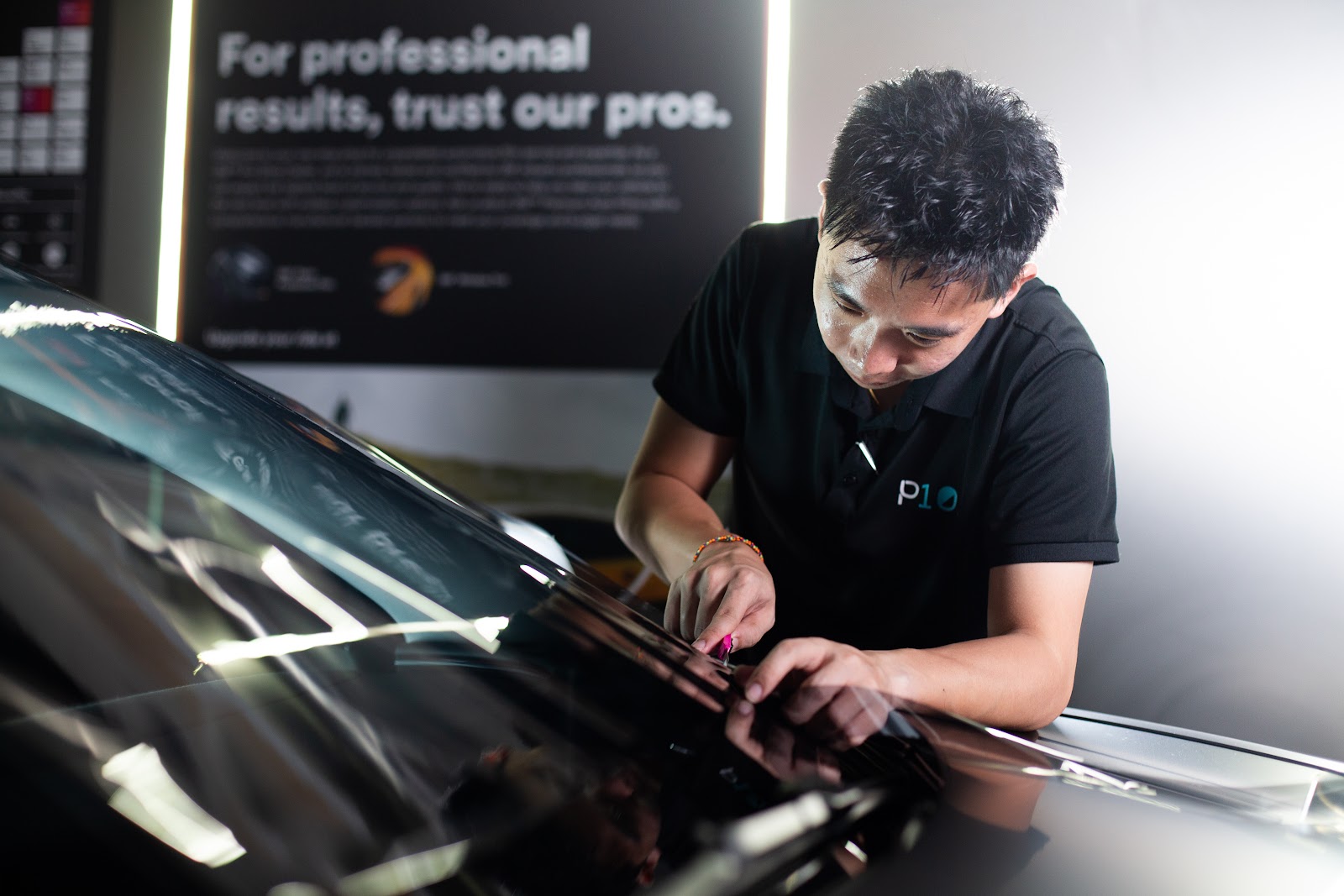
Park in open daylight and look across each window at an angle, which makes flaws far easier to spot than a quick glance indoors. Check for trapped dust, gaps at the edges, and uneven cuts along the rubber line. Small specks may settle during curing, but note anything larger and point it out before you leave. Run your eyes along the top edge of each window too, since that is where a rushed cut tends to show.
Step 3: Register the e-warranty
Confirm your 5 year e-warranty is registered in your name and that you have a copy of the record, whether that is a digital confirmation or a printed card. Check that the vehicle details and film series on the record match your car and your invoice. Keep it with your invoice so a future claim is straightforward, and save a photo in your phone as a backup in case the paper copy is lost.

What to Do in the First 48 Hours
The first two days decide how well your tint settles. Keep the windows up so the film can bond, even if the cabin feels warm before the aircon kicks in. If you spot a defect, photograph it in daylight and note the date, then contact the shop early rather than waiting, because most reputable installers fix genuine issues quickly and without fuss. Keep your invoice and warranty record together in case you need them.
Avoid car washes and aggressive cleaning during this window, including the automatic brushes at petrol stations. When you do clean the glass, use a soft microfibre cloth and a mild, ammonia-free cleaner so you do not disturb the film or its tint layer. Be gentle around the edges, where the film is still settling, and avoid sticking suction mounts or stickers on the freshly tinted glass for the first week or two.
Turning Your Tint Checklist Into a Plan
The logic is simple. Inspect before so there are no surprises, confirm on the invoice so you get the film you paid for, and verify after so you can prove compliance and claim your warranty. Each stage leaves a record, and those records are what protect your money long after the install is done. None of it requires special tools or technical know-how, only the discipline to ask plain questions and write down the answers before you pay.
Think of the checklist as the difference between hoping a job went well and knowing it did. The owners who never have tint trouble are rarely the ones who spent the most. They are the ones who checked the glass, named the film, and confirmed the warranty while the car was still at the shop.
If you are booking soon, print this checklist and bring it with you. When you are ready, choose a 3M Authorized Dealer that measures VLT and registers your warranty as standard. You can compare film options on the 3M window tint range or find a certified outlet through the 3M Pro Shop by P10X locations page for a spec-based recommendation.
Find out the best protection for your car
Visit a 3M Pro Shop and discover the cost-effective 3M Protective Film and Window Tint
Frequently Asked Questions About Car Tinting in Malaysia
What is the legal tint limit in Malaysia?
Since 6 October 2023, the front windscreen must allow at least 70 percent VLT and the front side windows at least 50 percent. The rear side windows and rear windscreen have no VLT limit, so you can go as dark as you like at the back.
How long does car tint take to cure?
Most films settle within a few days in Malaysian heat, and up to about a week in cooler or humid conditions. Treat these as estimates, since cure time varies with weather and film type.
How long should I wait before rolling my windows down after tinting?
Keep the windows up for at least the first two to three days, or follow the period your installer gives you. Rolling down too early can shift or peel the film at the edge.
How do I check if my 3M tint is genuine?
Ask for the warranty card and batch details, confirm the shop is an authorized dealer, and request an official film verification. Genuine film and valid warranties only come through authorized channels.
Is a car tint warranty transferable?
A 3M tint e-warranty is tied to the vehicle and owner record and is not transferable. Keep your invoice and warranty registration so the coverage stays valid for the warranty period.
How much does 3M window tint cost in Malaysia?
Full-car pricing depends on the series and car size and includes a 5 year e-warranty. As a guide, a standard car ranges from around RM1,600 for the XP Series to RM3,800 for Crystalline Black. Check the latest pricing article for the full breakdown by size.
What should I check after window tint installation?
Measure VLT against the JPJ limits and your invoice, inspect each window in daylight for defects, and confirm your e-warranty is registered in your name. Keep all records together for any future claim.
Does window tint reduce visibility at night?
A quality film with the right VLT keeps night visibility clear because it rejects heat through technology rather than just darkness. Stay within the JPJ limits on the front windscreen and front side windows, avoid going too dark at the front, and choose a reputable film so you keep a clear view on dim Klang Valley roads.
Author

Fabian
He is passionate about revolutionizing the car protection services industry by bringing innovation and transparency to a traditionally opaque and often misunderstood field. His mission is to educate end users on the true benefits and importance of car protection, aiming to replace outdated practices with honest, customer-focused solutions. With a fresh approach to car tinting, paint protection film (PPF), and detailing services, he is committed to delivering a superior customer experience that sets a new standard in the market. He welcomes discussions about the future of the automotive industry and is eager to connect with like-minded professionals who share his vision for innovation, integrity, and excellence.
Experience the future of window tinting
Visit a 3M Pro Shop and discover the revolutionary Crystalline CR BLK film