
Window Tint Gap: How Much Is Normal?

- A straight gap of up to about 1 to 2 mm above the tint on a window that rolls down can be normal.
- Once the glass is fully up, you usually won't notice the gap, though this depends on the glass and seal design.
- A shaved edge can sit almost flush with the glass, so a gap under 1 mm is not a fault on its own.
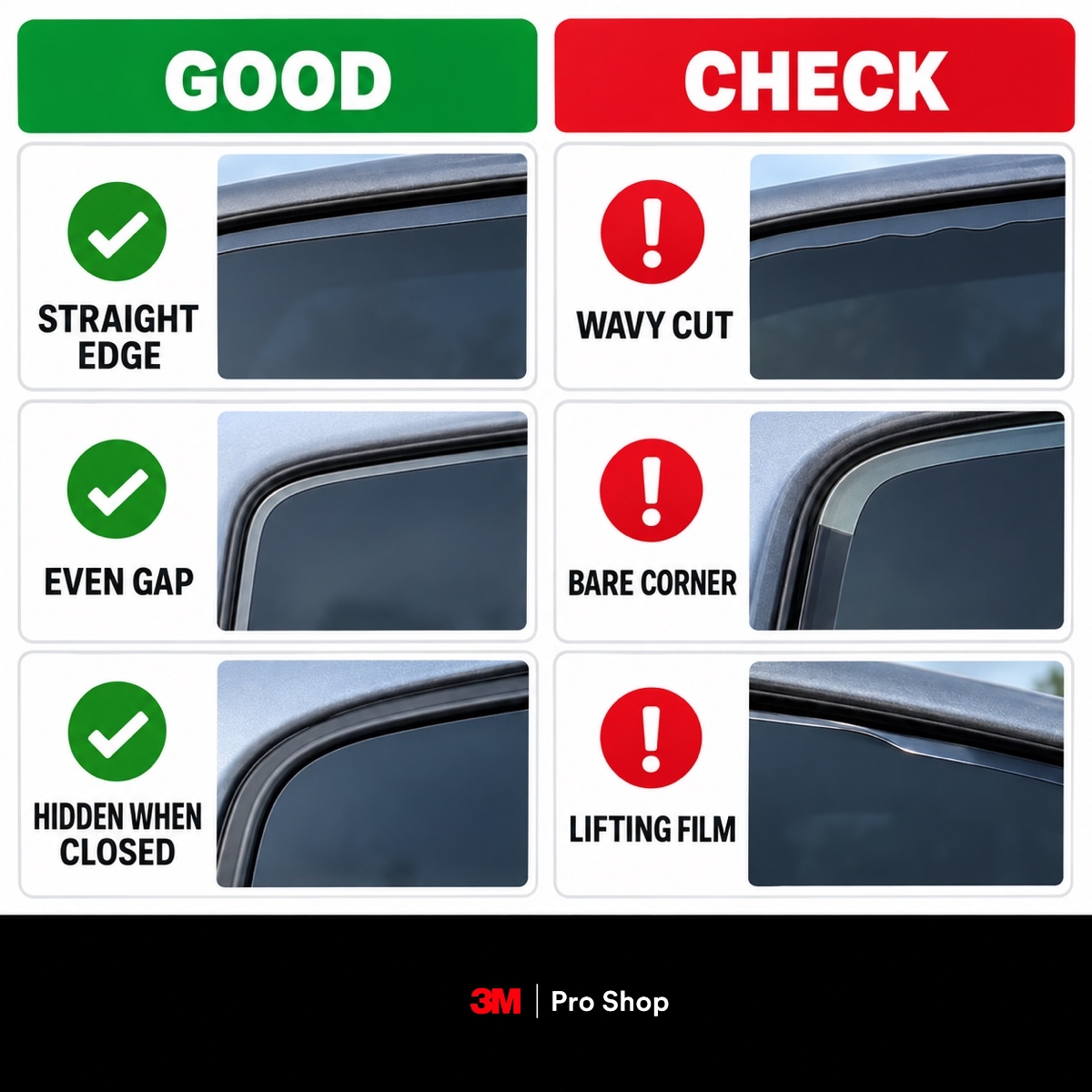
- If the cut is wavy, a top corner shows bare glass, or the film catches the seal or lifts, it is worth showing the installer rather than trimming or filing the edge yourself.
- Freshly tinted windows are best kept up until the shop's aftercare instructions say they can be lowered.
A window tint gap of up to about 1 to 2 mm along the top of the glass can be a normal finish on a window that goes up and down, as long as the gap is even. That thin strip of clear glass leaves room for the film edge to slide past the rubber seal without catching.
A wide gap, a crooked cut or an edge that lifts is a different matter. Whether your car has 3M window tint or another film, those signs are worth having the installer check.
Why is there a gap above the tint?
During car window tinting, the film goes on the inside of the glass. Installers trim it just short of the top edge, because film hanging over the edge could catch on the window seal every time the glass moves up and down.
On many framed windows, you won't notice the clear strip once the glass is fully up, because it sits behind the upper seal. Frameless glass, or a window with a different seal design, can show a different finish. You can ask the installer what finish to expect on your car instead of comparing it with another model.
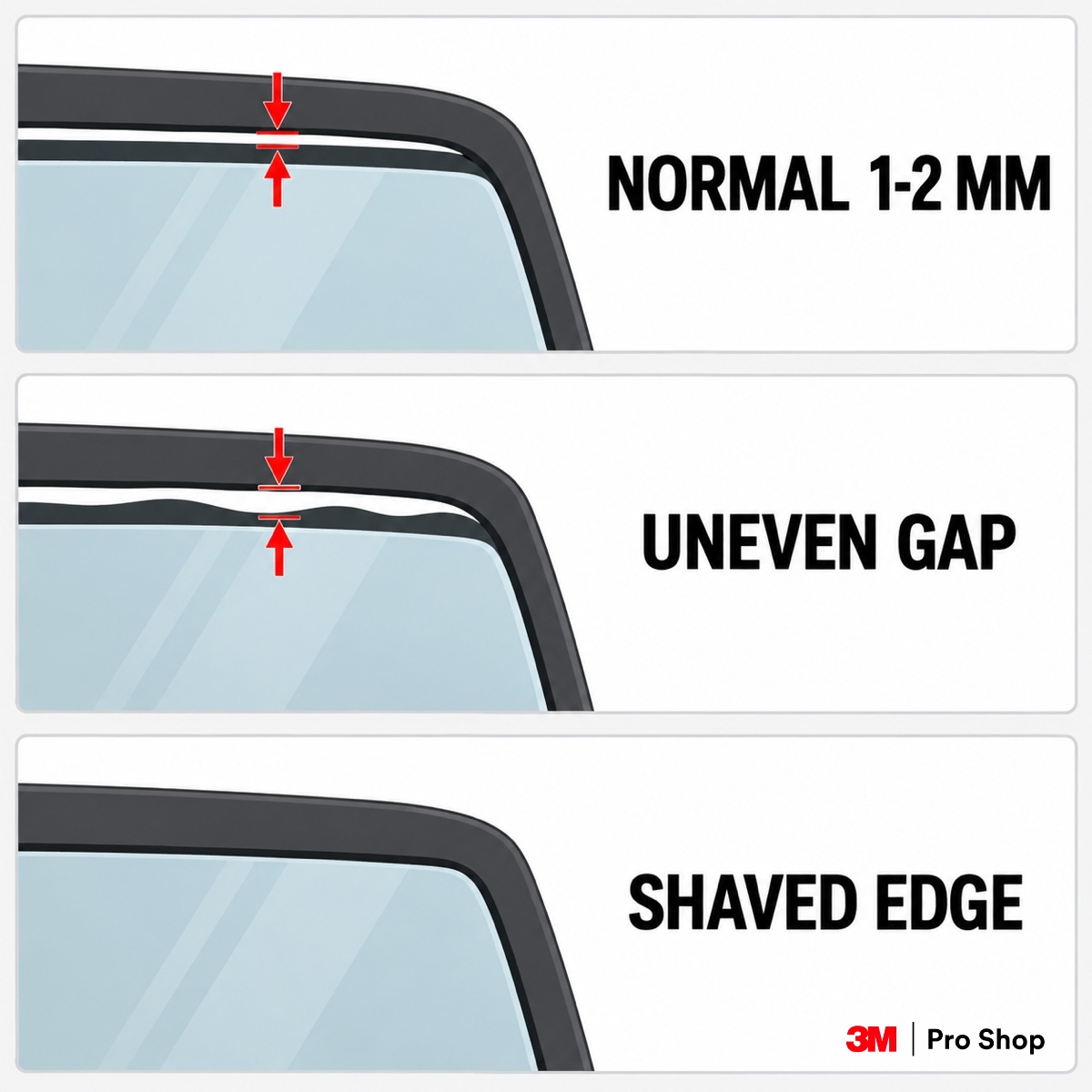
How much gap is normal? Up to about 1 to 2 mm
The International Window Film Association's automotive inspection guideline describes a maximum gap of about 1 to 2 mm at the top edge. It also notes that a shaved edge can appear to have no gap at all. That 1 to 2 mm figure is an upper limit, not a target, so a gap under 1 mm is not a fault on its own.
It helps to look along the whole edge, not just its narrowest point. A neat finish has:
- a straight cut that follows the top of the glass
- a gap that stays about the same width from end to end
- neatly finished top corners
- film that does not catch, curl or lift as the window moves
Looking at both front windows from the same angle makes differences easier to spot. If the gap is much larger on one side, or stays obvious with the glass closed, the installer should be able to explain why.
Standard vs shaved edge: why some tint shows almost no gap
A standard finish leaves a small gap below the top of the glass, and it looks neat when the cut is straight and the corners are well finished. A shaved or filed edge brings the film close to the edge of the glass, so the clear strip is barely visible. It takes more careful work, and not every glass edge suits it.
Neither finish is automatically better. Before booking, you can ask which finish the shop recommends for your car and whether it can show you a finished example.
When should you ask the installer to check the gap?
It is worth asking the installer to check the gap if the cut looks uneven, a corner shows extra bare glass, the gap stays visible with the window closed, or the film catches or lifts as the glass moves. Once the shop says it is safe to lower the window, you can check the top edge in daylight. Things to look out for:
- the cut is wavy or slopes across the glass
- one top corner has noticeably more bare glass
- the gap remains obvious with the window closed
- matching windows have very different gaps
- the film catches the seal
- the edge curls, lifts or collects dirt
Photos taken with the glass partly lowered and fully closed help the installer see what you see. If you spot a scratch near the cut line, it is best to photograph it and leave the film in place, so the installer can inspect the glass. It is also better not to trim or smooth the edge yourself.
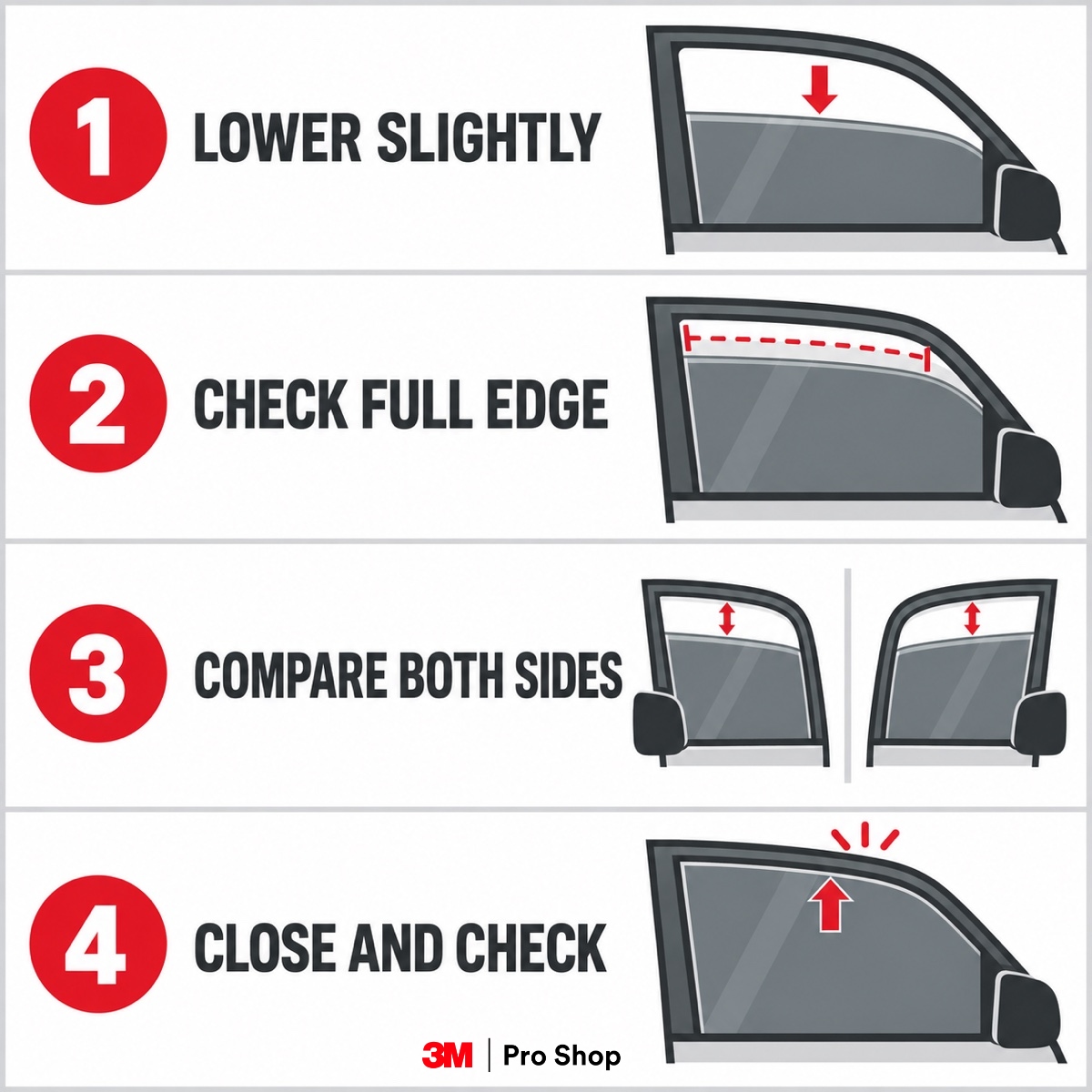
When can you lower the windows after tinting?
It is best to keep freshly tinted windows up until the shop's aftercare instructions say they can be lowered and cleaned, because moving the glass too early can disturb a newly fitted edge. At handover, you can ask the installer to show you the finish along the top edge, so you do not need to lower the window yourself to check it.
Moisture haze or small water pockets may appear while the film dries. That is different from a crooked cut or film that is actually peeling, and the installer can tell you how long your film normally takes to dry.
If the powered window drags the film, struggles or makes a new noise, it is safer to stop using it and contact the shop than to keep running it to see whether the problem goes away.
Agreeing on the edge finish with your installer
Whichever finish you choose, a good edge has an even cut, tidy corners and film that stays in place as the window moves. Installers at any 3M Pro Shop by P10X outlet can walk you through the planned edge finish before fitting and check it with you at handover.
Find out the best protection for your car
Visit a 3M Pro Shop and discover the cost-effective 3M Protective Film and Window Tint

Frequently asked questions
Is a small gap above window tint normal?
Yes. On a window that rolls down, a small, straight gap can be a normal finish, as long as the cut is neat and the film does not catch or lift as the glass moves.
How wide should the gap be?
No wider than about 1 to 2 mm, based on the IWFA's automotive inspection guideline. A shaved edge can sit almost flush with the glass, so there is no minimum gap you need to see. If the gap on your car looks wide or uneven, you can ask the installer to check it.
Should the film reach the very top of the glass?
Not always. A standard finish leaves a small gap at the top, while a shaved edge brings the film close to the edge of the glass. The installer can tell you which finish suits your glass and seals.
Can a large gap be fixed?
Not by trimming, because trimming cannot cover bare glass. If the film was cut too short or unevenly, that piece may need replacing, so it is best to have the installer inspect it first.
Is an uneven gap a sign of poor workmanship?
It can be. A wavy cut, a corner with too much bare glass, a gap that stays visible with the window closed, or film that catches the seal or starts lifting can all point to poor cutting or finishing. Glass and seal designs vary, so the shop needs to check the actual window before calling it poor workmanship.
Author

Kelvin Cheen
Kelvin is an Automotive Solutions Consultant and Branch Manager at 3M Pro Shop. With 4+ years of field experience in premium vehicle surface protection, Kelvin specializes in flagship 3M technologies, including 3M Crystalline Black optical film and Ceramic IR tints, 3M Paint Protection Film (PPF), etc. His focus is on delivering transparent, engineering-backed advice to car and EV owners, cutting through sales upsells to ensure customers choose the exact thermal rejection and paint protection tailored to their driving needs.
Experience the future of window tinting
Visit a 3M Pro Shop and discover the revolutionary Crystalline CR BLK film