
Best Window Tint for a Tesla Model 3 in Malaysia
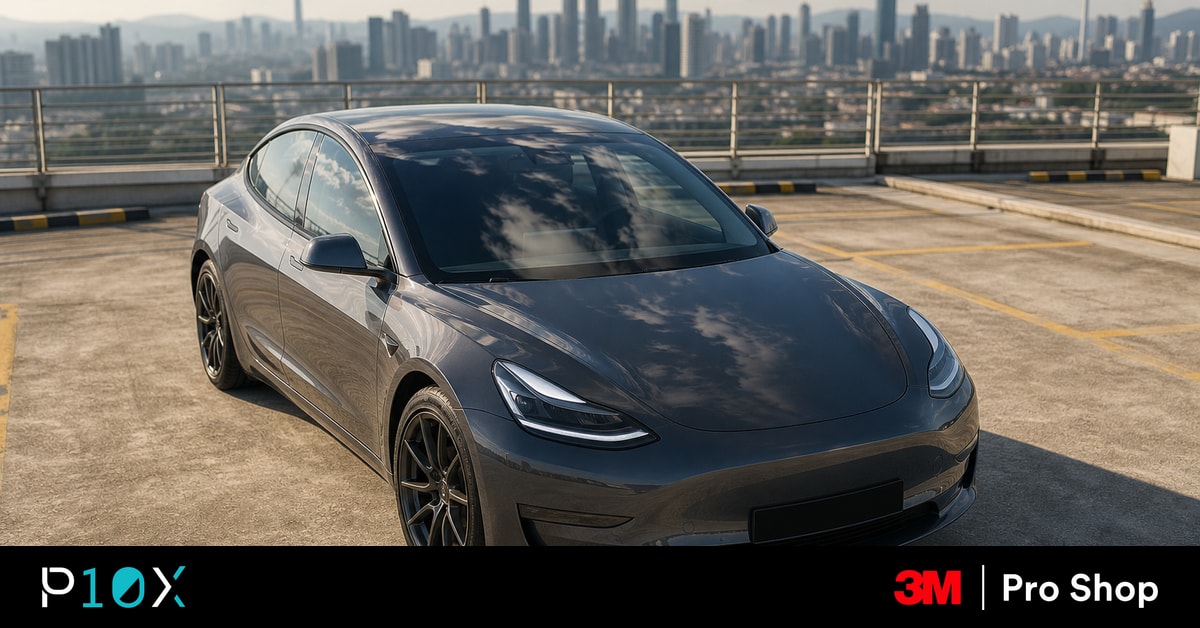
- Choosing Tesla Model 3 window tint in Malaysia is really two decisions, because the roof glass and the rear screen are one continuous panel on this car.
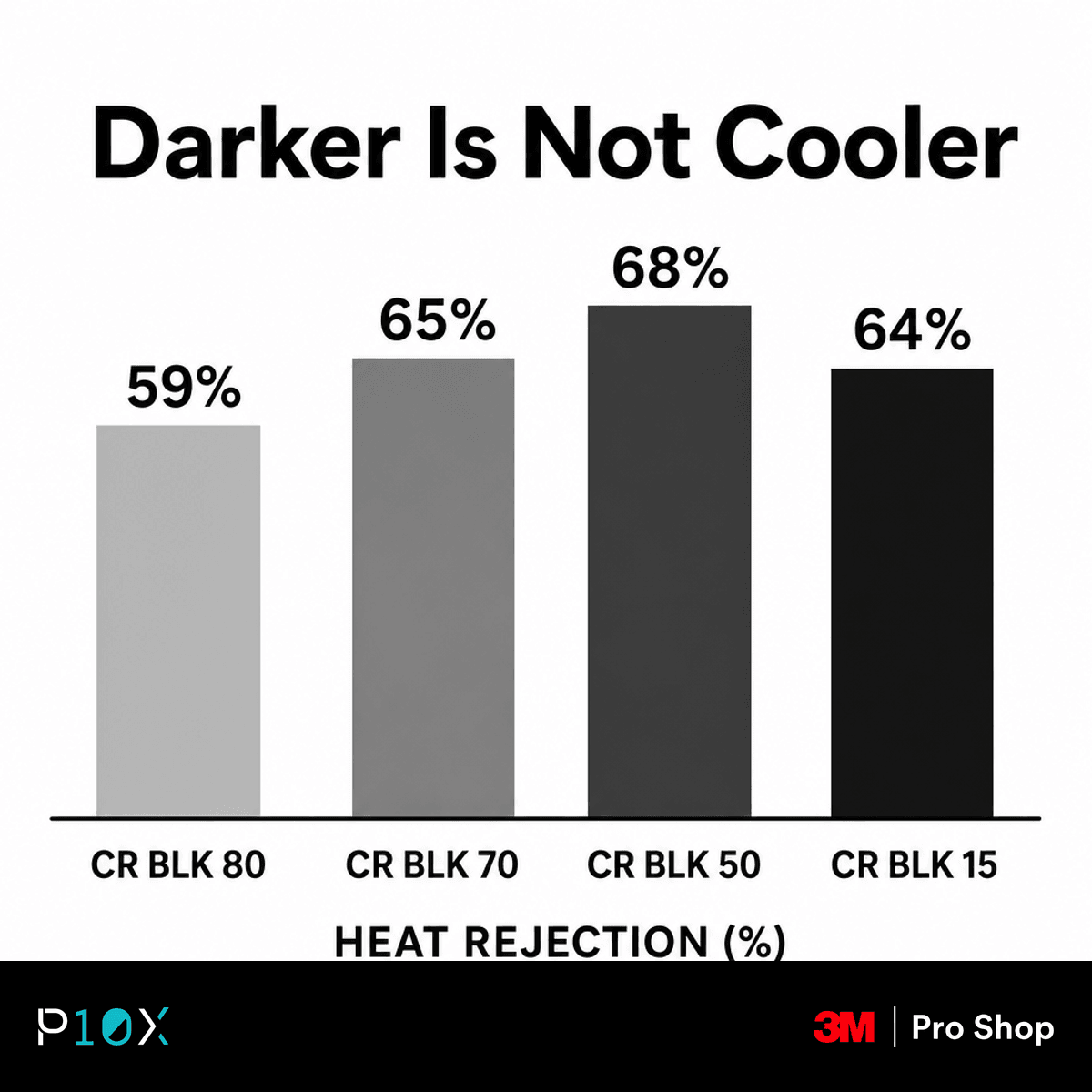
- Darker is not cooler. 3M Crystalline Black 50 rejects 68% of total solar energy, while the much darker CR BLK 15 rejects only 64%.
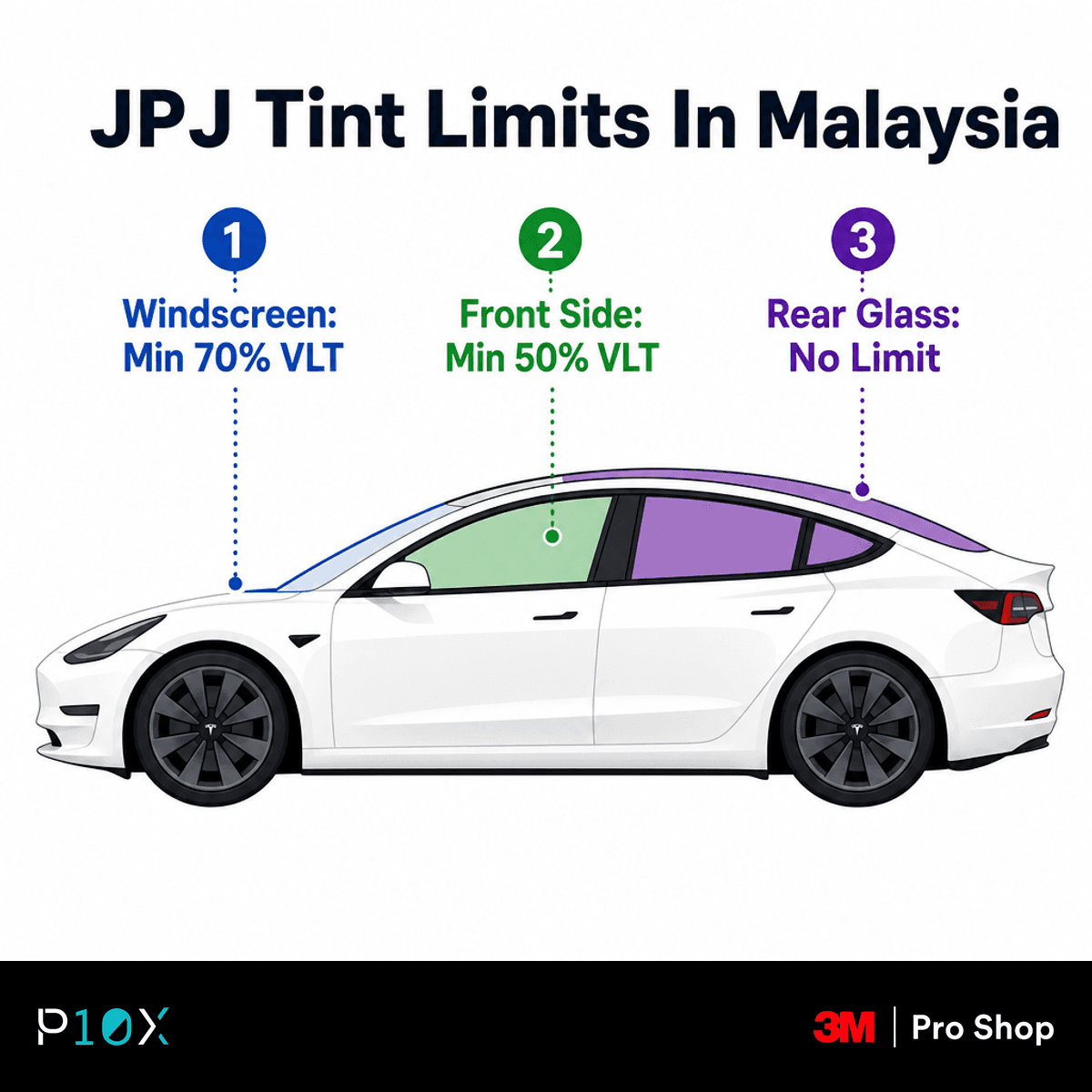
- JPJ allows a minimum of 70% VLT on the windscreen and 50% on the front side windows. The rear glass and the roof have no VLT limit.
- CR BLK rejects 99.9% of UVA and UVB across every shade, so UV protection does not improve by going darker.
- The film is non-metallized, so it does not interfere with mobile signal, GPS or satellite radio.
Anyone shopping for Tesla Model 3 window tint in Malaysia runs into the same problem within about ten minutes of asking around. Every shop quotes a shade percentage, nobody explains what that number does, and the car in question has more glass overhead than most owners have ever had to think about. The Model 3 that arrived here in January 2026 as the cheapest new Tesla on sale locally is a comfortable car with one genuine weakness in this climate, and it sits directly above your head.
The good news is that the decision is more structured than it looks. There are five distinct pieces of glass to specify, two of them are legally constrained, and the film range has published numbers for each shade. Once you see those numbers side by side, most of the guesswork disappears, including the widespread assumption that a darker film runs cooler. It does not, and the reasons a car still feels hot after tinting usually start with that exact mistake.
This guide works through the Model 3 glass by glass, gives the JPJ limits you have to respect, and shows the one number that decides how cool the cabin actually gets.
Why a Model 3 Feels Hotter
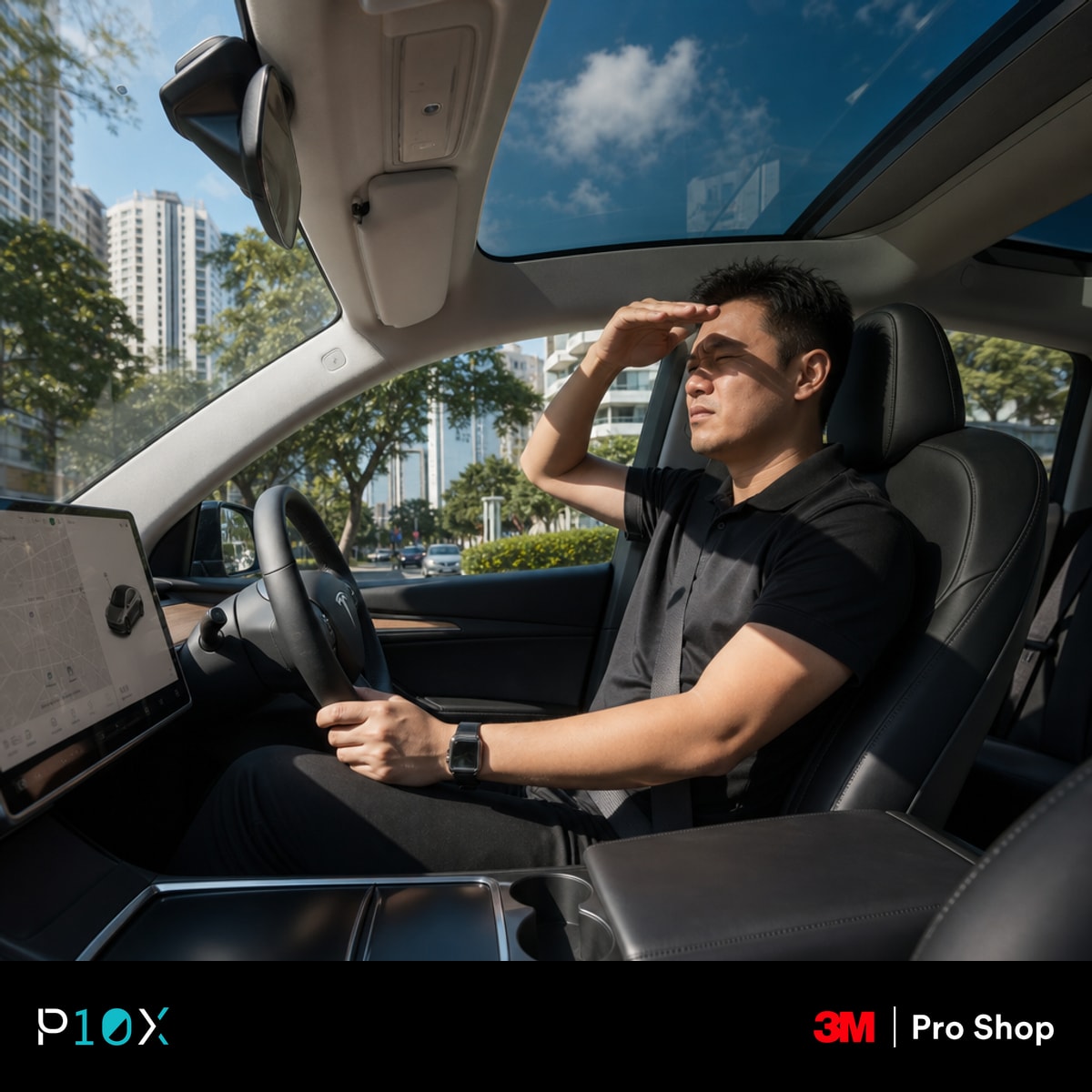
The Roof and Rear Screen Are One Panel
This is the Model 3 fact that changes how you book the job, and most shops will not mention it until the car is already on the ramp. On the Model 3 the panoramic roof glass does not stop at the back of the cabin. It continues down and becomes the rear screen, flowing to the base of the C-pillar as one continuous surface. There is no separate rear windscreen in the way there is on a conventional saloon.
The practical consequence is that you cannot specify the roof and the rear screen separately, because they are the same piece of glass. Whatever shade you choose for the roof is the shade you are looking through in the rear-view mirror. Choose a very dark film because you want a cool roof, and you have also just darkened your entire rear view. Choose a light film because you want good rear visibility, and the roof stays hot.
This is where the heat rejection numbers earn their keep. Because CR BLK holds its total solar energy rejection almost flat from shade 30 through shade 70, you can put a mid or light shade on that panel and lose almost nothing thermally while keeping the rear view clear. Owners who understand this stop treating the roof as a privacy decision and start treating it as a heat decision, which is what it actually is.
The moment it becomes obvious is a night drive home on the Federal Highway with a car behind you at full beam. On a Model 3 wearing a very dark roof film, that light arrives through the same panel you are trying to see through, and the mirror washes out for the two or three seconds it takes the other car to fall back. Owners who picked their shade for a hot carpark at 2 pm discover the cost at 9 pm, and by then the film is already on the glass.
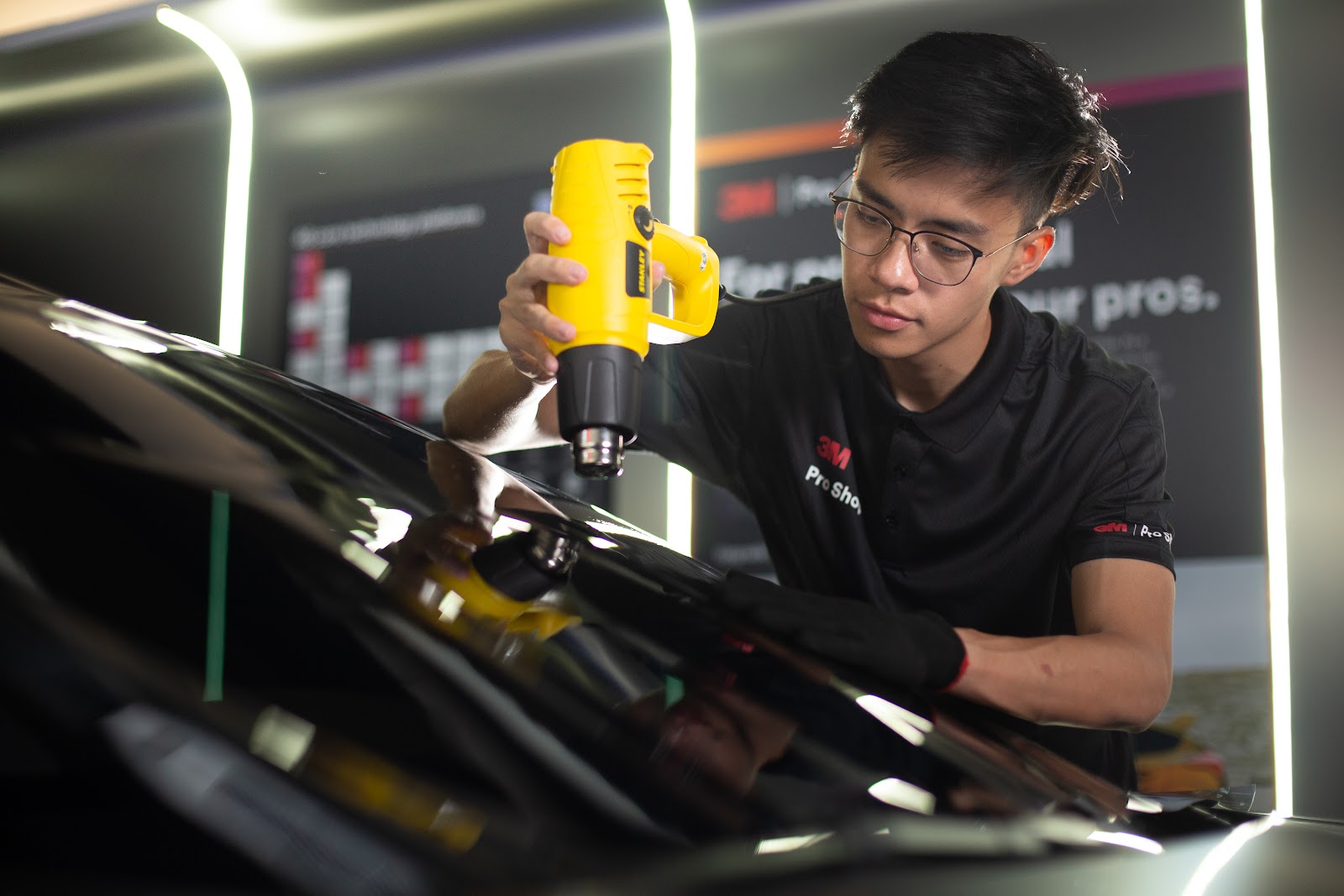
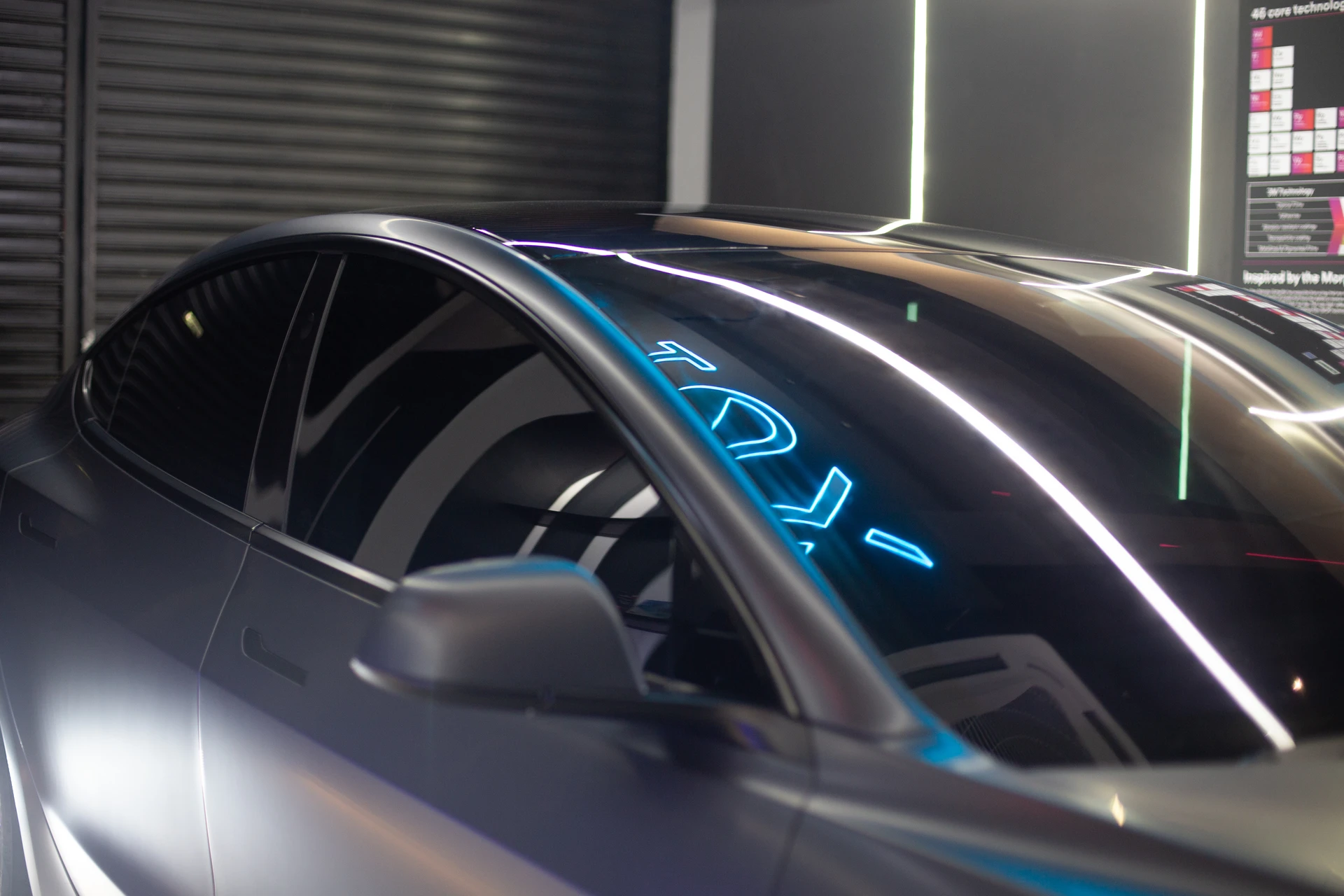
Heat shrinking, shown in that photo, is the technique that makes a single-panel roof possible without seams. A large curved panel has to be shrunk to shape before it goes on, and a shop that cannot do this cleanly will either seam the roof or leave fingers of trapped film at the edges.
Model 3 Tint, Shade by Shade
There are five distinct glass specifications on a Model 3, and the table below gives each one a shade with its published numbers. Every figure comes from the current 3M Crystalline Black range, which replaced the original Crystalline Series in Malaysia from December 2025 and is now the flagship. Infrared rejection is published by 3M at series level rather than per shade, so it is stated identically in each row.
| Glass | Recommended shade | VLT | TSER | IRR | JPJ legal status |
|---|---|---|---|---|---|
| Windscreen | CR BLK 70 | 70% | 65% | 95 to 98% | Legal, meets the 70% minimum |
| Front side windows | CR BLK 50 | 50% | 68% | 95 to 98% | Legal, meets the 50% minimum |
| Rear side windows | CR BLK 35 | 35% | 67% | 95 to 98% | Legal, no VLT limit |
| Glass roof, front section | CR BLK 40 | 40% | 67% | 95 to 98% | Legal, no VLT limit |
| Glass roof rear section and rear screen | CR BLK 40 | 40% | 67% | 95 to 98% | Legal, no VLT limit |
Read the TSER column rather than the VLT column. The windscreen at 70% VLT still rejects 65% of total solar energy, which is only three points below the best figure in the entire range. You are not giving up meaningful cooling by staying legal at the front, which is the opposite of what most owners assume when they walk into a shop.
The roof recommendation of CR BLK 40 is a deliberate compromise. It sits at 67% TSER, one point off the peak, while keeping enough light transmission that the rear screen half of the panel stays usable in the mirror at night. If the car is used mostly for daytime commuting and rear visibility matters less, CR BLK 35 on the roof section is defensible. Going darker than that buys nothing thermally, as the next section shows with numbers.
That clip walks through what changed when Crystalline Black replaced the original Crystalline Series, which matters because a lot of the advice still circulating in Malaysian owner groups refers to a film that is no longer the current range.
Darker Costs You 4 Points of Heat
Here is the calculation that decides the Model 3 roof, and it takes about thirty seconds.
Take the total solar energy rejection figures published for the Crystalline Black range. CR BLK 50 rejects 68%. That is the highest figure in the entire range. CR BLK 15, which is dramatically darker and the shade most owners ask for when they want a cool car, rejects 64%.
Subtract one from the other. 68 minus 64 gives 4 percentage points, and the mid shade is the one that wins. Go to the other end and the gap widens the other way: CR BLK 80 at 59% sits 9 percentage points below the peak, so very light film does cost you real heat rejection.
The assumption behind those figures is that the film is measured as a system on glass, so the numbers are comparable across shades. What they show is that heat rejection in this range is driven by the multilayer optical construction and the ceramic layer, not by how much visible light the film blocks. Darkness controls glare and privacy. The nano-layers control heat, and they are present in every shade.
For a Model 3 owner the practical read is this. Put CR BLK 50 on the front sides because it is both legal and the single best heat rejecting shade available. Put CR BLK 40 on the roof panel because it is one point off the peak and keeps the rear view alive. Resist the shop that offers to go very dark on the roof as an upgrade, because on these figures it is a downgrade you are paying for.
JPJ Rules Your Model 3 Must Meet
Malaysian law sets a minimum visible light transmission on the two pieces of glass the driver looks through most. The windscreen must let through at least 70% of visible light. The front side windows must let through at least 50%. Both of those are floors, not targets, so a film rated at exactly those numbers is compliant.
Everything behind the B-pillar is unrestricted. Rear side windows, the rear screen and the glass roof carry no VLT limit, which is why the roof recommendation above is a comfort and visibility decision rather than a legal one. This surprises owners who assume a panoramic roof must be treated like a windscreen. It is not, and you have full freedom there.
The enforcement point worth knowing is that a roadside check measures the glass as it sits, which means factory tint plus your film combined. The Model 3's rear glass is already tinted from the factory, so adding a dark film behind the B-pillar compounds two layers. That is legal, but it is worth knowing before you are surprised by how dark the finished car looks. Our full guide to choosing JPJ-compliant window tint covers what an inspection actually measures.
Mistakes Model 3 Owners Make With Tint
The first mistake is buying on shade percentage alone. A shop that leads with a number and never mentions total solar energy rejection is selling you darkness, not cooling. Ask for the TSER figure of the specific shade going on your specific glass, and ask which document it comes from.
The second is skipping the pre-installation inspection. The Model 3 has tight window seals, frameless door glass and sensitive electronics in the door cards, and film installation involves spray solution in exactly those areas. A shop that spends the first 20 minutes checking glass condition, door trim and switch operation before a single sheet is cut is protecting your car. A shop that has the film on the glass inside 20 minutes of you handing over the key is not. This matters more on a Model 3 than on a conventional car because of how much of the interior is one continuous panel, and our 3M Crystalline comparison is a useful reference to bring with you when you ask what is actually going on the car.
The third is treating the windscreen as a place to economise. The Model 3 carries its forward-facing cameras behind the top of the windscreen, and film choice interacts with that hardware. Non-metallized construction is the safe answer here, which is what CR BLK uses, and it is also why the film does not interfere with mobile signal, GPS or satellite radio. The broader question of what tint does around ADAS and camera systems is worth reading before you book, because getting it wrong on a camera-dependent car is expensive to undo.
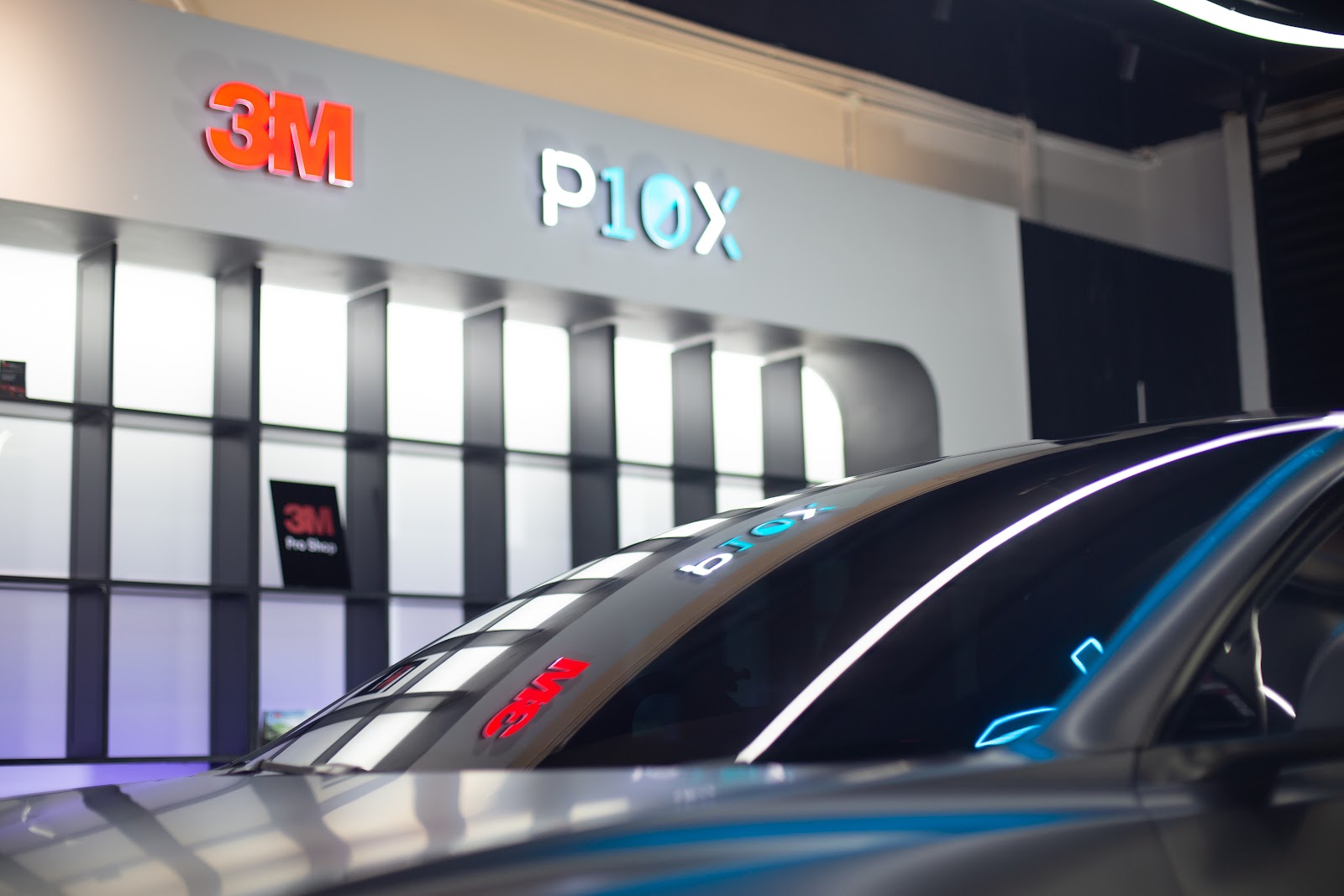
What you are looking for in a finished job is exactly what that photo shows. Clean edges that follow the glass line, no trapped particles visible against a reflection, and no fingers of film lifting at the top edge where the glass drops into the door.
Choosing the Right Model 3 Tint in Malaysia
The decision reduces to three moves. Put CR BLK 50 on the front side windows, because it is both legal and the best heat rejecting shade in the range. Put CR BLK 70 on the windscreen, because 65% TSER while staying fully legal is a genuinely good outcome. Then treat the roof and rear screen as one panel and pick the shade that keeps your rear view usable, knowing that anything from 35 to 50 sits within one or two points of peak heat rejection anyway.
If you want that spec quoted properly, take the car to a 3M Authorized Dealer such as 3M Pro Shop by P10X, ask them to confirm the roof and rear screen are being treated as one continuous panel, and ask for the TSER figure of each shade in writing before the film goes on.
Tesla Model 3 Window Tint Questions
What is the best window tint shade for a Tesla Model 3 in Malaysia?
CR BLK 50 on the front sides at 68% TSER, CR BLK 70 on the windscreen at 65% TSER, and CR BLK 40 on the roof and rear screen panel at 67% TSER.
Does the Tesla Model 3 glass roof need to be tinted?
It is the single biggest heat source on the car when parked, so most Malaysian owners tint it. There is no JPJ limit on the roof, so the shade is a comfort and visibility choice.
Is the Model 3 rear screen separate from the glass roof?
No. On the Model 3 the roof glass continues down and becomes the rear screen as one continuous panel, so both take the same film and the same shade.
Will darker tint keep my Model 3 cooler?
No. Crystalline Black peaks at 68% total solar energy rejection on CR BLK 50, while the much darker CR BLK 15 rejects 64%. Heat rejection comes from the film construction, not the darkness.
What VLT is legal for a Tesla Model 3 windscreen in Malaysia?
A minimum of 70% visible light transmission on the windscreen and 50% on the front side windows. Rear glass and the roof have no limit.
Does window tint affect the Model 3 forward cameras?
Non-metallized film such as Crystalline Black is the appropriate choice on a camera-dependent car. Discuss the windscreen specifically with the installer before booking.
Does tint block mobile signal or GPS in a Tesla Model 3?
Crystalline Black is non-metallized, so it does not interfere with mobile signal, GPS or satellite radio.
How much UV does Model 3 tint block?
Crystalline Black rejects 99.9% of UVA and UVB across every shade, so UV protection does not change when you go darker.
Find out the best protection for your car
Visit a 3M Pro Shop and discover the cost-effective 3M Protective Film and Window Tint
Author

Kelvin Cheen
Kelvin is an Automotive Solutions Consultant and Branch Manager at 3M Pro Shop. With 4+ years of field experience in premium vehicle surface protection, Kelvin specializes in flagship 3M technologies, including 3M Crystalline Black optical film and Ceramic IR tints, 3M Paint Protection Film (PPF), etc. His focus is on delivering transparent, engineering-backed advice to car and EV owners, cutting through sales upsells to ensure customers choose the exact thermal rejection and paint protection tailored to their driving needs.
Experience the future of window tinting
Visit a 3M Pro Shop and discover the revolutionary Crystalline CR BLK film