
Car still hot after tint in Malaysia? Why it happens

- Most budget tint films block visible light but not infrared heat, which is the real source of cabin warmth in Malaysian weather.
- TSER (Total Solar Energy Rejected) is the single most reliable number to compare when choosing tint for heat rejection. High VLT darkness alone does not mean high heat blocking.
- Your windshield is the largest glass surface on the car. Leaving it unprotected or using a low-spec film there limits how cool the cabin can stay.
- Degraded or poorly installed film loses performance over time. Bubbling, purple discolouration, or peeling edges are signs of failure.
- Upgrading to a ceramic or multi-layer sputtered film with verified TSER data is the most effective fix before spending on a full retint.
Car still hot after tint in Malaysia is one of the most common complaints from drivers who expected their new window film to make a real difference. You spent the money, sat through the installation, and waited for the curing period. But the cabin still heats up fast under the midday sun, the steering wheel is still too hot to grip, and the air conditioning still takes several minutes to cool things down.
The problem is rarely that "tinting does not work." It is usually that the wrong type of film was installed, the specs do not match your needs, or there are gaps in coverage that let heat pour in.
This guide breaks down 7 common reasons your car still feels hot after tinting in Malaysia, what each one means technically, and what you can actually do about it.
1. The film uses dye instead of ceramic or multi-layer technology
This is the most common reason behind weak heat rejection. Dyed window films are designed to darken glass and reduce glare. They do that job well enough. But dye absorbs heat rather than reflecting it. That absorbed heat radiates inward into the cabin over time. You might notice the car feeling fine for the first few minutes, then warming up steadily after sitting in the sun for an hour.
Metallic films do reflect some heat, but they come with tradeoffs. They can interfere with GPS, RFID-based toll tags (Touch 'n Go RFID), and mobile phone signals. Smart Tag, which uses infrared rather than radio frequency, is affected by a different mechanism: high IR rejection in any film type, not just metallic films. In Malaysia, that is a real inconvenience on daily commutes.
Ceramic-based films and multi-layer sputtered films use non-conductive particles (like titanium nitride or rare earth metals) to reflect infrared heat without blocking electronic signals. These films reject heat at the source rather than absorbing and re-emitting it.
If your installer used a budget dyed film, the darkness you see through the glass does not translate into meaningful heat blocking. The film might look dark, but heat passes through it almost as freely as through untinted glass.
There is one additional signal nuance worth knowing. Smart Tag toll readers use infrared signals, not radio frequency. This means even non-metallic ceramic films with very high infrared rejection (above 90% IRR) can interfere with Smart Tag function. The trade-off is direct: the more infrared heat a film blocks, the more likely it is to weaken Smart Tag signals. Most drivers accept lowering the window at Smart Tag lanes. If uninterrupted Smart Tag function is a hard requirement, choose a film with moderate IRR (below 90%) on the windscreen.

2. The film has a low TSER rating
VLT (Visible Light Transmittance) tells you how dark the tint looks. IRR (Infrared Rejection) tells you how much infrared heat the film blocks. But the number that matters most for overall cabin comfort is TSER, which stands for Total Solar Energy Rejected.
TSER measures the total percentage of solar energy, including visible light, infrared, and UV, that the film blocks. A film can have 90% IRR and still let heat through if its TSER is low, because infrared is only one component of the total heat load reaching your glass.
Here is a rough guide to what TSER levels mean in practice:
- Below 40% TSER: Minimal heat reduction. You will still feel the full force of Malaysian afternoon sun.
- 40% to 55% TSER: Moderate. Acceptable for daily driving but limited benefit after long outdoor parking.
- 55% to 70% TSER: Good. Noticeable comfort improvement for most Malaysian drivers.
- Above 70% TSER: High performance. Best suited for drivers who park outdoors regularly or want maximum comfort.
When shopping for tint, always ask your installer for the TSER figure at your chosen VLT level. If they cannot provide it, that is a red flag worth paying attention to.
For a side-by-side look at how TSER varies across film technologies, the 3M Crystalline tint comparison breaks down the real performance differences between budget and premium options.
3. Your windshield has no tint or uses a weak film
Many drivers tint the side and rear windows but skip the windshield entirely. This is one of the biggest missed opportunities for reducing cabin heat.
The windshield is the largest single piece of glass on your car. It faces the sun directly when you drive and when your car is parked nose-in, which is common in Malaysian parking lots and shopping malls. Even if your side windows have a high-TSER ceramic film, heat pouring through an unprotected windshield will warm the dashboard, steering wheel, and entire front cabin area.
In Malaysia, JPJ regulations require a minimum 70% VLT on the windshield. That means you can legally apply a near-clear film that still blocks a large amount of infrared and UV energy without making the windshield look dark at all.
High-performance clear films designed for windshields can reject 50% or more of total solar energy while keeping VLT well above the 70% legal limit. If your car feels hot and you have no windshield film, this is where the single biggest improvement will come from.
For the full breakdown of what is legally allowed on each window, read the guide on JPJ compliant window tint rules and VLT limits.

4. The film blocks visible light but not infrared radiation
This is related to Reason 1, but it is worth explaining separately because it trips up many buyers.
A very dark tint, say 5% VLT (sometimes called "limo tint"), looks like it should block everything. But darkness and heat rejection are two different properties. VLT only measures how much visible light passes through the glass. Infrared radiation, which is the main source of the heat you feel inside the cabin, operates on a different wavelength entirely.
A cheap 5% VLT film might reject less total solar energy than a premium 50% VLT ceramic film. The darker film just makes the cabin dimmer. The ceramic film actually blocks the heat.
This is why some drivers tint their windows as dark as possible and still complain that the car feels hot. The film was never designed to reject infrared energy. It was designed to block visible light, and that is exactly what it does.
If you want both privacy and genuine heat rejection, look for a film that combines your preferred VLT with a high TSER rating. These films exist across multiple price points. The 3M window tint price guide explains what drives the cost difference between basic dyed films and premium ceramic or sputtered options.
5. The installation has gaps, lifted edges, or air pockets
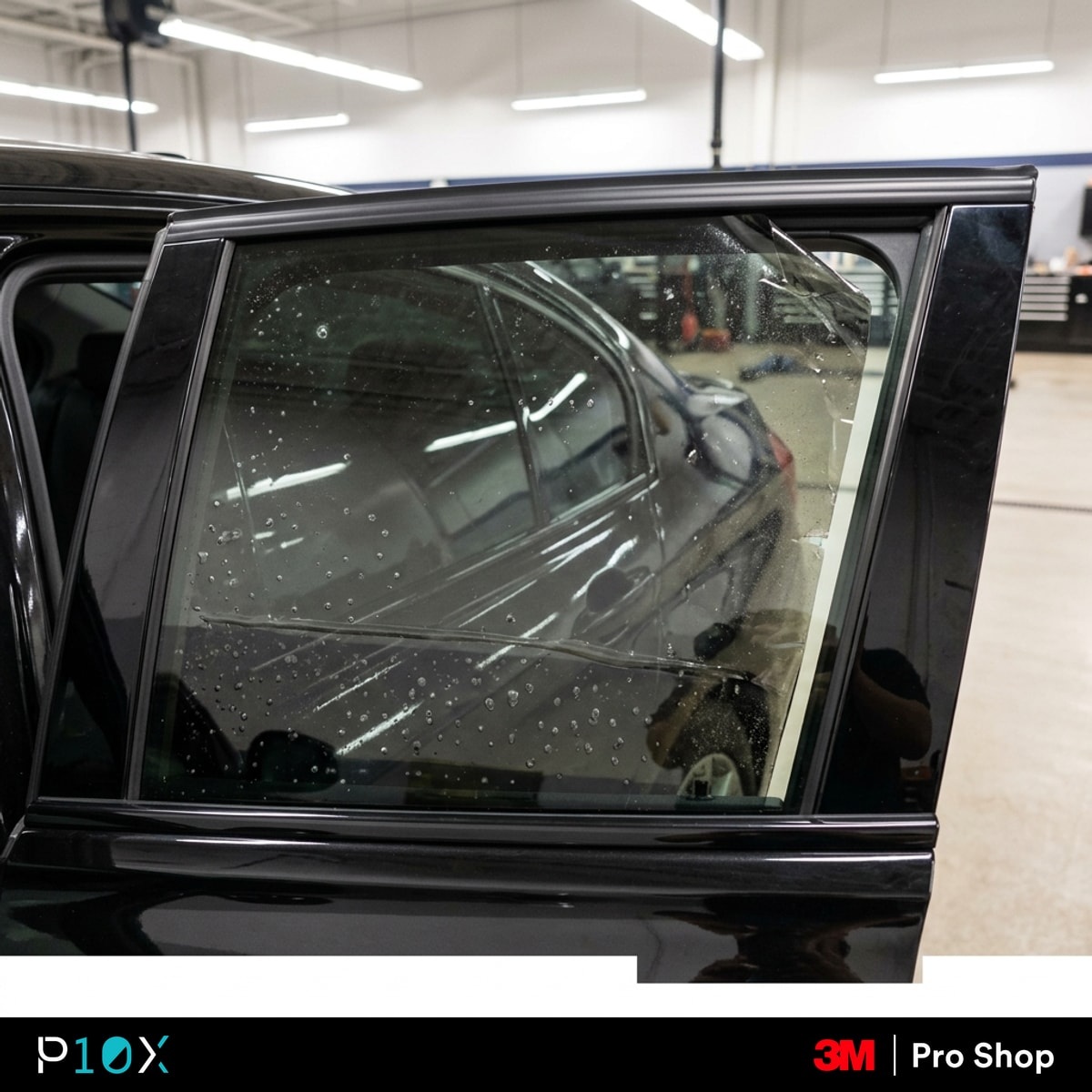
Even a premium film loses performance if the installation is not done properly. Common issues that reduce heat rejection:
- Gaps along window edges: If the film does not cover the full glass surface, heat enters through unprotected strips. Even a 2 to 3mm gap around the edges adds up across all windows.
- Air pockets or bubbles: Trapped air between the film and glass reduces the film's ability to reject heat uniformly. It also speeds up film degradation over time.
- Overlapping seams on curved glass: On rear windshields with heavy curvature, some installers use two pieces with an overlap seam. That seam is a weak spot for both appearance and performance.
- Contamination under the film: Dust or debris trapped during installation creates raised spots that prevent the film from lying flat against the glass.
Good installation matters as much as the film itself. A certified installer using proper tools, such as heat guns, squeegees, and a controlled environment, will produce a result that performs closer to the film's rated specs.
If you see car tint bubbles, dust specks trapped under the surface, or edges that are starting to peel, these are signs that installation quality is compromising your tint's heat rejection ability.
6. The film has degraded and lost its heat rejection properties
Window film does not last forever. Depending on quality and technology, films degrade at different rates under Malaysia's year-round UV exposure and high humidity.
Signs your film may have degraded:
- Purple or blue discolouration: This is common in dyed films. The colour shift means the dye is breaking down and the film is losing performance.
- Reduced darkness: If the film looks noticeably lighter than when it was installed, the UV-absorbing layer is failing.
- Increased cabin heat: If your car feels hotter than it did a year or two ago with the same film, degradation is the most likely cause.
- Bubbling or hazing: Adhesive breakdown causes the film to separate from the glass, creating visible defects and reducing contact.
Premium ceramic and multi-layer sputtered films generally maintain their performance for 5 to 10 years or longer. Budget dyed films may start losing effectiveness within 1 to 2 years under Malaysian conditions, especially on windows that face direct sunlight.
Check your warranty card or receipt. Quality films from established brands typically carry warranties of 5 years or more and guarantee against colour change, bubbling, and measurable performance loss.
7. Your expectations may not match what window tint can physically do
Window tint reduces heat. It does not eliminate it. Even the best multi-layer sputtered film with 80%+ TSER will not keep your car cool like an air-conditioned room when parked under direct Malaysian sun for hours.
Here is what quality tint realistically does:
- Reduces peak cabin temperature by several degrees compared to untinted glass
- Lowers the time your air conditioning needs to bring the cabin to a comfortable temperature after parking
- Blocks 99% or more of UV radiation, protecting your skin and preventing dashboard and leather fading
- Makes the cabin noticeably more comfortable during driving, especially on long highway trips
What it does not do:
- Prevent the car from heating up entirely during extended outdoor parking
- Replace the need for air conditioning
- Perform equally well if only some windows are tinted and the windshield is left bare
Setting realistic expectations helps you judge whether your current film is genuinely underperforming or whether you expected more than any tint can deliver. If your air conditioning reaches the set temperature faster than before and the dashboard is not as scorching to touch, the film is working. The improvement may just feel less dramatic than what you pictured.
What to check before you retint
Before spending on a full retint, run through this quick checklist:
- Get the TSER spec sheet for the exact film and VLT on your car. If your installer cannot produce one, that itself is a concern.
- Check your windshield. If it has no film or only a basic dyed film, upgrading the windshield alone is the single biggest improvement you can make.
- Inspect installation quality. Walk around the car and look for gaps, bubbles, haze, and lifted edges on every window.
- Check the film's age and condition. Any purple shift, visible bubbling, or colour fading means the film is degrading and losing performance.
- Compare your current TSER to available options. If your film's TSER is below 50%, moving to a ceramic or sputtered film with 60%+ TSER will produce a noticeable difference.
If two or more of these checks flag an issue, a retint with the right film and a certified installer is the most practical path forward. Understanding the full car window tint installation process also helps you evaluate whether your previous job was done to a proper standard.

When upgrading your film makes the biggest difference
If your current film is a budget dyed type with no meaningful TSER rating, switching to a ceramic or multi-layer sputtered film will give you the most noticeable improvement. The difference is not small. Drivers who upgrade from basic dyed film to a high-TSER ceramic film regularly report that the cabin feels cooler within the first few minutes of entering the car and that the air conditioning reaches the set temperature faster.
For Malaysian drivers who park outdoors during work hours, focus on these three priorities:
- A high-TSER windshield film at 70%+ VLT to stay within JPJ legal limits
- A ceramic or multi-layer sputtered film for all side and rear windows
- Installation by a certified shop that provides a written spec sheet and proper warranty
The reality is straightforward. A good film on a well-installed car will make a measurable difference to your daily comfort. A bad film, no matter how dark it looks, will leave you right where you started.
If you are comparing options and want a broader look at what car window tinting in Malaysia offers across technology tiers, that guide covers the main categories and what to expect from each.
A practical next step is visiting a 3M Pro Shop location near you. You can review film samples, check TSER data sheets in person, and get a recommendation matched to your vehicle, parking conditions, and budget.
FAQs
Can I add a second layer of tint over my existing film to improve heat rejection?
Layering tint is not recommended. Two layers change the VLT in ways that are hard to predict, which can push you below JPJ legal limits. The combined films may also bubble or peel faster because the adhesive layers interact poorly. If your current film underperforms, the better approach is to remove it fully and install a single, higher-spec replacement.
Does the colour of my tint affect how much heat it blocks?
No. Heat rejection depends on the film's technology (dyed, metallic, ceramic, or sputtered) and its TSER rating, not the visible colour or shade. A dark film can have low heat rejection while a nearly clear ceramic film can block a large percentage of infrared energy. Always ask for the spec sheet rather than judging by appearance alone.
How long does new tint take to reach full performance after installation?
Most films need 2 to 4 weeks to fully cure in Malaysian weather. During this curing period, you may notice slight haze or small water pockets between the film and glass. These typically disappear on their own. Avoid rolling down tinted windows for at least 3 to 5 days after installation to give the adhesive time to bond properly.
Will adding a windshield tint affect my visibility when driving at night?
A film with 70% VLT or higher on the windshield has minimal impact on night visibility for most drivers. The light reduction is comparable to wearing very lightly tinted sunglasses. For those who do frequent night highway driving, a 70% VLT ceramic windshield film still provides strong daytime heat rejection without meaningfully reducing clarity after dark.
Is it worth retinting if my car is only 1 to 2 years old?
It depends on what film was originally installed. Age alone does not determine whether a retint is worthwhile. The deciding factors are the film's technology, its current condition, and whether the TSER meets your expectations. A 1-year-old premium ceramic film should still perform near its rated specs. A 1-year-old budget dyed film may already be losing colour and heat rejection performance.
Find out the best protection for your car
Visit a 3M Pro Shop and discover the cost-effective 3M Protective Film and Window Tint
Author

Fabian
He is passionate about revolutionizing the car protection services industry by bringing innovation and transparency to a traditionally opaque and often misunderstood field. His mission is to educate end users on the true benefits and importance of car protection, aiming to replace outdated practices with honest, customer-focused solutions. With a fresh approach to car tinting, paint protection film (PPF), and detailing services, he is committed to delivering a superior customer experience that sets a new standard in the market. He welcomes discussions about the future of the automotive industry and is eager to connect with like-minded professionals who share his vision for innovation, integrity, and excellence.
Experience the future of window tinting
Visit a 3M Pro Shop and discover the revolutionary Crystalline CR BLK film