
Dashcam Blurry After Tinting? Check These Before Buying a New One
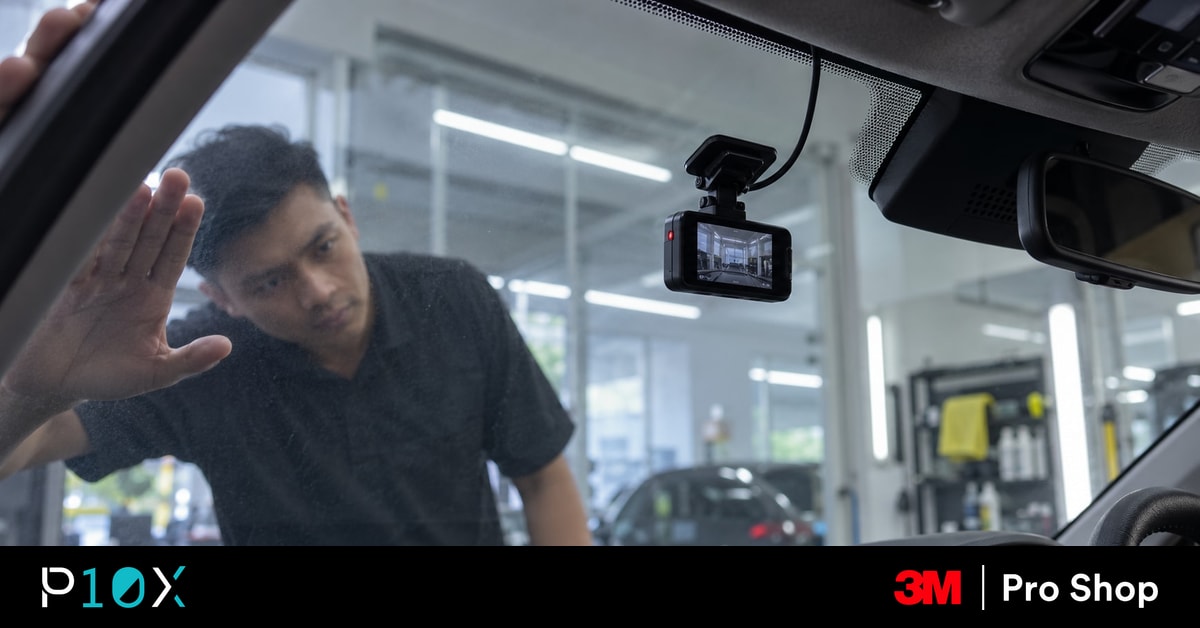
- Fresh film can look hazy until the water left from installation dries, and the installer can tell you how long your film should take.
- A shipping film left on the lens, a dirty lens or a lower quality preview in the phone app can all look like blur, so they are worth ruling out before you replace the camera.
- Cleaning new film or moving a mount stuck to it is best left until the shop's aftercare instructions allow it.
- Your dashcam lens needs a clear view of the road, not a view through the black dotted border on the windscreen.
- If night footage is worse than daytime footage, darker glass or a CPL filter may be cutting the light reaching the camera.
- Haze that lasts beyond the drying period the shop gave you is worth an installer check. An unsafe view, or a lane keeping or automatic braking warning, needs attention sooner.
If your dashcam is blurry after windshield tinting, the lens, the glass and the mounting position are worth checking before you spend money on a new camera. Freshly fitted window tint may still be drying, the camera may have moved, or a darker windscreen may have changed how much light reaches it.
You can start by playing an original recording from the memory card at full resolution. A lower quality preview in the phone app can hide detail that is there in the saved file. It also helps to compare clips recorded in similar light, rather than judging a sunny clip from before the tint against a rainy night after it.
Dust specks trapped under the film or edges that start lifting will not clear as the film dries, so they are worth showing the installer early. If you cannot see the road clearly through the windscreen, it is safer to have the glass checked before you drive again.
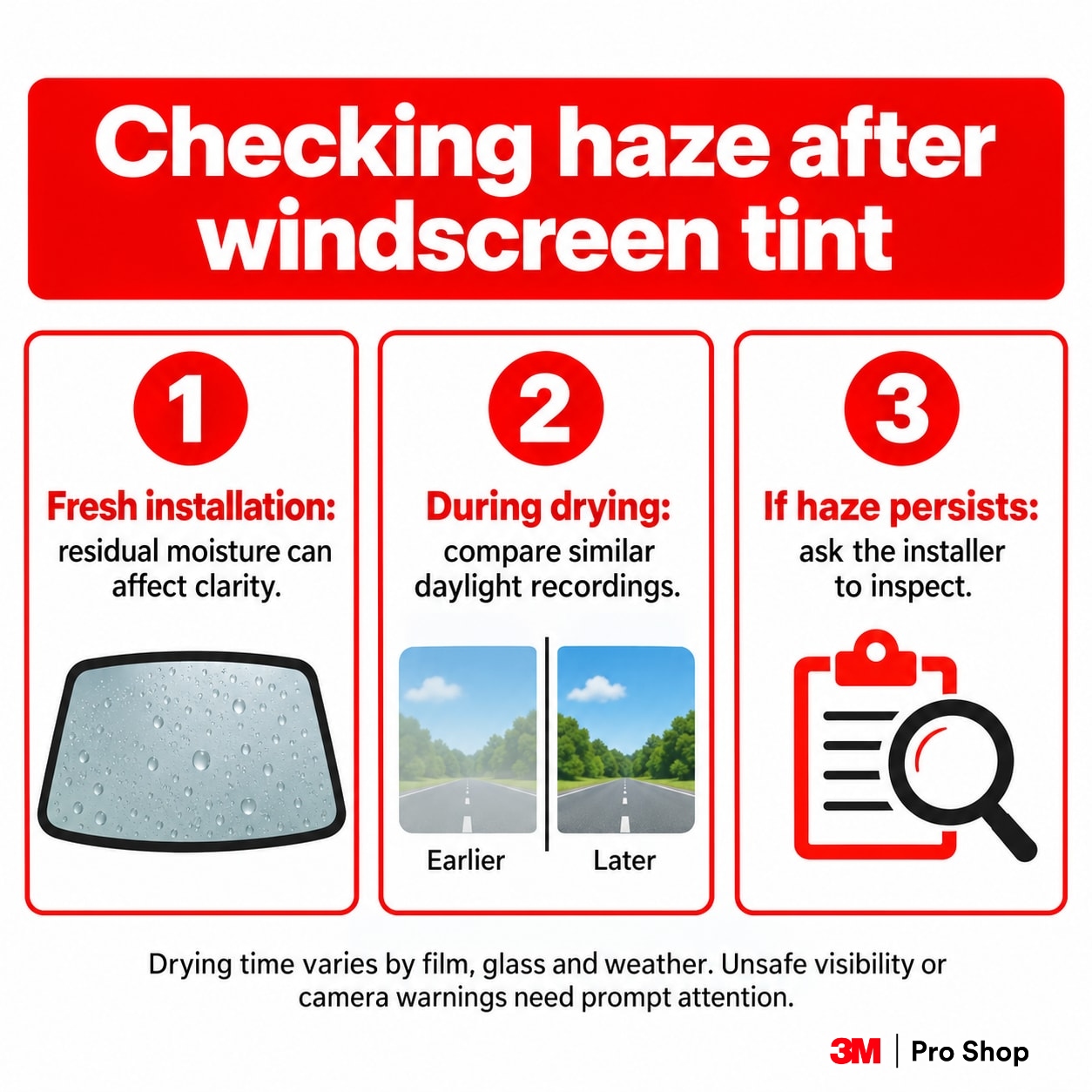
Haze in the first days is often the film still drying
Haze in the first days after tinting is often water left over from the installation. Installers spray a mounting solution that is mostly water so the film can slide into place, and some of it stays between the film and the glass even after the installer presses the water out. Until it dries, it can leave cloudiness, streaks or small water pockets.
Drying time depends on the film, glass and weather. On some cars the moisture clears within days, while others take longer, especially in cool or humid weather. You may hear three days, ten days or a month from different people, but the drying period your shop gives for your exact film is the one to go by.
Short clips recorded from the same parked spot in similar daylight make it easy to see whether the haze is clearing. If the haze fades a little more every few days, that usually points to normal drying. If it stops improving, it is time to call the installer.
A dirty lens, camera setting or CPL filter can look like tint blur, especially at night
Before blaming the tint, it is worth ruling out the camera itself. A shipping film left on the lens, fingerprints, a recording setting that changed after the camera was unplugged, or a CPL filter can all make footage look hazy, even when the new tint is fine.
A thin protective film left on the dashcam lens is easy to miss, especially if the camera is new or was taken down and refitted during the tint job. You can peel it off if the camera manual describes it as a shipping protector. If the manual does not mention one, the layer may be part of the lens, so it is better left alone.
Fingerprints or residue on the lens can be cleaned off following the camera maker's instructions. Once the tint shop says cleaning is safe, the inside of the windscreen in front of the camera is worth cleaning too. A clean microfibre cloth and the cleaner your shop recommends are enough. Fresh film should not be scrubbed or pressed at the edges.
It is also worth checking that the camera is still set to its highest recording resolution, especially if it was unplugged during the tint job.
If daytime footage is clear but night footage is worse, less light coming through the tinted glass may be part of the problem. Night mode, exposure or WDR settings can brighten the picture. WDR stands for wide dynamic range, a setting that balances the bright and dark parts of the image. No setting can add back light that the film blocks or sharpen a lens that is out of focus. If you change one setting at a time and compare the saved files, you can see which change actually helped.
A CPL filter is a polarising lens that fits over the dashcam lens on compatible models. It can cut dashboard reflections on the windscreen in some conditions, but it also reduces the light reaching the camera and may make night footage worse. If you already use one, you can record a short clip with it and one without it while the car is parked, then compare the two.
Your dashcam lens needs clear glass, not the black dotted border
Your windscreen's black dotted border, often called the frit area, can block part of the picture if it sits in the lens's view. Film may also not sit fully flat over the raised dots, so the area around them can look patchy on camera.
Your mount can sit near that border while the lens looks through clear glass below or beside it. What counts is what the lens sees, not where the pad is stuck. It is also worth keeping the camera out of your line of sight while driving, and following the car and camera makers' mounting instructions.
Pulling a mount off new film, or sticking another one onto it, is best done only after checking with the installer. Peeling adhesive off can damage the film, and a suction cup is not automatically safe on a freshly tinted surface either. Your installer can help plan the position and tell you when the film is ready.
Haze that outlasts the drying period needs an installer check
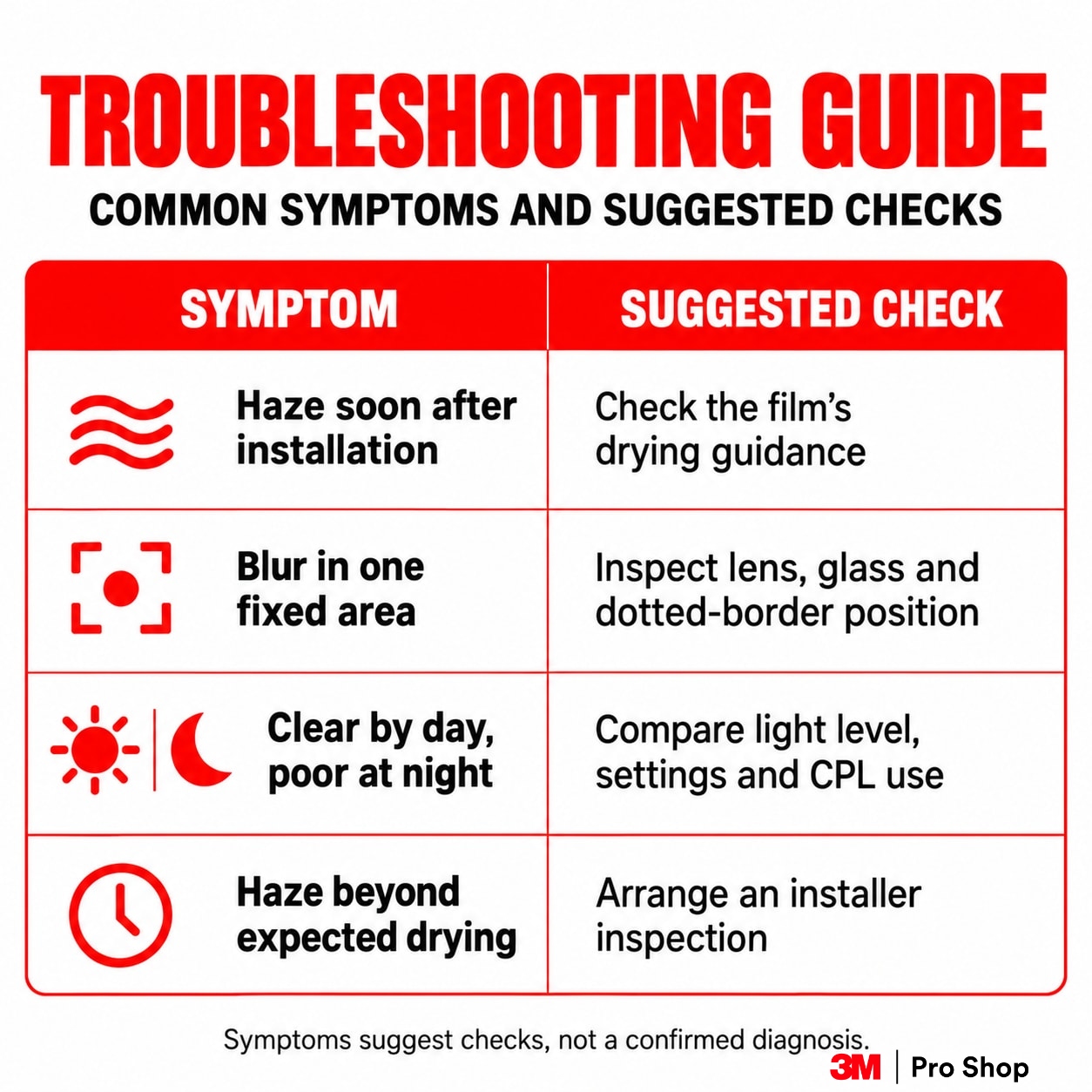
If your footage stays hazy beyond the drying period the shop gave you, it is worth bringing the car back to the installer. Lifting edges, obvious specks under the film, severe distortion or an unsafe view are reasons to go back sooner. At the inspection, the installer can check the glass, the film and the area the camera looks through.
Blur that does not go away can come from dirt trapped under the film, a fitting fault, the film itself or the camera. Darker film, or film labelled “dyed” rather than “ceramic”, is not automatically the cause, so the film type alone does not tell you much.
Bringing the original footage, the installation date, the film details and any clips from before and after the job makes the inspection easier. Your installer should explain what they find and whether cleaning, moving the mount or replacing the film makes sense. Whether a redo is covered depends on what caused the problem and the warranty terms, so it is not automatic.
A lane keeping or automatic braking warning after tinting needs a separate check
If a lane keeping or automatic braking warning appears after tinting, it is worth telling both the installer and an authorised service centre. Until it is checked, it is safer not to rely on that system. Your owner's manual explains what the warning means.
Lane keeping and automatic braking use cameras that are separate from your dashcam. They may look through their own area of the windscreen and come with specific restrictions on film, stickers and accessories. A head-up display can have its own film restrictions too.
If the shop noted any warning lights on a checklist before starting the job, that record helps show whether a warning is new.
Testing the system by triggering emergency braking or drifting out of a lane is dangerous. Any inspection or calibration should follow the carmaker's procedure.

If the glass checks out, the dashcam itself may need checking
When the glass and film pass inspection but the footage is still poor, the camera maker can help check focus, recording settings or a hardware fault.
On the film side, our team at 3M Pro Shop by P10X, a 3M Authorized Dealer, can inspect the windscreen and discuss a suitable mounting position. If new film is needed, we can explain the 3M window tinting options. Our outlets are listed on the locations page.
Find out the best protection for your car
Visit a 3M Pro Shop and discover the cost-effective 3M Protective Film and Window Tint
Frequently asked questions
How long does tint haze take to clear?
It varies with the film, glass and weather. Some moisture clears within days, but full drying can take longer. Your installer can give you the drying period for your film, and it is worth letting the shop know if the haze stops improving. If you cannot see the road clearly, it is safer to have it checked straight away.
Why is my footage worse at night after tinting?
Tinted glass may let less light reach the camera, which makes grain or blur in dark scenes more noticeable. It is worth checking the original file, the recording settings and any CPL filter. Night mode or a higher exposure may improve the picture, but it will not guarantee sharper footage.
Can I move the dashcam without damaging new tint?
It is safer to check with the installer before removing or refitting a mount attached to the film. Adhesive can pull at the film, and suction mounts can also disturb a fresh surface. How and when to do it safely depends on the film, mount and installation.
Does darker tint always mean blurrier footage?
No. Darkness affects how much light reaches the camera, but how clear the film is, where the camera is mounted and the camera itself matter too. A legal tint shade does not guarantee clear night recordings.
Will a CPL filter fix the haze?
It may reduce reflections, but it cannot remove moisture under the film, clean a dirty lens or correct a blocked view. It also cuts light and may make night recordings worse, so it makes sense to find the cause before adding one.
Should I replace the film or the dashcam?
Neither, until the basic checks are done and the installation has been inspected. New film only makes sense if a film or installation problem is found. If the glass is fine and the fault is with the camera, the camera maker can advise on repair or replacement.
Author

Kelvin Cheen
Kelvin is an Automotive Solutions Consultant and Branch Manager at 3M Pro Shop. With 4+ years of field experience in premium vehicle surface protection, Kelvin specializes in flagship 3M technologies, including 3M Crystalline Black optical film and Ceramic IR tints, 3M Paint Protection Film (PPF), etc. His focus is on delivering transparent, engineering-backed advice to car and EV owners, cutting through sales upsells to ensure customers choose the exact thermal rejection and paint protection tailored to their driving needs.
Experience the future of window tinting
Visit a 3M Pro Shop and discover the revolutionary Crystalline CR BLK film