
Why Your Tint Turned Purple After 2 Years: Dyed vs Sputter vs Nano-Ceramic

- Purple tint is a sign of dye breaking down, not bad luck. It points to the film type, not a one-off defect.
- Dyed films fade because UV destroys their colour dyes unevenly, leaving a purple cast. Quality ceramic and multilayer films resist this.
- Malaysia's equatorial sun speeds up the fade, so budget dyed film can turn within two years here.
- You can diagnose the film without removing it by checking the glass edge, running an infrared cabin test, and shooting a blue-sky photo.
- 3M multilayer optical and ceramic films are colour-stable and the 3M warranty covers purpling, which budget dyed films almost never do.
If you have noticed your tint turning purple and wondered why car tint turns purple at all, the short answer is chemistry, not bad luck. The colour shift is a dyed film breaking down under ultraviolet light, and once you understand how different films are built, the purple cast becomes easy to explain and easy to avoid next time. This guide walks through the three main film types, why dyed film fades, how Malaysian heat speeds it up, and how to check your own film without peeling it off.
It is one of the most common complaints among Malaysian car owners, and it always feels worse than a simple colour change. A tint that looked sleek and neutral when it was fitted slowly turns a blotchy purple or bronze, the cabin starts to feel hotter, and the whole car looks older than it is. Many owners assume they were just unlucky, when in fact the film told them exactly what it was made of.
The encouraging part is that purpling is completely predictable and completely avoidable. Once you can read the signs, you will know what you are driving with today and exactly what to ask for so it never happens again.
What Purple Tint Is Actually Telling You
Purple tint is telling you the film is dye-based and the dye has started to fail. Dyed colour film is built from layers that include coloured pigments blended to produce a neutral grey or black. When the dye that produces that grey and black breaks down faster than the others, the leftover pigment is what reads as purple or bronze across the glass. The film is not dirty and it will not wash off, because the chemistry inside the layer has shifted permanently.
This matters because it points to the film type rather than a single faulty panel or a bad day at the installer. A film that turns purple was almost always a budget dyed film to begin with, regardless of how good it looked on day one. That is genuinely useful information, because it tells you exactly what to avoid when you choose your next tint, and it is one of the warning signs we flag in is cheap car tint worth it in Malaysia. In other words, the purple is less a defect than a label revealing what was on your windows all along.
Dyed, Sputtered and Nano-Ceramic Films Explained
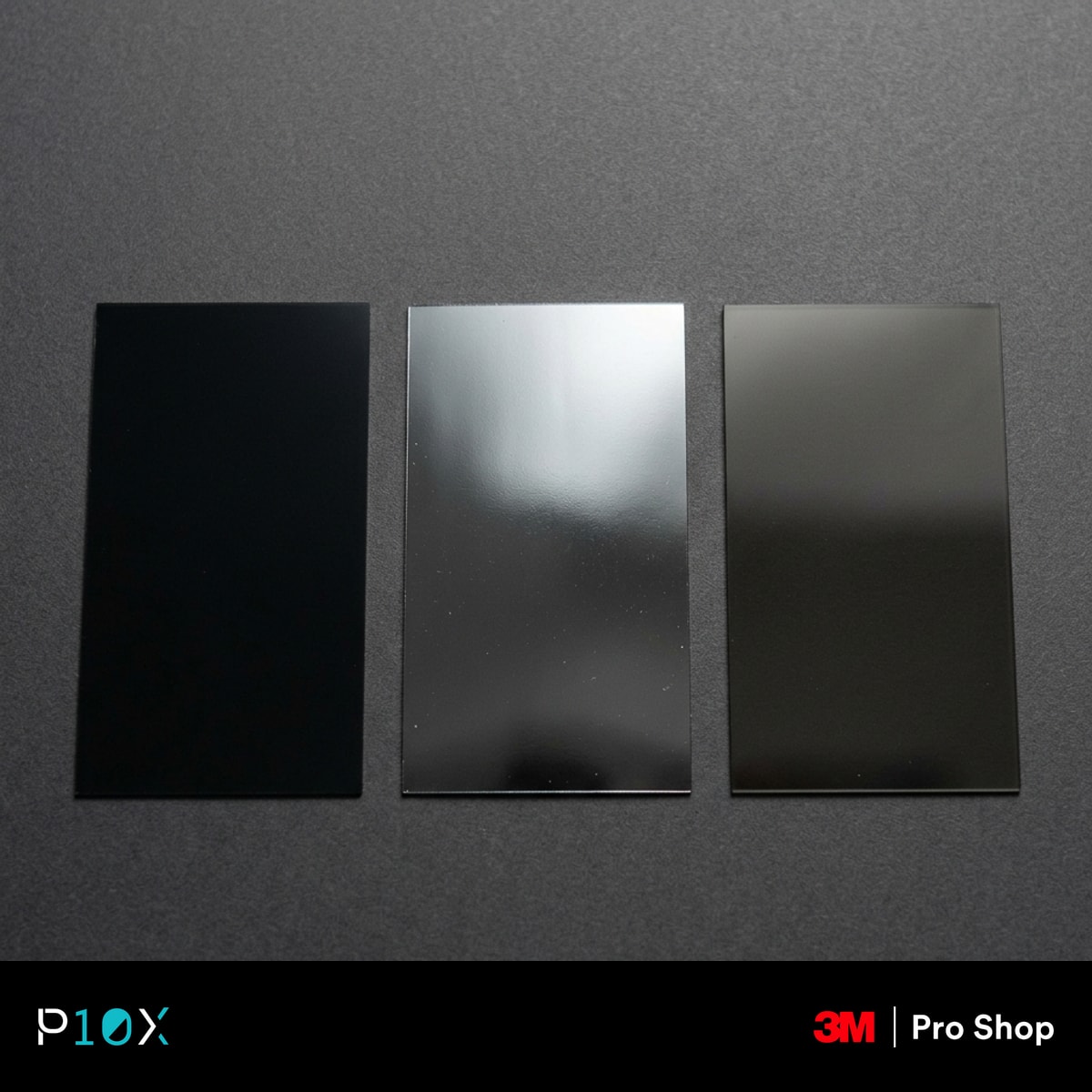
The three common film families are built very differently, and that construction is what decides whether they fade. Dyed films rely on colour pigment to darken the glass, metallised films use a sputtered metal layer to reject heat, and nano-ceramic and multilayer optical films use stable ceramic particles or precision optical layers. Understanding these three is the key to the whole topic, because construction, not price alone, is what predicts purpling. A more expensive dyed film can still fade, while a well-made ceramic film holds its colour for years.
Dyed film basics
Dyed film places colour dye in or just under the adhesive layers of the film. It is the cheapest type to make and the most prone to fading, because the dye is asked to do both the darkening and much of the heat work at once. Under strong, sustained UV, that dye slowly degrades, and that breakdown is the root cause of the purple shift. It is also why dyed film tends to reject less heat as it ages, since the same layer doing the colour is the one wearing out.
Sputtered or metallised film
Sputtered film bonds a fine metal layer to the film to reject heat, which is why it does not rely on dye to do the work. It resists colour fade far better than dyed film and will rarely turn purple, but the metal layer can interfere with radio signals such as key fobs, remotes, and navigation. It is an older approach that solves the fading problem while introducing a different one. We cover that trade-off in does window tint block your key fob signal.
Nano-ceramic and multilayer
Nano-ceramic films use heat-stable ceramic particles to block heat and UV, while multilayer optical films stack many precision layers that reject heat without any dye or metal at all. Because neither carries a vulnerable dye, both are colour-stable and hold their tone for years rather than months. The 3M Crystalline Black film, for example, uses around 200 nano-layers and does not rely on dye to stay dark, which is exactly why it does not develop a purple cast as it ages. This is the construction you want if fading is your concern.
Why Dyed Film Fades to Purple
Dyed film fades to purple because ultraviolet light breaks down its colour dyes at different rates. A neutral grey or black is actually a careful blend of several pigments, and the dyes that create that neutral tone degrade first under UV, while the more UV-stable reddish pigment is left behind. That surviving pigment is what your eye reads as a purple or bronze haze spreading across the glass. In short, the colour does not so much fade away as fall out of balance.
This is a gradual chemical process, not a sudden fault, which is why it tends to creep in after a year or two rather than appearing straight away. It is also why the shift is usually fairly even across a whole window, since the entire dyed layer is exposed to roughly the same sunlight, though sun-facing windows often go first. A colour-stable ceramic or multilayer film simply has no vulnerable dye to lose, so no matter how long it bakes in the sun it does not develop the cast in the first place.

How Malaysian Heat Speeds It Up
Malaysia's equatorial sun accelerates dye breakdown far more than most climates do. Our ultraviolet index regularly sits at 11 and above, which is classed as extreme, and cars here often park in open, unshaded lots for hours at a time, day after day. The more intense and prolonged the UV exposure, the faster a dyed film loses its neutral colour, and few places on earth dish out UV as relentlessly as we do year-round.
This is why a dyed film that might last several years in a milder climate can turn purple within two years here, sometimes even sooner on the windows that face the afternoon sun. It is not that locally fitted film is always worse, it is that our conditions punish any dye-based film much harder than a temperate climate would. This climate reality is precisely why investing in colour-stable construction matters more here than almost anywhere else. For heat performance context across film types, our 3M Crystalline tint comparison lays out the numbers.

How to Diagnose Your Film Without Removing It
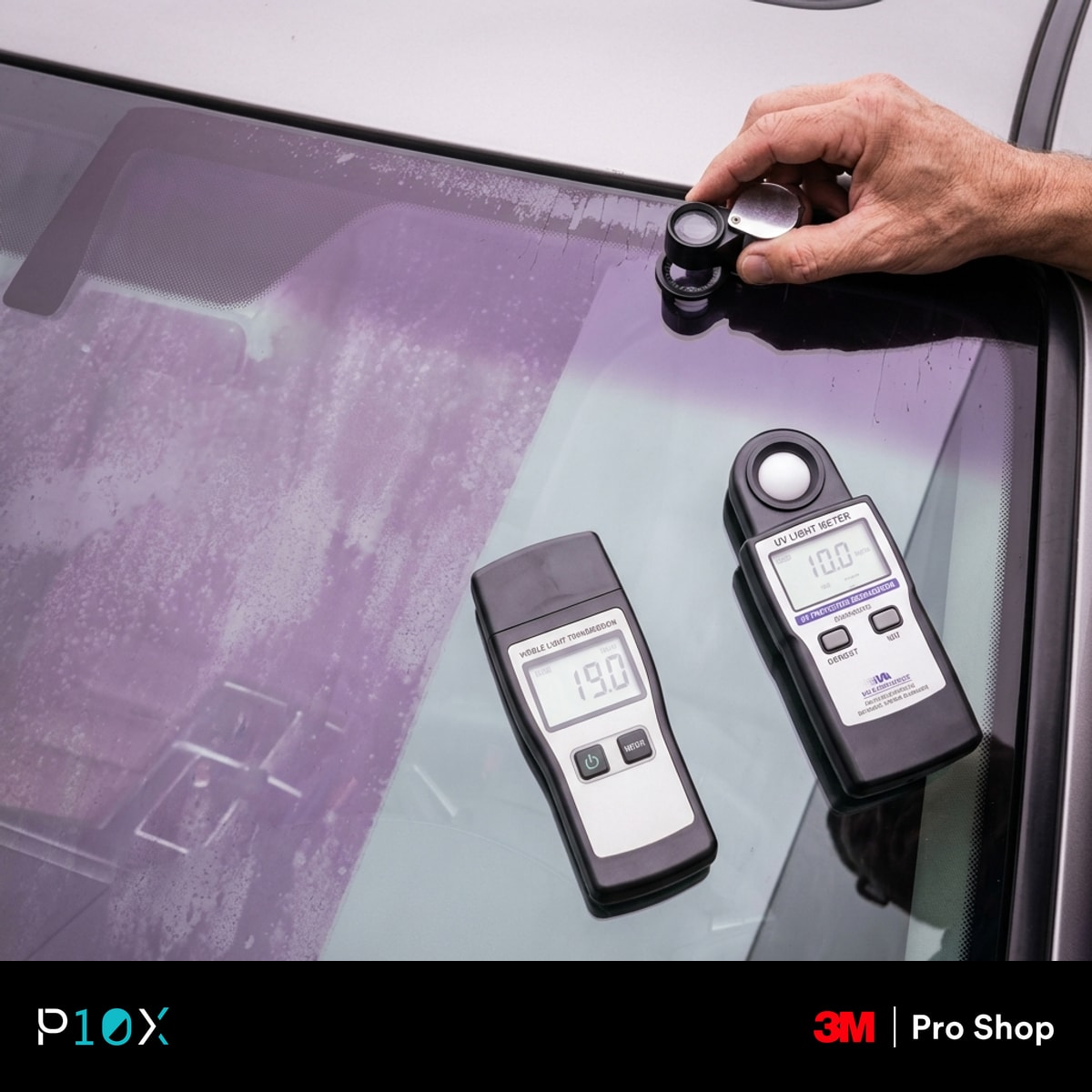
You can work out what film you have without peeling anything off, using only your eyes and a cheap thermometer. A few quick observations are usually enough to tell whether you are driving with a fading dyed film or a stable one. Run the three checks below before you decide whether to live with it or replace it, since together they paint a clear picture.
Check the glass edge
Look closely at the film along the glass edge and around the demister lines on the rear screen. A dyed film that is failing often shows the purple shift most clearly at these edges, and may look noticeably different from the centre of the pane. A uniform, neutral tone with no bronze or pink tint anywhere usually suggests a more stable ceramic or multilayer film.
Run an infrared cabin test
Point an infrared thermometer at the seat or door card near a tinted window after the car has sat in the sun for a while. A film that rejects little heat, leaving those surfaces hot, alongside a visible colour shift is almost certainly a basic dyed film that is past its best. Strong heat rejection that keeps the surfaces noticeably cooler points to ceramic or multilayer construction doing its job.
Shoot a blue-sky photo
Take a photo of a bright, clear sky through the window with your phone. A dyed film that is fading will often cast an obvious purple or pink tone across the image that is easier to spot in a photo than with the naked eye. A colour-stable film keeps the sky looking a neutral grey, which is a quick and convincing visual confirmation you can compare across different windows.
Replace or Live With It: Making the Call
Whether to replace purple film comes down to visibility, comfort, and how much the look bothers you. A faded dyed film usually rejects little heat and offers weaker UV protection by the time it turns, so beyond the unsightly colour you are very likely losing cabin comfort and interior protection as well. If the cast irritates you every time you get in, or the cabin feels like an oven on a sunny day, replacement is the practical and worthwhile choice rather than a purely cosmetic one.
Purple film cannot be restored or polished back to neutral, since the dye damage inside the layer is permanent. If you do replace it, choosing a colour-stable ceramic or multilayer film means you should not have to face the same fade again for the life of the car. As a cost reference, standard 3M packages start from about RM1,600 for XP, RM2,700 for Ceramic IR, and RM3,800 for Crystalline Black, detailed in our 3M window tint price in Malaysia guide. Viewed over the years you will keep the car, the difference in price is small against never replacing purpled film again.
What to Ask For Next Time
Next time, ask plainly for a film that does not rely on dye to stay dark. A nano-ceramic or multilayer optical film holds its colour, rejects far more heat, and blocks 99.9 percent of UV without depending on a pigment that the sun can break down. Ask the installer for the film type, the heat rejection figure, and the warranty terms in writing before you commit, and treat reluctance to provide them as a warning sign in itself.
Warranty is a strong tell here. A genuine 3M e-warranty covers purpling for 5 years through an authorised dealer, whereas budget dyed films almost never cover colour shift. Quality colour-stable films from reputable brands all resist purpling, so the key is choosing construction over the lowest price. Our 3M Crystalline Black launch notes and the broader why 3M window tinting guide explain what to look for, and if you also see bubbling, our why your tint bubbles guide helps you tell the faults apart.
Choosing Film That Holds Its Colour
Purple tint is a chemistry problem with a simple lesson. Dyed film fades because its dyes break down under our intense sun, while ceramic and multilayer films stay stable because they carry no vulnerable dye. Diagnose your current film with the edge, heat, and sky checks, then choose construction that will not repeat the fade.
If your film has already turned, treat the replacement as a chance to upgrade to a colour-stable option with a real warranty. That way the purple cast becomes a one-time lesson rather than a recurring cost.
Find out the best protection for your car
Visit a 3M Pro Shop and discover the cost-effective 3M Protective Film and Window Tint
Frequently Asked Questions
Why does window tint turn purple?
It turns purple when a dyed film's colour dyes break down under ultraviolet light. The neutral dyes fade first and leave a reddish pigment behind, which looks purple. It is a sign of dye-based film, not a passing stain.
Can purple tint be fixed?
No. The dye damage is permanent, so purple film cannot be restored to its original colour. The only real fix is to remove it and fit a new film, ideally a colour-stable ceramic or multilayer option that will not fade the same way.
How long does dyed tint last?
In Malaysia's intense sun, budget dyed film can start turning within two years, sometimes sooner on sun-facing windows. Milder climates give it longer, but our extreme UV index shortens its colour life noticeably.
Does ceramic tint turn purple?
No. Ceramic films use heat-stable particles rather than colour dyes, so they hold their tone and do not develop a purple cast. This colour stability is one of the main reasons people choose ceramic over dyed film.
Is purple tint a sign of cheap film?
Usually, yes. Purpling is a dye breakdown that affects dye-based budget films. Colour-stable ceramic and multilayer films do not carry the vulnerable dye, so a purple cast is a strong sign the original film was a low-cost dyed type.
Does 3M tint fade over time?
3M ceramic and multilayer optical films are colour-stable and do not fade to purple, and the 3M warranty covers purpling for 5 years through an authorised dealer. Quality films from other reputable brands also resist this kind of colour shift.
How can I stop my tint from turning purple?
The only reliable way is to choose a film that carries no fade-prone dye, such as a nano-ceramic or multilayer optical film. Parking in the shade and using a sunshade slows fade on any film, but construction is what truly prevents the purple cast.
Is purple tint illegal in Malaysia?
Purpling itself is not a separate offence, but a faded film can drift outside the legal visible light limits or impair the driver's view. If your front film has turned, it is worth checking it still meets the JPJ limits and replacing it if it does not.
Author

Fabian
He is passionate about revolutionizing the car protection services industry by bringing innovation and transparency to a traditionally opaque and often misunderstood field. His mission is to educate end users on the true benefits and importance of car protection, aiming to replace outdated practices with honest, customer-focused solutions. With a fresh approach to car tinting, paint protection film (PPF), and detailing services, he is committed to delivering a superior customer experience that sets a new standard in the market. He welcomes discussions about the future of the automotive industry and is eager to connect with like-minded professionals who share his vision for innovation, integrity, and excellence.
Experience the future of window tinting
Visit a 3M Pro Shop and discover the revolutionary Crystalline CR BLK film