
How Long Does Window Tint Take to Install on Your Car?
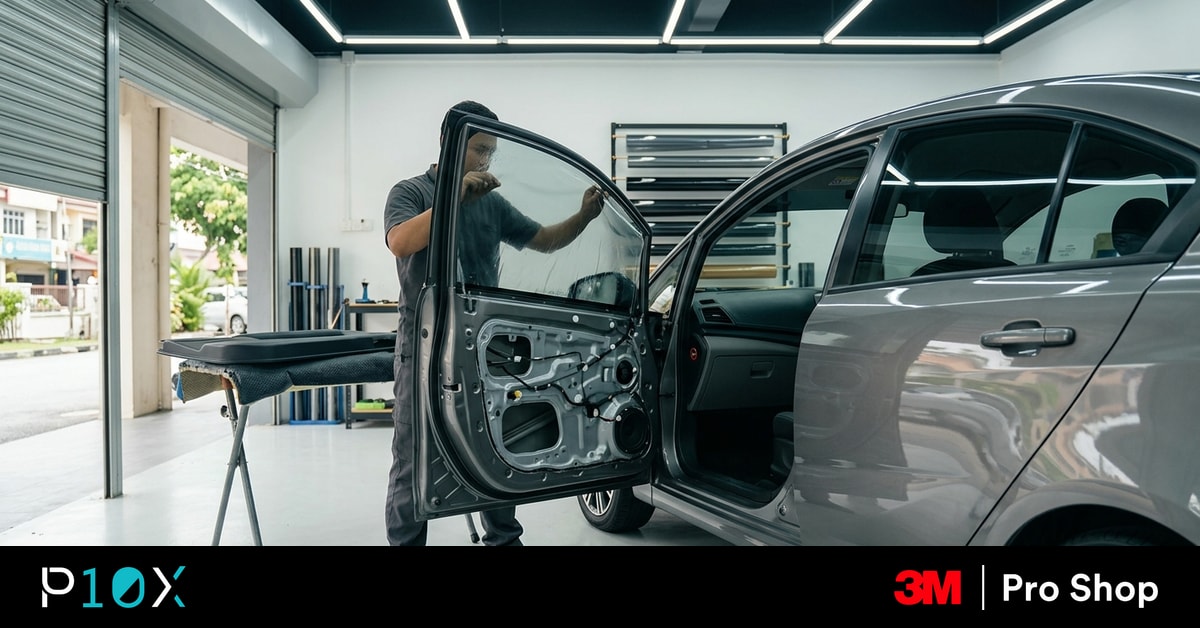
- Ask for the appointment length, not the fitting length. The two are different numbers and only one of them is on the quote.
- Between a third and four in every ten minutes of the booking happen before film touches glass, and that is the part rushed shops delete.
- A sedan runs faster than a seven seater because it has fewer and flatter panes, not because the film is different.
- The rear windscreen is the slowest pane on any car. If nobody mentions heat shrinking it, ask why.
- Your timeline does not end when you collect. The film is still curing for days after you drive away.
How long window tint takes to install is really two questions wearing one coat. There is the fitting, which is one to three hours on a full car, and there is the appointment, which is longer because the film has to be cleaned up to, cut and checked before any of it goes on.
Published installer guidance puts a full car install at one to three hours, with a sedan at the fast end and larger vehicles at the slow end. The same guidance puts surface preparation at fifteen to thirty minutes and film cutting and shaping at thirty to sixty minutes on top of that.
The real question before booking is simple. Wait at the shop, or drop the car and come back after lunch. Your glass answers that better than the shop's diary does. If you want the stage by stage version of what the technician is doing, our step by step installation guide has it. What follows here is what each of those stages costs you in time.
How Long Window Tint Takes on a Full Car
One to three hours of fitting for a full car, depending on size and glass shape. Add fifteen to thirty minutes of preparation and thirty to sixty minutes of cutting, and the whole appointment lands between one hour forty five minutes and four and a half hours.
That range is wide because the two ends describe different cars. A sedan with flat door glass and a modest rear screen sits near the bottom. A seven seater with a third row, quarter glass and a steeply raked back window sits near the top, and no amount of skill compresses it.
Here is the part most quotes hide. Take the published figures and add them up. At the fast end, fifteen minutes of prep plus thirty minutes of cutting is forty five minutes out of a one hundred and five minute appointment. At the slow end, thirty plus sixty is ninety minutes out of two hundred and seventy. Either way, between thirty three and forty three percent of your booking happens before a single sheet touches glass.
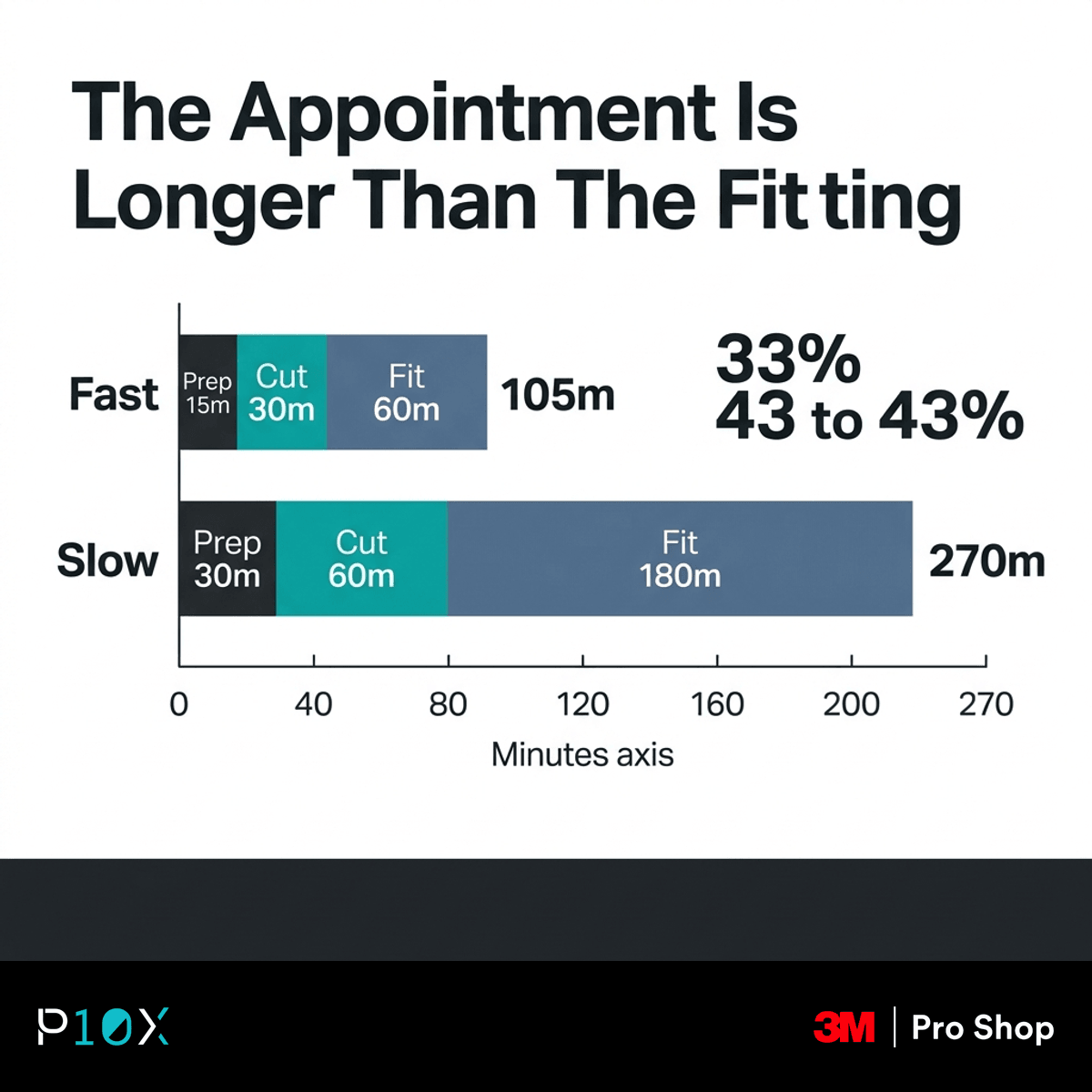
Read the two bars against each other rather than at the totals. Those are the published fast and slow ends of the same appointment rather than a small car against a big one. What moves most between them is the fitting block, which triples from sixty minutes to a hundred and eighty while everything else stays modest.
There is a second reason the range is so wide, and it has nothing to do with the film. A shop fitting one car at a time works to the glass. A shop fitting four cars in a morning works to the diary, and the diary does not care that your rear screen needs a third pass. Same film, same price list, different clock.
That proportion is the useful number to carry into a shop. When someone quotes you two hours flat for a full car, you now know that a compliant two hour appointment leaves somewhere around seventy five minutes of actual fitting once prep and cutting are paid for. That is achievable on a small car. On a larger one it means something is being skipped.
What Happens Before the Film Touches Your Glass
Three things, and none of them are optional. The glass and trim get inspected, the surfaces get decontaminated, and the film gets cut to each pane. Skip any of the three and the job still finishes on time, which is exactly why rushed shops skip them.
Inspection is the one nobody bills for and everybody needs. Existing scratches, old adhesive residue, worn rubber trim and exposed switches all change how the film behaves once it is on. A shop that looks first knows what it is dealing with. A shop that does not look finds out later, on your car.
Decontamination is where the fifteen to thirty minutes goes, and it is the least glamorous stage in the building. Every speck of dust still sitting on the glass when the film goes down becomes a permanent speck under the film. There is no fixing it afterwards short of pulling the pane and starting again.
Cutting is thirty to sixty minutes of shaping film to each individual window. Modern shops pattern the film to the exact glass rather than trimming it on the car, which protects your paint and your rubber seals from a blade, and which takes longer than the alternative.
| Stage | Published time | What it involves | What rushing it costs |
|---|---|---|---|
| Glass and trim inspection | Rarely quoted | Scratches, residue, worn trim, exposed switches | Early peeling and water in the electrics |
| Deep clean and decontaminate | 15 to 30 minutes | Every surface taken back to clean glass | Permanent dust specks under the film |
| Cut and shape the film | 30 to 60 minutes | Each pane patterned individually | Blade marks on trim and short edges |
| Door panel removal | Inside the fitting block | Panels off so film reaches the glass channel | A visible cut line at the window edge |
| Front and rear door glass | Inside the fitting block | The flattest panes, fastest surfaces on the car | Creases at the corners |
| Rear windscreen | Inside the fitting block | Compound curve heat shrunk over defogger lines | The classic crease across the back glass |
| Quarter glass and small panes | Inside the fitting block | Small awkward shapes worked by hand | Gaps where film meets trim |
| Final check and handover | Rarely quoted | Care instructions and the wind down window | Windows wound down too early |
The fitting block in that table is the one to three hours. Everything above and below it is the rest of your appointment, and the four rows inside it are why two shops with the same film produce different cars.
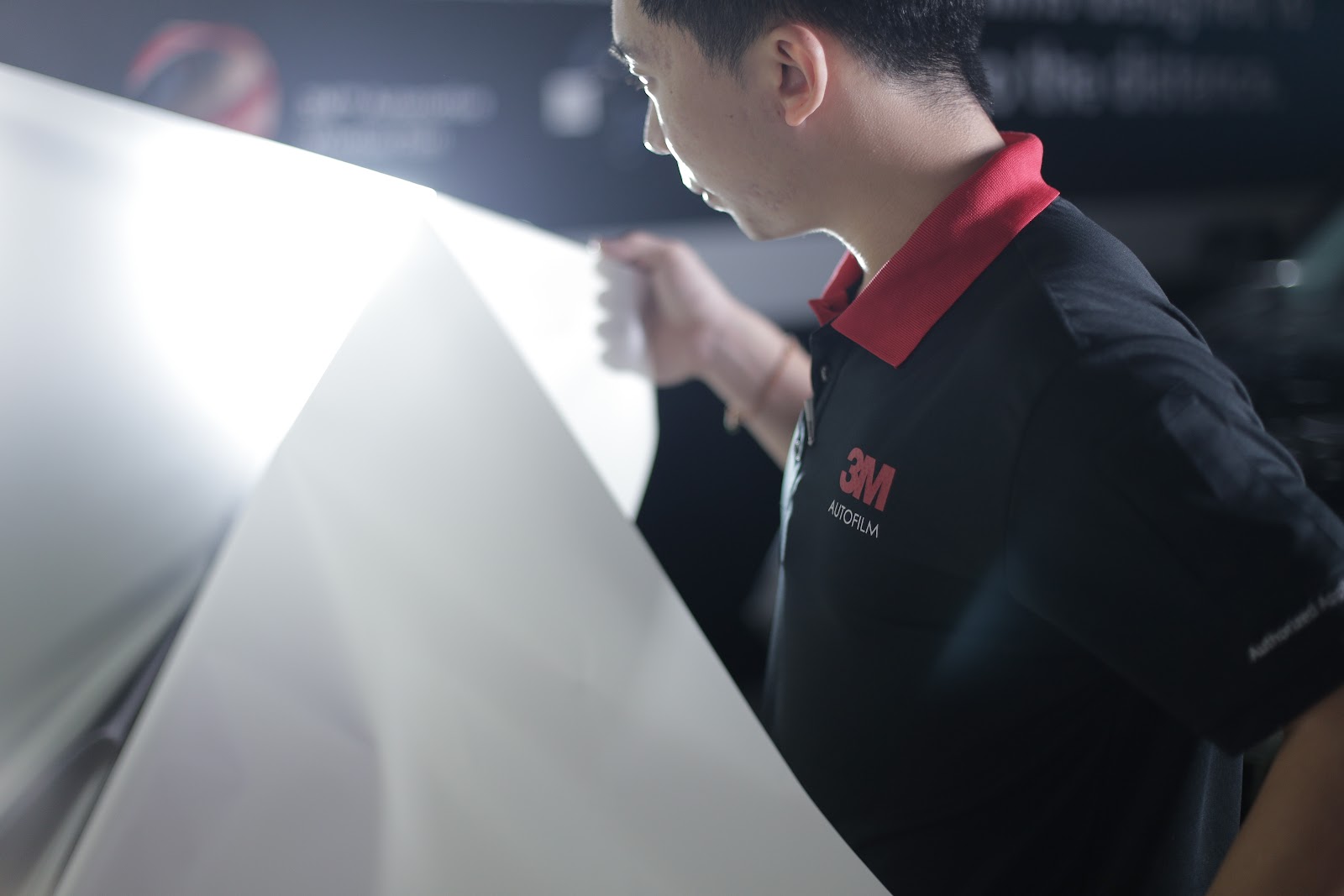
Handling film like that is a two hand job on a clean bench, and it is the stage where a busy shop is most tempted to hurry. A sheet laid down on a dusty surface for ten seconds carries that dust onto your glass.
Why Your Car's Size Changes the Tint Timeline
Published guidance is direct about this. A sedan sits at one to two hours of fitting and a larger vehicle sits closer to three. The difference is pane count and pane shape, and both of those are decided by the body style you bought rather than by anything you can choose on the day.
More seats means more glass. A seven seater adds a third row and usually a pair of extra quarter windows, and each of those is a small awkward pane that takes disproportionate time for how little film it uses. Our seven seater tint guide works through why the back rows need a different answer entirely.
Shape matters as much as count. A steeply raked rear screen has to be heat shrunk before it will sit flat, and that is the slowest single operation in the whole job. Defogger lines run underneath it, so there is no margin for working the film aggressively.
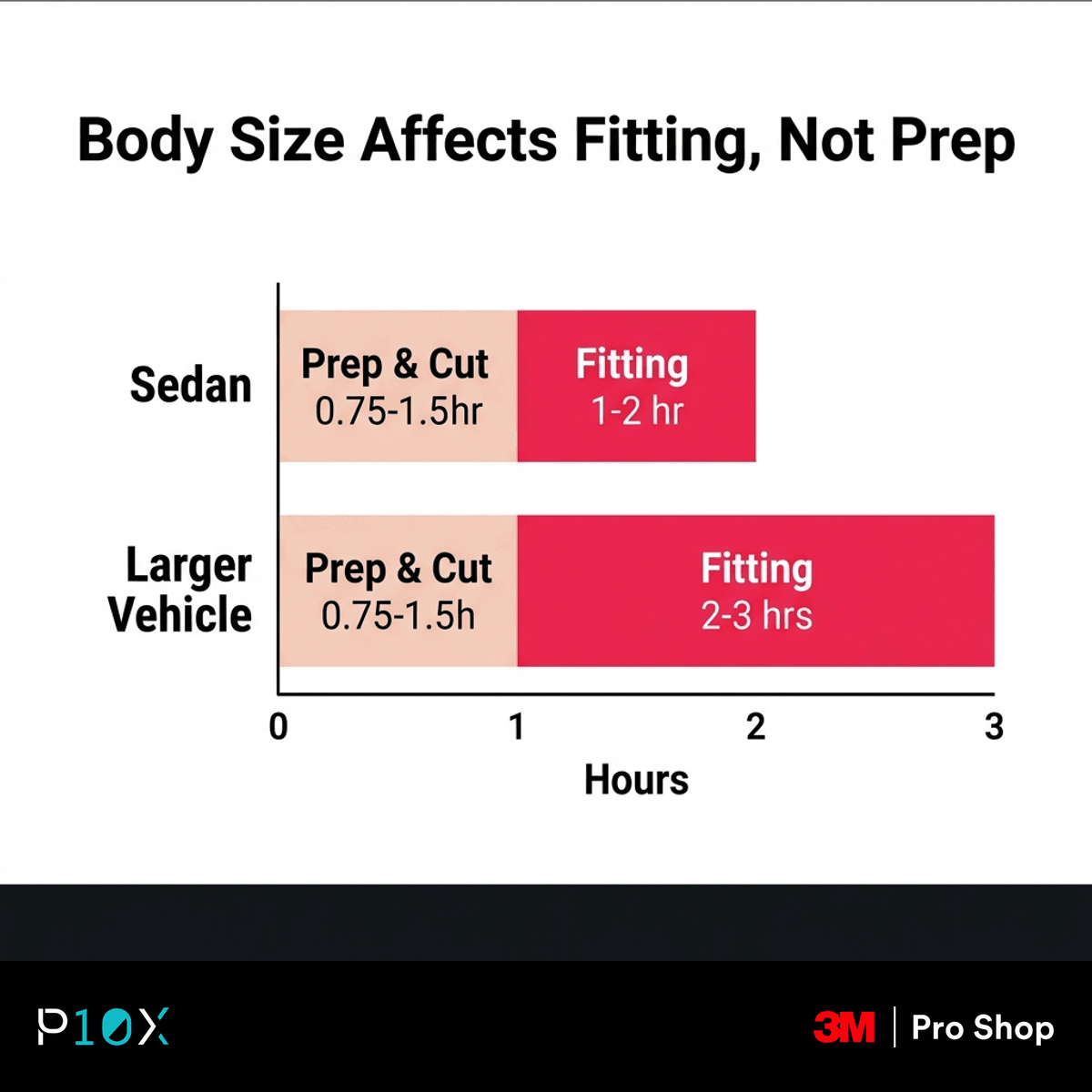
The light block barely moves between the two groups and the dark block nearly doubles. Preparation is a fixed cost you pay whatever you drive, so on a small car it is a big share of the appointment and on a large one it disappears into the fitting.
Film choice does not change the clock in any meaningful way. Crystalline Black is a two hundred layer non metallised construction and the XP series is nano ceramic, and both go on pane by pane at the same working pace. What changes is what you get afterwards, which our film comparison covers properly.
Why a Two Hour Tint Job Shows Up Later
Malaysian owner forums have been arguing about this for years and the pattern in the threads is consistent. Owners who report a two hour turnaround also report finding small bubbles and dust specks at the windows within a day or two. Owners who report a shop taking most of the day describe it as good workmanship rather than as slow service.
Other owners in the same threads push back on the idea that specks are unavoidable, and they are correct. A properly prepared pane should be free of them. When a shop describes dust under new film as normal, what is being described is that shop's normal.
What makes the pattern believable is that nobody in those threads is complaining about the film itself. They are describing the same product arriving in different condition depending on how long the shop spent on it. That is a workmanship variable, not a product one.
The honest version is that speed removes cleanliness first, because cleanliness is the invisible part. A pane fitted in a hurry looks identical to a pane fitted properly on collection day. It stops looking identical on about day two, which is roughly when the shop's phone stops being answered.
Door panel removal is the clearest example. Taking the panel off lets the film run down into the glass channel instead of stopping at a cut line, and it keeps water away from the switches. It also adds time to every door on the car, which is exactly why a two hour job tends not to include it.
Our guide to bubbles, dust specks and peeling edges separates the marks that settle out on their own from the ones that never will. Reading it before you collect is more useful than reading it after.
5 Questions to Ask Before You Book a Tint
Not one of these requires you to know anything about window film. They are questions about how the shop intends to spend the morning, and somebody who has already planned your car into the day will answer all five straight away.
1. Is that the fitting time or the appointment time?
The gap between the two is forty five to ninety minutes of prep and cutting. A shop quoting the fitting time only is not lying, but you will be at the counter longer than you planned.
2. Are the door panels coming off?
This is the single clearest signal of how the shop works. Panels off means film into the channel and switches protected. Panels on means a cut line at the top of every window.
3. How is the rear windscreen being handled?
The answer you want involves heat shrinking the film to the curve before it goes on. It is the slowest pane on the car and it is where a rushed job shows first.
4. Which VLT is going on each window?
Different panes take different shades under Malaysian rules, and the shop should be telling you the numbers rather than asking what you want. Our JPJ compliance guide has the current limits.
5. When can I wind the windows down?
If nobody volunteers this at handover, that tells you something about the handover. It should be part of the collection conversation, not something you discover by breaking it.
Ask all five in one go and listen to how quickly the answers come. A shop that fits film every day has said these words a thousand times.
Why a Rushed Pane Looks Fine on Collection Day
Because the two failures a rushed pane carries are both invisible on the day. Trapped dust needs bright light and a shallow viewing angle to show up, and a soft adhesive edge needs a few days of the window moving before it starts to lift. Neither is findable at the counter.
That is why the first week matters more than the handover inspection. Some of what you see in those days is normal and clears by itself, and some of it is a preparation problem that will still be there next year. Telling the two apart is the whole skill.
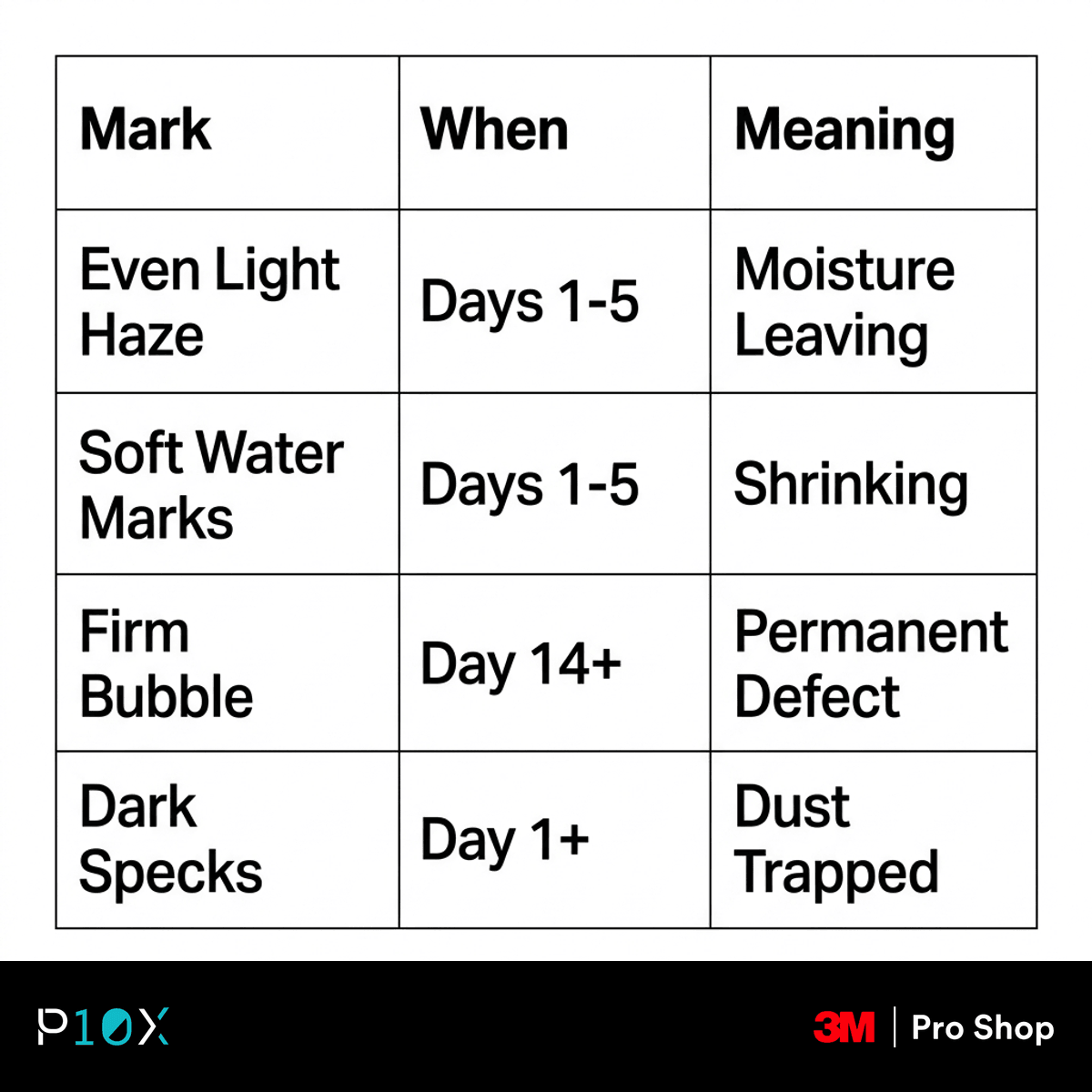
The top two rows are the week nobody needs to worry about. The bottom two are a return visit, and the sooner it happens the simpler it is, because a pane pulled and re done in the first week is routine while the same pane argued about in month six is not.
The test that separates the columns is whether the mark moves. Moisture migrates outward and shrinks a little every day. Trapped dust does not move at all, because it is pinned under a bonded layer of film rather than floating in solution. Our handover checklist covers what to photograph before you drive off.
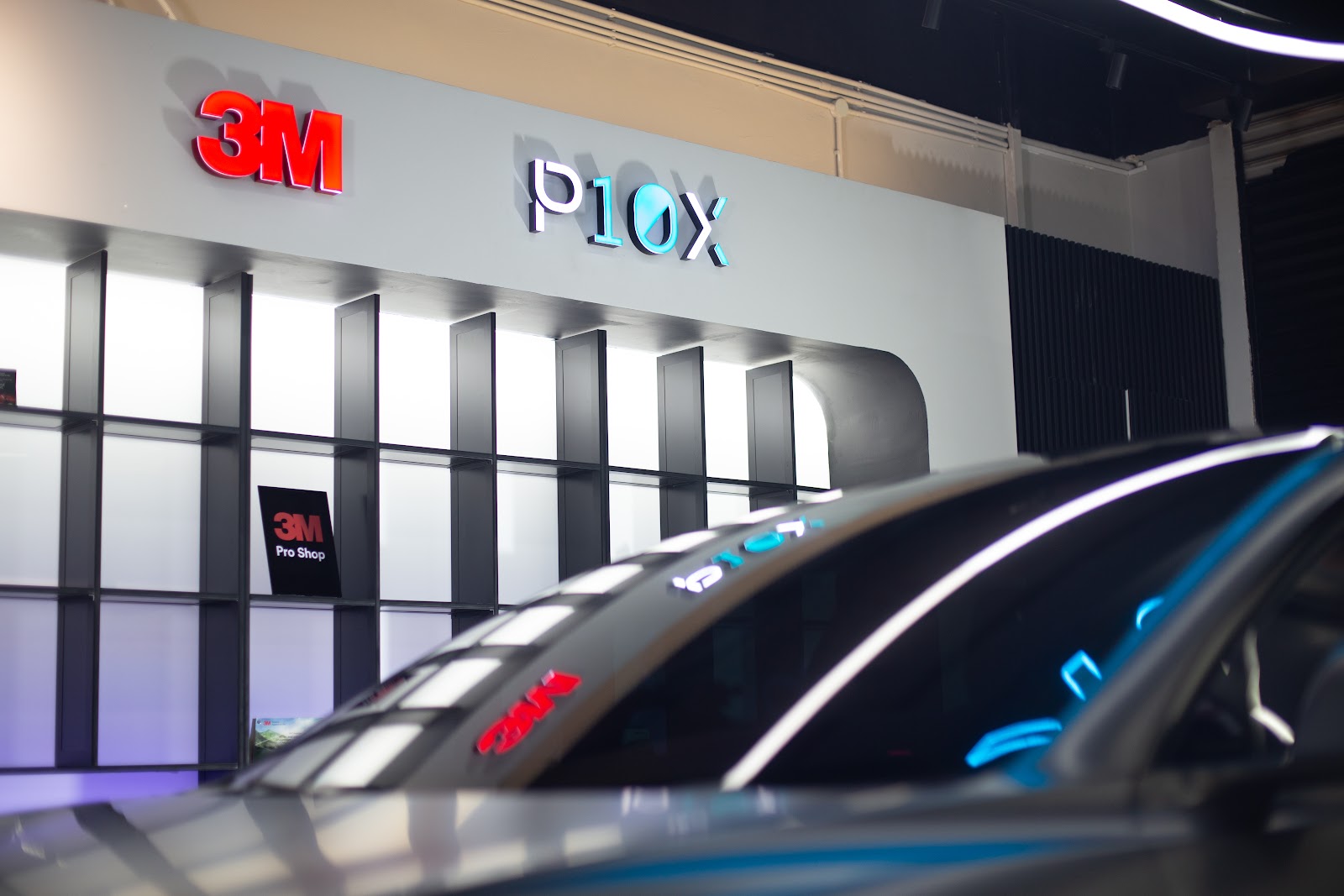
Glass that reads clean from the outside on a bright day is the actual test. Look across each pane at a shallow angle rather than straight through it, because that is the angle that shows up anything trapped underneath.
Fitting Window Tint Around a Working Week
Book a morning slot rather than an afternoon one. A car that goes in first thing gets the bay while it is clean and the technician while the day is still going to plan, and it gives the shop room to slow down if your rear screen fights back.
It also helps to ask what else is in the bay that day. A tinting job shares air with whatever else is being worked on, and film going up in a bay where someone is sanding a panel is film with a dust problem waiting to happen. A shop that separates the two knows why it matters.
After that, the three to four days following collection want planning too. Avoid booking the day before a trip where the windows will be up and down at every toll and drive through, because that is precisely the habit the cure window asks you to break. Our guide to avoiding a bad tint job covers the rest of the aftercare in order.
Checking the glass, trim and switches before anything goes on is the stage that decides whether the timeline holds. A worn seal found at the start is a conversation. The same seal found halfway through the fitting is a delay.
One last thing on the paperwork. A 3M tint warranty registered through an authorised dealer follows the car rather than the shop, so the registration should happen at handover while you are standing there rather than at some point afterwards.
Quoting the appointment as three separate blocks, prep, cutting and fitting, is how 3M Pro Shop by P10X does it, so you know which part of the morning is going where. Our locations page lists the outlets.
Common Questions About Window Tint Appointment Times
How long does window tint take to install on a full car?
Published installer guidance puts full car fitting at one to three hours. Adding fifteen to thirty minutes of surface preparation and thirty to sixty minutes of film cutting takes the whole appointment to between one hour forty five minutes and four and a half hours.
How long does it take to tint a sedan?
A sedan sits at the fast end, roughly one to two hours of fitting. It has fewer panes than a seven seater and its door glass is flatter, so the film goes on with less shaping and less repositioning.
Why does tinting a bigger car take longer?
More glass and more awkward glass. Extra rows bring extra quarter windows, which are small panes that take disproportionate time, and a large raked rear screen has to be heat shrunk before it will sit flat.
Can I wait at the shop while my car is tinted?
On a smaller car, yes, if you are comfortable with roughly two hours. On a larger one you are looking at most of a half day once preparation and cutting are counted, so dropping the car off is usually the better plan.
Is a two hour tint job too fast?
It depends on the car. Two hours is a reasonable full appointment on a small sedan. On a larger vehicle it means either the preparation was shortened or the door panels stayed on, and both of those show up within a week rather than on collection day.
How long after tinting before I can roll the windows down?
At least three to four days is the published recommendation. Winding a window down before the adhesive has taken hold drags the film edge against the rubber sweep, and that damage does not heal.
How soon can I drive the car after tinting?
Straight away. The car is roadworthy the moment you collect it and nothing about driving disturbs the film. What changes for the next few days is winding the windows down and touching the inside face of the glass, not whether the car goes out.
Do bubbles after tinting mean the job was rushed?
Not always. A slight haze and small water marks in the first days are the moisture leaving and they clear on their own. Firm bubbles that stay in one place, or visible dust specks, are a preparation problem and they will not improve with time.
Find out the best protection for your car
Visit a 3M Pro Shop and discover the cost-effective 3M Protective Film and Window Tint
Author

Kelvin Cheen
Kelvin is an Automotive Solutions Consultant and Branch Manager at 3M Pro Shop. With 4+ years of field experience in premium vehicle surface protection, Kelvin specializes in flagship 3M technologies, including 3M Crystalline Black optical film and Ceramic IR tints, 3M Paint Protection Film (PPF), etc. His focus is on delivering transparent, engineering-backed advice to car and EV owners, cutting through sales upsells to ensure customers choose the exact thermal rejection and paint protection tailored to their driving needs.
Experience the future of window tinting
Visit a 3M Pro Shop and discover the revolutionary Crystalline CR BLK film