
Jaecoo J7 Window Tint: Matching Film to Every Pane
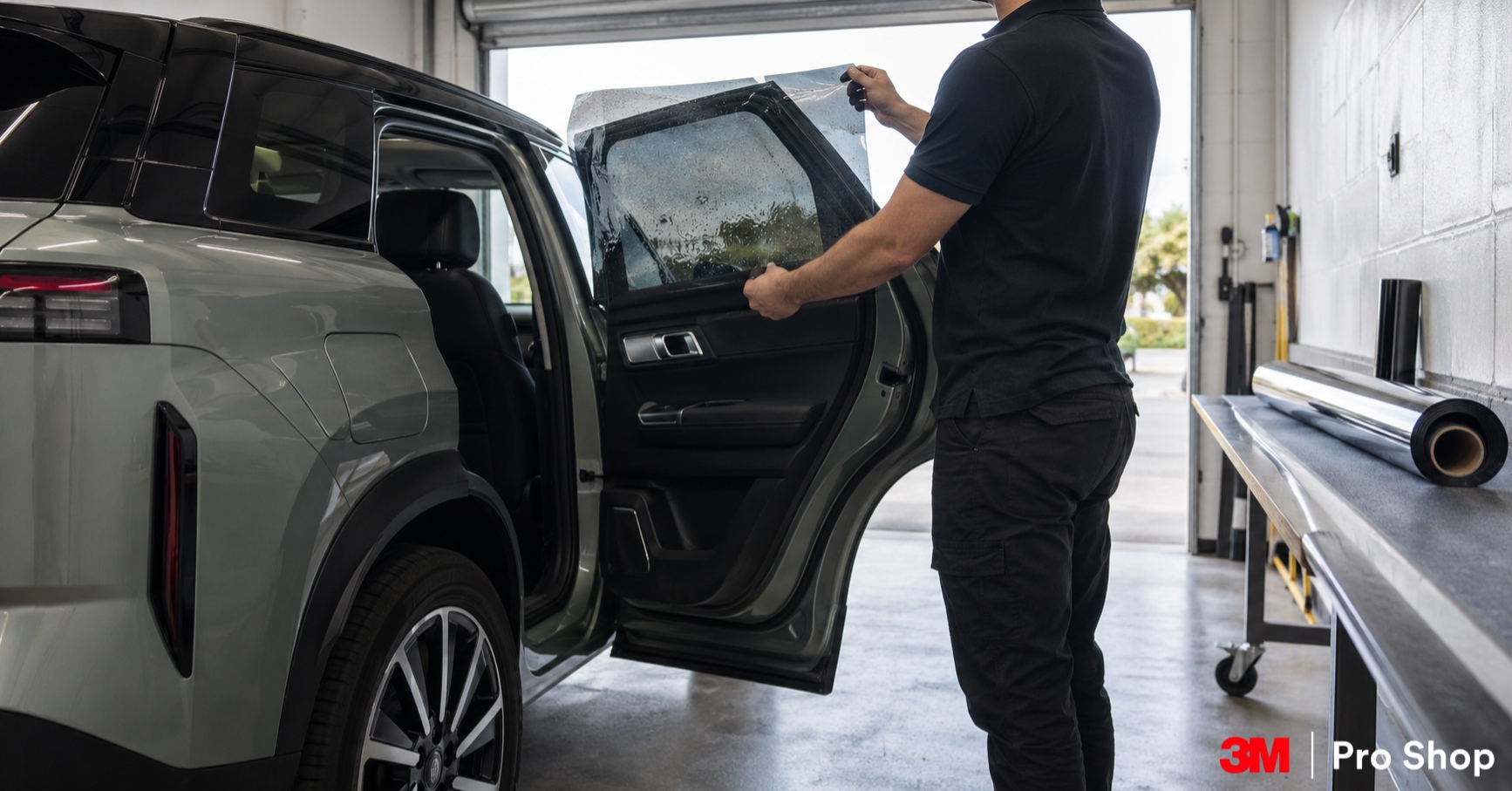
- Ask which number the quote is using. Infrared rejection and total solar energy rejection are not the same measurement.
- Ask for the total solar energy rejection of the exact shade being fitted, pane by pane.
- Quote the panoramic roof separately. It is a different job to the side glass and it should have its own line.
- If you already have film on the car, ask what shade is on it before you agree to replace anything.
- Check the door cards and switches are covered before any water goes near them.
Jaecoo J7 window tint decisions get made off a single number, and it is usually the wrong one. Almost every quote leads with infrared rejection, a figure measured on a bare strip of film across a narrow slice of the spectrum. The number that describes what happens inside your car sits lower on the same spec sheet and nobody points at it.
On Lowyat, the official J7 owners' thread is oddly quiet for a car that sells in these numbers. A member there said plainly that not many J7 owners are on the forum and that it is very silent, with the conversation having moved to Facebook groups instead. Which means the shop counter is where most J7 owners end up getting their tint advice.
Your car has been on Malaysian roads since July 2024 or later, so you have already sat through two full hot seasons in it. You either have film you are no longer sure about, or you are finally getting round to the roof, and either way the reason a tinted car can still feel hot usually comes down to which number was on the quote.
What the Brochure Number Actually Measures
Infrared rejection on the Crystalline Black range is 95 to 98 percent, measured on the film alone between 900 and 1,000 nanometres. Infrared energy rejection is 59 to 68 percent, measured with the film mounted on glass across 780 to 2,500 nanometres. Same film, same sheet, two very different figures.
The gap is not marketing. It is measurement. One test looks at a narrow band where multilayer optical film performs at its absolute best, on the film by itself. The other looks at the whole infrared range the sun actually delivers, with the film where you will actually use it, stuck to a pane of glass.
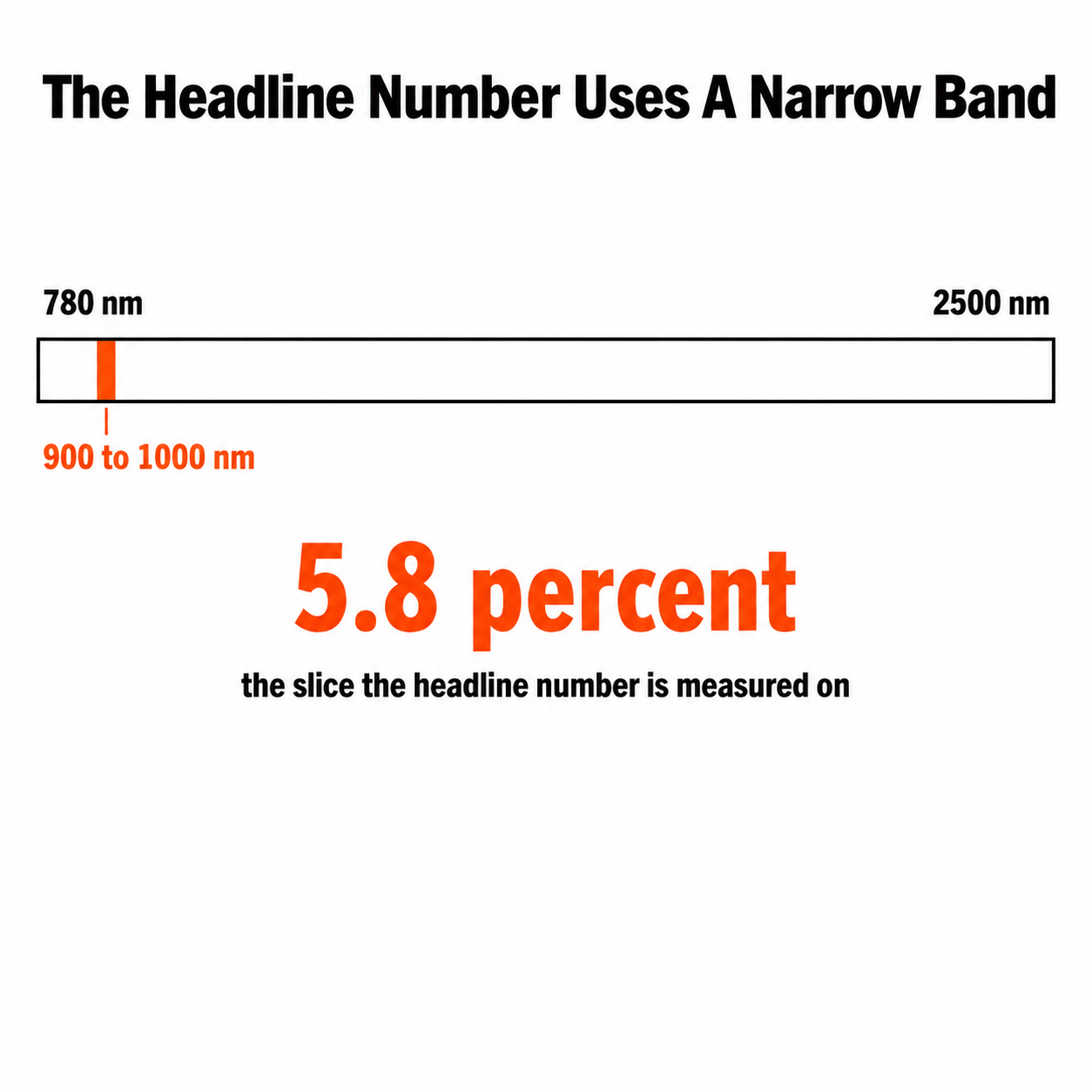
Here is how narrow that first band is. The infrared rejection window runs from 900 to 1,000 nanometres, so it is 100 nanometres wide. The energy rejection window runs from 780 to 2,500 nanometres, so it is 1,720 nanometres wide. Divide 100 by 1,720 and the headline figure is measured across roughly 5.8 percent of the band that matters. That is why one number reads 98 and the other reads 68.
None of this makes the high figure dishonest. It is a real result from a real test, and it is the industry standard way to quote a film. It just answers a different question to the one you are asking, and our Crystalline range comparison and the CR BLK launch article both work off the second number for that reason.
Why the Panoramic Roof Is Different Glass
Jaecoo lists a large panoramic sunroof on the J7, and the AWD spec sheet lists it alongside a panoramic glass shade. It is the biggest single pane on the car and the only one that takes the sun from more or less straight overhead through the middle of every afternoon.
Side glass gets an easier deal than people assume. The sun crosses it at a steep angle for most of the day, so a lot of the energy reaching that pane arrives off-axis. The roof does not get that reprieve. Between about eleven and three, it is facing the source almost square on.
The factory shade is not the answer people hope it is. A shade sits under the glass. It stops the light reaching your head, which makes the cabin darker and more comfortable to look at. It does nothing to stop the pane above it heating up, and a hot pane radiates downward whether there is fabric under it or not.
That is the whole case for treating the roof as its own line on the quote. It is a different area, a different angle, a different heat path and often a different film. Our panoramic sunroof piece on the MG S5 EV works through the same problem on a different car, and the reasoning transfers directly.
That clip covers what changed when Crystalline Black replaced the original Crystalline range in Malaysia at the end of 2025, which matters if you are holding a quote written before that.
How to Spec Each J7 Window
Five decisions on a J7 with the panoramic roof, and they are not the same decision repeated five times. Work front to back, and give the roof its own thought rather than letting it inherit whatever went on the doors.
Step 1: Windscreen at CR BLK 70
Seventy percent visible light is the legal floor, so this is the darkest film allowed on that pane. It rejects 65 percent of total solar energy, which is the best available performance inside the limit.
Step 2: Front Doors at CR BLK 50
Fifty percent is the legal floor here and CR BLK 50 is also the shade with the highest total solar energy rejection in the range at 68 percent. The legal answer and the best answer are the same film.
Step 3: Rear Doors at CR BLK 35
No legal minimum applies behind the B-pillar. CR BLK 35 rejects 67 percent, one point off the peak, while darkening the glass enough to matter for anyone sitting back there.
Step 4: Rear Windscreen at CR BLK 35
The J7 is 4,500 mm long with a 2,672 mm wheelbase, so there is a lot of car behind you. Keeping the rear screen at 35 keeps the interior mirror genuinely usable at night.
Step 5: Panoramic Roof on Its Own Spec
This is the pane where a Ceramic IR film earns its place, because the brief overhead is different to the brief on a door. Ask for it as a separate line and read the number they give you for it.
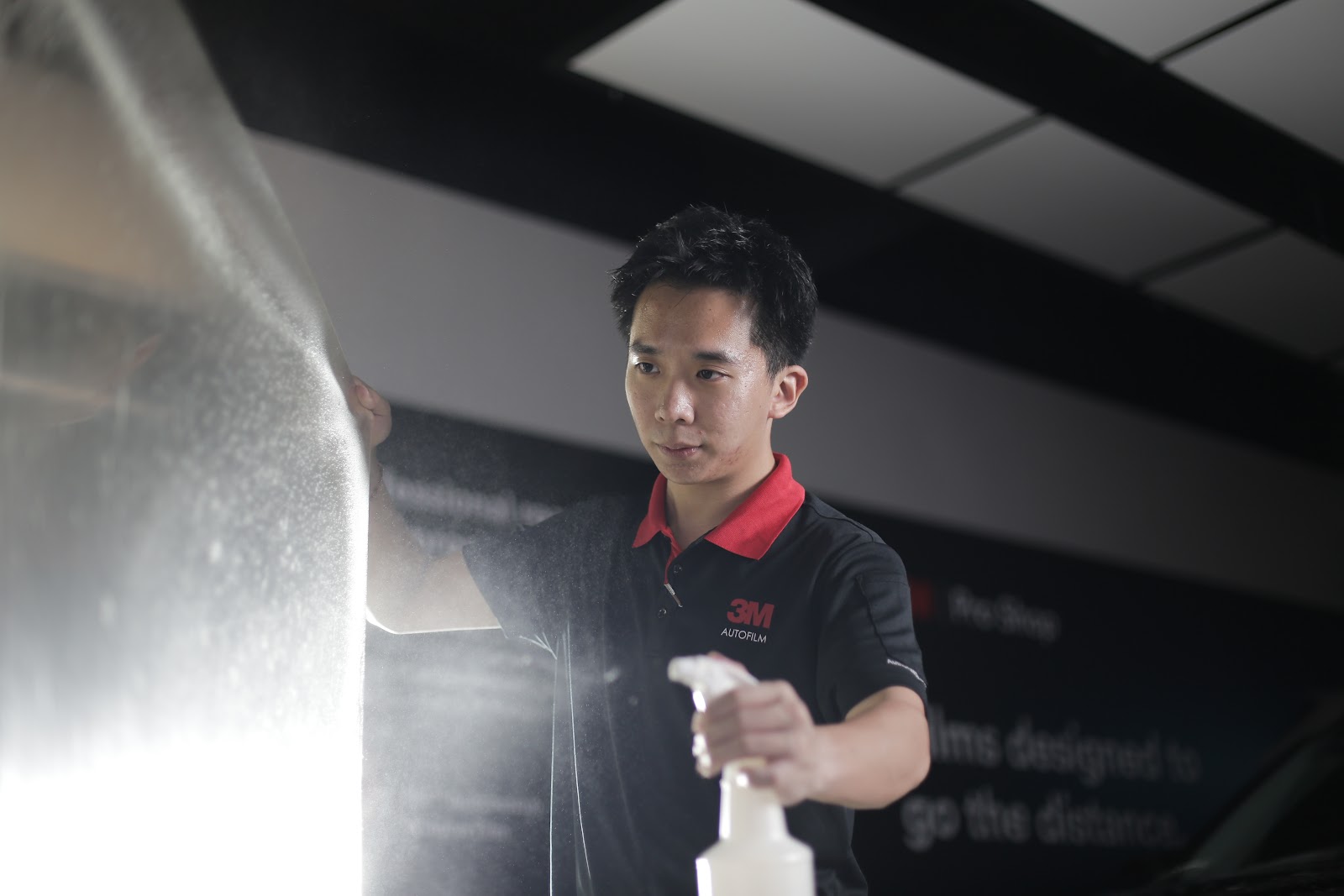
That wet stage is where dust either gets flushed out or gets trapped forever. It is also where water gets close to switches and speakers, which is why the door card should already be covered before that bottle comes out.
What JPJ Requires and What It Ignores
Two panes carry a legal minimum. The front windscreen must transmit at least 70 percent of visible light, the front side windows at least 50 percent. The rear side windows and the rear windscreen have no minimum, so the shade on those is entirely your call.
The reasoning behind that split is visibility of the driver, not comfort of the passengers. The rule exists so the person behind the wheel can be seen from outside the car. Once you are past the driver's own two windows, the regulation stops having an opinion.
There is a second thing the rule ignores, and on a J7 it is the important one. Nothing in the regulation says anything about the roof panel. The minimums are written for the windscreen and the front side windows, which means the largest single piece of glass on your car is entirely outside the conversation. That is freedom rather than a loophole, and it is why the roof deserves a film chosen on merit rather than on what is legal.
That has a practical consequence people miss. Because there is no rule behind the B-pillar, that is exactly where shops will happily fit the darkest film in the cabinet if you let them. Darker is not automatically better there either. Total solar energy rejection across the Crystalline Black range peaks at CR BLK 50 with 68 percent and falls to 64 percent at CR BLK 15.
So on the rear glass you are trading heat rejection for privacy, one point at a time. Thirty-five percent is the sensible landing spot for most families, and our JPJ compliance guide covers what actually happens at a roadblock if you go further.

Screenshot that before you go in. Most disagreements about tint legality in this country come from someone believing the rear glass is regulated when it is not, or the windscreen is not when it is.
3 Tint Mistakes on a Two-Year-Old J7
Replacing good film for the wrong reason, letting the roof inherit the door spec, and comparing two quotes that are quoting different measurements. Your car is old enough now that all three are live decisions rather than hypothetical ones.
Stripping Film That Is Still Fine
If the film is even, tight and clear, the polyester and adhesive are still bonded and there is nothing wrong with it. Purple, hazy, bubbled or lifting at the edges is a different story. Removal is not free of risk on the rear screen, so it is worth being sure first.
Letting the Roof Inherit the Door Spec
The roof is the largest pane and the only one directly overhead. Fitting it with whatever was left over from the door job is how a full tint bill still ends with a hot cabin at two in the afternoon.
Comparing Two Different Measurements
One shop quotes infrared rejection, the other quotes total solar energy rejection, and the first number always looks better. Ask both for the same measurement on the same pane and the comparison becomes real.
The pre-install handover checklist covers the rest of what to agree before the keys change hands, and it takes about as long to read as it does to wait for a coffee.
Crystalline Black, Ceramic IR or XP
Crystalline Black for the strongest heat performance and the widest shade ladder. Ceramic IR for a neutral look with strong glare control and a softer feel against the skin. XP if privacy and glare are the whole brief and the car mostly parks under cover.
Crystalline Black is a roughly 200 layer non metallised optical film. Total solar energy rejection runs 59 to 68 percent across the shade range, ultraviolet rejection sits at 99.9 percent on every shade, and glare reduction reaches up to 81 percent on CR BLK 15. Because there is no metal in it, it does not interfere with mobile, GPS or satellite radio.
Ceramic IR is an absorptive nano ceramic film, also metal free. It rejects up to 63 percent of total solar energy and up to 95 percent infrared, with glare reduction up to 93 percent. That combination is why it comes up so often for roof glass, where glare and the sensation of direct sun on skin are both part of the complaint.
XP is nano ceramic as well and sits below both, rejecting up to 55 percent total solar energy and up to 38 percent infrared, with glare reduction up to 95 percent. It is a real glare and privacy film. It is not the film for a J7 that lives in an open lot all day.
| Glass | JPJ minimum VLT | Suggested 3M film | TSER | UV rejection | Why this pane |
|---|---|---|---|---|---|
| Front windscreen | 70 percent | CR BLK 70 | 65 percent | 99.9 percent | Best performer that stays inside the legal floor |
| Front side windows | 50 percent | CR BLK 50 | 68 percent | 99.9 percent | Legal floor and the peak of the whole range |
| Rear side windows | No minimum | CR BLK 35 | 67 percent | 99.9 percent | Privacy for rear passengers at a one point cost |
| Rear windscreen | No minimum | CR BLK 35 | 67 percent | 99.9 percent | Keeps the mirror usable across a long body |
| Panoramic roof | No minimum | Ceramic IR | Up to 63 percent | 99.9 percent | Largest pane and the only one directly overhead |
Note that the ultraviolet column does not move. Every film in the 3M automotive range holds 99.9 percent ultraviolet rejection regardless of shade, which is worth knowing if your reason for tinting is skin rather than heat. Our article on ultraviolet and the back seat goes into what that does and does not cover.

Read the middle column against the first one before you decide the roof. Crystalline Black wins on raw heat rejection. Ceramic IR wins on glare, and glare is a bigger part of the roof complaint than most people realise, because overhead light hits your eyes from an angle no visor was designed to deal with.
Every one of the decisions above gets made across a counter like that one, before anyone touches the car. Once the film is cut, changing your mind about a shade stops being a conversation and starts being a cost.
Small things like blade choice and shampoo sound like detail until you have seen film fitted with the wrong ones. They are the difference between a pane that looks flawless in four years and one that has a scratch you notice every morning.
Getting Your J7 Tint Spec Right
Write the five panes down before you call anyone. Windscreen, front doors, rear doors, rear screen, roof. Put the shade next to each one and put the total solar energy rejection figure next to that. Then read it back when the job sheet gets written.
One thing to know about the paperwork. A 3M film warranty registered through an authorised dealer covers bubbling and cracking, and it follows the car rather than the shop, which matters when you eventually sell it. Yellowing is not a covered defect on any 3M film. The films use ultraviolet inhibitors that resist yellowing as a product characteristic, which is a good reason to buy quality film and a poor reason to expect a replacement.
If you want the roof quoted as its own line and the numbers written down properly, 3M Pro Shop by P10X specs per pane as standard. The locations page has the nearest outlet, and your five line list will take about four minutes to go through.
Jaecoo J7 Window Tint Questions Owners Ask
What is the best window tint for a Jaecoo J7?
CR BLK 50 on the front doors, because it is both legal and the highest heat rejecting shade in the range at 68 percent. CR BLK 70 on the windscreen, CR BLK 35 on the rear glass, and a separate spec for the panoramic roof rather than a leftover from the door job.
Does the Jaecoo J7 have a panoramic sunroof?
Jaecoo lists a large panoramic sunroof on the J7 and the AWD specification lists it with a panoramic glass shade. It is the biggest pane on the car, which is why it belongs on the quote as its own line rather than being lumped in with the side glass.
What is the legal tint percentage for a Jaecoo J7?
At least 70 percent visible light transmission on the front windscreen and at least 50 percent on the front side windows. There is no legal minimum on the rear side windows or the rear windscreen, so those panes are your decision.
Is 99 percent infrared rejection better than 68 percent heat rejection?
They are not comparable. Infrared rejection is measured on the bare film between 900 and 1,000 nanometres. Total solar energy rejection is measured with the film on glass across 780 to 2,500 nanometres, a band about seventeen times wider. Only the second describes your cabin.
Do I need to tint the panoramic roof on a J7?
It is worth quoting separately. The roof is the largest single pane and the only one facing the sun almost square on in the middle of the day, and the factory glass shade stops the light without stopping the pane above it heating.
Will window tint make my J7 cabin cold?
No film makes a parked car cool. What good film does is slow how fast the cabin heats while you are away and cut how much energy keeps arriving while you drive, which shows up as less work for the air conditioning and a much better first five minutes.
Does tint block UV rays in a Jaecoo J7?
Every film in the 3M automotive range rejects 99.9 percent of ultraviolet A and B regardless of how light or dark the shade is. That means a clear-looking windscreen film gives the same ultraviolet protection as the darkest rear glass.
Can I tint over the film already on my J7?
No, and no reputable shop will. New film goes onto clean dry glass, so the old film and all of its adhesive have to come off first. That is a separate job with its own risks, particularly on the rear windscreen where the defogger grid sits.
Find out the best protection for your car
Visit a 3M Pro Shop and discover the cost-effective 3M Protective Film and Window Tint
Author

Kelvin Cheen
Kelvin is an Automotive Solutions Consultant and Branch Manager at 3M Pro Shop. With 4+ years of field experience in premium vehicle surface protection, Kelvin specializes in flagship 3M technologies, including 3M Crystalline Black optical film and Ceramic IR tints, 3M Paint Protection Film (PPF), etc. His focus is on delivering transparent, engineering-backed advice to car and EV owners, cutting through sales upsells to ensure customers choose the exact thermal rejection and paint protection tailored to their driving needs.
Experience the future of window tinting
Visit a 3M Pro Shop and discover the revolutionary Crystalline CR BLK film