
Beyond RFID: When Car Tint Blocks Your Key Fob, Auto-Gate Remote and Remote Start

- Only metallised and sputtered films block remote signals. Non-metallic films do not.
- Key fobs, auto-gate remotes, condo barrier remotes, and remote start all use radio signals that metal layers can weaken.
- A fob that fails right after tinting is often trapped moisture, which clears in three to five days, not metal interference.
- 3M Crystalline Black, Ceramic IR, and XP are non-metallic, so they do not interfere with mobile, GPS, or satellite radio signals.
- Test your fob against a film sample before you commit, and choose non-metallic film if you rely on remotes daily.
If you are wondering whether window tint blocks your key fob signal, the honest answer is that only certain metallised films do, and the fix is simply choosing the right film. Many Malaysian owners notice it first in a basement condo carpark, standing by the car and pressing the fob several times before the doors finally respond, or at an auto-gate that suddenly needs a much closer approach than it used to. This guide explains which signals can be affected, why metal in the film is the cause, and how to avoid the problem entirely before you tint.
It is a strangely modern frustration. You have just spent good money making the car cooler and more comfortable, and now you are doing an awkward little dance in the carpark, holding the fob over your head or pressing it against your chin to coax the doors open. It feels like the tint has broken something, and in a sense it has, but only with one specific type of film.
The good news is that this is one of the most avoidable tint problems of all. It comes down entirely to what the film is made of, and once you understand that, you can keep strong heat rejection and fully working remotes at the same time without compromise.
Which Car Signals Tint Can Affect
The signals most affected are the short-range radio ones you use every single day without thinking about them. Key fobs, auto-gate beepers, condo barrier remotes, and remote start systems all rely on radio frequencies that a metal layer in the film can reflect or absorb before they reach their receiver. Navigation and tyre-pressure sensors can also be affected in heavier cases, though this is rarer and usually only with the most heavily metallised films.
Most Malaysian car owners deal with a familiar set of signals without ever knowing the technical details. Key fobs and many auto-gate and barrier remotes run on the 433 MHz band that is common across the region. Remote start uses a similar short-range radio link. Tyre-pressure monitoring and satellite navigation each work on their own separate frequencies. The common thread tying all of them together is that they are radio signals passing through or near the glass, which is precisely why the material of the film, and not its colour, is what matters here.

Why Metallised Film Acts Like a Faraday Cage
Metallised film interferes because the thin metal layers within it reflect radio waves, behaving much like a Faraday cage. A Faraday cage is simply a metal enclosure that blocks electromagnetic signals from passing through it, the same principle that stops a phone working inside a lift. When sputtered or metallised film effectively wraps the glass around your car in a fine metal skin, it can weaken the radio link between your remote and the receiver tucked inside the vehicle.
This is purely a property of the film material, not its darkness, which is the part most owners get wrong. A light, almost clear metallised film can interfere far more than a very dark non-metallic one. Older budget films and many cheap sputtered options contain these micro-metal layers as their way of rejecting heat, which is exactly why the problem tends to follow low-cost installs rather than premium ones. In short, the shade you see on your window tells you almost nothing about whether it will block your remote.

Five Signs Your Tint Is Hurting Your Remotes
The clearest sign is a remote that works perfectly fine out in the open but suddenly struggles right next to the car. If you find yourself having to stand closer, press repeatedly, or aim the fob at one specific window to get a response, metal in the film may well be the cause. The three everyday situations below are the ones Malaysian owners report most often, and they tend to be the moment the penny drops.
The basement carpark struggle
In a concrete basement carpark, radio signals are already weak because the structure itself absorbs them. Add a metallised film on top of that and the fob may need several presses, a step closer, or a raised hand before the doors finally unlock. The telling detail is that the very same fob usually works fine out in open daylight, which points firmly to film interference rather than a flat battery that would fail everywhere.
The auto-gate that will not trigger
If your condo auto-gate or barrier remote suddenly needs a closer, clearer line to the receiver after a fresh tint, the film may be weakening the transmission on its way out of the car. Owners very often work around it instinctively by winding the window down before pressing, which is itself a strong hint that the glass and the film on it are the thing standing in the way.
The shrinking remote-start range
Remote start that once worked comfortably from inside the house but now only responds within a few metres of the car is a classic interference pattern. A non-metallic film avoids this completely, which matters a great deal if you like to start the car and cool the cabin before walking out into a hot Malaysian afternoon. Losing that range quietly takes away one of the conveniences you may have paid extra for.

Moisture After Install Is a Different Problem
Not every post-tint fob issue is down to metal interference, and it is important not to jump to that conclusion. A very common and harmless cause is moisture from the installation seeping into the door card or near the dash, which can briefly disrupt the sensitive electronics that read your fob. This almost always clears on its own within three to five days as the film cures and the trapped moisture evaporates, leaving everything working normally again.
The distinction really matters, because it decides whether you simply wait or go back to the shop. If your fob acted up only after a fresh tint and then steadily improved over a few days, that was almost certainly moisture rather than metal, and no action is needed. If the problem is constant from day one and never improves at all, the film material or a knocked antenna during the door panel work is the more likely cause, and it is worth raising with your installer promptly. The same curing window is why we explain settling time in our professional window tint installation guide.
Which 3M Films Stay Signal-Safe
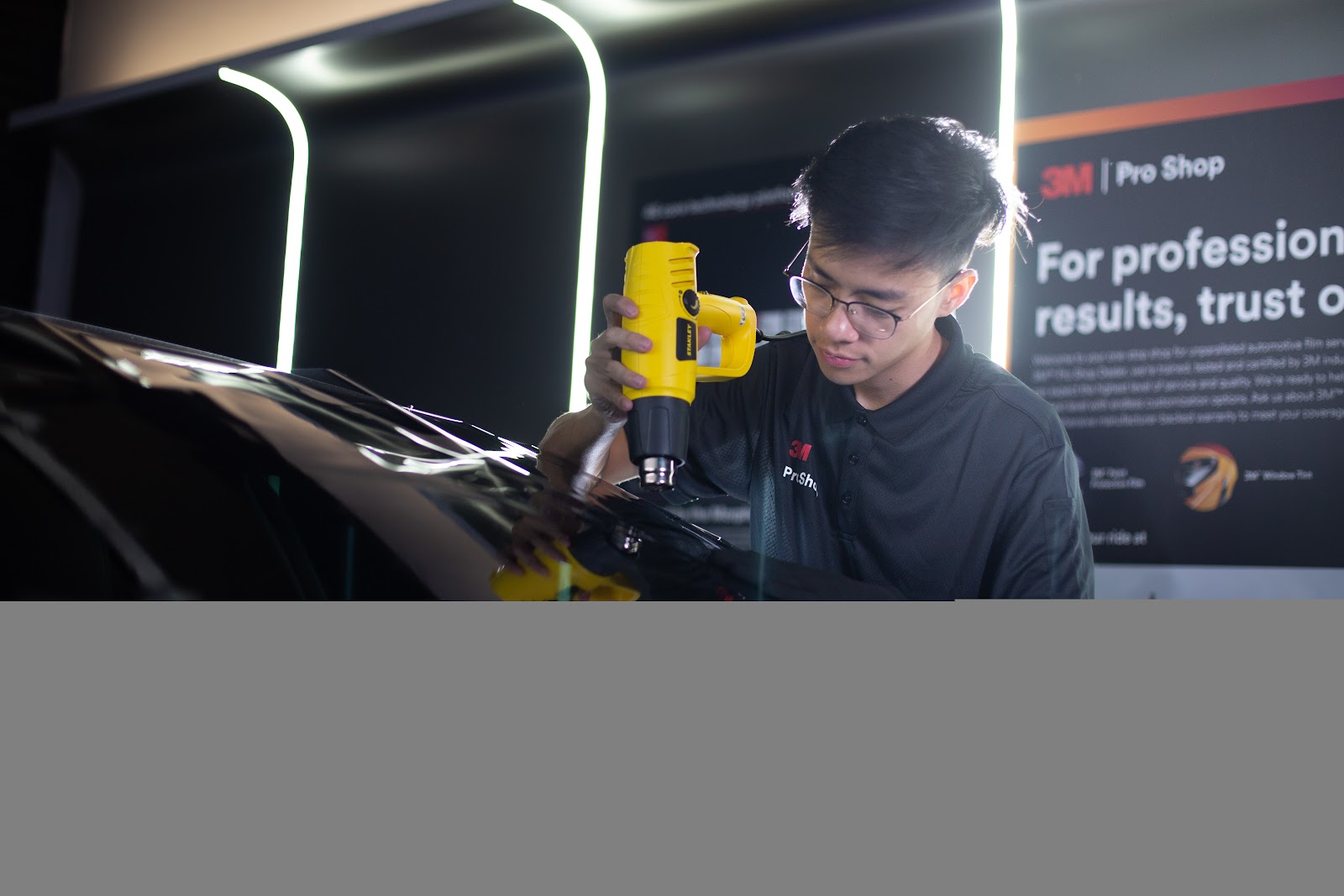
The signal-safe choice is, simply put, a non-metallic film. 3M Crystalline Black uses a multilayer optical construction with around 200 nano-layers and no metal at all, so it does not interfere with mobile, GPS, or satellite radio signals in any way. Ceramic IR and the XP Series are likewise metal-free nano-ceramic films, using ceramic particles rather than metal to do their heat work, so they keep your key fob, remotes, and navigation all working exactly as normal.
The key point is that you do not have to trade away heat rejection to keep your remotes working, which is the false choice cheap metallised film forces on you. Crystalline Black rejects up to 64 percent of total solar energy while staying completely non-metallic, and the ceramic films offer strong heat control without a trace of metal. For a fuller comparison of the premium options, see our 3M Crystalline tint comparison and the 3M Crystalline Black launch notes. To understand the wider benefits of the range, our why 3M window tinting guide is a good starting point, and you can check costs in our 3M window tint price in Malaysia breakdown.

How to Test Before You Commit
The simplest and most reassuring test is to bring your own key fob to the shop and hold it behind a sample of the exact film you plan to buy. If the film is metallised, you can often feel the difference in responsiveness right there in your hand. A reputable shop will happily let you try this little experiment and will tell you honestly whether a given film is metallic or not, because they have nothing to hide about their materials.
A quick check before you book:
- Ask directly whether the film is metallised, sputtered, or non-metallic.
- Hold your fob behind a film sample and test the unlock range.
- Confirm the film is from a known brand with published specifications.
- Plan for a few days of curing before judging any fob behaviour.
Good preparation like this is part of a proper fitting, and it pairs well with a documented handover, which we cover in our pre-install handover checklist.
What This Means for EV Owners
EV owners have a mixed picture worth understanding before they choose a film. Cars that use a phone as the key over Bluetooth or ultra-wideband, such as some Tesla models, are generally less affected because those signals behave differently from a traditional radio fob and are more robust. Conventional radio remotes on many other EVs, and on popular Proton, BYD, and MG models, can still be affected by metallised film just like any petrol car.
The safe approach is reassuringly the same across all of them, petrol or electric. Choose a non-metallic film from the start and you sidestep the entire question, no matter how your car talks to its key. The same non-metallic, sensor-safe thinking applies to the windscreen and its driver-assistance cameras, which we cover in our guide on ADAS and HUD safe windshield tinting. Owners researching specific models can read our MG S5 EV window tint and Proton eMAS 7 window tint guides for model-level notes.
Choosing a Film That Keeps Your Remotes Working
The decision is far simpler than the technical talk makes it sound. Metallised and sputtered films can weaken your key fob, auto-gate remote, and remote start, while non-metallic films like 3M Crystalline Black, Ceramic IR, and XP simply do not, because they carry no metal to block the signal. And a fob that struggles only in the first few days after tinting is almost always trapped moisture, which clears on its own without any intervention.
If you rely on remotes every day, as most of us in condos and gated communities do, ask plainly for a non-metallic film, test your fob against a sample before committing, and give the fresh install a few days to settle before judging any odd behaviour. Do that and you keep your heat rejection high and your remotes fully responsive, with no awkward carpark dance required.
Find out the best protection for your car
Visit a 3M Pro Shop and discover the cost-effective 3M Protective Film and Window Tint
Frequently Asked Questions
Does window tint block key fob signals?
Only metallised or sputtered films can. The metal layers reflect the radio signal and weaken the link between fob and car. Non-metallic films, including ceramic and multilayer optical films, do not block key fob signals.
Can tint stop my auto-gate remote from working?
Metallised film can reduce the range of an auto-gate or barrier remote, so you may need to get closer. A non-metallic film avoids this. If the remote weakened right after tinting, the film material is worth checking.
Why will my remote start not work after tinting?
The two usual causes are metallised film weakening the signal, or moisture from the install briefly affecting the electronics. Moisture clears in three to five days. If the range stays poor, the film material is the likely cause.
Does ceramic tint affect signals?
No. Ceramic films are metal-free, so they do not interfere with key fobs, remotes, mobile, or navigation signals. This is one reason ceramic and multilayer optical films are preferred where signal reliability matters.
Why did my key fob stop working right after tinting?
This is most often trapped moisture from the installation, which can disrupt the electronics for a few days before clearing as the film cures. If the fob does not recover after about five days, ask your installer to check the film type and antenna.
Does tint affect GPS or tyre-pressure sensors?
Heavily metallised film can weaken navigation and tyre-pressure signals in some cases. Non-metallic films such as 3M Crystalline Black, Ceramic IR, and XP do not interfere with these signals, so they are the safer choice if you depend on them.
Can I fix key fob interference without removing the tint?
If the film is metallised, the only true fix is replacing it with a non-metallic film, since the metal layer is the cause. In the meantime, you can reduce the nuisance by pressing the fob against your chin or winding the window down, but these are workarounds rather than solutions.
Is non-metallic tint more expensive than metallised film?
Non-metallic ceramic and multilayer films usually cost more upfront than basic metallised film, but they keep your remotes working, reject more heat, and resist fading. For anyone who uses remotes daily, the extra outlay buys back a daily convenience that cheap film quietly takes away.
Author

Fabian
He is passionate about revolutionizing the car protection services industry by bringing innovation and transparency to a traditionally opaque and often misunderstood field. His mission is to educate end users on the true benefits and importance of car protection, aiming to replace outdated practices with honest, customer-focused solutions. With a fresh approach to car tinting, paint protection film (PPF), and detailing services, he is committed to delivering a superior customer experience that sets a new standard in the market. He welcomes discussions about the future of the automotive industry and is eager to connect with like-minded professionals who share his vision for innovation, integrity, and excellence.
Experience the future of window tinting
Visit a 3M Pro Shop and discover the revolutionary Crystalline CR BLK film