✧ Key Takeaways
- Crystalline Black offers several shades. An Elite quotation may use a different film on the side and rear windows.
- Heat rejection percentages only make a fair comparison when the glass, film darkness and test methods match.
- Crystalline Black has no metal layer and does not interfere with mobile, GPS or satellite radio signals. Cameras and sensors need their own checks.
- Elite's listed 73.2% visible light transmission (VLT) is not a guaranteed JPJ pass. Your car's glass and film need measuring together.
- Real samples help you choose the look. Your job sheet should name the film on each window and record how much light the glass lets through after fitting.
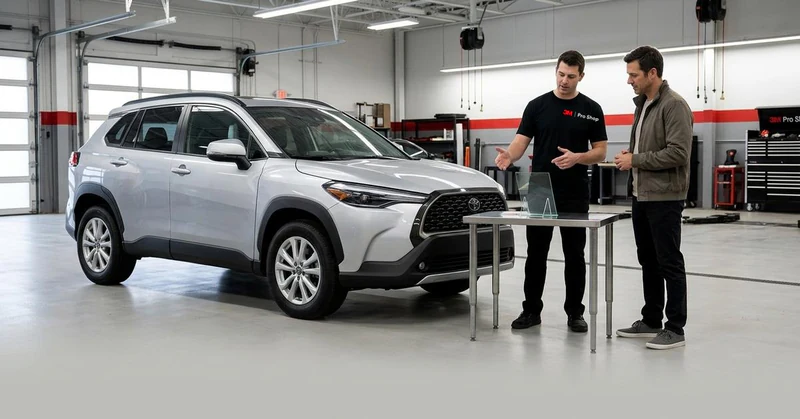
If you're choosing between 3M Crystalline Black and V-KOOL Elite, their listed heat figures alone don't tell you which will keep your car cooler. Crystalline Black has a charcoal look and no metal layer. With Elite, the package name alone doesn't tell you which film goes on each window.
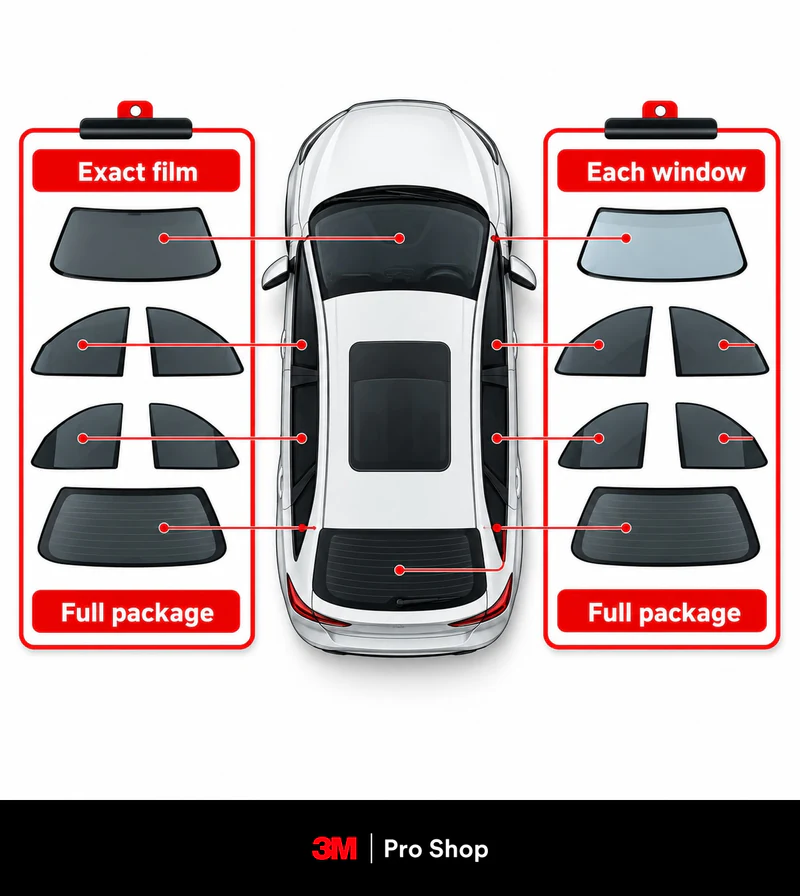
3M Crystalline Black comes in several shades. Elite is one film in V-KOOL's range. Your windscreen quote might name Elite while your side and rear windows get something else. Even if the quotes are headed “Crystalline Black” and “Elite”, check which films they include for each window.
As you compare 3M Crystalline with other tint brands, check which windows and windscreen shades each quote includes.
Which windows get which film?
An Elite package doesn't necessarily put Elite on every window. V-KOOL's Malaysian store offers an all-Elite installation and an Elite windscreen package with VK55 on the side and rear windows. A Crystalline Black quotation also needs shade codes, because your front and rear glass may use different films.
V-KOOL 55 has its own listed figures: 58% visible light transmission, 60% total solar energy rejected and 96% infrared heat rejection. Those are not Elite's figures. If that film covers your side and rear windows, Elite's specification only describes part of the package you're considering.
Crystalline Black shade codes matter for the same reason. Your windscreen may need a lighter film than your rear windows. A heat rejection figure for a dark Crystalline Black shade doesn't tell you how much heat the lighter windscreen shade rejects. Each window needs its own shade code on the quote, not just the Crystalline Black name.
We came across a Proton X70 buyer on Lowyat comparing quotes that used different films around the car: Crystalline throughout, Elite throughout, or Elite at the front with another film elsewhere. This was the original Crystalline, not Crystalline Black.
If roof glass is included, it needs its own line on the quote too. A windscreen upgrade and a complete window tint installation cover different amounts of glass, even if both name the same premium film. Check the window lists to see whether both prices cover the same parts of the car.
Which film rejects more heat?
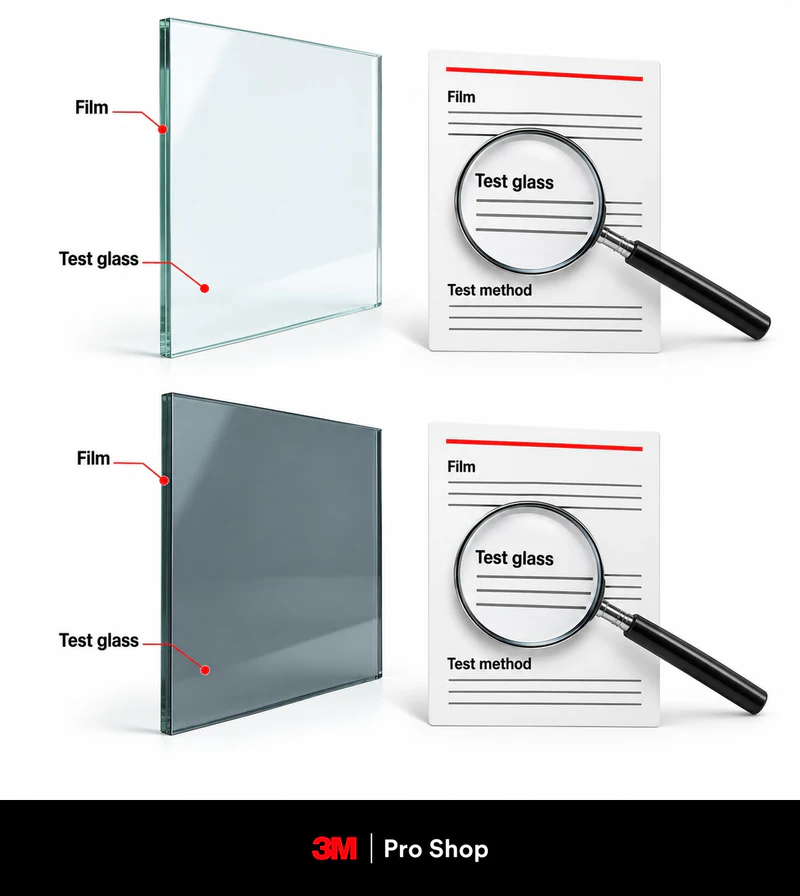
Published figures alone don't tell you whether Crystalline Black or Elite rejects more heat. Visible light transmission, or VLT, tells you how much daylight passes through the glass. Higher VLT means a lighter tint. A useful heat comparison needs films of similar darkness, tested on the same glass under comparable conditions.
Total solar energy rejected, or TSER, tells you how much of the sun's total energy the glass and film keep out, not just visible light. Infrared rejection measures only the infrared part of sunlight. So a high infrared percentage doesn't mean the same percentage of all solar energy stays out. The two measurements answer different questions.
Elite's Malaysian store listing gives 73.2% VLT, 55% TSER and 94% infrared heat rejection. It doesn't say which glass was tested or which part of the infrared range was measured. Without those details, the published figures don't let you fairly compare Elite with a particular Crystalline Black shade.
Our Crystalline Black product page lists CR BLK 70 at 43% total solar energy rejection. The 3M technical sheet gives that result on 6 mm clear glass with 89% starting visible light transmission, tested using ANSI/NFRC 200. V-KOOL's Malaysian listing doesn't say whether Elite was tested on the same glass in the same way, so 43% and 55% still don't tell you which film would keep your car cooler.
Factory glass affects the result before you add tint. The published figure may come from film fitted to a particular glass sample, not film tested on its own. Your car's glass may let through a different amount of light to begin with. Without the glass details, a difference between the samples can look like a difference between the films.
| Product listing | Listed TSER | What limits the comparison? |
| CR BLK 70, our product page and 3M technical sheet | 43% | Tested on 6 mm clear glass with 89% starting VLT using ANSI/NFRC 200. Elite's listing doesn't say whether its test conditions match. |
| V-KOOL Elite, Malaysian store listing | 55% | The listing doesn't say which glass was tested. |
A larger percentage on one listing isn't proof that your car will feel cooler. The missing glass details don't mean Elite or Crystalline Black performs badly. They mean we don't know whether the films were tested the same way. To compare the shade going on your car, you need figures that say which glass was used and how it was tested.
What can a heat lamp show?
A heat lamp lets you feel warmth through the samples on the stand. It doesn't recreate all the sunlight falling on your car or the heat inside the cabin. Your hand may feel a difference, but that doesn't tell you how hot the cabin will get or which film is better overall.
What you feel depends on the lamp, how far it is from the glass, how long the sample is heated and the glass itself. An old sample is harder to judge if nobody knows which film it is or what condition it's in. You can ask which films are on the stand and how old the samples are.
A demonstration using bare glass and one tinted sample does not compare Elite with Crystalline Black. To help you choose between those films, both samples need to be identified and compared using the same glass and conditions.
How hot your arm feels while driving is also different from how hot the cabin gets after parking. Tint reduces some solar energy entering through the glass, but your car can still get hot after tinting. Heat also enters through other windows and the car’s body. Neither film makes a parked car stay cool without air conditioning.
A sample on the heat lamp stand labelled only ‘3M tint’ doesn't tell you which series you're trying. Crystalline Black, Ceramic IR and XP are different 3M series, so the sample needs its series and shade identified, just as your job sheet does.
Which colour do you prefer?
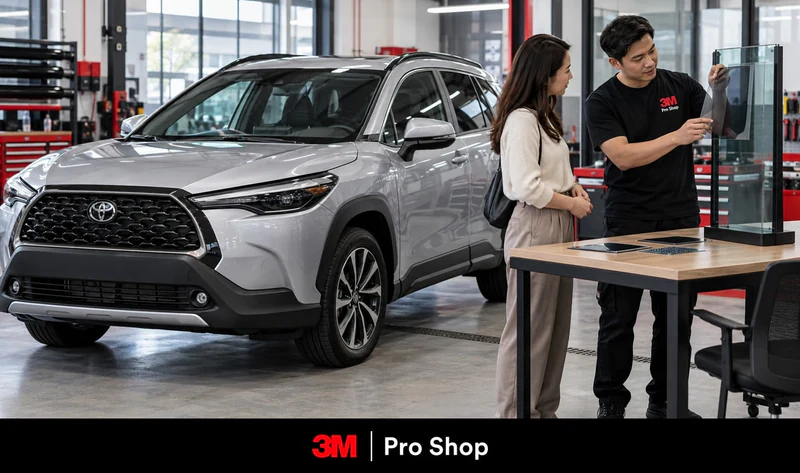
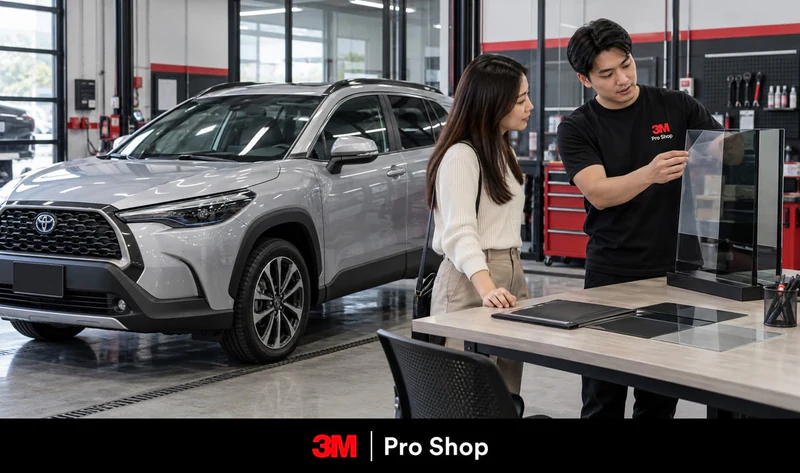
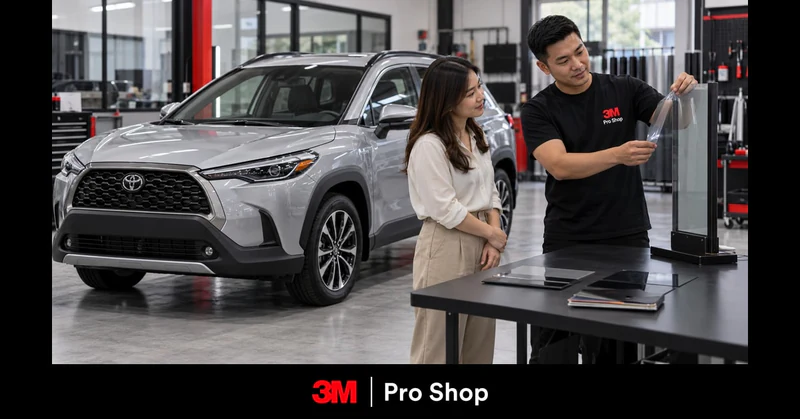
Crystalline Black has a charcoal look, but the shade you choose, your car's glass and the lighting all affect how it looks once fitted. It's best to see an Elite sample too. A photo or a sample held against white paper won't show exactly how either film will look on your car.
A green or blue cast in a photo may come from the car's glass, reflections or the camera, not just the film. V-KOOL's local Elite listing doesn't promise the same colour on every car. Seeing the actual film helps avoid choosing from a photo or assuming every film from one brand looks alike.
How well you see the road matters more than how dark the windscreen looks from outside. Compare the view through a sample, not just how it looks under bright showroom lights. If driving at night or in rain is already difficult, or your glass is hazy or scratched, tell the installer before choosing a shade.
If both samples suit your glass and driving needs, it's fine to choose the colour you prefer. That doesn't mean it rejects more heat. A darker or more reflective film may look better to you without keeping the cabin cooler.
Crystalline Black came after the original 3M Crystalline range. A friend with original Crystalline may be able to tell you about their installer, but their experience doesn't tell you what Crystalline Black is like.
Will GPS and cameras still work?
Crystalline Black is nonmetallised, which means it has no metal layer inside the film. Our product information says it doesn't interfere with mobile, GPS or satellite radio signals. Signal compatibility does not tell you whether a camera can see through the film. Covering the part of the glass it looks through can still block its view.
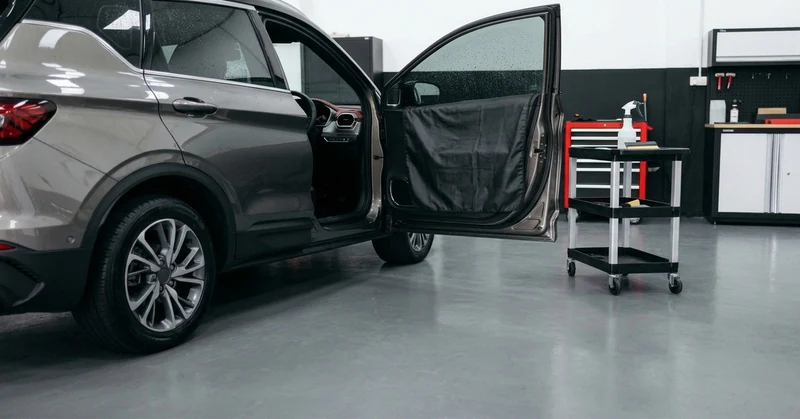
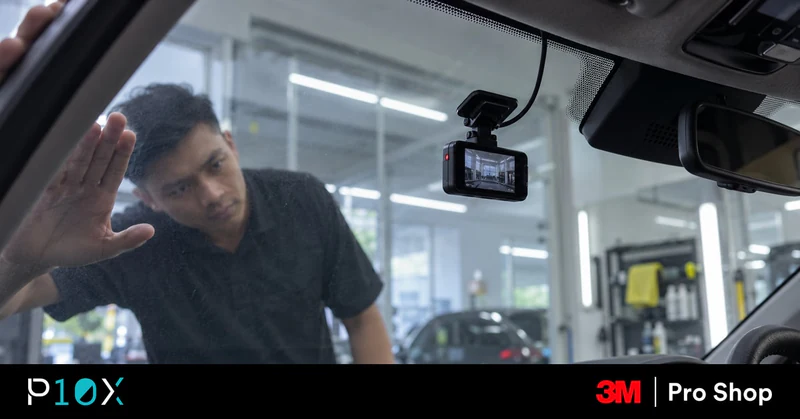
Glass, trim and switches also need checking before installation, as this workshop reel shows. It is not a test of GPS reception.
V-KOOL's Malaysian FAQ says GPS, auto gate and phone reception depend on the receiving device and signal strength. It doesn't say Elite will cause problems in your car, but it doesn't promise every device will work either. Another driver may have different glass, a different receiver or another V-KOOL film.
If your car has a windscreen camera, dashcam or head-up display, the installer needs to follow your carmaker's guidance on where film can go. Having no metal layer doesn't mean film can cover every sensor area. Window tint can affect ADAS, or advanced driver assistance systems, if it blocks a camera's view. A blurry dashcam image needs a different check from weak GPS reception.
Before fitting, the installer needs to know which devices you use and whether any already have reception problems. Checking how they work now gives you something to compare afterwards. If navigation becomes unreliable after fitting, you and the installer can look at that receiver and what changed, rather than rely on a promise that tint suits every device.
How does the installer handle your glass?
Whichever film you choose, the glass needs cleaning, the film needs shaping and the edges need a neat finish. A recognisable brand does not replace careful fitting. Before work starts, you and the installer can record any scratches, chips, old adhesive or marks on nearby trim.
If your car already has tint, you can discuss removing the existing film with the installer, especially around rear demister lines.
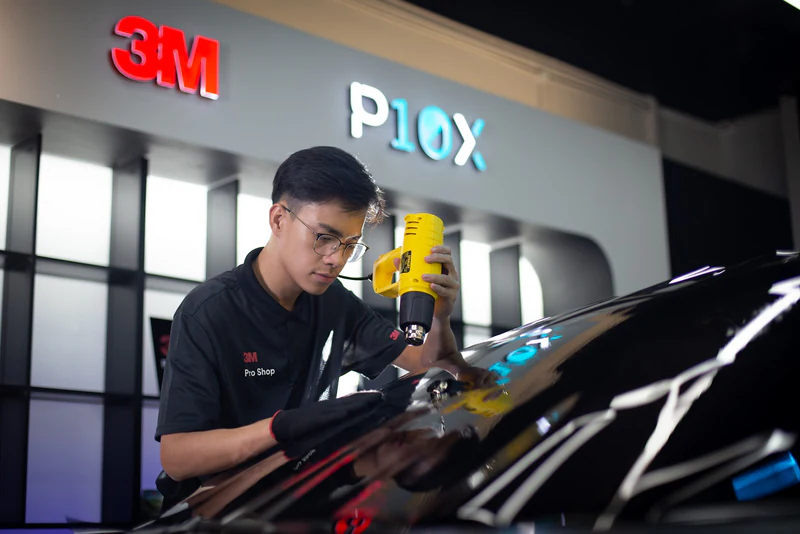
A technician uses a heat gun to shape the film to the windscreen's curve before fitting it to the glass.
What should the finished edges look like?
When you collect your car, the fitting matters as much as the film you chose. On a window that rolls down, a narrow clear strip at the top can be normal. If the cut is wavy, a corner is exposed or the film catches the seal, the installer needs to check it. Heat rejection figures won't show you those faults.
Your glass and seals affect where the film edge should end. A close-up of someone else's car won't necessarily show the right finish for yours. The installer can explain the planned gap before fitting and show you the edge when you collect your car. Newly tinted windows need to stay up for as long as the shop's aftercare instructions say.
Cloudiness or small water pockets while the film dries are different from a crooked cut. If something worries you, a photo lets the installer see the area without you rubbing, pressing or trimming the film. The shop can explain what needs time to dry and what needs checking.
During fitting, the installer trims the film to follow the edges of the glass. When you collect the car, they can show you the window tint gaps and edges. It's also a chance to look through each window and check the fitted films against your job sheet, rather than rely on the brand logo alone.
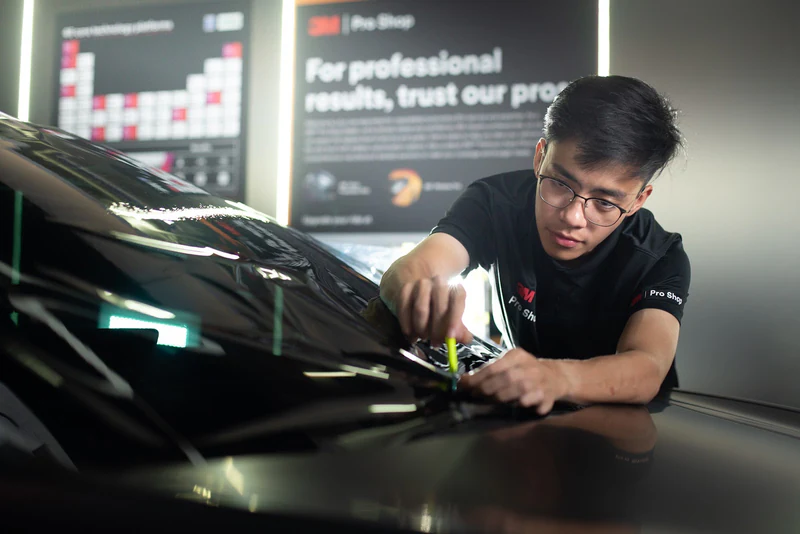
Will your tinted glass meet JPJ limits?
Neither Elite's listed VLT nor a Crystalline Black shade code guarantees a JPJ pass. For a normal Malaysian private car, JPJ window tint requirements call for at least 70% VLT at the front windscreen and 50% at the front side windows. Those limits apply to glass and film together.
Before agreeing to the work, you can ask the installer to record the VLT before and after fitting, with each reading beside the relevant window and film code on the job sheet. If the car arrives with old tint, the first reading includes that film too. The record should also say whether it was removed.
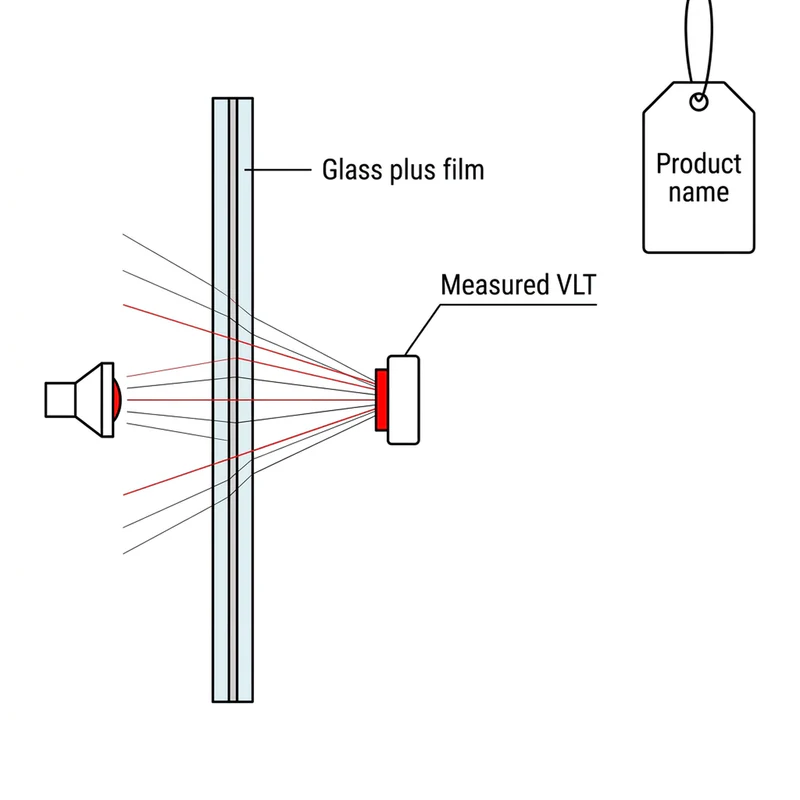
Your invoice tells you which film you bought. A light meter checks how much light passes through your car's glass and film. Together, they tell you what was fitted and how dark the finished window is. Keeping the readings with the invoice lets you refer back to the finished VLT if you need the windows checked later.
PUSPAKOM's July 2025 statement explains that it follows JPJ's specifications, not a separate tint standard. Your factory glass already affects how much light passes through before another layer is added. So your windows still need measuring after fitting. A percentage measured on clear glass in a test doesn't tell you how much light passes through your car's glass and film together.
What should the quote and warranty records include?
Both quotes need to include the same removal and preparation work if you're replacing old tint. Before agreeing to another layer, you and the installer need to check whether the old film should stay on the glass. Every layer left there affects how the finished windows look and how much light passes through.
Leaving old tint in place isn't the same job as removing it and preparing the glass for new film. If a quote doesn't say which work is included, it's worth getting that in writing. Otherwise, the films might be similar but the price may cover different work.
V-KOOL's Malaysian FAQ explains how to get a warranty card and where to make a claim. The installer can tell you which documents come with your film. A card doesn't mean every problem is covered. If you need help later, the documents from your installation show the shop which film was fitted.
Crystalline Black or Elite: which suits you?
Crystalline Black may suit you if you prefer a charcoal look, no metal layer and several shades to choose from. With either film, your quote needs to name the film for each window, and the installer needs to measure VLT and check your devices. The heat percentages do not tell us which will keep your car cooler unless the test conditions match.
If you like Elite's sample and its package suits your car, these figures don't give you a reason to reject it.
At 3M Pro Shop by P10X, we can explain the Crystalline Black shades on your quotation and the heat rejection figures for each shade. You can bring the list of films in the Elite package you’re considering and compare what would go on each window before making your choice.
Find out the best protection for your car
Visit a 3M Pro Shop and discover the cost-effective 3M Protective Film and Window Tint
Frequently asked questions
Is every window tinted with V-KOOL Elite?
Not necessarily. V-KOOL's Malaysian store offers Elite on every window and a package with Elite on the windscreen and VK55 on the side and rear windows. Your quote should say which film goes on each window so you know which package you are being offered.
Does Elite's 55% TSER mean it will keep my car cooler?
No. V-KOOL Elite's 55% total solar energy rejection (TSER) does not prove that it keeps your car cooler than Crystalline Black. A fair comparison needs films with similar visible light transmission (VLT), tested on the same glass using comparable methods. CR BLK 70's 43% TSER result is for 6 mm clear glass with 89% starting VLT, tested using ANSI/NFRC 200. Elite's listing doesn't say whether its glass and test conditions match, so those percentages don't tell you which film would keep your car cooler.
Does Crystalline Black contain metal?
No. Crystalline Black has no metal layer and does not interfere with mobile, GPS or satellite radio signals. That doesn't mean film can cover every camera or sensor area. The installer still needs to follow your carmaker's guidance for those parts of the glass.
Will V-KOOL Elite disrupt my GPS?
Not necessarily. V-KOOL's Malaysian FAQ says reception depends on the receiving device and signal strength. Your receiver, glass and the film fitted may differ from another driver's, so their experience won't tell you for certain how yours will work. Checking your own device before and after fitting gives you something to compare.
Does Elite's 73.2% VLT guarantee a JPJ pass?
No. Elite's listed 73.2% visible light transmission doesn't guarantee a pass on your car. JPJ limits apply to how much light passes through the glass and film together once the film is fitted. A Crystalline Black shade code isn't a guarantee either, so your completed windows need checking.
Will either film keep my parked car cool?
No. Crystalline Black and V-KOOL Elite reduce some heat entering through the glass, but heat can still enter elsewhere and build up inside. Neither replaces air conditioning or makes an unattended parked car safe to occupy.