✧ Key Takeaways
- A useful quotation names the film for each window, including the Crystalline Black shade code or the exact Raytech model.
- Raytech's RX package does not put RX film on every window. Windscreen, side and back glass can receive different products.
- A thicker security film does not necessarily keep your car cooler. Its heat figures do not tell you how well a window will withstand an impact.
- A film's visible light transmission (VLT) tells you how much light it lets through. JPJ compliance depends on the reading through your glass and film together.
If you're choosing between 3M and Raytech, neither brand is better for every car. 3M Crystalline Black suits you if you want a charcoal look and a film with no metal layer. Raytech offers both solar films and thicker solar security films, so your quote needs to say which film goes on each window.
You may have a quotation from each shop and still be unsure what you are paying for. When you compare Crystalline Black with other tint brands, the film listed for each window tells you more than the highest percentage in an advertisement.
Raytech packages can contain several films
Raytech's RX and RC packages use Ultra 70 on the windscreen and other films on the side and back windows. A package name does not tell you the film or shade fitted to every window, so each window needs its own product details on the quotation.
In the RX package, the side windows receive RX film, but the back window uses RC film. This matters if you chose the package for its security film. RX on the doors does not mean the same thicker film covers the windscreen and back glass.
Crystalline Black also comes in different shades. You may choose a lighter one for the windscreen and a darker one for the side windows. Each has its own shade code and specifications, so the figures for one shade do not describe the other.
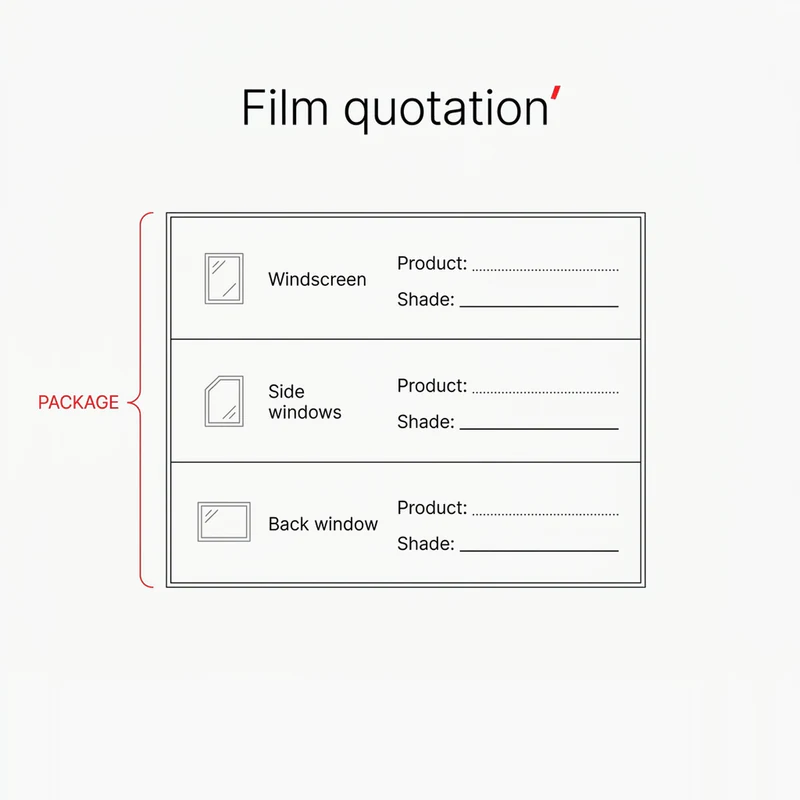
A glass roof and removal of old tint may be included in one quotation but left out of another. Labels such as “premium 3M” or “Raytech security package” do not tell you whether those jobs are included.
If you change the film, shade or windows included, you can have those changes written on the quote before fitting. An invoice that only repeats the original package name will not show what changed.
RX 55 is thicker than RC 55
Centurion RX 55 is listed as a 6 mil solar security film, while RC 55 is a 2 mil solar film. Both have a listed 62% total solar energy rejection (TSER). That percentage describes solar energy rejected in a test, not resistance to a break-in or the temperature your cabin will reach.
VLT describes how much visible light passes through. Raytech lists RX 55 at 60% VLT and RC 55 at 58%, so even these two films with matching heat figures are not identical. Ultra 70 has a listed 73% VLT, 58% TSER and 95% infrared heat rejection.
| Raytech product | Listed use | Thickness | VLT | TSER |
| Ultra 70 | Windscreen film | 2 mil | 73% | 58% |
| RC 55 | Solar film | 2 mil | 58% | 62% |
| Centurion RX 55 | Solar security film | 6 mil | 60% | 62% |
One mil is one thousandth of an inch, so RX 55 is three times as thick as RC 55. Both have the same listed TSER and 98% infrared heat rejection. RX 55 gives you a thicker security film, but those figures do not prove it will keep your car cooler.
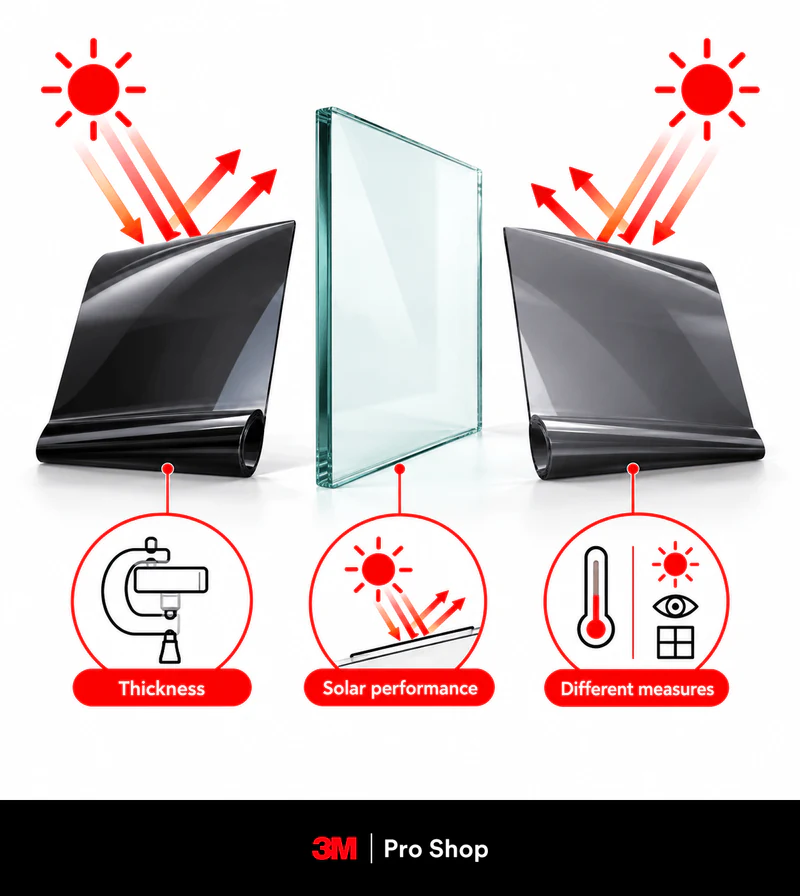
Thickness alone does not tell you how well a window will withstand an impact. To judge a protection claim, you need to know which film and glass were tested and how the film was fitted. No film makes glass unbreakable or prevents every theft.
Heat figures need the same test conditions
Raytech's listed percentages do not prove that it will keep your car cooler than Crystalline Black. To compare them fairly, the films need similar VLT and must be tested on the same type of glass under similar conditions. Without those details, the figures cannot show which brand keeps a car cooler.
Infrared rejection covers only the infrared part of sunlight. TSER covers the total solar energy rejected by the glass and film in a test. Two films can have similar infrared figures and different TSER, which is why a single infrared percentage is not enough to compare them.
For a windscreen, where JPJ requires at least 70% VLT through the glass and film together, the lighter Crystalline Black shades and Raytech's Ultra 70 are relevant options to discuss. The Crystalline Black figures below still need matching test details before they can be compared with Raytech's:
- CR BLK 70: 43% TSER
- CR BLK 80: 32% TSER
These figures were measured on 6 mm clear glass. They do not tell you how hot your car will feel after parking or how much visible light will pass through your windscreen once the film is fitted.
Raytech's catalogue does not name the glass used in its tests. Without that detail, you cannot tell whether its figures and the Crystalline Black figures above were measured in the same way. A higher number alone does not tell you which film will keep your car cooler.
A brand's “up to” figure can also belong to a shade you would not fit on that window. It helps to compare the specific shade on your quotation rather than the highest number in the range. Otherwise you could choose a light windscreen film while expecting the published result of a different shade.
Heat on your arm while driving is different from heat built up inside a car parked for hours. A hot dashboard and hot air inside affect how you feel too. Parking time and the amount of glass help explain why a car can still feel hot after tinting. Catalogue percentages do not promise a particular cabin temperature.
Crystalline Black has a charcoal appearance
Crystalline Black has a charcoal appearance, unlike the original Crystalline range it replaced in Malaysia from December 2025. If you saw an older sample or demonstration, it may not show the film you are being offered now. Both carry the Crystalline name, but they are not the same product.
A sample against glass gives you a closer look at the colour, but does not measure how the finished windows will perform. You may like Crystalline Black's appearance even if another film has a higher listed heat rejection figure.
If your quotation only says “Crystalline”, you may not know whether it means the older range or Crystalline Black. Having the full product name written down makes it clear which one is being offered.
A lighter windscreen shade and darker side-window shade will not necessarily look identical. Your glass also affects the finished appearance. Comparing the actual samples for the windows you plan to tint is more useful than judging the whole range from one photograph or one piece of film.
Crystalline Black uses many thin optical layers
Crystalline Black uses many thin optical layers together with nano-ceramic technology, without a metal layer. It is designed not to block mobile, GPS or 5G signals. If you use these connections in your car, that is worth considering alongside the shade and the film’s heat rejection figures.
That does not mean all Raytech films will interfere with electronics. Raytech has several series, and details about one may not apply to another. You would need the technical details for the exact Raytech film to check whether it contains metal or could affect those signals.
Original Crystalline film has more than 200 thin optical layers and is thinner than a Post-it Note. Crystalline Black uses the same multilayer technology. A demonstration of those layers in the original film can help explain the technology, but it cannot show Crystalline Black's colour or tell you how the newer film performs.
More optical layers do not mean a window can withstand a harder impact. To compare how well the fitted windows withstand an impact, you would need impact tests, not just a layer count or thickness figure.
Some areas around windscreen cameras and sensors may need to stay free of film. Any area your carmaker requires to remain clear must be left uncovered, whichever film you choose. You can agree those areas with the installer before the film is cut. Compatibility with mobile or GPS signals does not answer whether film can cover a camera's view.
JPJ measures glass and film together
For Malaysian private cars, JPJ requires at least 70% VLT through the front windscreen and 50% through the front side windows. Compliance depends on the glass and film together. A film's catalogue VLT or shade code cannot guarantee that the finished window meets the minimum on your particular car.
PUSPAKOM's July 2025 statement says it follows JPJ's tint rules, not a separate standard. If a window fails the tint test, the glass and film together let through less light than JPJ requires. The brand name does not change that requirement.
Your car's factory glass already blocks some light. Existing film adds another layer if it is left on. Both affect the final reading, so a sample held against the glass cannot tell you whether the finished windscreen meets the JPJ window tint limits.
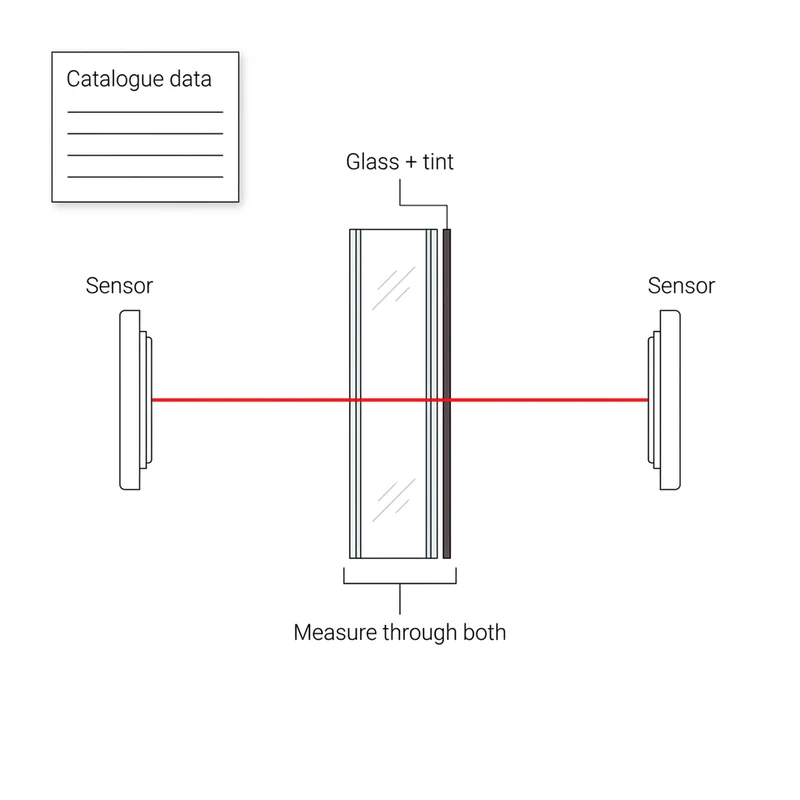
Ultra 70's listed 73% VLT does not promise that every windscreen will finish above 70%. The same applies to Crystalline Black. A reading through your window after installation tells you how much light passes through your glass and film together, rather than through a sample used for catalogue figures.
Meeting the legal limit does not mean you will be happy with the view at night. Rain and reflections can change what you see. If your glass is already scratched or cloudy, or glare bothers you, that is worth discussing before fitting. New film will not repair the glass, so visibility matters as well as the legal minimum.
What to check before and after tinting
Old tint, chips, scratches and rear demister lines need attention before new film is fitted. Nearby switches and trim matter too, whichever brand you buy. Recording those details gives you and the workshop a way to tell existing marks from anything you notice after the work is done.
A pre-install tint check records those details for you and the workshop. It also records whether old film is still on the windows. Otherwise, a reading through that old film could later be mistaken for a reading through factory glass alone.
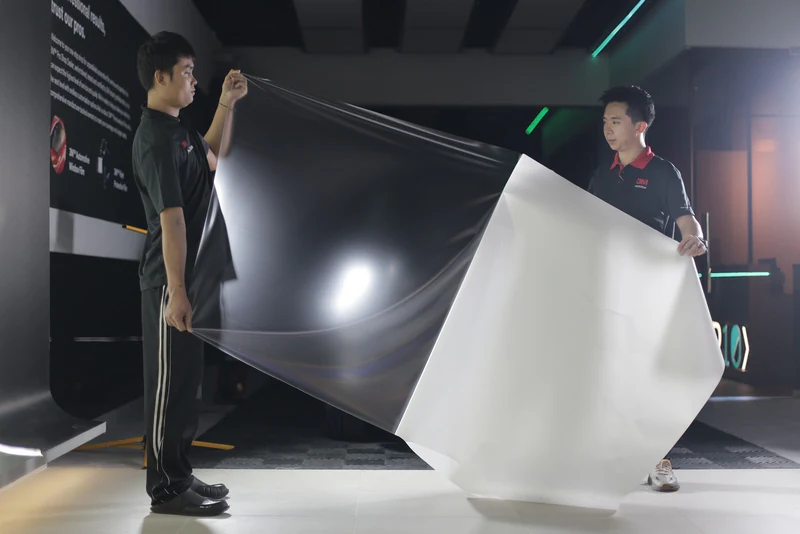
Technicians need to keep the large sheet of film clean while handling and fitting it.
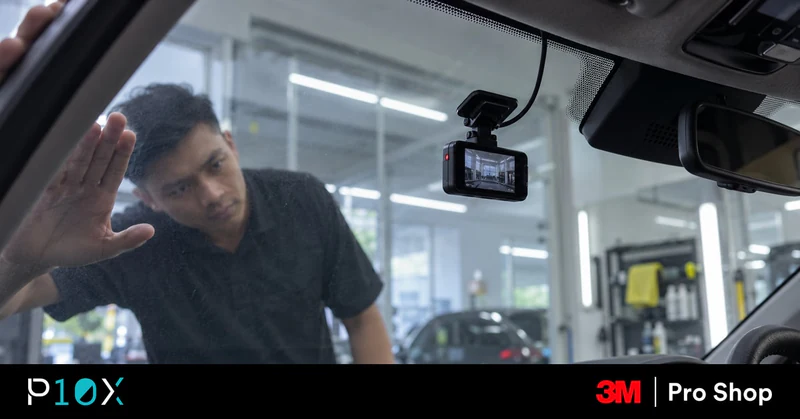
Old tint removal needs care around rear demister lines and equipment attached to the glass, such as a dashcam. Your quotation can list removal separately from fitting the new tint, so you know whether the old film will be removed as part of the job.
When you collect your car, you can look through each window and point out anything that seems wrong to the installer. New film needs time to dry, so it helps to know what to expect and when to return for a check. Pressing or scraping a bubble yourself may make it harder for the installer to assess.
Windscreen film is shaped before fitting
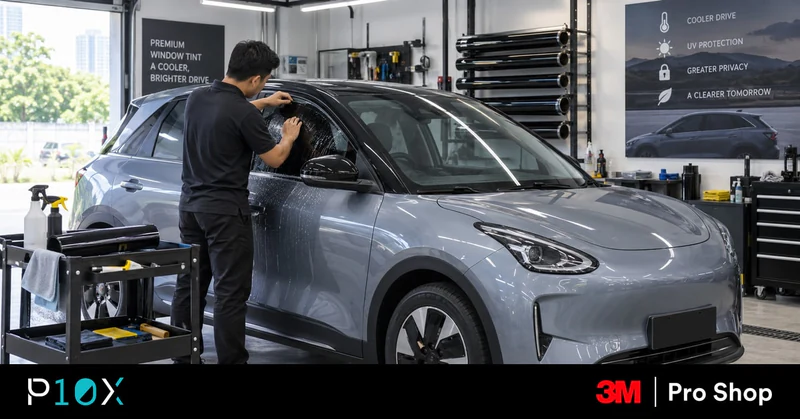
Windscreen film needs to follow the curve of the glass, rather than lie flat. It is shaped against the outside of the windscreen before being fitted inside. Seeing film on the outside during that stage does not mean your finished tint will stay there.
Nearby switches and speakers need protection from fitting solution, the liquid that lets the film slide into position. Once the film is fitted inside, the installer pushes the solution out with a squeegee so the sheet lies flat. Small amounts left underneath can cause water bubbles or cloudiness during the first couple of weeks.
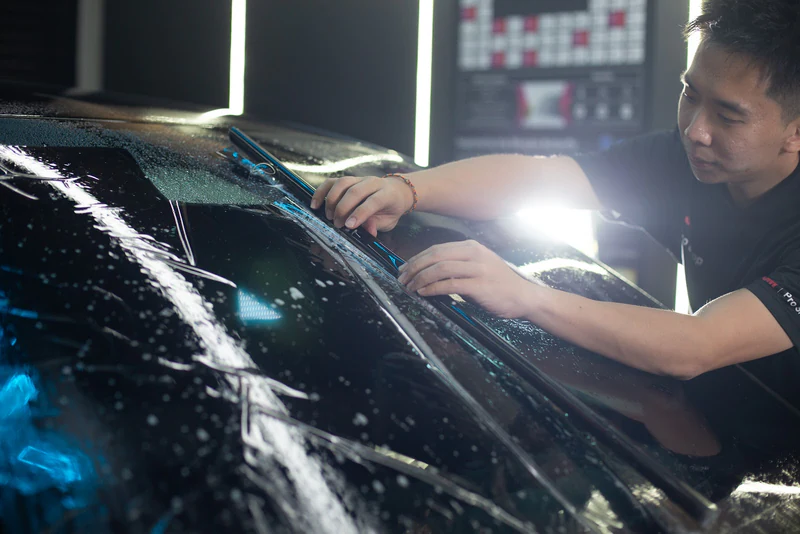
A technician uses a squeegee on the film while it is laid over the outside of the windscreen during preparation.
Keep the film details in case a window needs replacing
Your job sheet can record which film is on each window, who fitted it and the VLT readings after fitting. Those details help if a window needs new film later. The package name and colour of the remaining tint may not be enough to find the right replacement.
If you replace the windscreen, its film may differ from the film on the doors. Recording the exact product makes that clear. For example, the listed windscreen film in an RX package is Ultra 70, not the 6 mil RX film used on the doors.
If you replace RX 55 on one door window with RC 55, the listed heat figures stay the same, but you no longer have the same 6 mil security film on that window. A job sheet with the exact replacement product lets you see what changed.
Your warranty documents explain the support available, while the job sheet records your car, the films fitted and the work done. Keeping both gives you something to refer to if a concern comes up later.
Choosing between 3M and Raytech
Crystalline Black may suit you if you like its charcoal appearance and want a film without a metal layer. A Raytech package may suit you if you want its solar security film. Either way, knowing which film and shade go on each window tells you more than comparing two infrared percentages.
At 3M Pro Shop by P10X, we can show you Crystalline Black samples against glass and discuss shades for each window. You are welcome to bring your Raytech quotation so we can go through the films listed on it with you. We can also explain what the heat figures tell you, separately from any claims about security.
Find out the best protection for your car
Visit a 3M Pro Shop and discover the cost-effective 3M Protective Film and Window Tint
Frequently Asked Questions
What is the difference between Raytech RX 55 and RC 55?
Centurion RX 55 is a 6 mil solar security film, while RC 55 is a 2 mil solar film. Raytech lists both at 62% total solar energy rejection (TSER) and 98% infrared heat rejection. RX 55 is thicker, but those matching heat figures do not tell you how hard it would be to break either window.
Does every window get Ultra 70?
No. Raytech lists Ultra 70 as the windscreen film in its RX and RC packages. Side and back windows receive other products. A quotation can name the film for each window so you do not have to guess from the package name.
Is thicker Raytech film better at rejecting heat?
Not automatically. Raytech lists 6 mil Centurion RX 55 and 2 mil RC 55 at the same 62% total solar energy rejection (TSER). RX 55 is thicker because it is a security film, but that does not prove it rejects more heat. Thickness alone cannot tell you how cool your cabin will feel.
Is Raytech cooler than 3M Crystalline Black?
Raytech's published figures do not prove that it keeps your car cooler than 3M Crystalline Black. To compare them fairly, the films need to let through similar amounts of visible light and be tested on the same type of glass using similar methods. Raytech's catalogue does not give all those details, so a higher listed percentage is not proof of a cooler car.
Will film listed at 73% VLT pass on my windscreen?
Not necessarily. JPJ requires at least 70% visible light transmission (VLT) through the front windscreen, measured through the glass and film together. Factory glass and any existing film affect that reading. A film listed at 73% VLT therefore cannot guarantee that your finished windscreen will meet the requirement.
Does security film make glass unbreakable?
No. A window can still break with security film fitted, and the film cannot prevent every theft. Any claim about protection needs to name the exact film and explain how it is fitted. Thickness alone does not tell you how much protection your window has.