
Jetour T1 Window Tint: The JPJ-Legal 3M Shade for Every Window
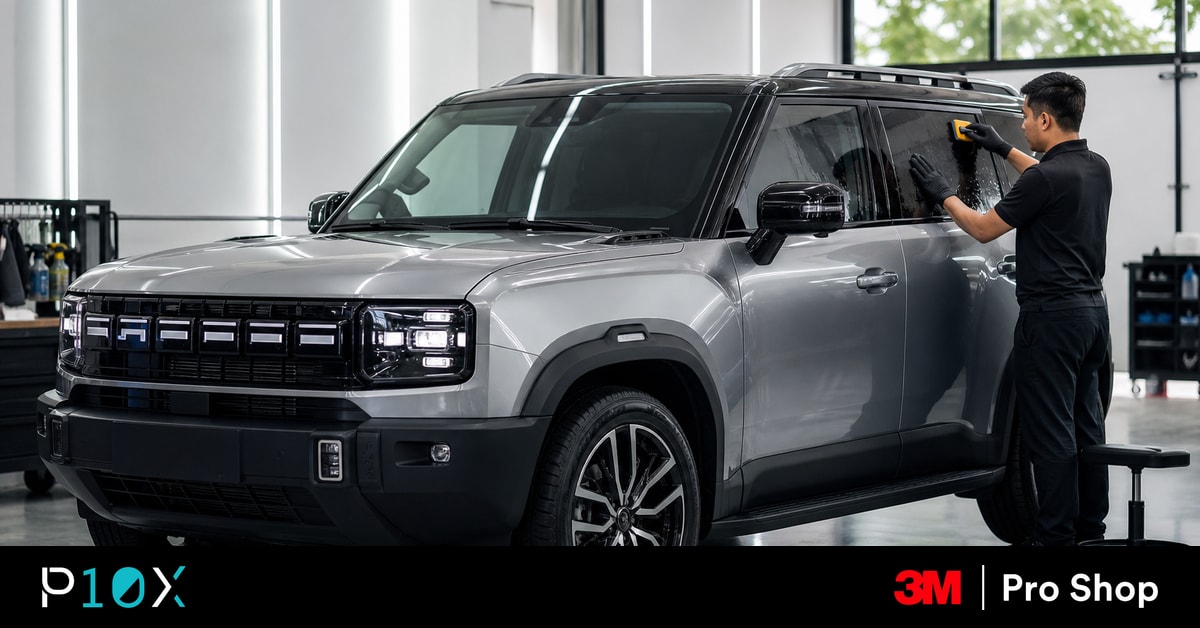
- A legal Jetour T1 window tint plan in Malaysia comes down to three JPJ numbers: 70% VLT on the windscreen, 50% VLT on the front doors, and no limit on the rear glass.
- The tricky part is that JPJ does not measure the film alone. The meter reads the glass and the film together, so the number on the film box is never the number on the roadside meter.
- On standard reference glass, CR BLK 80 suits the windscreen, CR BLK 60 the front doors, CR BLK 30 the rear zones, and CR BLK 15 the panoramic roof on the 2.0 XWD, but your own glass decides the final reading.
- 3M Crystalline Black rejects 95 to 98% of infrared heat and 99.9% of UV, and its non-metallised build keeps the T1's cameras, GPS and 5G working.
- Our worked calculation shows the right film mix cuts about 40% of the solar heat entering through the T1's glass at midday.
- Book with a 3M Authorized Dealer, have your actual glass metered before any film is cut, and register the E-Warranty before you leave the bay.
A Jetour T1 window tint job is usually the first upgrade Malaysian owners book after collecting their keys, and our weather makes that an easy call. What catches many new owners off guard is the legal side, because tint film does not go onto clear glass. It stacks on top of the T1's factory glass, which already blocks some light on its own, and JPJ's meter reads the combined result of both layers.
That stacking is why tint legality is trickier than it looks. A film described as legal at the shop can read a few points darker once it is sitting on your actual glass, and those few points are exactly where summonses live. Talk to owners of newly launched models in local car groups and a second pattern shows up fast: bundled or free tint often blocks heat poorly, gets measured against a proper film, and ends up redone at the owner's own cost within months. The tactics budget tint shops use are a big reason these bundles look better than they perform.
This guide lays out a full tint plan for the T1, window by window. You will get the 3M Crystalline Black shade suggested for each piece of glass, the JPJ position for each zone, what the film means for the T1's cameras and electronics, the mistakes new owners make, and what a careful installation looks like.
JPJ Tests Your Glass and Film Together
Malaysia's tint rules are set by JPJ using VLT, which stands for visible light transmission, the share of light that passes through your window. For private cars the current limits, in force since 8 May 2019, are simple on paper: the front windscreen must allow at least 70% of light through, the front side windows at least 50%, and the rear side windows and rear screen carry no VLT limit as long as both side mirrors are intact. Our JPJ-compliant window tint guide covers the full rulebook, including how officers measure at the roadside, if you want the deeper legal picture.
The part most owners miss is what the meter actually measures. JPJ does not test your film in isolation. The handheld meter clamps onto the whole window and reads the glass and the film together as one combined VLT number. Factory glass is never a perfect 100% clear: most car glass reads somewhere around 75 to 85% VLT before any film goes on, and the exact figure varies by glass batch, sometimes even between two cars of the same model.
Run the stacking math and the trap becomes obvious. Say your T1's front door glass reads 85% on its own. Layer a film rated at 60% VLT over it and the meter does not show 60%. It shows about 0.85 times 0.60, which works out to roughly 51%, one lonely point above the legal line. A slightly darker glass batch, and the same film that sounded safe at the shop reads illegal at a roadblock.
The graphic below shows how the two layers combine into the single reading JPJ cares about.
These are not paper rules either. Picture a Friday evening roadblock along the NKVE near the Subang exit at about 6:30pm. An officer holds a handheld meter against your driver window and it reads 48%, two points under the legal line. That single reading can mean a summons of up to RM2,000 or six months' jail for a first offence, rising to RM4,000 or twelve months for a repeat, plus an order to strip the film. Owners have even had to remove tint for Puspakom inspections, so understanding the combined reading before you tint is worth far more than arguing about it after.
If you have a medical condition that needs extra darkness, JPJ allows an exemption through the MyJPJ app at no cost, while a security-based application costs RM5,000 and lasts two years. Most T1 owners never need either, because legal shades from the right film family still reject serious heat. Our team breaks these percentages down in plain language in the short reel below, worth a watch before you book anything.
Why Factory Glass Will Not Cool Your T1
Standard automotive glass is a safety product first and a heat product never. It blocks a portion of UV rays, but it lets most of the sun's infrared energy straight into your cabin, and infrared is what you feel as heat on your skin. With roughly 4.6 square metres of glass around the T1's tall cabin, estimated from its published dimensions, plus a panoramic roof on the 2.0 XWD, there is a lot of area for that energy to enter.
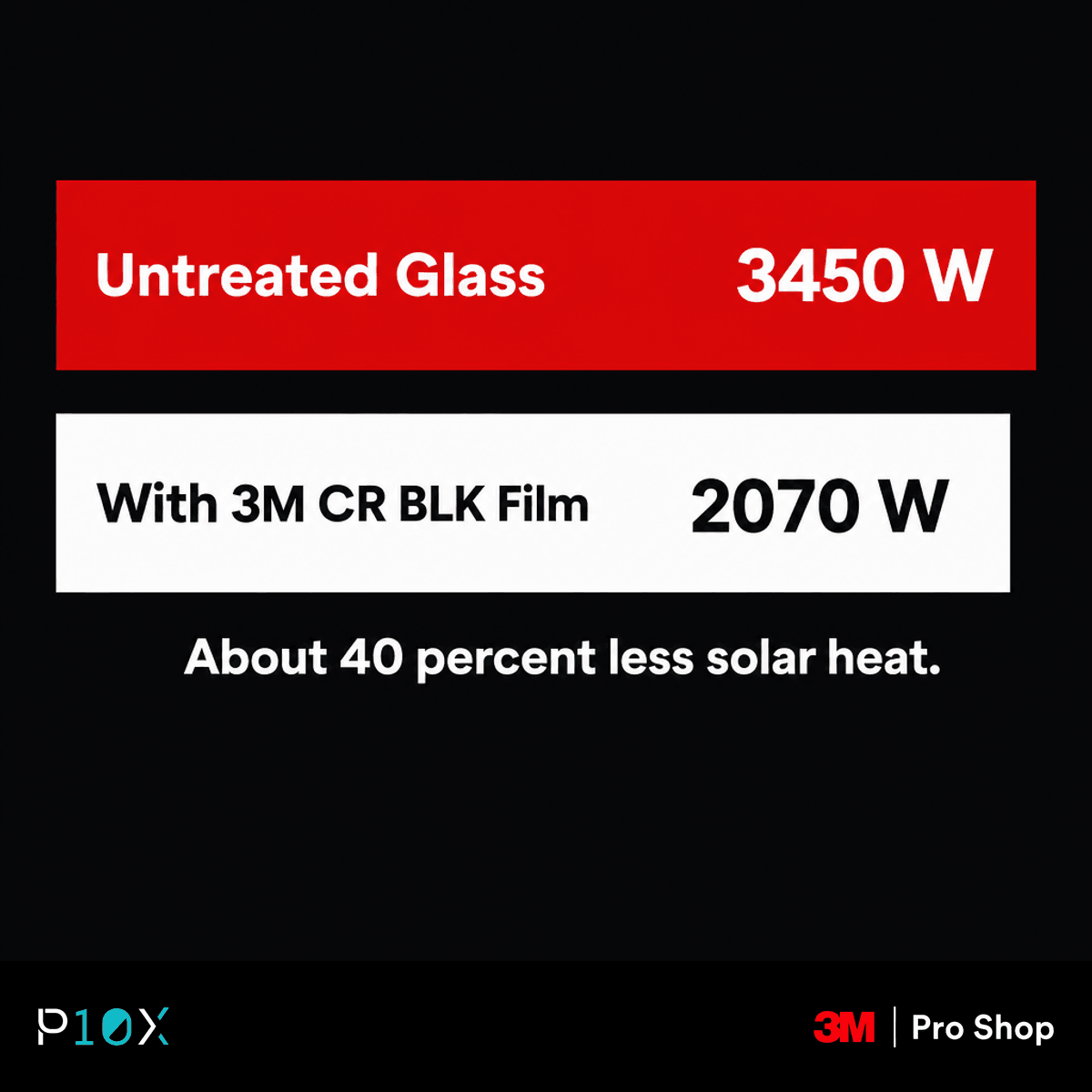
Here is the worked math, using verified figures. Malaysia receives an average of 4 to 5 kWh of solar energy per square metre per day, and midday peak irradiance runs at about 1,000 W per square metre. Untreated automotive glass lets roughly 75% of solar energy through. So at 1pm on a clear day, the T1's glass is passing about 4.6 x 1,000 x 0.75 = 3,450 W of heat into the cabin. Fit the Crystalline Black mix suggested below, which averages about 55% TSER across the zones, and filmed glass lets through about 45% instead: 4.6 x 1,000 x 0.45 = 2,070 W. The difference is about 1,380 W kept out, which works out to roughly 40% less solar heat entering through the glass.
That 40% shows up in daily life. Leave the T1 in an open lot in Shah Alam from 12:30pm to 3:30pm and an unfilmed cabin can push past 50°C, with seat surfaces far hotter, so the aircond runs flat out for eight minutes before anyone stops sweating. With film doing the blocking, the cabin starts noticeably cooler and the dual zone auto climate reaches its setpoint sooner, which is kinder to fuel range on long drives. If your car still feels like an oven after tinting, the problem is usually the film grade or the installation, and our guide on why a car still hot after tint in Malaysia walks through those causes.
The infographic below shows this heat cut at a glance, comparing the solar energy entering untreated glass against glass protected with the suggested film mix.
The Right 3M Shade for Each Window
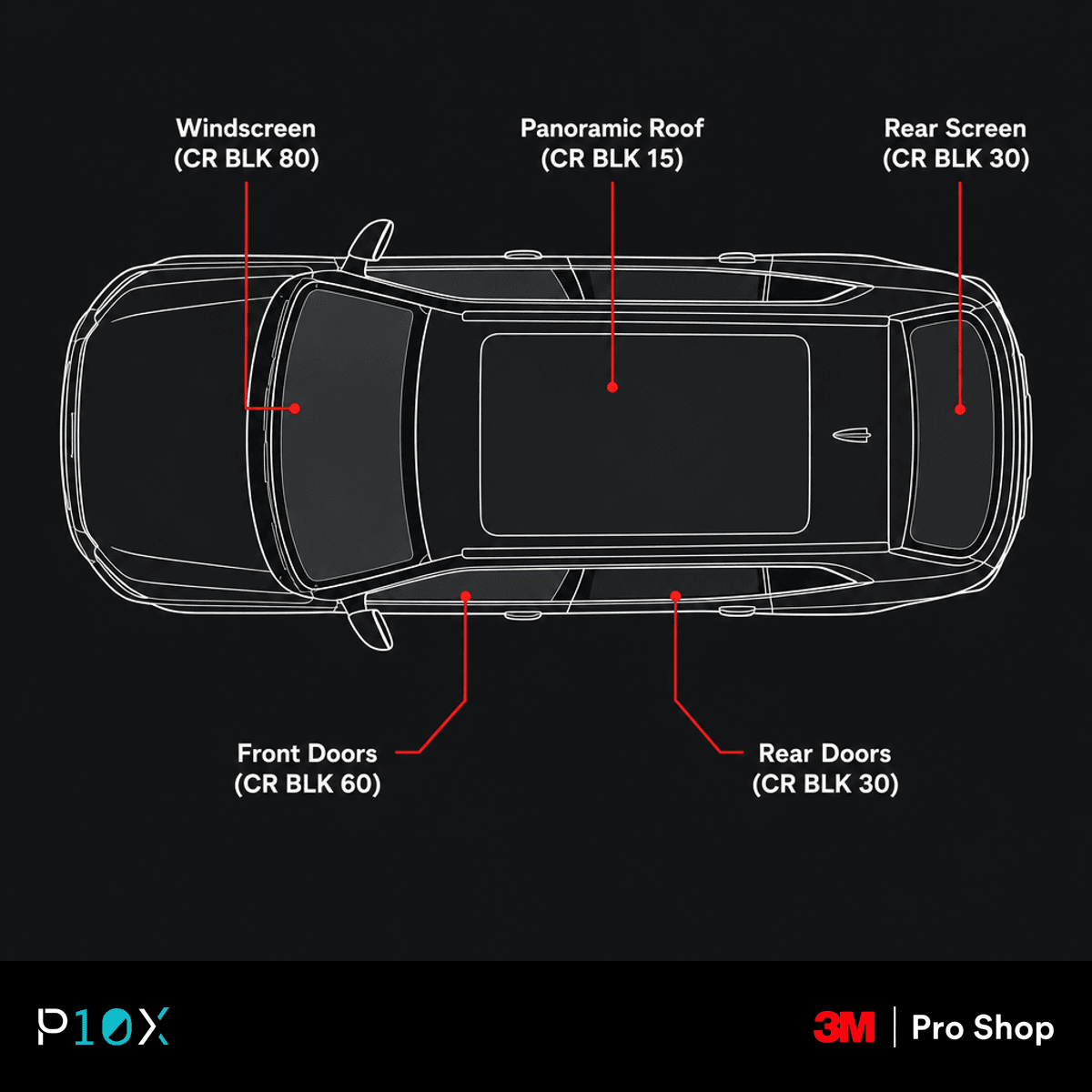
The plan below balances two forces: JPJ caps how dark the front of the car can go on the combined reading, and physics decides how much heat each shade blocks. Treat the shades here as a well tested starting point rather than a guarantee, because your T1's own glass sets the final number. The shade map graphic sums up the whole plan in one look before we explain each zone.
Up front, the windscreen gets CR BLK 80, the lightest shade in the family, which reads 72% VLT on 3M's standard 73% reference glass and still rejects 95% of infrared heat. The front doors get CR BLK 60, which reads 57% on the same reference glass. A common question is why not CR BLK 50 up front, since the name sounds exactly legal: on reference glass it reads 48%, two points under the line, which is the stacking problem in action. The film's catalogue number and the meter's number are simply different things.
The rear half of the T1 is where you are free to chase privacy and heat rejection, because JPJ sets no VLT limit behind the B pillar. CR BLK 30 on the rear doors, quarter glass and rear screen reads 29% VLT, dark enough for proper privacy while rejecting 98% of infrared and 61% of total solar energy. On a 40 minute weekend drive up to Genting Highlands with the sun squarely on the rear quarter glass, that 61% is the difference between kids napping in the back and kids complaining. On the 2.0 XWD, the panoramic roof takes CR BLK 15, the darkest shade at 14% VLT, because roof glass faces the sun all day and sits outside JPJ's window checks.
One step matters more than any catalogue figure: have the installer meter your T1's actual glass before any cutting starts. Glass batches vary, and a two minute meter check tells you exactly how much headroom each window has left. The full plan, with the verified performance figures for each zone measured on standard reference glass, sits in this table.
| Window zone | Suggested shade | VLT on reference glass | TSER | IRR | JPJ limit |
|---|---|---|---|---|---|
| Windscreen | CR BLK 80 | 72% | 45% | 95% | Min 70% |
| Front doors | CR BLK 60 | 57% | 54% | 97% | Min 50% |
| Rear doors and quarter glass | CR BLK 30 | 29% | 61% | 98% | No limit |
| Rear screen | CR BLK 30 | 29% | 61% | 98% | No limit |
| Panoramic roof (2.0 XWD) | CR BLK 15 | 14% | 64% | 98% | No limit |
Every figure above comes from 3M's Crystalline Black technical data, measured as film applied to standard 73% VLT automotive green glass. Because the roadside meter reads your glass and film together, the on-car numbers can sit a few points either side of these, so treat them as planning figures and let a calibrated meter on your actual windows make the final call.
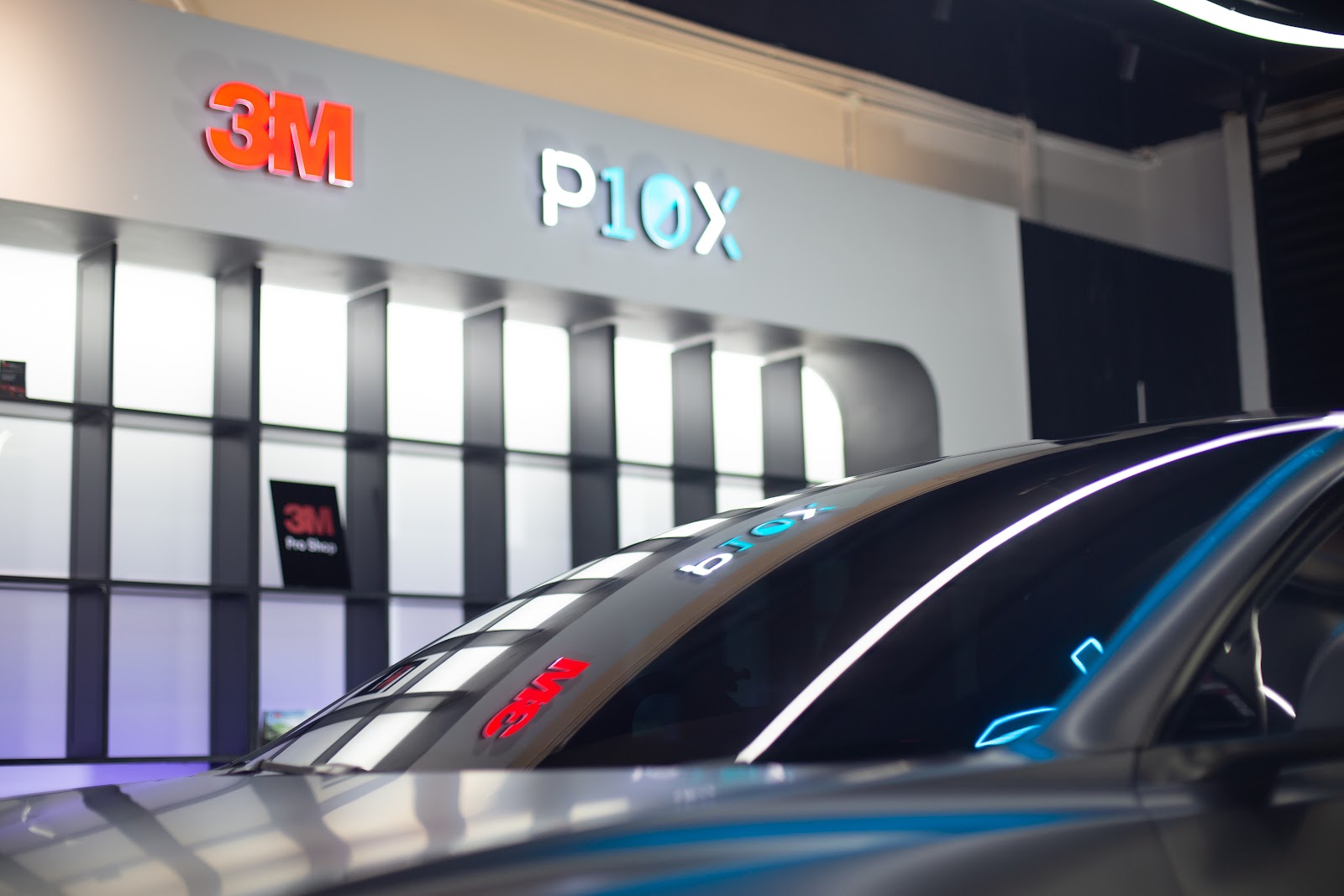
Once the shades are on, this is the finish you should expect: clean, even glass with a factory look and no distortion, like the completed work in the photo below.
CR BLK, Ceramic IR or XP for a T1?
Crystalline Black, or CR BLK, is 3M's current flagship tint in Malaysia, built from more than 200 nano layers of multilayer optical film with ceramic nano technology. Across its shades it rejects 45 to 64% of total solar energy and 95 to 98% of infrared, with 99.9% UV rejection on every shade. It took over from the original Crystalline series, which was retired from the local range in December 2025, and it adds a deep charcoal tone that matches modern factory glass.
One step down sits Ceramic IR, a nano ceramic film rated at up to 63% TSER and 95% infrared rejection, a strong middle option for owners who want premium heat performance in a more neutral shade. XP is the entry series, rated at up to 55% TSER with 38% infrared rejection and 95% glare reduction, which suits owners who prioritise glare control and privacy over outright heat blocking. For a deeper brand-by-brand breakdown, our 3M crystalline tint comparison puts these films side by side against other names you will hear quoted.
For a T1 doing the daily school run and office crawl, CR BLK across the whole car makes sense if the budget allows, because the heat figures above are what keep a 2:45pm pickup in Bangsar bearable for the kids in the back. If you are weighing CR BLK against the older Crystalline you have read about, the reel below explains exactly what changed between the two generations.
Will Tint Affect the T1's Tech?
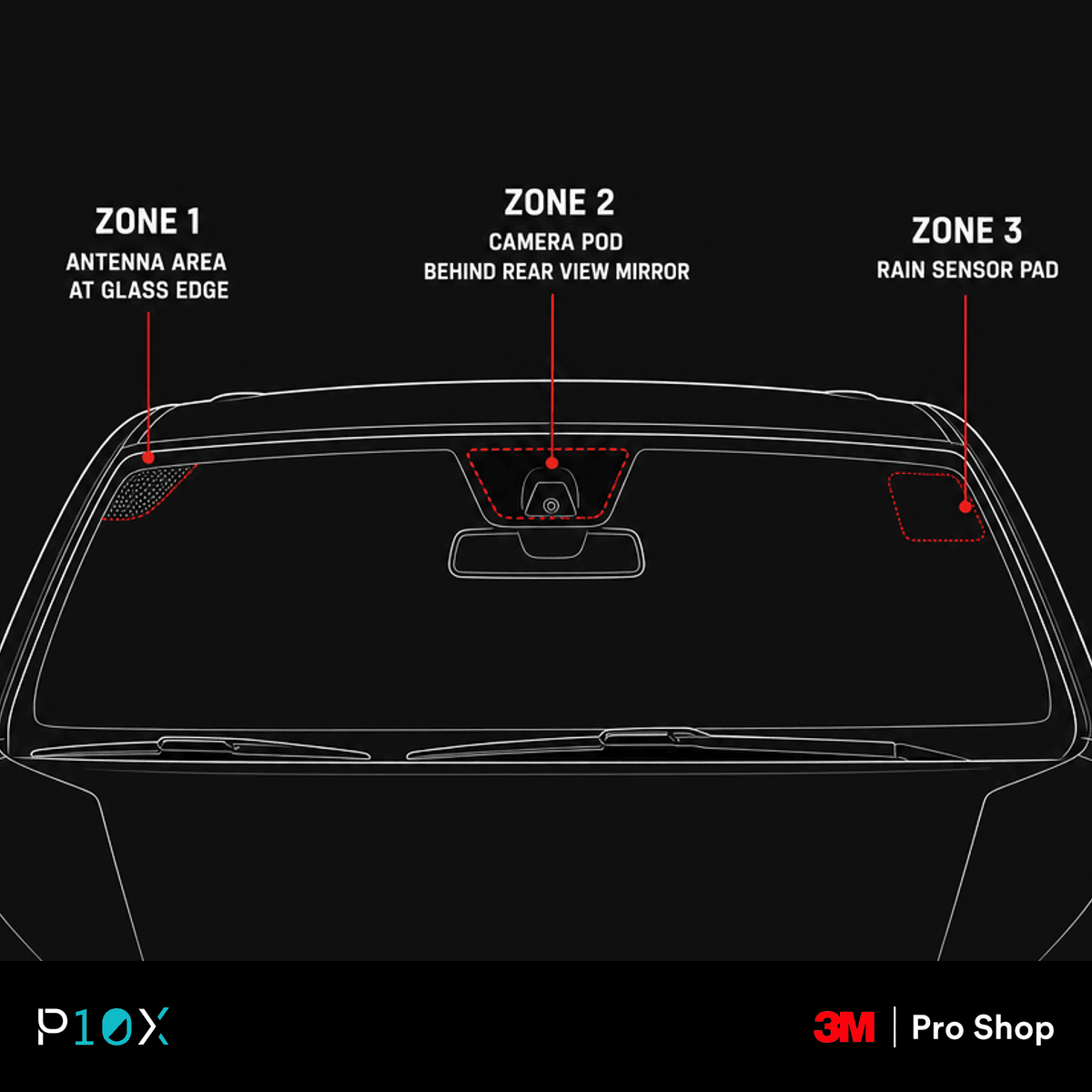
The T1 runs a full Level 2 driver assistance suite, and its forward camera watches the road through the top of the windscreen glass. Any film on the car has to be optically clean with low haze so that camera sees clearly, which is one more reason to stay with a quality film from a proper installer rather than the cheapest roll in the shop. Our guide on windshields you should never tint with sputtered film explains which film types cause trouble for cameras and displays, and why.
The rest of the T1's electronics are unaffected by the films suggested here, because all three 3M series are non-metallised. GPS navigation, 5G and mobile signal, wireless Apple CarPlay and Android Auto, the 50W wireless charger, and the remote engine start all pass straight through the film. Keyless entry and auto gate remotes are a separate topic with their own quirks, and we have a full guide on tint blocking your key fob signal if you want the detail.
In practice, nothing about the driving tech changes. On Monday morning your adaptive cruise will still hold its gap in the 8:30am Federal Highway crawl while CarPlay runs on the 15.6 inch screen, exactly as it did before the film went on, and tinting does not move any camera, so no recalibration is needed.
Tint Mistakes New T1 Owners Make
Owner communities for newly launched models are blunt about tint regrets, and the same errors come up again and again. Learn from them before you book, and your T1's film will be the one you keep for the long haul rather than the one you pay to strip.
Mistake 1: Trusting the Number on the Box
A film labelled 60% sounds safely above the 50% front window limit, but the label describes the film alone, not your window. Once it stacks onto factory glass the combined reading drops several points, and very dark front glass also strains your eyes on unlit stretches of the MEX at night. Start from the combined reading, not the catalogue number, and let the rear glass carry the privacy look instead.
Mistake 2: Taking Bundled Tint Blindly
Free or bundled film sounds like a win at collection day, yet owner groups are full of people whose bundled tint barely touched the heat and needed a redo within months. If a package includes tint, ask for the film series and its TSER and infrared figures in writing before accepting, and compare those numbers against the ones in this guide. Understanding what drives 3M window tint price in Malaysia helps you judge whether the free film is actually worth anything.
Mistake 3: Judging by Darkness Alone
Darkness measures light, not heat. CR BLK 80 looks almost clear at 72% VLT yet still rejects 95% of infrared, while a dark dyed film can look impressive and block a fraction of the heat. Always compare TSER and infrared rejection figures first, then pick the shade that fits the legal zone.
Mistake 4: Forgetting the Roof Glass
On the 2.0 XWD, the panoramic roof is the single largest piece of glass on the car and it faces the sun from morning to evening. Owners who film every window but skip the roof wonder why the cabin still bakes at lunchtime. CR BLK 15 up there blocks 64% of total solar energy and makes the cabin shade feel complete.
What a Proper T1 Install Looks Like
A careful job starts before any film is cut. The installer inspects every window for chips and scratches, checks door trim and window switches, and meters the stock glass, which is the step that tells you the real headroom left on each window before film goes on. On a new T1 this takes minutes, because delivery-fresh glass rarely carries damage, but the habit protects you if anything is found.
The fitting itself happens in a dust-controlled bay. Patterns are computer cut to the T1's exact window shapes, the film is floated on with a slip solution, squeegeed down channel by channel, and heat shrunk to the glass curve, with edges finished cleanly so nothing lifts when you drop the windows. Before you leave, the installer registers your 3M E-Warranty against your car, which is your proof of genuine film and proper coverage if a defect ever appears.
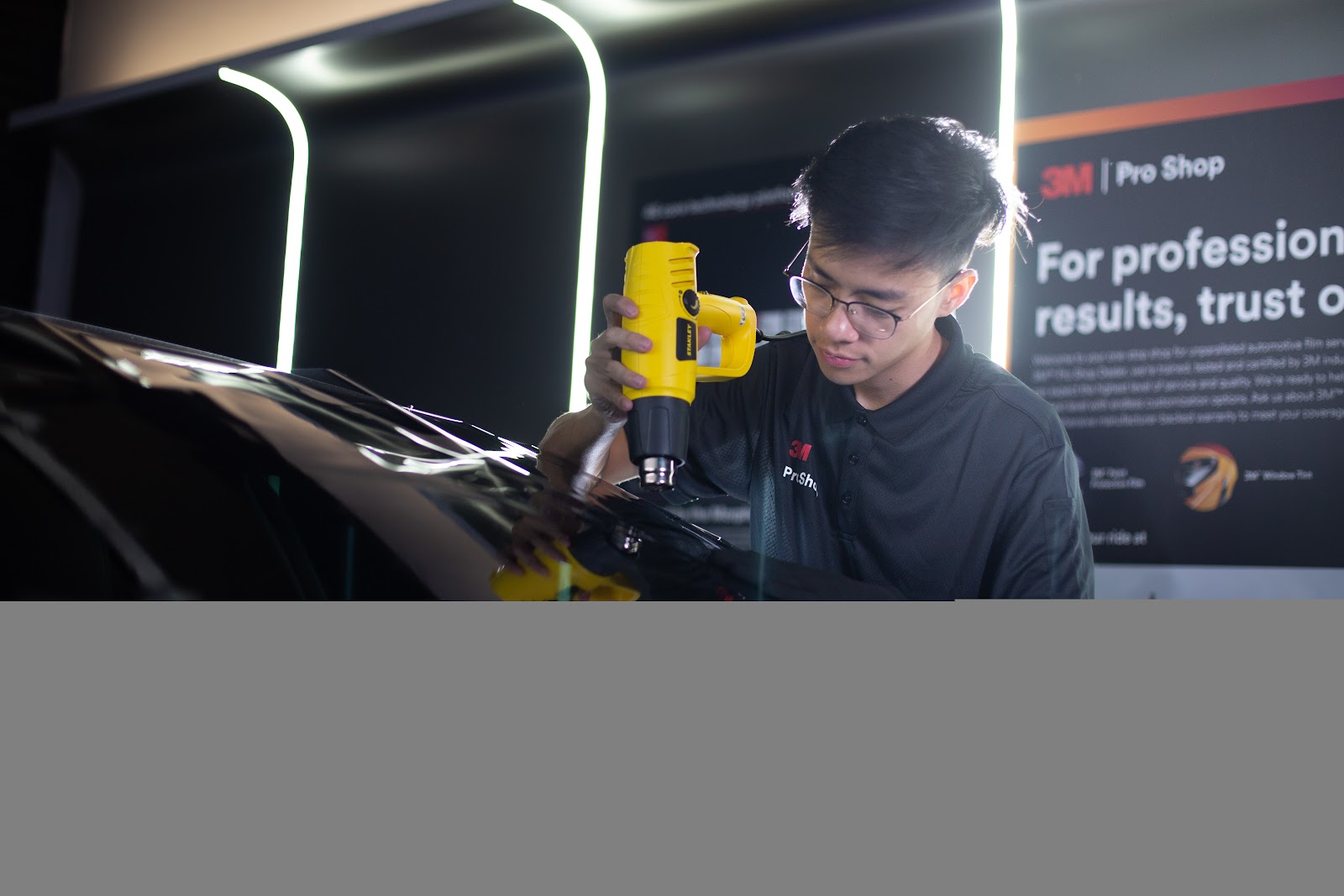
Aftercare in the first days is simple. Keep the windows wound up for 48 to 72 hours while the film cures, expect a light haze or small water pockets that clear on their own as the moisture evaporates, and delay the first wash a few days. Drop the car at 9:30am and you are usually driving home by early afternoon, with the whole job done inside one working day. The photo below shows the heat-shrinking stage on a large glass panel, where the installer shapes the film to the glass before the final squeegee pass.
Getting Your T1 Tinted Right From Day One
The plan is straightforward once you see it laid out. Keep the front of the car in light shades whose combined readings sit above the JPJ limits on your actual glass, put CR BLK 30 across the rear for privacy and heat, and finish the panoramic roof on the XWD with CR BLK 15. Every suggested film keeps the T1's cameras and connectivity working, and the whole mix cuts roughly 40% of the solar heat that untreated glass would let through.
If you want this plan checked against your own T1, bring the car to a 3M Authorized Dealer such as 3M Pro Shop by P10X for a meter reading on the actual glass and a written per-window plan, since vehicle size and film series change the final figure. You can compare the film families on the 3M window tint page and find your nearest outlet on our locations page before you visit.
Find out the best protection for your car
Visit a 3M Pro Shop and discover the cost-effective 3M Protective Film and Window Tint
Jetour T1 Window Tint FAQ
What tint is legal on a Jetour T1 in Malaysia?
JPJ requires at least 70% VLT on the windscreen and 50% on the front side windows, with no limit on the rear glass for private cars. Keep in mind the meter reads glass and film together, so the film you choose has to leave enough headroom on top of whatever the T1's factory glass already blocks.
Does the Jetour T1's factory glass change its JPJ reading?
Yes. Factory glass is not perfectly clear, and its own VLT stacks with the film's VLT. Glass at 85% layered with a 60% film combines to roughly 51%, which is why a film that sounds legal on paper can read darker on the car, and why metering the actual glass before installation matters.
Does tinting affect the Jetour T1's ADAS cameras?
No, as long as the film is an optically clean, non-metallised product fitted correctly. The forward camera reads the road through the film without recalibration, and adaptive cruise, lane keeping and emergency braking work as before.
Can you tint the Jetour T1 panoramic roof?
Yes, and on the 2.0 XWD it is worth doing. The roof glass sits outside JPJ's VLT checks, so CR BLK 15 at 14% VLT is the usual pick, blocking 64% of total solar energy from the one panel that faces the sun all day.
How long does Jetour T1 window tint take to cure?
Keep the windows up for 48 to 72 hours after installation while the film sets. A light haze or small water pockets are normal in the first days and clear on their own as the film dries.
Is the Jetour T1's factory glass enough for our heat?
Factory glass blocks some UV but passes most infrared, which is the energy you feel as heat. Our calculation shows untreated glass lets about 3,450 W of solar heat into the cabin at midday, and the right film mix cuts that by roughly 40%.
Author

Kelvin Cheen
Kelvin is an Automotive Solutions Consultant and Branch Manager at 3M Pro Shop. With 4+ years of field experience in premium vehicle surface protection, Kelvin specializes in flagship 3M technologies, including 3M Crystalline Black optical film and Ceramic IR tints, 3M Paint Protection Film (PPF), etc. His focus is on delivering transparent, engineering-backed advice to car and EV owners, cutting through sales upsells to ensure customers choose the exact thermal rejection and paint protection tailored to their driving needs.
Experience the future of window tinting
Visit a 3M Pro Shop and discover the revolutionary Crystalline CR BLK film