
Retinting car windows in Malaysia: when it is worth doing

- Most car window tint in Malaysia lasts 3 to 7 years depending on film quality, and signs like bubbling, purple discolouration, or rising cabin heat mean it is time to retint.
- Before retinting, inspect your current film for adhesive failure, haze, and edge peeling, then confirm the tint darkness still meets JPJ legal limits for your windscreen and front windows.
- Choosing a replacement spec based on TSER, VLT, and IRR ratings rather than just darkness gives you better heat rejection and a longer-lasting film the second time around.
If you need to retint car windows in Malaysia, you are not alone. Tint films break down over time, and Malaysia's year-round heat and UV exposure speed up that process. Whether your film is bubbling, turning purple, or just not blocking heat the way it used to, this guide walks you through the signs of tint failure, what to check before committing to a retint, and how to pick a better spec for your next round of film.
How Long Does Car Window Tint Last in Malaysia?
The lifespan of car window tint depends on three things: film quality, installation technique, and daily sun exposure.
Budget dyed films often last 2 to 3 years before fading or bubbling. Mid-range metallic and carbon films typically hold up for 4 to 6 years. Premium ceramic and multi-layer sputtering films can last 8 to 15 years with proper care.
In Malaysia, your car sits under direct equatorial sun for most of the year. If you park outdoors daily in Kuala Lumpur, Johor Bahru, or Penang, your film absorbs more UV and infrared energy than it would in a cooler climate. That constant thermal cycling breaks down adhesive layers and degrades dye particles faster.
The practical takeaway: if your tint is 4 to 5 years old and showing any of the signs below, it is likely past its effective lifespan.
5 Signs Your Car Tint Needs Replacing
1. Bubbling and peeling edges
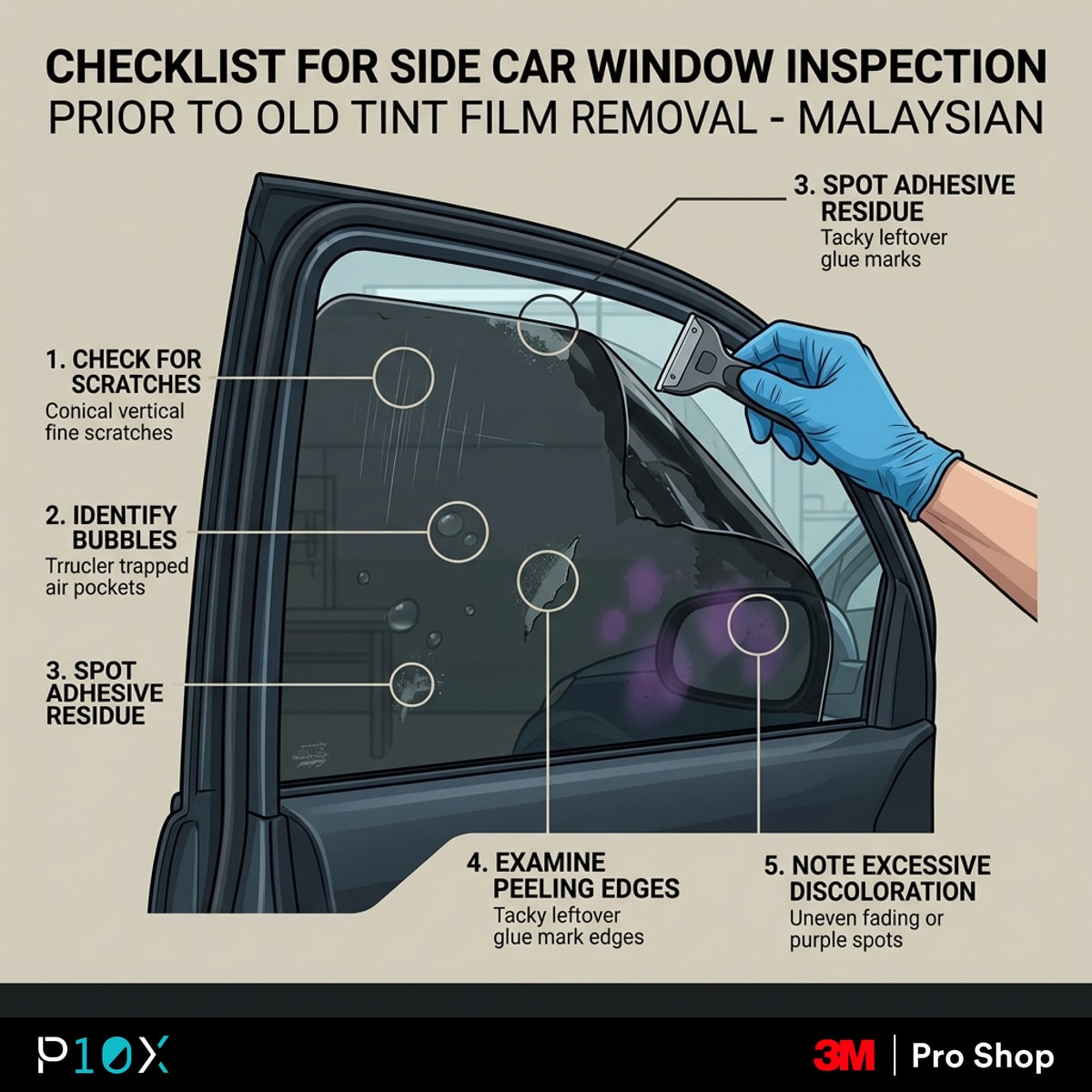
Bubbles form when the adhesive bond between the film and glass breaks down. Small bubbles near the edges are common early signs. Once they appear, they spread. Peeling edges let dirt and moisture creep in between the film and glass, making the problem worse. If your tint has multiple bubbles or lifting edges, removal and retinting is the only real fix. Car tint bubbles are not just cosmetic. They block your view and signal that the film has lost its structural bond with the glass.

2. Purple or brown discolouration
Low-quality dyed films are the most common offenders here. Over months of UV exposure, the dye particles break down and shift colour. A film that started as neutral charcoal turns purple, brown, or reddish. This change is irreversible. Once the colour shifts, the film has also lost most of its UV and heat blocking ability.
3. Hazy or cloudy appearance
If you notice your windows look foggy or smeared from the inside even after cleaning, the film's optical clarity has degraded. This often happens when moisture gets trapped between the film layers or between the film and the adhesive. Haze reduces your visibility, especially at night or during heavy rain, and that is a real safety concern on Malaysian roads.
4. Reduced heat rejection
This is the symptom most Malaysian drivers notice first. Your cabin feels hotter than it used to, your air conditioning takes longer to cool things down, and you feel more radiant heat on your skin while driving. If the film's heat rejection has dropped, your car burns more fuel running the air conditioning harder. You cannot see this change, but you can feel it.
5. Scratches and hard water marks that will not clean off
Mineral deposits from rain and car washes leave white spots on older films. Deep scratches from wipers or cleaning tools accumulate over time. Once the top coat of a film is compromised, dirt gets embedded into the surface and no amount of cleaning restores clarity.
Quick Inspection Checklist Before You Retint
Before booking a retinting job, run through this checklist:
- Check all four sides and the rear window. Tint on the driver and passenger sides often degrades faster because those windows go up and down regularly.
- Test for bubbles. Run your finger lightly across the film surface near the edges. If you feel raised spots or see light distortion, the adhesive is failing.
- Look for colour consistency. Compare your side windows to the rear window. If one panel looks noticeably different in shade, that panel has degraded more.
- Assess heat levels. Park in direct sun for 20 minutes, then feel the inside surface of the glass. If it is very hot to touch, the film is no longer rejecting infrared energy well.
- Check your tint card or warranty. If you still have the original warranty card, check the date and warranty period. A film past its warranty is likely past its peak performance too.
- Confirm JPJ compliance. Make sure your chosen VLT (visible light transmittance) level meets current JPJ compliant window tint rules. The windscreen must allow at least 70% VLT, and front side windows must allow at least 50% VLT.
What Happens During Old Tint Removal
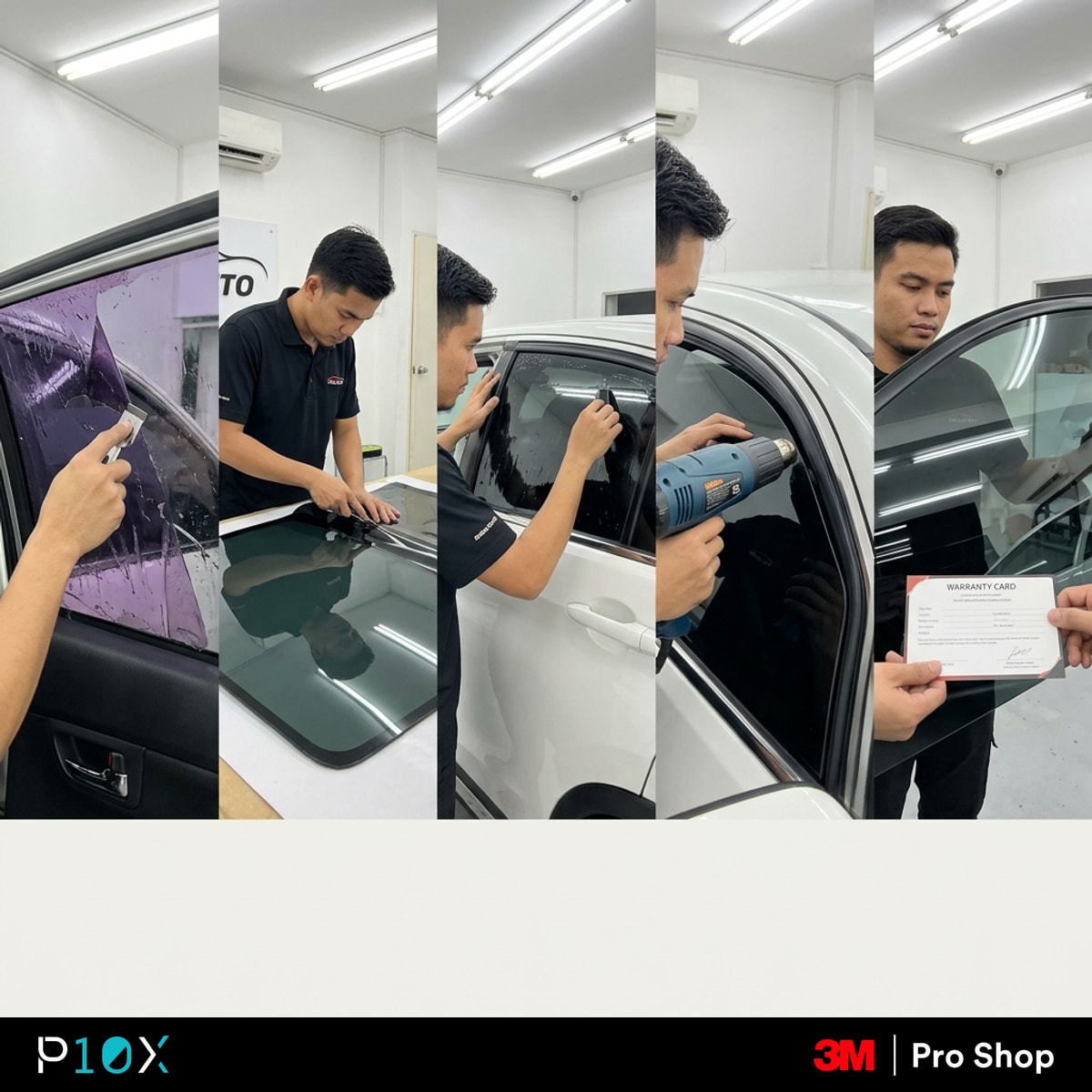
Removing old tint is not as simple as peeling it off. Here is what a proper removal process looks like:
- Heat or steam application. Professional installers use a steamer or heat gun to soften the adhesive. This loosens the bond between the film and glass so the film pulls away in sheets rather than small flakes.
- Film peeling. The technician carefully peels the film at a controlled angle. Rushing this step tears the film and leaves more adhesive residue behind.
- Adhesive cleanup. After removal, sticky residue stays on the glass. Installers use a combination of soapy solution, razor blades, and adhesive remover to clean the glass surface completely. This step takes the most time.
- Glass inspection. Before applying new film, the glass is inspected for scratches, chips, or defects. Any damage should be addressed before the new tint goes on.
- New film application. The car window tint installation process then follows standard steps: cutting, shrinking, and applying the film with a slip solution before squeegeeing out air and water.
Expect the full retinting process (removal plus new application) to take 3 to 5 hours for a full car, depending on how stubborn the old adhesive is.
How to Choose the Right Spec for Your New Tint
If your previous tint underperformed, this is your chance to upgrade. Do not just pick the same darkness level. Focus on the performance numbers that actually affect your daily comfort.
TSER, VLT, and IRR: what these numbers mean
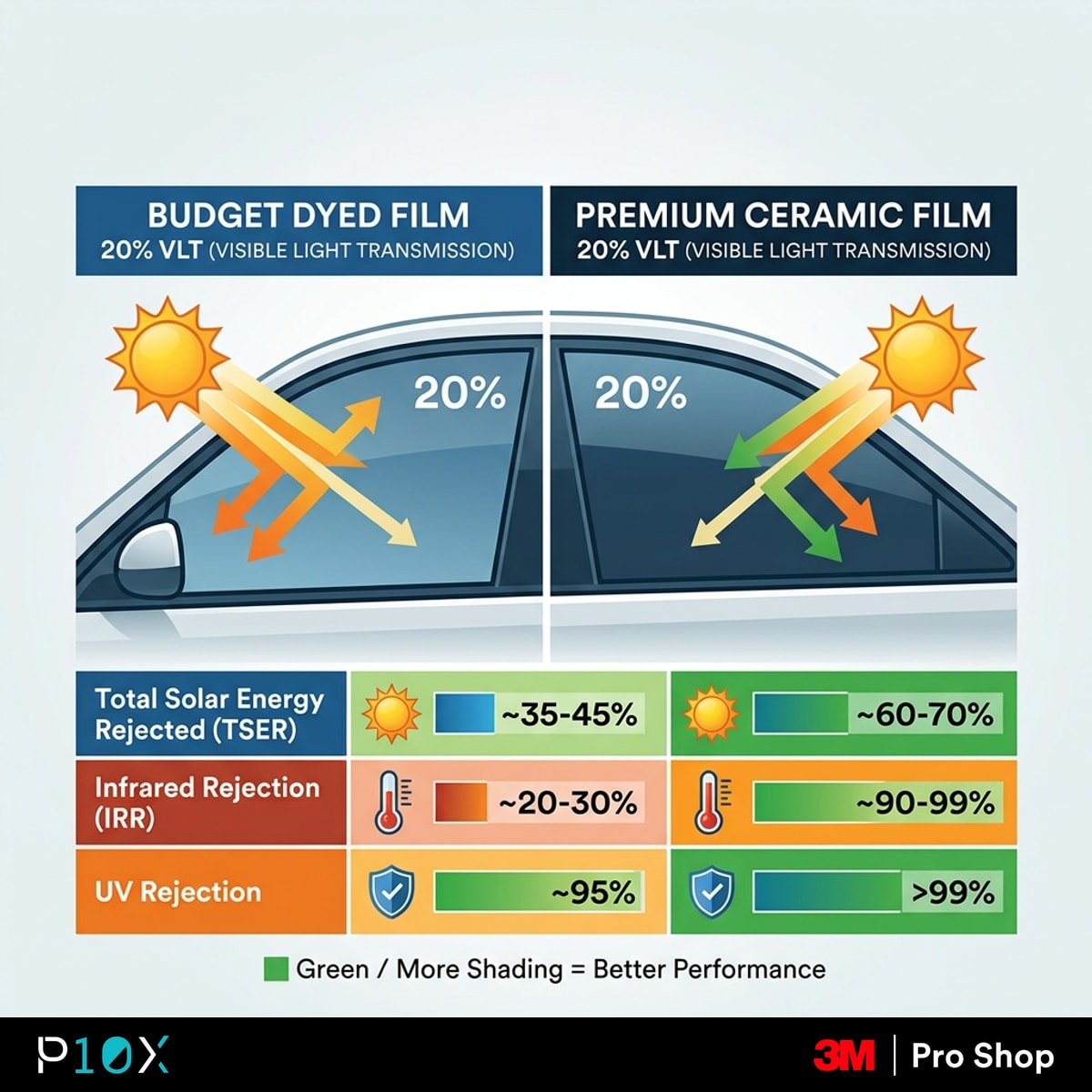
- VLT (Visible Light Transmittance): The percentage of visible light that passes through the film. Lower VLT means darker tint. This affects privacy and night visibility.
- TSER (Total Solar Energy Rejected): The total percentage of solar energy (heat, light, UV combined) that the film blocks. This is the single most useful number for comparing heat rejection. Higher is better.
- IRR (Infrared Rejection): The percentage of infrared heat energy blocked. A high IRR directly reduces the hot feeling on your skin when driving.
A cheap dyed film might have VLT 20% (looks dark) but only 30% TSER. A premium ceramic film at the same VLT 20% could deliver 60% or more TSER. The darkness looks the same, but the heat rejection is double.
When comparing options, ask your installer for the full spec sheet. If they cannot provide TSER, IRR, and UV rejection numbers, consider that a warning sign. A proper 3M crystalline tint comparison gives you transparent data for every VLT option so you can compare on facts, not guesswork.
JPJ legal limits to keep in mind
Malaysia's Road Transport Department (JPJ) sets minimum VLT levels:
- Windscreen: Minimum 70% VLT
- Front side windows: Minimum 50% VLT
- Rear side windows and rear windscreen: No official minimum (darker films are allowed)
If your old tint was installed years ago when enforcement was different, your new tint should meet current standards. Getting pulled over for non-compliant tint adds a fine on top of the money you just spent on retinting.
For a full breakdown of how film grade affects the total cost of retinting, read this guide on 3M window tint price in Malaysia.
Is It Worth Retinting, or Should You Just Live With It?
Retinting is worth it if:
- Your film has visible damage (bubbles, peeling, discolouration) that affects appearance or resale value
- You can feel that heat rejection has dropped and your air conditioning works harder than before
- Your film is past its warranty period and performance has declined noticeably
- You plan to keep the car for at least 2 more years
Retinting may not be worth it if:
- The film is only 1 to 2 years old and the issue is minor (a single small bubble near one edge may be fixable without full replacement)
- You plan to sell the car within the next few months
If you do retint, treat it as an upgrade opportunity. Spending more on a better film grade this time saves you from repeating the cycle in 3 years.
What to Expect at a Certified 3M Pro Shop
Where you go for retinting matters as much as what film you pick. A certified installer removes old film properly, preps the glass, and applies new film with the precision that prevents future bubbles and early edge lifting.
At a 3M Pro Shop, you get:
- Genuine 3M films with verified performance specs and official warranty cards
- Trained installers who follow 3M's installation standards for adhesive prep, film cutting, and curing
- A full range of film options from entry-level to premium ceramic and multi-layer films, so you can match the spec to your budget and driving pattern
- Warranty backed by 3M, not just the shop
For drivers interested in the latest film technology, the 3M Crystalline CR BLK series is worth asking about. It combines high heat rejection with a clean dark aesthetic that many Malaysian drivers prefer.
If you want to compare car window tinting Malaysia options or understand which film series fits your daily use case, the 3M Pro Shop team can walk you through the spec sheets and help you pick based on your parking situation, daily drive distance, and privacy preference.
Visit a 3M Pro Shop location near you to get your current tint inspected and discuss replacement options with a certified installer.
Find out the best protection for your car
Visit a 3M Pro Shop and discover the cost-effective 3M Protective Film and Window Tint
Frequently Asked Questions
How much does it cost to retint car windows in Malaysia?
Retinting costs vary based on film brand, grade, and car size. Budget films start from around RM150 to RM400 for a full car. Premium ceramic or multi-layer sputtering films range from RM800 to RM2,500 or more. The removal of old tint may add RM100 to RM300 to the total, depending on how difficult the adhesive cleanup is.
Can I retint just one or two windows instead of the whole car?
Yes. If only your front side windows have degraded while the rear is still in good condition, you can retint individual panels. Colour matching between old and new film can be tricky, especially if the original film has shifted in shade. Discuss this with your installer to get a close match.
Will retinting damage my car's defroster lines on the rear window?
Professional removal using steam and careful peeling techniques should not damage defroster lines. Rushing the process or using too much force can lift or break the lines. This is one reason to choose a certified installer with experience in full tint removal rather than attempting it yourself.
How long should I wait before rolling down my windows after retinting?
Most installers recommend 3 to 5 days before operating your windows. This allows the adhesive to cure fully. In Malaysia's warm climate, curing can be slightly faster, but follow your installer's specific guidance to be safe.
Does darker tint always mean better heat rejection?
Not at all. VLT controls how much visible light passes through, which affects brightness and privacy. Heat rejection depends on TSER and IRR, which are separate measurements. A VLT 50% ceramic film can reject more heat than a VLT 5% dyed film. Always compare TSER across films, not just the darkness level.
Author

Fabian
He is passionate about revolutionizing the car protection services industry by bringing innovation and transparency to a traditionally opaque and often misunderstood field. His mission is to educate end users on the true benefits and importance of car protection, aiming to replace outdated practices with honest, customer-focused solutions. With a fresh approach to car tinting, paint protection film (PPF), and detailing services, he is committed to delivering a superior customer experience that sets a new standard in the market. He welcomes discussions about the future of the automotive industry and is eager to connect with like-minded professionals who share his vision for innovation, integrity, and excellence.
Experience the future of window tinting
Visit a 3M Pro Shop and discover the revolutionary Crystalline CR BLK film