
Bought a Used Car With PPF in Malaysia? A Keep, Strip, or Top-Up Decision Tree
- Most used cars in Klang Valley with inherited PPF need a real decision, not a default "keep it because it is free".
- A 6-point visual check (yellowing, edges, water spots, micro-cracking, bubbles, fingernail edge test) reveals film age and install quality in under 10 minutes.
- The right call falls into one of four outcomes: keep and top up with ceramic coating, spot-replace high-wear panels, full strip and re-PPF, or strip immediately and pause.
- Removal labour typically costs RM 800 to RM 1,800 in Klang Valley, separate from any fresh PPF install. A pre-purchase inspection at a 3M Authorized Dealer often pays for itself before you sign the JPJ transfer.
- 3M PPF warranty terms vary by series. Always ask the previous owner for the warranty card, install date, installer name, and batch number.
Buying a used car with PPF in Malaysia almost always comes with a quiet question the seller will not answer: how old is the film, who installed it, and is it still protecting your paint anymore? Most Klang Valley buyers default to keeping the inherited film without checking, then regret it 8 to 12 months later when yellowing on the bonnet or edge lift on the bumper becomes impossible to ignore. This guide walks you through the 6 checks that tell you the real condition of the film in under 10 minutes, the 4 possible outcomes you can choose from, and what each outcome actually costs in ringgit before you sign the JPJ transfer.
What Inherited PPF Means for Malaysian Used Car Buyers
Why Old PPF Is a Hidden Cost in Used Cars
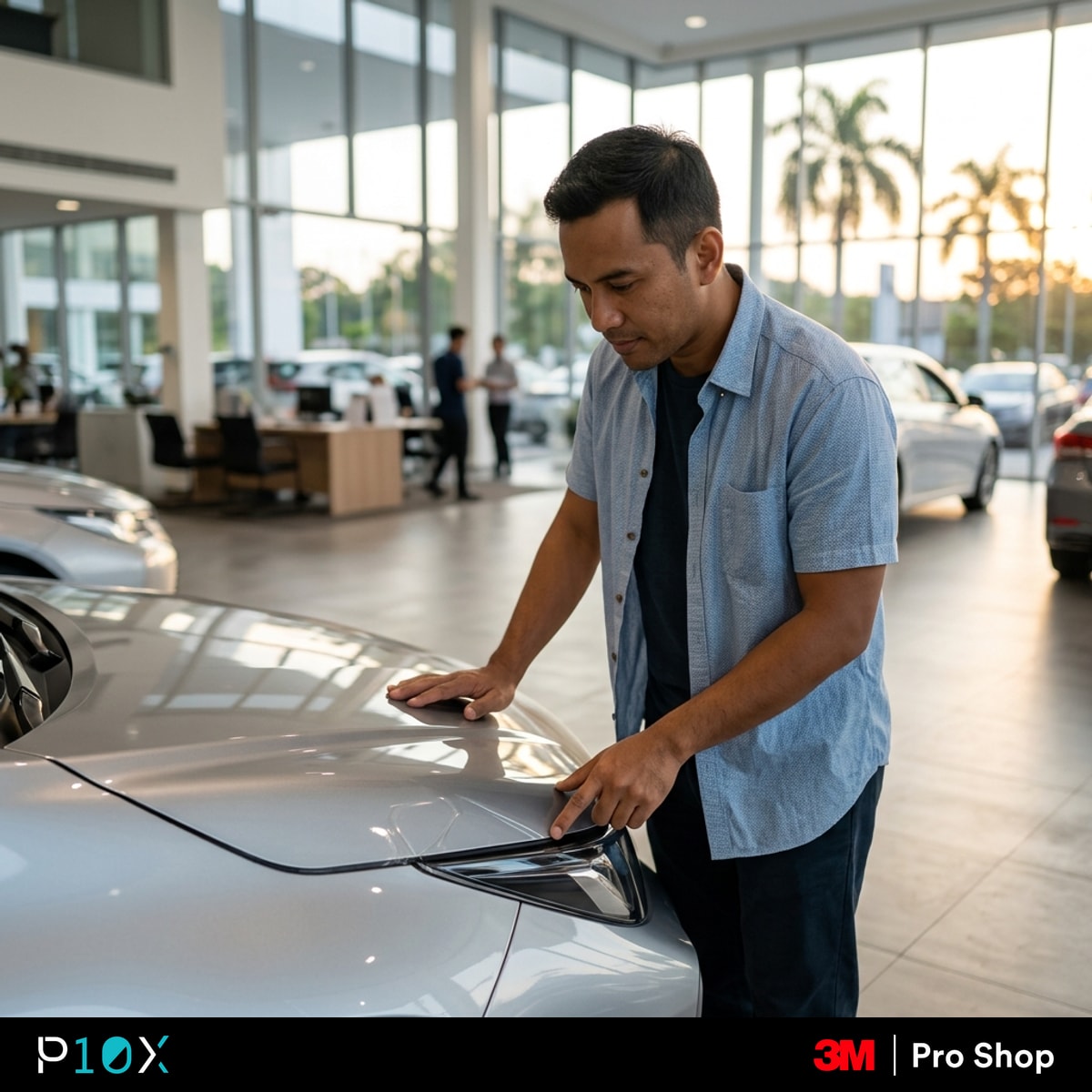
Old PPF on a used car is not free protection. It can quietly knock thousands off your resale price and create new repair costs the previous owner already walked away from. Yellowing on a white car ruins the colour-match across panels, edge lift becomes a dirt and moisture trap, and a film glued on with the wrong adhesive can rip off your original clear coat when it is finally removed years later.
Malaysian conditions accelerate every one of these failures. KL's UV index sits at 11 or 12 (extreme) on most clear afternoons, which fades lower-grade film top coats long before their warranty period ends. Monsoon humidity drives moisture into any lifted edge. PLUS, KESAS, and SPRINT stone chips break the film surface on every long-distance drive. Condo carparks chip away at film edges through repeated door knocks and shopping-trolley swipes.
Inherit the wrong film and you also inherit the previous installer's mistakes. That is the real hidden cost. For the bigger-picture view on how much value premium PPF actually returns over a car's lifetime, see this expert analysis on whether paint protection film is worth the investment for Malaysian car owners.
How to Diagnose Inherited PPF: 6 Visual Checks
You can tell roughly how old and how well-installed a film is in under 10 minutes, in good daylight, with nothing more than your eyes and a fingernail. Run all six checks before you make any decision. If the film fails two or more, treat it as old or poorly installed.
Check 1: Look for yellowing under direct sunlight
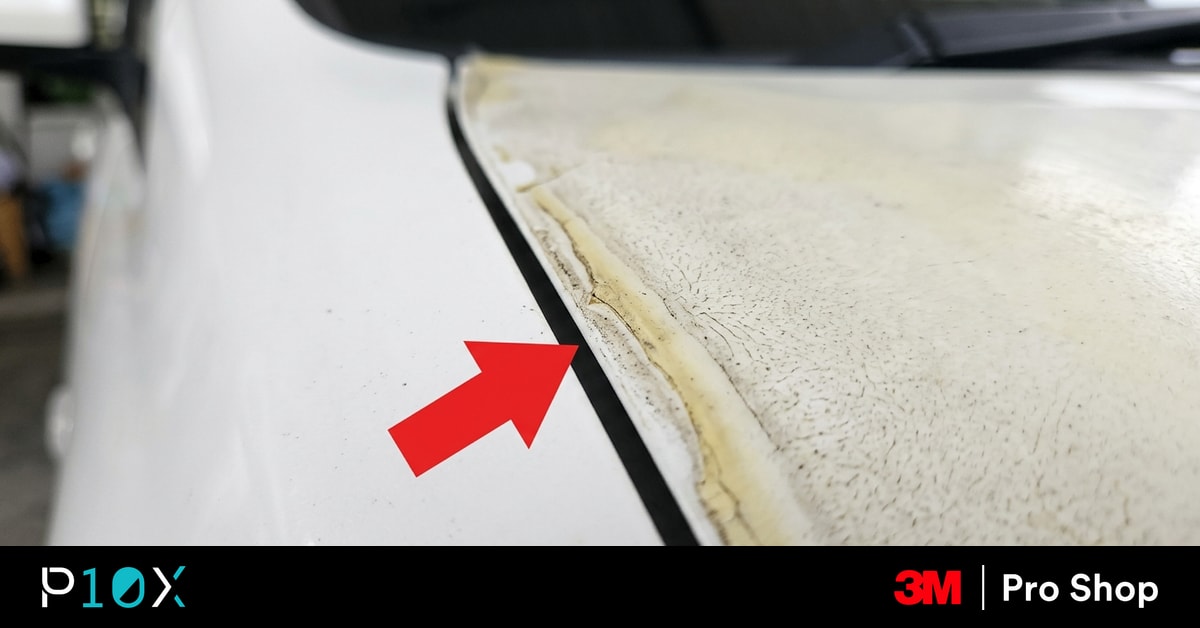
Park the car under open sun and compare a PPF-covered panel to a non-PPF area like the roof or the lower door (most installs skip those). A faint yellow or amber tint over the bonnet, especially on a white, silver, or grey car, means the top coat has oxidised. Lower-grade films can start yellowing inside 24 to 36 months under Malaysian sun. Premium 3M films like Series 150 use UV inhibitors to resist this, but no film is immune forever. For the deeper story on causes and what is reversible, see this guide on PPF yellowing in Malaysia.
Check 2: Inspect edges on bonnet, fender, and bumper
Crouch and run your eye along every PPF edge. You are looking for two things: a thin black line of trapped dirt (means the edge has lifted and dirt has crept underneath), and small whitish flares where the film has started peeling back from the paint. Clean, tight edges that disappear into the paint are a sign of a good install by a certified hand. Visible black lines or peeled corners mean the film is past its prime, or was never tucked properly to begin with.
Check 3: Look for water spots and surface haze
Hose down the panel, then look across the surface at an angle. Healthy PPF beads water tightly. Older film often shows a milky haze, faint chalking, or hard water etching that no longer washes off. Surface haze does not always mean the film is failing structurally, but it does mean the hydrophobic top coat is gone, and so is most of the easy-clean benefit you thought you were inheriting.
Check 4: Test high-flex panels for micro-cracking
Look closely at the bonnet leading edge, front bumper corners, and side mirror caps. These are the panels that flex most from heat, wind pressure, and stone impact. Micro-cracking shows up as a fine, spiderweb-like pattern catching the light. Cracking on more than one panel is a strong signal the film is at or past end-of-life, and removing it cleanly may require professional heat tools.
Check 5: Spot bubbles and trapped contamination
Small bubbles or pinpoint dust specks within the film mean either a poor install (dust trapped at the time of application) or a failed adhesive (water vapour migrating under the film). A few isolated specks are normal on any install. Clusters of bubbles or a long bubble strip near an edge means the adhesive has failed in that zone and the film is no longer protecting the paint there.
Check 6: Confirm install quality with the fingernail edge test
Press your fingernail gently against a film edge and try to lift it. A properly installed PPF, especially with full edge wrapping, will not lift at all. If your nail catches and you can flick the edge up like a sticker, the installer never wrapped it under the panel. That film will lift on its own within months of monsoon exposure and high-pressure car washes. This single test separates a certified install from a back-lane job faster than any spec sheet.
The 4-Outcome Decision Tree for Used Car PPF
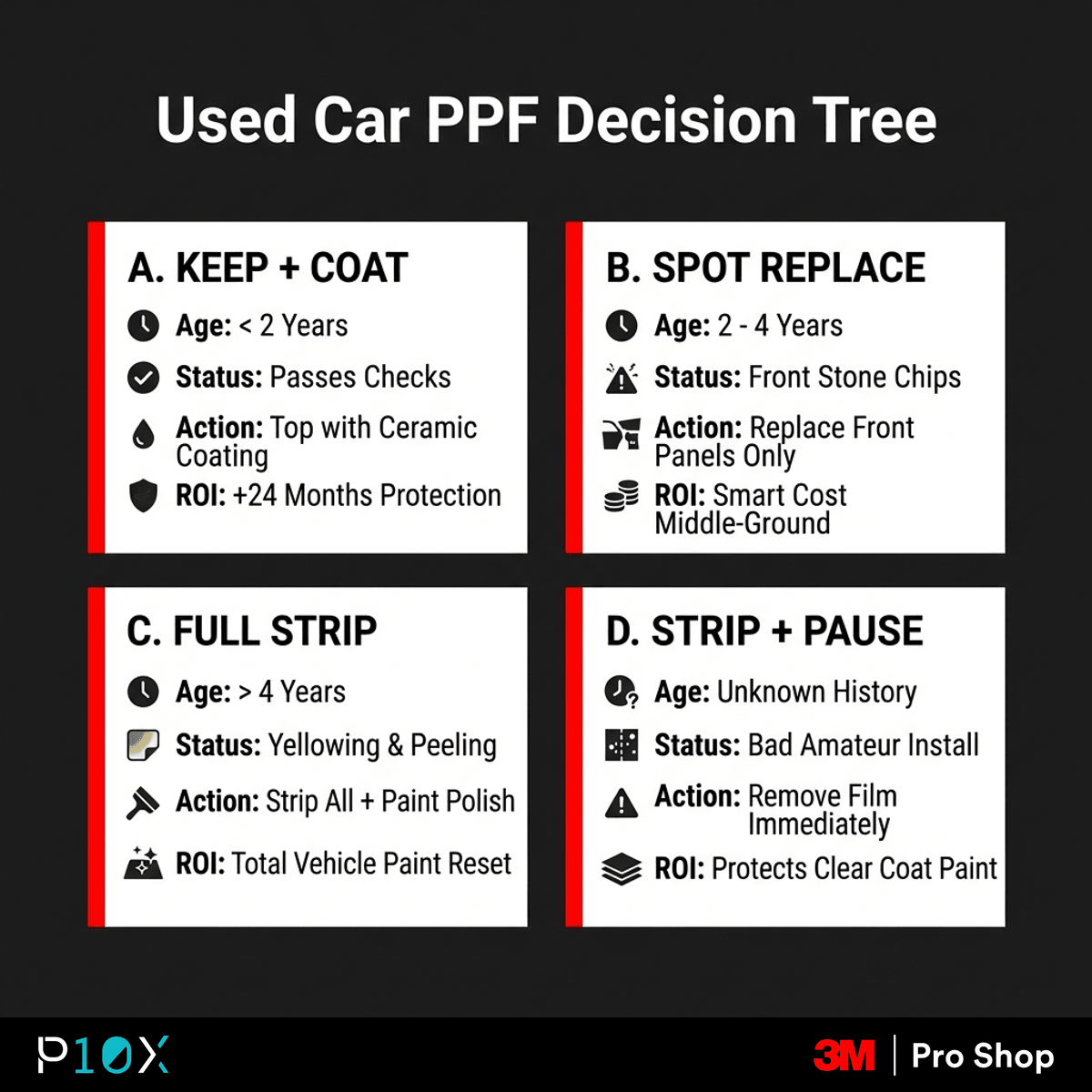
Run the 6 checks above, then match the result to one of four outcomes. Each outcome is built around three things: how old the film is, how clean the edges are, and whether you can verify install quality through paperwork (warranty card, batch number, installer name).
Outcome A: Keep and top up with ceramic coating (film under 2 years, good condition)
If the film is under 24 months old, passes all 6 visual checks, and the previous owner can hand over a warranty card from a known installer, keep it. Add a layer of ceramic coating on top to restore hydrophobicity and protect the film itself from UV oxidation. Ceramic over good existing PPF is the cheapest path to a "factory feel" on a used car, and it extends the life of the film by another 18 to 24 months under Malaysian conditions. If you want the longer view on coating versus film, self-healing PPF versus self-healing coating explains why a coating alone never replaces real film.
Outcome B: Spot-replace high-wear panels (film 2 to 4 years, minor edge lift or stone chip damage)
If the body of the film still looks healthy but the bonnet and front bumper are pitted with stone chips, or one or two edges have started to lift, do not strip the whole car. A certified installer can carefully peel and replace just those panels with fresh 3M PPF Series 100 or Series 150. The rest of the original film stays. This is the cheapest middle-ground outcome and works especially well for daily KL commuters whose front-end takes most of the highway abuse.
Outcome C: Full strip, then re-PPF (film over 4 years OR visible yellowing or peeling)
If yellowing is visible on a light-colour panel, more than one edge has lifted, or the original install is over 4 years old, strip everything and start fresh. Stripping is non-negotiable here, because aged adhesive bonds harder over time and will pull paint with it if left longer. After removal, the installer should compound and polish the panels back to clean paint before applying new film. This is also the moment to upgrade the series if your budget allows. See comparing 3M PPF Series 150, 100 and 50 for the tier-by-tier breakdown, and 3M paint protection film Malaysia: benefits, cost and longevity for the full pricing context.
Outcome D: Strip immediately, pause re-PPF (unknown age plus signs of poor install)
If the seller has no paperwork, you cannot identify the installer, and the visual checks show edge lift or fingernail-flick failures, strip the film first and live with bare paint for a few weeks while you decide. A bad install hiding under a film you keep is worse than no film at all, because the next time water and dirt creep under the edges, they go directly onto your clear coat. Strip clean, compound and polish, then book a fresh install with a 3M Authorized Dealer such as 3M Pro Shop by P10X when you are ready. The safe-removal process matters more than people realise, especially if the previous owner ever did a partial respray. The full how-to is here: redo PPF Malaysia: inspect old film and plan a safe re-install.
How Much Each Used Car PPF Outcome Costs in Ringgit
The right outcome also has to fit your wallet. Here is what each action realistically costs in Klang Valley today. The 3M PPF figures below come from 3M Pro Shop pricing tiers. Removal labour and ceramic top-up are installer-quoted ranges typical of certified Klang Valley shops, not 3M-published numbers.
| Action | RM range | Warranty length | Time at shop | Best for |
|---|---|---|---|---|
| Keep + ceramic coating top-up | Ask installer for a quote (installer-quoted) | Inherits remaining film warranty if transferable | 1 day | Film under 2 years, good condition |
| Spot replace bonnet + bumper (medium vehicle) | RM 3,500 to RM 5,000 typical | Fresh series warranty on replaced panels | 1 to 2 days | Film 2 to 4 years, front-end damage only |
| Full strip + Re-PPF Series 50 (full car) | RM 11,000 to RM 15,500 | Period varies by series, confirm with your installer | 3 to 5 days | Aged film, budget-conscious owners |
| Full strip + Re-PPF Series 100 (full car) | RM 15,000 to RM 19,000 | Period varies by series, confirm with your installer | 3 to 5 days | Daily drivers wanting balanced protection |
| Full strip + Re-PPF Series 150 (full car) | RM 19,000 to RM 24,000 | Period varies by series, confirm with your installer | 4 to 6 days | Long-term keepers, premium MPVs, used EVs |
| Strip only (no immediate re-PPF) | RM 800 to RM 1,800 (installer-quoted) | Not applicable | 1 to 2 days | Unknown age plus signs of poor install |
A note on warranty. 3M PPF warranty length varies by series, and brochures and dealer pricing lists do not always show the same number on every document. Premium tiers like Series 150 typically run longer than entry tiers, but the exact period depends on the specific batch and dealer. Always confirm the warranty term for your install with a 3M Authorized Dealer in writing before you pay.

Common Mistakes Buyers Make With Inherited PPF
Most regret around inherited PPF comes from five repeated mistakes. None of them are technical. They are all decision errors.
Mistake 1: Assume all PPF lasts 10 years
The 8 to 10 year figure you read online is the upper bound for premium film, installed perfectly, on a garaged car, in a temperate climate. Malaysian sun, daily uncovered parking, and lower-grade film often cut that to 3 to 5 years of useful life. Inheriting a 3-year-old film does not mean you have 7 years left.
Mistake 2: Skip the install-record check
Ask the seller for the installer name, install date, warranty card, batch or lot number, photos of the original install, and the list of panels covered. If they cannot produce any of it, assume the worst about install quality. A transparent owner who actually maintained the car will keep the paperwork. No paperwork is a red flag worth budgeting for.
Mistake 3: Pressure-wash the edges in week one
Brand new owners often head straight to a coin-wash to clean a car they just bought. High-pressure spray directly at an aged PPF edge will lift it in seconds. Stick to touchless or hand wash for the first week while you inspect, and never spray above 4 to 5 bar directly at any film edge, even on fresh installs. For the full wash routine, see PPF aftercare in Malaysia, or the official 3M Malaysia PPF care guide.
Mistake 4: DIY peel with a heat gun
Aged PPF adhesive needs controlled heat, the right pull angle, and the right pulling speed, or it lifts the clear coat off with it. Trying it yourself in your apartment carpark is the single most expensive YouTube tutorial you can follow. Professional removal costs RM 800 to RM 1,800 at a certified shop. Respraying a single panel after a botched DIY peel can cost RM 1,500 to RM 3,000.

Mistake 5: Re-install PPF over a fresh respray
If the previous owner respray-ed a panel within the last 60 to 90 days, the paint is not fully cured underneath. New PPF applied too early traps solvents in the paint and can blister or pull off pigment when removed later. Ask directly: "Was any panel resprayed in the last 3 months?" If yes, wait, or strip and let the panel breathe before fresh film goes on. The safe-removal and re-install workflow is covered in detail in this PPF redo guide.

When a 3M Authorized Dealer Pre-Purchase Inspection Pays Off
A 30-minute inspection at a 3M Authorized Dealer such as 3M Pro Shop by P10X catches what your own eye misses: batch and lot codes that reveal manufacture year, install-date stamps on the warranty card, film series identification (Series 50 versus Series 100 versus Series 150 look similar to a non-expert but perform very differently), adhesive condition under the edges, and signs of past respray that change the safe-removal plan.
Done before you sign the JPJ transfer, this inspection typically prevents RM 5,000 to RM 10,000 of downstream surprises. Examples include avoiding a car where the "10-year PPF" turns out to be 5-year film with 18 months left, catching a hidden respray that would have damaged a fresh PPF install, or spotting edge lift that the seller has masked with wax for the viewing.
Ask the previous owner to hand over a simple checklist before you commit: installer name, install date, warranty card, batch or lot number, photos of the original install, and the list of panels covered. A 3M Authorized Dealer can verify all of it against 3M's own records. If you are based in Klang Valley, the outlets at Kepong, Sunway, and Seri Kembangan all run pre-purchase inspections by appointment. Book a slot at 3M Pro Shop locations before the car-viewing if possible. The wider picture on what a certified install involves, and how it differs from a non-authorized installer, is here: car PPF installation Malaysia: certified 3M installers.
Find out the best protection for your car
Visit a 3M Pro Shop and discover the cost-effective 3M Protective Film and Window Tint
FAQ: Buying a Used Car With PPF in Malaysia
Can you remove PPF from a used car without damaging the paint?
Yes, when removed by a trained installer using controlled heat and the correct pull angle. Aged film over 4 years is harder to remove cleanly and may require panel-by-panel work. Avoid DIY removal, especially with a household heat gun, because the wrong heat or angle pulls the original clear coat off with the film.
How long does PPF last on a car in Malaysia?
Premium 3M films like Series 150 are engineered to last 5 to 8 years or more under Malaysian conditions if maintained well and parked under cover when possible. Lower-grade films often show yellowing or edge lift inside 3 to 5 years. UV intensity, monsoon humidity, and daily uncovered parking all shorten real-world life compared to brochure claims.
Is PPF transferable to a new owner?
3M PPF warranty terms vary by series and dealer. Transferability is not automatic. You need the original warranty card, install date, and dealer name from the previous owner. Bring the paperwork to a 3M Authorized Dealer to confirm what coverage carries over to you. If the seller cannot produce the card, treat the film as out of warranty regardless of how old it actually is.
How can I tell how old the PPF on my used car is?
Three sources. The warranty card from the original install (most accurate), the batch or lot code on the installer's records (a 3M Authorized Dealer can decode this), or the 6 visual checks listed earlier in this article (visual estimate only). If you have none of the three, assume the film is at least 3 years old until proven otherwise.
Is it worth re-doing PPF on a second hand car?
Yes if you plan to keep the car 3 or more years and the existing film fails two or more of the 6 visual checks. A full strip and re-PPF restores both protection and resale value. If you are flipping the car within 12 months, a ceramic top-up over the existing film is usually the smarter spend.
How much does it cost to remove PPF in Malaysia?
Typical Klang Valley shops quote RM 800 to RM 1,800 for full-car PPF removal, depending on film age, condition, and how aggressively the original adhesive was applied. Older film and cars with prior respray cost more, because the work is slower and more careful. These figures are installer-quoted ranges and not 3M-published numbers.
Can I apply ceramic coating over existing PPF?
Yes, and it is one of the most common Outcome A choices. Ceramic coating restores hydrophobicity to film that has lost its top coat, and adds a fresh sacrificial layer that protects the film itself from UV oxidation. Get it done at a certified installer who can confirm the existing film is healthy enough to bond to. For the deeper context, read self-healing PPF vs self-healing coating.
Does PPF affect a car's resale value?
Premium PPF, installed cleanly and maintained, adds resale value because buyers can see the original paint is preserved underneath. Old, yellowed, or peeling PPF does the opposite. It signals neglect even if the underlying paint is fine, and most resale buyers either negotiate harder or ask for it to be stripped before they commit. This is exactly why an inherited-PPF decision is also a future resale decision.
Author

Fabian
He is passionate about revolutionizing the car protection services industry by bringing innovation and transparency to a traditionally opaque and often misunderstood field. His mission is to educate end users on the true benefits and importance of car protection, aiming to replace outdated practices with honest, customer-focused solutions. With a fresh approach to car tinting, paint protection film (PPF), and detailing services, he is committed to delivering a superior customer experience that sets a new standard in the market. He welcomes discussions about the future of the automotive industry and is eager to connect with like-minded professionals who share his vision for innovation, integrity, and excellence.
Experience the future of window tinting
Visit a 3M Pro Shop and discover the revolutionary Crystalline CR BLK film