
PPF yellowing in Malaysia: what causes it and how to prevent it
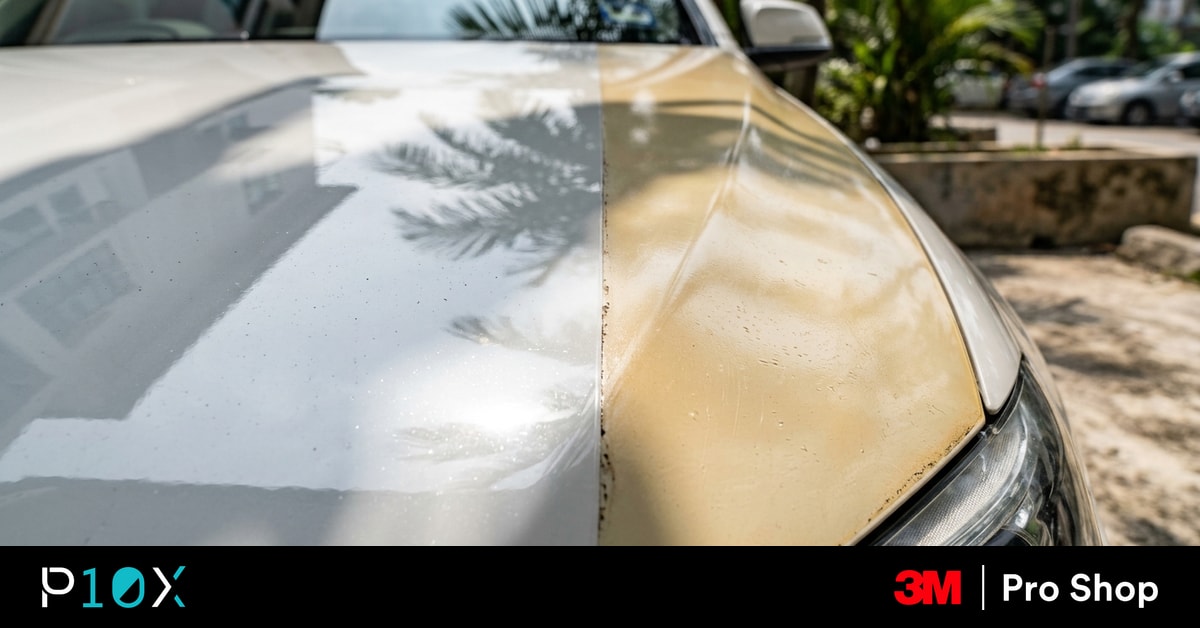
- PPF yellowing in Malaysia almost always starts at the panel edges first, then spreads inward. It is a film or adhesive problem, not paint damage underneath.
- Malaysia's climate (UV index regularly 9 to 11+, ambient 32 to 35°C, humidity often above 80%, plus haze) can age cheap film 2 to 3 times faster than temperate countries.
- The single biggest decision is film material. PVC and TPH yellow fast, premium TPU (used in 3M PPF Series 50, 100, and 150) holds clarity for years longer.
- Yellowed PPF cannot be polished or chemically restored to clear. The only proper fix is to remove and re-install.
- 3M PPF carries an E-Warranty of up to 5 years on Series 150, with shorter brochure periods on Series 100 and 50 (confirm with your dealer), when installed by a 3M Authorized Dealer such as 3M Pro Shop by P10X in Kepong, Sunway, or Seri Kembangan.
Introduction
If your PPF is starting to look yellow under Malaysia's hot sun, you are not the only car owner asking why. PPF yellowing in Malaysia is one of the most common worries we hear from Klang Valley drivers, especially owners of white, silver, or champagne cars that sit outdoors at condo carparks, mall rooftops, and office street parking. The good news is that most yellowing has a clear cause, and most of those causes are preventable if you know what to check before the film goes on.
This guide walks you through what PPF yellowing really is, why our climate punishes the wrong film faster than people expect, the seven causes you actually need to watch out for, and how to protect your investment. By the end, you will know how to spot yellowing early, what mistakes to avoid, and what a redo realistically costs in RM.
What PPF Yellowing Looks Like on Your Car
PPF yellowing is the visible amber or pale yellow tint that appears on a clear paint protection film, usually starting at the cut edges of each panel and on sun-facing parts like the bonnet, roof, and front bumper. It is most obvious on light-coloured cars. The yellow sits in the film or its adhesive, not in your paint, so the panel underneath stays the original colour.
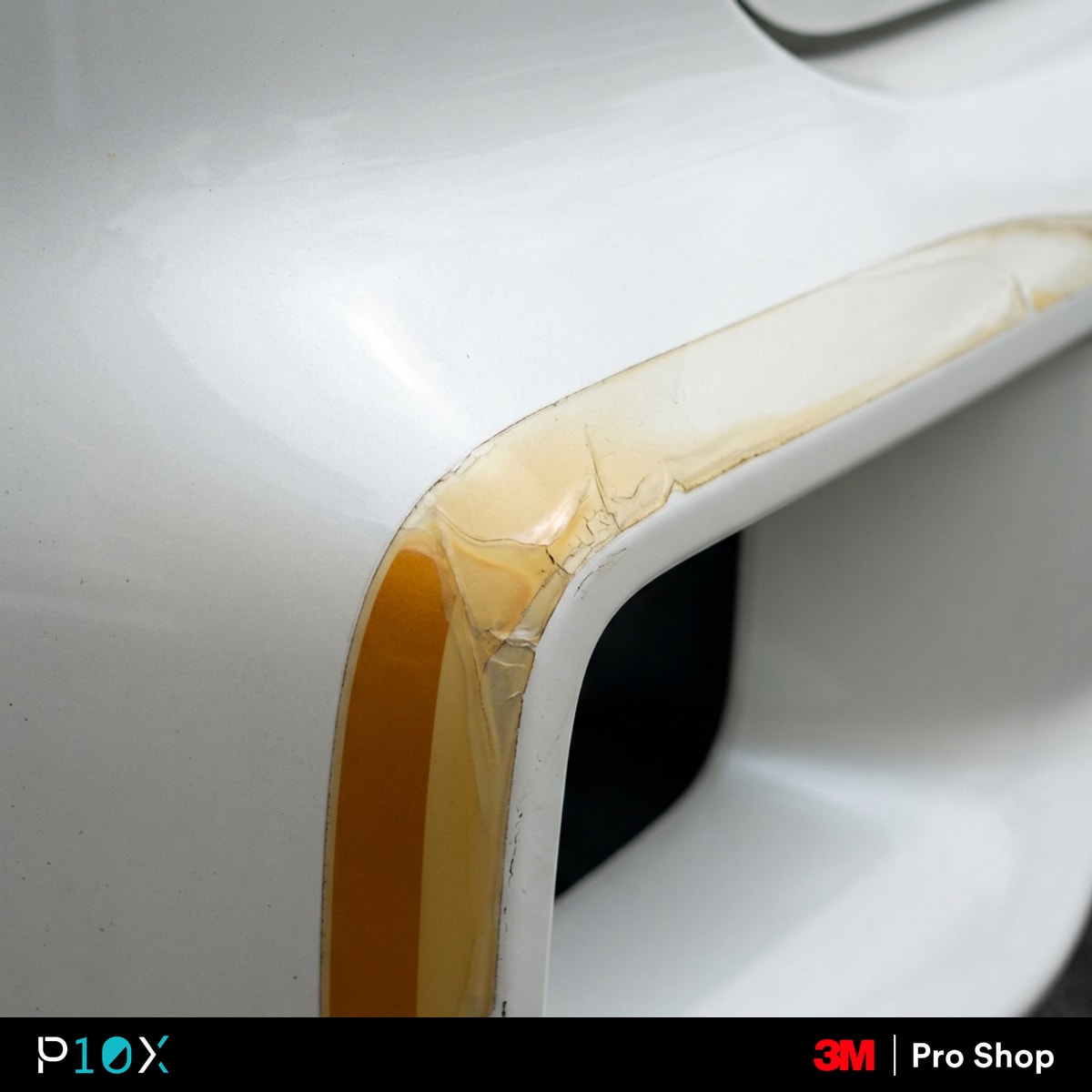
You will often notice it first as a thin amber line along the trimmed edge, where the bumper meets the headlight or where the bonnet meets the grille. From there it slowly creeps inward across the panel. A quick visual check at the seams tells you more than any showroom photo ever will. If your headlamps look yellow but the rest of the film is still clear, the issue is the headlamp lens itself rather than the body PPF — see our headlight PPF in Malaysia guide for that specific fix.
Why PPF Discoloration Hits Malaysian Cars Faster
Malaysia ages cheap PPF faster than almost anywhere in the world. We sit close to the equator, so UV index regularly hits 9 to 11+ for 8 to 10 hours a day. Ambient temperatures stay in the 32 to 35°C range most of the year. Monsoon humidity often climbs above 80%, and haze season brings acidic particulates that settle on paint and film. Most car owners also park open-air at condos, malls, and offices, so the film never gets a real break from the sun.
Stack all of that together and you get a punishing environment for any polymer film. A film that holds up for seven years in a temperate country can yellow inside 12 to 18 months in Klang Valley if the chemistry is wrong.
- UV index: Malaysia 9 to 11+ daily, most temperate countries 3 to 6.
- Average daytime temperature: 32 to 35°C versus 18 to 24°C.
- Average humidity: 75 to 85% versus 40 to 60%.
- Parking habits: mostly open-air condo and mall carparks versus mostly indoor garages.
How UV, Heat, and Cheap Adhesive Yellow PPF
Yellowing is a chemistry problem, not a mystery. Sunlight, heat, moisture, and pollutants attack the weakest layer in the film stack first. Cheap film and cheap adhesive give up early. Premium TPU with a UV-stable top coat resists for far longer. Knowing how each factor works helps you choose smarter the next time round.
UV Radiation Breaks Polymer Bonds
Ultraviolet light has enough energy to break the chemical bonds inside a polymer film. When those bonds break, the film oxidises, and the by-products show up as a yellow tint. Aromatic-based polymers, common in older or cheaper TPU and TPH films, yellow quickly under UV. According to 3M's published product literature, all 3M PPF Series films use aliphatic TPU chemistry, which resists this far better.
Heat Softens Adhesive at the Edges
Adhesive softens as it heats up. In Malaysian sun, surface temperatures on a dark bonnet can climb to 70 to 80°C. Soft adhesive lifts at the edges, lets in dust and moisture, and creates a hot pocket where degradation accelerates. This is why edges almost always yellow first. Dark cars run hotter still under Malaysian sun, so if you drive a black or near-black vehicle, our guide on PPF on a black car in Malaysia covers the extra precautions worth taking.

Acidic Rain and Haze Stain the Top Coat
Haze fallout, exhaust soot, and acidic rain leave a fine residue on top of the film. Left to dry repeatedly, this attacks the protective top coat. Once the top coat fails, UV and oxygen reach the film itself, and yellowing speeds up. This is why a regular weekly wash matters more here than in cooler climates.
Trapped Moisture Causes Yellow Cloudiness
When edges lift, water creeps in and gets trapped between the film and the paint. Over weeks of hot-cold-hot cycles, that pocket clouds up and yellows. It looks like a yellow halo or patchy stain rather than a clean amber edge. This is almost always traceable back to a poor install or a cheap adhesive.
7 Causes of PPF Yellowing in Malaysia's Heat
Most yellowing cases we see in Klang Valley trace back to the same handful of root causes. If you are about to install PPF or you are inspecting an existing job, run through this list before you commit. Spotting any of these early can save a five-figure mistake later.
Cause 1: Cheap TPH or PVC Film Instead of TPU
TPH and PVC are the budget materials in the PPF world. They typically yellow within 12 to 24 months in Malaysian sun. If a vendor's quote looks suspiciously cheap, the film is almost always one of these. Premium TPU is the only mainstream material engineered to stay clear long-term.
Cause 2: Aromatic Adhesive Without UV Stabilisers
The adhesive layer sits directly against the paint and bakes in the heat. Cheap aromatic adhesives yellow on their own, which then shows through the clear film. Premium PPF uses adhesive with built-in UV stabilisers so it stays clear and lets the film stay clear too.
Cause 3: Open-Air Parking Under Direct Sun
If your car sits at an open-air condo carpark or mall rooftop every day, your PPF takes the full UV load all day. This is unavoidable for most Klang Valley owners, which is exactly why film chemistry matters so much. Cheap film simply cannot handle this exposure.
Cause 4: Acid Rain, Haze, and Industrial Fallout
Klang Valley's haze season and industrial fallout from the Klang and Shah Alam corridors leave a thin acidic film on cars. Combined with rain, this slowly etches the top coat. Once the top coat is compromised, yellowing accelerates from the surface inward.
Cause 5: Harsh Wash Chemicals and Brush Car Washes
Many cheap car wash chemicals are highly alkaline, or use iron and tar removers that are too aggressive for PPF. Brush car washes are even worse because the bristles drag grit across the film, scratching the top coat. Both shorten the life of even premium PPF.
Cause 6: Bird Droppings and Tree Sap Left Too Long
Bird droppings are acidic. Tree sap hardens and bonds to the surface. Leave either on the film for more than 24 hours under hot sun and they can permanently stain the top coat. The stain looks yellow, but it is localised damage that often cannot be cleaned out later.
Cause 7: Poor Installation With Lifted or Trimmed Edges
A bad installer leaves edges that lift, trims too close to body lines, or stretches the film too thin around corners. Each of these creates a weak point where moisture and contaminants get in. Within months, that weak point yellows. A factory-trained installer cuts edges cleanly and uses proper inlay technique. For more on what to look for, see our guide on certified 3M PPF installation in Malaysia. And if you are still planning your install, our highway stone-chip PPF priority guide helps you pick which panels to wrap first.
Quality TPU PPF vs Cheap TPH: Yellowing Compared
Not all PPF is the same. The biggest single decision that prevents yellowing is the film material itself. Here is how the main film types stack up in Malaysian conditions. Use this as your shortlist filter when comparing quotes.
| Material | Typical yellowing onset | UV resistance | Warranty | Self-healing | Price tier |
|---|---|---|---|---|---|
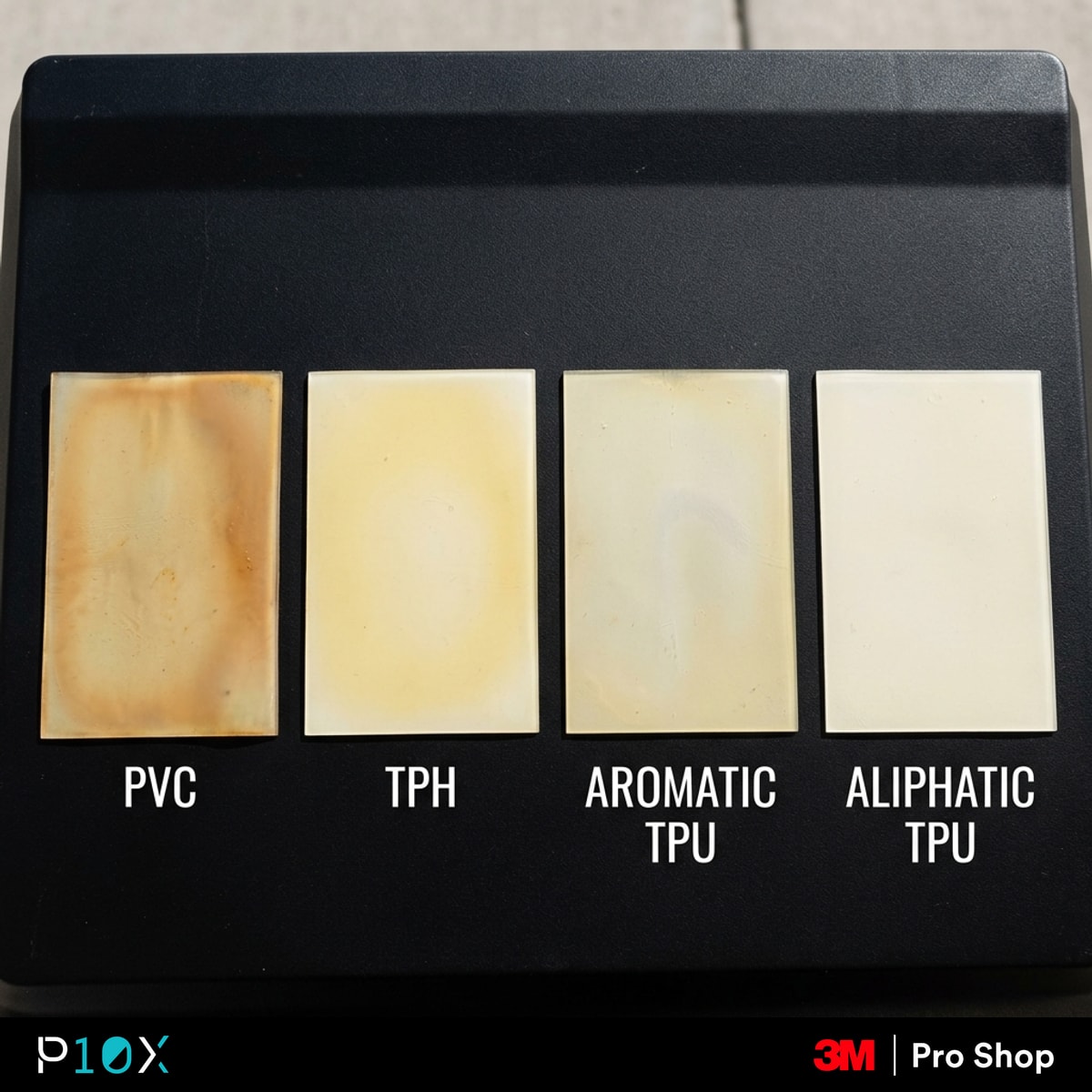
| PVC | 6 to 18 months | Poor | None or 1 year | No | Lowest |
| TPH | 1 to 3 years | Below average | 1 to 3 years | Limited | Mid-low |
| Aromatic TPU | 2 to 4 years | Average | About 3 years | Yes | Mid |
| Aliphatic TPU (3M PPF Series 50, 100, 150) | 7+ years | High | Up to 5 years (Series 150) | Yes | Premium |
Material Difference: PVC, TPH, and TPU
PVC is rigid, brittle, and yellows quickly. TPH is a halfway step that tries to mimic TPU at a lower price, but the chemistry is not the same. TPU (thermoplastic polyurethane) is the proper material for modern PPF, and within TPU there are two grades, aromatic and aliphatic.
UV Resistance: Aliphatic vs Aromatic TPU
Aromatic TPU contains chemical groups that absorb UV light and then release that energy by breaking down, which produces yellowing over time. Aliphatic TPU does not have those groups, so it stays far more stable under UV. All 3M PPF Series films are built on aliphatic TPU per 3M's published product literature, which is why they hold colour for years in tropical sun.
Warranty Coverage Against Yellowing
A real warranty against yellowing means the manufacturer will replace the film if it discolours during the warranty period. 3M PPF Series 150 carries up to a 5-year warranty against yellowing, bubbling, and cracking, with Series 100 and Series 50 typically covered for shorter brochure periods of around 3 years. Confirm the exact figure with your dealer before installation. Installs done by non-authorised vendors do not qualify, even if the film itself is genuine 3M.
Self-Healing and Top Coat Quality
Self-healing PPF has a clear elastomeric top coat that re-flows when warmed, lifting minor scratches and swirl marks back out. A quality top coat also acts as the first defence against UV, haze, and chemicals. If the top coat is thin or missing, yellowing reaches the structural film faster. For a deeper comparison, see our guide on self-healing PPF vs self-healing coating.
5 Mistakes That Speed Up PPF Yellowing
Even the best film can fail if you treat it wrong after install. These are the five mistakes we see most often in Klang Valley, on cars that should have stayed clear but did not. Each one is avoidable, costs nothing to skip, and quietly decides whether your PPF reaches its warranty milestone or fails inside two years.
Mistake 1: Buying "Cheap 3M" From an Unverified Vendor
There is a thriving market of vendors who claim to install "3M PPF" at prices far below the official Pro Shop range. The film is often counterfeit, expired, or genuine but installed by untrained hands without a real warranty. If you cannot register the install for an E-Warranty, you do not have 3M's protection.
Mistake 2: Skipping the 72-Hour Post-Install Wash Window
Fresh PPF needs at least 72 hours for the adhesive to fully cure to the paint. Washing too early, especially with a high-pressure hose at the edges, lifts the film and lets in moisture. Many early yellow halos trace back to a wash in the first three days.
Mistake 3: Using Tar or Iron Removers Straight on PPF
Tar removers, iron decontaminators, and engine bay degreasers are too aggressive for PPF top coats. Spraying them directly on the film strips the protective layer, after which yellowing speeds up. Stick to pH-neutral car shampoo for normal washes.
Mistake 4: Leaving Bird Droppings or Sap Overnight
Malaysian heat bakes bird droppings onto the film within hours. Tree sap hardens and bonds chemically to the top coat. Wipe both off the same day with warm soapy water and a soft microfibre cloth. Do not scrape.
Mistake 5: Parking Permanently Under Direct Sun
If you genuinely have no shaded option, accept that UV exposure is your biggest enemy and choose film chemistry accordingly. Use a windscreen sunshade, a breathable car cover for long-term parking, and rotate your parking spot when possible. Every hour out of direct sun extends the film's life.
How to Prevent PPF Yellowing in Malaysia
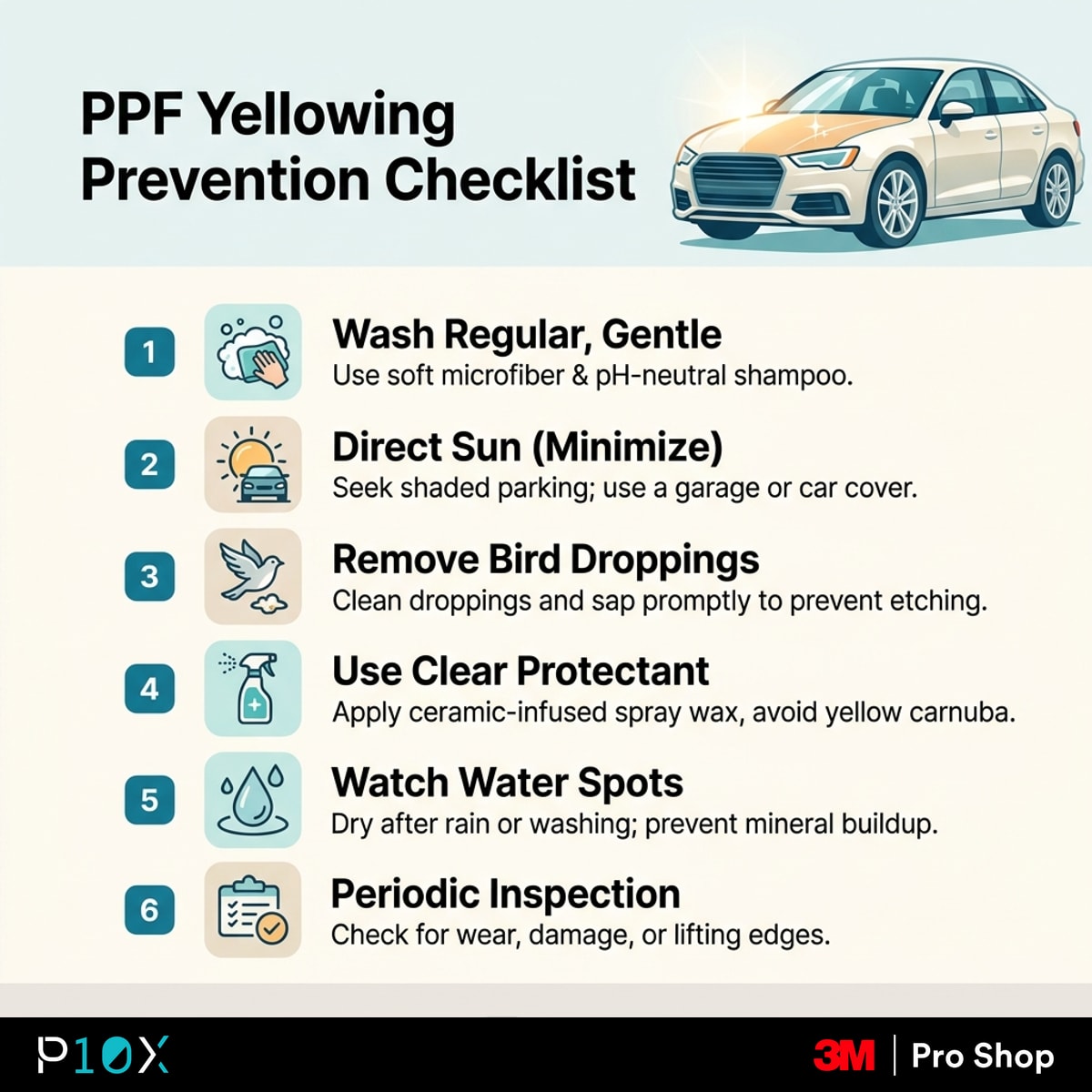
Prevention starts before the film is even ordered, and continues every week after. A 3M PPF install is a five-figure investment, and a few good habits are the difference between a film that lasts the full warranty period and one that needs replacing within two years. Follow these six steps to give your PPF the best chance of staying clear under Malaysian sun.
Choose Aliphatic TPU PPF With UV Warranty
Insist on aliphatic TPU. Ask the installer to confirm in writing. Then check that the warranty specifically covers yellowing. If a vendor cannot show you both, walk away.
Install With a 3M Authorized Dealer
A 3M Authorized Dealer registers your install for the official E-Warranty, uses factory-trained technique, and stocks genuine current-batch film. You can find the full list of authorised outlets at https://www.3mproshop.com.my/locations.
Wash Weekly With pH-Neutral Shampoo
A simple weekly hand wash with pH-neutral car shampoo and a soft mitt removes haze, fallout, and bird droppings before they can damage the top coat. Avoid drive-through brush washes and harsh degreasers. For a full routine, see our PPF maintenance Malaysia guide.
Remove Bird Droppings Within 24 Hours
Keep a spray bottle of plain water and a microfibre cloth in the boot. Spotting droppings or sap and wiping them off the same day prevents permanent staining. It is the cheapest yellowing prevention there is.
Park Shaded or Covered Whenever Possible
A few extra minutes walking from a covered carpark adds years to your film. At condos, request a shaded bay. At malls, choose lower levels even if they fill faster. At home, a basic carport pays for itself many times over.
Apply a Top Sealant or Ceramic Coating Over PPF
A top sealant or a thin ceramic coating layered over the PPF gives the top coat extra protection against acidic fallout, haze, and water spotting. This does not replace good PPF chemistry, but it adds a sacrificial layer that takes the daily abuse instead of the film itself.

When to Replace Yellowed PPF in Malaysia (RM Cost)
Once PPF has yellowed deep into the film itself, there is no polish, no chemical, and no compound that brings it back to clear. Surface haze on the top coat sometimes responds to a light polish, but true film yellowing means it is time to remove and re-install. Here is how to decide, and what to budget in RM.
Signs It's Time to Replace Yellowed Film
If the yellow tint runs continuously along multiple panel edges, if it is visible from arm's length on light-colour paint, or if the film is also lifting or bubbling, replacement is the right call. Trying to live with it usually means the film keeps degrading and starts trapping moisture against the paint.
Inspection Steps Before Removal
Before you commit to a full redo, get a proper inspection. A trained technician will check whether the yellowing is in the film, in the top coat, or in localised stains, whether the paint underneath is sound, and whether the original install qualifies for a warranty claim. For a deeper look, see our redo PPF safe-removal guide.
E-Warranty Claim Through a 3M Authorized Dealer
If your original install was done by a 3M Authorized Dealer and is still within the E-Warranty window, yellowing is covered. Bring your install paperwork, the warranty card, and the car to the same authorised dealer. The dealer verifies the claim with 3M and arranges replacement under warranty terms. If the damage is from an accident rather than gradual yellowing, the question becomes an insurance one — our PPF insurance claim guide for Malaysia walks through documentation and what is typically covered.
Realistic Re-Install Cost in RM
For owners paying out of pocket, here is the realistic range at 3M Pro Shop:
| Coverage | Series 50 Gloss | Series 100 Gloss | Series 150 Gloss |
|---|---|---|---|
| Full car | RM 11,000 to RM 15,500 | RM 15,000 to RM 19,000 | RM 19,000 to RM 24,000 |
| Bonnet only (medium car) | From RM 1,250 | From RM 1,650 | From RM 2,050 |
| Bumper | From RM 2,250 | From RM 2,250 | From RM 2,250 |
| Headlights (range) | RM 500 to RM 600 | RM 500 to RM 600 | RM 500 to RM 600 |
For a complete primer on the 3M PPF range, our 3M PPF Malaysia comparison guide lays out Series 50, 100, and 150 side by side. The pillar guide on 3M Paint Protection Film in Malaysia (benefits and cost) covers the bigger picture, and our PPF ROI guide for Malaysian car owners helps weigh whether a redo or a fresh install is worth it.
Bottom Line on PPF Yellowing for Malaysian Owners
If you take one thing from this guide, let it be this. Yellowing is mostly a choice, not bad luck. The film material, the installer, and the daily routine you keep around your car decide whether your PPF stays glass-clear for the full warranty or starts looking tired within a year. Malaysian sun gives no second chances to cheap film.
If your current PPF is showing signs of yellowing, get it inspected before it spreads. If you are still planning your install, ask harder questions about the film material, the adhesive, and the warranty. A short conversation with a 3M Authorized Dealer such as 3M Pro Shop by P10X (or your nearest 3M Authorized Dealer) will tell you exactly where you stand and what a proper next step looks like.
PPF Yellowing FAQs from Malaysian Car Owners
These are the questions Malaysian car owners ask most often when their PPF starts looking off-colour or when they are comparing quotes.
Does 3M PPF turn yellow over time?
3M PPF is built on aliphatic TPU per 3M's product literature and is engineered to resist yellowing far longer than PVC, TPH, or aromatic TPU films. In Malaysian sun, a properly installed 3M PPF Series 50, 100, or 150 typically stays clear for the full warranty window and often beyond. It is not yellow-proof, but it is one of the most yellowing-resistant films sold here.
How long does PPF last in Malaysia?
Quality TPU PPF lasts around 5 to 10 years in Malaysian conditions, depending on parking, washing habits, and how often the car is exposed to haze and direct sun. Cheap PVC or TPH film often fails inside 12 to 24 months. The film material is the biggest single driver of lifespan.
Can yellowed PPF be cleaned or restored?
No. Once the film itself has yellowed, no polish, compound, or chemical brings it back to clear. Light surface haze on the top coat sometimes improves with a gentle polish by a trained detailer, but true film yellowing is permanent. The only proper fix is to remove and replace.
How long before PPF starts yellowing?
Cheap PVC or TPH films can start yellowing within 6 to 18 months. Aromatic TPU usually starts within 2 to 4 years. Quality aliphatic TPU like 3M PPF Series 50, 100, and 150 typically resists visible yellowing for 7 years or more if maintained properly.
Does PPF yellowing damage the car paint underneath?
The yellowing itself sits in the film, not the paint, so the paint colour stays the same. However, if the yellowed film is also lifting or trapping moisture at the edges, that moisture can eventually affect the clear coat. This is why a yellowed film that is also peeling should be removed sooner rather than later.
Is yellowing covered under the 3M PPF warranty?
Yes, when the install was done by a 3M Authorized Dealer and is within the E-Warranty period (up to 5 years on Series 150, typically around 3 years on Series 100 and 50, confirm with your dealer). The warranty specifically covers yellowing, bubbling, and cracking. Installs done by non-authorised vendors do not qualify, even if the film itself is genuine 3M.
Why is my PPF yellow but my friend's is still clear?
Three usual reasons: different film material (PVC or TPH versus aliphatic TPU), different installer quality (edge cuts and adhesive curing), and different exposure (open-air parking versus shaded). If your film is yellow within two years and your friend's is still clear after five, the gap is almost always one or more of these three.
Find out the best protection for your car
Visit a 3M Pro Shop and discover the cost-effective 3M Protective Film and Window Tint

Fabian
He is passionate about revolutionizing the car protection services industry by bringing innovation and transparency to a traditionally opaque and often misunderstood field. His mission is to educate end users on the true benefits and importance of car protection, aiming to replace outdated practices with honest, customer-focused solutions. With a fresh approach to car tinting, paint protection film (PPF), and detailing services, he is committed to delivering a superior customer experience that sets a new standard in the market. He welcomes discussions about the future of the automotive industry and is eager to connect with like-minded professionals who share his vision for innovation, integrity, and excellence.

Experience the future of window tinting
Visit a 3M Pro Shop and discover the revolutionary Crystalline CR BLK film