
Volvo EX30 PPF: Which Panels to Cover and What Affects the Cost
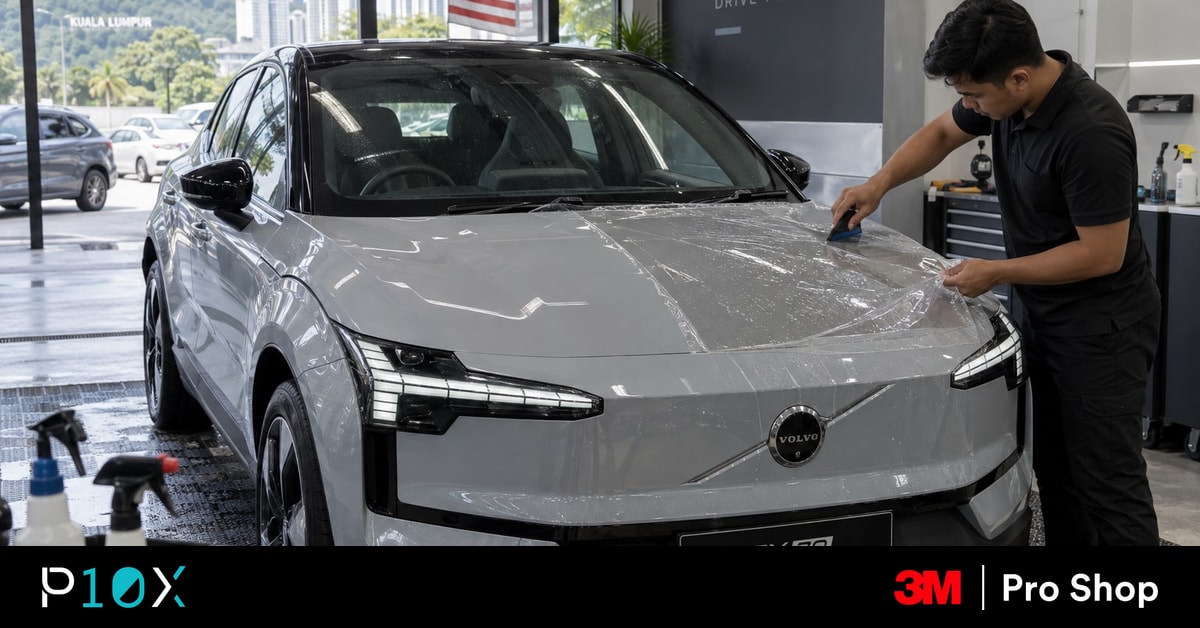
- PPF only protects the panels it covers, so coverage is the first decision, not the film series.
- Front panels take the highway hits. Door edges, handle cups and the boot ledge take the parking and loading hits.
- Cameras, radar and parking sensors stay clear of film, full stop.
- Get the paint checked before fitting, because clear film will not hide old damage.
- Price moves with coverage, film series and paint condition, not with the package name.
Imagine a Volvo EX30 a year from now. The bonnet and front bumper have taken a year of highway grit, and the boot ledge has a scuff for every suitcase dragged across it. That is the damage PPF for a Volvo EX30 is meant to take instead of the paint. Clear paint protection film (PPF) can take some of that contact before the paint does.
So before you start comparing 3M film series, show the installer where your EX30 gets used and which painted areas worry you, especially around the cameras, sensors and panel gaps. That conversation decides the rest of the job.
What PPF does on your EX30
Say a small stone comes off the lorry in front of you on the highway and flies at your bonnet. On an uncovered car, that hit lands on the clear coat and paint. On a covered car, it lands on the film first.
That is the whole idea. Paint protection film, usually shortened to PPF, is a transparent polyurethane sheet with adhesive underneath, and it sits on top of the paint like a phone case sits on a phone. The case takes the scratch so the phone does not have to. Same idea here, just bigger and clearer.
One thing worth remembering: the film only protects the area underneath it. An uncovered panel is still an uncovered panel, no matter how good the film on the next panel is. That is why coverage matters as much as the product name.
Now you may be thinking, what about the self-healing part? 3M lists self-healing technology across its current Malaysian PPF comparison. In plain English, a bit of warmth, say from the sun on a parked car, can help minor surface scratches and swirls in the film become less visible. It does not mean a deep cut closes up, a dent pops out, or damaged paint repairs itself. If you can see a cut through the film or feel a dent in the panel, the car needs an inspection. And if a shop offers coating as a substitute, self-healing PPF and self-healing coating are not the same thing.
PPF also does not mean you can wash the car carelessly. Dirt can collect along neglected edges, and strong contact can still damage the film or the paint below. A careful installer will mark every old defect before work begins, so ask for that record.
How thick are they? 3M Malaysia's film comparison lists Series 150 and Series 100 Gloss at 7.5 mil each, and Series 50 at 7.3 mil. One mil is one-thousandth of an inch, so these are differences you cannot see with your eyes. Series 150 adds a hydrophobic surface, while Series 100 and Series 50 do not list that feature.

The numbers are close, so a thicker-looking figure alone should not decide the job. Coverage, finish, surface feature and installation quality still matter more. Before work starts, take a look at the exact roll label or product record for the film named in your quote.
Where your EX30 takes the hits
Let's say your EX30 spends most weekdays on PLUS or KESAS. Every trip throws a bit of road debris at the front bumper and bonnet, and the front fenders and mirror caps sit in the same firing line. One trip is nothing. A year of trips is why those panels usually get the first look.
But what if your driving is mostly short city trips? Then the trouble spots are probably the carpark and the boot. Door edges can meet walls or the next car's door, and luggage scrapes the boot ledge every time you load it. So before you pay for film on panels that barely see wear, take a look at those contact points on your own car first.
Your own routine decides the order. Daily work bags and short distances push the boot ledge and door edges up the list. Long weekly highway distances make a full-front package easier to explain. The PPF coverage guide helps you compare those scopes, and the table below turns them into an EX30 panel list.
| EX30 panel or area | Typical exposure | What to confirm on the quote | Coverage tier |
|---|---|---|---|
| Front bumper | Direct road debris and complex corners | Full bumper piece and clear sensor openings | Full front |
| Bonnet | Broad forward-facing painted area | Full bonnet or the exact partial line | Full front |
| Front fenders | Road debris beside the bumper and bonnet | Left and right fender pieces | Full front |
| Mirror caps | Forward exposure and curved edges | Seam and wrapped-edge position | Full front |
| Door edges and handle cups | Parking and hand contact | Named door edges and handle cups | Contact areas |
| Boot ledge | Luggage crossing the painted edge | Strip width and finishing points | Contact areas |
| Remaining painted panels | Wider everyday coverage | Every included and excluded panel | Full vehicle |
This is a starting plan, not a claim that one series must go on every car. A film that looks neat in the centre of the bonnet can still disappoint if a corner lifts or a seam crosses a place you see every day, so ask how each edge gets wrapped or trimmed.
One more thing people miss. Before the PPF sheet reaches your EX30, the film, paint and bay should be clean. Dust trapped under PPF can stay visible after handover, so a clean bay matters more than a fast one.
If your EX30 has already been on the road for a while, look hard at the lower bumper, bonnet leading edge, mirror caps and boot opening before choosing coverage. Protecting a marked panel can still make sense, but the mark needs its own decision first.
Which 3M series should you pick?
Walk into a shop asking about 3M film and you will usually hear 3 names: Series 150, Series 100 Gloss and Series 50. They sound like trim levels on a car, and in a way they are. Here is what actually separates them.
Series 150 is the current 3M option in this comparison with a hydrophobic surface. Hydrophobic simply means water and road grime release more easily from the film during a normal wash, so the car is a bit easier to clean. It is listed at 7.5 mil with adhesive. How much that feature matters depends on which panels get covered and how the car gets washed.
Series 100 Gloss is also listed at 7.5 mil. It does not list the same hydrophobic feature, but it keeps the high-gloss finish and self-healing technology shown in 3M's comparison. The installer can show how its finish looks beside a panel left uncovered.
Series 50 is listed at 7.3 mil with a high-gloss finish. So does that mean it is the worse film? Not by itself. A difference of 0.2 mil does not tell you how cleanly an edge will sit on your car. The fitter still has to prepare and install it properly.
So sort the coverage first, then compare the finish, the hydrophobic behaviour where it matters, the edge plan and the workmanship.
What happens to the cameras and sensors?
If you have heard your EX30 beep at a pillar in a tight mall carpark, you already know how much the car leans on its sensors. It uses cameras, radar units and parking sensors around the front, windscreen, door mirrors and rear, and the EX30 owner's manual says these areas must stay clean and free from objects or other obstructions.
So what does that mean for PPF? Simple. Film belongs on suitable painted surfaces. It should not cover a camera lens, a sensor face or any functional opening, even though the film itself is transparent.
At the front, the installer has to work around the bumper's radar and parking-sensor areas. The windscreen camera is not part of a paint-protection job. The door-mirror cameras and the rear camera also need clear fields of view. Model year and equipment can change the exact layout, so the technician should point to the actual hardware on your own EX30 before cutting any film.
Where a pattern reaches close to a sensor opening, the film's ending point matters: wrapped, trimmed or left with a small gap. Look at that edge from different angles during handover. And if a warning appears after the job, do not start peeling the bumper film yourself. Let the installer inspect the fit and follow Volvo's diagnostic process.
Before work starts, point at each camera and sensor opening on your EX30 and get the installer to show you where the film will end.

Here is a simple habit. One photo of each complex edge during handover makes a useful condition record. Focus on the bumper corners, mirror caps and any cutout near a functional part. You do not need a full photoshoot, just a clear reference in case something changes later.
What a good install looks like
A good job starts with washing and a close paint inspection, not with the film. Clear film follows whatever surface sits underneath it, so existing chips, swirl marks and uneven touch-up paint need a decision first, even on a new car. Yes, even new cars can carry swirl marks from transport and dealer washing. The installer may recommend cleaning or paint correction before film, so agree on what will stay visible before the panel gets covered.
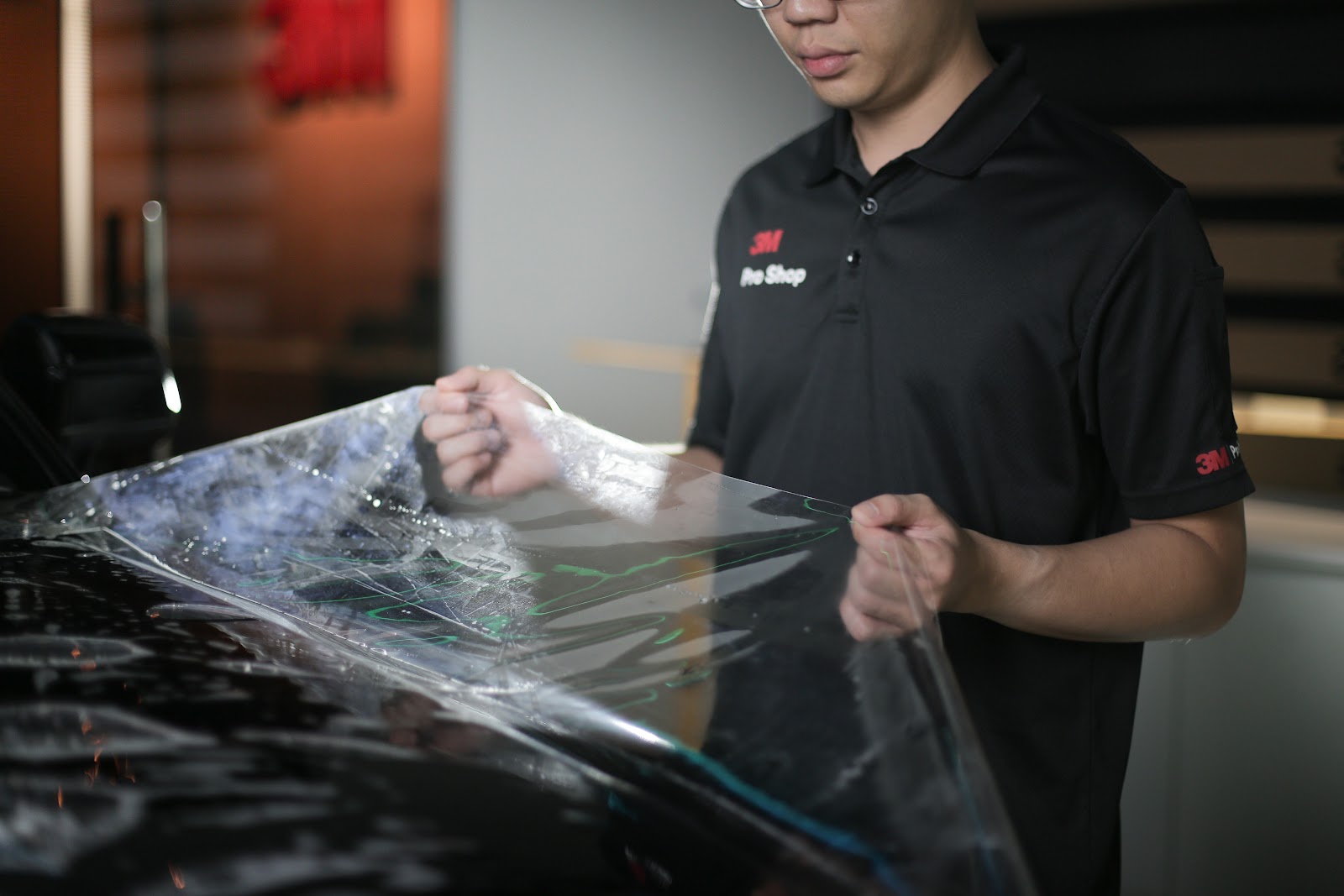
Then the fitting starts. The film is positioned with installation solution, a liquid slip that lets it slide into place, then a squeegee moves the liquid and air towards the edges. The sheet needs to sit cleanly before its edges are finished. Curved bumper sections need controlled stretch, and bonnet and fender edges need a clear plan for wrapping or trimming. The PPF installation guide explains the full process, so the handover can stay focused on the panels actually being covered.
At handover, look across each panel in bright bay light and in natural daylight. Trapped dirt, unexplained cuts, lifting corners and awkward edge lines are exactly what a bad PPF installation looks like, and they are much easier to catch in the bay than at home. Some installation moisture can settle as the film cures, but the installer should tell you what is normal for that product and what needs a return visit. Do not accept every bubble or mark as something that will simply disappear.
The installer should be able to show you the edges and cut lines on your EX30 from arm's length.

Before leaving, keep the product name and care instructions together with the date of the job. If a front piece is replaced later, that record helps the next installer match the film and understand where the original seams ended.
Looking after the film
The question almost everyone asks at handover: when can I wash the car? There is no single answer, because the timing depends on the exact film and the workshop conditions, and it matters because fresh edges need time to settle. Notice an edge lifting during that period? Send the installer a clear photo instead of pressing the edge back down, because that traps road dirt under the film. Early inspection is easier than guessing after several washes.
Normal washing is nothing fancy. Rinse the loose grit first and use clean tools. Aim pressure along an edge rather than straight underneath it. Dry the panel with a clean soft towel and look over the bumper corners, mirrors, door cups and boot ledge while you work. You are not searching for perfection every week. You are catching a small edge change before dirt builds around it.
Beyond normal washing, 3M PPF maintenance means removing road grime and surface contamination using products accepted for the film. Avoid aggressive scraping, and do not polish the PPF as if it were bare paint without checking the product guidance first.
A deep cut or chip still needs an installer to inspect it. Self-healing technology applies to minor surface marks in suitable film, not to damage that reaches through it.
If one section does get damaged, ask whether that piece can be replaced without disturbing the nearby film. A bonnet piece, a mirror cap and a boot-ledge strip are separate jobs, and the original panel map makes that conversation much easier.
What about ceramic coating?
Now you may be thinking, what about ceramic coating? Fair question, because shops often mention both in the same breath.
They do different jobs. PPF is a physical film that takes contact on the area it covers. Ceramic coating is a liquid-applied surface treatment often chosen for easier washing and better water beading. If road debris is your worry, coating cannot replace the physical layer on the bumper and bonnet. A coating can make paint easier to wash, but it does not stand between a stone and your bonnet.
If easy cleaning is your main goal, you may not need full-car PPF at all. You might protect the front and contact zones with film, then discuss a suitable coating for the other surfaces. The choice should follow what actually happens to your EX30, not a package that combines products without explaining where each one goes.
Order matters too. 3M's installation guidance says an existing ceramic coating should be professionally removed before its PPF is applied, and that a suitable coating may be applied on top of installed 3M PPF. Make sure the fitter knows about any dealer-applied coating before the car enters the bay, because clear film needs a properly prepared surface underneath.
And if you want both treatments, get the workshop to write down the surface preparation and the application order.
And window tint? That is a separate decision for the same car. The Volvo EX30 window tint guide covers the glass side, including the JPJ light-transmission limits and the rear-windscreen antenna warning.

Do not let the coating discussion distract from the panel question. If the bonnet is your worry, decide on bonnet coverage first. If the boot ledge is already marked, deal with that paint condition before choosing any layer.
What moves the price of Volvo EX30 PPF
Now to the question everybody asks first and shops answer last: what does it cost? There is no single honest number, because 4 things move the price.
The first is coverage. A full-front package covering the bumper, bonnet, front fenders and mirror caps costs more than contact-area strips on the door edges, handle cups and boot ledge, and full-vehicle coverage sits above both. More painted area under film means more material and more bay time.
The second is the film series. Series 150, Series 100 Gloss and Series 50 sit at different points in 3M's range, and the 3M PPF series comparison sets out which series tends to fit which budget.
The third is panel shape. A curved EX30 bumper with sensor cutouts takes longer to fit cleanly than a flat bonnet section, and time in the bay is part of the price.
The fourth is the quiet variable: paint condition. A car that needs cleaning or correction before film takes more preparation time than one that arrives ready.
So when 2 quotes for the same car differ, this is usually why. The comparison only works panel by panel: bumper, bonnet, front fenders, mirrors, 4 door edges, handle cups and boot ledge on one sheet, with the exact 3M series and the planned edge finish beside each one. A package called full front can mean different details at different shops, so the written panel list is the comparison that matters.
So how much of your EX30 should you cover?
The right coverage is the one that matches where your EX30 actually takes contact. Road-facing panels if your week is mostly highway. Door edges and the boot ledge if it is mostly parking and loading.
A 3M Authorized Dealer such as 3M Pro Shop by P10X should show you the film series, the panel scope and the edge plan before work starts, and a visit where you show how you use the boot and doors makes the whole conversation much easier.
Find out the best protection for your car
Visit a 3M Pro Shop and discover the cost-effective 3M Protective Film and Window Tint
Frequently Asked Questions
Does PPF stop every Volvo EX30 stone chip?
No. PPF can reduce damage from some road debris, but a hard or sharp impact can still cut the film or reach the paint. It also cannot prevent dents.
Can PPF cover the Volvo EX30 boot ledge?
Yes. 3M lists the trunk ledge as a contact-area coverage option, and the installer can show where the strip begins and ends based on the part of your EX30 that luggage crosses.
Is full-car PPF necessary for a Volvo EX30?
Not automatically. Full-front film suits regular highway exposure, while door edges, handle cups and the boot ledge suit daily parking and loading. The right choice is the set of areas that matches how you actually use the car.
How much does Volvo EX30 PPF cost in Malaysia?
There is no single figure, because coverage, film series, panel shape and paint preparation all move the price. A full-front package costs more than contact-area strips, so compare written quotes panel by panel with the exact 3M series named for each area.
Will PPF affect the Volvo EX30's cameras?
It should not, as long as the film stays off camera lenses, radar faces, parking sensors and other functional openings. The installer must identify those areas on your exact car and keep them clear.
How should you wash a Volvo EX30 after PPF?
Keep to the installer's first-wash timing, rinse loose grit before contact washing and aim pressure along the film edges rather than underneath them. Use products accepted for the fitted film.
Author

Kelvin Cheen
Kelvin is an Automotive Solutions Consultant and Branch Manager at 3M Pro Shop. With 4+ years of field experience in premium vehicle surface protection, Kelvin specializes in flagship 3M technologies, including 3M Crystalline Black optical film and Ceramic IR tints, 3M Paint Protection Film (PPF), etc. His focus is on delivering transparent, engineering-backed advice to car and EV owners, cutting through sales upsells to ensure customers choose the exact thermal rejection and paint protection tailored to their driving needs.
Experience the future of window tinting
Visit a 3M Pro Shop and discover the revolutionary Crystalline CR BLK film