
Volvo EX30 Window Tint Guide: What It Does and How It Works

- The EX30's glass needs measuring before any film shade is chosen.
- The finished VLT on the windscreen and both front side windows is what counts, not the shade name.
- Film construction matters on the rear windscreen because of its antenna.
- The panoramic roof is a separate decision, because where fitted it already has an infrared coating.
Volvo EX30 window tint works pane by pane: sun through the windscreen bothers you differently from light through a side window or the panoramic roof. Tint can reduce glare and some solar heat, but the front glass must still meet JPJ light-transmission limits. The EX30 owner's manual also warns about film construction on the rear windscreen because of its antenna. The 3M window tinting guide explains the film basics.
So before anyone starts talking shades, get the existing glass measured. The bare-glass readings decide which 3M film and shade each pane can take, and after fitting, the finished front-glass readings and the view from the driver's seat decide whether the job was done right.
What do the tint numbers mean?
Sit down at a tint shop and the numbers come at you fast: VLT, TSER, IRER, IRR. They decide more than the shade name does, so here is what each one actually measures. Window tint itself is simple: a thin layer installed on the inside of the glass.
The first number is VLT, visible light transmission: how much visible light passes through the finished glass. Higher VLT looks lighter, lower VLT looks darker. VLT is also the number the front-glass legal limits use, so no heat-rejection claim can stand in for it.
Heat needs different measures. Total solar energy rejected, or TSER, is the share of total solar energy the filmed glass keeps out. Infrared energy rejection, or IRER, covers a broad infrared range and also counts energy the glass absorbs and releases again. Infrared rejection, or IRR, can be measured over a much narrower band, so a big IRR figure is not the same thing as a big TSER figure.
The current 3M Malaysia range page lists Crystalline CR BLK at up to 62% TSER, 70% IRER and 98% IRR, and Ceramic IR at up to 63% TSER, 63% IRER and 95% IRR. Read those as range ceilings, not the result on your EX30. Two films only compare properly when the exact shade, the same glass reference and the same measurement line up.
Here is a real example of why the test basis matters. 3M's Malaysian CR BLK brochure measures VLT on clear reference glass at 89%, and its IRR figures are for the film alone. Across the 3 shades shown, the film gets darker while the narrow-band IRR moves only slightly. Numbers mean very little without the glass and the test method, so read the CR BLK overview together with the full product sheet.

One honest warning about heat. Tint can reduce part of the solar load coming through the glass, but it does not turn a parked car into a cool room. The seats, dashboard, body and uncovered glass still soak up heat. So if anyone promises the same cabin temperature or battery saving for every EX30, ask for the exact test on the exact car, because a brochure figure cannot promise that. And if your current car still feels hot after tinting, the causes are usually specific. The guide to why a car stays hot after tint lists the ones worth checking.
The glass your EX30 comes with
Count the glass on your EX30: a windscreen, 4 powered side windows and a rear windscreen, plus a panoramic roof where fitted. Some panes are laminated, meaning two sheets of glass with a plastic layer between them, depending on the pane and specification. And where the roof is fitted, Volvo's documentation says the glass already carries an infrared coating, so the roof gets its own decision.
The pane that bothers you is the one to check first. Say you are driving home at 5 pm with the sun low: the front sides are where the glare comes in. Park in the open at 1 pm and the roof may still feel warm above your head even with its coating. Each pane does a different job, so each one gets its own film decision.
The rear windscreen has one more job. The antenna lives in that glass, and the owner's manual warns against tint with a metallised surface coating because it can affect signal reception. The warning is about how the film is built, not how dark it looks. 3M describes CR BLK as non-metallised, which fits that warning, but get the full name of the exact rear film in writing before it goes on.
One thing most people never see: tint goes on wet. The installer uses installation solution, a liquid that lets the film slide into place, so ask how they will control it around the trim, the switches and the electronics near the glass, and how they keep dust off the adhesive. A careful shop has a straight answer for both.

Before any film goes on, have the technician point out every existing scratch, chip, residue mark or damaged seal, because film will not make them disappear. That 2-minute inspection gives you and the shop the same record of the glass before work starts.
How dark can you legally go?
The legal line is drawn on finished glass, not on a brochure. Malaysia's 2026 JPJ enforcement list says the front windscreen must not fall below 70% light transmission, and the driver's right and left side windows must not fall below 50%. What the meter reads at a JPJ check is the glass and the film together, never the number printed in a shade name.
How much room do you have? 3M tests its CR BLK brochure on clear reference glass at 89% VLT. With CR BLK 80 fitted, the published finished reading is 88%, just 1 percentage point lower than the bare reference glass under that exact test. A useful example, but not a formula for your EX30, because your factory glass may start from a different number.
If your windscreen starts below the brochure's 89%, your room before the 70% limit shrinks, and the same goes for the 50% front-side limit. Subtracting a shade number from 100 does not give you the answer. The bare pane gets measured, the film goes on, then the finished pane gets measured again. The JPJ-compliant tint guide explains why those 2 readings matter, and when legal tint still fails the JPJ meter, the missing first measurement is usually the reason.
Without the bare-glass readings, nobody can responsibly recommend a front-glass shade for your EX30, so bring those numbers to the workshop.
| EX30 glass area | What to decide | Measurement or caution |
|---|---|---|
| Front windscreen | Lightest film that meets your comfort goal | Finished VLT must be at least 70% |
| Front side windows, left and right | Balance glare, visibility and comfort | Finished VLT must be at least 50% |
| Rear side windows, left and right | Choose for privacy and night visibility | Check the current rule and measure the finished glass |
| Rear windscreen | Check film construction and rear visibility | Avoid metallised-surface film (owner's manual antenna warning) |
| Panoramic roof, where fitted | Add film only for a clear remaining problem | Account for the existing infrared coating and glass compatibility |
At a JPJ check, the meter reads the finished front-glass VLT. The heat figure in the brochure never comes into it.

Keep a small margin above the limit instead of aiming at the exact brochure number, because meters, glass condition and installation results can all vary. And before you commit to a front shade, sit in the car and look through the chosen shade in dim light. A film that looks fine under bright workshop lamps can feel very different on a wet night drive home.
CR BLK or Ceramic IR?
Start with the exact series and shade, not the family name. Crystalline CR BLK uses multilayer optical film with ceramic nano-technology. Ceramic IR uses absorptive nano-ceramic technology. Both ranges come in several VLT shades, so 2 quotations can both say Crystalline and still propose very different finished glass.
Now you may be thinking, why not just take the highest IRR figure? Because IRR is a narrow-band figure, while TSER measures the broader solar load the filmed glass keeps out. The two only compare properly when the exact shade, VLT and TSER come from the same test conditions. Then check visibility from the driver's seat, because the darkest option is not automatically the coolest, and the biggest IRR number is not automatically the right windscreen film.
For the rear windscreen, construction comes before shade. 3M describes CR BLK as non-metallised, which matches the owner's manual warning, but the installer should still write down the exact product code and inspect the rear demister and antenna area. A vague promise that every film in the shop uses the same construction is not an answer.
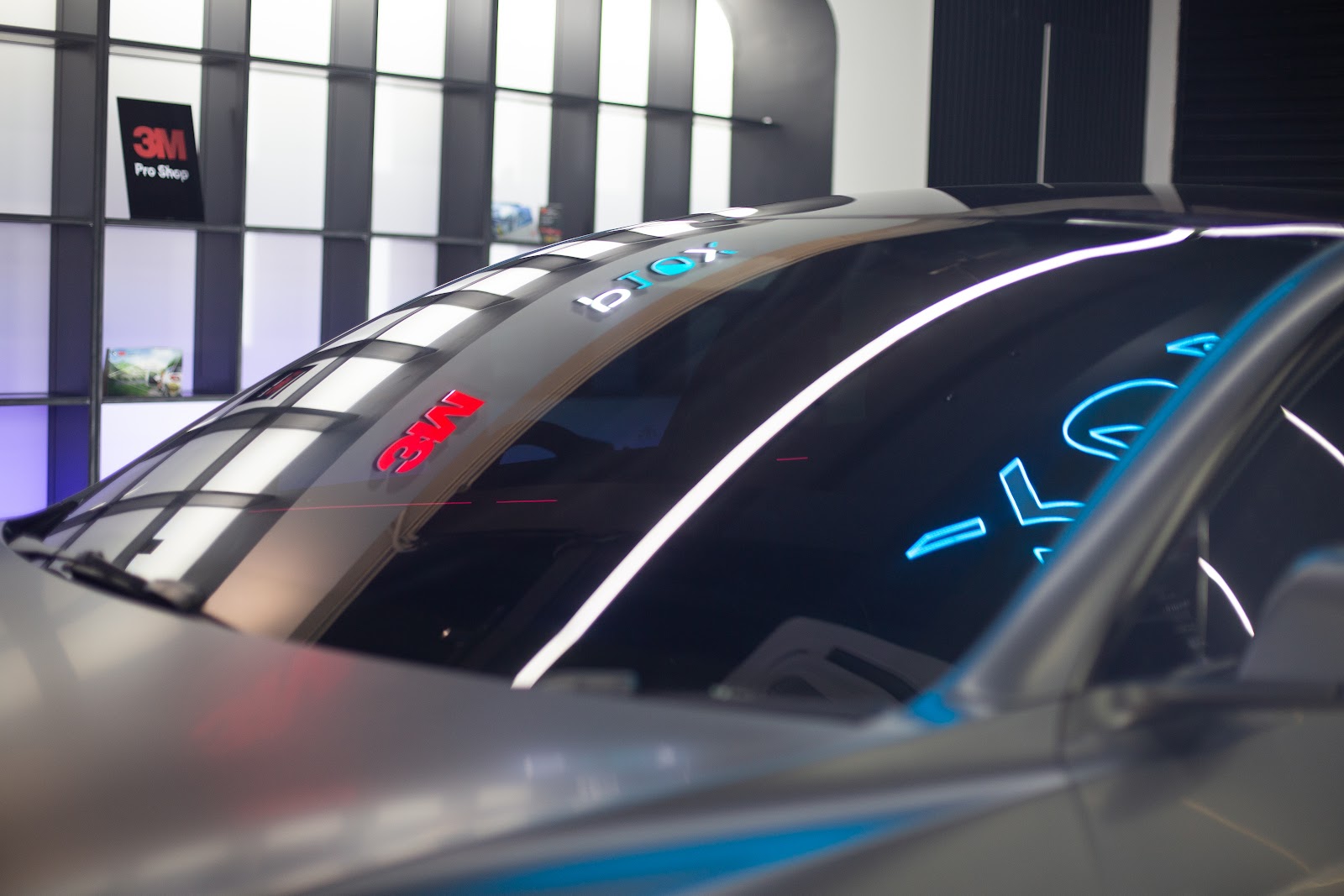
Before you sign off, check the colour and reflections from both sides of the finished glass. Sit in the driver's seat, look at both mirrors, then turn and look through the rear glass.
Keep the film codes and finished VLT readings with the car's papers. If the windscreen is ever replaced, that record tells the next installer what was fitted and why the new glass must be measured again.
What happens on fitting day
A careful job starts before any film is cut. The technician records which panes are being tinted, measures the factory glass and tests the windows, switches and seals. This is the moment to raise the front soundbar area and any electronics close to the glass. The answer you want is a protection plan, not a claim that water never goes near the cabin.
Then the fitting itself. The glass gets cleaned, the film is cut and shaped, and installation solution lets it slide into position before the adhesive settles. The installer works the moisture and air out towards the edges, controlling the liquid with towels, barriers and careful tool direction. The window tint installation guide shows the full process.
At handover, take your time. Check the edges, look through every pane, run each powered side window up and down, and get the final VLT readings on the windscreen and both front sides. Fresh film can show temporary moisture while it dries, but tint bubbles that stay put, trapped dirt, a lifting edge or a marked demister line all need a proper look before you leave.
Those 2 sets of numbers, bare glass and finished, are the proof of the job. Without them, the shade code alone cannot confirm what your EX30's front glass lets through.

Before you drive away, ask 2 things: when can the side windows go up and down, and how long will the visible moisture take to settle under these actual workshop conditions. The answer for your film beats a waiting time copied from another product.
What about the panoramic roof?
Not automatically. Where the panoramic roof is fitted, Volvo's documentation says the glass already carries an infrared coating. It can still feel warm, because sun angle, parking position and your own comfort all decide what you feel at head level.
Here is the useful test. Leave the car parked for a while, then notice what actually bothers you: bright light, warmth above your head, or a generally hot cabin. Glare and heat are different problems. A shade may answer glare where another film layer would not, and for heat the real question is what the proposed film adds beyond the factory coating, plus whether Volvo and the film supplier both accept film on that glass.
One thing roof tint is not: a battery-range promise. Cabin cooling uses energy, but there is no verified EX30 test that converts one roof film into a fixed number of kilometres. The same question came up for another EV, and the Proton eMAS 7 window tint article goes into it in detail. Choose roof film because it solves a comfort problem you can describe, not because somebody quotes you a neat range figure.
If you do go ahead, the roof film belongs on the job sheet as its own line with the exact product recorded. And at handover, look up through the roof in daylight yourself, not only at an exterior photo.
So which film goes on which window?
The short answer: the windscreen and both front sides get measured first, and the film choice should leave a sensible margin above 70% and 50%. The rear sides, the rear windscreen and the roof are separate decisions about privacy, visibility and glare.
Whatever you decide, every pane, film code and promised finished VLT belongs on one sheet. Comparing 2 quotations? Line them up window by window. One shop may quote a lighter front combination and another a darker full-car look, and without the pane list you are not comparing the same job.
If the same car also needs paint protection, the Volvo EX30 PPF guide covers the panels, film series and cost. A 3M Authorized Dealer such as 3M Pro Shop by P10X should be able to show you the exact film, measure the front glass before and after fitting, and explain the rear-windscreen material. Keep the window-by-window plan and the final readings with the car. They are the record that matters later.
Find out the best protection for your car
Visit a 3M Pro Shop and discover the cost-effective 3M Protective Film and Window Tint
Frequently Asked Questions
Does a Volvo EX30 need window tint in Malaysia?
It can help with glare, privacy and part of the solar heat entering through glass, but the useful choice depends on the factory glass and the pane causing discomfort, so measuring comes first.
What VLT is legal for a Volvo EX30 windscreen?
The 2026 JPJ enforcement list sets a minimum of 70% light transmission for the front windscreen. This is the finished glass-and-film reading.
Can tint affect the Volvo EX30 rear antenna?
Yes, the wrong construction can. The EX30 owner's manual warns against tint with a metallised surface coating on the rear windscreen because the antenna is located there, so get the exact film construction in writing before it goes on.
Should you tint the Volvo EX30 panoramic roof?
Only if there is a clear remaining glare or comfort problem and the proposed film is compatible with the glass. Where the roof is fitted, Volvo's documentation says the glass already has an infrared coating.
Can a light Volvo EX30 tint reject heat?
Yes, a lighter film can still reject solar energy. Compare the exact shade's VLT and TSER under the same test method instead of using darkness as the heat measure.
Author

Kelvin Cheen
Kelvin is an Automotive Solutions Consultant and Branch Manager at 3M Pro Shop. With 4+ years of field experience in premium vehicle surface protection, Kelvin specializes in flagship 3M technologies, including 3M Crystalline Black optical film and Ceramic IR tints, 3M Paint Protection Film (PPF), etc. His focus is on delivering transparent, engineering-backed advice to car and EV owners, cutting through sales upsells to ensure customers choose the exact thermal rejection and paint protection tailored to their driving needs.
Experience the future of window tinting
Visit a 3M Pro Shop and discover the revolutionary Crystalline CR BLK film