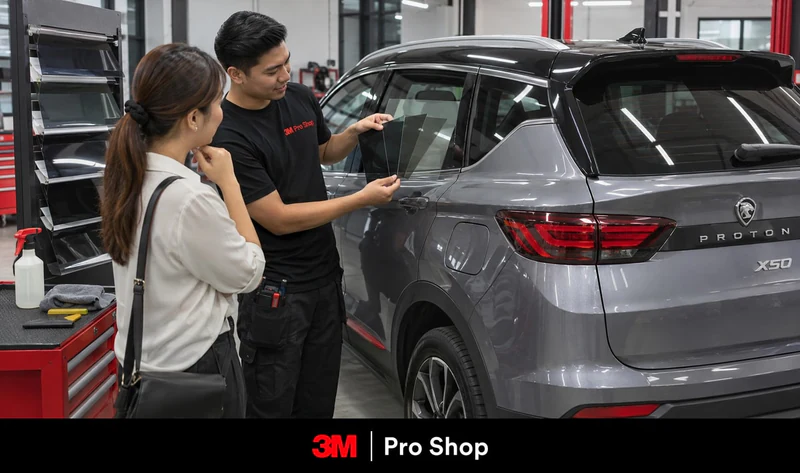
✧ Key Takeaways
- There is no single tint material that is best for every car and driver. Check the actual film and shade, not just the material name.
- Dyed, metallic, carbon, ceramic and multilayer describe construction. Sputtering describes a manufacturing process.
- Compare heat figures at similar visible-light levels and under matching test conditions.
- Before fitting, check the film’s name and shade, how well you can see through it and whether it meets your car’s equipment requirements.
No single type of car tint is best for every driver. A useful choice lets you see clearly, has heat-rejection figures you can compare fairly and suits your car’s equipment. Those details depend on the actual product and shade, not just its material label.
Dyed, metallic, carbon, ceramic and multilayer are broad construction labels, not complete product descriptions. When comparing 3M window-tint options, identify the range and shade first. 3M window tinting can reduce solar heat and glare and filter ultraviolet (UV) light, but check the actual film’s figures for each.
Your car’s glass and how you drive both matter when choosing tint. Reducing heat matters, but so does seeing through the window after dark. A high heat-rejection percentage cannot make an unsuitable shade the right choice.
What matters besides the tint material
Decide what you want to improve before comparing technology names. You may want less sunlight through a side window, a lighter windscreen that still rejects solar heat, or more privacy without losing too much of the view. Those needs can lead to different shade choices.
Visible light transmittance, or VLT, tells you how much visible light passes through the tested material. It tells you about the light level, not the complete construction. A dark film can use different materials from another film with a similar appearance. A lighter film can also reject solar heat.
UV protection cannot be judged by darkness alone, so the darkest sample is not automatically the most protective. Metallic tint can weaken some radio signals, so reception needs a separate check. Neither a dark appearance nor a heat-rejection figure shows how a device will receive signals.
Make those needs clear to the installer so the comparison addresses the problem you actually have.
- If your concern is the view on dim roads, maximum daytime privacy does not answer it.
- If you need information about a navigation receiver, an infrared-rejection figure is not a substitute.
What the common material names mean
Dyed film uses dye to reduce visible light and change the glass’s appearance. Metallic film contains a deposited metal layer. Carbon film uses carbon material, and ceramic film uses ceramic material. Multilayer optical film uses many thin layers working together to control light. These are broad descriptions, not complete specifications.
Films can also combine materials or treatments. A product description may therefore fit more than one broad label, or use a manufacturer’s own name for a particular construction. Do not assume every film must fit into five perfectly separate boxes.
A material name does not tell you how dark a film is, how much heat it rejects or how reflective it looks from inside the car. Those details depend on the actual product and your glass. Care instructions also belong to that product, not to every film sharing the label.
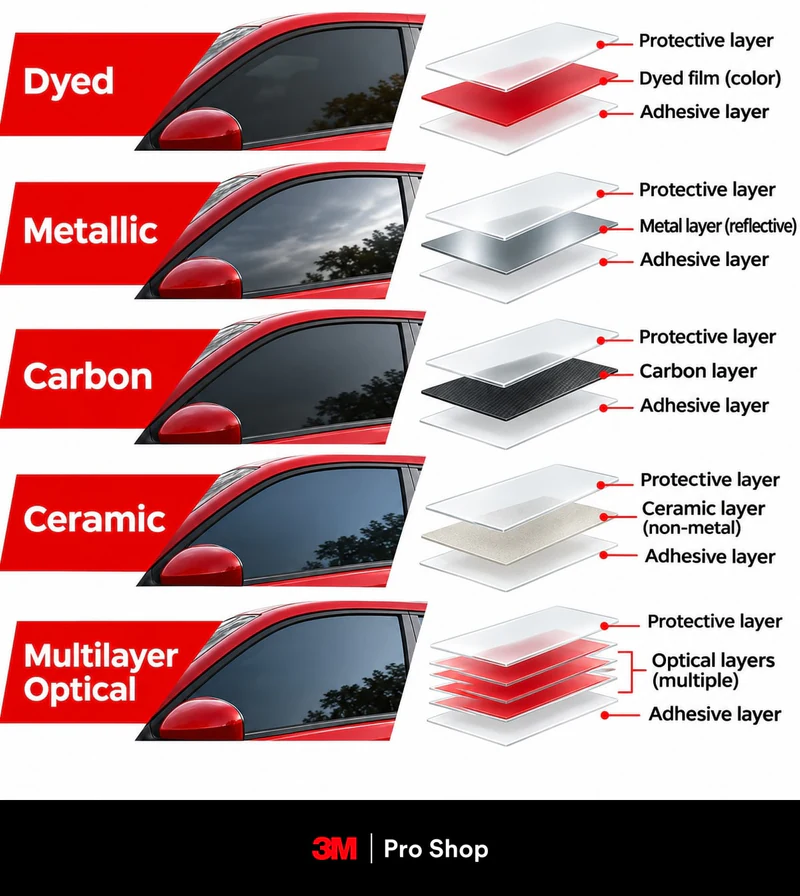
| Label | Basic meaning | What not to assume |
| Dyed | Uses dye in its construction | Every dyed film has identical durability or heat performance |
| Metallic | Uses a metal-containing layer | Every car device will be affected |
| Carbon | Uses carbon material | The name provides a complete performance rating |
| Ceramic | Uses ceramic material | Every ceramic film performs the same way |
| Multilayer optical | Many thin layers work together to control light. | It is simply another name for sputtered metal |
Dyed, metallic, carbon, ceramic and multilayer describe ways to build a film, not five fixed performance grades. Each product still needs its own evidence for how much heat it rejects, how clear it looks and how long it lasts.
Sputter is a process, not a grade
Sputtering and ceramic tint describe different things. Sputtering is a method of applying a thin coating, while ceramic describes a material used in the film. Neither term gives the full construction or tells you which product rejects more solar heat. That comparison needs the exact films’ technical sheets.
Nano carbon ceramic tint can use both carbon and ceramic in a hybrid. That is not automatically fake, and a longer description does not prove better performance. The manufacturer, series and shade tell you which product to investigate.
Think of technology names as a starting point for questions. They can help you understand a construction, but they do not replace a product code or test sheet. If the seller cannot move beyond the category name, the comparison is not specific enough yet.
Compare heat figures on the same basis
Total solar energy rejection, or TSER, describes the proportion of total solar energy rejected by the tested glass-and-film combination. It is a useful starting point for comparing solar performance, provided the shade and test conditions are relevant to the products you are considering.
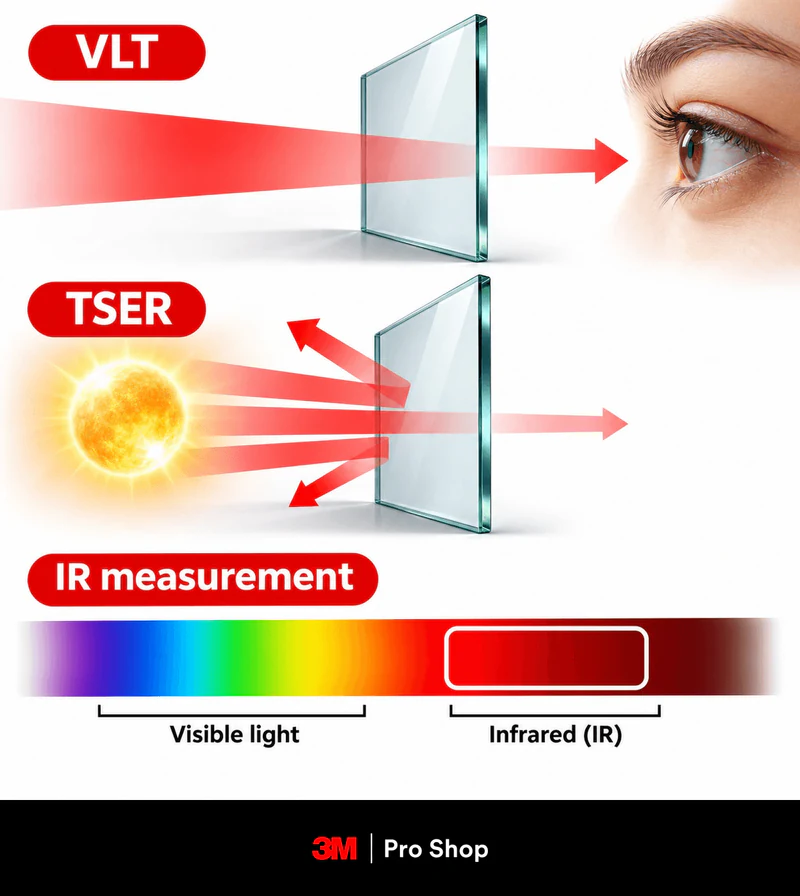
Infrared rejection, often shown as IRR, covers a specified wavelength range. A film can carry a high percentage for that range without the number describing all solar energy. You also need to know whether the test used film alone or film on glass.
IRR and infrared energy rejection (IRER) describe different measurements. In 3M’s documentation, IRER covers a broader infrared range and accounts for absorbed energy reradiated through the glass. The percentages cannot be swapped between columns or ranked without checking how they were measured.
When comparing two products, line up:
- A similar level of visible-light transmission.
- The same type of test glass where possible.
- The same named solar or infrared measurement.
- The stated wavelength range and test method.
- The actual shade proposed, rather than a different shade’s maximum.
These comparisons involve different measurements: VLT for visible light, TSER for total solar energy and the stated infrared figure for its measurement range. Results also depend on the glass used in the test. Figures measured on clear glass cannot be directly ranked against those measured on automotive green glass.
A sample does not recreate your car
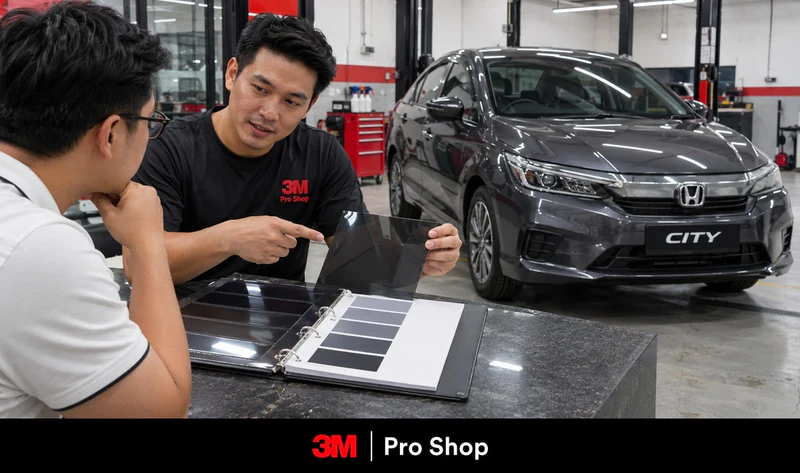
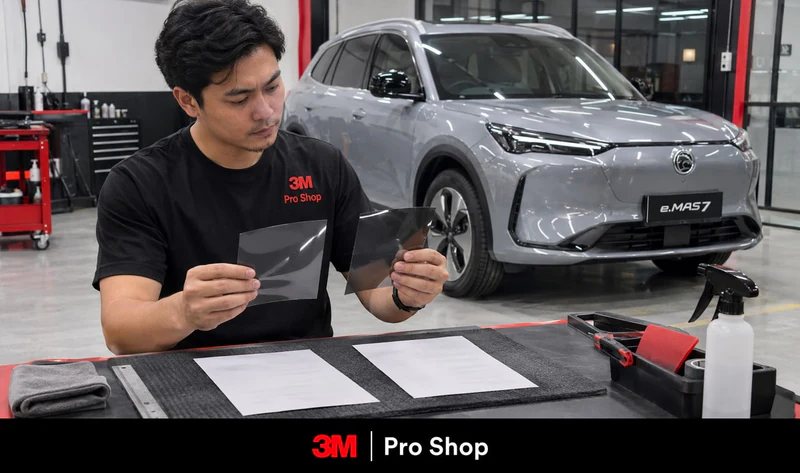
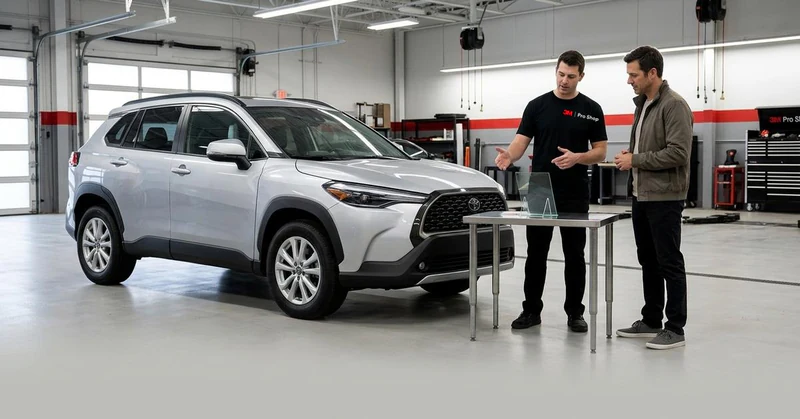
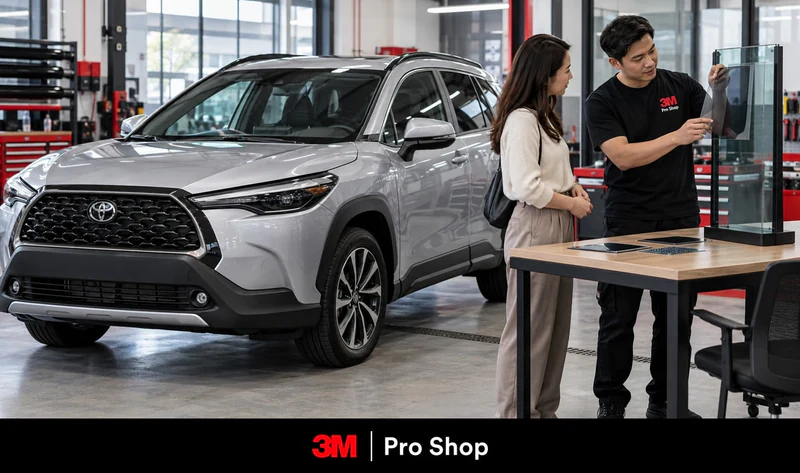
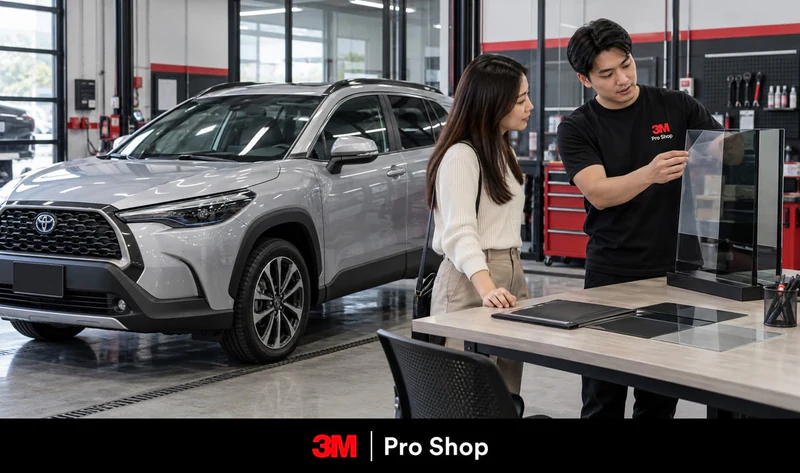
A sample display can help you see a shade and understand a product. A lamp can help demonstrate how selected samples behave under that lamp. These are useful parts of a conversation, but neither automatically predicts a particular cabin temperature on your car.
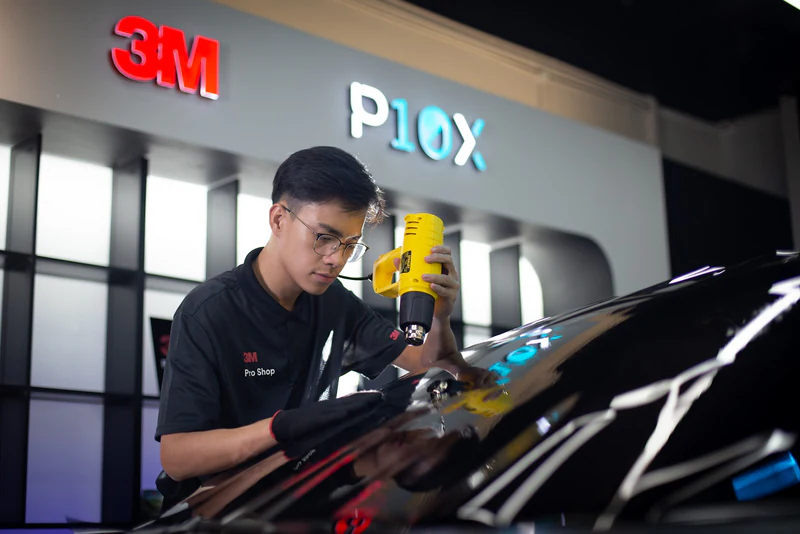
A demonstration depends on the light source and glass, the distance from the sample and how long it is exposed. Feeling less heat behind one sample cannot establish a precise saving in air con energy use, a reduction in fuel use or an increase in EV range. Those outcomes need evidence suited to the vehicle and conditions being discussed.
Use the demonstration to ask what the manufacturer’s published data support. If a salesperson claims it proves all ceramic beats all metallic film, or that every multilayer product is better than every hybrid, the conclusion is broader than the demonstration.
For the view through the glass, ask to see a relevant shade rather than the darkest or lightest example available. A sample that is not the proposed product can illustrate a concept, but it should not be presented as the result you are buying. Keep that distinction clear before agreeing to an installation.
Where current 3M films fit
Crystalline Black, Ceramic IR and XP are the Malaysian 3M ranges covered here. The 3M CR BLK launch page presents CR BLK as a new and improved version of the Crystalline Series, and its Malaysia brochure identifies the CR BLK range. Check the exact product name and brochure version when comparing quotations.
| Current range | Construction described in 3M product information |
| Crystalline Black (CR BLK) | Non-metallised multilayer optical film with ceramic nanotechnology, not sputtered metal |
| Ceramic IR | Metal-free nano-ceramic film |
| XP | Nano-ceramic film |
Two quotes can name the same range but include different windows or shades. Listing the product and shade beside each window makes those differences clear. A heat figure for a dark side-window shade cannot settle the choice of a lighter windscreen shade.
When comparing Crystalline Black and Ceramic IR, use the figures for the shades proposed on each window, not the highest figure advertised anywhere in either range. Their construction differs, but that alone does not tell you which range suits your car.
Check signal reception and windscreen equipment
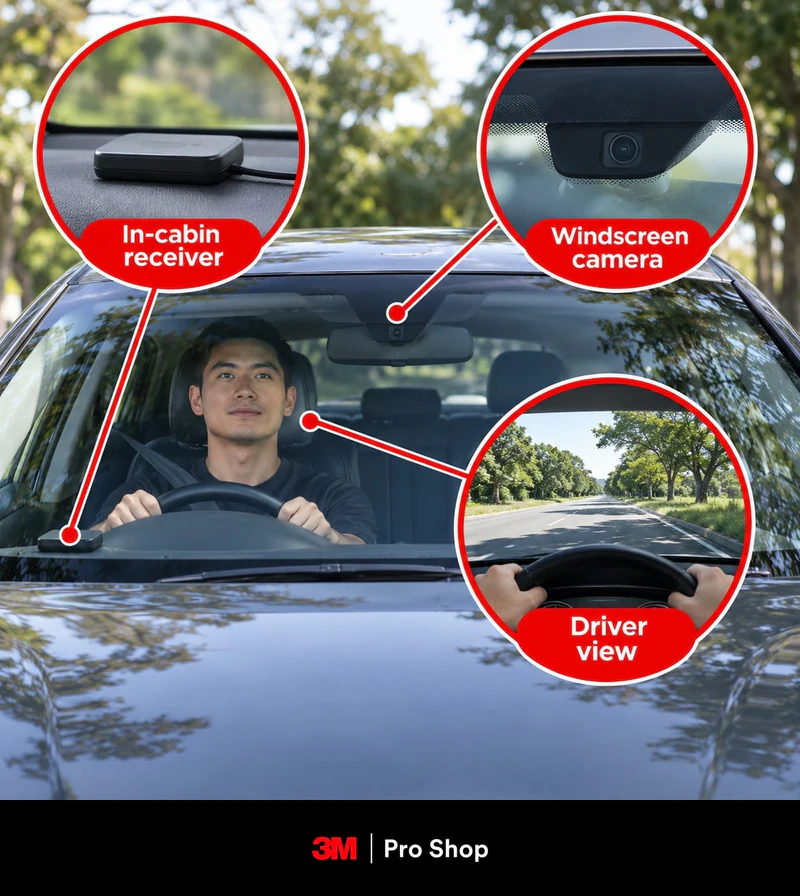
Metal-containing tint can weaken some radio signals, but it does not disable every device in every car. Reception depends on the film, the equipment, where its antenna sits and the surroundings. A useful check focuses on the affected system rather than treating every electronic feature as one problem.
3M describes Crystalline Black as non-metallised and compatible with mobile devices, GPS and satellite radio. That claim does not cover every remote, camera, sensor or display a vehicle might have. Those systems still need to meet the vehicle manufacturer’s requirements.
For equipment looking through the windscreen, follow the vehicle manufacturer’s fitting requirements. A camera’s optical view is a separate matter from a receiver getting a radio signal. Visibility for the driver needs a separate check too. A successful phone call does not prove that every windscreen-mounted system has been assessed.
If a reception or equipment problem is one reason for changing tint, describe it before selecting the replacement. The installer may need input from the device technician or vehicle service centre to find out whether the film is involved. A different tint material cannot be assumed to fix the problem.
Test the view you will use
Daytime privacy, glare control and night-time visibility involve trade-offs. Less visible light passing through can reduce daytime glare, but it can also make a dim scene harder to see. Ceramic, carbon or multilayer construction does not remove that basic issue.
Discuss your regular driving conditions and view a relevant sample through glass. Look at reflections from inside, not just how the car would appear from outside. Do not choose solely from a photograph taken under showroom lighting or from another owner’s view of a different shade.
JPJ compliance depends on the finished glazing, not just the film’s shade code. Your car’s existing glass affects the result after fitting, so the installer needs to assess the proposed film on your car against the applicable requirements.
If the vehicle has a glass roof, unusual windscreen features or replacement glazing, identify those details in advance. Do not borrow a blanket recommendation from a different model. The installer should assess the glass actually present, including existing film, before recommending what to add or replace.
Check what is already on the glass
A new quotation should account for existing film, not treat every window as untreated factory glass. This matters when the car was tinted before delivery, bought used or had one pane replaced. Similar-looking windows do not prove the same product is fitted everywhere.
Tell the installer what you know and bring any existing records. If the film is unidentified, let the inspection establish what can be confirmed. Do not choose a second product on the assumption that adding more layers automatically improves the result. Visibility, compatibility and the fitting requirements still need to be assessed.
When replacing only one window’s film:
- Bring the old product name and shade rather than try to match a colour from memory.
- Ask what can reasonably be matched. A category label cannot guarantee an identical appearance.
You do not need to replace a known, suitable film just because a newer technology word appears on an advertisement. Establish what is fitted and whether it is meeting your needs first. A change is easier to justify when it addresses a specific limitation or a documented requirement, rather than an unsupported claim that every older material is now inadequate.
Keep the product record clear
A useful quotation identifies the manufacturer, series and shade, and shows where each one will be fitted. It should not leave the actual film hidden behind a package name such as “premium nano”. You need enough detail to connect the proposed installation with the product information you have reviewed.
Keep that record after installation. It helps when asking about cleaning, attachments, a replacement pane or an issue that develops later. A remembered technology label is much less useful than the actual film identity.
Keep the care instructions with the product record, rather than rely on advice for a different film. Ask which cleaners and cloths are suitable, when you can clean the newly tinted glass or lower the windows, and what to do if you notice a problem. The answers should come from the instructions for the installed product, not a general rule for everything called ceramic. If you later add a camera mount or another attachment to treated glass, show the installer those instructions first. Checking before sticking, scraping or removing an attachment is more useful than discovering afterwards that the advice you followed concerned untreated glass.
Read the applicable local care and product terms without assuming a construction label guarantees coverage for every problem. Product characteristics and written warranty coverage are different things. A general statement about durability should not quietly become a replacement promise.
Choose the film, not the longest label
A sensible tint choice balances how well you can see through the windows, the film’s measured heat rejection and the requirements of equipment fitted to your car. Those checks matter more than whether the quote says carbon, ceramic or multilayer.
If the evidence is incomplete, ask for the missing information before choosing. You do not need a universal “best tint technology” verdict to make a good decision. You need a fair comparison between the actual options available to you.
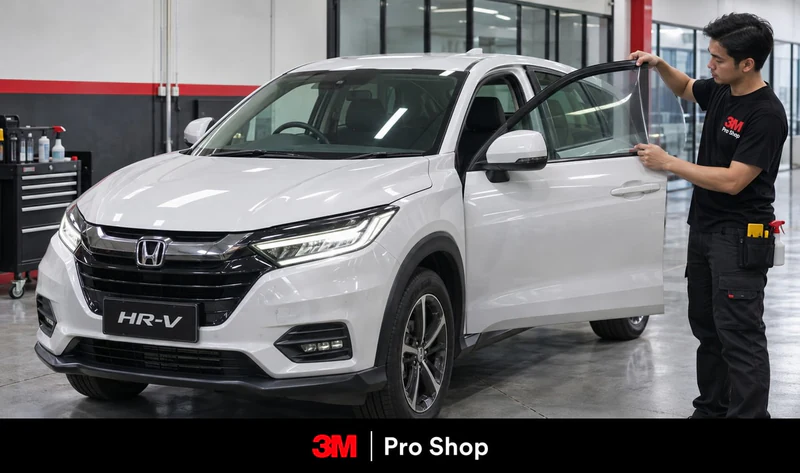
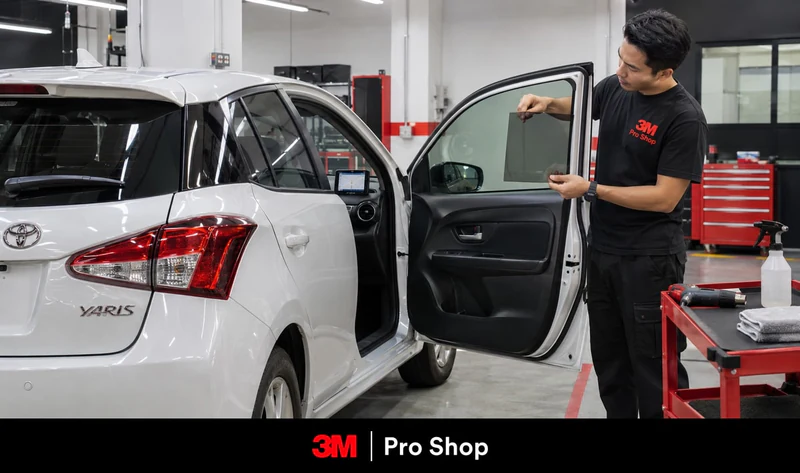
At 3M Pro Shop by P10X, discuss those needs against the current 3M window-tint options. Begin with the car’s existing glass and the exact product and shade, rather than assume ceramic, sputter or multilayer is the complete answer.
Find out the best protection for your car
Visit a 3M Pro Shop and discover the cost-effective 3M Protective Film and Window Tint
Frequently Asked Questions
Is ceramic always the best car tint?
No. Ceramic describes a material, not one shared performance level. Compare the actual products, suitable shades, supporting data and requirements of your car.
Does darker tint always reject more heat?
No. Darker tint does not necessarily reject more solar heat. Compare the actual films’ solar figures at relevant shades using the same test conditions.
Is sputter a material or a process?
Sputtering is a process used to apply a thin coating. Ask what materials and construction the manufacturer uses in the finished product.
How do carbon and ceramic tint differ?
They use different materials, and a hybrid may use both. Their names alone do not establish the performance of a particular product or shade.
Where does 3M Crystalline Black fit?
3M Crystalline Black uses non-metallised multilayer optical film with ceramic nanotechnology. It is not a sputtered-metal film. Calling it only nano ceramic leaves out its layered optical construction.
Can I choose tint using IRR alone?
No. Infrared rejection (IRR) covers a stated wavelength range, not all solar heat. Compare it only with figures measured on the same basis, and also check total solar energy rejection (TSER) and visible light transmittance (VLT) for the proposed shade.
Does a shade code prove JPJ compliance?
No. Existing glass and the installed film together determine the finished result. Assess the glazing against the requirements applicable to the vehicle.