
Denza Z9GT Window Tint: The CR BLK Shades That Actually Beat Malaysian Heat
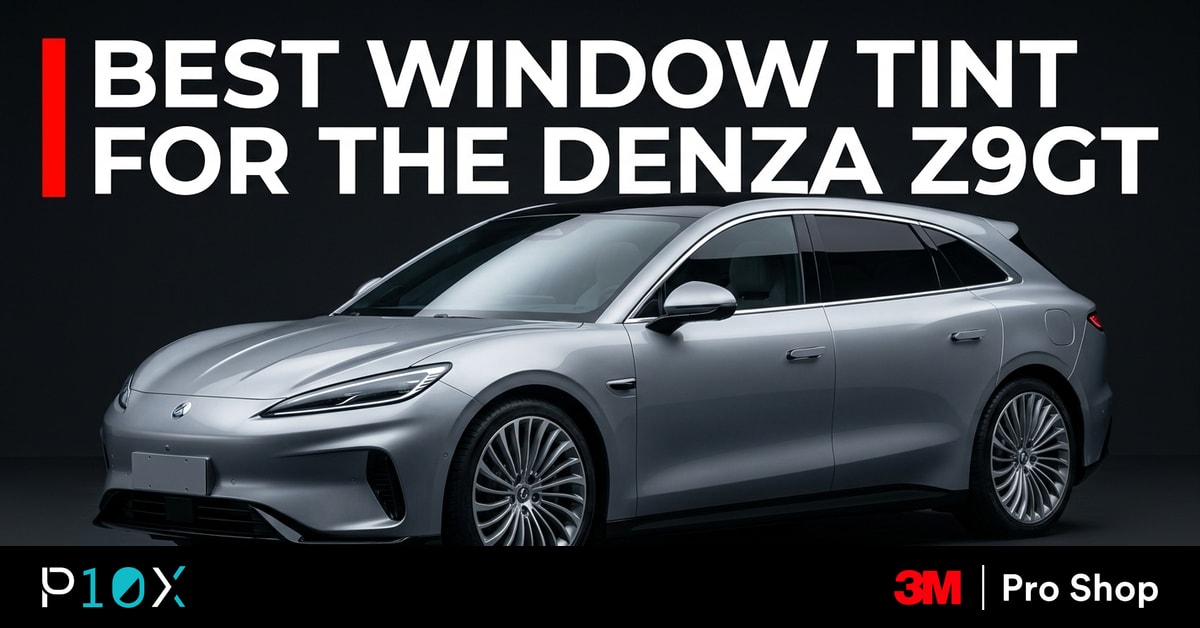
- The Z9GT needs three shades, not one: CR BLK 70 on the windscreen, CR BLK 40 on the front sides, CR BLK 15 on the rear glass and the panoramic roof.
- CR BLK heat rejection peaks at shade 50 with 68% TSER, and CR BLK 70 at 65% beats CR BLK 15 at 64%. Darker is not cooler.
- Every CR BLK shade blocks 99.9% of UVA and UVB and rejects 95% to 98% of infrared, so JPJ limits cost you almost nothing.
- At 5,180 mm long the Z9GT falls in the X Large package bracket, and every CR BLK job carries the 3M E-Warranty when a 3M Authorized Dealer registers it.
- Air conditioning costs a 600 km WLTP Z9GT roughly 90 to 102 km in tropical heat. Good film buys back 13 to 20 km per charge.
Getting the window tint right on a Denza Z9GT is not about picking one dark film and wrapping the whole car in it. This is a flagship shooting brake with 850 kW, a 122.49 kWh battery, a panoramic glass roof over your head and a sensor suite reading the road through the windscreen, so the correct answer is three different 3M Crystalline Black shades on four different zones of glass. That is the part almost every quotation gets wrong. If you are protecting the paint in the same booking, our Denza Z9GT PPF coverage guide sets out the front-end versus full-body split, and the combined PPF and tint package puts both jobs in one workshop slot.
One thing to clear up before anything else. If a shop still quotes you the original 3M Crystalline series for your Z9GT, they are working off an old price list. Crystalline became obsolete in Malaysia in December 2025, and Crystalline Black, sold as the CR BLK range, took over as the current flagship film. Our 3M Crystalline CR BLK launch guide covers what changed, and the 3M window tinting science for Malaysian drivers explains why the multilayer optical construction matters more here than anywhere in Europe.
This guide gives you the shade-by-shade answer for each window on the Z9GT, the JPJ limits that apply to each one, what the film does to a 600 km WLTP range figure in Klang Valley traffic, and how the X Large package bracket applies to a body this size. If you have already read our Proton eMAS 7 window tint and EV range breakdown, the logic will be familiar, but the numbers are very different on a car with almost two and a half times the battery.
The Z9GT Needs Three CR BLK Shades, One Per Zone of Glass
The correct specification for a Denza Z9GT is CR BLK 70 on the windscreen, CR BLK 40 on the front side windows, and CR BLK 15 on the rear side windows, the rear windscreen and the panoramic glass roof. Three shades, four zones, one film family. Anything simpler than that is either illegal at the front or leaving heat on the table at the back.
The reason is that JPJ regulates only the front glass, and CR BLK holds its heat performance almost flat across shades. So you go as light as the law demands where it is watching, and as dark as you like where it is not, without giving up meaningful thermal performance anywhere. A shop that offers you "50% all round" is giving you an illegal windscreen and a rear cabin that is darker than it needs to be for no thermal gain.
Picture the handover at a Sime Motors showroom on a Tuesday afternoon. The car has 12 km on the odometer and the glass is bare. If you drive it straight to a shop that fits one shade everywhere, you will be back within a month either to strip the windscreen after a summons or to redo the roof because the rear passengers are still warm. Doing it once, correctly, in one visit, is the entire point.
| Glass zone | JPJ minimum VLT | Recommended shade | Film VLT | TSER | IRR | UV blocked |
|---|---|---|---|---|---|---|
| Front windscreen | 70% | CR BLK 70 | 78% | 65% | 95% to 98% | 99.9% |
| Front side windows | 50% | CR BLK 40 | 50% | 67% | 95% to 98% | 99.9% |
| Rear side windows | None | CR BLK 15 | 17% | 64% | 95% to 98% | 99.9% |
| Rear windscreen | None | CR BLK 15 | 17% | 64% | 95% to 98% | 99.9% |
| Panoramic glass roof | None | CR BLK 15 | 17% | 64% | 95% to 98% | 99.9% |
The Panoramic Glass Roof Is the Z9GT's Biggest Heat Problem
The Malaysian launch car comes with a panoramic glass roof, and on a 5,180 mm body with a 3,125 mm wheelbase that is a very large sheet of glass sitting directly above the driver and the rear passengers. It is the single most exposed surface on the car between 11 AM and 4 PM, because the sun is close to overhead and the angle of incidence is at its worst.
A shooting brake makes this worse than an SUV would. The roofline is low and long, the cabin volume under it is relatively shallow, and the rear seats sit close to the glass. Heat that comes through the roof does not have much air to disperse into before it reaches the people underneath it. That is why rear passengers in a glass-roofed GT often complain while the driver, sitting further forward under the header rail, feels fine.
Think about the school run in Damansara or a Saturday crawl into the Pavilion basement. The car has been baking in an open-air lot at Bukit Jalil for two hours, cabin surfaces are radiating, and the rear vents are fighting a heat source that is 40 cm from your passengers' heads. No factory sunshade fully solves this, because a fabric shade blocks visible light while infrared continues to load the glass and the trim. Film on the roof glass is what actually reduces the energy arriving in the first place. If your cabin still feels hot after a tint job, our guide on why heat rejection can feel weak after tinting explains the usual causes.
CR BLK 50 Rejects More Heat Than CR BLK 15, Which Kills the Darkness Myth
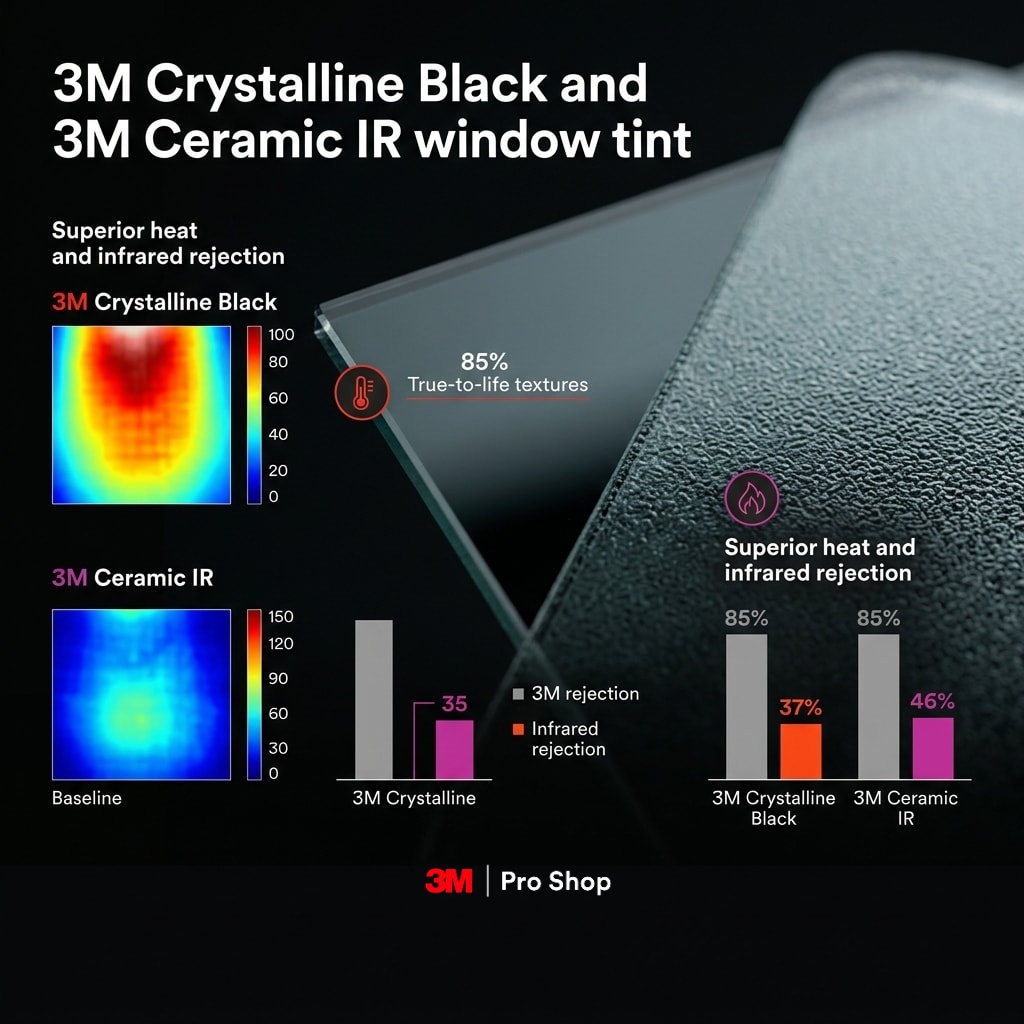
Here is the number that should change how you shop. Across the CR BLK range, total solar energy rejection does not climb as the film gets darker. It peaks in the middle. CR BLK 50 rejects 68% of total solar energy, while the much darker CR BLK 15 rejects 64%, and the nearly clear CR BLK 70 rejects 65%. The lightest shade in the range beats the darkest one.
That happens because heat rejection in a multilayer optical film comes from roughly 200 nano-layers engineered to reflect infrared, not from a dye that darkens the glass. Visible light transmission and thermal performance are two separate properties of the film. A dyed or cheap sputtered film gets its heat number by absorbing energy and then radiating part of it back into the cabin, which is why a very dark budget film can feel hotter than a light premium one after twenty minutes.
For a Z9GT owner this is genuinely liberating. You are not choosing between looking factory-clean and staying cool. You can put a nearly clear 78% VLT film on the windscreen and still get 65% TSER and 95% to 98% infrared rejection. If you want to see how the range compares against other brands at matched VLT, our 3M Crystalline Black versus other tint brands comparison lays it out.
| CR BLK shade | TSER | IRR (film only) | UV rejection |
|---|---|---|---|
| CR BLK 80 | 59% | 95% to 98% | 99.9% |
| CR BLK 70 | 65% | 95% to 98% | 99.9% |
| CR BLK 60 | 67% | 95% to 98% | 99.9% |
| CR BLK 50 | 68% | 95% to 98% | 99.9% |
| CR BLK 40 | 67% | 95% to 98% | 99.9% |
| CR BLK 35 | 67% | 95% to 98% | 99.9% |
| CR BLK 30 | 66% | 95% to 98% | 99.9% |
| CR BLK 15 | 64% | 95% to 98% | 99.9% |

Staying JPJ-Legal Costs the Z9GT Almost Nothing
Malaysian law sets a minimum of 70% visible light transmission on the front windscreen and 50% on the front side windows. Rear side windows and the rear windscreen have no minimum, and neither does a glass roof. Those are the only four numbers you need to argue with a shop about.
Because CR BLK 70 measures 78% VLT and still delivers 65% TSER, the legal ceiling on your windscreen costs you three percentage points of heat rejection against the best shade in the range. Three points. That is the entire penalty for being fully compliant on the most sun-exposed piece of glass on the car. On the front sides, CR BLK 40 sits exactly at the 50% VLT floor and delivers 67% TSER, which is the joint second-best figure in the whole range.
This matters more on a Z9GT than on a Myvi, because a summons on a car like this tends to come with a closer look at everything else. A roadblock on the LDP at 10 PM, a torchlight through the driver's window, and a tint meter is a bad way to end a Friday. Our guide to choosing JPJ-compliant window tint walks through the enforcement side in detail, including what to keep in the car.
Tint Buys Back 13 to 20 km Per Charge on a 600 km Z9GT
Now the calculation nobody quotes you. The Malaysian Z9GT carries a 122.49 kWh second-generation Blade LFP battery rated at 600 km WLTP. Air conditioning on an EV draws from that same pack, and published research is consistent about the size of the hit. AAA measured a 17% average range loss driving at 35 degrees Celsius with air conditioning running, and Recurrent Auto, analysing roughly 30,000 electric vehicles, found around 5% loss at 32 degrees rising to 17 to 18% in more extreme heat.
Apply the conservative 15 to 17% band to the Z9GT. On a 600 km WLTP figure that is 90 to 102 km surrendered to the air conditioner in Malaysian conditions, or 18.4 to 20.8 kWh of the pack spent on cooling rather than driving. That is the number worth attacking.
Quality window film has been measured reducing cabin temperature by up to 8 degrees Celsius against untinted glass. A cooler starting cabin means the compressor reaches its setpoint sooner and cycles less for the rest of the drive. Taking a conservative 15 to 20% reduction in air conditioning energy, the film returns 2.8 to 4.2 kWh per charge, which is 13 to 20 km of range.
Here is what that means across a year rather than a single drive. Say you charge the Z9GT about twice a week, roughly 100 charges a year. That is 280 to 420 kWh a year not spent on cooling, which is the equivalent of two to three and a half extra full charges of the 122.49 kWh pack handed back to you purely by keeping the cabin cooler. Expressed the way you actually experience it, that is roughly 1,300 to 2,000 km of driving a year the air conditioner would otherwise have taken, before you count the comfort or the protected leather.
| Metric | Figure |
|---|---|
| Battery capacity | 122.49 kWh |
| WLTP range | 600 km |
| Range lost to air conditioning (15% to 17%) | 90 to 102 km |
| Energy spent on cooling per charge | 18.4 to 20.8 kWh |
| Energy recovered with CR BLK (15% to 20% less AC load) | 2.8 to 4.2 kWh |
| Range recovered per charge | 13 to 20 km |
| Cooling energy recovered per year at 100 charges | 280 to 420 kWh |

Non-Metallised Film Is Not Optional on a 33-Sensor Car
CR BLK is a non-metallised construction, which means it does not interfere with mobile, GPS or satellite radio signals. On a car built around connectivity and driver assistance, that is the difference between a film you can fit and a film you cannot.
The Denza Z9 platform runs BAS 3.0+ driver assistance using 33 sensors including two lidar units, and the Malaysian car pairs that with a fully connected cabin. Metallised and sputtered films carry a conductive layer that can attenuate radio-frequency signals, and on a windscreen they sit directly in the optical path of forward cameras and sensors. A film that shifts light transmission or introduces haze in front of a camera can degrade the calibration the car was delivered with, and recalibration on a CBU flagship is not a quick job.
The practical rule is simple. Never allow sputtered metallic film on the Z9GT windscreen, and confirm in writing that the film going on the car is non-metallised before the first sheet is cut. Our deeper guide on ADAS, HUD and rain sensors versus sputtered film covers which windscreens should never see metallic film, and the MG S5 EV tint guide shows the same reasoning applied to another ADAS-heavy EV.
The Z9GT Sits in the X Large Bracket, and the Body Decides That
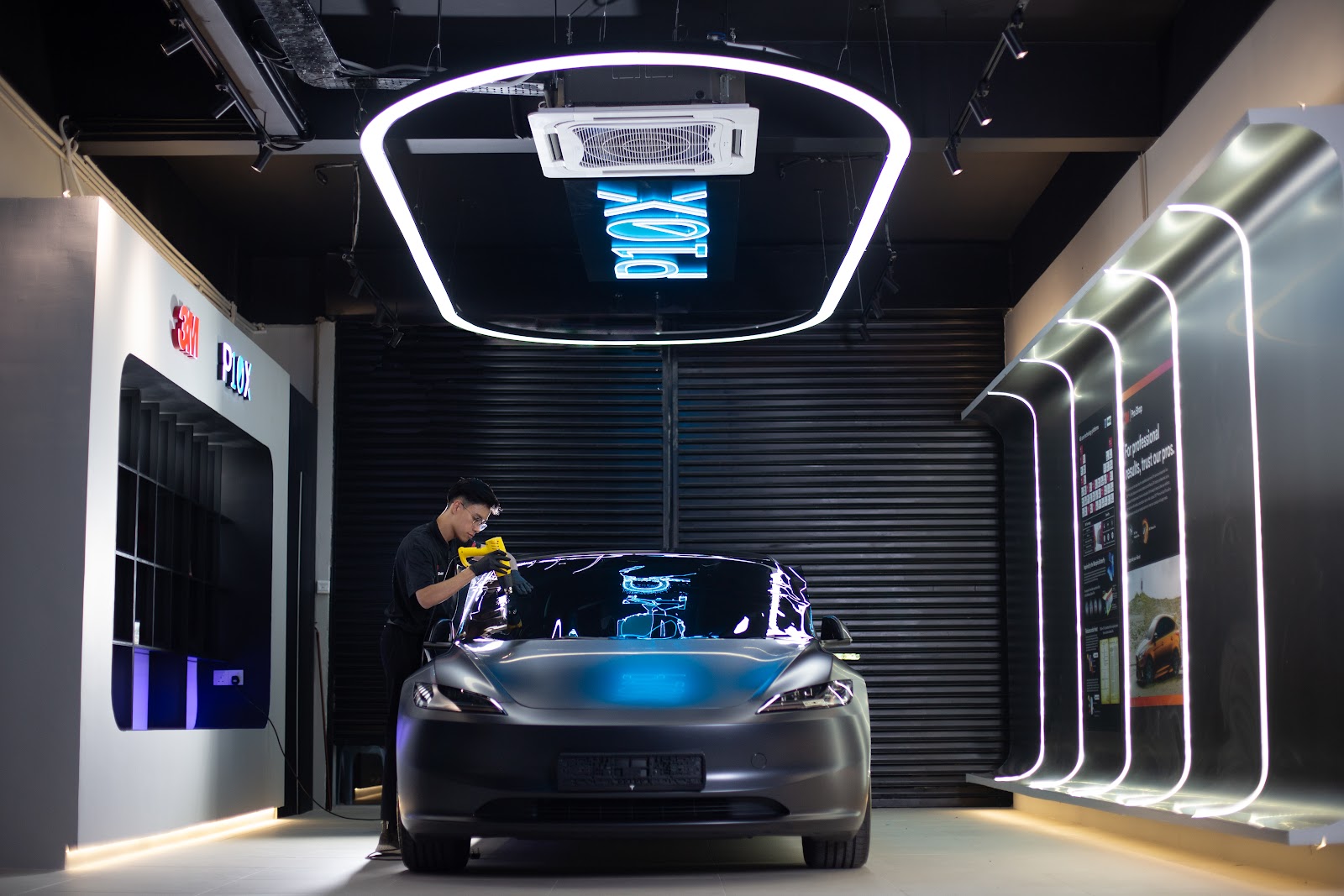
At 5,180 mm long and 1,990 mm wide, the Z9GT sits in the X Large bracket on the 3M Pro Shop package list. The bracket is set by the body, not by the film, so the same three-shade specification is quoted as one X Large job whichever tier you land on. Picture the booking itself: a Saturday morning slot in Subang Jaya, seven pieces of glass across four zones, three different CR BLK shades, one visit. Ask for the quotation in writing with the bracket named and the shade listed per zone, and you remove the single most common source of disagreement at handover.
What separates the tiers is performance, not what you see in the showroom. CR BLK delivers 59% to 68% TSER depending on shade and 95% to 98% infrared rejection, which is what lets you run a 78% VLT windscreen without giving up heat performance. It also gives the deeper, uniform black tone that keeps the glass looking like it left the factory that way, and on a Rime Gold or Obsidian Black shooting brake that visual consistency is most of the reason owners choose the tier.
If your budget genuinely stops lower, Ceramic IR at 63% TSER and 95% IRR is a real film and not a compromise you will regret. XP at 55% TSER and 38% IRR is where the infrared gap becomes obvious, and on a glass-roofed EV that gap is exactly where your comfort and your 13 to 20 km of recovered range go. Every tier carries the 3M E-Warranty once a 3M Authorized Dealer registers it, so warranty cover is a tick on all three rows rather than a reason to move up. Our full 3M window tint price breakdown shows what each tier includes across all bracket sizes.
| Film | TSER | IRR | UV | X Large bracket | E-Warranty |
|---|---|---|---|---|---|
| Crystalline Black (CR BLK) | 59% to 68% by shade | 95% to 98% | 99.9% | Available | ✓ |
| Ceramic IR | 63% | 95% | 99.9% | Available | ✓ |
| XP | 55% | 38% | 99.9% | Available | ✓ |
Five Mistakes Owners Make Tinting an 850 kW Grand Tourer
The expensive errors on a car like this are rarely about the film brand. They are about specification and sequence, and they usually cost a second visit.
First, accepting one shade across the whole car, which leaves you either illegal at the front or thermally short at the back. Second, choosing on darkness, when the CR BLK numbers show shade 50 out-rejecting shade 15. Third, skipping the panoramic roof to save money, which is skipping the single largest heat gain on the vehicle. Fourth, allowing sputtered metallic film anywhere near the windscreen and its sensor array.
Fifth, and most common on new CBU deliveries, tinting before anyone has inspected the glass. Factory glass can arrive with chips, delivery scuffs or a marginal seal, and film is the worst possible thing to trap over a defect you have not documented. Have the glass checked first, then fit. Using a 3M Authorized Dealer such as 3M Pro Shop by P10X keeps the film genuine, the E-Warranty valid, and the shade record on file if JPJ ever asks. You can see the whole window tint product range before you book.
Getting the Denza Z9GT Window Tint Choice Right in Malaysia
The decision resolves into one sentence. Put CR BLK 70 on the windscreen, CR BLK 40 on the front sides, and CR BLK 15 on the rear glass and the panoramic roof, and you get a fully JPJ-legal car with 64% to 67% total solar energy rejection on every surface, 95% to 98% infrared rejection, and 99.9% UV protection over a cabin you will be sitting in for years.
The payoff is not only comfort. On a 600 km WLTP car that surrenders 90 to 102 km to its air conditioner in this climate, the film hands back 13 to 20 km per charge and 280 to 420 kWh of cooling energy a year, while keeping the leather, the suede and the screens out of direct ultraviolet.
Book the glass inspection and the tint before the car sees its first full week of Klang Valley sun, insist on the three-shade specification in writing, and keep the E-Warranty document in the glovebox. That is the whole job, done once.
Find out the best protection for your car
Visit a 3M Pro Shop and discover the cost-effective 3M Protective Film and Window Tint
Frequently asked questions
What is the best window tint for a Denza Z9GT in Malaysia?
Three 3M Crystalline Black shades, matched to each zone of glass. CR BLK 70 on the windscreen at 78% VLT, CR BLK 40 on the front side windows at 50% VLT, and CR BLK 15 on the rear side windows, rear windscreen and panoramic glass roof. That combination is fully JPJ-legal and keeps total solar energy rejection between 64% and 67% everywhere.
How much does it cost to tint a Denza Z9GT?
Quotations are given per car rather than published, and three things set the figure on a Z9GT: the X Large bracket that comes with a 5,180 mm body, the film tier you choose between Crystalline Black, Ceramic IR and XP, and whether the panoramic glass roof is included. Ask a 3M Authorized Dealer for a written quotation listing the bracket, the shade for each zone of glass, and the E-Warranty registration.
Should I tint the Denza Z9GT panoramic glass roof?
Yes, and it should be the first panel you commit to. The roof is the largest and most directly exposed sheet of glass on the car, sitting close to the heads of the rear passengers in a low shooting-brake cabin. No JPJ limit applies to it, so CR BLK 15 at 17% VLT and 64% TSER is the right call.
Does window tint affect the Denza Z9GT sensors and driver assistance?
Non-metallised film such as Crystalline Black does not interfere with mobile, GPS or satellite radio signals. The concern is metallic sputtered film, which carries a conductive layer and sits directly in the optical path of the forward camera and sensor array on the windscreen. Keep sputtered film off the Z9GT windscreen entirely.
How much range does window tint give back on a Denza Z9GT?
On the 122.49 kWh, 600 km WLTP Malaysian car, air conditioning costs roughly 90 to 102 km in tropical heat. Reducing that cooling load by a conservative 15 to 20% returns 2.8 to 4.2 kWh, which is about 13 to 20 km of range per charge.
Is CR BLK 15 the coolest shade in the Crystalline Black range?
No. Total solar energy rejection peaks at CR BLK 50 with 68%, while CR BLK 15 sits at 64% and the near-clear CR BLK 70 reaches 65%. Heat rejection in this film comes from roughly 200 engineered nano-layers, not from darkness, so the shade number tells you about privacy and glare, not about heat.
Can I still get the original 3M Crystalline for my Z9GT?
No. The original Crystalline series became obsolete in Malaysia in December 2025 and Crystalline Black, the CR BLK range, replaced it as the current flagship film. If a shop is still quoting plain Crystalline, they are working from an outdated price list.
Author

Kelvin Cheen
Kelvin is an Automotive Solutions Consultant and Branch Manager at 3M Pro Shop. With 4+ years of field experience in premium vehicle surface protection, Kelvin specializes in flagship 3M technologies, including 3M Crystalline Black optical film and Ceramic IR tints, 3M Paint Protection Film (PPF), etc. His focus is on delivering transparent, engineering-backed advice to car and EV owners, cutting through sales upsells to ensure customers choose the exact thermal rejection and paint protection tailored to their driving needs.
Experience the future of window tinting
Visit a 3M Pro Shop and discover the revolutionary Crystalline CR BLK film